Sunday, 29 November 2009

Philadelphia (1993)

"This is the essence of discrimination: formulating opinions about others not based on their individual merits, but rather on their membership in a group with assumed characteristics."

-Philadelphia
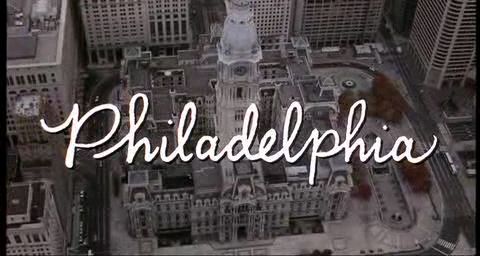


Philadelphia is one of those recent classics that, while aware of it since its release, we never managed to see from start to finish. So now, fifteen years later, we catch up with it!

And what a nice film it is. We use the word "nice" thoughtfully, because it tackles what was, at the time, a very controversial and emotional topic - HIV/AIDS - in a dignified and relatively tame way. The original New York Times review notes, with some disappointment, just how unprovocative this film is, but we - ever the pragmatists - are content to see Philadelphia as an important stepping stone in the mainstreaming of certain issues into American cultural life: that is, homosexuality, homophobia and HIV/AIDS.

A brief, personal aside: in our travels around the world, the one thing we have grown to deeply appreciate about American culture is its "diversity education". There was a great article (maybe in Tehelka?) about this, but we can't find it anymore. Anyway, diversity education is a relatively recent thing, with mostly the X and Y generations inaugurating it in a post-Civil Rights Movement, post-Flower Power USA. We at the PPCC still have fond memories of our elementary and high school indoctrinations about how racism, classism and homophobia are WRONG (IN CAPITAL LETTERS!!!) and never to be tolerated. Ahh, Sesame Street. Ahh, Mister Rogers. You taught us so well. Ahh, after school specials about Martin Luther King Jr. and Very Special Episodes about how, yes, you can make out with someone who has AIDS, but always use sterilized needles and never mix blood with your friend in order to become "blood brothers/sisters". (Did anyone ever actually do this, by the way? Even the ten-year-old PPCC was like, "Mixing blood...Whut?") Philadelphia, we think, is a great example of this diversity-minded culture at its best. Yeah, 1990s!

Another brief aside, on the 1990s in general: what memories Philadelphia brought back! Immediately, with the first tracking shots of Philadelphia's neighborhoods - with those funny haircuts and bleached jeans and puffy jackets - with Bruce Springsteen's gorgeous track in the background, we were transported back to the days of watching those same scenes and that same song on MTV and crying generously into our New Kids on the Block sweater. We don't have the sweater anymore (at least, we think we don't), but we cried again today, older and wiser, into our much more hip, 2009 t-shirt.

Man, this movie took us back.
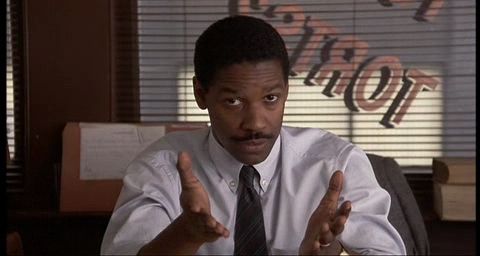

We love you, Denzel!!


But let's talk about the movie itself now. Based on the true story of Geoffrey Bowers, Philadelphia centers around the unjust firing of a prominent young lawyer, Andrew Beckett (Tom Hanks), from his prestigious law firm. The film opens efficiently with scenes showing us Beckett the hot shot in the office being offered a promotion, and Beckett in the hospital for his periodic check-up. While it's not voiced until later in the film, it is clear that Beckett has AIDS. On a parallel storyline, we follow Joe Miller (a wonderful Denzel Washington) in his much less prestigious, much more "We make money for you!" office. With excellent narrative efficiency, we skip over several months of time and the actual firing, and we end up on the day when Beckett, now looking emaciated and quite ill, comes into Miller's office looking for legal representation. As he explains, he believes he was framed to look incompetent and fired based on his homosexuality and AIDS. Miller, which the film slowly reveals to be strongly homophobic, quickly pulls his hand away when he hears that Beckett has AIDS. Eyeing him, he asks, "How many lawyers did you go to before me?"

"Nine."
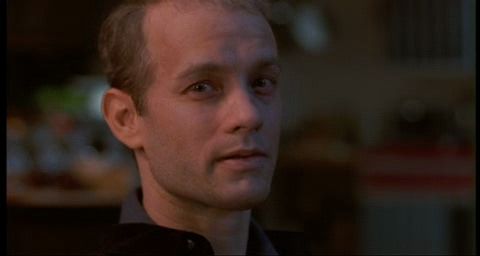

And you, Tom.


It's not a great start to a beautiful friendship, but beautiful and poignant it does become. After lengthy hesitations over several weeks, Miller eventually gives in and agrees to take the case. The rest of the film follows the relatively straightforward trial scenes, with occasional - often very touching or disturbing - moments exploring the attitudes towards these issues during that period. This film is basically a morality play, and so the characters are fairly bluntly sketched: the evil, bigoted law firm partners, Millers' good ol' boy homophobic barfly buddies, Beckett's nearly angelic family. Nonetheless, there are some great moments, such as when a young man gently flirts with Miller in a Rite-Aid, causing the latter to flip out. Indeed, we agree with the New York Times reviewer that the character of Miller is the most compelling: he's the only one that really captures the duality and complexity of prejudice. Watching his beliefs change, and how he chooses decency and helps despite his prejudices, is touching. Denzel Washington, who is always great at playing characters with great humanism, is just fabulous.

Anyway, morality play it is, and so there are some nice thematic parallels drawn between the discrimination against African-Americans and the discrimination against homosexuals. For example, there's a scene when Beckett and Miller are reading over a law book's definition of anti-discrimination laws: they go back and forth between reading it aloud, (perhaps bluntly?) calling attention to their shared role as "the Other" in a white, male heteronormative hegemony. Another theme which is briefly - and bizarrely! - touched on is Beckett as a "savior" and absolver of sins. This Christ-like metaphor is made most explicit in the "opera" scene, in which Beckett describes his favorite aria to Miller:

ANDREW BECKETT: 'I am divine. I am oblivion. I am the god... that comes down from the heavens, and makes of the Earth a heaven. I am love!... I am love.'

Indeed, the sense that Beckett is a martyr whose death becomes a symbolic sacrifice for a better, post-homophobic, more tolerant world is a fascinating, almost eerie, concept. The movie doesn't go too much into this though, and indeed, the opera/Jesus scene feels too over-the-top and stylized compared to the rest of the film's more low-key earnestness. Overall, though, it's a great, uncomplicated tale with an important, positive message. Definitely recommended.

Tuesday, 17 November 2009

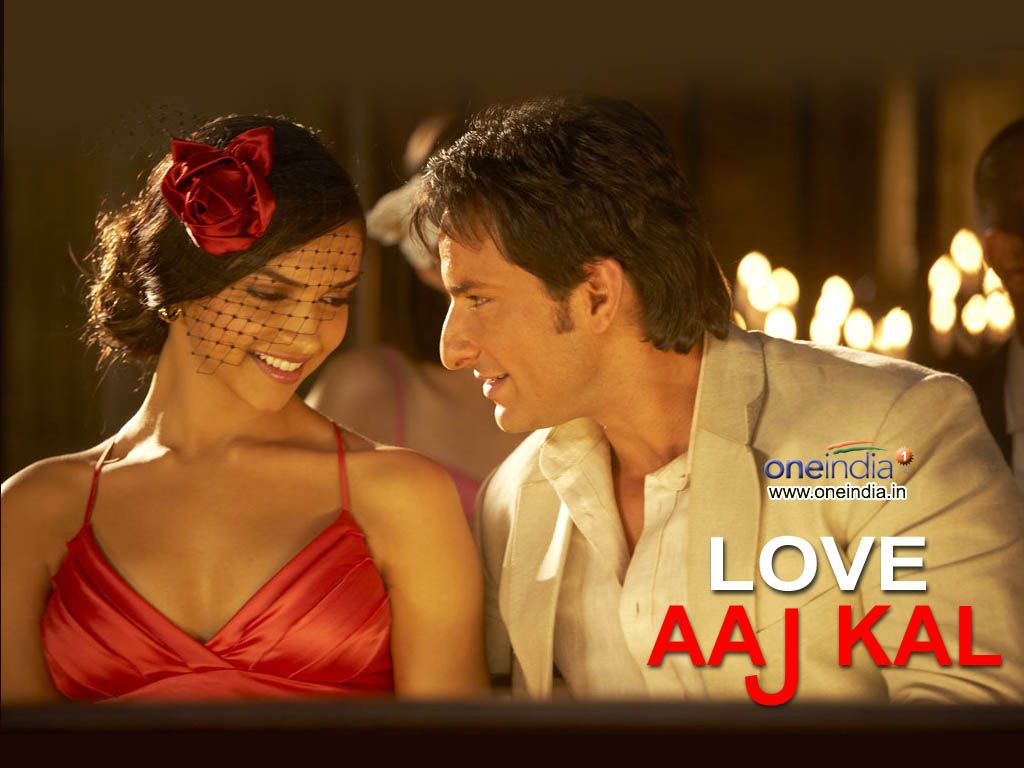
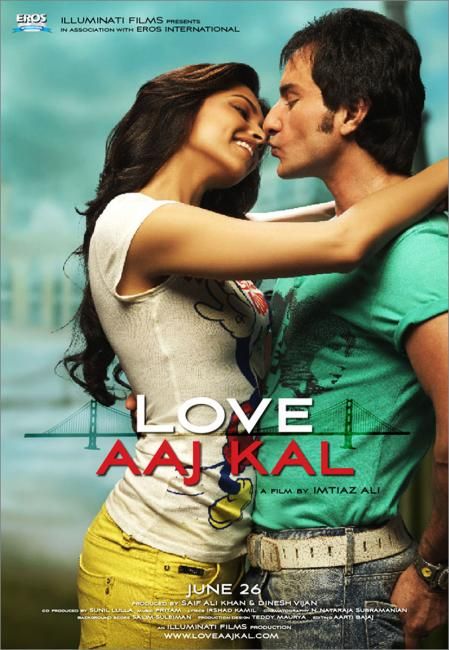
Love Aaj Kal (2009)


Some stories are just well-told.

Time out: The PPCC is all about philosophy of aesthetics, and we appreciate things like sharp narrative structure. In Love Aaj Kal, we were in for an unexpected treat: exciting, razor-tight, efficient pacing. Vah!

That may not sound like much, but it was exciting for us. Hindi films tend to be pretty Baroque in their narrative: they spend a lot of time lingering on emotional climaxes, building our interest in characters slowly and in great detail. Just remember the days of Manmohan Desai, where we would follow the Amitabh and Shashi brothers from the sidewalk to the front room, into the kitchen, upstairs, to the bathroom, and all that? There was a reason these movies were long.

They were also conventional in their chronology: the scenes were ordered according to the straightforward idea that what happened in Scene B was maybe a few minutes, or maximum a few days, after what happened in Scene A. If a larger jump in time was required, we would experience the required Flashback/Flashforward fuzzy camera + song.


This scene felt very Four Weddings and a Funeral, for some reason.


So what was very, very refreshing about Love Aaj Kal (Love Today Yesterday) was its use of a more post-modern style of storytelling. The plot spans two different generations, with the modern day love story taking place over several years. And yet - partly (we think) in order to maintain the intimacy of the emotional experience - director Imtiaz Ali abandons the David Lean epic effect in favor of a series of short vignette-style scenes. In this way, the characters and their romance is painted in broad brushstrokes; things are intimated and suggested more than explored in any great detail. And yet, paradoxically, as we abandon the mundane details of their lives in favor of a series of speedy snapshots, it becomes more realistic and more engaging! It's a bit like a Michael Ondaatje novel - most scenes don't last more than a minute or two, and they jump forward months and even years. Yet we never lose touch with the main thread.


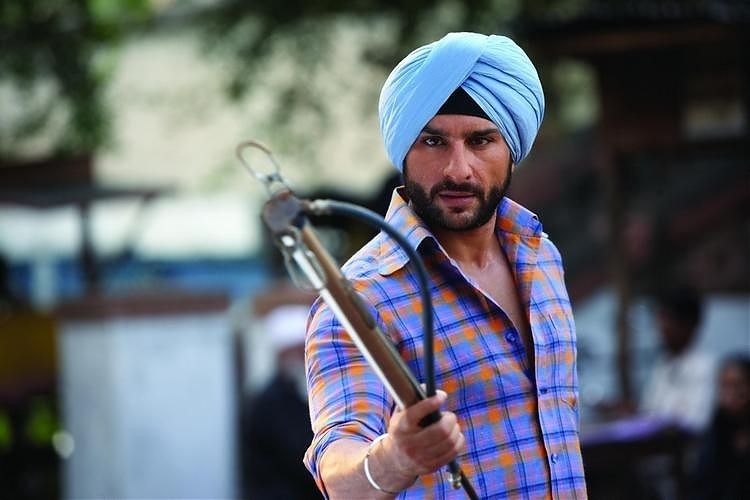
Saif looking very good as a Sardarji.


That thread is the slow realization that Jai (a slightly plastic-looking Saif Ali Khan) and Meera (an unexpectedly wonderful Deepika Padukone) really do love each other in the old fashioned, soulmate way. A pair of light-hearted, cosmopolitan career people, Jai and Meera meet in a bar, date, enjoy each other's company and, when Meera's job takes her from London to Delhi, amicably part ways. Neither seems particularly devastated by their parting, there are no proclamations of eternal love. In fact, the two are pretty convinced that such love doesn't exist!

"Those 'made in heaven', 'can't live without you' soulmate types. They only exist in stories," Jai says confidently (and later in the film, desperately). "We're just regular people."

Their eventual understanding, over years and distance and obstacles, that they were, and are, in Love with a capital L, is a pleasure to watch. And it's partly helped along by a wonderful (CAN HE BE ANYTHING LESS THAN WONDERFUL THESE DAYS? THE ANSWER IS NO) Rishi Kapoor, who plays a sympathetic Sikh London coffee shop owner. As Kapoor relates his ultra-romantic, traditional love story from yore, we cut rapidly back and forth between the 1970s Delhi of the young Kapoor (played by Saif Ali Khan) and Harleen (Giselle Monteiro) - with its cinematic train departures, disapproving fathers and midnight escapes - and the stubbornly cynical text messages of post-modern Jai and Meera. The moral of the story: stop trying to deny your old fashioned heart goo, Generation Y!

We have very soft spots for jump cuts, drastic cross cuts (as between Sardar Saif and 2009 Saif) and old Rishi Kapoor, and we are also - at heart - old fashioned romantics, so we really enjoyed this film. Saif Ali Khan is dependably charismatic, and, since the film is mostly from his perspective, he does a fine job taking us through the highs and lows of Jai's awakening. He also impresses as the passionate young Punjabi in the old timeline. Deepika Padukone was surprisingly great - we say "surprisingly" because her roles in Om Shanti Om and Chandni Chowk to China were mostly throwaway stand-and-pose affairs. Or maybe she's maturing as an actress? Either way, she was just great. Rishi Kapoor... well, need we say more? What happened to this guy after 2000? He seems to have reinvented himself as, like, the best Papa Bear ever! The songs were fine, though - having heard them approximately ten billion times in the supermarket, gym, malls and autorickshaws - we were a little saturated. Special mention goes to the remix of the evergreen personal favorite Mera Mann Dole.

Monday, 9 November 2009

Arundhati (2009)


Who will win? Iron-Willed Lady or Unwashed Maniac?


Jejammaaaaaaaaa! O Ammaaaaaaaa! Jejammaaaaaaaaaa! Hey Ammaaaaaaaa!

Jejammaaaaaaaaaaaaa!
Jejammaaaaaaa!
Jejammaaaa!

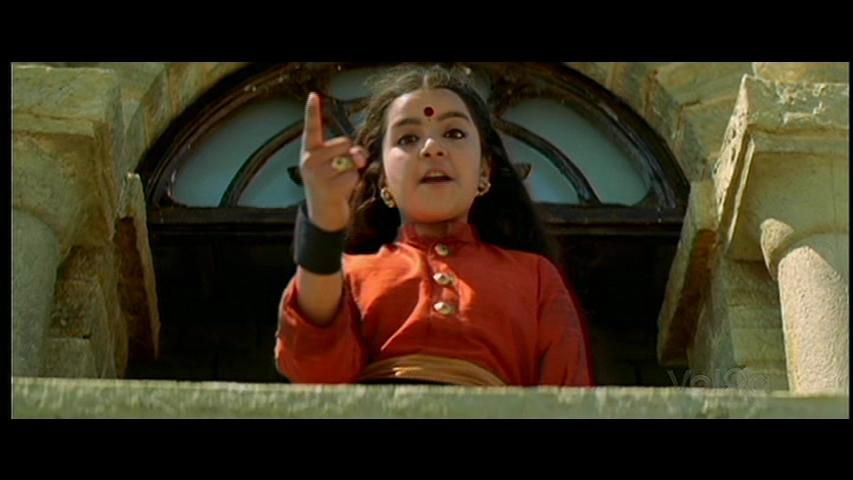
That's our favorite song from the spectacular horror film-cum-feminist fable Arundhati. Evil rapists of the world, you better watch yoselves! Little 10-year-old Arundhati is going to beat you so hard "even dogs are disgusted by the corpse"! And after she ties you to your horse and runs you out of town, she's going to run the kingdom as the most beloved queen of all. Oooh, Jejaammaaaaaa!


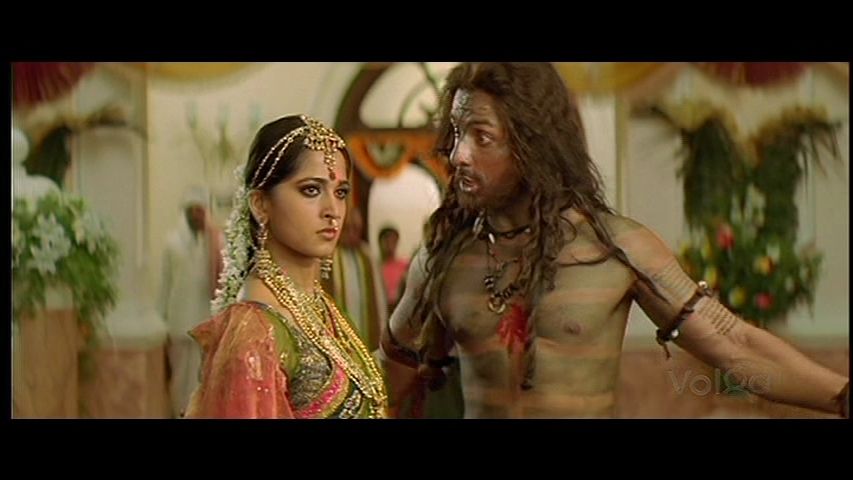
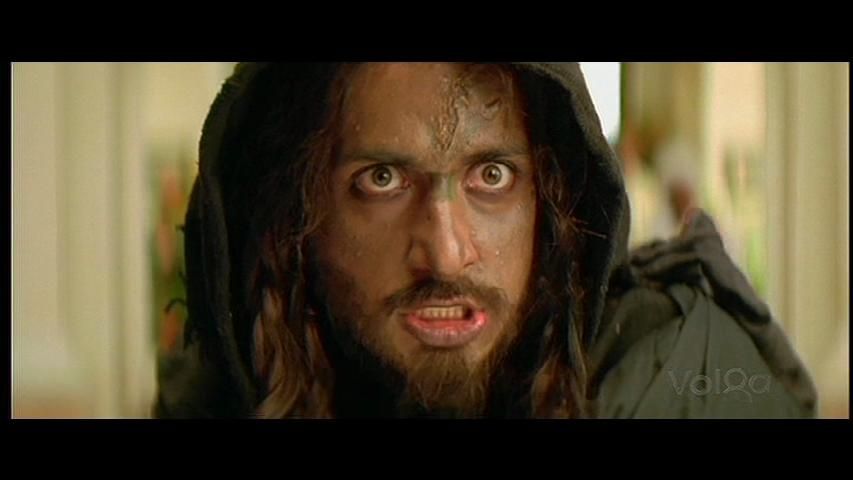
Round 1: Evil Pasupathi still retains some vestiges of hotness, even if he is just a demon in human form.


Nevertheless, 10-year-old Arundhati still wins. Ha!


A highly appealing film that was a big hit earlier this year, Arundhati is a tale of reincarnation, haunted mansions and super-charged girl power. Because when a girl says "no", she means it - and she can back it up with some martial arts and ancient swords made of BONES.

Much like the Hindi film Paheli, Arundhati is steeped in feminism and an earthy Hinduism full of mysticism and the supernatural. Except now just pretend Paheli had been directed by Quentin Tarantino. Talking puppets and handsome ghosts? Kid's stuff! Arundhati's characters spend most of their time covered in either gore or mud, and when they aren't fighting each other or casting spells on each other, they're probably dying in some horrific, spectacular way.


Round 2: Okay, now we bring out the big guns. You want to play this supernatural, Pasu-frickin'-pathi? Bring it!


I see your incantations and raise you an Agora!


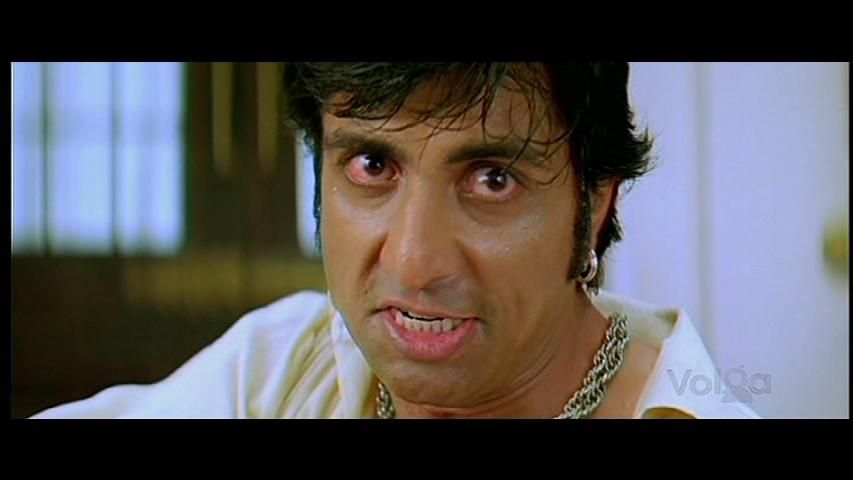
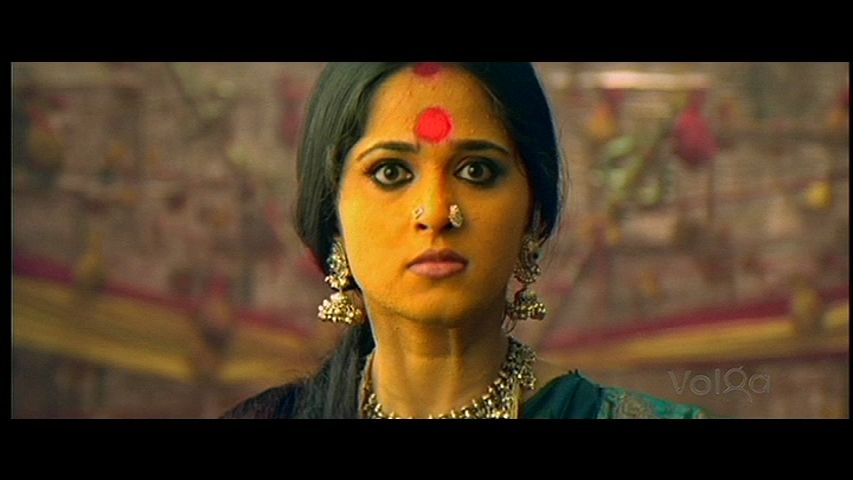
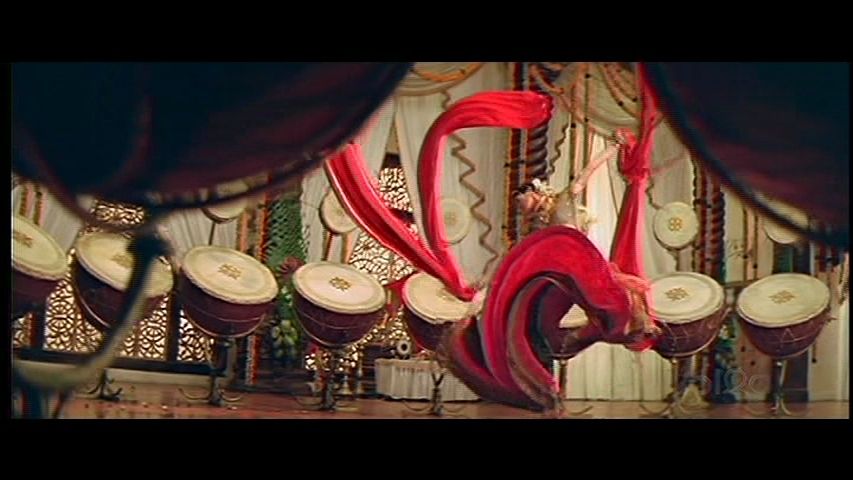
Essentially, the film is about a war of wills between super-heroine Arundhati (Anushka Shetty) and her arch-nemesis (and brother-in-law!), the sadistic sex maniac Pasupathi (Sonu Sood!). This war spans generations, reincarnations, undead zombie stuff, and leads to much decimation and destruction all around. You wouldn't want to be an innocent bystander around these two, as you'd probably die horribly. The film also features a scene unexpectedly pilfered from Zhang Yimou's House of Flying Daggers. But that's OK, we love Zhang Yimou films and we love zany, primal destruction. Oops, did we say that out loud? Well, we do! (Can't wait 'til 2012...)

The direction is a bit mindlessly hyperactive, with bizarre use of CGI backgrounds, over-fast cuts, sloppy pacing and a wacky taste for excessive, computer-ketchup gore. This often gives the film a vibe of an extended, overly violent episode of Xena: Warrior Princess. The performances are reasonable: Anushka Shetty is satisfyingly magnificent in her moments of flinty, queenly resolve. Sonu Sood won lots of Tollywood love for his portrayal of the evil Pasupathi, though honestly - maybe because of his incessant good humor and good looks (even in the dreadlocks and awful manicure) - he was much more comically demented than genuinely threatening. Mad props go to Sayaji Shinde, who played an indestructible Muslim fakir, and the little child actress who played Arundhati as a child. She was amazing!


Hmm, a little familiar.


Overall, while we had one or two moments of shock, we were never really scared. According to Ebert's criterion, then, Arundhati fails to achieve its objective and should be panned. But it certainly succeeds - perhaps unintentionally - as an all-round entertainer and occasional comedy. For that reason alone, we give it a thumbs up. Heeeey Jejammaaaaaaa!