Friday, 19 June 2009

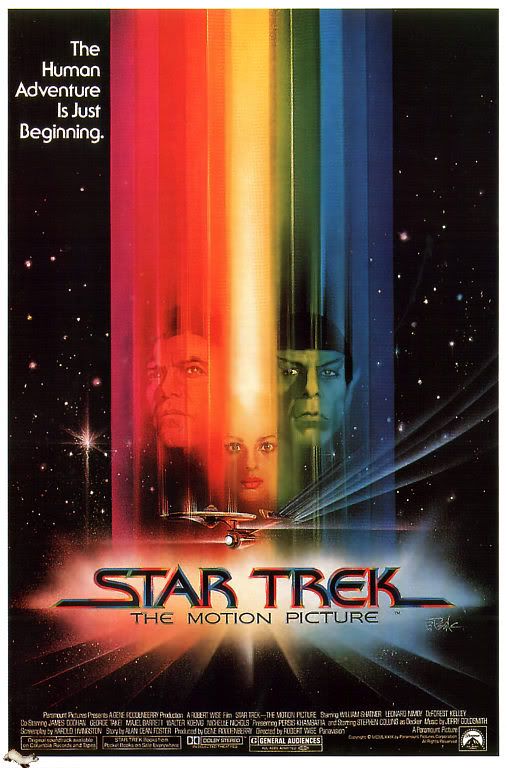
Star Trek: The Motion Picture (1979)


The more we watch Star Trek, the more we find that (1) they are all clearly insane, and (2) we kind of like it. It must have to do with the sweet, sticky, pumping love that the Kirk-Spock-McCoy trio give off - they are just so cute! - and the "sci-fi for the insane" ideas. A testosterone-fueled Spock goes into heat? The Greco-Roman gods were aliens? Yet another planet of human beings reenacting yet another episode from 20th-century history?!

It's all so perplexing and funny. Or, as Spockfield would say, FASCINATING.

Anyway, we've been sucked in. And after finding a moldy VHS copy of Star Trek: The Motion Picture at our local used media store, we just had to spring the two bucks and get it. After all, the last Star Trek movie we saw - Star Trek IV: The Revenge of the Humpback - was just too amazing.

Well, we couldn't have found a more orthogonal movie to follow up with - it has none of the zany self-referential charm of the whale movie, nor does it have any of the demented wackiness of the old series. The vibe is completely different: lumbering, slow, melancholy, dystopian and sinister. It felt much more like that terrifying early 80s sci-fi movie with Sean Connery (which still gives us nightmares, by the way), or, as these guys rightly point out, like a Trekkified version of 2001: A Space Odyssey (another movie we found alternatively boring and creepy). Basically: everyone's wearing hideous white suits (with booties, oh Lord), there are a number of silent scenes where people just look at each other, and it all has this semi-mystical, semi-despairing "Spaaace, SPAAAACE" vibe.


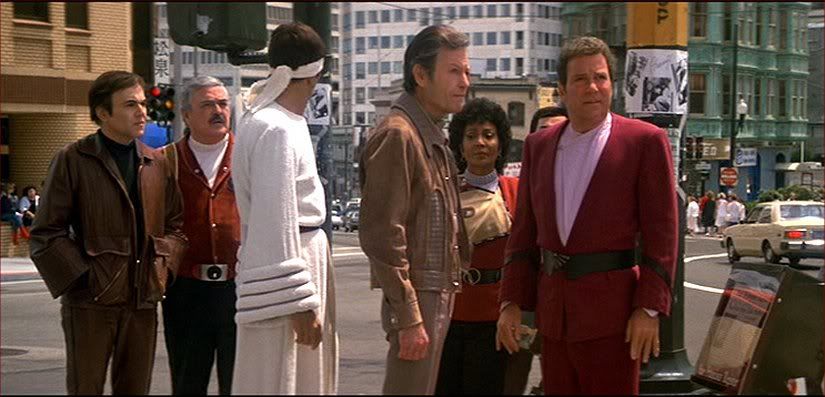
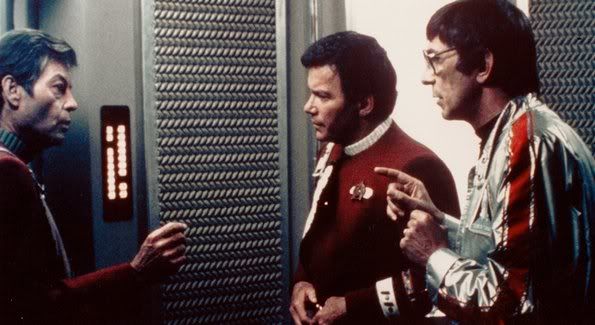
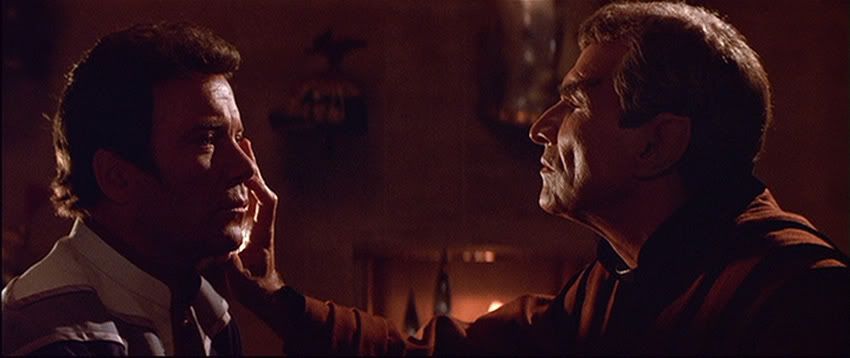
In red. (All pics copied from Google Images.)
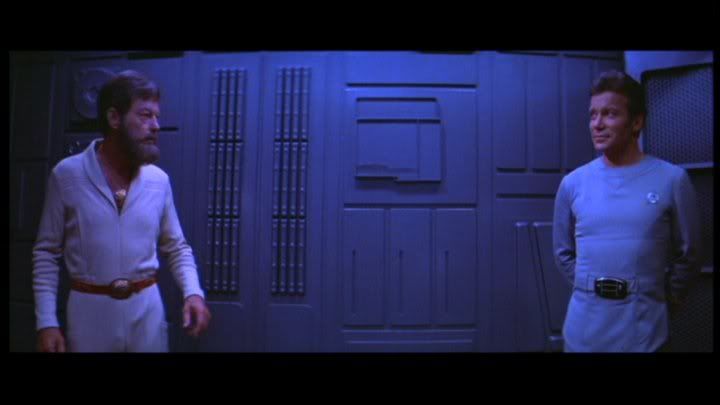

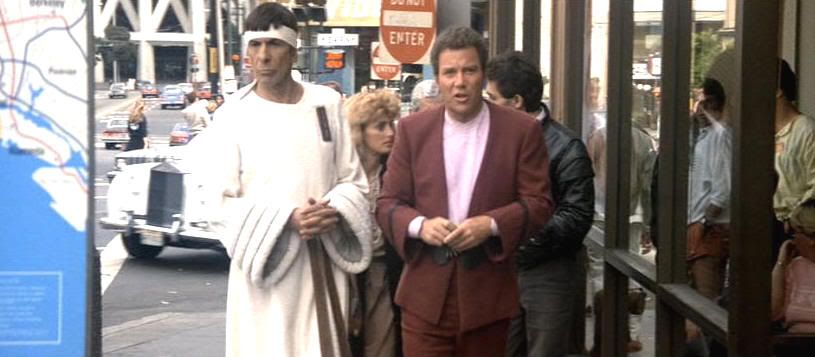
And in blue. Yay, McCoy's back (from Woodstock?)!


The film could be divided into two acts. Act One, which lasts one hour and a half, is purified boredom. Robert Wise directed this film - and for shame, Mr. Wise! During the first 90 minutes, basically, two things happen:
1. A mysterious energy field thing is floating through space, heading for Earth (oh no!).
2. The Enterprise crew get back together.

Why did this take so long? WHY? We swear, Kirk's (William Shatner) 15-minute shuttle ride from the space station to the new Enterprise must have been filmed in real-time. Mother of God. The only sparks of goodness in this lengthy, interminable, morose sequence are:
1. McCoy (DeForest Kelley) returns! Hooray, Dr. McCoy! McCoy McCoy McCoy! He may have nothing to do, but at least he's here! And then Spock (Leonard Nimoy) too!
2. A strange, slightly comical new crew member arrives: Ilia (Persis Khambatta), she of the bald head and the funny introductions ("My oath of celibacy is on record, Captain.")
3. A horrific (and gratuitous) accident happens with the beaming technology, thus adding a sprinkle of realism to the whole beaming thing. A nice, slightly cyberpunk-ish sci-fi touch, which terrified us (and explains McCoy's reluctance to use the beamer thing) but we appreciated.

Act Two - when the Enterprise finally intercepts the mysterious floating energy cloud - becomes much, much more interesting. In fact, we shouldn't really tell you what happens, as the film goes to great pains to maintain a sense of mystery, slowly being revealed. The final scenes, when we get the answer to the puzzle, are pretty mind-blowing. It definitely blew our hair back! And all those gritty, hairy philosophical quandaries that make great sci-fi great are examined: what makes humans human, the nature of consciousness, Singularity/Arthur C. Clarke-type evolutionary jumps. All very interesting and fun.

So our advice: skip the first hour. Nothing happens. It's poorly filmed. Instead, enjoy Act Two - which is some crazy stuff, man. In terms of general filmmaking, the direction is uniformly clunky and awkward, with bad timing and confusing cuts (the scene where Spock sends the message? Oy...). The acting is also a little shaky, as if a lot of the actors were just getting used to playing these characters again. While DeForest Kelley is still charmingly awful (what is it about his ability to be objectively terrible and yet so lovable? Sigh!), the usually dependable William Shatner and Leonard Nimoy are strangely stiff and stilted. Similarly, the writing, while strong on philosophy (yay!), was a little bloodless on the whole fun Enterprise crew personality dynamic. That said, some bits were decent. The creepy, tragic love story between Commander Decker (Stephen Collins, the 1980s version of Aaron Eckhart) and alien lady Ilia (Persis Khambatta) waswell-played. The orchestral score and aesthetics were eerie and epic - very nice - especially the chunky analog look of the ships, and the post-psychedelic parabolic waves from the mystery ship. Groovy, man.

A very slow start with a cataclysmic, fun finish - not great, but not as God-awful as the beginning implied. And now... bloopers!

Sunday, 14 June 2009

Star Trek IV: The Voyage Home (1986)


Oh my God, that was brilliant.

Star Trek IV: The Voyage Home is not only the best Star Trek anything we've ever seen, it might be one of the best films we've ever seen period. We haven't felt such sheer pleasure watching a movie since discovering the genre of zany 1970s masala. Oh, Star Trek IV: The Voyage Home, where have you been all my life?

Buried under a stack of VHSs, apparently. But thank God, we unearthed it and can now say that there is a benchmark of demented genius. Now we know what to measure everything else against.


"Everybody remember where we parked!"


Picking up where Star Trek III: The Search for His Spockliness [sic] left off, the Enterprise's enterprising crew is chillin' on the New Mexico-like planet of Vulcan. Spock (Leonard Nimoy) is still getting up to speed on everything from quantum physics to welfare economics, thanks to his new brain being all shiny and pure and unused. Meanwhile, a large, mysterious pod is floating through space emitting a high-pitched screech which sort of sounds like, "Eeeeeooooeeeeeeoooooeeeee." No one understands what is up with this pod, and, when it approaches Earth's atmosphere, the Earth people are alarmed to see that (1) the screeching doesn't stop, (2) machines stop working, and possibly (3) the oceans are evaporating.

The Enterprise crew, being that fraction more intelligent than everyone else (as required to be the heroes of the story), mess around with the screeching until it finally sounds like, "Eeee. Oooo. Eeeeeeee." Which, duh (Spock says), that's the cry of the humpback whale. Clearly the pod is trying to speak with Earth's whales (take that, anthro-centric sci-fi!), and only a whale will be able to respond and thereby free Earth of the pod's auditory tentacles of doom.

"But humpback whales went extinct in the 21st century!" Kirk (William Shatner) says, in a subtle injection of 1980s environmentalism. "I guess we'll just have to time-travel and go get one."


"Computer? Computer?"


At this point, the PPCC's head was filled with exclamation marks. Was this the best film ever?!!

And it only got better! Once they warp themselves back to 1986, the Enterprise crew parks their spaceship in Golden Gate Park, San Francisco, ("Everybody remember where we parked!" Kirk tells the group) and embarks on their mission to, uh, find a whale to steal. The adventures each of them have are absolutely priceless: the aquarium, Kirk and Spock learning about "colorful metaphors" ("Double dumbass on you!" Kirk fumbles at one point), Scotty (James Doohan) managing 20th century computers, Chekov (Walter Koenig) trying to steal nuclear energy from a US Navy vessel (and even just trying to find directions to "zee nuclear wessels"), and on and on. Much of these golden comedy moments are on YouTube, but we won't spoil the punchlines for you: just do what we say and watch this film.


Kirk excuses Spock's behavior by noting that he "did a little too much LDS" in the 1960s.


And the comedy is just part of the fun! In true Trekkie style, the dynamic between all the crew members - and the visible affection they have for each other - is an absolute joy. This doesn't just extend to Kirk and Spock (though they're the top duo and in top form), but everyone gets a moment to shine and engage in character-defining ridiculousness. What's also great is that, while the vibe of this film is A Good Time in the style of 1980s iconic comedy sci-fi (e.g. Back to the Future), we can still squeeze in some interesting philosophical nuggets. Our favorite being McCoy's (DeForest Kelley) exasperated attempts to psychoanalyze and philosophize with a newly-resurrected Spock:
McCOY: Perhaps we could cover a little philosophical ground. Life... Death... Life. Things of that nature.
SPOCK: I did not have time on Vulcan to review the philosophical disciplines.
McCOY: C'mon Spock, it's me, McCoy. You really have gone where no man's gone before. Can't you tell me what it felt like?
SPOCK: It would be impossible to discuss the subject without a common frame of reference.
McCOY: You're joking!
SPOCK: A joke... is a story with a humorous climax.
McCOY: You mean I have to die to discuss your insights on death?
SPOCK: Forgive me, doctor. I am receiving a number of distress calls.
McCOY: ...I don't doubt it.

Heeee.

Our overall anti-Trekkie verdict: highly recommended. Run, don't walk.

Saturday, 13 June 2009

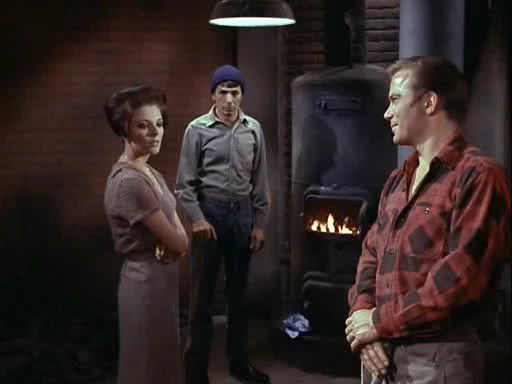
Star Trek Episode #28: The City on the Edge of Forever (1967)

Our noble quest to get over the anti-Trekkie prejudice which runs deep in our veins continues. Today, we went for the much-acclaimed classic episode, The City on the Edge of Forever.

Written by the well-known (apparently!) sci-fi writer, Harlan Ellison, and later winning a Hugo Award (the mother of all sci-fi awards), The City on the Edge of Forever is a tightly-wound story about drugs, time travel and moral dilemmas.

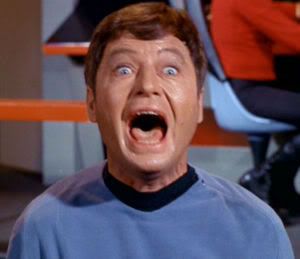
One day, the spaceship Enterprise was rocking and rolling along time bumps in the space-time continuum. By coincidence, during one of these bumps, the good Doctor Leonard McCoy (DeForest Kelley) accidentally injects himself with "cortrazine" - some sort of stimulant that, when taken in high doses, leads to, well... this:


Oh, Leonard. You're so silly.


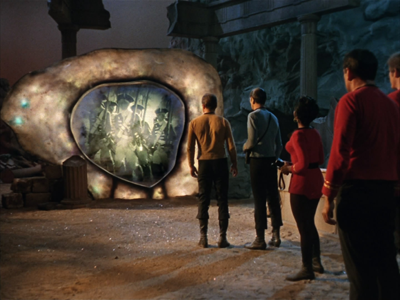
Now properly batshit insane, McCoy screams garbled phrases, runs around, and then beams himself down onto the nearest planet. When the rescue team - Captain Kirk (William Shatner) and Mr. Spockfield Spockly Spock the Third (Leonard Nimoy) among them - go chasing after him, they find a mysterious portal. This portal may seem like glitter-encrusted plastic to our space adventurers, but soon the Man in the Portal Voice assures them that it is, in fact, a time-travel device. Just when Spock and Kirk are busy marveling at its time-travel-ness, crazy McCoy jumps in - and manages to alter the course of history in such a way that suddenly the Enterprise disappears from space above them. Now Kirk and Spock have to follow him.


BEHOLD! LUMPY DOOR OF TIME-TRAVEL-NESS!


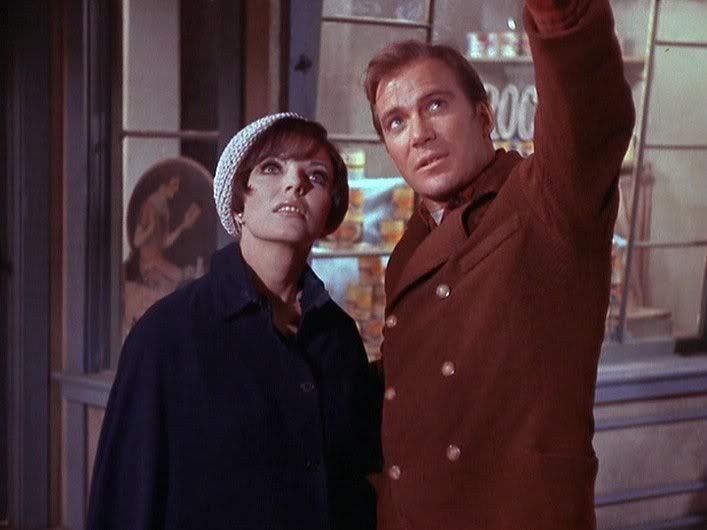
They do; and land in Depression-era USA. After some comical mishaps with their sci-fi uniforms and Spock's pointy Vulcan ears, they end up in the warm and friendly care of do-gooder, Edith Keeler (Joan Collins(!)), at her 15th Street Mission. While Spock busies himself with "endeavoring, ma'am, to construct a mnemonic memory circuit using stone knives and bear skins," Kirk falls in love with Edith - hard. The mystery of McCoy remains: where is McCoy? What does he do which alters the space-time continuum so dramatically? How can they stop him? They do, eventually, figure it all out - and it unearths a hairy moral tangle of surprising (for 1960s television) complexity.


Chillin' at the Mission.


Oh, Mr. Kirk. Always so ready to give your heart out.


The time-travel paradox thriller is, by now, a well-worn sci-fi theme (e.g. Back to the Future, The Terminator, Bring the Jubilee). What makes this Star Trek episode understandably a classic is its variation on the theme: what if straightening things out in the past is morally difficult? Even morally repugnant? This episode's philosophical maturity is admirable, in that it investigates the ambiguity of real life, rather than falling back onto the standard "he good, he bad" schoolchild moral dichotomy.

The writing is also pretty darn good. As we said, the narrative is airtight: you're propelled forward from crisis to crisis in a dynamic, engaging way. There are some sweet moments of humanism, such as when Kirk uses reverse psychology to get Spock working on the computer:
KIRK: Couldn't you build some form of computer aid here?
SPOCK: In this zinc-plated, vacuum-tubed culture?
KIRK: Yes, well, it would pose an extremely complex problem in logic, Mister Spock. Excuse me. I sometimes expect too much of you.

Leonard Nimoy's expression is priceless!

Another touching moment is when a delirious, exhausted McCoy marvels at the historical American setting and then suddenly starts to despair:
McCOY: Oh, I'd give a lot to see the hospital. Probably... needles and... sutures. All the pain. They used to hand-cut and sew people like garments. Needles and sutures... all the terrible pain!

Oh, poor, pessimistic humanist Dr. McCoy. He's like Hawkeye Pierce. Only angrier.

So, after all this talk, you might think we looooved this episode? Alas, no. While we admired these things in a detached way, our emotional core still couldn't see anything but plastic, glitter, tight pants, bad acting (Mr. Kelley being particularly bad) and strong vibes of Nerd. Is the prejudice bigger than us? Bigger than logic? Possible. The prejudice made us notice, for example, glaring points which were never resolved: what happened to the guy who beamed himself? (Or did he phase himself?) Who are McCoy's "murderers" after all? Why is everyone's uniform so tight? Did Uhura forget to wear her pants today? Why 1929 America, of all the places in the entire history of the world? Etcetera.

All in all, then, our summary thoughts are:
  • If you like Star Trek, you've probably already seen this. If you haven't, you'll definitely love it.
  • If you hate Star Trek, you'll probably admire this but it won't be converting you anytime soon.
And if you're curious, or think the PPCC is far too skewed a reviewer, you can now watch the episode online!

Thursday, 11 June 2009

Thirteen Days (2000)


(Pile O' VHSs is pleased to bring you...)


Thirteen Days (trailer) is less a "film" in the aesthetic sense of the word, and more a straightforward docudrama. Made in the earnest style of Apollo 13, except lacking that film's ace cinematography and narrative structure, Thirteen Days nonetheless sucks you in with the sheer weight of its subject: the 1962 Cuban missile crisis. We don't doubt it will become (if it hasn't already!) a staple "Movie Day" viewing in high school history classes all around America. And our bottom line is: kids, bless your lucky stars! Because this is a fun, informative, easy peasy history lesson that will make you hungry for more - more about the Kennedys, the Cold War, the bomb and, gosh, everything! (Thank God we have Oppenheimer's biography on our desk, but more on that later.)

Our protagonist is Kenneth O'Donnell (Kevin Costner), special aide to the President. The year is 1962 and the film efficiently begins with American planes detecting, for the first time, nuclear missiles being built in Cuba. We then follow all the escalating tensions, as well as the strategies and deals made within the White House during the next thirteen days, as the USA and USSR engage in a egg shell-delicate diplomatic game with potentially disastrous consequences.

First things first: this is not Good Night and Good Luck. That is, expect no artistic finesse or meaty allegory hidden in this history lesson. Furthermore: this is not Dr. Strangelove either. While nuclear holocaust looms on the horizon in all its terror, there is no existential satire. The story here is very practical, and - while ethical concerns obviously inform the whole point of what happened - the film isn't philosophical.


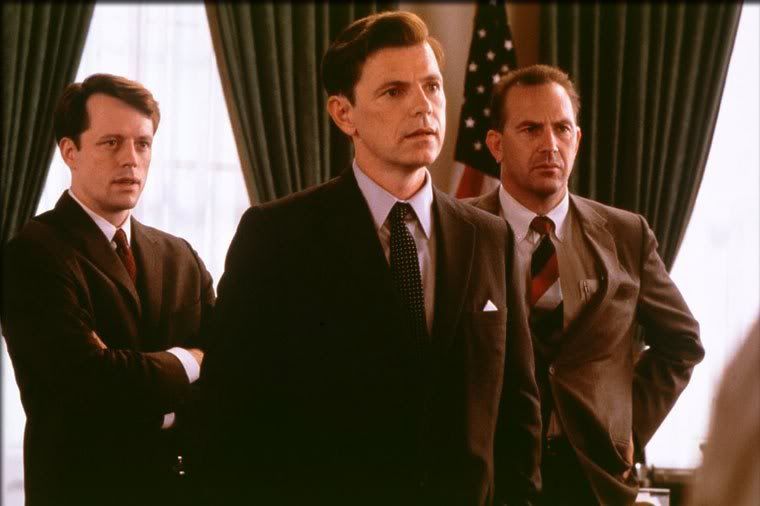
RFK (Steven Culp), JFK (Bruce Greenwood) and special aide Kenny O'Donnell (Kevin Costner).


It's exactly what it says on the tin: a history lesson. And it becomes increasingly compelling with the exacting (and blunt) representation of that charged time. The actors playing President John F. Kennedy (Bruce Greenwood) and his brother, Attorney General Robert Kennedy (Steven Culp), may resemble their real-life counterparts a little too closely (giving the PPCC, for one, very strong Disney theme park vibes) and their Boston accents may feel a bit hokey ("Pahking cahs in Bahstan yahd" and all that)... initially. But, scene by scene, we at the PPCC found ourselves slowly getting hooked. The believability eventually won us over, and it was exhilarating to see the insides of Camelot in the thick of the Cold War.

Indeed, while the film isn't subtle, it does touch on some fascinating, human aspects of the story. For example, we see the cliques and insider-outsider feeling, with the "Irish mafia" triumvirate of JFK, Bobby Kennedy and Kenny O'Donnell (all Catholic, Irish and Harvard grads) - representing humanism and the "doves" - versus the more hawkish military contingent. There are several intense and private moments where, thanks to O'Donnell's "insider" status, we see JFK and Bobby Kennedy at their most vulnerable. And there's the fascinating network of 1960s Washington, where the President himself will call up a newspaper editor to ask for a story to be stalled. All in all, it makes old politics seem so innocent, idealistic and pure - and maybe it was like that in the ideal-driven 1960s?


Fiction.


Fact.


Indeed, by showing us the humanity of the men at the reins, it really brings home their courage and intelligence. And in the face of such a radically new environment - an atomic age where, as J. Robert Oppenheimer remarked, humans suddenly had "a power over nature out of all proportion to their moral strength" - often there's a feeling of flying by the seat of your pants. One of our favorite moments was when, during one of the private bull sessions between the Kennedys and O'Donnell, they realize that even the "Soviet expert", Secretary of State Dean Acheson, doesn't have the elusive solution to this potentially deadly puzzle:
PRESIDENT KENNEDY: [Secretary of State] Acheson's scenario is unacceptable, and he's got more experience than anybody.
KENNY O'DONNELL: There is no expert on the subject, there is no wise old man. There's... shit, there's just us.

Apart from the great human element, there was also the undercurrent of - wait for it - game theory! Huzzah! This sent our personal geek meter off the charts. Game theory is a branch of economics which examines strategic behavior. John Nash - whose life was made into the film A Beautiful Mind - was one of game theory's pioneers. And, during the Cold War, game theory was heavily used to predict and understand US-USSR relations - that is, what "moves" do you have to "play" in order to ensure that the world doesn't blow up. The film implicitly uses a lot of game theory vocabulary, the Kennedys frequently angsting about the "signal" they're sending to the Soviets. One choice quote comes from Secretary of Defense Robert McNamara (Dylan Baker), who, exasperated, lectures a more "old school" military man with the following:
ROBERT MCNAMARA: This is not a blockade. This is language! A new vocabulary, the likes of which the world has never seen! This is President Kennedy communicating with Secretary Khrushchev!

Ahh, game theory. *geek glee*

In terms of the filmmaking itself, as we said, it's nothing spectacular. The cinematography is actually quite clunky and bad - jerking, extreme close-ups (think 1980s masala or Wayne's World), as well as sudden screaming cuts to LOUD OBVIOUS SYMBOLS (often with different lighting; sloppy!). There's also a mysterious loss of color every so often; signifying... something? The performances are all decent. The Hahvahd triumvirate speak in fussy, over-meticulous Boston accents that often ring cheesy, but Bruce Greenwood and Steven Culp as JFK and RFK, respectively, are slightly less distracting than Kevin "I AM ALSO IN THIS FILM HELLO" Costner. Actually, special high five to foxy old Bruce Greenwood who has, in the past month, eaten alien slugs and lost several teeth for the PPCC's entertainment - and we are entertained!

Tuesday, 9 June 2009

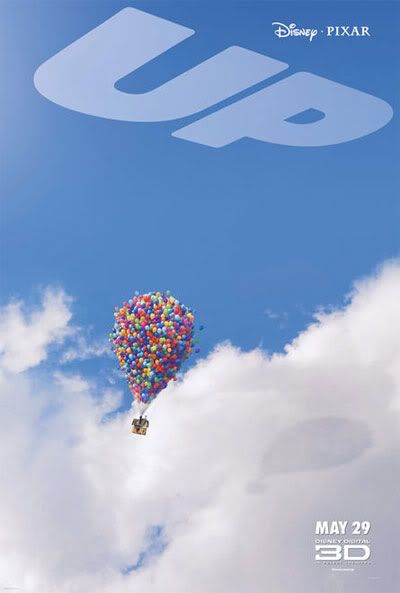
Up (2009)


More reminiscent of a Hayao Miyazaki film than previous Pixar fare, Up follows the unlikely adventures of 78-year-old Carl Frederickson (Ed Asner) and his side-kick, the bouncy pubescent Russell (Jordan Nagai).

Borrowing some Miyazaki trademarks - flight, a steampunk aesthetic, some environmentalism vibes and a quasi-magic(al) realist mythical quality - Up is one of the more unorthodox films from a film company that specializes in the unorthodox. Up furthermore up-ends (no pun intended) the typical quest pattern by shifting the focus away from the young, naive hero and to the wise old man figure. Imagine Star Wars told from Obi-Wan Kenobi's point of view - or Lord of the Rings from Gandalf's - or The Matrix from Morpheus'!

It is definitely refreshing. And, because of its unorthodox narrative, we found ourselves pretty lost in the woods - unable to predict the usual story cues. At least for the first half. Manohla Dargis at the New York Times laments that eventually by its second half, Up settles back into the mainstream hero pattern of "stock characters and banal story choices".


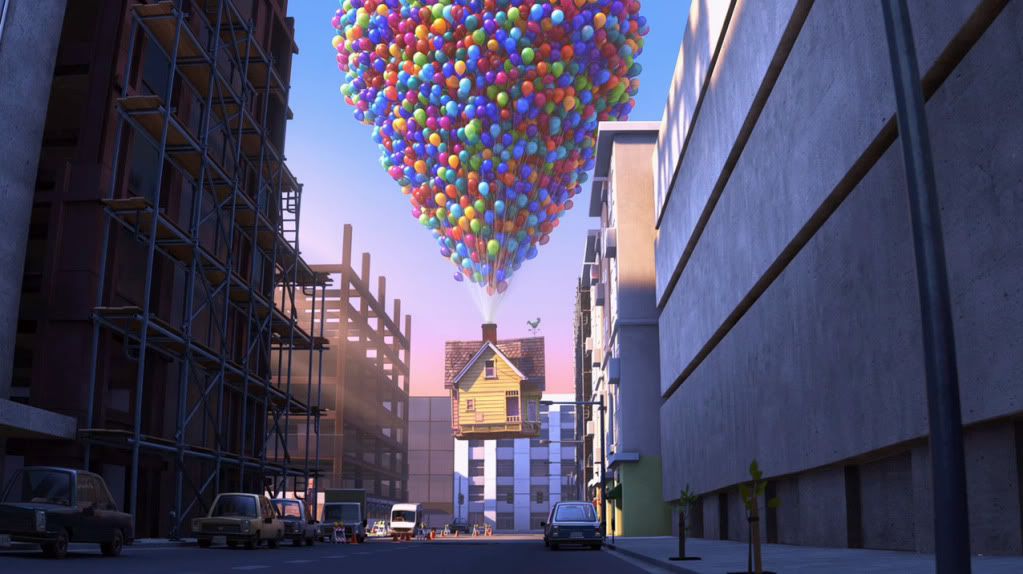
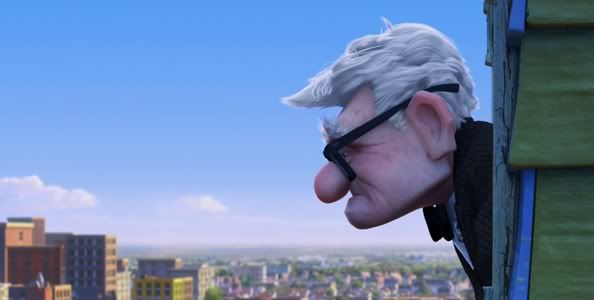
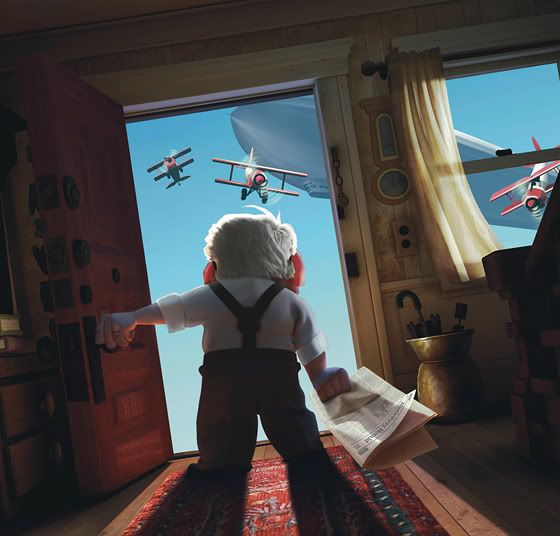
One of the most wonderful, magic(al) realist images.


And another.


To some extent, this is true. Up begins with a brief, poignant prologue about Carl's life: his childhood obsession with celebrity explorer Charles Muntz (Christopher Plummer), his courtship and marriage to the love of his life, Ellie (Elie Docter). When we catch up with Carl in the present, Ellie has passed away and his beloved home is threatening to get swallowed up by the rapid urbanization around him. In a last-ditch effort to get free of the clogging city and looming retirement home, and to fulfill his and Ellie's old dream to visit the legendary "land lost in time" in remote South America, Carl ties a kabillion multi-colored balloons to his house and sets off. Along the way, he unexpectedly picks up one pudgy and adorable "wilderness explorer" (i.e. Boy Scout), Russell (Jordan Nagai), as well as a talking dog, Dug (Bob Peterson), and a large mythical bird, "Kevin".


...And another.


This is all very strange and marvelous and funny (especially the talking dogs), but then the film starts taking the usual story route. Unlike Ms. Dargis at the NY Times, this was fine for us. The major themes were all resolved just as they should have been - for example, the Ellie/house parallels and how Carl finally heals his grief by, literally, unburdening his shoulders, or the typically Pixar intense philosophical undertone (this time about how the mundane can be just as memorable as the adventure). And while we didn't laugh or cry as much as we did during, say, Finding Nemo, well... Finding Nemo was a whirlwind! It was killer on our emotions, and we recall many screaming children beside us in the theaters. And all we can say is: scream on, kid, Papa Marlin losing Nemo was traumatizing!

Up is, thankfully, a lot more relaxed and gentle: no violent swings of children lost and found. Instead, it has the touching humanity of showing that old people are more than just "the elderly" - they're people too! Art and storytelling is too much dominated by the young and fit and mainstream, and showing people who are past their prime - or perhaps never had a prime! - has a lot of poignancy and relevance. Also showing that death is a natural part of life, and that life goes on, is touching and a healthy reminder for kids of all ages.

And now... we leave you with a quote from our favorite character in Up, the evil talking Doberman, Alpha:
ALPHA: Do not mention Dug to me at this time. His fool's errand will keep him most occupied. Most occupied indeed. Hahaha! ...Do you not agree with that which I am saying to you now?
BETA: Sure, but the second master finds out you sent Dug out by himself, none of us will get a treat.
ALPHA: You are wise, my trusted lieutenant.

Monday, 8 June 2009

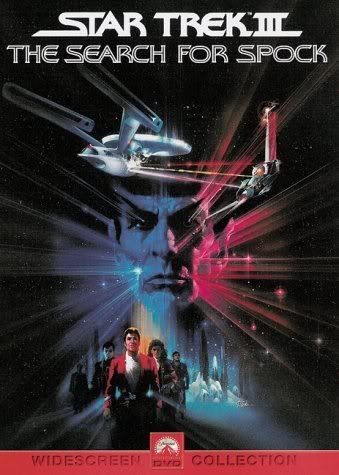
Star Trek III: The Search for Spock (1984)


Not to give things away but they do, in fact, find him.

Unwilling to pay another $X to see the 2009 Star Trek again in cinemas, and in our quest to get over our deeply-ingrained anti-Trekkie prejudice, we have decided to delve into the home VHS pile. This is what we found.

Disclaimer: Apart from the 2009 film, we've never seen any Star Trek. After seeing this, we can remember why we avoided it. Death to Trek, raaah!

Okay, that's mean. Star Trek III: The Search for Spock is actually a rollicking good time, most of the time. Much of the humor is admittedly unintentional, but there's just so much sheer, pure love flowing between the characters, creators and fans of Star Trek, that it's hard not to get a little warm and fuzzy yourself. And with one macho guy, one grumpy guy and one emotionally-dead-inside guy frequently proclaiming their love for each other (often with tears!) -
SPOCK: [to Kirk] I have been and always shall be your friend.
McCOY: [to an unconscious Spock] I'm gonna tell you something that I... never thought I'd ever hear myself say. But it seems I've... missed you. And I don't know if I could stand to lose you again.
KIRK: [to Spock's dad] If I hadn't tried [to save Spock's life], the cost would have been my soul.

- gosh, well, we at the PPCC were positively aglow with good vibes! No wonder these people generated slash.


Can these three possibly love each other more? The answer has been and always shall be... no. (Interesting side note: this film was directed by Leonard Nimoy!)


Because The Search for Spock is ultimately about love. Predominantly male love. The love of fathers to sons, sons to fathers, and friends to friends. The love of a captain to his science officer. A doctor to his captain. Etcetera.

We begin our masculine love journey with a tragedy: Spock (Leonard Nimoy) is dead. The spaceship Enterprise and its crew - Captain Kirk (William Shatner), Doctor Leonard "Bones" McCoy (DeForest Kelley), Engineer Scotty (James Doohan), Token Symbolically Post-Cold War Chekov (Walter Koenig), Token Multicultural Sulu (George Takei), and Token Post-Race (but not post-gender, apparently, as she does nothing!) Uhura (Nichelle Nichols) - have just docked into a massive way station for some calm-time. But McCoy's been acting weird ever since Spock died - like, really weird. Brainwashed weird. And it soon comes to pass that Spock, before his death, MIND-MELDED (our favorite thing ever!) with the good doctor and is using the latter's brain kinda like a jump drive.


How would you like a taste... OF MY BRAIN?!


What's Spock's first name, anyway? Spockfield?


So what to do, before McCoy's brain just melts under the sheer weight of his Spockliness? Find Spock! They seek out his coffin on the planet of Genesis, the science project-gone-wrong of Kirk's well-meaning scientist son (?!), David (Merritt Butrick). Everything on Genesis ages really rapidly and violently. It can even make cells regenerate. Spock's coffin was shot out into Genesis. Convenient!

What's not so convenient: the arrival of a small band of angry Klingons on Genesis, led by a pissed-off Doctor Emmett Brown, Commander Kruge (Christopher "1.21 GIGAWATTS!?" Lloyd). Action-adventure ensues.


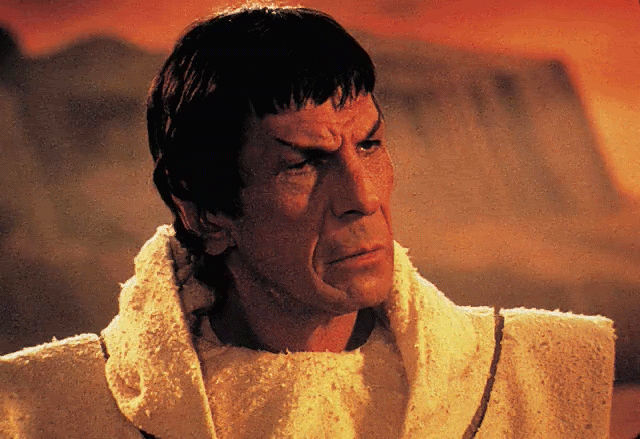
Why is it whenever we need Star Trek caps, we find something totally bizarre?


This was all very fun and a little demented and certainly gloriously space masala at times, but - gosh darned it - we just cannot take this stuff seriously. Maybe it's the Enterprise's carpeted hallways. Maybe it's those somewhat-too-tight pants everyone's wearing. The hokey faux Navy vibe? (Actually, we kinda dig that.) Whatever it is - despite Star Trek's excellent narrative structure, cunning and bizarre sci-fi ideas, and the great characterizations - we just cannot take it as anything more than funny and cute. Are we too old? Did we miss the boat?

Taking a break from our usual film analytics, can we just say something else? McCoy! McCoy McCoy McCoy. A grumpy, mint julep-jonesing doctor who introduces himself by his phobia? All gruff and twitchy and cynical and yet a total softie inside? A guy who professes his love by using cosmological comparisons?! BE STILL, MY HEART! OH, TOO LATE - IT'S DEAD, JIM! Leonard has killed it.

That is all.

Sunday, 7 June 2009

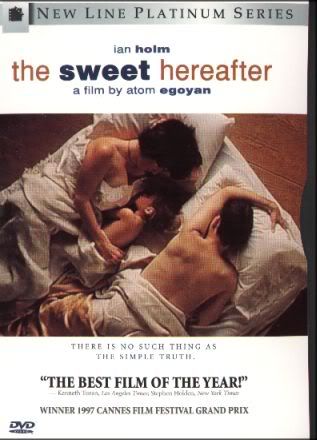
The Sweet Hereafter (1997)


Atom Egoyan's stark, beautiful The Sweet Hereafter is a tale about grief, helplessness and the innate, all-consuming need to protect one's children. Ultimately, the film shows that sometimes, even with the best protection and control, tragedy may occur. And, even more confoundedly, the tragedy can be essentially meaningless - a horrible accident with no perpetrators, only victims. How parents accept (or don't) this existential helplessness is explored in a not so much gloomy as meditative picture by the noted Canadian filmmaker.

One day in deepest, snowiest Small Town, Canada, a school bus full of children meets with a terrible accident. Few survive: the beloved bus driver, Dolores (Gabrielle Rose), and a thoughtful middle school girl, Nicole (an amazing Sarah Polley), now in a wheelchair. Shortly after the accident, a lawyer, Mitchell Stevens (Ian Holm), shows up. With apparent emotional authenticity, he begs the bereft parents to join him in a class action suit against - the bus company? The school board? The highway maintenance people? Well, someone. Stevens assures the devastated, grieving townspeople that he can "channel their rage", "assure this never happens again" and "seek, not compensation, but punishment". Meanwhile, during his interviews, we the audience uncover the usual can of worms: one couple are believed to be pot-smoking hippies, widowed mechanic Billy (Bruce Greenwood, in a huge mooch and missing some teeth) is having an affair with the motel owner's wife, and there may even be a case of incest or child abuse in the town.


A powerful image from the film: the looming specter of tragedy. Can we protect our children from everything?


Ian Holm and Sarah Polley were amazing in this!


This may make it sound a bit soppy or melodramatic, but everything is handled with great skill and sensitivity. Furthermore, the story is richly textured along Robert Browning's The Pied Piper of Hamelin, which Nicole reads to the younger children in several scenes:
And the Piper advanced and the children followed,
And when all were in to the very last,
The door in the mountain-side shut fast.
Did I say, all? No! One was lame,
And could not dance the whole of the way;
And in after years, if you would blame
His sadness, he was used to say, --
``It's dull in our town since my playmates left!
I can't forget that I'm bereft
Of all the pleasant sights they see,
Which the Piper also promised me.

The "Piper" could be the lawyer, or Nicole's father, or death, while it's clear the "lame" child is Nicole herself. Though it could also be the widower, Billy, or anyone who survives a tragedy.

The narrative also has a fascinating structure: circling around the accident, a plane trip Stevens takes two years later, the months before the accident, and the innocent childhood of Steven's troubled daughter. The scenes link into each other in novel and, at times, heart-wrenching ways - we watch Nicole read the Pied Piper poem to Billy's two adorable children in one scene, and we watch Billy's aghast expression when he witnesses his children's accident immediately after that. These moments could be months apart, but linking them so close really drives the devastation home.


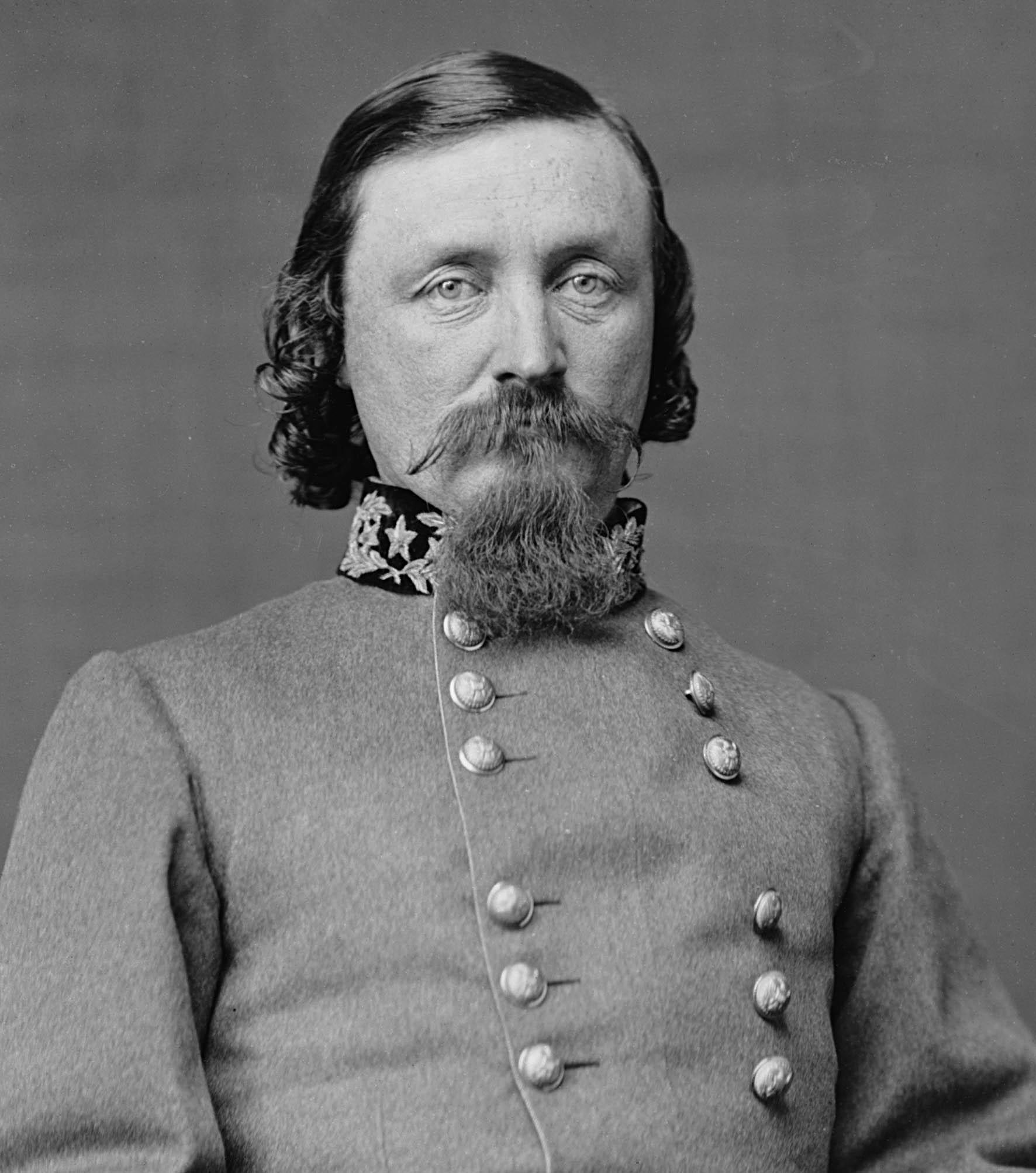
Bruce Greenwood in his gynormous handle-bar mooch. Canadia Schmanadia, someone get that man into an American Civil War TV movie. Ideas! Who should he play? I say Pickett (of "'s Charge" infamy).


It's ironic that we should have been reading David Sheff's devastating Beautiful Boy just yesterday, as it covers much of the same ground as Egoyan's film. Sheff's son, Nic, became a meth addict in his teens and Beautiful Boy follows Sheff's particular journey as being the parent of a drug addict. In The Sweet Hereafter, the protagonist - lawyer Mitchell Stevens (Ian Holm) - is also the father of a drug addict. And, in one scene, he seems to voice Sheff's most tragic insight: how rage and helplessness can twist love into something very painful, for everyone involved. For Mitchell Stevens, his drug addicted daughter is "dead" to him - her ranting phone calls fill him with visible grief, and he complains not being able to "know" who he's speaking with. In one moment of semi-drunken vulnerability, he seethes: "Well, enough rage and helplessness and your love turns to something else. It turns to steaming piss."

Sheff's other great insight in Beautiful Boy is how, just when you think you've reached your limit for coping with awful tragedies, you find that... you can cope with more. Life goes on. The character of Billy embodies this realization: already having lost his wife to cancer a few years before, he follows his twin children to school in their school bus every morning because, as one character puts it, it's comforting. A sense of control. We then have the pivotal moment, halfway through the town, when Billy helplessly watches the bus skid off the road. This is pretty much inconceivably awful for the PPCC - nervous breakdown-worthy - but Billy plugs on and, importantly, angrily refuses to take part in the lawsuit.

The stark difference between the fathers seems to represent the two ways of coping: anger/grief and grasping for control (Stevens) versus grief/anger and admitting helplessness (Billy). While Stevens seems almost convinced of his own pitch in some scenes - convinced that suing someone will help the grief - Billy is unambiguously clear that, "unless you can raise the dead", there is nothing to be done. Shit happened. That's that. Ultimately, the film seems to demonstrate that the longer you hold onto the belief that you can control everything (or that you should, or have somehow caused your tragedies), the longer you will find yourself angry and grieving at your helplessness. The sooner you let go, the sooner you can achieve a tenuous sort of acceptance or peace.

The beautiful cinematography captures both the pervasive sense of emptiness after such a loss, as well as the somewhat oppressive gloom of wintry remote Canada - though it also allows snatches of bittersweet beauty: the pink rays of the setting sun, Nicole's wisdom. The performances - particularly by Ian Holm, Sarah Polley and Bruce Greenwood - are absolutely amazing. We have a soft spot for Ian Holm (hey, it's Bilbo!) and indeed had been tracking this film for some time, knowing it was one of his best performances. He delivers some very powerful scenes indeed: the dead-eyed lassitude of receiving his daughter's ranting phone calls, the semi-conniving, semi-heartfelt attempts to reel the grieving parents in. Sarah Polley blew us away with her age and grace - it was such a layered, nuanced performance. The last time we saw Bruce Greenwood was eating alien slugs in this year's Star Trek - this, um, had a bit more depth. (Though, hey, go Captain Pike! Woohoo.) We look forward to exploring his other notable collaboration with director Egoyan: Exotica.

We can't help but compare this film to others we've reviewed: in particular, Nanni Moretti's The Son's Room, which examines a parent's grief in a much more microcosm, warmly humanistic way, and another Italian film, Pasqualino Settebellezze, for taking the "survivor's dilemma" (i.e. Is being the survivor really always the best deal?) to its most extreme imaginings. Very different films, but exploring similar themes and therefore maybe worth a look together. In the meantime, tired of PPCC monologues? Watch what Siskel and Ebert had to say about it!

Thursday, 4 June 2009

The Piano (1993)

"No, she is a strange creature and her playing is strange, like a mood that passes into you. To have a sound creep inside you is not all pleasant."
-The Piano

"What a death! What a chance! What a surprise! My will has chosen life?"
-The Piano


Tender, meditative and wonderfully bizarre, The Piano is truly the end-all, be-all Kiwi film. It's also, incidentally, one of our favorite films ever. The other day, we reviewed another popular Kiwi classic - Once Were Warriors - and wondered how it compared to The Piano. But it wasn't really fair to compare Once Were Warriors to something that could have been romanticized by nostalgia, so we decided to re-watch The Piano. And we're somewhat startled to find that it is that much more powerful and wonderful now, over ten years since we last saw it. It's just... damn.

Silence and expressiveness are the big, meaty themes of The Piano. Set in colonial New Zealand, a mute English woman, Ada (Holly Hunter), arrives for an arranged marriage with a local settler, Alisdair (Sam Neill). With her precocious young daughter, Flora (a precocious, young 11-year-old Anna Paquin, in an Oscar-winning performance!), in tow, she navigates the wild, new country, full of knee-deep mud, sublime and mysterious landscapes and the sensitive "gone native" outcast in the house next door, George (Harvey Keitel).


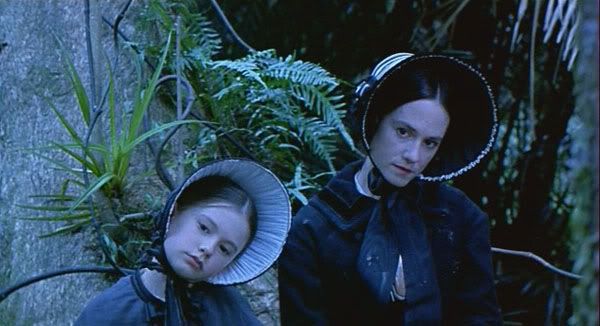
Ada (Holly Hunter) and Flora (Anna Paquin).


The story builds slowly as George invites Ada to teach him to play the piano - this is basically an excuse, since George is one of the few people that recognizes the intense connection that Ada has with her piano, and he's more interested in giving her a space to express this need than actually learning anything for himself. Indeed, Ada's piano is her lost voice. And, as one character puts it, Ada's playing is not the straightforward, blunt playing of a practicing pupil - instead, it is "like a mood that infects you". This applies to the movie itself. Ada - and the movie - seems to communicate on a different level, an unconventional language made almost entirely of emotion, spirit, the heart, whatever you want to call it. In other words, pure mood (like the CD series!).

The Piano is all about mood, and particularly the ability to transmit this intuitive, human connection via music and love (here, often sex). If there was a moral, it would be: talk is cheap, repression is bad, make love and music instead. Ada's muteness informs several scenes where characters meditate on the "usefulness" of silence, the rubbish of conversation and meaningless chatter, and the potentially soul-plumbing depths of just, well, shutting up and listening to the music, watching the birds, taking it all in. The only traditional villain, Alisdair, is doomed by his inability to connect with his wife, himself and the people around him: as a result, he is repressed, oppressive, exploitative and destructive. (And the film seems to leave an open question whether this is because of Alisdair's Victorian and colonialist attitudes.) All the other characters, however, are much more in tune with the harmony of things. And, using the absolute minimum of dialogue, director Jane Campion tells a rich, nuanced love story using only visuals and melody: it's all gestures, lingering looks and, of course, the soundtrack. At times, it even feels like a silent film.

This might make it sound dull, and it certainly is slow. However, we were never, ever bored. Quite the opposite! It's absolutely enchanting. It pulls you in and, once you're in the rhythm of it, it lulls you into its semi-mystical vibe. When the romance between Ada and George develops, it's exhilarating and entrancing. When it's then complicated by Alisdair the husband, it becomes unexpectedly (and ambiguously) tragic. All three characters are so vulnerable and expressive, it's just - well, really touching! Poor Ada! Poor George! Poor Alisdair! (Or are we blinded by an all-forgiving haze of Sam Neill affection? Very possible.)


Oh, Sam. Oops, we mean "Alisdair". What's gotten into you?


Since music is so important to this film, it should only make sense that the score is by a renowned minimalist composer, Michael Nyman. And, indeed, it is just sublime. It makes the movie. Several tracks, such as the main theme ("The Heart Asks Pleasure First") are well-worn and even overplayed nowadays - but just imagine hearing them back in 1993, fresh and new and with the swooping aerials of New Zealand underneath you. Transcendental, indeed. Other tracks - "A Wild and Distant Shore" and "All Imperfect Things" (our favorites) - are merely hinted in the film, yet they still manage to contribute to the special atmosphere. We highly, highly recommend this film just for the music.

The performances are also uniformly impressive. Holly Hunter, who's Ada is steely and dynamic, is just perfect - she carries the film entirely. Harvey Keitel - apart from his body, which looks like a breathing Bernini statue sometimes! - projects just the right balance of sensitivity and rough ignorance. His fumbled attempts to court Ada, and the slow mutual seduction, are at first cringe-worthy and then you invest in it completely. Sam Neill - our personal PPCC fave - is great, particularly in the scenes after he discovers Ada and George's love. (There's also a running debate whether that is, indeed, his bum in that one scene. Feel free to contribute in the comments. If it is, wow, Sam, how many squats do you do at the gym?!)

There are other interesting things about the movie - things we still haven't quite understood. For example, mirroring and doubling are used extensively throughout the film: little Flora for Ada, the ridiculous pair of settler women who finish each other's sentences and make moral decrees on the community, even just the silly sight gag where a Māori man teases Alisdair by copying him. Then there are those wonderfully surreal grace notes - the sailors carrying Ada and Flora onto the shore, the Christmas play, Flora's vividly weird lies about her father. We don't know what all this means yet.


*art geek glee*


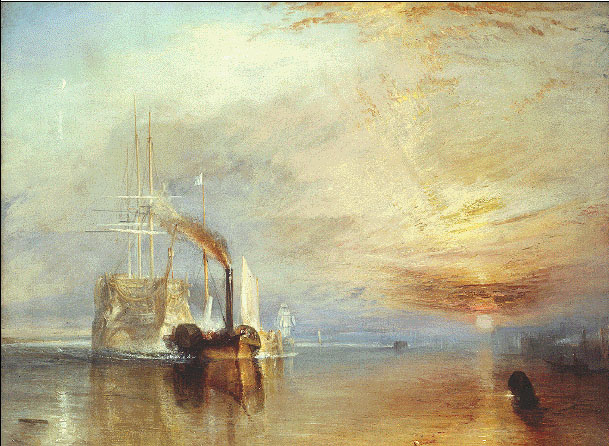
Is that you, Mr. Turner?!


But that's okay! The cinematography is so phenomenally gorgeous - it feels like we're in a moving Turner painting. The pacing is perfect, and some moments - such as Ada plunging into the water after the piano, or when Alisdair confronts Ada in the woods - are so well-filmed, they geeked us out completely as film nerds.

Sam Neill mostly makes wine nowadays, and we're happy the man gave us the demented trashy goodness of films like Jurassic Park and Event Horizon. But this will always be the top of his Sam Neilliness, as well as the top of Kiwi goodness, the top of using minimalist composers in film (sorry, Philip Glass! fear not, we will see Kundun toot-sweet), and in our top ten films ever.

Wednesday, 3 June 2009

Once Were Warriors (1994)


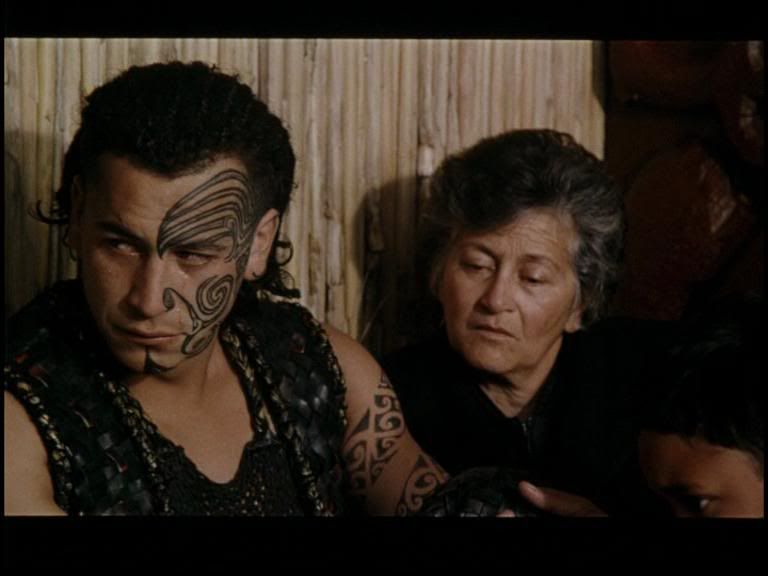
Nig (Julian Arahanga), a young Māori gang member, in a scene from the wonderful, troubling Once Were Warriors.


Although we always sell ourselves as being pan-cultural and 100% globalized, we do, actually, suffer a little bit from favoritism. And one country for which we have an inordinate amount of fondness is New Zealand. Ah, New Zealand! Land of Sam Neill, sheep, Tolkien stuff and wine! Oh, New Zealand! Heady blend of Pacific island cultures! Huzzah, New Zealand! The stark beauty of the landscapes, the glorious Māori art, the penguins in the south, Xena: Warrior Princess, and the Zen retreat-esque vibes of peace and serenity! The only problem with New Zealand (apart from how shamelessly expensive books are there; I mean, really, what is up with that?) is that it's just so darned remote. You have to really want to go there in order to immerse yourself in glorious Kiwi goodness, as the trip is several planes away from, well, everywhere.

However, you can always take the second best option: watch a movie.

Once Were Warriors was sold to us repeatedly by Kiwis and non-Kiwis alike as being the Ultimate Kiwi Film. We were skeptical, as we were pretty sure that the absolutely brilliant The Piano (starring Sam Neill, music by Michael Nyman, for the love of God) is the end-all, be-all Kiwi film. How, we thought, could anything possibly top that? Then of course there are those who say Whale Rider is great (we haven't seen it), and you have the the rabidly insane Lord of the Rings fanbase to contend with. Could Once Were Warriors really compete? And could it top them all?


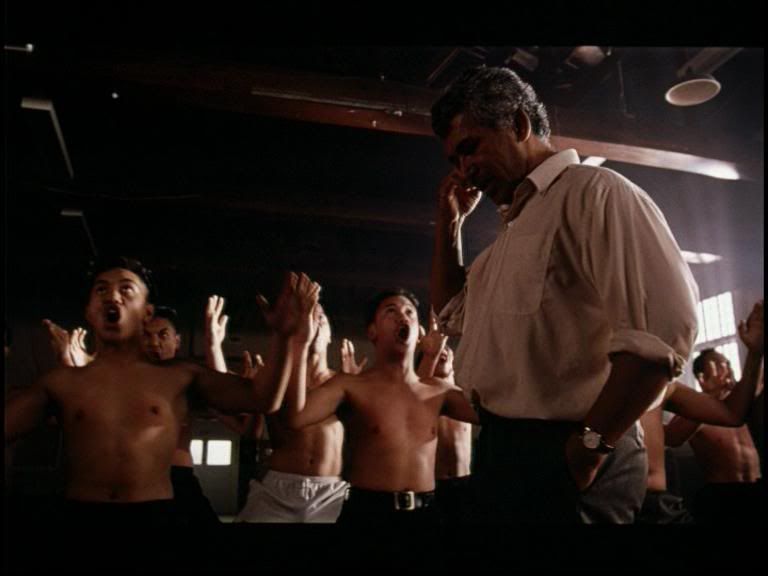
The haka scene: one of our favorite moments.


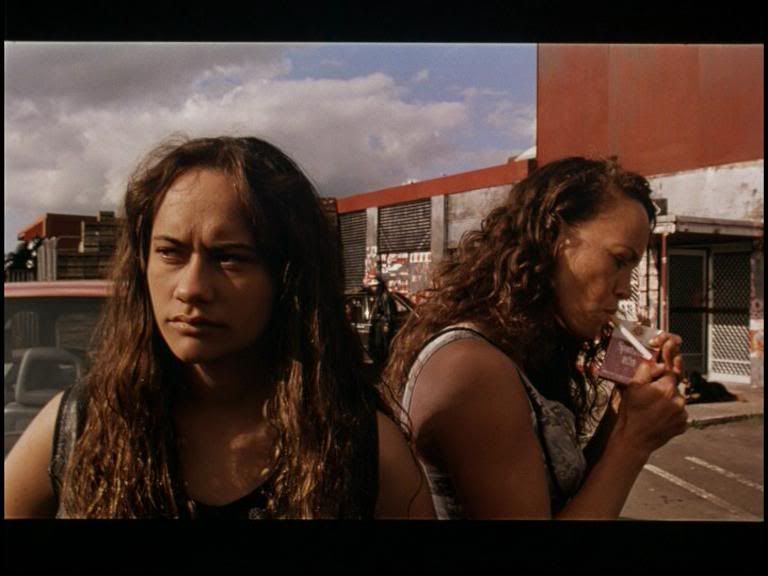
Grace (Mamaengaroa Kerr-Bell) and best mate Toot (Shannon Williams).


Well, the answer is: yes, it competes. We still consider The Piano a better-made film, and we enjoyed it more, but Once Were Warriors is an important film, with a stark, heartbreaking look at a little-known demographic: the modern Māori community. Indeed, it is because of its content that Once Were Warriors is so good.

Essentially a typical Dickensian tale of poor families with evil fathers, it takes place in and around the run-down home of the Heke family. Father Jake (Temuera Morrison, i.e. Jango Fett) is a violent, sexual, hard-drinking man who's recently been laid off. He holds wife, Beth (Rena Owen), in a high-intensity love/hate affair filled with extreme swings of abuse and seduction. Meanwhile, their five children are struggling to keep it all together, each in their own way. Eldest son Nig (Julian Arahanga) has recently joined a Māori gang, while second son Boogie (Taungaroa Emile) is arrested for a petty crime and put into a boy's home. Daughter Grace (Mamaengaroa Kerr-Bell) is the family's peacemaker and solid core: she cares deeply for her siblings and goes to great lengths to protect them, especially in the moments when their mother can't.


Some blunt visuals.


The film is brutal and brief (only 99 minutes), and it's also very straightforward. Much of the dialogue, family dynamics and plot points are well-worn clichés in the genre of the Hardcore Troubled Working Class Home Life Film. Indeed, so inured are we to these staples that our emotional reactions were often quite muted - more muted than they should have been, given how awful some of the scenes were. (And, importantly, even if it's a cliché in film, that doesn't mean it doesn't happen in real life.) The filmmaking style was also blunt, even at times sledgehammery: a quick cut from Jake beating Beth to a snarling dog hunting through scraps, a mother's tormented wail fading into the shriek of a passing ambulance's siren. This is a far cry from, for example, A Guide to Recognizing Your Saints, which takes an equally tired tale - except this time set in the Bronx - and, through nuance and post-modern presentation, makes it fresh and new. Once Were Warriors' freshness lies almost entirely in the uniqueness of the context (as we said): the modern Māori community in New Zealand.


A great shot: Grace and her mother (Rena Owen).


Indeed, the links back to Māori culture and community had the strongest effect on us: the electrifying scenes of Boogie learning to do the haka, Beth's nostalgic memories of life in the traditional community, the scenes where Nig joins the gang and emerges with his new facial tattoos. These moments were beautiful and very affecting.

On the one hand, the film could be about any family anywhere suffering from alcoholism, poverty and domestic abuse - taken that way, the film fails to make much of an impact, with poor writing and shaky acting. But on the other hand, the film is an incisive look into how modernization, colonization and globalization affect traditional cultural practices: in particular, what it means to be Māori in the 21st century. Taken that way, the film is a powerful and heartbreaking portrayal. Given also that Pacific island cultures are terribly underrepresented in modern filmmaking, Once Were Warriors is that much more significant.