Showing posts with label new zealand. Show all posts

Monday, 3 May 2010

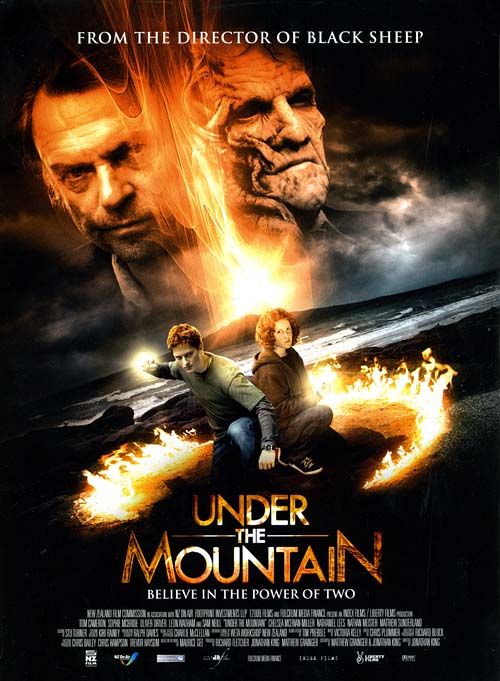
Under the Mountain (2009)


The low-budget fantasy, Under the Mountain, is an endearingly imperfect and low-key production. Based on a popular Kiwi YA book by Maurice Gee, it clocks in at a rushed 90 minutes - though we reckon something like five hours would have been enough to do the story justice. Instead, this film feels slipshod, with some very dodgy acting, a hasty narrative and a weak conclusion. Despite all this, we kinda liked it. Like, liked it a lot. It was cuddly. It featured Sam Neill. And New Zealand. And blue lakes. And volcanoes. Anyone up for a hug?

Twins Theo (Tom Cameron, awful but sweet) and Rachel (Sophie McBridge, a bit better) share that special twinly connection of telepathy and feeling what the other feels. One day, they come home to find that their mother has been killed in an accident. As Rachel reaches out in her grief, Theo shuts down - he cuts himself off from the twinliness, leaving Rachel alone in silence. Giving their father time to mourn, they are shipped off to live with their Uncle Cliff (Matthew Chamberlain) and Aunt Kay (Michaela Rooney) in Auckland. Guided by their cousin Ricky (Leon Wadham), they explore the mighty volcanoes surrounding Auckland city, marvel at the dilapidated house across the lake owned by the mysterious Wilberforces, and meet a crusty old man who yells at them. This old geezer is none other than Mr. Jones (SAM NEILL) - and, when Theo finds a 19th century picture featuring a not-much-younger Mr. Jones in his Volcanoes textbook, he realizes that Mr. Jones isn't just a crazy curmudgeon. What is up?


Not Weasleys.
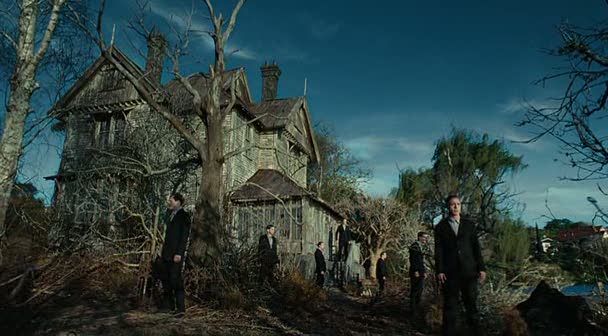

The Uglies from the Planet Crap and their ill-tended yard.


Something is up! Like beyond orbit up! It's a (hilarious, unintentionally) doozy of interstellar warfare and colonizing alien species and "twinness". Mr. Jones is the last surviving extraterrestrial expat of a race of Fire Raisers (think Avatar: The Last Airbender, but they only come in pairs). Back in the day (like, waaaaay back in the day), the Fire Raisers warred with the squiggly race of crappy aliens, now embodied in the Wilberforces (think The Matrix's Agent Smith mated with Predator). Then a third alien race came in - okay, we got hazy here - called the Gargantuans, or maybe just Gargantua, and they were trapped by - the Fire Raisers? the Wilberforces? Sam Neill's Sam Neilliness? well, something - under Auckland's seven volcanoes. The mother Gargantua, a kind of Grendel thing with rhinestones for eyes, currently slumbers under the mightiest of the peaks: Rangitoto Island (Māori for "bloody sky").
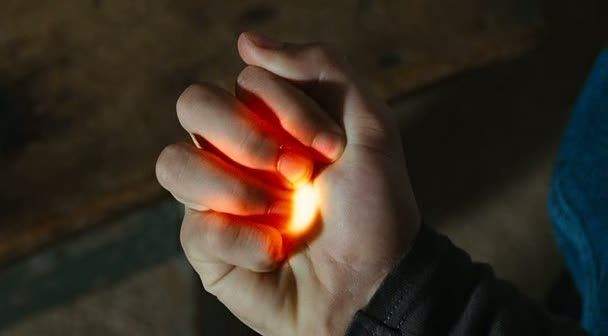

By our powers combined!


And only twins can defeat the Wilberforces and the Gargantua(n)s! After giving Theo and Rachel some very handsome oversized pebbles - Fire Raiser weaponry - Mr. Jones stresses, in that particularly grumpy way of his, that the only thing that's special about Theo and Rachel is their twinness, and they have to channel this twinness if they ever hope to survive. Theo's like, "Yeah, whatever," and Rachel's like, "What happened to your twin, Mr. Jones? And all the other twins before us who attempted this feat?" and Mr. Jones is like, "THEY DIED."

The acting, especially coming from the younger actors, is terrible. Just dreadful. The pacing is also slow. The cuts are awkward, and the background score seems to have its own ideas about how the story should go. Sam Neill channels his most ultra-serious avatar, often bordering on the camp (especially when he hobbles around and growls about dead alien races). The Wilberforces, while unnerving with their Predator-like jaws and slimy exoskeletons, were also quite funny as an ancient alien race that never quite got the hang of grammar ("Make them dead!" being a good one, though we also enjoyed "Then I will observe you to die, ho ho ho!").
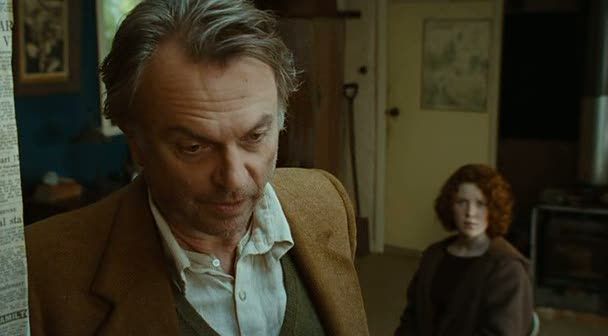

"They? Oh, they died horrible, drawn-out deaths," he wheezed. Yay!


Yet DESPITE ALL THIS, we cannot stress this enough, we deeply enjoyed this film. We are, of course, completely biased by our wild fondness for New Zealand and Sam Neill and young adult fantasy. But it was like Madeleine L'Engle cookies marinated in Sam Neill sauce (which sounds gross, but he even does the thing where he arches his eyebrows and glares crazily and intones some pronouncement on our DOOM). It was like a fuzzy blanket of Kiwi comfort. We just know that if we were 11-year-old Kiwi schoolgirls (as we are, on the inside), we would love the idea of sleeping alien beasts lying beneath Auckland's craters.

"But what if I don't feel any particular fondness for Sam Neill or New Zealand or aliens, PPCC?" you may ask. "What then?"

Well, since we cannot fathom such a bizarre, unnatural perspective, you're on your own. But for the rest of you: beautiful, beautiful trash. (Oh yeah, and since it's a kid's film, we think this is okay for 9-year-olds and up. Or maybe particularly badass 6-year-olds.)

(the soundtrack! the best we could do in American Amazon)

Thursday, 4 June 2009

The Piano (1993)

"No, she is a strange creature and her playing is strange, like a mood that passes into you. To have a sound creep inside you is not all pleasant."
-The Piano

"What a death! What a chance! What a surprise! My will has chosen life?"
-The Piano


Tender, meditative and wonderfully bizarre, The Piano is truly the end-all, be-all Kiwi film. It's also, incidentally, one of our favorite films ever. The other day, we reviewed another popular Kiwi classic - Once Were Warriors - and wondered how it compared to The Piano. But it wasn't really fair to compare Once Were Warriors to something that could have been romanticized by nostalgia, so we decided to re-watch The Piano. And we're somewhat startled to find that it is that much more powerful and wonderful now, over ten years since we last saw it. It's just... damn.

Silence and expressiveness are the big, meaty themes of The Piano. Set in colonial New Zealand, a mute English woman, Ada (Holly Hunter), arrives for an arranged marriage with a local settler, Alisdair (Sam Neill). With her precocious young daughter, Flora (a precocious, young 11-year-old Anna Paquin, in an Oscar-winning performance!), in tow, she navigates the wild, new country, full of knee-deep mud, sublime and mysterious landscapes and the sensitive "gone native" outcast in the house next door, George (Harvey Keitel).


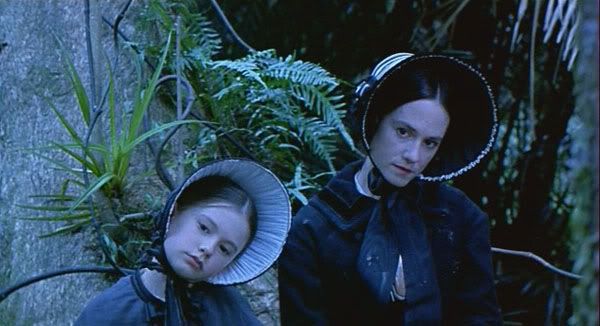
Ada (Holly Hunter) and Flora (Anna Paquin).


The story builds slowly as George invites Ada to teach him to play the piano - this is basically an excuse, since George is one of the few people that recognizes the intense connection that Ada has with her piano, and he's more interested in giving her a space to express this need than actually learning anything for himself. Indeed, Ada's piano is her lost voice. And, as one character puts it, Ada's playing is not the straightforward, blunt playing of a practicing pupil - instead, it is "like a mood that infects you". This applies to the movie itself. Ada - and the movie - seems to communicate on a different level, an unconventional language made almost entirely of emotion, spirit, the heart, whatever you want to call it. In other words, pure mood (like the CD series!).

The Piano is all about mood, and particularly the ability to transmit this intuitive, human connection via music and love (here, often sex). If there was a moral, it would be: talk is cheap, repression is bad, make love and music instead. Ada's muteness informs several scenes where characters meditate on the "usefulness" of silence, the rubbish of conversation and meaningless chatter, and the potentially soul-plumbing depths of just, well, shutting up and listening to the music, watching the birds, taking it all in. The only traditional villain, Alisdair, is doomed by his inability to connect with his wife, himself and the people around him: as a result, he is repressed, oppressive, exploitative and destructive. (And the film seems to leave an open question whether this is because of Alisdair's Victorian and colonialist attitudes.) All the other characters, however, are much more in tune with the harmony of things. And, using the absolute minimum of dialogue, director Jane Campion tells a rich, nuanced love story using only visuals and melody: it's all gestures, lingering looks and, of course, the soundtrack. At times, it even feels like a silent film.

This might make it sound dull, and it certainly is slow. However, we were never, ever bored. Quite the opposite! It's absolutely enchanting. It pulls you in and, once you're in the rhythm of it, it lulls you into its semi-mystical vibe. When the romance between Ada and George develops, it's exhilarating and entrancing. When it's then complicated by Alisdair the husband, it becomes unexpectedly (and ambiguously) tragic. All three characters are so vulnerable and expressive, it's just - well, really touching! Poor Ada! Poor George! Poor Alisdair! (Or are we blinded by an all-forgiving haze of Sam Neill affection? Very possible.)


Oh, Sam. Oops, we mean "Alisdair". What's gotten into you?


Since music is so important to this film, it should only make sense that the score is by a renowned minimalist composer, Michael Nyman. And, indeed, it is just sublime. It makes the movie. Several tracks, such as the main theme ("The Heart Asks Pleasure First") are well-worn and even overplayed nowadays - but just imagine hearing them back in 1993, fresh and new and with the swooping aerials of New Zealand underneath you. Transcendental, indeed. Other tracks - "A Wild and Distant Shore" and "All Imperfect Things" (our favorites) - are merely hinted in the film, yet they still manage to contribute to the special atmosphere. We highly, highly recommend this film just for the music.

The performances are also uniformly impressive. Holly Hunter, who's Ada is steely and dynamic, is just perfect - she carries the film entirely. Harvey Keitel - apart from his body, which looks like a breathing Bernini statue sometimes! - projects just the right balance of sensitivity and rough ignorance. His fumbled attempts to court Ada, and the slow mutual seduction, are at first cringe-worthy and then you invest in it completely. Sam Neill - our personal PPCC fave - is great, particularly in the scenes after he discovers Ada and George's love. (There's also a running debate whether that is, indeed, his bum in that one scene. Feel free to contribute in the comments. If it is, wow, Sam, how many squats do you do at the gym?!)

There are other interesting things about the movie - things we still haven't quite understood. For example, mirroring and doubling are used extensively throughout the film: little Flora for Ada, the ridiculous pair of settler women who finish each other's sentences and make moral decrees on the community, even just the silly sight gag where a Māori man teases Alisdair by copying him. Then there are those wonderfully surreal grace notes - the sailors carrying Ada and Flora onto the shore, the Christmas play, Flora's vividly weird lies about her father. We don't know what all this means yet.


*art geek glee*


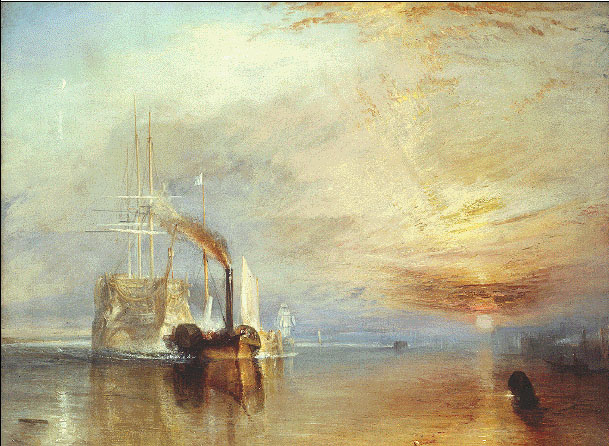
Is that you, Mr. Turner?!


But that's okay! The cinematography is so phenomenally gorgeous - it feels like we're in a moving Turner painting. The pacing is perfect, and some moments - such as Ada plunging into the water after the piano, or when Alisdair confronts Ada in the woods - are so well-filmed, they geeked us out completely as film nerds.

Sam Neill mostly makes wine nowadays, and we're happy the man gave us the demented trashy goodness of films like Jurassic Park and Event Horizon. But this will always be the top of his Sam Neilliness, as well as the top of Kiwi goodness, the top of using minimalist composers in film (sorry, Philip Glass! fear not, we will see Kundun toot-sweet), and in our top ten films ever.

Wednesday, 3 June 2009

Once Were Warriors (1994)


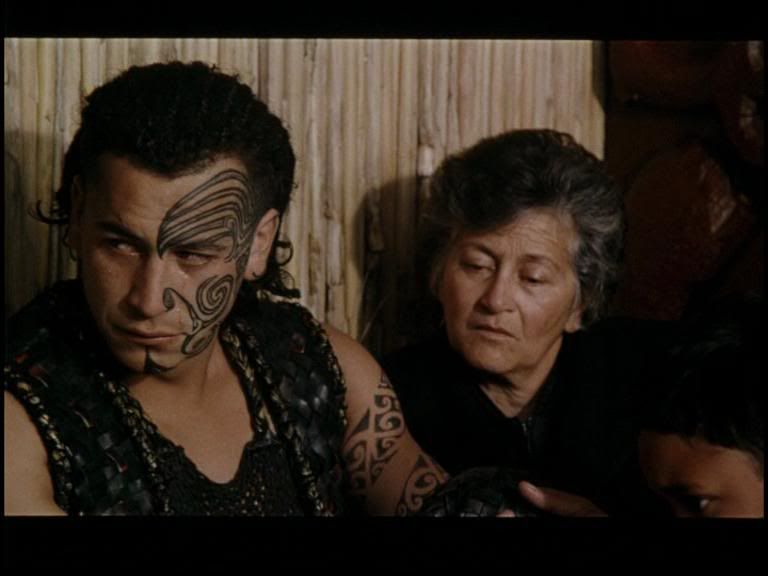
Nig (Julian Arahanga), a young Māori gang member, in a scene from the wonderful, troubling Once Were Warriors.


Although we always sell ourselves as being pan-cultural and 100% globalized, we do, actually, suffer a little bit from favoritism. And one country for which we have an inordinate amount of fondness is New Zealand. Ah, New Zealand! Land of Sam Neill, sheep, Tolkien stuff and wine! Oh, New Zealand! Heady blend of Pacific island cultures! Huzzah, New Zealand! The stark beauty of the landscapes, the glorious Māori art, the penguins in the south, Xena: Warrior Princess, and the Zen retreat-esque vibes of peace and serenity! The only problem with New Zealand (apart from how shamelessly expensive books are there; I mean, really, what is up with that?) is that it's just so darned remote. You have to really want to go there in order to immerse yourself in glorious Kiwi goodness, as the trip is several planes away from, well, everywhere.

However, you can always take the second best option: watch a movie.

Once Were Warriors was sold to us repeatedly by Kiwis and non-Kiwis alike as being the Ultimate Kiwi Film. We were skeptical, as we were pretty sure that the absolutely brilliant The Piano (starring Sam Neill, music by Michael Nyman, for the love of God) is the end-all, be-all Kiwi film. How, we thought, could anything possibly top that? Then of course there are those who say Whale Rider is great (we haven't seen it), and you have the the rabidly insane Lord of the Rings fanbase to contend with. Could Once Were Warriors really compete? And could it top them all?


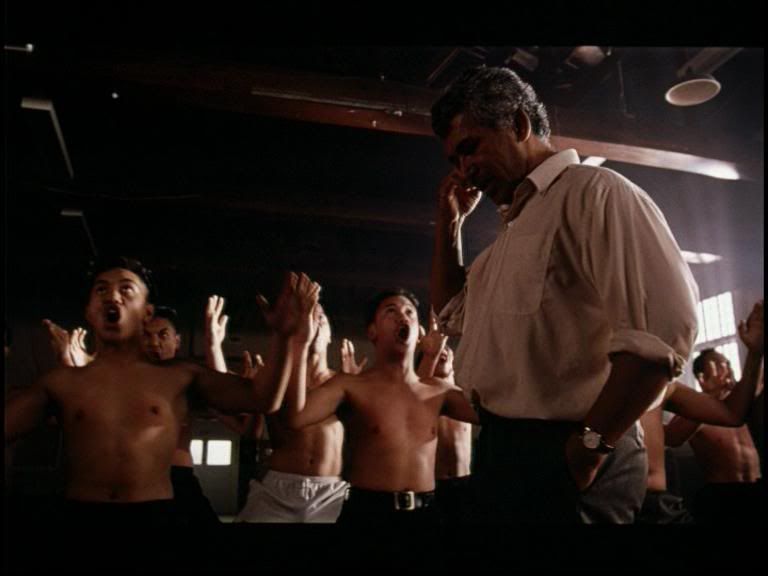
The haka scene: one of our favorite moments.


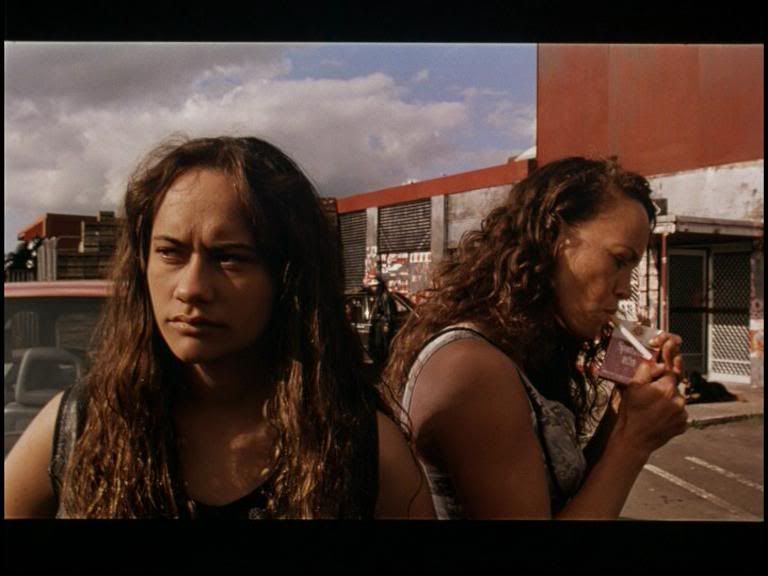
Grace (Mamaengaroa Kerr-Bell) and best mate Toot (Shannon Williams).


Well, the answer is: yes, it competes. We still consider The Piano a better-made film, and we enjoyed it more, but Once Were Warriors is an important film, with a stark, heartbreaking look at a little-known demographic: the modern Māori community. Indeed, it is because of its content that Once Were Warriors is so good.

Essentially a typical Dickensian tale of poor families with evil fathers, it takes place in and around the run-down home of the Heke family. Father Jake (Temuera Morrison, i.e. Jango Fett) is a violent, sexual, hard-drinking man who's recently been laid off. He holds wife, Beth (Rena Owen), in a high-intensity love/hate affair filled with extreme swings of abuse and seduction. Meanwhile, their five children are struggling to keep it all together, each in their own way. Eldest son Nig (Julian Arahanga) has recently joined a Māori gang, while second son Boogie (Taungaroa Emile) is arrested for a petty crime and put into a boy's home. Daughter Grace (Mamaengaroa Kerr-Bell) is the family's peacemaker and solid core: she cares deeply for her siblings and goes to great lengths to protect them, especially in the moments when their mother can't.


Some blunt visuals.


The film is brutal and brief (only 99 minutes), and it's also very straightforward. Much of the dialogue, family dynamics and plot points are well-worn clichés in the genre of the Hardcore Troubled Working Class Home Life Film. Indeed, so inured are we to these staples that our emotional reactions were often quite muted - more muted than they should have been, given how awful some of the scenes were. (And, importantly, even if it's a cliché in film, that doesn't mean it doesn't happen in real life.) The filmmaking style was also blunt, even at times sledgehammery: a quick cut from Jake beating Beth to a snarling dog hunting through scraps, a mother's tormented wail fading into the shriek of a passing ambulance's siren. This is a far cry from, for example, A Guide to Recognizing Your Saints, which takes an equally tired tale - except this time set in the Bronx - and, through nuance and post-modern presentation, makes it fresh and new. Once Were Warriors' freshness lies almost entirely in the uniqueness of the context (as we said): the modern Māori community in New Zealand.


A great shot: Grace and her mother (Rena Owen).


Indeed, the links back to Māori culture and community had the strongest effect on us: the electrifying scenes of Boogie learning to do the haka, Beth's nostalgic memories of life in the traditional community, the scenes where Nig joins the gang and emerges with his new facial tattoos. These moments were beautiful and very affecting.

On the one hand, the film could be about any family anywhere suffering from alcoholism, poverty and domestic abuse - taken that way, the film fails to make much of an impact, with poor writing and shaky acting. But on the other hand, the film is an incisive look into how modernization, colonization and globalization affect traditional cultural practices: in particular, what it means to be Māori in the 21st century. Taken that way, the film is a powerful and heartbreaking portrayal. Given also that Pacific island cultures are terribly underrepresented in modern filmmaking, Once Were Warriors is that much more significant.