Thursday, 29 December 2011

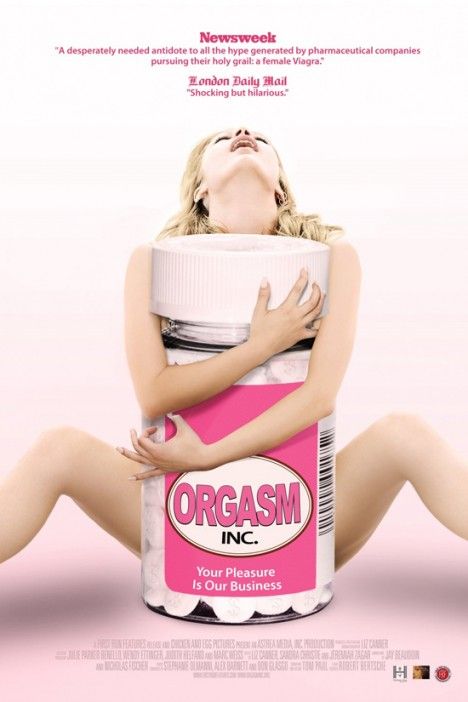
Orgasm Inc. (2009)

Orgasm Inc. is a wonderful documentary pulling together the big issues of Big Pharma and feminism. It explores the medicalization of female sexuality, and the intense race by pharmaceutical companies to get FDA approval for a "Viagra for women" that will "cure" them of female sexual dysfunction (FSD). Whether FSD is a real illness, or the "hysteria of the 21st century", is still hotly debated - but Big Pharma plows on, preparing pills, patches and nasal sprays aimed at helping women achieve orgasm. 

The documentary is brief (80 minutes), informative and fun. It swings from hilarious (the San Francisco Museum of Antique Vibrators was particularly wonderful) to tragic (the women who've undergone vaginoplasty or invasive procedures where a tiny vibrator is put in their spinal chord (seriously, W.T.F.)). And, overall, outrage. Outrage both at the medicalization of everything in America (America and New Zealand are the only two countries where pharmaceutical companies can run ads), and at the punitive gaslighting of a culture that tells women they're not "normal" and need to be "fixed" if they don't always orgasm during sex. Indeed, the tragedy is hearing how often the "bad guys" (those scrabbling to find a corrective pill/patch/spray to "cure" women) invoke "normality" - and how internalized that language is. Consider the poor clinical test subject of Orgasmatron-inventor, Dr. Stuart Meloy. This woman, happily married in her 50s, describes "humiliation" at feeling like she's not "normal" because of her FSD diagnosis. Dr. Meloy tells her that "over 80% of women" have FSD. (And did we mention that the original academic article from 1999 basically asked women if they ever didn't feel like having sex? Or didn't enjoy sex?) Just this contradiction was astounding: something that, purportedly, a majority of women have, and it's still classified as abnormal? Something that needs to be labelled and chemically altered? 

The amount of misinformation regarding female sexuality is also, we think, outrageous - and a glaring symptom of our patriarchal, sexist culture (yes, in America). When the Vibrator Museum's curator mentions little old grannies not knowing where their clitoris is, we wanted to laugh and cry. Or the scene where the filmmaker pays a visit to the Dr. Berman's Chicago clinic, where - for the modest price of $1,500 - you too can be shown a porn film while a medical assistant uses a vibrator on you, and then they tell you what you did wrong. For the love of God! Arghhh! 

The documentary's narrative eventually culminates in an FDA hearing over a new testosterone patch by Procter & Gamble - a patch that found, in a clinical study, to increase sexytimes and orgasms for its test subjects. Leaving the issue of publication bias aside, the study was performed on a select subsample of the general female population. When the FDA makes its decision, in the final minutes of the doc, we almost whooped for joy. But we would have appreciated some of the focus to shift more to the sex-positive talking heads: people like Dr. Tiefer and New View, who work to combat both FSD and its products; or the hilarious and wonderful Good Vibes (with a shout-out to Toys in Babeland); or Ray Moynihan and Dr. Kim Wallen, who just talked a lot of plain sense about the whole pseudo-science of it all. 

As it was, the doc was infuriating - but, showing more of the work of these people, we think it would have been inspiring. (We also wanted more on the history of vibrators, since that was hilarious - oh well, onto Sarah Ruhl and Jonathan Pryce now!) A must-watch.

Wednesday, 28 December 2011

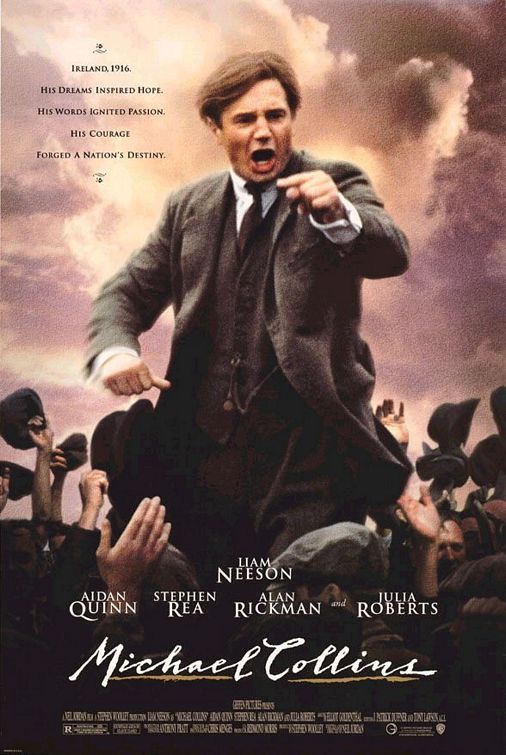
Michael Collins (1996)

The best bit in Neil Jordan's quasi-hagiographic Michael Collins is the final scene: a black and white coda featuring archival footage of the real Collins' funeral. This is, sadly, one of the rare moments when the film really hits its stride: what with the transcendental, thrusting bombastery underlain with leaping violins... well, it's all very transcendental, mystical and Neil Jordany. That is, bordering on the fantastical, while still deeply relevant to gritty reality. Is that a PPCC tear? Yes. Yes, it is.

Unfortunately, the rest of the film isn't quite so consistent. Director Jordan traffics in a very special, wonderful kind of weirdness: his films often feature gender-bending sexuality, coupled with Irish Troubles and a dash of the surreal. In Michael Collins, Jordan tones it down - or tries to, anyway - in telling a relatively straightforward biography of early freedom fighter, "Minister of General Mayhem" Michael Collins (played by a vivacious Liam Neeson). The problem is, we think, that Jordan can't quite keep his natural tendency to weirdness in place, and so the film is a jagged mess of episodic, clunky narrative and awkward shifts in tone. One moment, we're in a giggling, carefree love triangle between Michael, his best friend Harry Boland (Aidan Quinn), and the one-dimensional "Irish rose" Kitty (Julia Roberts, in an accent that comes and goes). The next moment, Michael is instructing his foot soldiers on which arsenals to set fire to, and which British collaborators to shoot in the head.

It's all a bit jarring, and it never quite comes together. The film begins with the 1916 Easter Rising, and we're quickly introduced to Michael, Harry and the whole band of Irish Republicans. The most notable of which is Eamon De Valera (Alan Rickman, not really doing the accent), President of the Irish Republic and a character who appears and disappears to America and then appears again, only to ruin everything by complaining too loudly about the Irish Free State. Okay, maybe Ebert was right and this movie isn't terribly balanced (or even informative) regarding the bloodshed that followed the Anglo-Irish Treaty. The relatively ignorant PPCC certainly didn't exactly follow why De Valera was in such a stitch. And that sort of undermines the tragedy of it all. Trying to make the love triangle become a parallel for these state-level schisms also just felt... weird.

Furthermore, we lost a bit of faith in this film's balance since Michael Collins, as played by Neeson, seemed so superheroic, so larger than life. He has brio and panache and a kind of Gerard Depardieu-as-Porthos joie de vivre. Everyone worships him, Kitty goes glassy-eyed when she sees him, and he seems ballsy and noble and true. That's fine. Okay. But what was he really like? Moments of a rounded personality, or even just a dash of doubt, would have been more effective in fleshing Collins' out. Especially since his work, being so violent, carries a sinister quality - some darkness, or at least more seriousness (!), would have been merited. 

As it stands, the film is diverting, but almost cartoonish. When comparing it to Ken Loach's stern, stately The Wind That Shakes the Barley (a film about the same period), it inevitably comes up short. Sorry, Mr. Jordan! We love you, otherwise!