Showing posts with label documentary. Show all posts

Monday, 25 July 2016

Mission Blue (2014)

Sylvia Earle is the reason we stopped eating fish two years ago. Well, that, and learning how to scuba dive. Man - Teddy Roosevelt (or was it John Muir?) was right: exposing yourself to a heavy dose of Mama Nature is really going to shift your perspective. And our scuba diving/marine conservationist/eco-warrior journey followed three distinct steps:
  1. Holy shit, is this going to kill us?! Oh my God, we have to cough, how does one cough with a regulator in one's mouth?! (Hint: The magic of regulators is - you just do!)
  2. Oh wow, those Pixar people really did their research.
  3. FISH ARE FRIENDS, NOT FOOD.

So, back to Sylvia Earle. She is amazing. HUHHHH-MAZING. She is also completely under-known, under-rated, under-appreciated. She is a kickass boss woman marine scientist who headed NOAA (pow pow!), has logged thousands of dives (kaplow!), and now fights for the ocean's right to live, LIVE, LIIIVE. She wrote the wonderful The World Is Blue, delivered a TED talk, founded an ocean conservation org and is both inspiring and fascinating. Mission Blue, a documentary (on Netflix!) by Fisher Stevens (where do we know him from?), follows the evolution of Sylvia Earle from beach-going Florida kid scientist to marine eco-warrior. There's a scene reminiscent of Greenpeace-style activism where Earle, in her late 70s, dons a wetsuit and jumps into the water near a fishing boat. The fishermen - all men - are shouting at her and the other cameramen, and she swims up, taking pictures, filming, as the giant industrialized fishnet pulls an entire school out of the ocean. It's amazing - horrible - inspiring. WHERE DOTH MY WET SUIT GO, I SHALL JOIN THEE!

Another moment in the doc notes that Earle never recognized or acknowledged the glass ceiling. She just did what she did. And, indeed, there's a refreshingly straightforward directness to her. Never is the F-word (feminism) uttered, but her entire life is testament to it: she wanted to do science, dammit! Now she wants to goddamn save the whales! AND SAVED THEY SHALL BE.

Another jarring moment: when Earle wanders the Tokyo fish market. It's the exact same shots as in Jiro Dreams of Sushi, except now our perspective is radically different: rather than the hedonistic, aesthetic appreciation of all that fine, dead fish, we have Earle's tortured gaze at all that over-fished, unsustainable, dead fish. The scenes with the shark fin hunting - where fishermen sliced fins from still-living, writhing sharks and threw them, gushing blood and panicky, back into the water - left the PPCC shaken, horrified.

We loved this documentary, and it's important, and we thought about it for days afterward. But we're already converts: 30+ hours at depths between 15 to 30 meters will do that to you. Will it appeal to the proto-eco-warriors out there? To those that have yet to have their "this blue planet!" peak experience? We don't know. But we do think Earle should be celebrated as the special, inspiring lady she is. Into the hall of heroes you go, Sylvia!

Monday, 1 December 2014

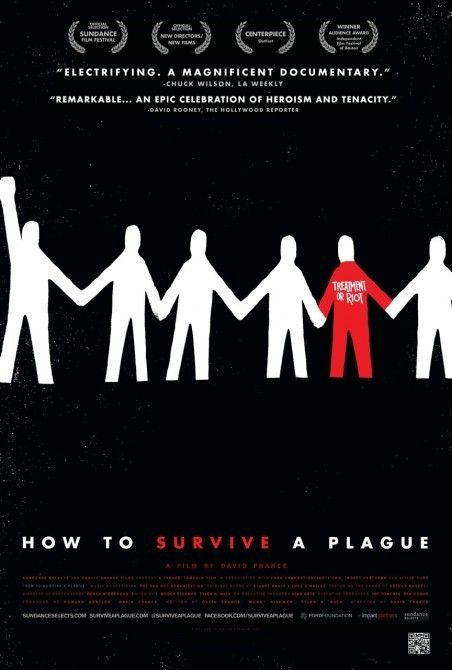
How to Survive a Plague (2012)

Queer history is one of those things we keep meaning to learn more about; since it's essentially a modern civil rights struggle that's run parallel with our lives. We were born in the 80s, came of age in the 90s, and we remember well the fear and stigma (as well as the activism) surrounding HIV/AIDS. The narrative has shifted now, with HIV/AIDS being primarily seem as an "African problem", a problem of international development and public health.

This wonderful documentary, though, is the story of the early days of HIV/AIDS, when it was little understood and terrifying - and its epicenter was Greenwich Village, New York. This was a time when to be diagnosed was a death sentence. We were nudged to watch it after reading about some of the ignorant hysteria and attendant racism gripping some people in the US due to Ebola scares last month; a few people likened this climate to the panic that swept the city during the HIV/AIDS epidemic, and its attendant homophobia.

The documentary charts the tireless work of ACT UP, an AIDS research advocacy group. Many of its members were gay men living with HIV/AIDS, and we focus on a group of them - Peter Staley, Bob Rafsky, Spencer Cox, and Mark Harrington - who seemed to have formed the leadership, and also branched off from ACT UP to create the Treatment Action Group (TAG). The doc is plainly presented, with little stylistic embellishments: Most of it is taken from a huge multi-year archive of grainy VHS footage; background music is subtle and low-key. We watch impassioned, town hall-style meetings as the activists debate their strategies. We watch acts of civil disobedience: marches, storming into medical conferences, draping huge banners over the awnings of pharmaceutical companies or the NIH. Sometimes, we zoom in on the personal life of one of the activists and learn more about their story: we at the PPCC were particularly struck by the story of the soulful Bob Rafsky, who had a wife and daughter, came out at 40, and quit his PR job to work full-time with ACT UP. There are a number of scenes which show the family together, happy and celebrating Bob's birthdays, year after year, while his daughter grows taller and he gets thinner. What we rarely see are modern-day interviews (the usual trope in documentaries); and, indeed, this mystery (where are they now? did they make it?) is left as a powerful reveal towards the end of the doc.

We at the PPCC can't stress enough how incredible this doc was, and how it should be essential viewing for anyone who wants to understand activism and civil rights. Sometimes, when you see the giant block of a cell phone, or the fashion, its world feels very different - and it feels so long ago, more than 20 years. Yet in many ways it wasn't so long ago. Many of those cultural symbols - we see a young Bill Clinton on the campaign trail - are still around today. The tentacles of that world reach straight into today. And, unfortunately, much of the same stupid bigotry is around today (the fight for marriage equality in the US seems to regularly progress only to get knocked back; the immoral and narrow-minded intolerance of legislation like Uganda's shameful "kill the gays" bill). The fight's not over yet, neither for gay rights nor for eradicating HIV/AIDS. And it is a fight; one of the most heartbreaking moments in the doc is when Peter Staley, who is alive and well today, reveals the survivor guilt he feels, and likens it to being a war veteran.

"How To Survive a Plague" answers its own titular question in the final half of the film: there's a powerful sequence when we see some of the activists in the present day. They're older, grayer, weary - but they're alive. They made it. And there we have it: the way to survive a plague is to agitate, to fight for your rights, to learn, and to never give up. Highly, highly recommended.

Tuesday, 6 May 2014

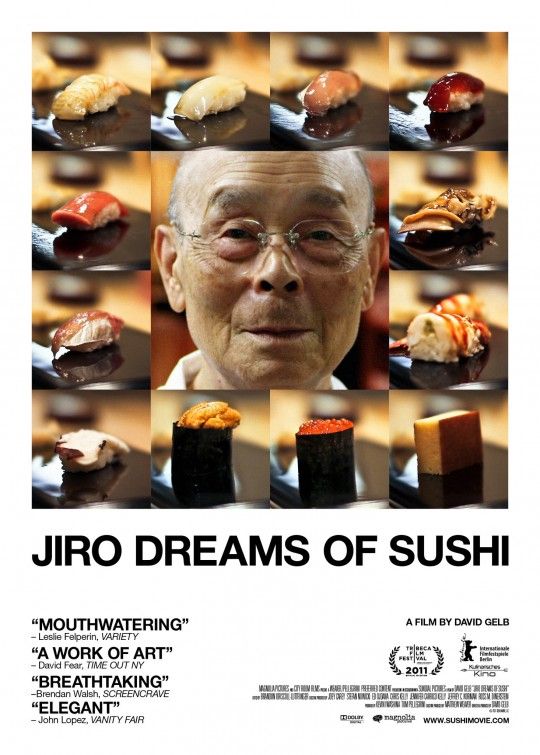
Jiro Dreams of Sushi (2011)

We've missed International Worker's Day by a week, but so be it! We are here today with an excellent film for you: a film about work, and Zen, and sushi.

Jiro Dreams of Sushi is, on the surface, a documentary about a Michelin-star sushi chef working out of his legendary sushi restaurant at a subway station in Tokyo. Jiro Ono is nearing 90, an implacable perfectionist who creates symphonies with raw fish. We meet some of his entourage: his elder son, Yoshikazu, who is the eternal chef #2 at the legendary joint, and younger son, Takashi, who's opened up a second outlet in one of Tokyo's upscale neighborhoods.

Throughout the documentary, we learn about Jiro's upbringing, his philosophy on work, we follow Yoshikazu as he goes to the fish market every morning, we have a few musings on how to cook the perfect rice or the perfect egg sushi, and, in general, there are a lot of loving shots of glistening sushi settling on the plate in gloriously narrow focal depth. With, we should note, a gorgeous score by Philip Glass and other minimalists.

So, it's very nice. Definitely.

But that's not what the documentary is really about, not for us. Because the doc is really a Zen meditation on the glorious pointlessness, the non-passionate passion of pursuing work - any work. Any thing really. This doc - and Jiro's life - is like zazen (a seated meditation style used in Zen). Just as the Sōtō Zen school thinks that - you know - wanting Enlightenment is a big mistake, and maybe there's nothing beyond this, there's nothing beyond just sitting, so too does Jiro advocate working just to work. That is, you just sit. You sit for the sake of sitting. Not for any reward, not for any benefit. You make sushi just to make sushi. You try to make the best sushi you can, not because your father was a master sushi chef (Jiro's wasn't), or because you dreamed since childhood of fish (Jiro didn't), but because - now that you find yourself behind the sushi counter - you just do it.

It's a powerful message, and it's refreshingly austere and refreshingly anti-"do what you love". The "do what you love" mantra is a very post-1980s American work ethic which claims that everyone should, step 1, identify something which they're passionate about (ideally involving poor African children), step 2, pursue this passion with all their energy and zeal and drive while in their nomadic 20s and 30s, and, step 3, bask in their pure feel-goodness. The "do what you love" mantra manifests itself in, for example, a friend of the PPCC's guffawing when the PPCC (very seriously!) mentioned "salary" as one of the reasons she does her job (seeking a good salary is, after all, antithetical to "doing what you love"). It also manifests itself in the abuse of zero-wage labor, the ridiculousness of the academic job market, and the abandonment (suppression, even) of traditional labor rights issues. It's also, we think, very much perpetuated by those who benefit from The System - i.e. old, rich, white dudes.

Oh, we at the PPCC have MUCH TO SAY ON THIS ISSUE. But we'll spare you.

"But Jiro seems quite passionate!" you might cry. And there's the difference. It's about which comes first: the passion to do job X, or job X. Jiro's philosophy seems to be: find job X, pay bills, do job X well. There's no "finding yourself", there's no thinking about what you "really" want to do. There's just doing. Just sitting. Such Zen! We love it.

Anyway, even if you disagree with our labor rights philosophy (which we will, from now on, call Zen careerism), you will still enjoy Jiro because, well, everyone loves Jiro. Seriously, this is a hit with everyone we've ever seen it with. We've never met anyone who doesn't love this doc. You will love it too. Just sit back, relax, and enjoy the fish.

Highly recommended.

Thursday, 29 December 2011

Orgasm Inc. (2009)

Orgasm Inc. is a wonderful documentary pulling together the big issues of Big Pharma and feminism. It explores the medicalization of female sexuality, and the intense race by pharmaceutical companies to get FDA approval for a "Viagra for women" that will "cure" them of female sexual dysfunction (FSD). Whether FSD is a real illness, or the "hysteria of the 21st century", is still hotly debated - but Big Pharma plows on, preparing pills, patches and nasal sprays aimed at helping women achieve orgasm. 

The documentary is brief (80 minutes), informative and fun. It swings from hilarious (the San Francisco Museum of Antique Vibrators was particularly wonderful) to tragic (the women who've undergone vaginoplasty or invasive procedures where a tiny vibrator is put in their spinal chord (seriously, W.T.F.)). And, overall, outrage. Outrage both at the medicalization of everything in America (America and New Zealand are the only two countries where pharmaceutical companies can run ads), and at the punitive gaslighting of a culture that tells women they're not "normal" and need to be "fixed" if they don't always orgasm during sex. Indeed, the tragedy is hearing how often the "bad guys" (those scrabbling to find a corrective pill/patch/spray to "cure" women) invoke "normality" - and how internalized that language is. Consider the poor clinical test subject of Orgasmatron-inventor, Dr. Stuart Meloy. This woman, happily married in her 50s, describes "humiliation" at feeling like she's not "normal" because of her FSD diagnosis. Dr. Meloy tells her that "over 80% of women" have FSD. (And did we mention that the original academic article from 1999 basically asked women if they ever didn't feel like having sex? Or didn't enjoy sex?) Just this contradiction was astounding: something that, purportedly, a majority of women have, and it's still classified as abnormal? Something that needs to be labelled and chemically altered? 

The amount of misinformation regarding female sexuality is also, we think, outrageous - and a glaring symptom of our patriarchal, sexist culture (yes, in America). When the Vibrator Museum's curator mentions little old grannies not knowing where their clitoris is, we wanted to laugh and cry. Or the scene where the filmmaker pays a visit to the Dr. Berman's Chicago clinic, where - for the modest price of $1,500 - you too can be shown a porn film while a medical assistant uses a vibrator on you, and then they tell you what you did wrong. For the love of God! Arghhh! 

The documentary's narrative eventually culminates in an FDA hearing over a new testosterone patch by Procter & Gamble - a patch that found, in a clinical study, to increase sexytimes and orgasms for its test subjects. Leaving the issue of publication bias aside, the study was performed on a select subsample of the general female population. When the FDA makes its decision, in the final minutes of the doc, we almost whooped for joy. But we would have appreciated some of the focus to shift more to the sex-positive talking heads: people like Dr. Tiefer and New View, who work to combat both FSD and its products; or the hilarious and wonderful Good Vibes (with a shout-out to Toys in Babeland); or Ray Moynihan and Dr. Kim Wallen, who just talked a lot of plain sense about the whole pseudo-science of it all. 

As it was, the doc was infuriating - but, showing more of the work of these people, we think it would have been inspiring. (We also wanted more on the history of vibrators, since that was hilarious - oh well, onto Sarah Ruhl and Jonathan Pryce now!) A must-watch.

Saturday, 18 June 2011

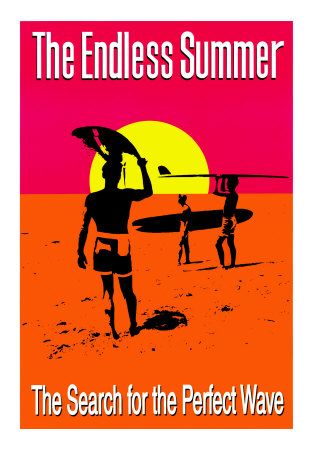
The Endless Summer (1966)


The charming, hypnotic documentary, The Endless Summer, features a lot of surfing. Surfing. Surfing Surfing.

It also features a pair of globe-trotting 1960s Californian surfers, Mike Hynson and Robert August, as they paddle their way out from Senegalese, Ghanaian, South African, Australian, Kiwi, Tahitian and Hawaiian beaches: always and forever in search of the "perfect wave". In the meantime, director/writer/narrator Bruce Brown provides a Beach Boys-esque commentary: sly asides, self-deprecating humor, complete political incorrectness ("Sharks and porpoises in South Africa," Brown notes while filming a pod of porpoises behind the surfers, "have yet to integrate."). The boppy 1960s music, mixed in with some questionable stuff meant to sound "tribal", along with Brown's cavalier painting of surfers as hubris-filled daredevils to be revered - all of this sounds like it would make the 1.5 hour film excruciatingly narrow and kind of annoying.

Instead, thanks largely to those soothing shots of surfer after surfer after surfer, as well as those meditative, lingering shots of a slow sunset, or those beautiful moments using a camera on the board, or the smashing waves in Tahiti: it's all very beautiful. And fascinating. Fascinating because of the sheer adventure of Mike and Robert, as they paddle around, always in a boppy good mood, assessing the water temperature and perfection of the curl. In Lagos, Nigeria, Brown notes that the air and water are so hot, it almost "melts the wax off the boards". Near Durban, South Africa, the boys find the "perfect wave" - little "pipelines" of water, curling smoothly and perfectly from a promised seven miles away. Brown notes that these waves provide surfing so lengthy that you have a "nervous breakdown". "It's the kind of wave," Brown says, "that makes you talk to yourself."

The physicality, naturalism and pop mysticism of the sport bubbles under the surface throughout this film, perhaps explaining its status as an enduring classic. What is it about surfers? Why do we all like them? Why are they so Zen? They always seem to have predilections towards spirituality, especially the really laid back kind. Or did we absorb that awful-yet-nostalgically-wonderful surf spirituality feel-good teen flick, Airborne, way back in the day? And is that why we can forgive them anything?

Suffice to say, despite the grating treatment of poverty by Brown (Africans are "natives", ready to "massacre" each other; Australians are "local residents"), as well as the increasingly dodgy boasting (Brown jokingly emphasizes all the various ways surfers can die), this film is... well, definitely appealing. It's also a perfect little gem of American history: what it was like to surf in the 1960s; what that south Californian landscape that The Beach Boys later immortalized (and Weezer later post-modernified, or proto-hipsterized, or whatever) looked like, as described and shot by people from that place. Gnarly, man.

Recommended.

Saturday, 30 May 2009

Blindsight (2006)


One of the most touching, almost sublime, moments in Lucy Walker's documentary, Blindsight, is a meditative exploration of some ice formations on the side of Mount Everest. The film, which follows blind mountaineer, Erik Weihenmayer, as he leads six blind Tibetan teenagers up to the 23,000 foot summit of Lhakpa Ri (practically next door to Everest's summit), spends a lot of time musing about what they're doing: the challenges of being blind, the importance of building self-esteem in young people, the clash of Western and Tibetan notions of success. As the teenagers and Weihenmayer get closer and closer to the summit, and as things get harder and harder (Weihenmayer is the only experienced mountaineer), a new question pops up: is reaching the summit really the most important thing?

It's then that we have this meditative moment by the ice, when the kids teach the mountaineering crew that sometimes stopping to soak in a moment is much more important than pushing your way through to an arbitrary goal. The joy on everyone's faces, the lilting background music and the vibe of hard-earned peace and contemplation is absolutely lovely. Much more than anything else in the film, this scene captures the bittersweet beauty of what these kids are doing and what it means.


Sonam Bhutso, one of the young mountaineers, during the rock climbing training.


Documentaries are few and far between here in PPCCland, mostly because we have trouble finding them and then, have trouble reviewing them. You can't really talk about characterization, narrative and aesthetics when the film is, by definition, only supposed to document the facts. Of course, documentary-making is just another form of storytelling. Blindsight's storytelling is normally straightforward: a swift prologue-type section with introductions and interviews of the team, followed by a more day-by-day accounting of their trek up the mountain.

Layered over the trek is a back story of one of the team's young men, Tashi, who is the group's outcast and weak link: always trailing behind, he has difficulty during the trek and has an unfortunate background (he was a street kid before joining the Braille Without Borders school). Tashi, who quickly becomes the film's special hero, is moody and troubled, yet also cheeky and joyous. You can't help but root for his success. And in scenes running parallel to his climb up the mountain, we follow Tashi's journey into a remote town of Szechuan Province, China, for a long-overdue reunion with his estranged family.

Tashi's story is occasionally likened to Weihenmayer's background as well: there are touching moments when Weihenmayer remembers his own gangly, awkward youth, his own feelings of being an outcast (Weihenmayer went blind at 13). Watching Weihenmayer's growing closeness and concern for Tashi - especially as it becomes increasingly unclear whether Tashi will be able to make it up the mountain - is very touching.


Two of the kids: the cheekiest!


While there are some interesting discussions about differing cultural attitudes towards blindness, and the dynamic between the American mountaineering experts and the Tibetan kids and workers is fascinating and even a little ambiguous at times, the documentary on the whole sends a crisp, powerful message about working hard and winning big. The simple, humanistic film is much more interested in showing the different back stories of the kids and their different personalities than making any overly-philosophical statement about disability or culture. For that reason, we think this film will be both inspiring and touching for a very broad audience.

Saturday, 27 December 2008

Rock School (2005)


We at the PPCC are starved for documentaries, and so we gobbled up Rock School like a... a turkey (gobble, gobble!). This brief and well-made doc follows the exploits of the teacher and students (aged 9-17) at the Paul Green School of Rock in Philadelphia. Established in 1998 by rock aficionado, Paul Green, its after-school program became a popular meeting point for self-described "misfits" and rock lovers. The documentary follows a group of young musicians as they rehearse power chords and stage presence in preparation for a series of concerts in tribute to Alice Cooper, Black Sabbath and Frank Zappa.

The main "characters" in the film are Paul Green himself, the turbulent, egotistical, impassioned instructor; a pair of 9-year-old twins who aren't so great at music but perfectly embody the Rock Out! spirit (and are adorable, too!); a prepubescent guitar prodigy; a depressed "coffee shop intellectual" 16-year-old artist; and a Sheryl Crow-inspired folky Quaker talent. The kids are a wide range of talent and temperament, yet they are all devotional to Rock School. Even if they're not the best musicians, they visibly thrive in the freedom and chaos of Rock School. One of the most controversial aspects of the documentary is Paul Green's teaching method - he berates, browbeats and screams. He makes inappropriate jokes filled with drug references, bad language and - to the depressed teen who's already attempted suicide several times - suicide. Yet Green insists that his method works, and most of the kids seem to do well. The documentary concludes with the kids successfully rocking out at the world Zappa festival, Zappanale, held in Bad Doberan, Germany, every year.

We just love documentaries about subcultures - whether it's misfit kids learning to rock out or red light kids learning amateur photography or paraplegic full-contact rugby players. Rock School also touches on other interesting subcultures, apart from the 1970s rock lover hangover: for example, there is a brief sojourn in the youth Quaker movement - in particular, we spend some time with a group of Quaker rappers, the Friendly Gangstaz, who lay old school Quaker hymns over phat, hip hop beats. Since we at the PPCC are part of a subculture - the "non-Indian hipster intellectual blogger reviews Hindi movies" subculture - we feel a sense of community with these documentaries. When are they going to make a documentary about us, I ask?!

One of the first things we thought when watching this documentary was that Jack Black's earlier (fictional) film, School of Rock, was in some way based on Paul Green's experiences. We still haven't found anything that says whether they were in some way related or not - the films are, however, strikingly similar. Even more interesting as a spin-off in this subgenre of "rock school" films is a film about a "Rock 'n' Roll Camp for Girls" entitled, Girls Rock!. The interview with the directors of Girls Rock!, Arne Johnson and Shane King, has an interesting nugget:
SF360.org: Did you see School of Rock or Rock School? Thoughts?

Johnson: Rock School’s Paul Green is the antithesis of what’s going on at Girls Rock camp—training [in a particular style] as opposed to nurturing creative expression and using music to, as Misty described it, give girls tools to make their own culture. Rock School is about carrying on a school of music that is already male.

Touché! Indeed, considering that the male-dominated 1970s "glory era" of rock is what Paul Green is trying to indoctrinate the kids into (ahem, not everyone worships Zappa...) this seems like the natural direction things should be moving in: girls' empowerment and freedom of expression! We would love to see more of this. Anyone know about any documentaries on the riot grrrl movement? Or feminist hip-hop? OMG would this be the opportunity for the Missy Elliott/Anil Kapoor dream collaboration we often fantasize about?!! Huh huh BOUNCE bsshhhhhh... OMG CAN YOU IMAGINE?!?!! Timbaland/Missy/Anil Kapoor/A.R. Rahman/M.I.A./Arcade Fire/Arctic Monkeys - the PPCC would have died and gone to heaven!!! AIEEEE musicmusicMUSICMUSIC!!!