Sunday, 18 September 2011

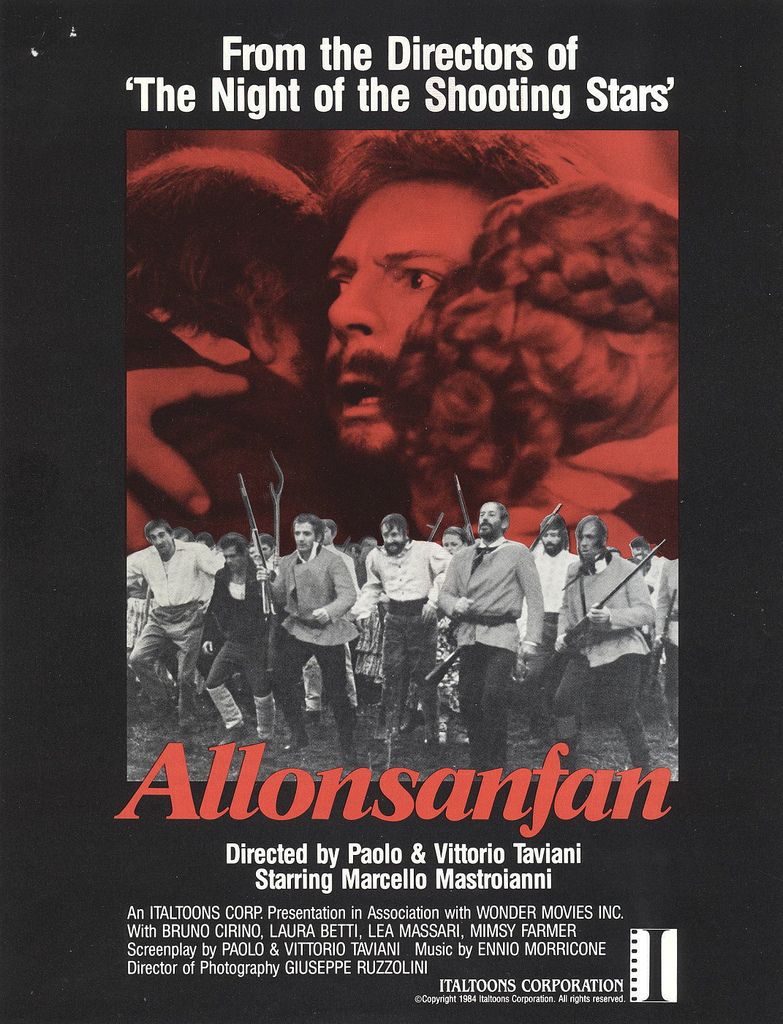
Allonsanfàn (1974)


Allonsanfàn is a wry, strange look at the absurd tragedy of radical Italians. It technically takes place in the early 19th century, but it could be just as home in the 1860s, 1920s or 1970s. In fact, especially the 1970s - a decade in which domestic terrorism killed Aldo Moro and laid bombs in Bologna's train station. A decade where the idealism of 1968 had ripened into a hyper-violent, extreme nihilism (both on the Left and the Right), where killing became a currency of discourse. (Thanks, Paul Ginsborg, by the way, for teaching the PPCC about modern Italian history! Seriously, readership, A History of Contemporary Italy is wonderful.)

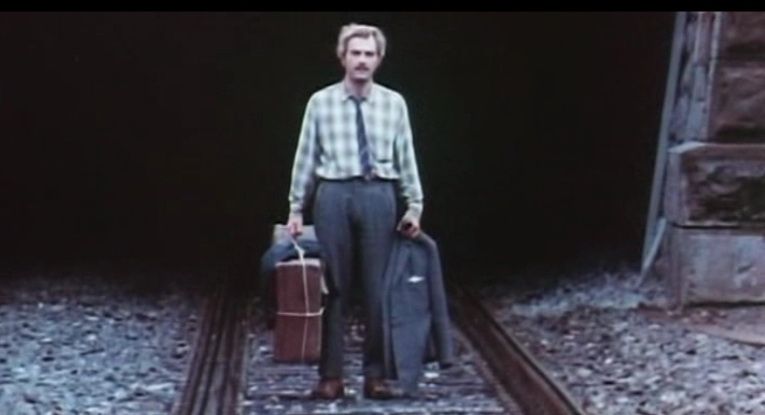
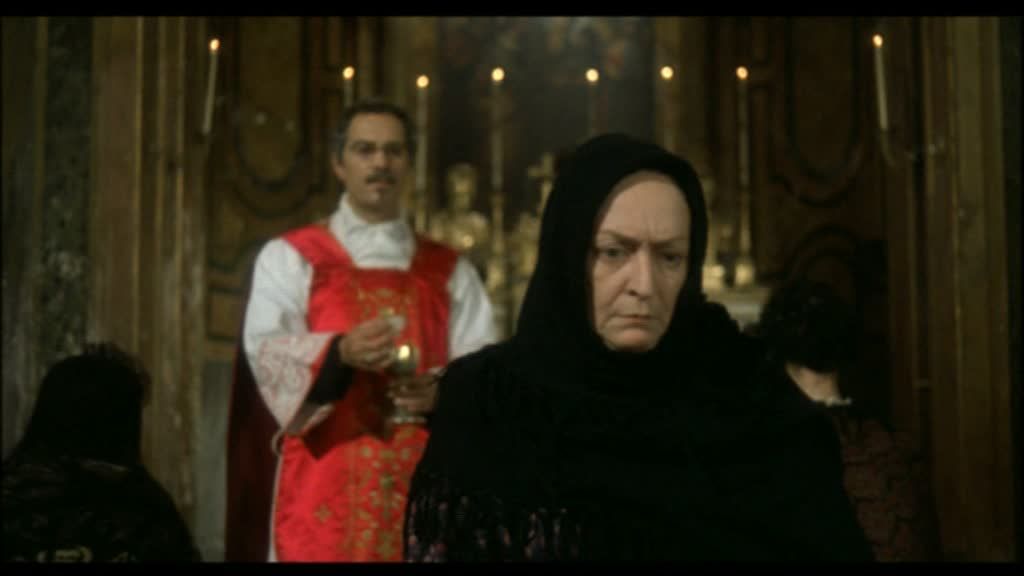
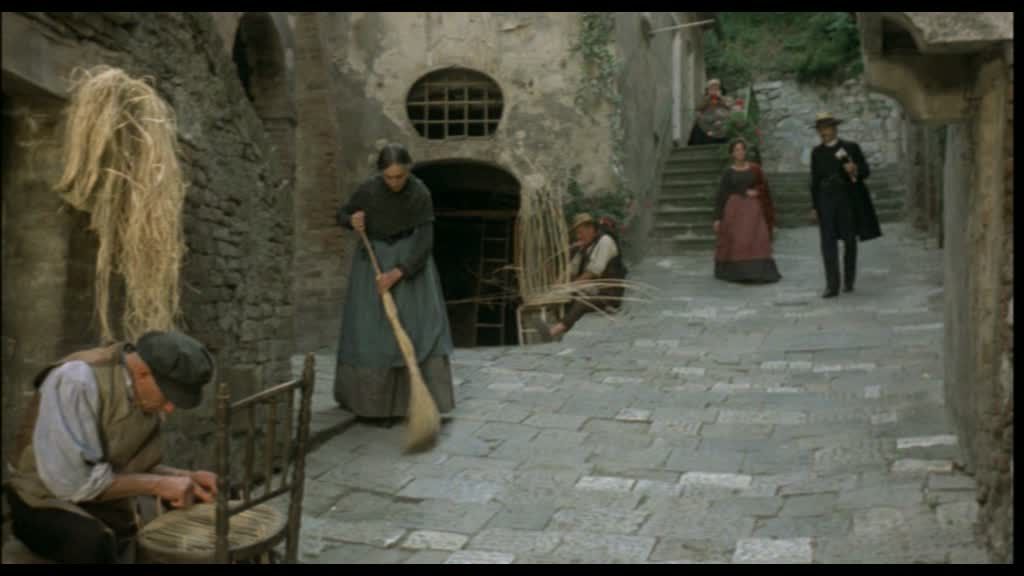
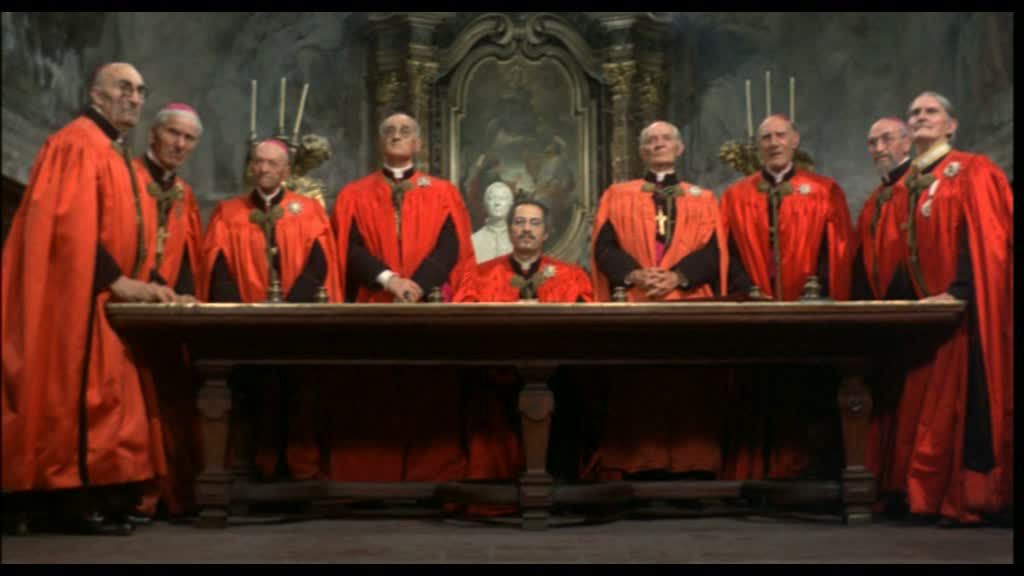
Anyway, in Allonsanfàn, we follow a disillusioned, weary and aging radical, Fulvio Imbrani (Marcello Mastroianni), as he repeatedly tries (and fails) to extricate himself form his former revolutionary life. This is often to grotesque or comedic results (such as when he makes a suicide pact with one fellow comrade, only to let the other guy go first), though - as is the usual style of 1970s commedie all'italiana - it's also very sad, beneath everything. The aristocratic Fulvio stumbles out of prison one day, feverish and exhausted, narrowly avoiding a grim fate at the hands of the state. His revolutionary comrades likewise almost behead him, thinking he had spilled all their secrets. When this is proved false, he is left to mend in the comfort of his big fancy bed in his big fancy mansion. And big fancy mansions - they are hard to say no to.

Indeed, Fulvio's ideals - which were already a little brittle - now crumble under the weight of this material comfort. Of course, this gnaws at him - aren't those big fancy chandeliers just symbols of oppression? And his poor nanny, still making his bed and doing back-breaking agricultural labor outside? Fulvio's strength of opinion, though, has been broken out of him. Or maybe he's just tired of being indignant and sure of everything, because he proceeds to embark in a misguided, frequently half-assed adventure to cut his old ties. We found ourselves snickering, sometimes with disgust, sometimes with glee, at Fulvio's silliness, selfishness and pitiable state - and we found ourselves constantly grafting this story onto the wider meaning of 1970s Italian politics, messy and unfortunate as they were. "How can we live in this world?" one earnest revolutionary laments. "When everyone seems asleep, and we're the only ones who seem to have woken up?" It's a sad, slightly delusional statement, and Fulvio's in the unfortunate position of recognizing the idealists' misguided attempts to (for example) free the Southern peasants, while not having the courage or ability (or good luck!) to get free of their grasp. He's made his bed, and now he's going to LIE IN IT, FOR THE LOVE OF GOD.

Allonsanfàn himself turns out to be a character, a young revolutionary (Stanko Molnar), who is the most dedicated, the grimmest, and, ultimately, the most delusional. A stand-in for the young, violent Red Brigades? Allonsanfàn is also, oddly, named after the first two words of La Marseillaise ("Wake up, children!") - indeed, the strains of revolutionary France are an important reference for the revolutionaries of this film. (In the way that the Paris Commune inspired the 1968 Italian idealists?)

Marcello Mastroianni is, as usual, wonderful in this, aging charmer that he is. Indeed, he channels that same world-weariness that we saw in Una giornata particolare, as well as the sense of a man trapped in an almost Kafka-esque surrealist nightmare, much like his role as the doomed bricklayer from Dramma della gelosia. The music by Ennio Morricone, particularly the theme of the revolution, was also incredibly catchy and wonderful: this scene, where an embittered Fulvio meditates on his former comrades, was just wonderful. "I've healed. I've changed." Brrr, lovely!

Sunday, 11 September 2011

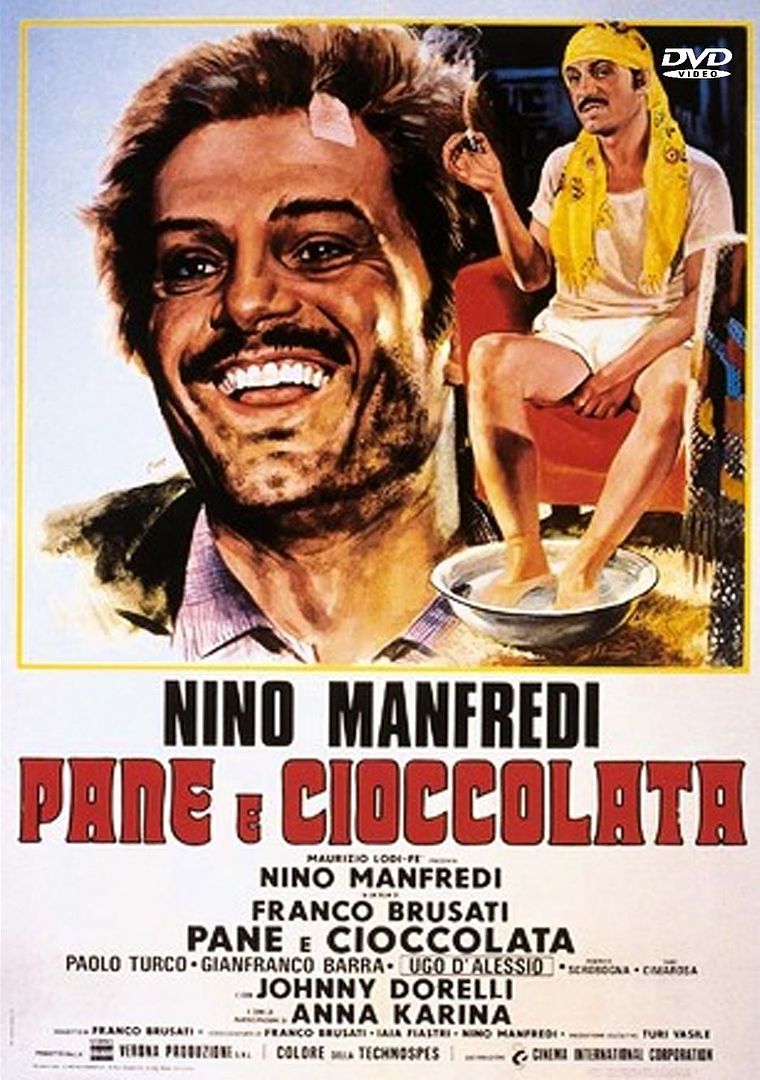
Pane e cioccolata (1974)


The popular Italian classic, Pane e cioccolata (Bread and Chocolate), is incredibly uneven. But it occasionally works as a weird, tragically farcical Odyssean tale of one Italian immigrant's misadventures in a cold, uncaring Switzerland.

Its gags are hit and miss, and its tone veers around a little wildly: in the opening ten minutes, we witness some social satire, some slapstick, and then a murdered child. It sounds strange, and, in the hands of a ballsy director like Lina Wertmuller, it might have worked as a sort of chaotic, provocative, politicized film. But director Franco Brusati is much tamer in comparison, and his aesthetics just feel sort of muddled and indistinct. Mostly, it just felt like a slightly maudlin proclamation for the inherent tragedy of immigrant lives. Yes, it's sad. But… huh? How are we supposed to feel about a ribald-turned-depressed drag show?


The immigrant.


Nino (Nino Manfredi) is a southern Italian immigrant making his way as a waiter in a posh Swiss restaurant. At night, he yearns for his family back in Italy - but his pride won't let him return, and his wallet won't let him bring them up to be Swissified (his ultimate wish).

The Swiss setting, meanwhile, is cold, uncaring, and fundamentally hypocritical: the lawns may be perfect, the etiquette air-tight, but there are dead kids in the bushes and stolen fish in the toilet bowl. Even the immigrant success stories - such as the ruthless millionaire who briefly employs Nino - end in embezzlement and suicide.

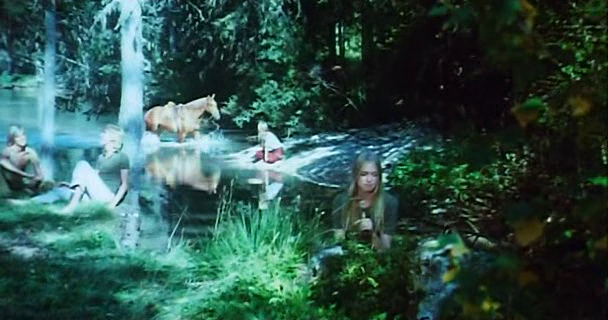
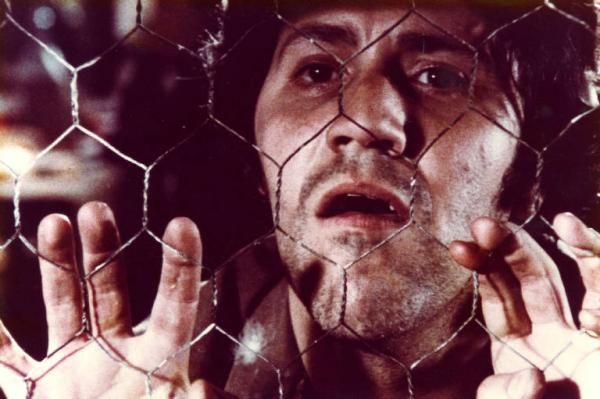
After getting fired from the restaurant, Nino faces trial after trial - and his problems just get more and more surreal. In a way, the film improves with this surreality, because that's when it makes its point most brazenly: for example, at one point, Nino ends up huddled in a chicken coop with a family of half-crazed, stunted, ignorant Italian immigrants. This madhouse increasingly appalls Nino until, exasperated, he says, "Look at us. You're Italian. I'm Italian. Does that mean we have anything in common?" The family shushes him and runs to the chicken wire window. "Look!" He joins them, and, all crouched and huddled together, the Italians watch through the chicken wire as a troup of young, naked, Aryan supermodels frolic through an Abercrombie & Fitch ad. The way this scene is directed - with lingering, objectifying shots of perfect blond hair glittering in the sunlight, and soft pink flesh - is just wonderful. It's scathing, hilarious, surreal and awful - very Lina Wertmuller! The next sequence, which opens with Nino having dyed his hair blond, is just as painful and wonderful. Indeed, the last twenty minutes of this film are uncharacteristically pitch perfect: it makes its point and hammers it home. Too bad the rest of the film wasn't like that!


Frolicking Aryans...


"Look how beautiful they are."


Our previously reviewed Café Express is indeed a spiritual sequel to this, covering much the same territory of Italian pessimism and decrepitude, embodied in the aging, tired Nino Manfredi and his sorrowful smiles. We don't know if we'd necessarily recommend these films, though, neither for their social point (which was better made by, for example, Wertmuller's Mimi metallurgico ferito nell'onore) nor for Nino Manfrediness (which is better enjoyed in C'eravamo tanto amati).

Saturday, 10 September 2011

People singing in Nanni Moretti films

As a commenter on this vid said, "I love people who sing out of key. It's expressionist."


Palombella Rossa (1989)
Silvio Orlando and some swimmers singing Bruce Springsteen's I'm On Fire.


Palombella Rossa (1989)
Nanni Moretti and the crowd singing Franco Battiato's E ti vengo a cercare.


La messa è finita (1985)
Nanni Moretti singing Bruno Lauzi's Ritornerai.


La stanza del figlio (The Son's Room, 2001)
Nanni Moretti, Giuseppe Sanfelice, Laura Morante and Jasmine Trinca singing Caterina Caselli's Insieme a te non ci sto più.


Caro Diario (1993)
Nanni Moretti dancing to Silvana Mangano's Anna.


Has anyone seen Habemus Papam yet? And, if so, is there any singing? The PPCC hopes so.

Sunday, 4 September 2011

Café Express (1980)


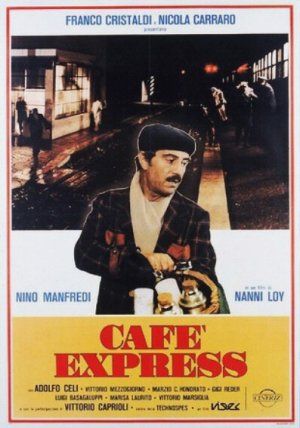
Like a number of commedie all'italiana, Café Express is a tragedy dressed up as a comedy. Also, like other picaresque Neopolitan Odysseys (e.g. Mi manda Picone), dissembling, poverty and surreality factor heavily.

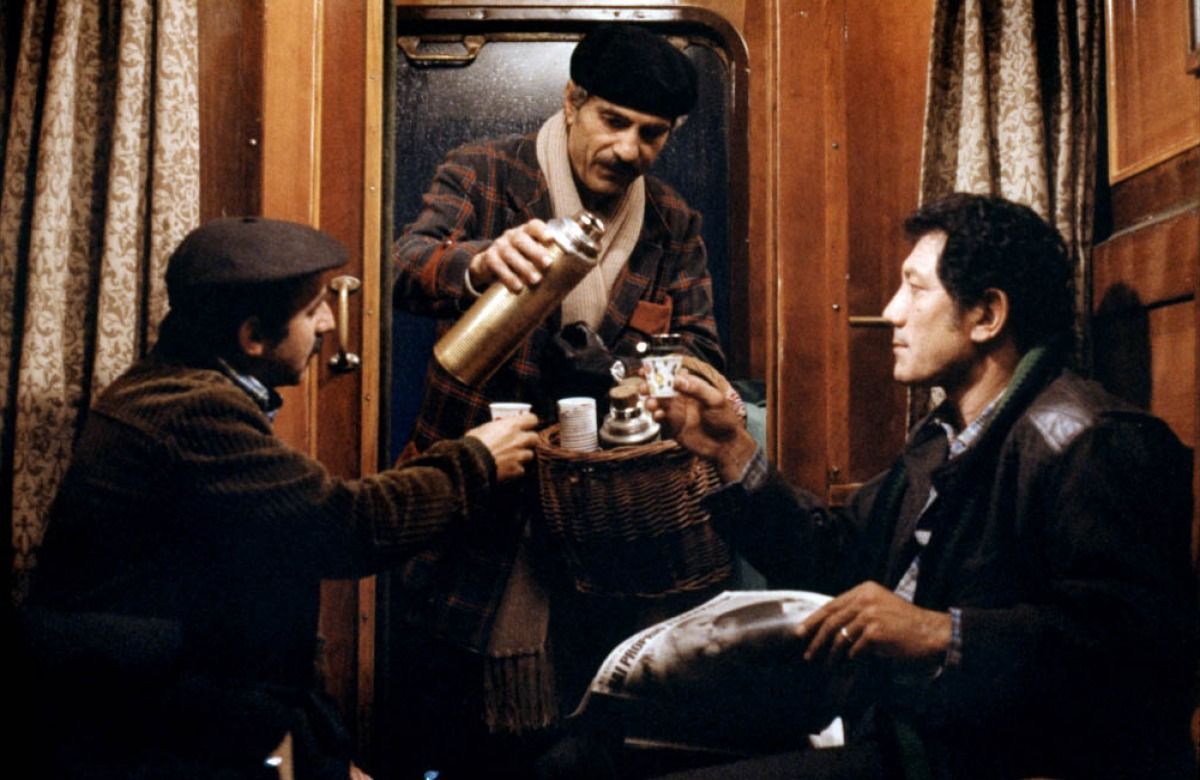
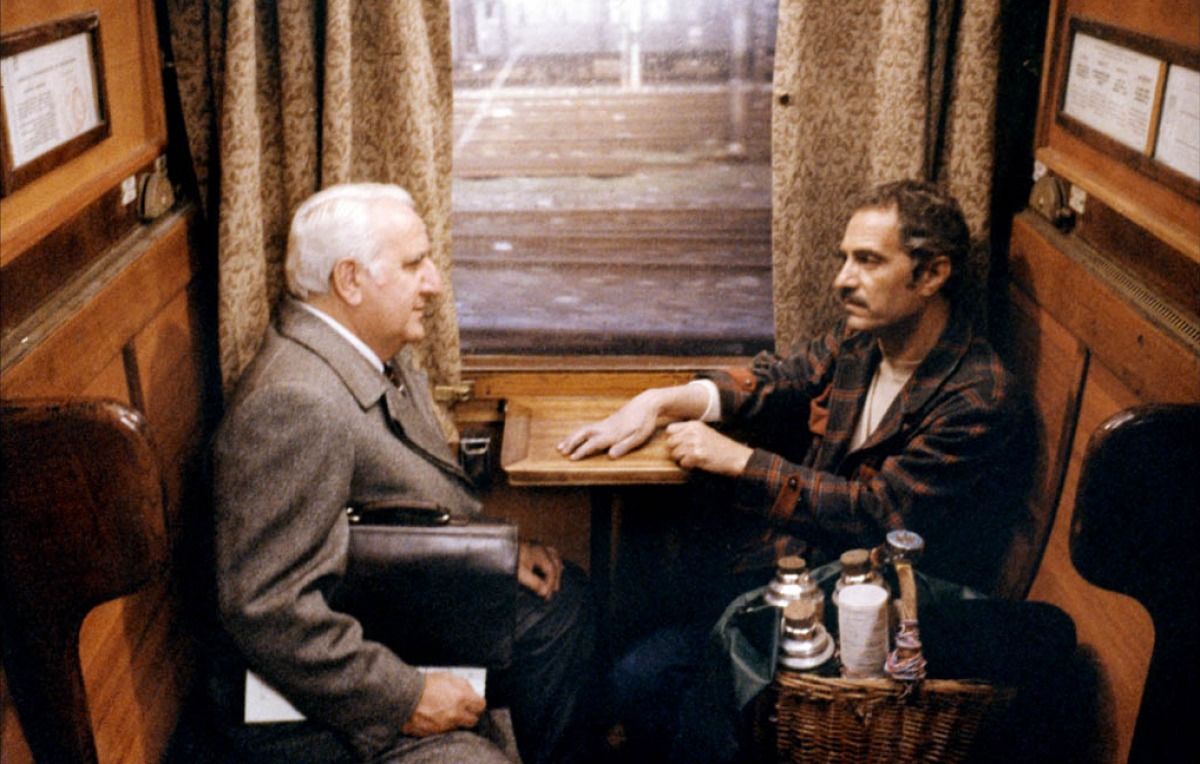
Michele Abagnano (Nino Manfredi) is an illegal coffee vendor riding the night train between Naples and Rome. With his broken shoe and wooden arm, he cuts a sorry figure. Though, since he's played by the charming Manfredi, he's also wonderfully lovable, always ready with a joke and sympathetic ear. The film ambles along, dropping in with Michele as he visits the various characters in the various cars. In this way, and the fact that it takes place overnight, the film resembles an episodic, nocturnal, ensemble piece like Jagte Raho or After Hours: that is, it mixes the strange with the immoral with the funny, all steamed up with some schmaltzy philosophizing on the nature of man.


With each car, Michele's story changes: in one, his wooden arm is a war wound, in another, an injury received as he saved children from a burning home. Even if he's a warm and gregarious presence, he's also evasive and, thus, mysterious. The only thing we know for sure is that he has a 14-year-old son, Cazzillo (a very cute Giovanni Piscopo), with a congenital heart defect - we know this for sure because we actually meet Cazzillo, as rascally as his father, when Michele finds him shaving in the train's bathroom. (Okay, that whole scene was adorable.)


Things take a very sour turn after Michele pisses off a small gang of thieves, and the film swings from a sentimental Italianate tragicomedy to an enraged screed against an unjust society. As well as a plea for magic(al) realism as a weapon against (Anglo-Saxon? oligarchic?) hegemonic notions of "reality"? Maybe. As Obi-Wan Kenobi would say, "So what I said was true. From a certain point of view." Similarly, Michele - and, to his horror, his son, Cazzillo - live by this creed of a malleable reality. It certainly feeds the stereotype of Neopolitans as knavish story-spinners, and it certainly makes for great surrealist cinema. What is the truth? We'll never know for sure. And, even if we did, would it change the tragedy (or funniness) of the situation?

Props to the final shot, with the self-posessed, urchiny Cazzillo making his way through a 1970s Rome, a little hawk in search of prey. That was fabulous. And props, as always, to lovely Nino Manfredi, our favorite interpreter of Romanness (even though, in this film, he's Neopolitan - and whoa! that accent!).


(Though Italian speakers can watch the movie here.)

Thursday, 1 September 2011

In nome del papa re (1977)


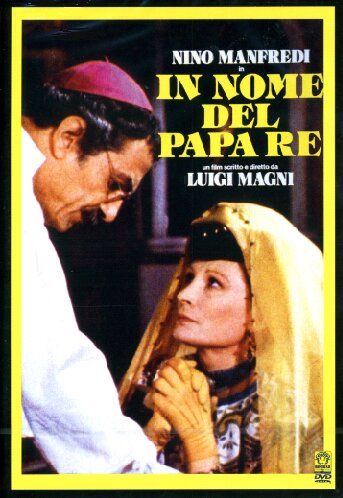
In nome del papa re (In the name of the Pope-king, though it could also be In the name of the father-king) is a fraught, strange, charming film. It's also a breath of fresh air in its portrayal of the clergy - long stereotyped as corrupt pedophiles or one-dimensional bigots. Quite the contrary, In nome del papa re's worn, frazzled anti-hero, Monsignor Colombo (a wonderful, as always, Nino Manfredi), seems more like an ancestor to the partisan-priests of WW2 neorealism than anything else. His tangled, unfortunate position - as reluctant collaborator to a reactionary Papacy, as reluctant father to an arrested revolutionary - is wonderfully charged, tragic and bizarre. His mannerisms also - cigar-chewing, Roman-slanging - recall the tinted glasses, smoldering cigarette and whiskey tumblers of the old SNL character, Father Guido Sarducci. In other words, the PPCC loves him and would totally go all Catholic for him. "What do you want from me?" Colombo demands, impatient. "A benediction? Want me to give you a benediction? You'll have to make it last!"


In the name of the Father (and father)...


...and son...


...and the Holy Spirit (of revolutionary Italia!).


But enough of priests, let's get to the plot. The year is 1867, and Rome is in full-on Risorgimento-style turmoil. (For those that don't know, Italy was created in 1861. The period of unification is called the Risorgimento, and featured a lot of bloody conquering of the various kingdoms and principalities - principal among them, of course, being the Papacy and its repressive reign over Rome.) Bombs are falling, Italian revolutionaries are hiding in the houses of the sympathetic bourgeois or getting their heads chopped off, and Monsignor Colombo (Nino Manfredi) is drafting his resignation letter as a Papal judge. "I just want to be a priest," he laments. "Which is hard enough, as it is." In other words, the good monsignor's lost faith in the Papacy's legitimacy as a secular authority. He's basically a closet Garibaldista, even though he won't admit it to himself. (Garibaldi being the general who led the armies which unified Italy.)

Meanwhile, across town, three revolutionary youths - among them the stormy, arrogant Cesarino (Danilo Mattei) - have learned that they're to be arrested and beheaded by the Papacy, following a terrorist bomb they (or someone) left under a barracks (killing dozens of Vatican soldiers). Cesarino's mother, the well-to-do gentlelady, the Countess Flaminia (Carmen Scarpitta), despairs - and flies immediately to Monsignor Colombo's house. And there she lays the bomb (no pun intended) of the Bestest Plot Device Ever on him: "Now you have two reasons to save him. One, because he's my son. And, two, because he's also yours."

Ah, yes. Yes, back in those heady, halcyon days of 1849, amid musket fire and the clash of armies, when the Vatican's foundations first shook under Garibaldi's assault, as she tended the wounded and he administered last rites to the dying, and they were so tired, and all they needed was a warm bed, and so on and so forth. Okay, we actually found that whole idea very romantic. But then, disrobing priests while battles rage around us in Garibaldi-era Rome - mm mmm!


One of the most badass scenes: the mother of one of the other condemned revolutionaries confronts Colombo. "You saved your son. You didn't save mine." When he tries to give her the Holy Communion, she leans back, "No. Not from you." BAM! Go, lady!


Anyway. Monsignor Colombo is clearly in a bind now, and the schmaltzy music which forever hounds his brooding bluntly announces the heartbreaking choices he must make. HEARTBREAKING, in case that's not clear. VIOLINS MUST BE PLAYED. How will he get Cesarino out of the clink? When guillotines fall with such ease, and "there are spies everywhere", and Cesarino announces that there are two things he hates in this world: "Absent fathers, and priests!" What's a guy to do?

The film is most effective when it's not REALLY ALL CAPS BLUNT - and certain schmaltzy moments could have been lessened if only the music track had been changed. But we can't complain. We even loved the soap opery final plot twist, if only because the lovely Nino Manfredi underscored everything so well with his restrained, effective performance. Manfredi's schtick - as he did so well in C'eravamo tanto amati - is the easy-going, sarcastic, vulnerable Roman with a heart o' gold. He lays that down as his main melody, and basically improvises around it - in this performance, peppering Said Roman with telling moments of weariness, worry and grief. Never is he explicit in these things, everything is turned into a joke. It's like his protective exoskeleton. And, of course, that makes it all the more touching. An example: one of the most poignant scenes is when his servant, a grizzled, Obelix-ish Serafino (Carlo Bagno), comes downstairs at dawn to find him sleeping, collar askew, at his desk. As Colombo grumbles himself awake, clearly exhausted, he laments the night before: freeing Cesarino, but not the other two revolutionaries, and thus doing a pretty half-assed good deed. As he hunkers down to eat his breakfast, he sees bite marks in it. "Did you eat this?" Serafino is aghast: "You think I'm giving you my leftovers? It must be the rats in the kitchen, they must have got to the pantry by now and given it a nibble." And Manfredi just looks at him, looks at the biscuit, eats, and then sighs, "They're God's creatures." Ha! Okay, maybe you had to be there.


Ah, 1860s Rome! Is that Trastevere that my eye detects?


Don't legitimize a false authority!


What's interesting about this film - a tame example of a 1970s Italian film, despite all the sexytimes on and off screen, with and without priests - is how, yet again, political engagement is portrayed as complicated, messy and doomed. We saw this in Lina Wertmuller's incredible Love and Anarchy, a film which explored a would-be assassin of Mussolini in the days before the deed. Both films, which follow the "good" guys (pro-Unification priests, anti-Fascist anarchists), essentially end badly. It's very sad. And both films offer an apologetic coda, promising the good things that actually did occur to those movements post-movie timeline: i.e. the eventual unification of Italy and demise of Papal power; the eventual liberation of Italy by the Americans in 1945, and the death of Fascism. Which makes us wonder. Why are these films, both about real periods and real movements that "won", so pessimistic? Is it just commentary on extreme political activism per se? The inevitable fall of the zealous anarchist/partisan/Garibaldista? Hm.