Saturday, 30 May 2009

Blindsight (2006)


One of the most touching, almost sublime, moments in Lucy Walker's documentary, Blindsight, is a meditative exploration of some ice formations on the side of Mount Everest. The film, which follows blind mountaineer, Erik Weihenmayer, as he leads six blind Tibetan teenagers up to the 23,000 foot summit of Lhakpa Ri (practically next door to Everest's summit), spends a lot of time musing about what they're doing: the challenges of being blind, the importance of building self-esteem in young people, the clash of Western and Tibetan notions of success. As the teenagers and Weihenmayer get closer and closer to the summit, and as things get harder and harder (Weihenmayer is the only experienced mountaineer), a new question pops up: is reaching the summit really the most important thing?

It's then that we have this meditative moment by the ice, when the kids teach the mountaineering crew that sometimes stopping to soak in a moment is much more important than pushing your way through to an arbitrary goal. The joy on everyone's faces, the lilting background music and the vibe of hard-earned peace and contemplation is absolutely lovely. Much more than anything else in the film, this scene captures the bittersweet beauty of what these kids are doing and what it means.


Sonam Bhutso, one of the young mountaineers, during the rock climbing training.


Documentaries are few and far between here in PPCCland, mostly because we have trouble finding them and then, have trouble reviewing them. You can't really talk about characterization, narrative and aesthetics when the film is, by definition, only supposed to document the facts. Of course, documentary-making is just another form of storytelling. Blindsight's storytelling is normally straightforward: a swift prologue-type section with introductions and interviews of the team, followed by a more day-by-day accounting of their trek up the mountain.

Layered over the trek is a back story of one of the team's young men, Tashi, who is the group's outcast and weak link: always trailing behind, he has difficulty during the trek and has an unfortunate background (he was a street kid before joining the Braille Without Borders school). Tashi, who quickly becomes the film's special hero, is moody and troubled, yet also cheeky and joyous. You can't help but root for his success. And in scenes running parallel to his climb up the mountain, we follow Tashi's journey into a remote town of Szechuan Province, China, for a long-overdue reunion with his estranged family.

Tashi's story is occasionally likened to Weihenmayer's background as well: there are touching moments when Weihenmayer remembers his own gangly, awkward youth, his own feelings of being an outcast (Weihenmayer went blind at 13). Watching Weihenmayer's growing closeness and concern for Tashi - especially as it becomes increasingly unclear whether Tashi will be able to make it up the mountain - is very touching.


Two of the kids: the cheekiest!


While there are some interesting discussions about differing cultural attitudes towards blindness, and the dynamic between the American mountaineering experts and the Tibetan kids and workers is fascinating and even a little ambiguous at times, the documentary on the whole sends a crisp, powerful message about working hard and winning big. The simple, humanistic film is much more interested in showing the different back stories of the kids and their different personalities than making any overly-philosophical statement about disability or culture. For that reason, we think this film will be both inspiring and touching for a very broad audience.

Friday, 22 May 2009

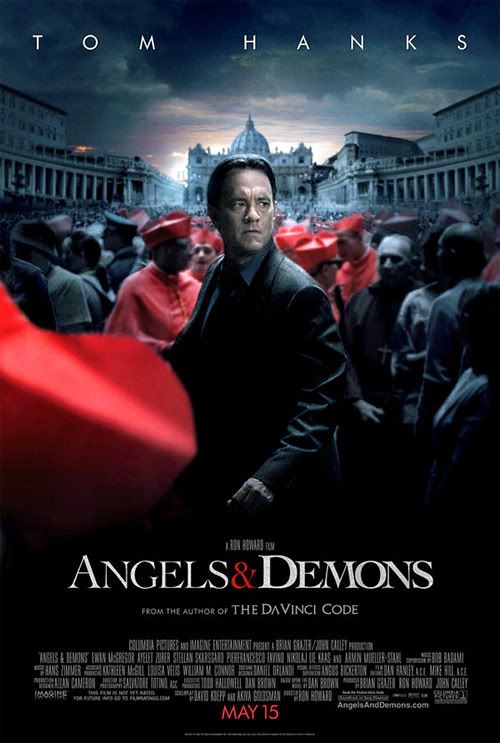
Angels & Demons (2009)


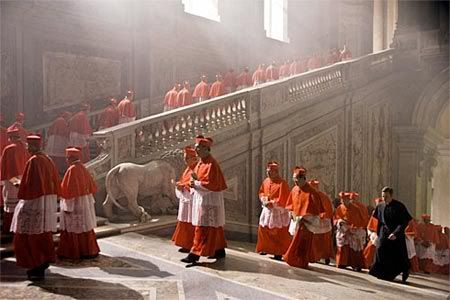
Oy with the Photoshop.


After seeing the trailer, we thought Angels & Demons might be stupid and fun. Halfway into the film, we worried that it might be dangerously, possibly even destructively stupid and definitely not fun. Finishing the film, we concluded that (1) yes, it was pretty stupid, but not dangerously so, and (2) it was not fun.

Usually trashy Vatican corruption stories are fun. At least, for us (insert heathen disclaimer). See, for example, the story of Pope Alexander VI and his illegitimate son, Cesare Borgia (who, by the way, was made a Cardinal at 18, led the Papal Armies and was Machievelli's inspiration for The Prince). We at the PPCC have a strong Italian component in our DNA, and this provokes a tendency in us to wallow in Renaissance history as (1) the height of good aesthetics and Italian culture, and (2) tabloid-style, Papal corruption. But we can't always party like it's 1492. And there comes a time - namely, today - when we have to admit that maybe it's over. The Holy See is just not the significant political force it used to be, with all the accompanying Machiavellian machinations that drive us social scientists wild. Sure, Catholics around the world by definition still look to the Pope for spiritual guidance. But, in a multicultural, globalized world where the Mediterranean is no longer a political and economic center, most non-Catholics don't really care what the Vatican says or does anymore. Similarly, Italy is more and more being described as "beautiful, but useless" by Italians in films and amongst our homies. Alas. The days of decadent power and significance are gone.


Exploring the remaining cultural artifacts and rituals, however, is still pretty interesting.


Angels & Demons, however, seems to refuse to accept this post-Renaissance, post-Vatican reality. It attempts to smoosh together cosmological significance and political provocativeness by constructing an elaborate "war" between science - represented by CERN's Large Hadron Collider in Switzerland - and religion - represented by the Vatican. (Umm, all you other scientists and people from different religions need not apply. These two representatives have got everyone covered.) Of course, the fact that in reality the CERN scientists probably don't care what the Vatican does, the Vatican doesn't care what the CERN people do, and most people don't care about either doesn't seem to figure. Instead, based on this increasingly flimsy premise, we're supposed to believe that:
(1) Dropping anti-matter can spark an explosion somewhere between an atomic one and the Big Bang. More towards Big Bang. (Uh... dammit, man, we're a blog, not a physicist, but huh?)
(2) Radical anti-Vatican science-fundamentalist revival groups are allegedly wreaking havoc in Rome in order to... actually, the plot lost us on this one. Why all the trouble again? It had something to do with avenging Galileo.
(3) The only way to stop the havoc and the mini-Big Bang 2.0 is through the cunning deployment of ace Harvard symbologist, Robert Langdon (an aging, but still lovable, Tom Hanks).

Uh...?

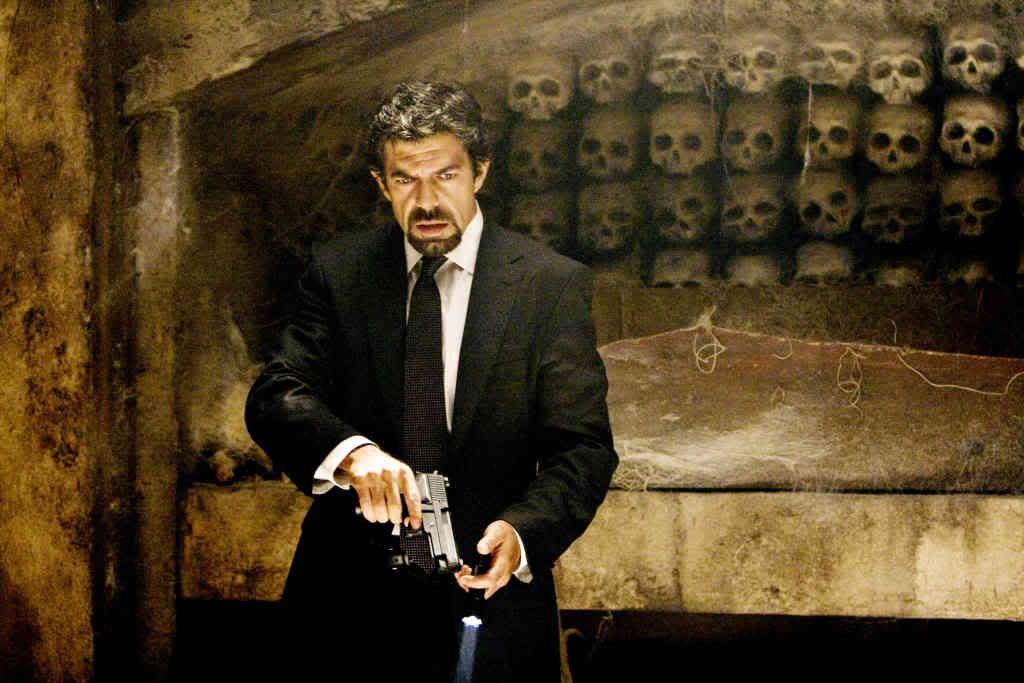
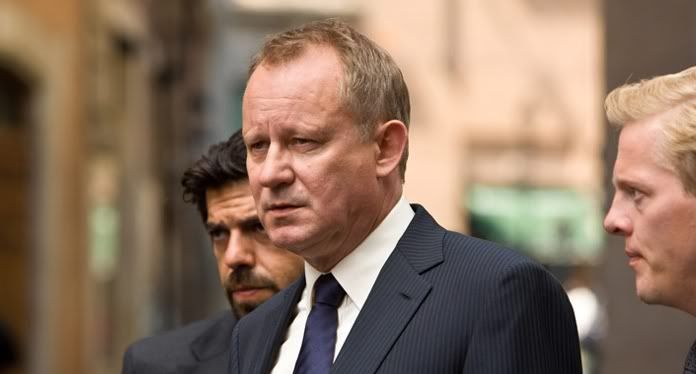
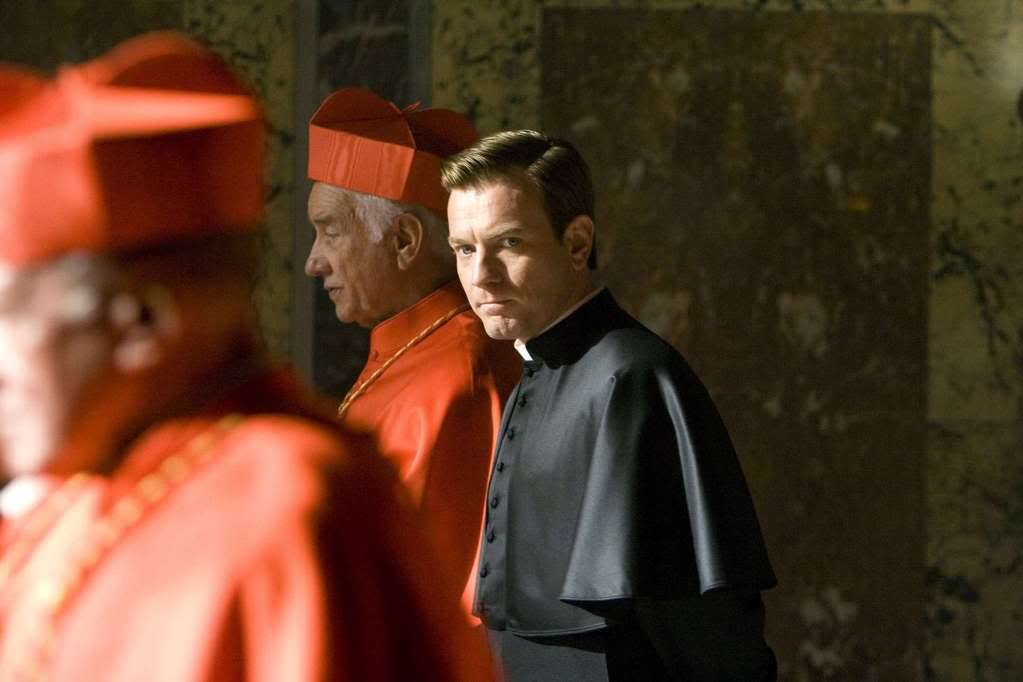
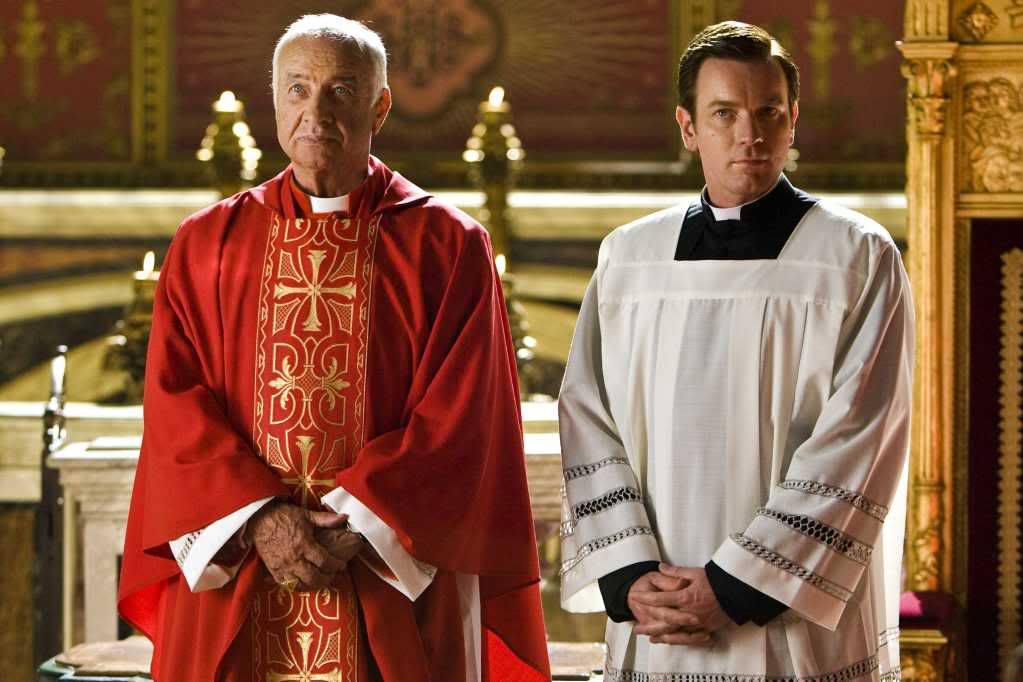
We would accept this, well, stupid premise on the agreement that we would be given either hotties or action in return. We did get some hotties - specifically, Italian actor Pierfrancesco Favini, Swedish actor Stellan Skarsgård (looking old too, but hotness relatively undiminished... especially in that trim, well-cut suit! v. flattering), and, most of all, Ewan McGregor channeling a sort of demented Obi-Wan Kenobi in a priest's suit. Looking v.v. good, Ewan!


Hottie #1: Pierfrancesco Favini. He gets all of... ten lines.


Hottie #2: Stellan Skarsgård. Are we alone on this one? Surely not. Well, maybe he's an alternative choice.


And HELLO.


Okay, before this devolves into pure Bridget Jones, getting back on track: ...

...actually, let's take just one more minute to marvel at Ewan McGregor's pure, unadulterated, Big Bang-style hotness.


Gratuitous Ewan shot. Yes, this blog has officially turned into Bridget Jones's Diary. Yes, we fail The Bechdel Test today.


(insert your own inappropriate physics joke here)

ANYway: we get some hotties, yes, as well as some token shots of our beloved Rome (but merely drops in the desert!), but instead of action, we just get blunt, gruesome carnage. This gratuitous, macabre focus on pushing the PG-13 bounds of what is acceptable mutilation to be seen onscreen left us feeling disgusted and upset. It was at this point - watching yet another detailed close-up of a corpse, while listening to ignorant ranting about "religion and science's ancient war" - that we worried about what it meant when trashy American films project such an apocalyptic, black-or-white, anti-rationalism, anti-compromise, ultra-violent mentality.

Thankfully, the day is saved and everyone agrees that everything was blown way out of proportion (no pun intended). We won't spoil it for you, but let's just say that Ewan factors prominently in fixing the situation and redeeming the film into more neutral (but still very trashy) waters for us. And no, it's not just because of that particularly way he bats his eyelashes, or because of that adorably fussy part in his hair. (Though that helps.)

Tuesday, 19 May 2009

The Royal Tenenbaums (2001)


The Royal Tenenbaums made it into the Criterion Collection?!?!


Wes Anderson's quirky The Royal Tenenbaums is a study in fussy, geometrical postmodernism. Films like this - self-knowingly trendy and almost terminally ironic - can be cold. They can keep you at a distance. Yet just in those moments when we had had enough of the twee gimmicks (Alec Baldwin as narrator! archaic early 1980s fashions! yet another "colorful, extraneous detail"!) and being kept at arm's length, The Royal Tenenbaums finally turned around and delivered some good ol' fashioned sticky sweet, microwave-hot mush.

And we at the PPCC are very, very big fans of mush.

With all the mushy mushiness of a Lifetime Original Movie, The Royal Tenenbaums is about an estranged family's rapprochement. The eventual emotional reunion is just as sugary sweet as can be found in a more pop mainstream movie, despite the intentionally indie, stiff-upper-lip, "too cool to emote" aesthetic the film goes to great pains to maintain.


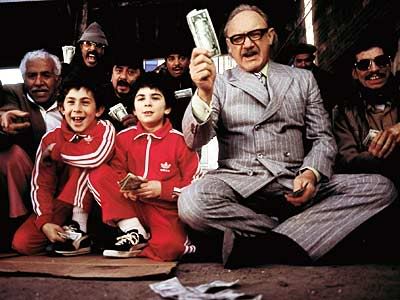
Gene Hackman as Royal Tenenbaum, the family's loose cannon patriarch.


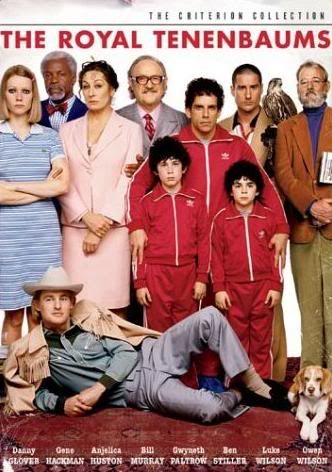
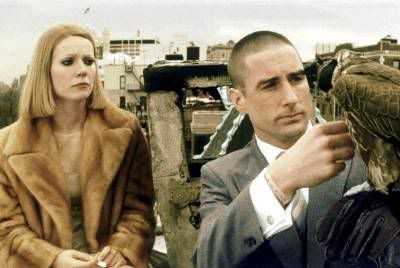
But more about the Tenenbaums themselves: a "family of geniuses", they are two parents - the scattered, quasi-Dionysian good ol' boy Royal Tenenbaum (a wonderful Gene Hackman) and the driven, anchor-like Etheline (Anjelica Houston) - and three children. The eldest son, Chas (Ben Stiller, as an adult), seems to have inherited his mother's single-mindedness: he becomes a business tycoon in his tweens. "I used to be a homeowner myself," Papa Tenenbaum reminisces in one scene, "Until our son expropriated it from me." The middle daughter, Margot (Gwyneth Paltrow), has a hard, frosty exterior: constantly having been reminded of being adopted as a child, she lives inside a shell of privacy as an adult. For example, no one in the family knows she's been smoking for almost twenty years. The youngest son, Richie (Luke Wilson), is a sensitive artist-tennis star who harbors a life-long crush on his adopted elder sister. Rounding out the cast of characters are Etheline's newest suitor, Henry Sherman (Danny Glover, who is black in case you forgot... but don't worry, the film will be more than happy to remind you over and over again), the envious neighborhood childhood friend, Eli (Owen Wilson, brother of Luke), Margot's hyper-intellectual husband (an underused Bill Murray) and his trailing behavioral experiment (Stephen Lea Sheppard), and the family's Indian servant, Pagoda (Kumar Pallana).

One thing Wes Anderson has been criticized of, especially since Darjeeling Limited, is his latent racism. We haven't seen Darjeeling Limited, so we can't judge that film in particular. But there were a few cringe-worthy moments in The Royal Tenenbaums which reduced non-white characters to silly and unfunny stereotypes: Royal confronting Henry in "jive", or describing him as "big and black", or Pagoda's thick Apu accent and the fact that he trails Royal around like a loyal, um, well, servant! (And Pagoda's room: all decked out in Orientalist trinkets, complete with colonial era depictions of elephants on walls and gently-playing sitar music in the background.)

It all looks very "trendy" and is supposed to be funny in that usual twee, hyper-ironic "stuff that white people like" (tangentially, a website we, uh, don't like at all) way. "But hipsters are supposed to be sensitive and cultural!" you may say. Indeed, we don't think this film intentionally trivializes or caricatures Indians and blacks. It just seems to exploit stereotypes for some cheap laughs. It also seems to think that the non-white characters have no interesting independent stories to tell either - they appear only to exoticize the trimmings of the white people's center-stage angst.


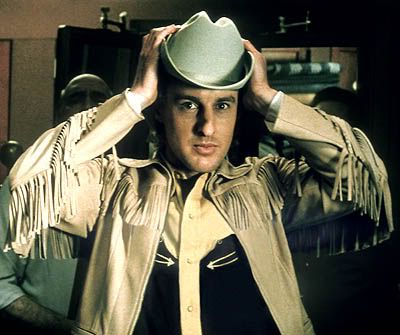
Owen Wilson does his usual lovably dopey thing.


...while brother Luke Wilson does his usual sensitive guy thing. Meanwhile, Gwyneth Paltrow gets every woman's dream role as (drumroll) the object of the men's lusts, affections and angst. Good thing we're needed, eh, ladies! Gosh, otherwise we'd be non-entities.


That is the only big criticism we can levy against this film. As we said, the mushy mushiness was tastefully done - earning a few PPCC Tears of Emotional Manipulation, thanks to the cunning use of indie woe (Elliott Smith, Nick Drake, Van Morrison...). We've seen smarter takes on the same "family of alienated intellectuals living in a brownstone in New York City" plotline before (e.g. the magnificent The Squid and the Whale) and we've seen just as refreshingly pomo aesthetics before as well (e.g. the under-appreciated, and much less precious Breakfast on Pluto). So, for us, The Royal Tenenbaums was not as groundbreakingly brilliant or incisive as it thought it was and wanted to be. But it was a pretty okay roll nonetheless.

Sunday, 17 May 2009

Star Trek (2009)

The special summer pick of 2009, Star Trek is big, brassy and grand. It is old fashioned space adventure in a reassembled bottle: selling itself as the Star Trek film that even non-Trekkies can love. We - the ultimate non-Trekkies - can attest that, yes, we loved it.


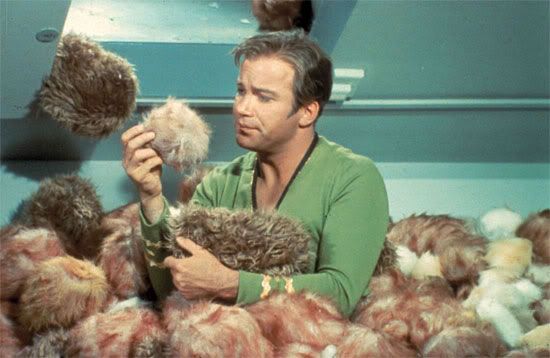
We can't seem to find any 2009 Star Trek images! So William Shatner in a pile of fuzzy things will have to suffice. Image from scificool.


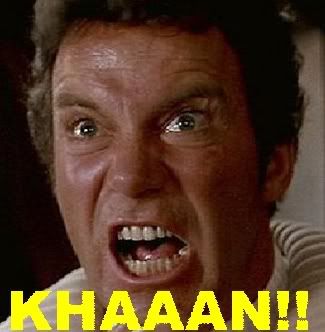
Though we probably missed a lot. Since its beginning as a TV show back in the day, Star Trek's influence has spread far and wide in pop culture. So even though we knew nothing of who was who and who did what, we did recognize key pop cultural relics. "I'm givin' her all I've got, Cap'n!" being one example. ("KHAAAAAAAN!" being another.)

Thankfully, the new Star Trek presupposes no special background info to get into the fun. And fun it is, full of black holes, stoics who are softies on the inside (OMG, Spock hotness alert), a Singularity shout-out (!), a Stanislaw Lem shout-out (!!), and much more of our favorite geek things. The director, J.J. Abrams (of Lost fame) has a special eye for capturing the particular majesty of old school, classical sci-fi: there are some wide-scope space panoramas of breathtaking beauty, and the internal ship is suffused with light from infinite sources. It looks sleek and gorgeous. Backed by a score that is just as traditional and large-scale as its glorious imagery, it makes for some pretty hard-to-resist viewing.


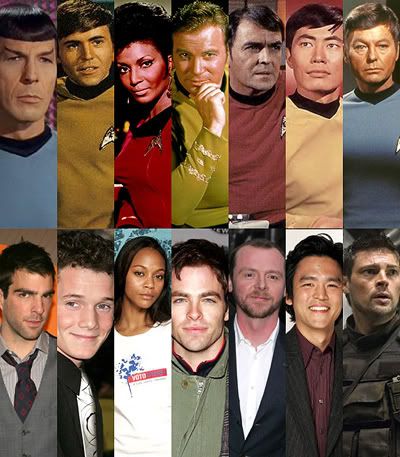
Beam me up, hotties. Image from screen.ology.


The movie follows an alternative history (apparently!) of the first Star Trek crew: Captain James T. Kirk (Chris Pine, stud factor=meh) the Stereotypical American Hero, Spock (Zachary Quinto, stud factor=hotness) the sensitive logician, Ahora (Zoe Saldana) the only woman on the entire ship (!?), Chekov (Anton Yelchin) the comic relief, Scotty (Simon Pegg) the other comic relief (he can't take much more of this, Cap'n!), McCoy (Karl Urban, stud factor=maximized) the badass doctor, Sulu (John Cho) the cute. Oh yeah... and Spock (Leonard Nimoy). When not busy battling black holes, time loops and angry Romulans (led by a nearly unrecognizable Eric Bana), the crew have the usual personality clashes. We also get a very emo Spock (yay!). Then we get two Spocks (best film ever?!).

Anyway, as is usual in these highly mainstream Hollywood hero myths (Dark Knight... Lord of the Rings... Star Wars...), we at the PPCC find the Stereotypical Hero insufferably boring (imagine no Batman! no Frodo! no Luke! sigh, wonderful). With his blue-eyed, tough guy cowboying around, Captain Kirk is our unfortunate companion for much of the film. And alas, Chris Pine has none of William Shatner's demented, self-referential genius. The supporting cast, however, is colorful and lovable - indeed, they make the film.


Waddup, homes? From toybender.


In the land of Geekdom, Star Wars fans and Trekkies hold an ancient rivalry. A rivalry which we at the PPCC, in honor of our love, were more than happy to uphold. But the wall has come down. Bridges are being built. We are abandoning our prejudices and welcoming the Trek people with open arms. While we have long secretly admired the Trekkies for their pioneering work in fandom (dammit, man, they invented slash!), we can now openly say: Star Trek is a cultural force to be reckoned with, and we are now more than happy to reckon. In fact, we'd be quite happy to reckon with it a little more... perhaps via a sequel? And, as this article argues that maybe an Indian actor should be playing the Indian character of "KHAAAAAAAAAAAN!" in any Star Trek: Wrath of Khan remakes, may we suggest... Anil Kapoor? Or have you your own suggestions, PPCC readership? Make yourselves known!


Too much?

Sunday, 10 May 2009

WHAT?!

CHOCOLATE!

A PUPPY!

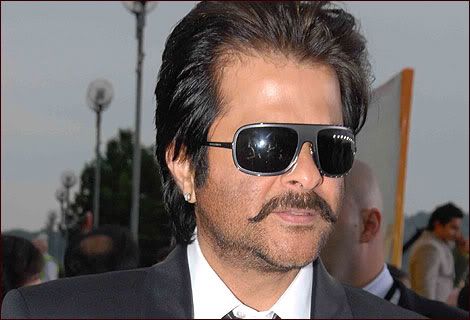
ANIL KAPOOR!

...AND HIS BIG FOREHEAD!


FOR HIS BIG BRAIN.


THAT ELLIPTICAL MACHINE WE LOVE IN THE GYM!

XKCD!

NEUROPLASTICITY!

ELECTRONIC MUSIC WITH LOTS OF REVERB THAT GOES, WWWEHHHHHHHHHH!

"ARRE, YAAR!"

THE BOOM DE YA DA SONG!

ABSURDIST BLOG POSTS COMEDY!

CAPITAL LETTERS!!!!


THAT'S WHAT!!!!!!

Saturday, 9 May 2009

WHO?

ANIL KAPOOR, THAT'S WHO!!!!!!!!!!


JHAKAAAAS!!!


That is all.