Wednesday, 27 October 2010

Speakeasy (2002)


We were kind of hoping Speakeasy would be a hidden gem, something demonstrating the grassroots screenwriting talent that Matt Damon and Ben Affleck's Project Greenlight was supposed to uncover. Unfortunately, Speakeasy - the runner-up for Project Greenlight's first year - demonstrates only how mediocre and uninspired screenwriting can be.

Failed magician Bruce (David Strathairn) lives a monotonous, suburban existence with his wife, Sophie (Stacy Edwards), and scrappy black labrador. One day, he gets in a minor traffic accident with Frank (Nicky Katt), a pawn shop owner, and they become friends. Sophie's father (Arthur Hiller) is deaf and Sophie doesn't like this - in fact, she's not on speaking terms with him. Frank's daughter (Gage Golightly) is also deaf, but Frank is OK with this. One day, a former classmate of Sophie's, now a successful psychiatrist, Dr. Addams (Christopher McDonald), starts flirting with Sophie and giving her informal therapy sessions at the local coffee shop.

The writing and direction, both by Brendan Murphy, crawl along with amateur aimlessness - the tone is indistinct, the point mysterious. At times, we sensed that it was going for an American Beauty-type vibe of quirky, semi-philosophical cynicism. But we really can't be too sure, since the music was so campy and the writing so full of lazy clichés. Some melodrama is weakly injected via Sophie's "therapy" - where she relates the various traumas of her youth, and Dr. Addams becomes a caricature of jealousy - but it's forced and inorganic.

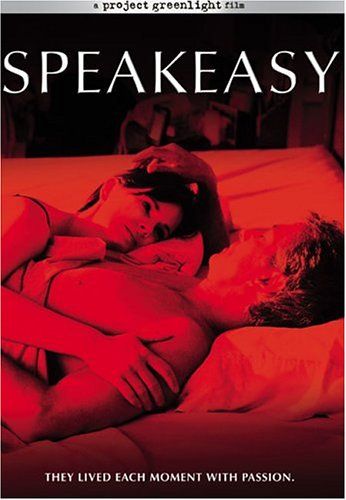
Such a shame! That moody, red-lit poster deceived us - we had imagined all sorts of grimy, exciting storylines full of envelope-pushing, slightly surreal ideas. You know: David Strathairn is a unicorn hunter addicted to magical space glitter; his ladyfriend is only one incarnation of a hive mind. Music by The Mars Volta. Dystopian. SOMETHING LIKE THAT. ANYTHING. Not this unimaginative pap.

Sunday, 24 October 2010

Talk Radio (1988)


We don't know much about freedom of speech. Which probably sounds funny, given that we regularly air our views on a globally visited website for fun. But seriously - we don't know much theory about it. We know there are rules against hate speech, and there are rules against yelling "Fire!" in a crowded movie theatre, but we've never really explored it.

Talk Radio, the classic play-turned-movie written by and starring Eric Bogosian, directed by Oliver Stone, explores one of America's most frequently used self-descriptions - a land where free speech exists. Misanthropic, self-loathing, sarcastic and genius Barry Champlain (Eric Bogosian) is a "shock jock" on a local Dallas, Texas, radio station. He periodically belittles and humiliates his late night callers - and indeed his callers run the gamut of society's detritus: rapists, neo-Nazis, drug addicts and idiots. The show - Night Talk - is insanely famous, if only for being provocative, Barry is very rich, and now, thanks to the efforts of his eager exec (a young Alec Baldwin), Night Talk is about to go national. Barry receives this news with a mix of outrage, horror and elation - frantically, he calls his ex-wife, Ellen (Ellen Greene), to come to Dallas to visit him.

Talk Radio reminded us, in tone, of Frank Miller's visions of America: it is a post-industrial wasteland in every sense of the word. It is morally bankrupt, alienating, sinister, dystopian, disgusting and very, very vapid, populated entirely by stupid sheeple who subsist entirely on pornography and violence. Homosexuals, feminists and non-whites are periodically bashed by the multitudes of narrow-minded bigots (minions of the Man, I guess) - and those bigots are in turn hated by Barry (or Frank Miller's gloomy superheroes), who acts as a sort of court jester.

This sort of high-minded gutter porn is, normally, not really our thing.

It's not really how we see things in America or elsewhere, and we even have some beef with this sort of mainstream misanthropy (which we'll discuss in more detail below). For now, suffice to say that we can take it in small doses and only if done in certain ways - e.g. by telling ourselves this must be what it's like in Dr. House's brain. And like all good Angry Young Misanthropes, Barry is funny. His jokes are scathing and rapid; they yoked shocked barks of laughter from us, or else they just left us bewildered by the sheer audacity. "How do you dial a phone with a straitjacket on?" he demands of one caller. "I don't care what you think!" he tells another. "No one does!" Often, he just hangs up on the person mid-sentence, mid-sob, mid-scream.

The ultimate message seems to be about the inherent dangers of free speech - evil bigots might try to violently shut you up, after all - and, therefore, the inherent disappointment we should have in ourselves with wasting our precious right by filling our minds and airwaves up with vapid nonsense. "What do you want to talk about?" Barry demands, spittle flying. "Baseball scores? Your pets? Orgasms?" When people in America, China, Cambodia and everywhere have fought and died for free speech shouldn't we honor that by… well, not wasting it all on pap? (Okay, we did feel a pang of this disappointment when we saw someone mention on a tech blog about how all our bandwidth gets choked up by Lindsey Lohan videos being e-mailed around.) Even as Barry claws towards success (and there's a great extended flashback which shows his meteoric rise as a shock jock), he is horrified that he should be so popular: in one memorable monologue, he rages at this popularity.
Yes, the war is coming! Yes, the world is shot to hell and you're all goners! Everything is screwed up and you like it that way!
This may as well be Barry talking directly to us. "You're fascinated by the gory details!" he screams. And it's true, we are. This movie is full of gory details - and you couldn't help but watch it.

In fact, this ironic/not-ironic hypocrisy of making a film about free speech's importance where the main speech freer meets a sorry end is endemic to the entire history of the play. There's a weird, Brechtian interplay between Barry versus his listeners, and Barry versus us. He is criticizing us; we may be nodding in sage agreement that bigots are bad and we shouldn't waste our airwaves on them, but here we are… wasting our airwaves on hateful people getting humiliated.

But the weird interaction between reality and the play goes deeper than that. This was a play based on a real event which was based on a fictional novel. It gets even stranger. When the play was revived on Broadway in 2007, several of its advertisements were censored. The feedback loop between Life and Art never seemed so narrow.

(A more detailed explanation of why we don't like Mainstream Misanthropy, as exemplified - to an extent - by this movie and - to a larger extent - by Frank Miller's and Alan Moore's graphic novels, such as "The Life and Times of Martha Washington" and Watchmen: why are homosexuality and feminism always equated with the end of society? This is almost always spouted sarcastically by, we are meant to believe, an indignant hero who is not homophobic and patriarchal. But we think that just by normalizing this language as "one of the typical reasons 1980s society was seen to be going down the tubes" is even dangerous in itself. You can't always expect people to detect the facetious!)

Anyway, this is definitely recommended - it's a challenging, electrifying piece.

Saturday, 23 October 2010

Time Stands Still (2010)


For however powerful and intriguing the play Time Stands Still was, it left us unsatisfied. Alas.

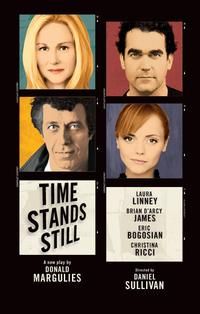
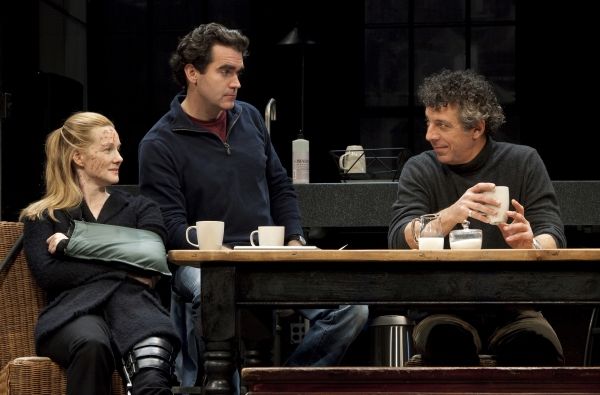
Ostensibly dressed up as a topical drama about a traumatized photo-journalist, Sarah (a graceful, fiery Laura Linney), freshly returned from Iraq, it covers instead a much larger issue of postcolonialism, justice and white guilt. It doesn't go into the nitty gritty surrounding the politics of Iraq or Afghanistan (as we had expected it to), nor the debates around humanitarian aid; its scope is less political and much more philosophical and, to its detriment at times, vaguer. Sarah and her partner, James (Brian D'Arcy James), are both damaged adrenaline junkies - forever chasing the next war zone, the next famine, dancing with death and flirting with notions (delusions?) of grandeur. Does their work mean anything? Does anyone back in the "developed" world actually notice Sarah's pictures or James' essays? When they turn Sarah's latest visit to Iraq into a glossy coffee table book, are they "profiting from the suffering of others"? (Sarah's words.) They are a dark, brooding pair given to an epic sense of significance: even as their romantic lives get mixed up and similarly scorched by their war zone wanderings, it's something they have great difficulty living without. They are, they feel, doing something very important.


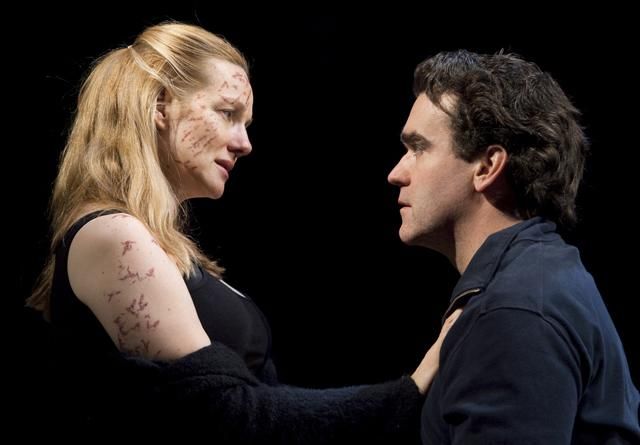
Laura Linney and Brian D'Arcy James.


Which is not the case for their close friend and photo editor, Richard (a rakish Eric Bogosian), who - while admitting to "living vicariously" through the duo's adventures - feels likewise shaken by their breakdowns and near-death experiences, eventually swinging around the spectrum to a philosophy of embracing vitality and comfort, debauched West or not. His new love, a young event planner naif named Mandy (Christina Ricci), is both a point of derision between the three old friends and a testament to Richard's dedication to his new life. No more hunting for suffering.

There's no doubt that Time Stands Still is very good - the interplay between the characters is dynamic, energetic and smart. While they risked becoming caricatures - especially Mandy - the writing respected their various positions, and they all played important roles in presenting these "options" for the liberal mentality. How guilty are we supposed to feel for the suffering of those in absolute poverty? Or in war? How responsible is the West for these disasters? These are thorny topics, and the play does a great job of, for example, establishing an uneasy (and funnily Brechtian!) parallel between the escapism of Hollywood horror movies and the "escapism" of going into a land of suffering and documenting it (and the escapism of watching a play about these escapisms). There's this sense of intrusion - Sarah has a great monologue about this, when she describes a PTSD flashback about a market bomb in which she was urged by a wounded woman to "Go away! No pictures!" - and there's a concurrent sense of detachment, of hiding behind a lens (or a coffee table book), all in the (noble?) name of atonement for past geopolitical grievances.


Is it wrong that (1) we think Eric Bogosian looks like Anthony Bourdain, and (2) this renders him hot?


We felt unsatisfied, though, because the play spent so much time setting up this complex, layered look at the effects of living in a powerful white hegemony on white people - just how guilty should white people feel, as humanitarians? as liberals? etc. - but then gave essentially no answers. There was even a scene in which James and Sarah have a raging fight about each other's "imperialist" attitudes, and how even their romantic entanglements carried tinges of exoticism and Orientalism. This is a scathing remark - and it's a very valid argument. Yet it is never pursued; the writing backs away from really damning Orientalists, or damning people who damn Orientalists. We think partly this had to do with the playwright (Donald Margulies) never criticizing Sarah as much as he could have - and perhaps should have. Despite the writing's nominal criticism of Sarah's less virtuous motivations - her trust fund baby guilt, her romanticizing of "adventures", the obvious, self-important pride - it never really undermines her. As a result, the audience never gets an opportunity to really question her role in the same way the other three are questioned. A little more subversion would have gone a long way in challenging us to think more deeply about these issues. At the moment, we were left only with the questions, and no options given as answers.

Nonetheless, it was an amazing opportunity to see the absolutely lovely Laura Linney on stage! She was really fabulous, and gracious to her adoring legions who waited by the cast door later. Christina Ricci did a great job keeping the humanity in her borderline cartoon character; and we may have a crush on Eric Bogosian now (BUT WHATEVS MOVING RIGHT ALONG). Brian D'Arcy James had some strong moments, but we had a hard time finding consistency in his performance. Time Stands Still is playing at the Cort Theater in New York.

Also, we think Saviors and Survivors might be an interesting companion to reading/seeing this play.
Thursday, 21 October 2010

Lone Star (1996)


Back in high school, the PPCC was taught that the old "melting pot" aphorism of American culture was considered passé, insensitive even, since it implied a homogenization of the diversity of immigrant cultures. Instead, we were supposed to say America is like a "tossed salad" - everyone jumping around together, joyous, distinct, fresh and crispy.

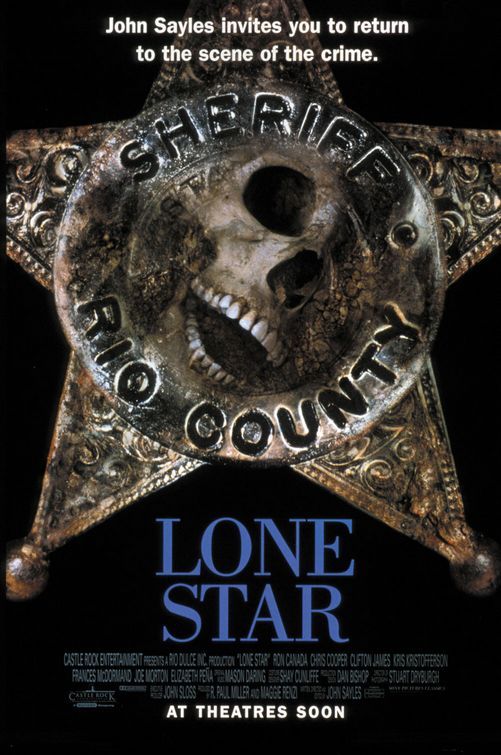
John Sayles' ballad about Texas, Lone Star, brings the "melting pot" idea back - and with a vengeance. A story about a Tex-Mex border town on the Rio Grande, it is all about intermingling - of the past and the present, of cultures and ethnicities, of legend and fact. Ultimately, the movie concludes that we're all a big family. But don't begin vomiting at the sight of such a Disney-style simplification: when Sayles says family, he means FAMILY. Angst-ridden, constantly clashing, unwillingly linked and reluctantly dependent on each other. The kind of family that stresses you out at the holidays. Not the kind of family that seems like a good idea when you're living alone in your apartment, independent of them and stress-free.


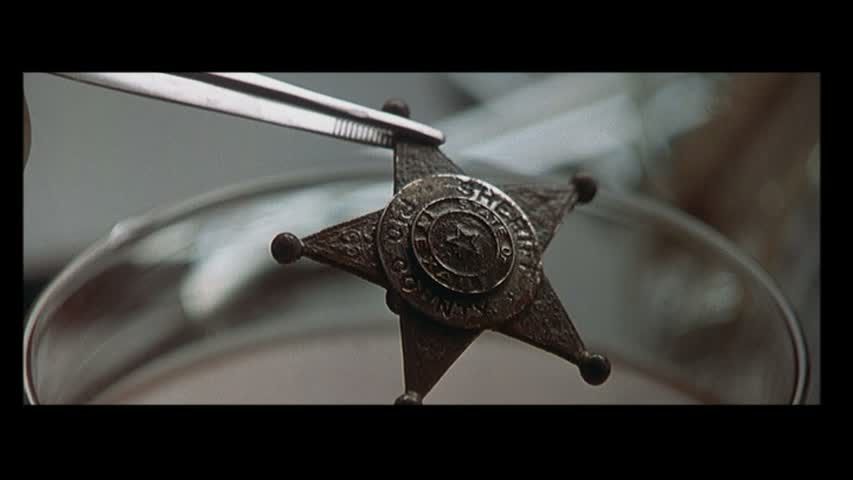
Ah ha! I have found a single star in a state of the lone star!


A visual triangle. The inner film nerd approves.


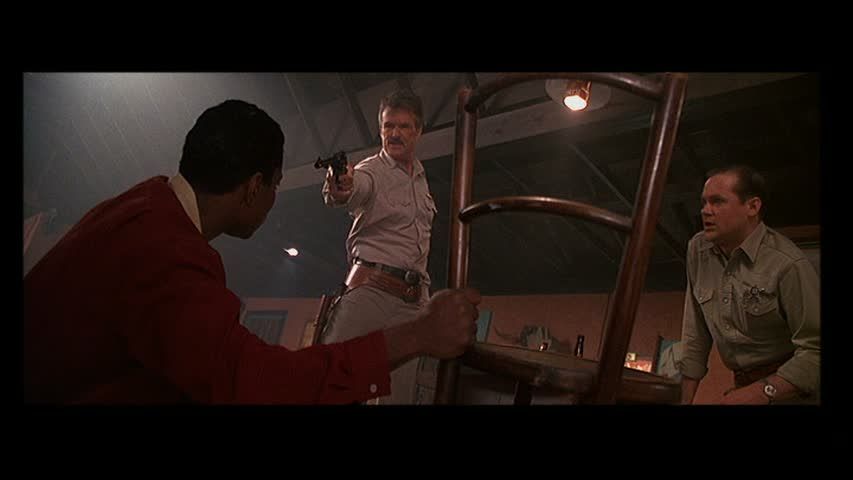
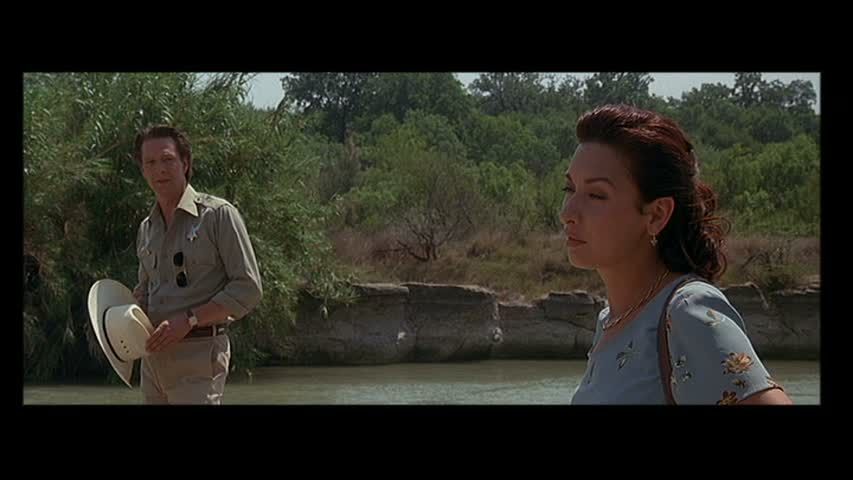
Rio County Sheriff Sam Deeds (Chris Cooper) sighs and snorts his way through sheriff life - he is tired of the realpolitik surrounding his job ("I'm a jailer," Sam laments. "I run a sixty-room hotel with bars on the windows."), he is tired of living forever in the shadow of his legendary father and previous sheriff, Buddy Deeds (Matthew McConaughey, in flashbacks), and he is tired of pining for his high school sweetheart, schoolteacher Pilar (Elizabeth Peña). One day, when two of the local army guys (an excellent Stephen Mendillo, Stephen J. Lang) uncover a human skeleton and charred sheriff's star (a… LONE STAR, GET IT!) in the desert by their base, Sam is called in to figure things out. And he, and everyone else, just assumes it was the deed (!) of Buddy Deeds finally taking vengeance on the evil sheriff of yore, Charlie Wade (a vile Kris Kristofferson). Sam's investigation into this 40-year-old murder pulls in all the tangled history (and tangled present, for that matter) of the town - particularly the race and power relations between the African-Americans, Mexicans (and Mexican-Americans), "Anglos" and Native Americans.


Fathers and sons.


And epic longing. (Yay for Chris Cooper, btw!)


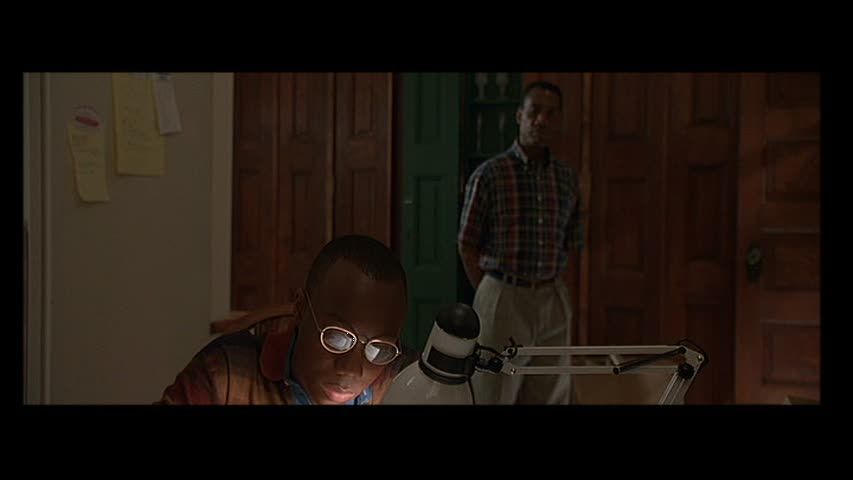
To this end, there are some great subplots which run tangential to the Deeds crime investigation - such as the Payne family, which have not one but two pairs of tense father-son battles: that between bar owner Otis (Ron Canada) and his military son Delmore (Joe Morton), and that between Delmore and his resentful teenage son Chet (Eddie Robinson). The Payne scenes manage to talk about militarism, estrangement and disappointment, and changing race relations. Then there is the Cruz family, with matriarch Mercedes (Miriam Colon), who runs a Mexican restaurant, insisting that everyone speak English ("Speak English! This is the United States!") and promptly calling border patrol every time she spots illegal immigrants sneaking through her property (she lives next to the river), and her daughter, the very same Pilar for whom Sam yearns.

Overall, it's a rich tapestry - a soup, even! definitely not a salad - with a variety of perspectives and emotional tones. The final, very American message of tabula rasa (which could be another way of saying cutting ties or turning away from heritage when it gets too complicated...) is delivered effectively and uniquely. As Otis comments, "Blood only means what you let it." Yeehaw!

Tuesday, 19 October 2010

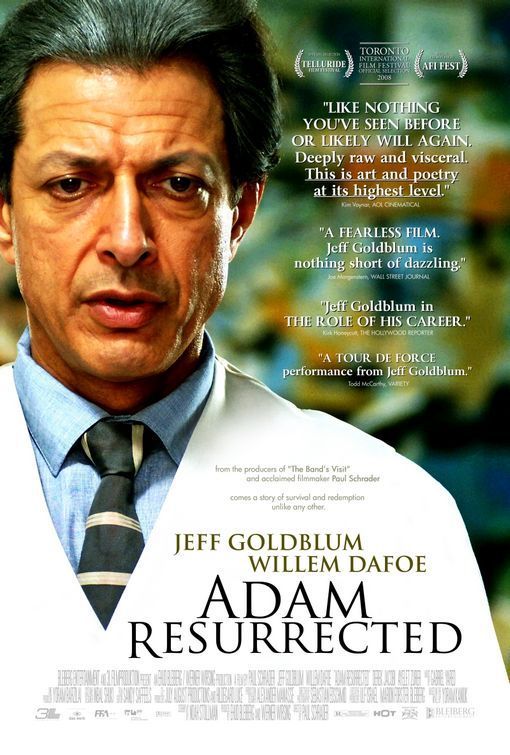
Adam Resurrected (2008)


Adam Resurrected is a bizarre, hypnotic tragedy about one German-Jewish circus performer, Adam Stein (Jeff Goldblum), in the years immediately following the Holocaust.

Essentially a character piece, we meet Adam one day in 1960s Tel Aviv when he is - apparently not for the first time - sent to an insane asylum for Holocaust survivors. He is charismatic, loopy and flamboyant - so, basically just Jeff Goldblum. And everyone loves him - the patients, the wry head psychiatrist (Derek Jacobi), the sexy nurse (Ayelet Zurer) and (as always) the PPCC. During this introductory sequence, we get scratchy, black and white flashbacks to pre-war days when Adam was even more Jeff Goldblumy - we learn of his zany cabaret-vaudeville standup routines, his adoring family, and, ominously, his almost magic(al) realist ability to read the mind of one near-suicidal young German, Klein (Willem Dafoe). We should pause here to note that Jeff Goldblum doing his schtick can be very loopy indeed, and his German-Yiddish-English "Ja-haaa!" jokes were genuinely very funny. Ja, ja, ja!

Adam swiftly falls apart, figuratively and literally, when he meets a mysterious patient at the institute - a young boy (Tudor Rapiteanu) who is convinced he is a dog. This sends Adam reeling back into his own private hell, and we relive his trauma of being taken to the concentration camp, re-meeting Klein - now a Nazi Commandant - and being forced to live as Klein's dog while his family suffers in the camp. Here, both Adam and the filmmaking go off the rails - drunken ranting (and drunken camera angles), extreme close-ups and the previously whimsical imagery turning nightmarish. Think Pan's Labyrinth for the same mix of surrealism, magic(al) realism, fantasy and horror. The restoration, or titular "resurrection", of Adam takes the form of healing the boy who thinks he is a dog, whom he names David ("King of the Jews! Descendant of Adam!"). A number of Biblical allusions follow, as well as expected "weeping clown" archetypes.

This film really surprised us. First, because the reviews for it had been so lukewarm (the New York Times called it "flat"!). We were expecting something earnest but dull. Instead, we got something screwy and challenging and, often, gut-wrenching. Second, this is a Holocaust Movie that still manages to remain a Jeff Goldblum Movie - that is, the weird, highly potent charisma that Jeff Goldblum seems to chug out from his pores isn't stifled for this very serious topic, but is instead channeled in an ingenious and powerful way. We were very skeptical of him playing straight and serious - he's never really been a heavy; his performances seem to subsist entirely on bubbles and glitter and airy good humor (the Guardian once called him the "Buddha of Hollywood", likening him to a "unicorn"!). We were even skeptical of his German accent. So it was a real shock to see how entirely believable, and yet entirely himself, he was. It was brilliant casting and a brilliant performance: using that very same jester quality which is Goldblum's brand to flesh out the character of Adam Stein. And the characterization was so varied, with rich highs and devastating lows. It was powerful in ways we weren't expecting at all. Did we mention we had to take a breather about halfway through? Our heart was taking a pounding.

It's not a perfect film - we didn't agree with some of its choices, and especially found Klein uninspiring (despite Willem Dafoe's best efforts to infuse Klein with his own kind of nightmarish instability) - but it is an adventurous and imaginative one.

Sunday, 17 October 2010

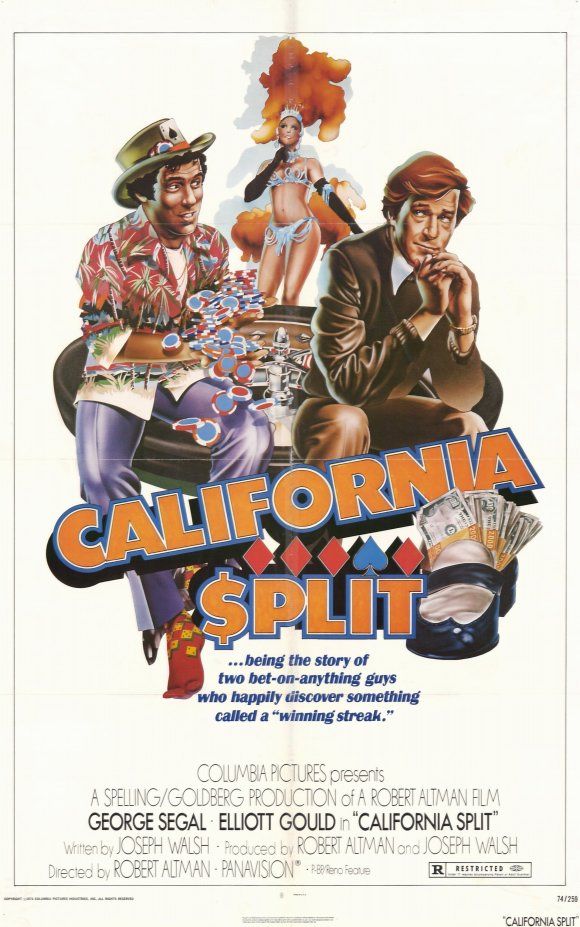
California Split (1974)


California Split should really be called California Existential Vacuum of Woe, but that probably isn't as good a card trick.

An intimate, bleak film, Robert Altman's California Split is the gambling addiction under a microscope. Two serial gamblers, Charlie (Elliott Gould) and Bill (George Segal), meet cute over some low-stakes poker drama and become friends. But, like drinking buddies or heroin buddies or any other type of bad-influence buddies, their raucous, drunken, blazing friendship just makes them spin closer to the abyss that always threatens to consume them. While Charlie lives in a run-down house with two low-level prostitutes, Barbara (Ann Prentiss) and Susan (Gwen Welles), Bill is a yuppie struggling to stay afloat.

Like Altman's other film, MASH, California Split is less about narrative, and more about atmosphere and mood. Here, the mood is grim - almost oppressively so, since there's a facade of 24-hour partying which never honestly admits the deep, psychic cracks that lay beneath the surface. We follow the troupe of four on their picaresque, bohemian adventures - full of chaotic, boozy, grimy locales, dollars flying, the thrill of victory and the crush of defeat. But things just get worse and worse, the stakes climbing ever higher, good humors evaporating, until Charlie finds Bill pawning off all his possessions for one last-chance do-or-die high-stakes gamble in Reno.


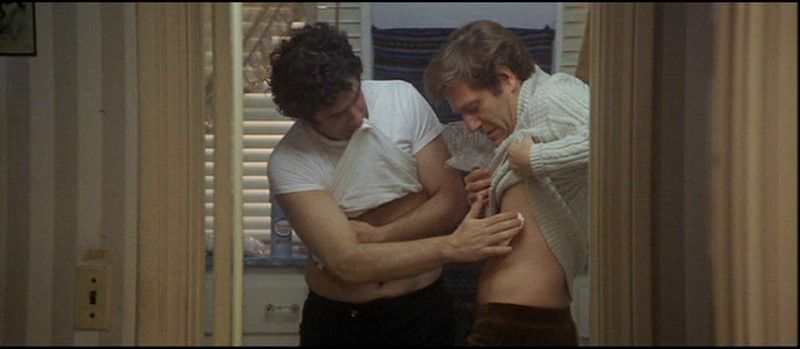
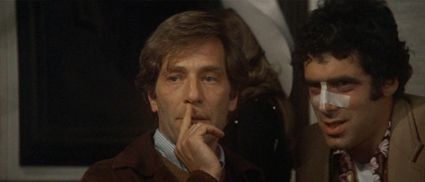
Gambling together, beat up together.


Winning and losing togeeether.


Segal really carries the film as Bill's fall is really the most cataclysmic, breaking even Charlie's heart. We didn't realize George Segal (1) ever did drama, (2) ever was young, and so it was a happy surprise to see him young, and delivering such a powerful performance. Elliott Gould was his usual charming, "all cheap and debonair" 1970s persona. And this movie is your pretty standard 1970s American indie about deprivation, depravity and really awesome fashion.

Saturday, 16 October 2010

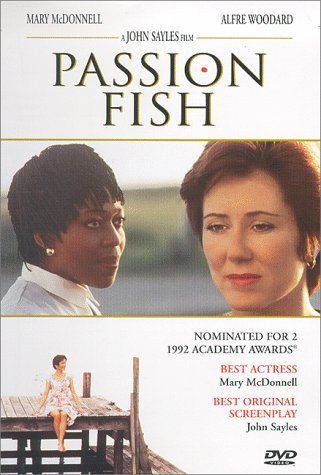
Passion Fish (1992)


John Sayles is a great director. He sets up clever symbols or reassuring stereotypes and then gleefully subverts them. Passion Fish is not his strongest film (we liked Limbo more), but it is another interesting, atmospheric look at a broad philosophical question set within a particular American niche culture.

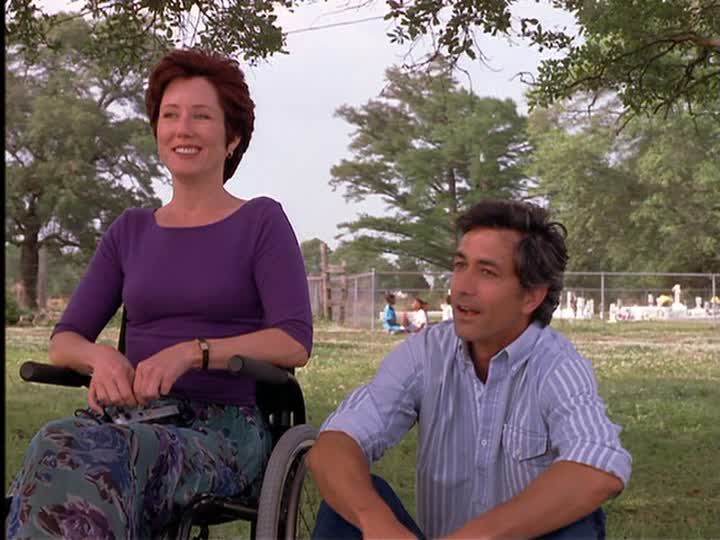
In this case, it's about the painful, crucial clash between harsh realities and dreamy fantasies, and the setting is 1990s Louisiana. May Alice (Mary McDonnell) wakes up one morning to find herself paralyzed from the waist down. A successful soap opera star, she has just been in a car accident. With his wonderful economy of storytelling, Sayles shows us shots of May Alice the Misfit of Rehab. She falls further and further into depression, eventually retreating to her childhood home in rural Louisiana, where she spends her days drinking, watching daytime television and scaring a series of caretakers away.


Soap opera as Greek chorus and weird Freudian fantasy projection of our own harsh realities.


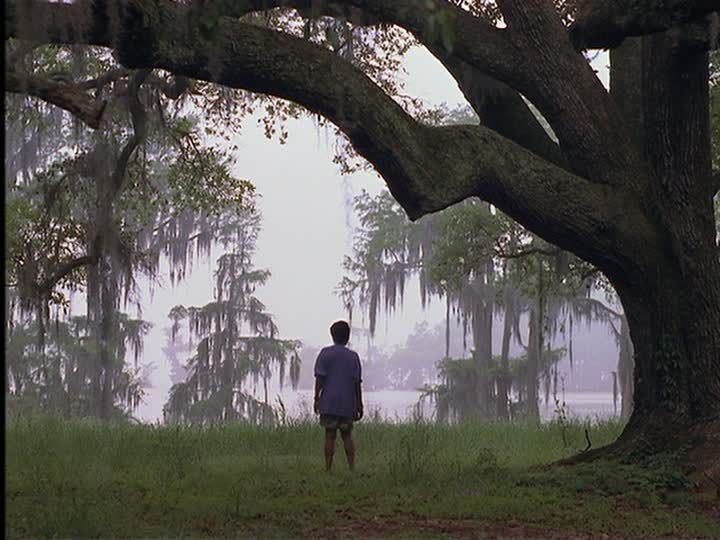
The restorative properties of fine Louisiana flora.


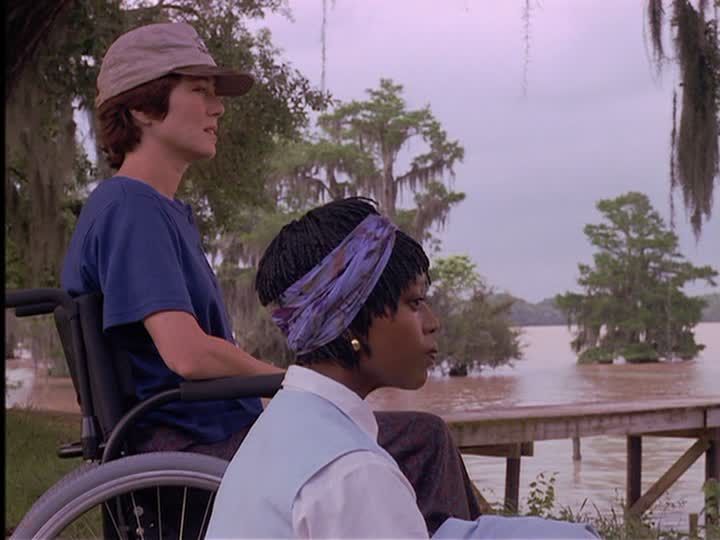
That is, until Chantelle (Alfre Woodward) arrives. Chantelle is quiet, evasive even, but also straightforward and steady as a nurse. She provides May Alice the support she desperately needs to get her life back on track and, as the physical therapist constantly chides, build her strength.


Both damaged, both on the road to recovery.


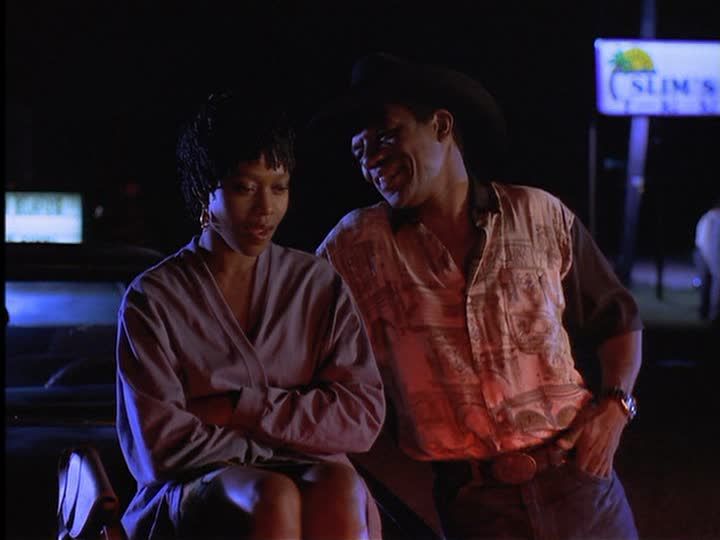
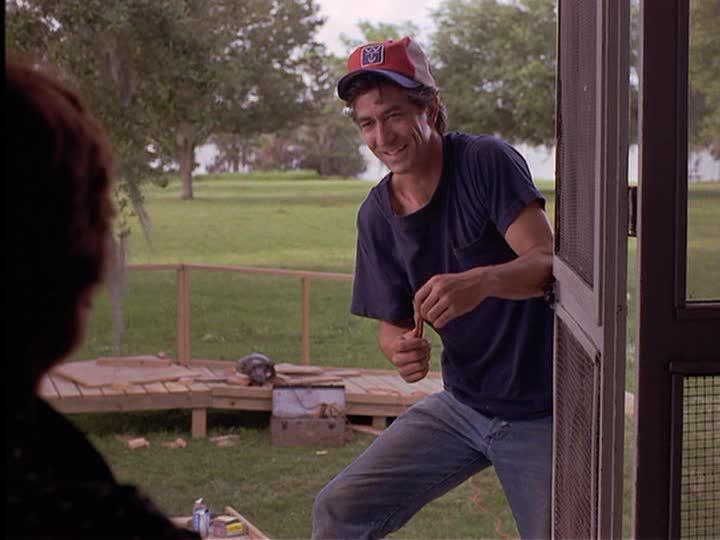
Meanwhile, a parade of characters troop through the family home. There is May Alice's hard-drinking dandy of an uncle (what shoes!). There are her former childhood enemies and her vapid New York City friends. And then there are the men. In a rare subversion of typical gender norms in film, this film not only passes the Bechdel Test (with flying colors!), its only two recurring male characters are sex objects. One is Sugar LeDoux (Vondie Curtis-Hall), a Frenglish-speaking Creole (or is it Cajun?) strutting peacock who flirts and charms Chantelle relentlessly. The second is Rene Boudreaux (David Strathairn), a Frenglish-speaking Creole (or is it Cajun?) sweaty handyman who flirts and charms May Alice relentlessly. While Chantelle of the Harsh Reality proceeds into sexy manfriendship with caution, May Alice of the Crushed Fantasy falls hard and fast into thick, soap operay, David Strathairny love. LOVE, she says.


Chantelle and Sugar.


May Alice and Rene.


There are two reasons we didn't heart this movie as much as Sayles' other work. First, he has a tendency to be really, really strong on the fast-paced, spare storytelling style - when the Black Sox are setting up their paydays, when Alaskans bemoan their self-inflicted purgatory - and, in Passion Fish, he gets bogged down with the whole cycle of self-pity/self-healing. Given that the restorative properties of soulful, rural areas is already well-established in cinema, a lot of this could have been sped up. (Though having Mary McDonnell use the Yank accent for moments of self-pity, and the drawling Louisiana one for moments of clarity and equanimity was a nice touch.) Second, we were disappointed that he didn't push some of the envelopes further. For example, mixed ethnicities are an integral characteristic of modern Creole and Cajun cultures, so it was a let-down to see the two couples pair off along racial lines. (By the way, did you know that David Strathairn is of mixed heritage? Pacific Islander and Scottish. Yeah.)

(By the way, when David Strathairn said "bon chance!": sexy mantimes!)


Gratuitous David Strathairn shot. Yes, he pwns this blog these days. Deal with it!


But don't let these mild criticisms deter you. This is still another strong entry by our current favorite director. Can we call him an auteur? Or, perhaps a more urgent question: why is there no John Sayles Box Set?! Why is it not in our hot little hands!?! Right now?!!?!

Thursday, 14 October 2010

The Rivalry (2009)


Okay, so this isn't a movie, but whatever.

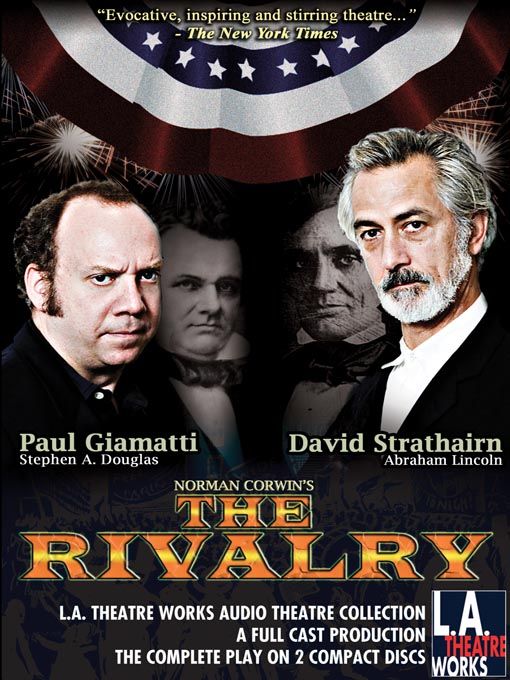
We finally got our hands on the audio recording of The Rivalry, a play that was performed at the LA Theatre Works in 2009. Written by Norman Corwin, The Rivalry examines the legendary marathon debates between incumbent Senator Stephen Douglas and a young(ish) Abraham Lincoln for the Illinois Senate seat in 1858. It stars Paul Giamatti (!) as Douglas and David Strathairn (!!!) as Lincoln. Holy mother of God.

So we haven't reviewed it yet, but the HBO miniseries, John Adams, was something of a Big Event here at the PPCC, and it rekindled the flame we have in our hearts for American history. Gosh, we do like our American history. And Civil War stuff is one of our favorite topics. Hence our nerdgasm upon seeing Paul Giamatti, of John Adams fame, and David Strathairn, of glorious John Sayles movies and, of course, Good Night and Good Luck, in a play about that fertile, fascinating period.

The play does a great job of capturing the character of Lincoln (we're not as familiar with Douglas - shamefully). Apart from being, well, really tall and vaguely noble, not many know that Lincoln also had quite a high-pitched voice, suffered from recurring bouts of serious depression, and was famous for telling good jokes. This is all (wonderfully) exploited in the play, what with Strathairn's wry, drawling debate style and - typical for Strathairn roles - underlying sense of the dignified yet damaged. Giamatti brings his John Adams-the-firebrand passion to the role of Douglas - indeed, the story is told from his point of view, and it really raises the historical figure of Douglas out of his "racist guy who lost to Lincoln" hole (well, in our heads) to someone much more complex and intriguing.
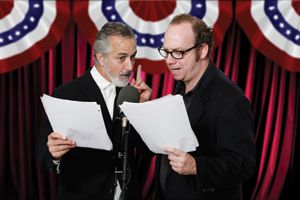
Mostly, we just follow the debates - the main argument between the Democrat Douglas and the Republican Lincoln was over slavery, and whether states had a right to maintain their slavery-enabling status quo, or whether the Federal government was justified in abolishing slavery on a nationwide scale. The debate over this issue was eventually one of the things that split the country in two - something both Douglas and Lincoln are anxious to avoid during these debates, even if both are pessimistic. And the debate itself is passionate, if unnerving - they debate over the relative inferiority of races (and if such a hierarchy exists), over the Declaration of Independence's interpretations ("…that all men are created equal…"), over the rights of the state versus the rights of the nation. Everything is done with great passion, debating cleverness and respect. The arguments are exhilarating and maddening.


Woohoo!


There are also brief, revealing interludes - the "backstage" moments between the two men and, occasionally, Mrs. Douglas (Lily Rabe). In fact, one of the best bits is when Mrs. Douglas runs into Lincoln on the train; their candid confessions and respectful disagreements are touching. Is it time for shameful, totally inappropriate yet totally awesome historical fanfic? WHAT?! I'M JUST SAYIN'. It's probably out there already, knowing the intertoobs. (If you find it, tell us.) (Actually, maybe I'll just get down to writing it myself.)

Now, if they only turned these debates into an anachronistic, ironic, Jon Stewart-flavored punk rock musical, life would be complete.

Saturday, 9 October 2010

Evidence of Blood (1998)


Evidence of Blood is a B-movie mystery that aims low-middle and hits pretty squarely. The only real reason to watch this film is for the charming and attractive David Strathairn and Mary McDonnell, who mostly do what they usually do (dazzle us with their raw physicality).

Set in wintry Georgia, with southern accents that come and go, this is a land of jeans, diner coffee and pick-up trucks. Crime novelist Kinley (David Strathairn) returns to his hometown after the death of his childhood friend. While there, he uncovers fresh evidence on a 40-year-old murder mystery that still haunts the town to this day. The convicted murderer's adult daughter, Dora (Mary McDonnell), is also busy with bringing her deceased father to justice.

There are some of the usual noir trappings - mysterious car headlights following the hero at night, explorations down wells (also at night), nightmares and lots of sexy sweating into bedsheets, the parallel between serial killers and the crime fighters and their perverse obsession with violent acts, and lots of people going, "Just let it go, ya hear!"

But this is like Diet Mystery, and even the southernness is lightly done. At least, David Strathairn can't seem to decide whether to do the accent or not. Whatevs! That's OK! He and Mary McDonnell are so lovable regardless of what they do or how hard they try. They have a nice chemistry as well, what with Mary McDonnell's Laura Roslin-style searching stares of warmth and goodness coupled with David Strathairn's Jumpin' Joe-style evasiveness. Nice "jelly roll", guys. PPCCkapow!

Friday, 8 October 2010

Never Let Me Go (2010)


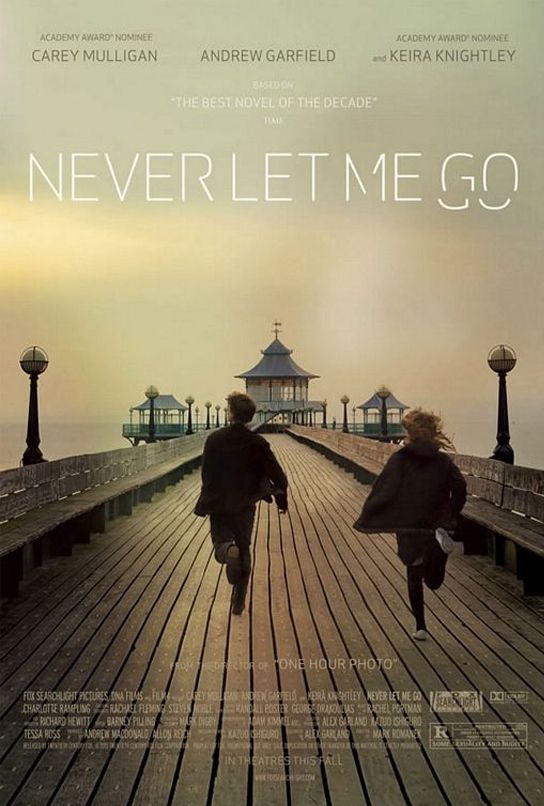
Never Let Me Go, the anemic adaptation of Kazuo Ishiguro's famous book of the same name, puts all its money in a sort of fuzzy, idyllic, Cotswold-saturated nostalgia, and unfortunately it's a waste. Much like the protagonist who waits for people to break up or die, we waited… and waited… and waited for this movie to end.
Ostensibly a dystopia, though we'll remain spoiler-free, the tale is set in recent-past England, and it's a typical look at lost love and wistful childhood memories that abound in other films about the English being bad at love: Atonement springs immediately to mind, with the same country manor setting for a love triangle that goes on for the characters' entire lives. Though another Ishiguro adaptation, Remains of the Day, is also very similar.

Kathy (Izzy Meikle-Small as a child, the cute Carey Mulligan as an adult), Ruth (Ella Purnell as a child, Keira Knightley as an adult) and Tommy (Charlie Rowe as a child, Andrew Garfield as an adult) are students at your Standard English Boarding School - where they frolic in the fields, hide buttons in their little tin boxes, and play deadly amorous games with each other. This could be any other film about the posh and heartbroken, what with their inhibited half-confessions and epic yearning. They grow up, they pine. Some slightly sci-fi stuff happens, but the movie isn't too concerned about it - it's essentially just another way to drive the same point home. And in case you still had any doubts about what, indeed, the point of all this is, Kathy helpfully TELLS YOU THE MORAL OF THE STORY in the end. Thanks, K!

Few films accurately capture the poignant, impermanent transcendence of an English countryside - our recently reviewed A Month in the Country is one of them. Few films know what to do with love too, it seems, and Never Let Me Go presents us with the same fairy tale we've been watching since Disney: pre-pubescent "true love" that lasts a lifetime, the virgin vs. whore (with the whore meeting her usual end), people who are static, unchanging and yearning, YEARNING, so painfully, ALL THE TIME.

Which is not to say that statically yearning unreconstructed romantics aren't occasionally fun. But when their Truly Tragical Romanticness is driven home with a hammer by the director (here, Mark Romanek), we get bored and a little insulted. We get it! We can't help compare Romanek unfavorably to our recent worshipee, John Sayles: in John Sayles's Limbo, there is a stock "nightmare torment angst" scene when tragic fisherman Jumpin' Joe comes awake with a gasp, causing lounge singer Donna to awake and ask what's wrong. A shaken Joe comments only that you can't always save people. END SCENE. DONE. We got it! Great! In Never Let Me Go, there is a stock "sensitive boy has tragical rage angst" scene, which is long, and detailed, and milked for all its juicy tragicalness. We get it! We get it already!

THIS REVIEW WAS ABOUT THE MOVIE NEVER LET ME GO AND HOW WE DIDN'T LIKE IT VERY MUCH. BUT IT'S NOT REALLY A REVIEW ABOUT A MOVIE AT ALL; IT'S ABOUT LIFE. PERHAPS IF ONLY WE HAD VALUED THE PRECIOUS MOMENTS WE HAD ON THIS EARTH WE WOULD NEVER HAVE WATCHED IT/WE WOULD HAVE LIVED LIFE MORE COMPLETELY/LESS TRAGICALLY. SO MANY REGRETS!
(the book!)

Sunday, 3 October 2010

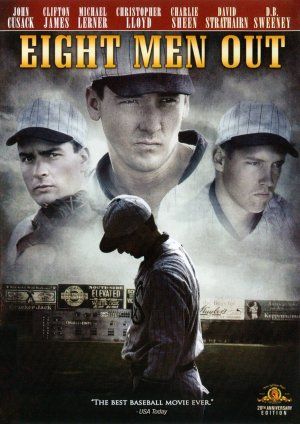
Eight Men Out (1988)


Man! Make it John Sayles Week at the PPCC, this guy is on fire. New favorite rediscovered director!

So much is going on in Eight Men Out, the layered look at the 1919 Chicago "Black Sox" Scandal, but the first thing we thought of was: has any economist written a paper about this? Because this whole story is just screaming for a game theory model.

It's also, like any really good sports movie, an allegory for something much bigger - here, pragmatism versus transcendentalism/faith - and, like our other favorite sports movie, The Damned United, it is fundamentally about defeat. Heck, this movie could be called The Damned Divided.

Back when anyone really cared about baseball - that is to say, back in 1919 - the best team in the country - the Chicago White Sox - were enjoying a powerhouse season, and they were shoe-ins for the upcoming World Series. Betting on baseball games had also become a strong undercurrent to the sport's culture, and this film follows the story of the White Sox's notorious choice to throw the World Series in exchange for $100,000 per player (about $1.3 million in 2010 terms).

The eight players "out" came from a variety of backgrounds and did it for a variety of reasons. Sayles, ever the efficient storyteller, weaves their stories together and gives us fully-fleshed out characters even in one or two scenes. "Shoeless" Joe Jackson (D.B. Sweeney) is the team's star and an illiterate innocent. "Buckie" Weaver (John Cusack) is the team's passionate heart - he plays for sheer love, and is the only player to hear of the conspiracy and refuse to take part. Pitcher Eddie Cicotte (David Strathairn) is - as usual for David Strathairn characters - an older player, and a sympathetic, damaged has-been who is struggling to make ends meet for his family.

When the slimy-in-a-strangely-adorable-way gamblers, "Sleepy" Bill Burns (Christopher "1.21 Gigawatts!?!" Lloyd) and Billy Maharg (Richard Edson), approach the more crooked player (and by that, we mean the one that should have been an economist), "Chick" Gandil (Michael Rooker, of Slither!), the conspiracy to throw the Series is hatched.
"I always figured it was talent made a man big, you know, if I was the best at something. I mean, we're the guys they come to see. Without us, there ain't a ballgame. Yeah, but look at who's holding the money and look at who's facing a jail cell."
-Eddie Cicotte (David Strathairn) commenting on risk exposure - he may as well be talking about the financial crisis of 2007
As in Sayles' other film, Limbo, a Greek chorus is present in the form of two reporters, Ring Lardner (John Sayles himself!) and Hughie Fullerton (Studs Terkel!!!! The Pultizer Prize-winning historian!!! OMGWTFBBQ!!!). You can think of Ring and Hughie as a number of things: at the meta/Brechtian level, they are Sayles and Terkel, real-life commentators watching history happen. They are also the Statler and Waldorf of the film (whimsically cynical), and the C3P0 and R2D2 (OK, well, Sayles is really tall and Terkel really short). Honestly, it was just so amazing on so many levels to have them in this film.

What's great about this film is how it clearly and carefully examines the tangled complexity of the scandal - the exploited, underpaid players, the team warring against itself (John Cusack's role was particularly poignant in this regard), the multiplication of risk and the invention of wealth as the conspiracy goes up the ladder to Big Money (God, it's the mortgage-Wall Street-entire American economy crisis all over again!). But a nice theme that kept popping up throughout the film was the impermanent transcendence of a gloriously good ball game. Like Michael Sheen's doomed Henry V Brian Clough in The Damned United, these players hanker at immortality - and they're on the edge of it. There's a touching scene when Buckie talks about the pure bliss of playing a good game. And indeed, some of the younger players - and their young fans - still dream these dreams. The older wash-outs like Eddie Cicotte and Abe Attell (Michael Mantell), a crooked boxer-turned-crooked gambler, have given up on these dreams and chosen to embrace mammon instead.

The film doesn't demonize mammon, though - instead, largely through David Strathairn's role as Cicotte, the need for financial security is given great weight and sympathy. It's practical, he has a family with young children, he's at the end of his career, and the "straight" path is exploiting him. The film really questions whether the transcendental can put food on the table, and it agonizes with the characters. There's a great exchange between Big Money, as embodied by the investor Rothstein (Michael Lerner), and boxer Atell:
Arnold Rothstein: Look, champ. I know guys like that. I grew up with them. I was the fat kid they wouldn't let play. "Sit down, fat boy'. That's what they'd say "Sit down, maybe you'll learn something." Well, I learned something alright. Pretty soon, I owned the game, and those guys I grew up with come to me with their hats in their hands. Tell me, champ, all those years of puggin', how much money did you make?
Abe Atell: The honest fights or the ones I tanked?
Arnold Rothstein: Altogether, I must've made ten times that amount betting on you and I never took a punch.
Abe Atell: Yeah, but I was champ. Featherweight champeen of the world!
Arnold Rothstein: Yesterday. That was yesterday.
Abe Atell: No A.R. you're wrong. I was champ, and can't nothin take that away.
The terror of becoming a has-been is real: it's on Abe Atell's face when he sees Rothstein's waning interest in him. It's in Eddie Cicotte's strained right arm. Money lasts.

Sayles lets us tread the ambiguity for a while, but ultimately, the film sides with transcendentalism. There's another great exchange between the two crooked pitchers, Cicotte and "Lefty" Williams (James Read), when, after a string of thrown games, a listless Cicotte confesses he doesn't care about the money anymore. Lefty agrees: "Peculiar way of finding that out."

Another highly recommended one.

Saturday, 2 October 2010

Limbo (1999)


Oh man. We forgot how incredibly good this movie is.

Limbo, a moody, intelligent film by John Sayles, is set in present-day Alaska. The state stands in for Limbo itself - if you define Limbo as a state of in-betweenness that goes on forever and ever. Because Alaska is struggling between its past and its future (with a present that tries to market one to the other), between being a frontier to the existential vacuum (visiting retirees and drifting non-people populate the state, and murder-suicides occur regularly "when people get too bored") and being a real home, a place to settle. What it most certainly is not is definitive.

This state of floating, anxious in-betweenness extends to the characters as well. Donna de Angelo ("woman of the angel", an excellent Mary Elizabeth Mastrantonio) is a lounge singer living in her own purgatory - too good for total obscurity, not good enough to make it big, she lives a non-life traveling around the country and singing in anonymous bars. Her dark, teenage daughter, Noelle (Vanessa Martinez), grudgingly accompanies her. When the de Angelos meet "Jumpin'" Joe Gastineau (David Strathairn), both are smitten. And we learn that the perpetually cautious and, well, jumpy Joe is drifting along as well - wounded from long-festering survivor guilt, he broods as a dark fixture at the town's main bar.

Limbo, the film, is presented in two distinct acts. The first act is a complex, layered (and often very funny) introduction to the characters and the world they live in. Sayles layers cross cuts over each other, playing with dialogues to create one strange, cohesive monologue about the State of Alaska (which might as well be the State of Being, considering how existential the story is). The scene in the bar, with all the seemingly unrelated conversations, is a great example of this. Also weaving in and out of this noise is a tour guide, who serves as a Greek chorus. When Joe's half-brother, Bobby (Casey Siemaszko), and his dubious drug dealing past show up, the tour guide walks by telling her retiree audience (and us) about "desperate men" that come to Alaska, ready to kill and be killed.

The second act has its own Greek chorus as well - now embodied in the mysterious, 19th-century frontiersgirl diary that Noelle finds, once she, Donna and Joe end up stranded on a remote, uninhabited islet after a very, very bad mix-up between the Gastineau brothers and some other drug dealers. Noelle reads from this diary every night, and the parallels between the previous inhabitants - a family of three, scraping out a frontier life by fox pelting - and the current trio are obvious to the point of being blunt. That bluntness is OK, though, because of how poignant and universal the feelings are. Joe, Donna and Noelle may be literally stuck in a suspended state of existence, a no man's land, but we are all prone to existential angst and asking the big questions. Why? What?

The movie is ultimately philosophical, but it can easily be enjoyed as a quasi-satirical, Altman-esque character piece of America's forgotten corners, as a touching romance between Joe and Donna, and as a Cast Away-type survival adventure. The three leads are very strong. Mary Elizabeth Mastrantonio is charming, vulnerable and, frankly, amazing when she belts out those bar tunes. David Strathairn's "tall, dark stranger" persona is very well-used - he seems perpetually uncomfortable, visibly tormented. And Vanessa Martinez was great - it's so rare to see teenagers (and teenagerdom) portrayed intelligently and realistically, without caricature.

Highly recommended.