Showing posts with label uk. Show all posts

Wednesday, 16 April 2014

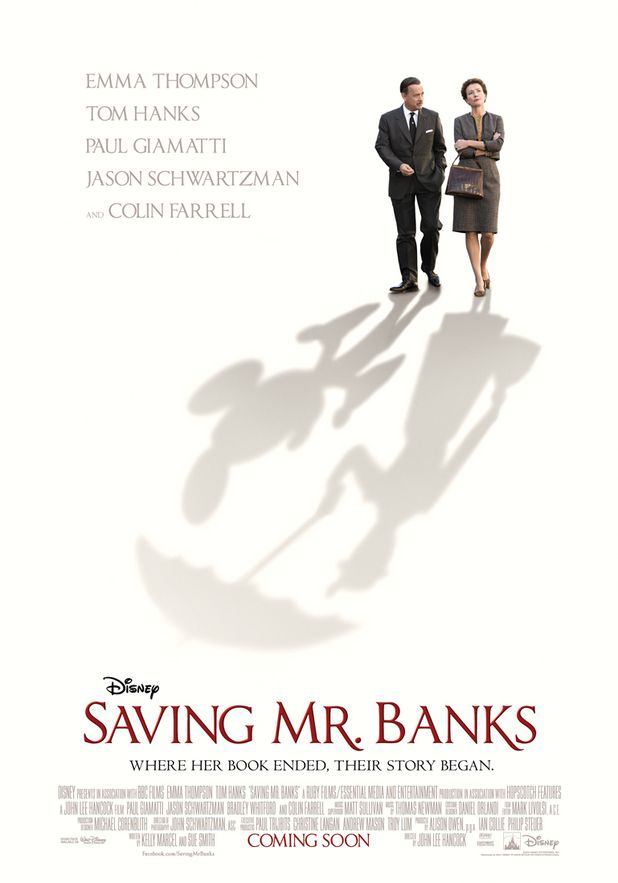
Saving Mr. Banks (2013)


Disney movies, and Disneyism in general, share a couple defining traits:

  • First, orphandom and the destruction of the parent/protector. Most Disney hero/heroines we can think of have been parentless or violently orphaned (Mowgli, Dumbo, Bambi, Simba, Aladdin, Nemo), and this is usually a big part of the plot (and legend-ness of these characters - e.g. the death of Bambi's mother, or Simba's father, are epically remembered childhood proxy-traumas - seriously, we at the PPCC can't watch this scene without choking up).
  • Second, manipulation. Oh my Looord, manipulation.

So it shouldn't come as a surprise that Saving Mr. Banks, a Disney film about Disney films, should feature - at its core - parental detsruction and consequent trauma. It follows a prim pedant named P.L. Travers (Emma Thompson), author of the Mary Poppins books, as she battles over creative control - and life philosophies - with the sunny, Zen Fascist-ish forced optimism of the Disney Empire. SMILE, DAMN YOU, SMILE. Or, as the Dead Kennedys put it, ALWAYS WEAR THE HAPPY FACE. MELLOW OUT OR YOU WILL PAY.

It's a tolerable film, though not nearly as self-aware and glorious as the other Disney-on-Disney film, Enchanted. Where Enchanted snarkily lampooned common Disney tropes - most centrally, the Relentless Optimism stuff - Saving Mr. Banks, instead, is fully (blindly?) behind them. As a result, it feels a little lifeless - even a little dishonest. We're meant to believe that the power of Disney - the plush toys, the California sun, the well-manicured everything - will eventually break into and heal even wintry P.L. Travers's heart. A heart, mind you, that was broken long ago by a charismatic, boozey dreamer of a dad, played (ineffectually) by Colin Farrell.

It's also partly a UK-versus-US thing, with each side (Travers and Walt himself (played distractingly by Tom Hanks as Tom Hanks)) being an embodiement of the national caricature: "terminally enthusiastic American"-ness (as the PPCC was once called!) versus drab, rainy, pessimistic Britishness. It's the triumph of southern California optimism therapy (redemption! forgiveness! pat endings!).

What's annoying is that the manipulation does work. We at the PPCC ugly-cried at this, sobbing as Emma Thompson sobbed, choking up as Paul Giamatti (!) the Soulful Driver choked up. Damn you, Disney! But this saccharine emotionalism leaves a bad taste as well, and it can't hide some of the film's flaws. Many characters are only rough, one-note sketches. Both Hanks and Thompson - both very loved by the PPCC - are unable to muffle their starshine: they seem like themselves, not like Disney and Travers. The childhood flashbacks are needlessly protracted: we know that "Mr. Banks" - Travers' father - is meant to, somehow, need saving. Watching his slow decline is (1) very slow indeed, and (2) a little difficult to sympathize with.

One interesting point was the link back to Travers's father's Irishness, and his adherence to a mystical, dreamy philosophy. Oh, Ireland. Oh, Erin.

This world is just an illusion, Ginty, ol' girl. As long as we hold that thought dear they can't break us, they can't make us endure their reality, bleak and bloody as it is. Money, money, money, don't you buy into, Ginty. It'll bite you on the bottom.
It's ironic - tragic even - then that this story is essentially about that daughter giving into that corporate, "money, money, money" spiral. Or maybe the film is a marriage between money and embracing (even manipulating) the illusion? That'd certainly be Disney in a nutshell.

Wednesday, 19 February 2014

Doctor Who: Midnight (2008)


Some mood music, while you read.

We at the PPCC are huge sci-fi nerds, and yet it has taken us a long (loooong) time to get into that one mighty pillar of sci-fi-ness, Britain's Doctor Who of Britain, starring Britain, co-starring Britishness. Okay, we tease, but, damn, that shit is nationalistic! Which is fine. Most spec fic is notoriously US-centric, after all. Anyway, we're glad we finally initiated ourself. In addition to being nationalistic like crazy sauce, it is also addictive and silly and fun and full of everything.

It's difficult to review a PILLAR, so instead we'll focus on a few things:
  • The episode, Midnight, and how it's awesome and a good intro. (Review)
  • Some Doctor Who themes, and how they run the gamut from awesome to stupid to huh-ness. (Thoughts)
Allons-y, then!  

Episode review: Midnight

Doctor Who episodes seem to come in three varieties:
  • Really trashy, ridiculous, and occasionally awful one-off episodes, featuring a Monster of the Week. As some of our friends assured us, "You do know it's a kid's show, right?" (No, we didn't! But now we do. Oh, how we do.)
  • Really spectacular, mind-bending one-offs.
  • Mediocre-to-good episodes that are usually redeemed by giving us one more crumb along the Great Path of Understanding the Doctor, usually accompanied by a Great Emotional Moment for the Doctor as well. These are exciting.
Midnight falls into the secondary category. It's the perfect gateway episode; you can watch it while knowing nothing of the Doctor and his Interminable Journey. But, of course, the experience is much richer if you do know a bit, since Midnight takes several Doctory themes, and then subverts them in refreshing ways.

Midnight begins on a fancy, diamondy planet called, uh, Midnight. Which is ironic, since it is brilliant and sparkling and very, very sunny. It is also totally hostile to any form of life; the sun being "x-tonic", which is technobabble for "zapping killer laser beam-like". The Doctor (David Tennant) and his Companion, the wonderful Donna Noble (the wonderful Catherine Tate), are taking a (much-deserved) break on Midnight, which markets itself as a party planet. The Doctor decides to go on a nature tour, while Donna lounges by the pool.

On the nature tour, we're introduced to a variety of Typical Human People: there's the suburban couple (Daniel Ryan, Lyndsay Coulsen) and their sullen teen son (Colin Morgan), the bumbling professor (David Troughton) and his geeky assistant (Ayesha Antoine), the flight attendant (Rakie Ayola; called a "hostess" in the episode, since apparently it's also 1950), and a middle-aged divorcee (Lesley Sharp). After lampooning modern commercial flight (endless, chattering entertainment options, tiny peanut packets, and so on), the journey is underway. The Doctor makes a few friends, people joke, and obviously something horrible is looming on the horizon.

We won't give away the horribleness, because much of the episode's genius is the smart and inventive (and cheaply-produced!) monster that we meet. If it's a monster at all. But it's something straight out of The Twilight Zone or Hitchcock: the fear and tension is slow, subtle, and gripping. One subversion of the Doctor Who routine is that the Doctor is as ignorant as everyone else on the ship (and in the audience) as to what the It thing is. Nothing is supposed to live on Midnight, and yet it seems something has? (Note that we can't even conclusively say that something has. One lovely interpretation of the episode is that there was nothing there at all, and everyone just freaked themselves out.)

A second subversion of Doctor Who's usual stuff is that, for once, humanity isn't celebrated, but instead retreats immediately into the banality of evil. When confronted with something difficult to understand and potentially violent, the passengers become scary and bestial themselves. It's reminiscent of J.G. Ballard's comments on seeing the "ragged scaffolding" of suburban civilization strip away, and how rattling that can be. For Doctor Who fans and the Doctor himself, it's especially rattling: usually, humanity has a big ol' crush on the Doctor, and is always happy to be helped. Here, they're skeptical, paranoid, hostile.

Anyway, the craft in this episode is just brilliant. The dialogue: building up tension, revealing aspects of the It thing's otherness slowly, taking sudden turns. Argh, as a writer, the PPCC burned with jealousy at someone having had such a good idea! The music. The acting: Tennant is always pretty damn good, but his role-reversal during the climax was so well-done. As with Lesley Sharp, especially in the earlier moments of being possessed, when she's/it's "learning". Ah! So good. Bravi, bravi.  

Big thoughts  

First big thought: Doctor Who is Buddhism

In fact, it might be as Buddhist as Groundhog Day, and that's pretty damn Buddhist. Except, whereas Groundhog Day is uplifting because it shows us nirvana (the ultimate happy ending), Doctor Who just grounds the PPCC down with its nihilistic woe. Seriously, how can this be a kid's show? HOW?! It is misery by design.

The most obvious Buddhist links are, first, the regeneration, and, second, the eternal woe. Oh, the woe.

One of the central tenets of Buddhism is that life is suffering, and it tends to repeat again and again, until we can break out of it by building mindfulness and compassion and non-attachment. Once you break out of that cycle of life and rebirth, you turn into Bill Murray - i.e. a Buddha, an enlightened being. In Mahayana Buddhism, there's an intermediate stage, called a bodhisattva - that's someone who delays nirvana, staying amongst the merely-stuck to teach about loving-kindness and being all nice and stuff.

You could argue that the Doctor's a bodhisattva. But we wouldn't. Because while he is pretty helpful and sorta nice and all that, he's also fighting the same battles over and over again: those Daleks never seem to die, do they? Nor does the (wonderful) Master (nor should he!).

Similarly, you'd think the Doctor would have learned, by now, that attachment leads to suffering (second Noble Truth in the ol' Buddhism). But he doesn't - constantly seeking out Companions, and constantly, ahem, effing them over. They never seem to emerge unscathed from their adventures. Seriously, after you've lost various Companions to death, dismemberment and being locked in a parallel universe, JUST STOP, DUDE.

So, it's Buddhism, but it's Buddhism at its saddest: the moment after the First and Second Noble Truths (life sucks, and the sucking will go on forever), and before the Third and Fourth (wait, maybe I should stop all this). To use a Christian analogy, it's like modeling a story on the moment after Jesus dies, but before he's resurrected. It's just miserable, dude.

 IS THIS WHAT YOU TEACH YOUR CHILDREN, BRITAIN?!

Which brings us to the second big thought.  

Second big thought: Doctor Who is Nationalism

 "Oh no," someone gasps. "They're headed towards Earth!"

Cut to outline of the UK.

The ostensible backstory is that the Doctor loves Earth like peanut butter loves jam. And that's fine. But Earth is basically Britain. And not only that - it's England. Scottish David Tennant wasn't allowed to keep his Scottish accent because, of all the regenerations a rogue Time Lord could make, of all the species, the genders, the heights and the everythings, the dude's gotta be a white English male every. single. time. Rumor has it the newest Doc, Peter Capaldi, will be retaining his Scottish accent, but this was - apparently - a major BBC decision.

Sometimes, the nationalism stuff is grating. But we know that we have no leg to stand on; most sci-fi is heavily skewed towards the US, and few people even seem to notice. At other times, the nationalism stuff is hilarious and wonderful, such as when an ailing Doctor - remember, this guy's a magical, super-smart, self-healing, time-traveling alien - is on the brink of death and then healed by the power of a CUP OF TEA. (Seriously, that was brilliant.)

Another wonderful byproduct of the Who's nationalism, is its portrayal of workaday Normal British Folk in all the supporting characters: Rose Tyler (Billie Piper), the London shopkeeper. Donna Noble, who's "just a temp from Chiswick!" And their funny families! Everyone is pretty modest, even mediocre. What's nice about the show is that it celebrates this normality for the inherent brilliance it can conceal.

Third big thought: Doctor Who is fandom

Fandom is nice. Fandom is fun. And Doctor Who has a huge, gigantic, long-lived fandom that seems to go on and on in every direction, and rival the Trekkies in terms of historicity and population density. Many of our good friends are Whovians. Some of the latest Doctors themselves - Tennant and Capaldi - are Whovians. And then you've got things like Adventure Time fans and fun, smart YouTube channel fans, and references all over the place. And the fanfiction! Oh, the fanfiction. We don't even want to go there.

For whatever reason (we still haven't pinpointed it), this miserable, lonely Time Lord has captured everyone and their mom's attention - including ours. The PPCC has basically put everything on hold while we finished off the Tennant years. And now we've still got all of Matt Smith to go - oh God.

There's still so much to say - how Doctor Who compares to Star Trek, especially The Next Generation, since we do think they are two sides of the same (weird) coin. Or the weird moments of transcendental, pulpy space opera in Who - especially when they talk about the Time War (and it sounds like the line-up for a heavy metal festival, "the Could-Have-Been King and his army of Meanwhiles and Never-Weres!"). But we'll leave that to another day, as it's 1AM here and a Time Lord has just regenerated in our laptop!

Monday, 31 January 2011

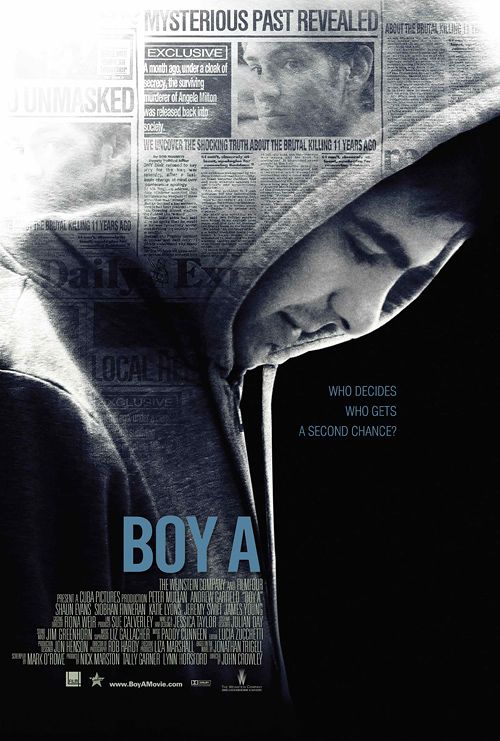
Boy A (2007)


Boy A is an emotionally charged, gritty film about redemption and the inability to escape the past.

It follows the life of Jack (Andrew Garfield), a young man recently released from prison for a murder he committed as an adolescent. Under the wing of his protective, gruff case worker, Terry (Peter Mullan), Jack takes on a new name, a new job, new friends and a new life. For a while, things seem to be going great: his assertive, gorgeous coworker, Kelly (Siobhan Finneran), courts him, his friends introduce him to the time-honored English tradition of going down the pub, and even, by a twist of fate, he manages to save a young girl from a car accident. Everyone is very forgiving of his mumbling shyness or his embarrassed insecurities, and everyone - the characters, the film, us - is quickly charmed by his shaky vulnerability.

Of course, Jack is vulnerable. Despite Terry's proclamations that the "past is moot" and "we only look forward", Jack's past is constantly threatening to submerge his present. Wracked with flashbacks and nightmares, Jack is constantly dodging a limelight that feverishly searches for him. "EVIL COMES OF AGE," a local newspaper headline screams, touting a picture of Jack as a child on the cover.

The film does a nice job of portraying Jack as innocent and damaged, building up - both in flashbacks and in the present - Jack's essentially gentle nature. We can't help but feel incredibly forgiving of whatever it is he did. Indeed, we were already inventing excuses for him. Then, just as things are turning sour for Jack's present, we flash back to the murder itself, and our slowly-fermented sympathies are given a good jostle.

An unexpected and tenuously successful parallel is drawn between Jack and Terry's biological son, a mediocre loafer who hangs around the house watching TV and cradling beers. Filial jealousy and paternal bewilderment hinted at classical themes - King Lear-ish? - but it felt forced and inorganic. The best thing about this part of the film was its portrayal of a vigilante society using ex-convicts as scapegoats for its own failings.

Andrew Garfield and Peter Mullan were perfect in their roles. Andrew Garfield's wispy boyishness struck us in the otherwise awful Never Let Me Go, while Peter Mullan likewise made an impression as the crusty, psychotic guard, Sid, from Children of Men ("Sid doesn't want to know. Sid doesn't care."). The filmmaking style was low-key and evocative, similar to Michael Winterbottom's Code 46 in tone and Dead Man's Shoes in the portrayal of a disaffected rural England where horrible violence bubbles under the surface. Recommended.

Sunday, 23 January 2011

Look Back in Anger (1989)


There's something perversely compelling but ultimately tiresome about Look Back In Anger, the classic "kitchen sink drama" about an Angry Young Man. In fact, the protagonist's name, Jimmy Porter, has become something of a shorthand for "the Angry Young Man" - or, if you're like the PPCC, "self-important misogynistic asshole".

What's amazing about Look Back in Anger is how autobiographical it purportedly is. John Osborne, the playwright, was also notoriously horrible to his loved ones - after repeatedly insulting her, he threw his teenage daughter out of the house and never spoke to her again. Like Jimmy Porter, the cruelty of his language was infamous. And what's amazing is that someone so, well, self-involved and dick-ish, could have been able to write anything remotely three-dimensional at all. It's a wonder he managed to create characters other than Jimmy Porter - especially Jimmy's long-suffering wife, Alison, and friend, Cliff.

Anyway! Jimmy Porter (Kenneth Branagh) is a working class candy shop owner somewhere in an anonymous English town. He seethes at the unfairness of it all, particularly classism and, uh, the existence of women. His hatred for these two things he takes out with relish on Alison (Emma Thompson), his passive, upper class-slumming wife. A diarrheic talker, Jimmy hates the complacency, the conformism, the hypocrisy of modern English everything. He rails and rails… and rails… and rails some more, for good measure. His (only remaining?) friend, the adorable puppy-like Cliff (Gerard Horan), tries to keep the peace between Jimmy and Alison. Eventually, Alison's childhood friend, the righteous and churchy Helena (Siobhan Redmond), comes to visit and attempts to bark back at Jimmy.

All of this building tension - a tension that goes from being pleasantly coiled to excruciatingly awful to watch - is punctuated by rare moments of sweet, almost needy, affection: when they're not screaming at each other, Jimmy and Alison cuddle and coo about being a "bear and a squirrel", Alison and Cliff cuddle and coo ("My lovely!" Cliff always exclaims), and Jimmy and Cliff wrestle and rough-house like schoolboys. It's a strange, compelling roller coaster of ups and… well, not so much downs, as when the roller coaster breaks off the tracks and goes flying away.

Kenneth Branagh and Emma Thompson are always reliably good in theater-driven stuff. Judi Dench directs, but it's a limited, anemic direction, still speaking theater language when it should be speaking movie.

The play itself has been lauded for bringing realism (and, we guess, nihilism and rebellion) to the English stage back in the 50s. It is certainly shockingly gritty by even today's standards - again, not so much because of the poverty or unwanted pregnancy stuff, so much as the cruelty of Jimmy and Osborne's relatively sympathetic treatment of it. It's as if Osborne is trying to tell us Jimmy is a prophet, someone who (as the "citation needed" intro of Osborne's wiki tells us) "argued for the cleansing wisdom of bad behavior and bad taste, and combined unsparing truthfulness with devastating wit." Now, we have a personal bone to pick with such a philosophy: mostly because we think compassion is the only universal wisdom, and behaving like an asshole isn't so much shaking off the shackles of a hypocritical, stifling society, as it is, well, being an asshole.

If we may go a bit Tiger Beatdown on Osborne and Jimmy for a moment, as well, we've always heard this ultra-individualistic, pessimistic philosophy proselytized by, well, angry young men. Angry, desperate egotism and self-pity of this sort, when coupled with disenfranchised young white men (as Jimmy and Osborne are), always makes us think of (1) misogyny! and (2) racism! And, indeed, you can read Look Back in Anger as a post-colonial play: Jimmy as a broken-down, post-imperial UK, with nothing else to conquer, wallowing in ennui and feelings of low self-worth. (Hey, Laurence Olivier, who was all about injecting patriotism into theater, thought Look Back in Anger was an offense to his "sense of patriotism and theatre".) In that respect, as a self-aware sympathetic satire of wounded, post-imperial British pride, Look Back in Anger is almost acceptable - but we're wary of giving Osborne too much self-reflective credit, especially since he was kinda right-wing and it smells throughout that he agrees with Jimmy. He certainly seems to think Jimmy's categorical hate of anyone upper class or female (or, worse, upper class and female!) is righteous and true. And he wasn't totally self-aware: as demonstrated in the completely ridiculous moment when another character, the father-in-law, listens to Alison describing Jimmy's various abuses and then compliments Jimmy on his "way with words" (?!). Why doesn't he just say, "Good heavens, that Jimmy fellow should become a playwright! He could revolutionize the stage with his witticisms!" Dude, he put a sockpuppet in his own play. What a troll...

Monday, 17 January 2011

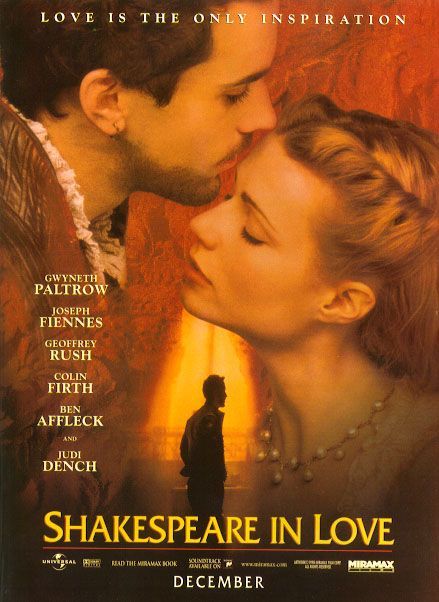
Shakespeare in Love (1998)


Shakespeare in Love is a grand celebration of the creative drive and the pleasure of fiction. It's also what we consider a Perfect Film - much like Rashomon or Ladri di biciclette.

Fictions layer over each other in Shakespeare in Love - and the way we approach this fundamental deceit is explored. Are we like the enraged, indignant preacher, waving his hat at the fact that "vice is in the show!"? Or are we like the passionate theater-goer Viola de Lesseps (Gwyneth Paltrow), who admits that her love affair with William Shakespeare (Joseph Fiennes) "is not life - it is a stolen season", or, even better, is a "flattering dream - too sweet to be substantial", but revels in it nonetheless?

Because fiction abounds - fiction as the transformative, cathartic, passionate release for our transcendental drive. The fiction of Viola as "Thomas Kent", an actor for the down-on-his-luck Henslowe (Geoffrey Rush) and his struggling theater company. The fiction that Shakespeare is writing Romeo and Ethel the Pirate's Daughter - no, Romeo and Rosalind - no, whatever - and that this play is for Henslowe… no, his competitor, Burbage (Martin Clunes). The fiction of Viola and Will's love for each other - she, already bound to the blunt, unimaginative Lord Wessex (Colin Firth); and he, exiled from his wife and children in Stratford. The fiction of the final play - Romeo and Juliet - and how it interweaves with the stolen romance Viola and Will enjoy.

You could call it lies or deceit, but everyone is definitely living in a fantasy in this film - deception, masks, costumes and dissembling abounds. Yet - just like in the Neopolitan underworld and its circus-like, surreal atmosphere in Mi manda Picone - this essential non-reality is accepted by everyone. It's like structured play. Everyone agrees that this isn't real, and everyone still operates within these bounds of non-reality.

The result is priceless: whimsical, funny, heartfelt and, ironically, very true. Early in the film, Queen Elizabeth (Judi Dench) accepts to judge a wager between the hard realist Wessex and the dreamer Shakespeare that true love could never be captured in a play. In the end, even though everything on which that love was built was a lie, we see that the love indeed was true. It's a cunning meta turn. And, just like Will and Viola or the audience of the play, the audience of the film - i.e. the PPCC - suffers a big letdown when we leave Narnia and return to reality. The dreamscape was so much… realer. At least, it felt so! (Ironically?)

Of course, the strength and intelligence of this film relies almost entirely on the strength and intelligence of the script by Tom Stoppard. The actors are all uniformly strong; it's a veritable tour of RADA talent. The music and direction support and give accent to what is essentially an emotional story (much as dreams have their own emotional logic!) and, of course, it's great as just a celebration of Shakespeare (expect lots of puns and references). It also does something which is rare, but delightful, to behold: it shows us the creative process at its most fluid and prolific. Like Amadeus, this film captures the verve and alive-ness of producing something creative, especially when that something just pours out of you. As if you were a conduit to something greater. The best part of being human? We'd wager Wessex his fifty pounds on it.

Highly recommended.

Monday, 3 January 2011

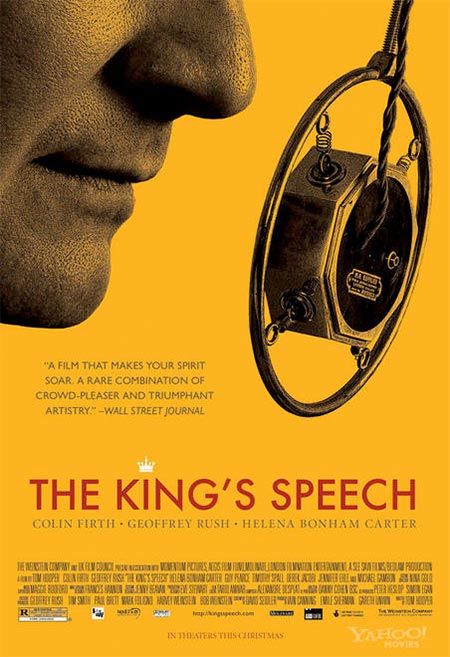
The King's Speech (2010)


The King's Speech is a solid film which never attains the greatness to which it aspires. By choosing the easy route, and smothering the darker, crueler core of its story under a tidy triumph, it ends up a good film, where it could have been a great one.

The King's Speech is essentially a sports film, and sports films are usually the same. They start with our hero, the underdog, undergoing a humiliating defeat. After licking his wounds (and it is usually a 'he'), the underdog discovers the key to his reformation and success - usually an inspiring mentor or coach. After a rousing training montage, we build up to the inevitable denouement - usually a rematch with the earlier opponent - which, after some tense last-minute uncertainties, ends in (inevitable) glorious victory.

The best sports films are those that bend the genre - films like Eight Men Out, that open with victory and end with the abyss. Director Tom Hooper is no stranger to such films - just see his work from last year, The Damned United, which used the harsh clarity of defeat to really examine our ambition to win. The King's Speech should have been such an innovative sports film - a film that let our character, King George VI (Colin Firth), wallow in his misery and explore it. Instead, we get the trials and complexities of England's waning royalty under the gathering storm of World War 2 shoe-horned into a feel-good movie complete with Disney-style pop psycho-analysis.

Behold:

Our hero, underdog Duke of York, is second son to King George V (a spot-on Michael Gambon) and an embarrassment to the family. In an age of the radio, where the royal family has been "reduced to ingratiating" themselves into England's living rooms via the "Pandora's box" of wireless technology, the Duke - Bertie to his wife (Helena Bonham Carter) and family - is a terrible public speaker. He suffers from a stutter and paralyzing stage fright. The film's opening defeat shows him giving a cringe-worthy speech to the crowds at Wembley (?) in 1925.

Ten years later, Bertie meets his mentor and coach - the unorthodox, transplanted antipodean Lionel Logue (Geoffrey Rush - nice to see you again!). Logue insists on equality in the counseling room, and couples his speech therapy with some pop Freud as well. Bertie's stutter will never improve, Logue reckons, if we don't unearth some of the anxieties which eat away at him from the inside. Bertie - clinging to the formalities and automatic distance that his title engenders - rebels. But then comes around. Then, after his father dies and his older brother abdicates in favor of a Baltimore divorcee, becomes king. And then war breaks out. And then he gives his speech.

The best parts of The King's Speech, as we've hinted at above, are the darker parts. Logue's non-speech therapy might be a bit Good Will Hunting, but there is a real edge to seeing the surreal, dehumanizing effect royalty has on everyone involved, not just Bertie - the cavernous palace rooms, the stiff ritualism of family affairs, the easy bullying. Bertie is, of course, the most obviously wounded of the lot - his stutter a paper-thin disguise to the deep insecurities he has been raised to feel. In one harrowing scene, Logue - ever awkward in reconciling his everyman conviviality with the formalities required in dealing with Bertie - attempts to console Bertie shortly after the latter's father's death. Bertie then haltingly describes his gruesome "personal affairs" - up to this point, taboo - and we hear of abuse, neglect, alienation. It's ironic that Geoffrey Rush's performance in this scene - that is, his reactions - almost outshines Colin Firth's. Another excellent detail is the tempestuous anger which Bertie exhibits - and how he explains away his sudden explosions as "one of my many faults".

It's these hints at dysfunction and decay that round out both the character of Bertie and the story of England's royalty under the war. And as war brews and Bertie is faced with his most important public speaking event yet - a cry to rally the troops - we can't help but feel like forcing the complicated private and public issues into one mishmash of "Hurrah for perseverance!" is facile.

Phew.

Anyway, on the purely movie front: Timothy Spall's spot-on Winston Churchill impression was stunning in the lengthier scenes and distractingly funny in the shorter moments, where it began to feel like a caricature. Turning the Archbishop of Canterbury (Derek Jacobi) into a thorny old guard antagonist was uninspired, as were the easy jokes about snobbish, stiff upper lip English royalty looking down on Australians. That said, it was nice, in a meta way, to have Australian actor Guy Pearce, as the dandy older brother and very-briefly-King Edward VIII, speak in the poshest accent ever. Helena Bonham Carter was wonderfully sympathetic as, well, the Queen Mother (what are these people's names, anyway?! Bertie said his at one point and it had, like, ten names in there), while Geoffrey Rush was his usual Geoffrey Rushy self. Colin Firth is a dreamboat as ever, and of course we felt a great rush of tenderness for him, as he was indeed incredibly vulnerable (and often humiliated!). Trivia: He played a WWI vet with a stutter in the glorious A Month in the Country.

Other movie stuff: Tom Hooper's direction was reminiscent of his work in Damned United - canned saturation, geometrical compositions emphasizing dizzying wallpapers, symmetrical perspectives and a tendency to use off-center close-ups. It was nice in Damned United, but we were distracted this time. The use of Beethoven's 7th was DIVINE, I tell you - but then, that music is divine. There was a whole 'nother movie in there. And hearing Bertie describe Hitler as advocating the "primitive doctrine that Might is Right" threw us right back to The Once and Future King - so that's what T.H. White was referring to: Bertie's speech! Oh my God, ARTHUR IS BERTIE, WE SEE IT NOW. Well, that is just something.

So: see it? Yes, definitely, but perhaps wait for DVD.

Sunday, 2 January 2011

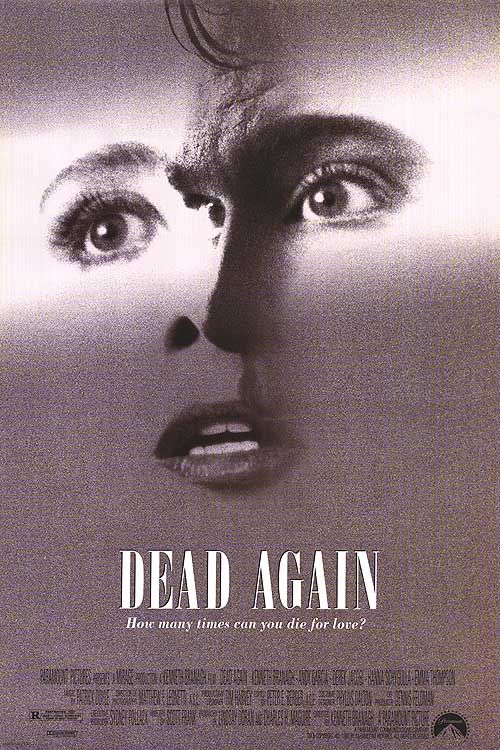
Dead Again (1991)


Dead Again is a fun, weird romp through reincarnation, melodrama, and Kenneth Branagh-Emma Thompson's Greatest Hits. A fluffy murder mystery dressed up in classical Hitchcock-style aesthetics with a dash of Branagh-style theatricality, it is whimsical and not too gory and very silly. Expect much intentional and unintentional humor.

One day, detective Mike Church (Kenneth Branagh, in an American accent) agrees to help his old orphanage out with a bag lady problem they're having: a mysterious mute woman (Emma Thompson), suffering from amnesia, has wandered onto the grounds and keeps having screaming nightmares. Mike takes the lady in and tries to find out where her memory went; his friends, Pete (Wayne Knight (!)) the forensics guy and Dr. Carlisle (Robin Williams, in a very good beefed-up cameo) the former psychiatrist quack, try to help. But the biggest help comes when the dapper, take-charge hypnotist Frank (Derek Jacobi) enters the scene. After just a few sessions with Frank, the woman - now called Grace - has regained the ability to speak and is busy reliving her past life as Margaret Strauss (Emma Thompson, again), eminent pianist and wife to the dashing European composer, Roman Strauss (Kenneth Branagh, in a (sexier) German accent this time), way back in post-war LA. The same Strausses who ended up all over the 1940s newspapers after Roman was convicted of murdering Margaret with a pair of scissors. What does it all mean?! Will Mike and Grace fall in love as per their predetermination? Or will karma catch up with them, as Dr. Carlisle insists it will, and they'll just murder each other all over again?! And what is Grace's real name anyway!?!?!

It all comes together in a delightful, unexpected conclusion that we'll not spoil here. But suffice to say it includes jarring cross cuts (our favorite filmy thing ever!), blood-pumping choral music (our favorite Kenneth Branaghy thing ever!) and lots of gasps and close-ups and unexpected laughter (from us, that is).

The charm of Dead Again is that it doesn't take itself too seriously, even though everything is played straight. Everyone looks like they're having a rollicking good time swaning around the 1940s black-and-white scenes (all white tie events, mind you) or engaging in some earnest, cringe-worthy 1980s rom-com-style flirting ("I can read tea bags, you know?" Mike schmoozes; OH GOD). Robin Williams' glorified cameo is a great performance filled with hilariously vulgar dialogue; it's worth it just to see him in this cross between The Fisher King and Good Will Hunting. Kenneth Branagh and Emma Thompson are at their charmingest peak (this was their period, after all!), and the whole film is like a tribute fest to their past and future work: the masked ball which we'll see again in Much Ado About Nothing, the domestic horrors reminiscent of Look Back in Anger and Patrick Doyle's rousing, bombastic score straight out of the goosebump-inducing St. Crispin's Day speech from Henry V. Andy Garcia has a nice role as the tobacco-addicted journalist, while Campbell Scott's cameo made us laugh and laugh and laugh.

Our conclusion? Definitely see it. And then write Kenneth Branagh and tell him he is and always will be King Arthur.

Friday, 8 October 2010

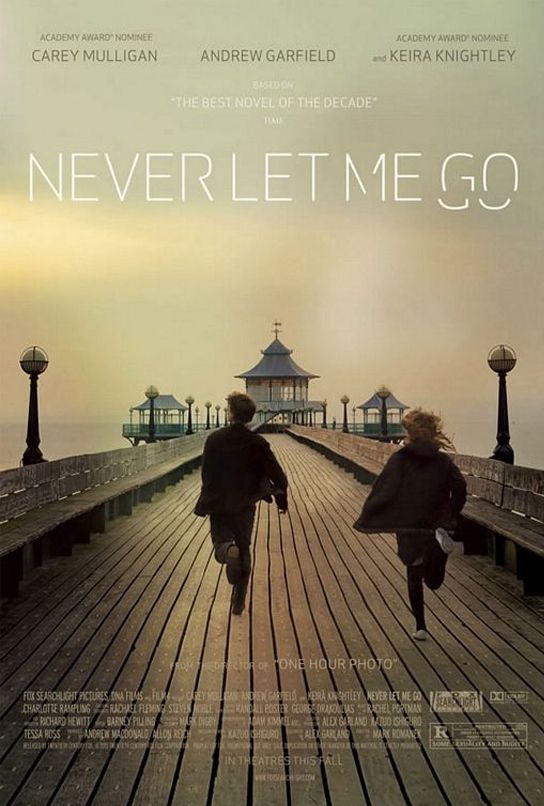
Never Let Me Go (2010)


Never Let Me Go, the anemic adaptation of Kazuo Ishiguro's famous book of the same name, puts all its money in a sort of fuzzy, idyllic, Cotswold-saturated nostalgia, and unfortunately it's a waste. Much like the protagonist who waits for people to break up or die, we waited… and waited… and waited for this movie to end.
Ostensibly a dystopia, though we'll remain spoiler-free, the tale is set in recent-past England, and it's a typical look at lost love and wistful childhood memories that abound in other films about the English being bad at love: Atonement springs immediately to mind, with the same country manor setting for a love triangle that goes on for the characters' entire lives. Though another Ishiguro adaptation, Remains of the Day, is also very similar.

Kathy (Izzy Meikle-Small as a child, the cute Carey Mulligan as an adult), Ruth (Ella Purnell as a child, Keira Knightley as an adult) and Tommy (Charlie Rowe as a child, Andrew Garfield as an adult) are students at your Standard English Boarding School - where they frolic in the fields, hide buttons in their little tin boxes, and play deadly amorous games with each other. This could be any other film about the posh and heartbroken, what with their inhibited half-confessions and epic yearning. They grow up, they pine. Some slightly sci-fi stuff happens, but the movie isn't too concerned about it - it's essentially just another way to drive the same point home. And in case you still had any doubts about what, indeed, the point of all this is, Kathy helpfully TELLS YOU THE MORAL OF THE STORY in the end. Thanks, K!

Few films accurately capture the poignant, impermanent transcendence of an English countryside - our recently reviewed A Month in the Country is one of them. Few films know what to do with love too, it seems, and Never Let Me Go presents us with the same fairy tale we've been watching since Disney: pre-pubescent "true love" that lasts a lifetime, the virgin vs. whore (with the whore meeting her usual end), people who are static, unchanging and yearning, YEARNING, so painfully, ALL THE TIME.

Which is not to say that statically yearning unreconstructed romantics aren't occasionally fun. But when their Truly Tragical Romanticness is driven home with a hammer by the director (here, Mark Romanek), we get bored and a little insulted. We get it! We can't help compare Romanek unfavorably to our recent worshipee, John Sayles: in John Sayles's Limbo, there is a stock "nightmare torment angst" scene when tragic fisherman Jumpin' Joe comes awake with a gasp, causing lounge singer Donna to awake and ask what's wrong. A shaken Joe comments only that you can't always save people. END SCENE. DONE. We got it! Great! In Never Let Me Go, there is a stock "sensitive boy has tragical rage angst" scene, which is long, and detailed, and milked for all its juicy tragicalness. We get it! We get it already!

THIS REVIEW WAS ABOUT THE MOVIE NEVER LET ME GO AND HOW WE DIDN'T LIKE IT VERY MUCH. BUT IT'S NOT REALLY A REVIEW ABOUT A MOVIE AT ALL; IT'S ABOUT LIFE. PERHAPS IF ONLY WE HAD VALUED THE PRECIOUS MOMENTS WE HAD ON THIS EARTH WE WOULD NEVER HAVE WATCHED IT/WE WOULD HAVE LIVED LIFE MORE COMPLETELY/LESS TRAGICALLY. SO MANY REGRETS!
(the book!)

Tuesday, 28 September 2010

A Month in the Country (1987)


If there is one movie that is terribly, tragically underrated and unknown, it is A Month in the Country.

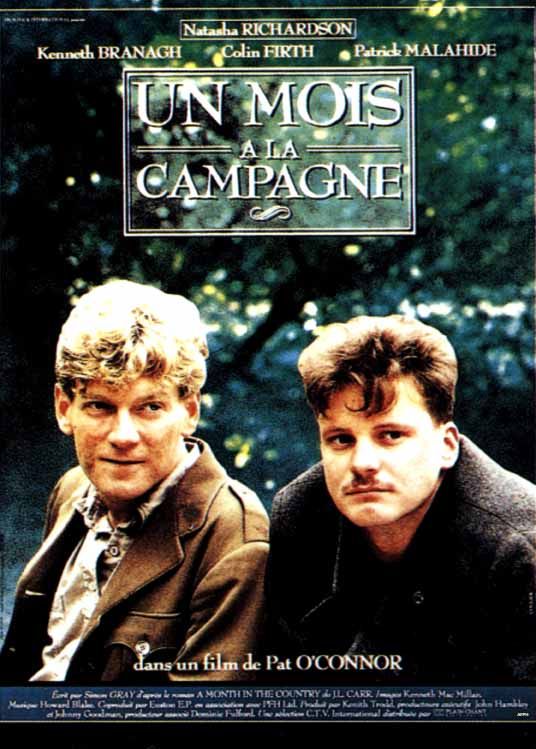
It's ironic because J.L. Carr's novel of the same name, on which the 1980s movie is based, is also terribly, tragically unknown. It just missed a Booker back in 1980, and instead won the Guardian Fiction Prize - a lesser trophy and, it seems, a punishment to anonymity. The movie, in the meantime, stars everyone's favorite English actors, Colin Firth and Kenneth Branagh, as young World War I veterans struggling to cope with their traumatic experiences in the first, Elysian summer after peace is declared. It's great. Really beautiful. And there's no DVD for it!?!!
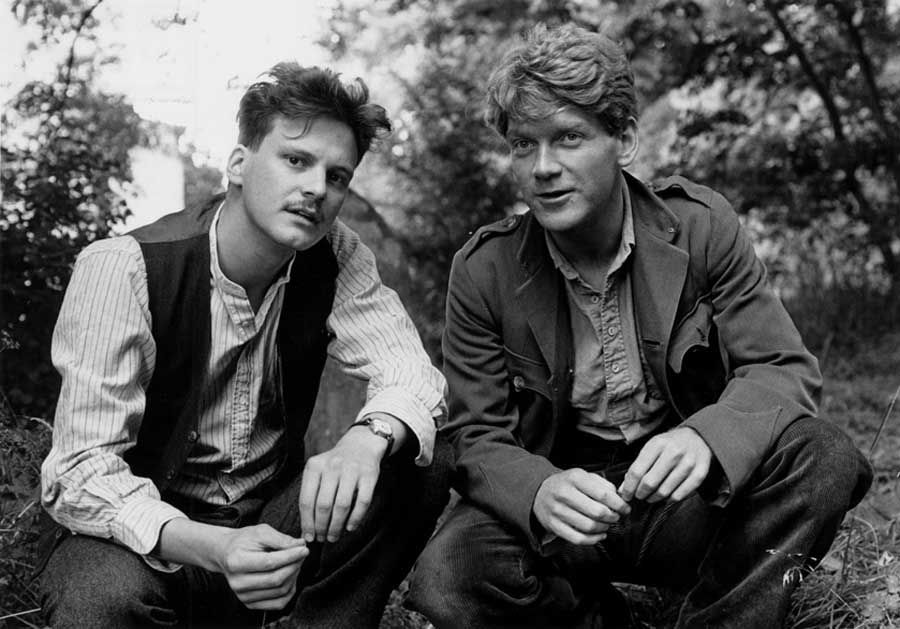
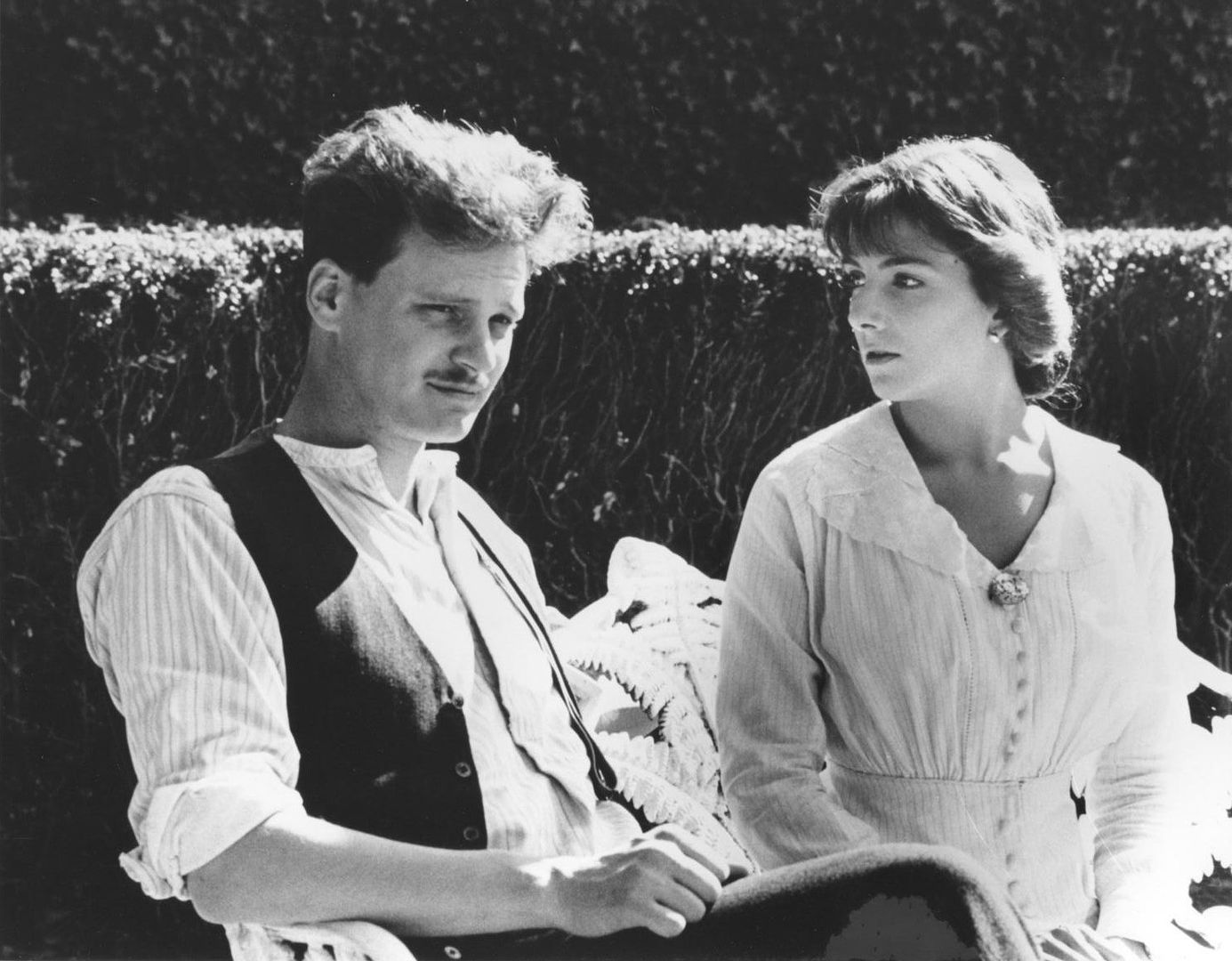
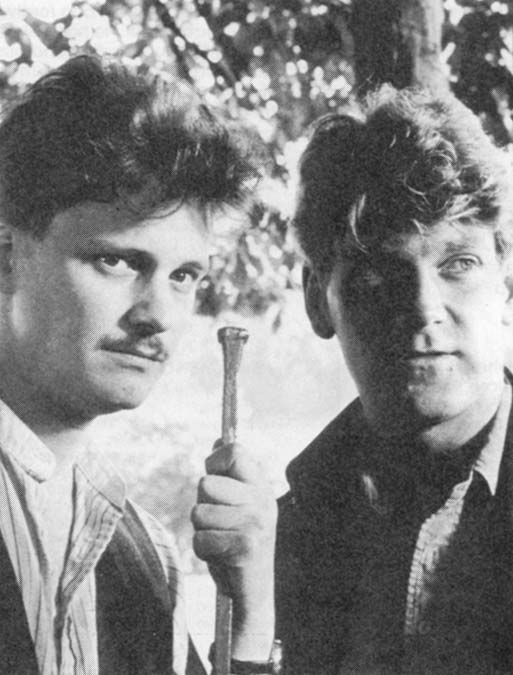
Colin Firth as Tom Birkin and Kenneth Branagh as Moon, both so young!


It's terrible, tragic and ironic, but it also makes sense - in a weird, double-agent-ironic way - that this small, understated story of remembering and loss should be on the verge of falling into the vacuum. The story is, after all, an extended meditation on nostalgia, grieving and renewal. It's about preserving yourself against the abyss; carving a space of light in a world where all seems dark. When Tom Birkin (Colin Firth) arrives in the tiny Yorkshire hamlet of Oxgodsby, he suffers from a stammer, a facial tic and terrible nightmares. He's also freshly divorced and still pining for his ex-wife, Vinnie (never shown on screen). He arrives in Oxgodsby in rainy twilight and makes his way to a gloomy church. His job for the coming summer months is to restore a decrepit, hidden 14th-century fresco from the church's ancient walls.

The pace is slow, matching the drift of motes in sunlight. Birkin meets another young vet, Moon (Kenneth Branagh), who has been paid to dig up the lost grave of a rich townie's ancestor. Moon is, like Birkin, still damaged from the war, though the quality of his suffering becomes an unexpected parallel with the mysterious artist's life. Birkin, when not drinking tea with Moon or brushing turpentine onto plaster, falls into quiet, intense love with the vicar's wife, Alice Keach (Natasha Richardson).


Love with the vicar's wife (Natasha Richardson)! The bit when she explains her apple savantness is so good.


Colin Firth recently waxed nostalgic about director Pat O'Connor's confidence in making this film: the story was allowed to breathe, actors were allowed to be silent. Indeed, the whole point of the film is the profound, emotional intensity that underscores this pleasant facade, and the uselessness of words. The trauma of World War I still lingers like a ghost in the landscape: and O'Connor does a brilliant job of never gazing directly at the war, but rather coming at it sideways. The most explicit war scene we see is the opening shot of Birkin struggling through the mud and barbed wire: the camera is zoomed tightly on him, we have little sense of context, and there's a sense of claustrophobia and horror. The haunting church hymns underscore the usual aphorism: war is hell (in the religious and literal senses). Similarly, Birkin and Moon's PTSD is a smothered suffering that we see only through the cracks of Birkin's twitch or Moon's nighttime howling.

But this story isn't about dwelling in the horribleness of World War I - rather, it's a realist, poignant look at slow healing. Oxgodsby's warm fuzziness is the perfect restorative for the broken vets, even if that healing is fragile and tentative. And the narrative is a looking back, so nostalgia is thick. The greatness of this story is the way it captures ephemeral beauty, a feeling that is vibrant and impermanent. Quite spiritual. And, like all art that does what it's supposed to, it captures and transmits an emotional quality.


We should probably mention that this film is, actually, in color.


The film is also a marvelous companion to the book - they both really enrich each other. And experiencing either is like breathing in purified rural gold. People, get thee to this film - or rather, get thee to preserving this rich work! We can't let gems like these disappear. Ahh, Angleterre. Where's good ol' William Blake when ya need him?
Bring me my Bow of burning gold;
Bring me my Arrows of desire:
Bring me my Spear: O clouds unfold!
Bring me my Chariot of fire!
(the book!)

Monday, 20 September 2010

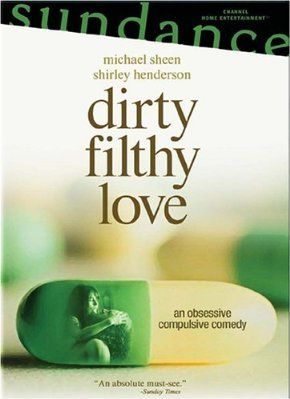
Dirty Filthy Love (2004)


It's unfortunately very rare to see a responsibly-made, informative and entertaining film about mental illness. Dirty Filthy Love, which covers obsessive-compulsive disorder (OCD) and Tourette's Syndrome, is just that: educational without sacrificing narrative, touching without sacrificing realism.

Mark's (Michael Sheen) life is falling apart. He just lost his job at a prominent London architecture firm and his wife (Anastasia Griffith) has filed for separation. Worse still, he seems to live in a prison of irrational tics and ostracizing habits: every day is an uphill battle with the stairs, chairs, shaving, the metro, and other people. When Mark asks his (NHS?!!) psychiatrist (John O'Mahony?) for help, the psychiatrist tells him again that it's just "clinical depression", and surely if he ups his anti-depressant dosage, he'll be fine. Mark knows that it isn't depression, he knows that the drugs aren't working, but he's not quite sure what it could be either: at the moment, he's narrowed it down to a brain tumor, meningitis or early-onset senility.

That is, of course, until Mark meets Charlotte (Shirley Henderson, "Moaning Myrtle" from the Harry Potter series) - a fellow OCD sufferer and the Beatrice to his Dante as she leads him out of the Inferno. And it is a pretty harrowing inferno indeed - be prepared for some shockingly awful stuff as Mark crashes down to the bottom.

OCD is one of those things that isn't normally presented realistically; the cinematic shorthand we have for OCD is Jack Nicholson dancing over pavement cracks in the dreamy fairy tale that is As Good As It Gets, or Tony Shalhoub's latex-glove wearing detective in Monk. That is, "pop OCD" is all about washing your hands repeatedly and being a sort of old-fashioned, Woody Alleny type of quirky urban neuroticism. It's about as helpful a representation as the "hysteria" label that women would get slapped with on their foreheads back in the day. In other words, not very helpful and basically made-up.

Dirty Filthy Love, thankfully, keeps it real. It represents. Mark's fears, compulsions and tics aren't cute and filmi - they're awkward, painful and, often, baffling. When Mark hits bottom, it's not rock star glamorous, it's ugly and uncomfortable to watch. Tragically, Mark is fully aware that he is suffering from some deep problem, but he has a terrible time pinpointing what, exactly, is wrong - a characteristic of OCD. In the sea of anxiety that Mark navigates every day, everything seems threatening. And Mark's "cure" isn't a miracle drug or a cuckoo's nest (sorry, Jack) or love (sorry, Jack) - it's not even a cure at all, but more of a management technique. Shout out for cognitive behavioral therapy!

Michael Sheen is great in these sort of modern edutainment roles, what with his Tony Blair looks and Every(British)man versatility - so we don't know why he spends his time taking loony bit parts in big-budget fantasies (Tron, Alice in Wonderland), or taking big parts in morally dodgy B-films (Beautiful Boy, Unthinkable). As a friend of ours said, Michael Sheen should be playing BP's Tony Hayward (seriously, they're identical) or Lancelot or some other modern British docudrama thing. Or a Zadie Smith film adaptation.

Sunday, 5 September 2010

The Deal (2003)


Screenwriter Peter Morgan does it again for modern British history in the excellent BBC movie, The Deal. For anyone unversed in British politics, it's a brief, fascinating primer of the Labour Party's ascendancy in the 1997 elections.

We've already noted Morgan's work in The Damned United - our pick for best film of 2009 - and Frost/Nixon. As always, Michael Sheen is his preferred actor, and Sheen carries himself well as the whippet upstart Tony Blair. But the core of The Deal is really Gordon Brown (David Morrissey), and Brown's relationship with Blair. As in The Damned United, this relationship carries romantic and epic undertones - there's a Shakespearean, archetypal quality to the friendship and strains between the boorish, "saturnine" Brown and the wily Blair.


Some excellent details from Stephen Frears' direction.


Michael Sheen as whippet Tony Blair, the Early Days.


The imposing David Morrissey imposing some imposingness in one of the great Parliament scenes. I SAY!


The story begins in Thatcherite Britain, when the Tory Party is well in power and the Labour Party struggles, seemingly endlessly, in Opposition. Brown and Blair both join in the late 80s and, sharing an office, form a friendship despite their differences. And the differences are notable: Brown is an "old Labour" type, with his working class vibe and party loyalty, whereas Blair is posh, Oxford, English and seen as something of a cultural usurper. Indeed, this tension between the old, working class (and largely northern) order and Blair's southern, posher, politically correct "New Labour" movement is directly embodied in Brown and Blair. When Thatcher resigns, the Tories begin coming apart and well-loved Labour leader, John Smith, dies unexpectedly in 1997, a vacuum of power opens up - one in which Blair ambitiously moves in.


Not unlike a similar shot from The Damned United.


In the meanwhile, within this film, great visual paralleling.


A movie about politics, with no action, assassinations or violent intrigue, may seem like a bore, but trust us - all that other stuff is just distracting fluff. This is the good stuff. The core of this film is Blair's emotional treachery of Brown in the name of politics - and it is intriguing, gut-wrenching and absolutely compelling. The actors do a great job capturing their real-life counterparts and infusing them with the Shakespearean grandeur that we mentioned before: David Morrissey's scowling, bent-over Brown, his gait and his cadence, were great, as was Michael Sheen's slightly saccharine, artificial good humor. (In fact, their juxtaposition was not unlike the Nixon-Kennedy debate!)


More visual parallels between Blair/Brown here and Blair/Brian Clough.


And Brown.


And between this film...


...and reality!

We worry that this is one of those great little films that will get lost in the miasma of time. It is, after all, a brief 80-minute BBC docudrama thing. Please rescue it from the abyss! It is too good to be forgotten so soon.

Saturday, 4 September 2010

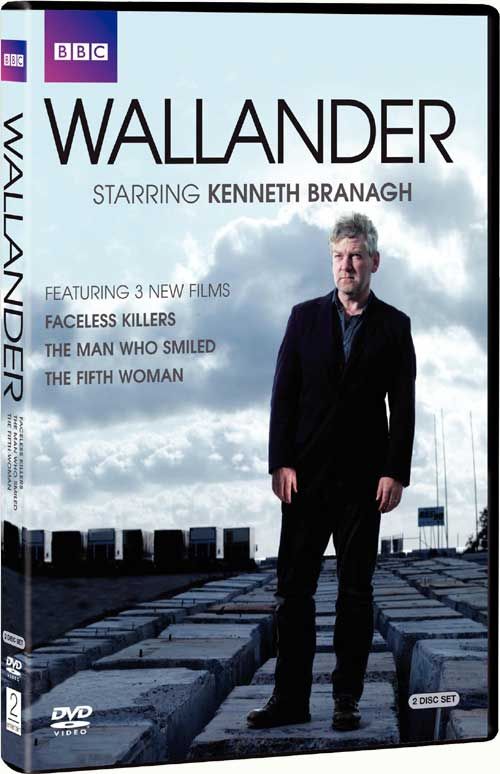
Wallander: The Fifth Woman (2010)


Ah, the Wallander series, where ace Swedish detective Kurt Wallander (Kenneth Branagh) relentlessly picks at the scab that is his life.

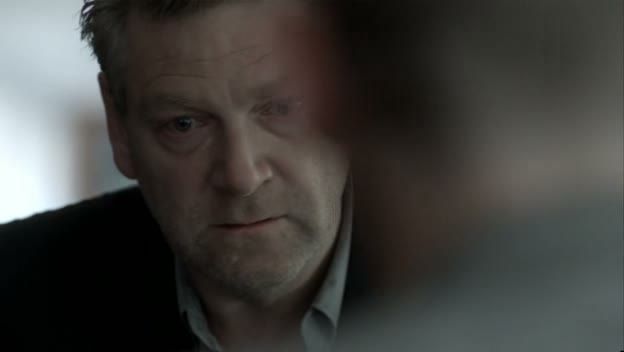
We can't help but think constantly to a description Kenneth Branagh gave of Wallander: the man's like an "open wound". And every episode features the same key scenes to show us just how psychologically wounded this teddy bear is: he sleeps only in awkward sitting positions (he broods himself to sleep, every. single. night. people!), is always awoken by the harsh siren call of his detective colleagues, who then take him to see someone who was murdered in some horrible way (in this episode: with spikes!), wherein Wallander becomes even more moody, irritable, depressed and fatalistic.


Kurt: historiam calamitatum.


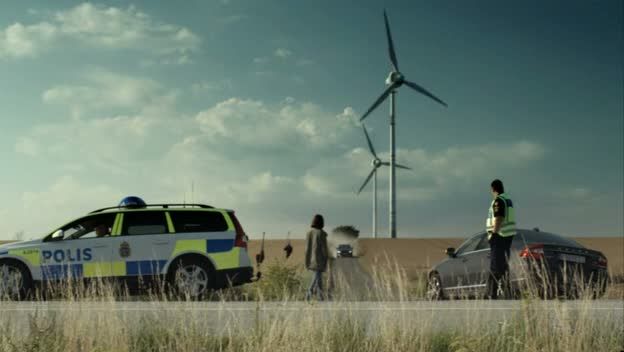
Sweden is a sad place, apparently.


In this third installment of Kurt's Angst, The Fifth Woman, Wallander is busy trying to figure out who killed the birdwatcher (with spikes!) while - on the personal side of things - his father, Povel (the excellent David Warner), deteriorates even further into frailty and old age. In fact, the entire episode is about aging parents, vulnerable adult children, and the ancient wounds we leave on each other. And, in its usual style, it tells us about these scars and hesitant catharses with moody shots of a sagging, exhausted Kenneth Branagh as he drives through the desaturated Swedish landscapes. The murder mystery turns out to be just a convenient thematic parallel for Kurt's familial turmoil, and on the personal side - well - Kurt finally cries in front of someone and lets himself be hugged (thank God).

The genius of this show - the genius of Branagh's interpretation of Wallander - is, as we've mentioned before, his social awkwardness. Because while watching Wallander churn silently in his own self-loathing is compelling (to a point), watching Wallander try to mask this is much more poignant. Of course, he fails every time as his tense explosions or brittle unhappiness are obvious and, well, really out there. But he tries to cover it up - and that's just sad. Also, is it just us, or does Wallander's sympathetic friend, Nyberg (Richard McCabe), solve every mystery only moments after seeing the corpse? "Oh yes, it was Colonel Mustard with the wrench. You can tell by that piece of lint there. Ta!"


Pale and miserable.


Meanwhile: Kenneth Branagh's performance. Ah, Kenneth Branagh. There's something unique about his style of acting: a combination of naturalism with theatrical vulnerability. It worked so well in Henry V. Heck, it worked really well in that reincarnation movie with Emma Thompson which was, btw, totally fun! In Wallander, his pain is obvious - and his attempts to smother it, or hide it, or beat his way through it, are likewise obvious. It's not necessarily subtle, though it is… calming? What's the word? There's a comfortably sympathetic quality to it. An earnestness. That's it! Kenneth Branagh is terribly, terribly earnest. And that's awfully nice.

Friday, 11 June 2010

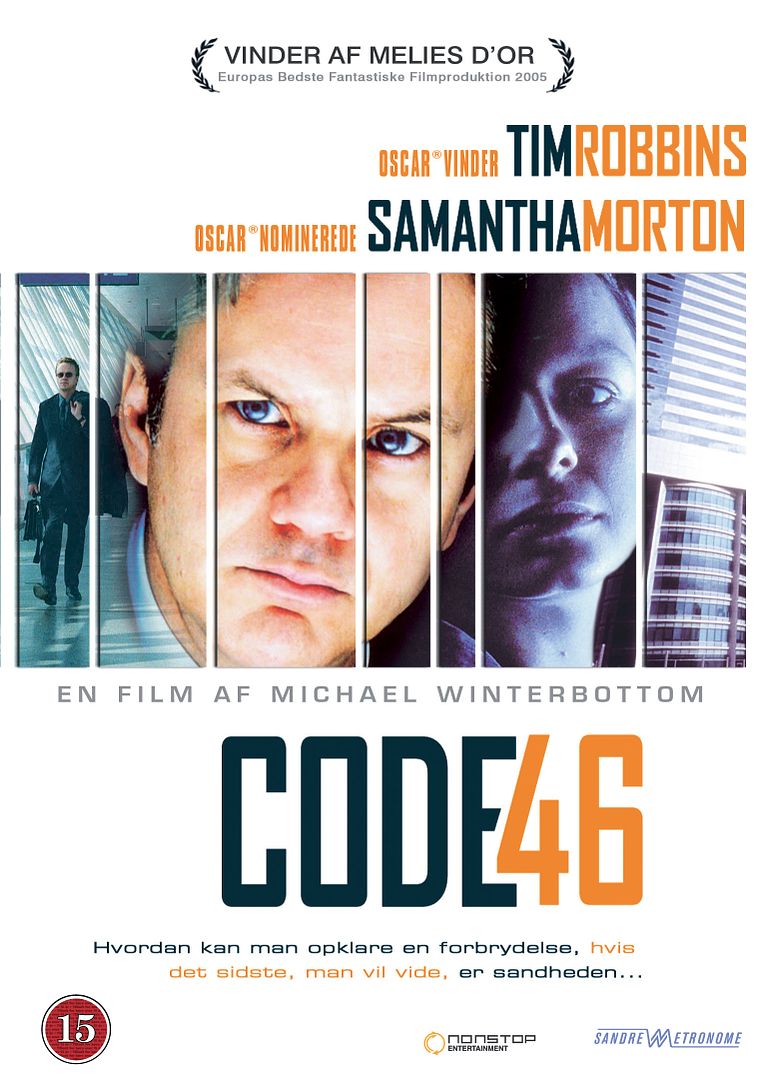
Code 46 (2003)


Code 46, the troubling, moody dystopian romance, initially charmed us, then baffled us, then kinda freaked us out, and then surprised us (Coldplay? Really?). But we are so terribly partial to dystopias filmed in atmospheric indie fuzz that we could overlook even the uncomfortable Oedipal kinks and the too-mainstream pop bookend: we liked it.

Kind of like the (incestuous!) love child between Blade Runner and Eternal Sunshine of the Spotless Mind, Code 46 is about love in the time of being almost-post-human. The film pushes special PPCC buttons by also being post-colonial: it acknowledges the Rest of the World, and what its position would be in a freaky future. But best of all: it's just a sweet, heady, doomed romance full of brooding darkness and two very weird people.


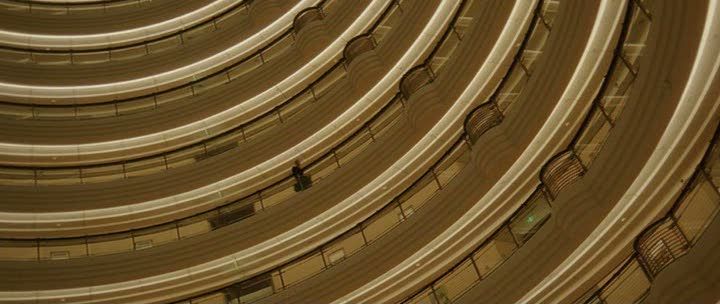
Some scene setting.


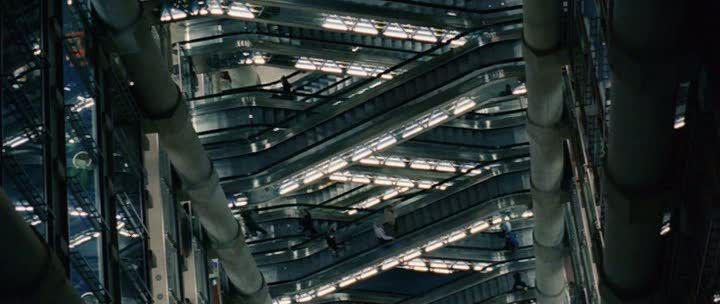
Living in an Escher world (where are Godel and Bach?!).


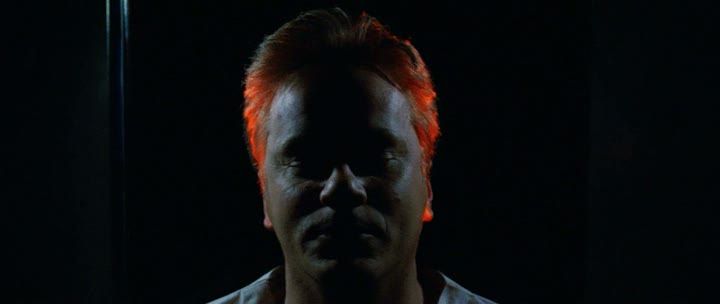
William (Tim Robbins, who is apparently a giant) is - like all good dystopian anti-heroes - a bureaucratic drone. This drone's particular job is investigating "papelles" fraud. The world has been divided into the Inside - buzzing metropolises full of light, drugs and technology - and the Outside - underdeveloped, poverty-stricken deserts. Movement across this so-familiar-it's-alien world is heavily controlled, and you need "papelles" to get anywhere. Interestingly, the axis of geopolitical influence has shifted from the Atlantic to the Indian Ocean - most characters circle around India, the Middle East and China.


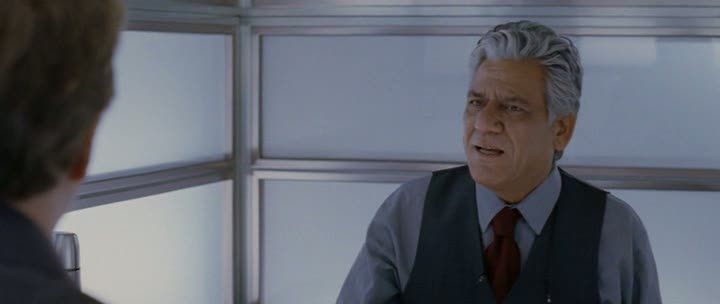
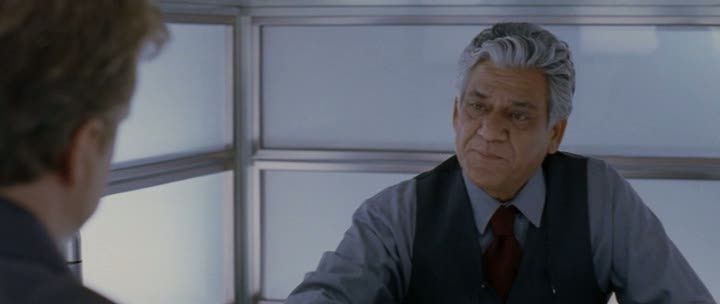
Let the Om Puri Lovefest begin! We love you, Om Puri!


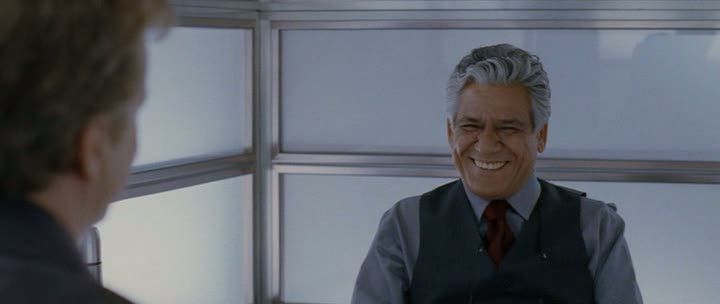
You're so cute and great, Om Puri!


Oh, Omnomnom Puri!


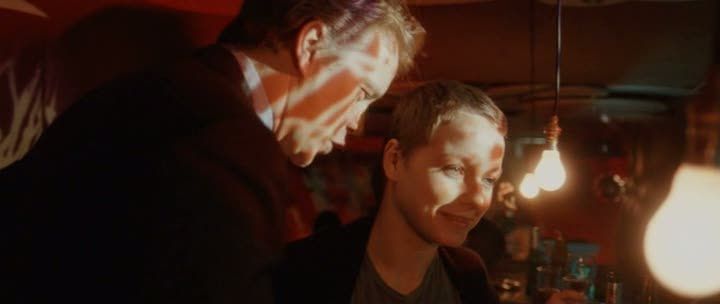
William has now been sent to Shanghai (looking remarkably like Hong Kong) to investigate a possible fraud at the large Sphinx company. While the anxious manager (Om Puri!!!) is eager to keep things quiet, William - tripping, William Gibson-style, on an "empathy virus" that spikes his intuition - easily identifies the culprit using only one, quick meeting with all the employees. That culprit, unfortunately, is the sexy, alluring Maria Gonzalez (Samantha Morton, still in Minority Report buzzcut mode). Maria is so totally awesome that William has some other, less attractive person arrested (whose only line announces that he was born in Hyderabad!), then follows her into a karaoke club where Mick Jones sings Clash songs. And so begins their very inappropriate, kinda gross but also fascinating romance.
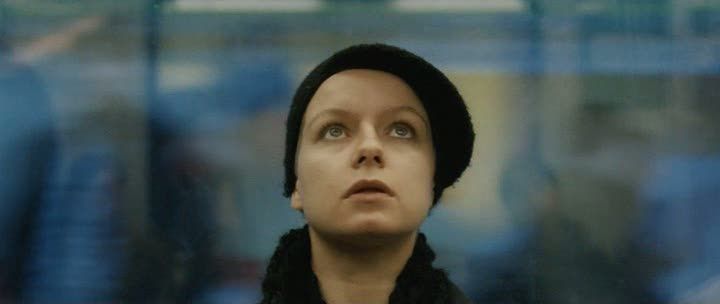

Her.


Him.


Them.


It's been a long time since we've seen a believable future presented, but Code 46 was the most evocative, grimy and convincing future since Gateway. Everyone speaks a babel of world languages - their chatter is peppered with Spanish, Italian, Urdu, Arabic and Mandarin. Familiar cities - Hong Kong, Shanghai, Seattle, Delhi (?) - are filmed in ways which render them otherworldly. The whole territory is strange, yet its links to our present are easily traceable. The whole film's look is very mysterious and beautiful.
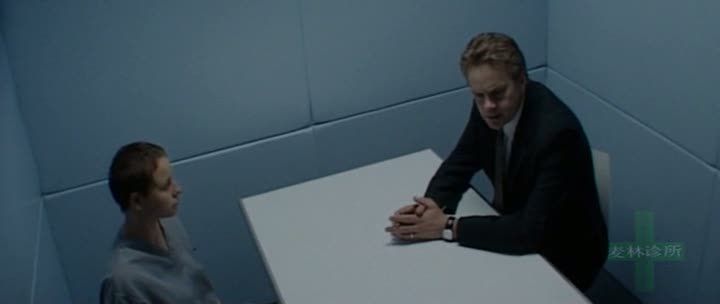
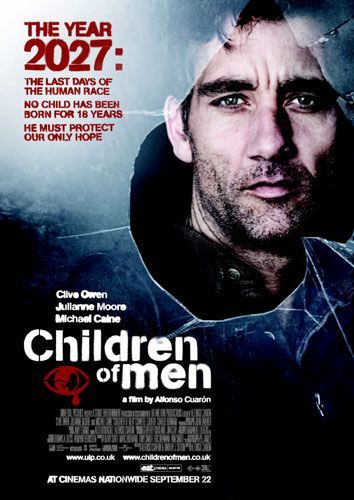
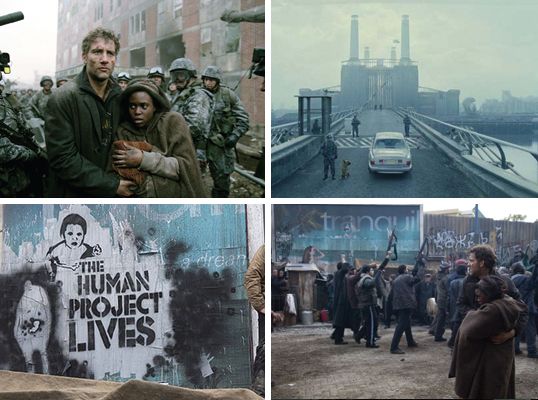
Big Brother is watching you. As usual.


This sort of story also encourages us to THINK in capital letters, and it does raise some interesting questions about gene pools, designer babies and the "Third World". But we were much more refreshed by the interpretation of this as an updated Greek tragedy, full of yearning and elliptical consciousness and DOOM in capital letters (also). It is forbidden love at its most primal, and the modern spin to the tragedy is that it was technological drive which set William and Maria up for their Sophocles-and-Aeschylus-style fall. Are all dystopias cautionary fables with a Luddite bent? Maybe. But only some of them are as classy (and classical) as this one, and even fewer let the softest of human emotions take center stage.

Thursday, 10 June 2010

Children of Men (2006)


Back when Children of Men came out, a lot of people took it as an incoherent parable for the modern day problems of Guantanamo and Abu Ghraib; Western paranoia of encroaching terrorist agendas leading to a Big Brother lockdown, etc. We were surprised that what we considered to be the driving symbolism of the movie - that is, orthodox Christianity - was instead downplayed or ignored completely. Did no one get it!?

The year is 2027 and Britain is a dark, crummy dystopia that no one likes. It's still better than the Rest of the World, which lies in literal ruins - fire, rubble, AK-47s. "Fugees" - i.e. non-British - are detained in filthy prison colonies on the southern coast of England, and meanwhile a terrorist organization calling itself the "Fishes" is planting bombs in downtown London coffee shops. What a mess.


Various scenes of wreck and ruin and... Bansky?


But the main problem is humanity's sterility. For 18 years, not a single baby has been born. The film opens then on Theo (Clive Owen), a rumpled bureaucratic drone, never too far from some liquor, who lives a wretched half-life in this childless purgatory. One day, Theo is contacted by his former flame, Julian (Julianne Moore), who asks him for some rare "transit papers" to help a friend get off the isle (and the Casablanca bell goes CLANG! hooray!). Theo reluctantly agrees to help, even though Julian is mixed up with the Fishes and their charismatic (well, we think so) leader, Luke (Chiwetel Ejiofor, always great). Of all the gin joints! Theo is then shocked to learn that Julian and the Fishes are secretly protecting none other than the World's Only Pregnant Woman, Kee (Clare Hope-Ashitey), who is in her eighth month (she thinks - everyone's sort of forgotten how this pregnancy thing works). Theo, Julian and the Fishes are now all competing to help Key get to the "Human Project" - a rumored Eden where humans aren't stuffing each other's heads into black bags and pushing them into detention centers. Insert also one extremely off-the-grid, pot-growing, old hippie Jasper (Michael Caine, always lovable) and shake well.


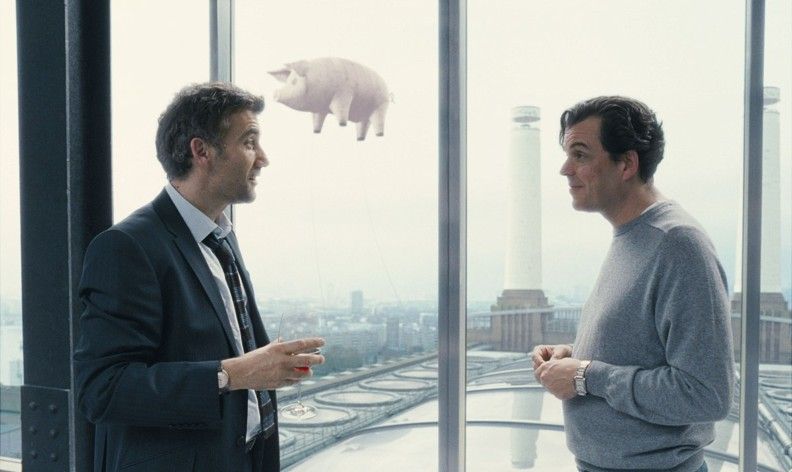
Clive Owen and Danny Huston, in a brilliant "brick in the wall" scene. We're starting to think no one on Earth appreciates Danny Huston the way we do. The man is AMAZING. Just watch The Proposition and you'll see.


Much of the film is, as you would expect, an exercise in dystopian misery. The tone is perpetually bleak, and the slightest levity is only the cynical, sarcastic kind. This film is also very self-aware; i.e. it knows its roots. For example, a brilliant scene featuring the brilliant and underrated Danny Huston as a "Noah of the arts", living alone with his deranged 20something son in a revamped Tate Modern, manages to throw in a Pink Floyd cover. And there are the obvious allusions to 1984 or Brave New World, what with the government-approved suicide rations and overbearing bureaucracy.
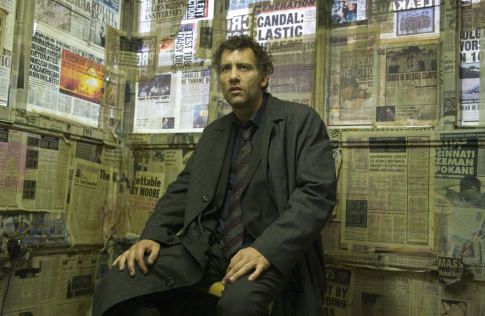
But the film is mostly about the Bible. We think. This is a very classical, orthodox Christian story, stuffed full of allusions: Theo, underground fish and miracle babies. Director Alfonso Cuarón is only using these Abu Ghraib-type aesthetics in the same way he uses the 1970s acid rock (King Crimson!): as a familiar, modern idiom to get across a very ancient story of miracle and saviors. When Kee reveals her pregnancy to Theo, she's in a manger. Theo's last words in the film are, "Oh, Jesus." Danny Huston's character could be Pilate. And one of Jesus' titles was the Son of Man - just pluralfy that and you get the title. Indeed, it's a very fun story to pick apart, as the Christian symbols are layered everywhere. Personally, we felt like Indy at the end of The Last Crusade (remember: there is no "J" in Greek).


Ahem, "Theo", meets the, ahem, "Fishes".


Another notable feature about this film is Cuarón's use of really, REALLY long takes. There are three in particular, each lasting as much as ten minutes (!). That's ten minutes of a single shot. The most impressive of these, by far, is the one in the car. This is an early climax in the film, and it begins when Theo wakes up from a nap, the camera slowly zooming out from him. Watch out for it. The entire thing is filmed on a single camera, spinning deliriously within a cramped, cluttered car. And from that single shot, we manage to witness the build-up, climax and after-effects of a chaotic action piece. It's a testament to everyone involved - Cuarón and the actors, especially - for making such an impressive, uninterrupted piece of movie magic.

Oh yeah, and it's based on a (waay more obviously Christiany) book by P.D. James.

Monday, 31 May 2010

Control (2007)


One of the most influential bands to come out of the 1970s post-punk movement was Manchester's Joy Division. Their sound - dark, looming, ethereal, sinister and sad - went on to influence bands in the 80s, 90s and now, the post-punk revival of the 00s and 10s. You can still detect traces of Joy Division's sound in recent bands such as Interpol, The Editors or The National, or even recenter stuff like Miike Snow.

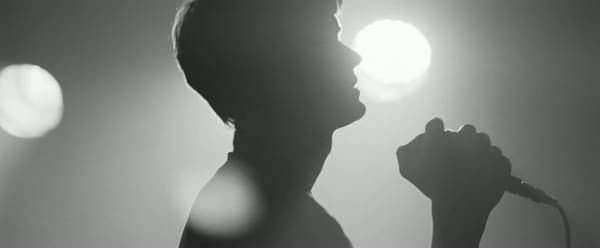
Control is a biopic of Joy Division's lead singer, Ian Curtis, who would commit suicide in 1980 at the age of 23. (Following Curtis's death, the remaining members formed New Order - another titan in the post-punk pantheon.) Curtis, played by Sam Riley as an inscrutable, brooding, quiet young man, is also the spark and life of Joy Division.


Great cinematography.


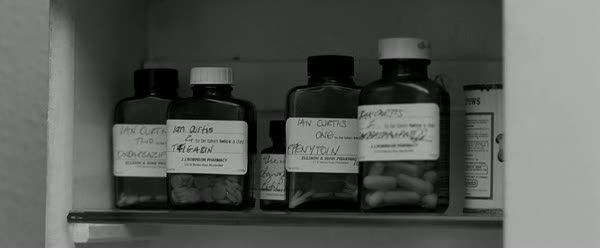
Not drugs, just meds.


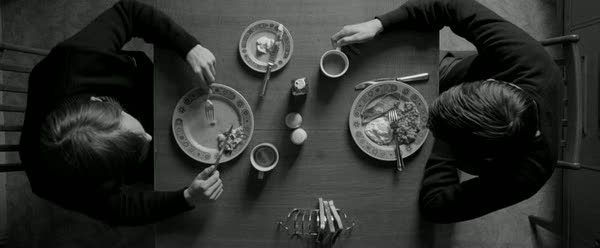
Sometimes 1984-ish.


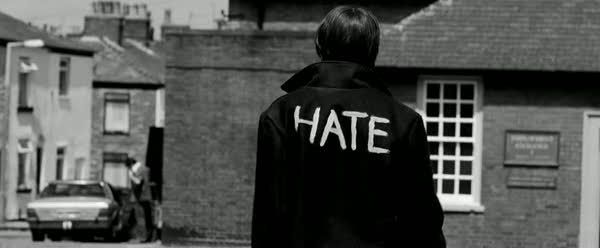
This isn't a typical rockstar biopic featuring "sex, drugs and..." - Curtis and his bandmates (James Anthony Pearson, Joe Anderson and Andrew Sheridan) are too thoughtful and sober for that. Director Anton Corbijn even plays on this cliché in one sequence where Curtis is shown walking down the street wearing a large black coat with "HATE" scrawled on the back. After moodily smoking a cigarette, he enters the Employment Office - only he's not going to pick up his weekly unemployment benefit, he's going to work. Indeed, Curtis is a bureaucratic drone, and his private life is likewise conservative: he married his high school sweetheart (Samantha Morton) at 19 and was a father by 22. His creative interests - we see influences of David Bowie, the Sex Pistols, and William Wordsworth - are channeled into Joy Division's lyrics, and everything seems great for a while as he runs his life during the day and has some fun singing gigs at night.

But then he starts to "lose control", and so begins his slide into depression and helplessness. Coming back from their first London gig, Curtis experiences a seizure. He is diagnosed with epilepsy and given a long list of medications to take, all which have their nasty side effects. The band takes off, and suddenly more energy, passion and commitment are demanded of him. He unexpectedly falls in love with a Belgian journalist, Annik Honoré (Alexandra Maria Lara), and his marriage becomes strained.


Off to the office.


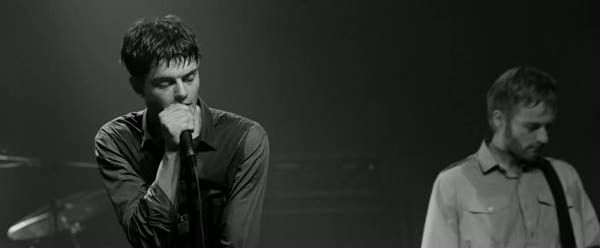
The performance scenes were great - and eerie, when you compare them to the real thing.


Most people's lives don't fit into the standard heroic quest pattern, and director Corbijn doesn't bother with trying to force Curtis' into that narrative mold. Nor does he intend to explain him or his suicide. The film has only one instance of background music, and that too lasting only a few seconds, so there is no emotional hand-holding. Instead, Corbijn intersperses the biographical scenes with Joy Division songs. This is a wise choice, since the lyrics are probably the best window we have into his states of mind. For example, in one sequence, after Curtis has just learned of his epilepsy, he calls to check up on a young epileptic girl whom he helped get a job for - and discovers that she had been fired for having a seizure at work. This later fades into the recording and performance of She's Lost Control.

We think this film, which is ponderous and ambiguous, may have limited appeal. This is a shame; it's a good movie. It's also technically impressive since the actors perform the songs, and do it remarkably well. But if you like Joy Division, or want to learn more about them, this will be very rewarding.