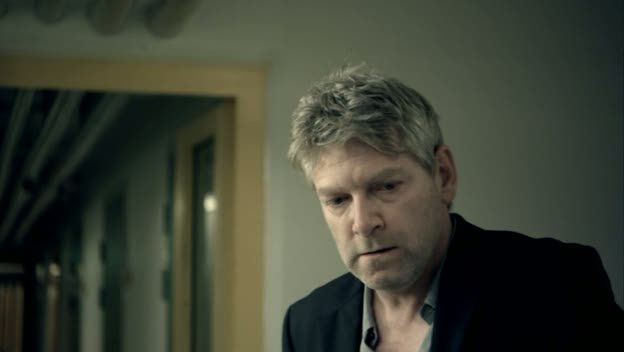
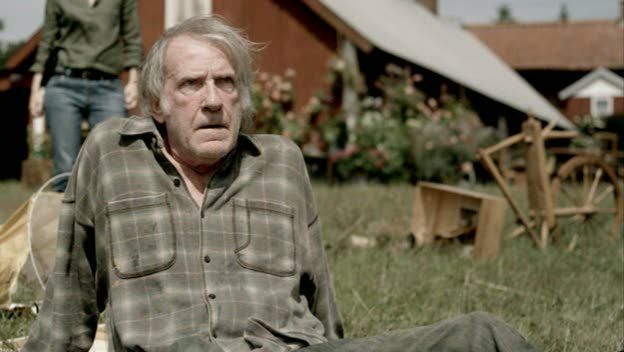
Showing posts with label this damn war. Show all posts

Monday, 23 June 2014

Half of a Yellow Sun (2013)

Half of a Yellow Sun is a fascinating, likable look at an interesting (and definitely under-cinematized) period in Nigeria's history: from independence in 1960 to the Nigerian civil war in Biafra in 1967 to 1970. Told through the perspective of a bunch of super-mod bourgeois intellectuals getting lost in the conflict, it's a stark, smart, sympathetic portrayal.

We start in 1960 with the fireworks and flash of Nigerian independence from the British. Twin sisters Olanna (Thandie Newton) and Kainene (Anika Noni Rose) are sparkling and soooo bourgeois: speaking with posh British accents, rocking glamorous 1960s dresses (and hair!), and being all like, "Oh, thanks, Dad, but I actually already got a job." At one of the "1,001 soirees" the girls head to on independence night, Kainene runs into Richard Churchill (a handsome Joseph Mawle) - "unrelated to Winston" - who is our Resident White Guy Orientalist and falls for Kainene hard. Despite a wife? Possibly a wife. Ambiguity!

Assisted by helpful maps (a la Indiana Jones), the girls go off to start their careers: Olanna heading north, where she'll take up a teaching position at the university, and also hang with a bunch of fiery 1960s intellectuals of the Aimé Césaire/Frantz Fanon variety. One of which is the crazy handsome Odenigbo (Chiwetel Ejiofor, or as we like to call him, Chiwwweeeeteeellll we loooove you). Odenigbo, mockingly called "The Revolutionary" by the other twin, is, okay yes, kind of your standard 1960s post-colonial leftist, what with the Malcolm X glasses and occasional rants about white guy's being racist and Americans being Cold War paranoid. And, yes, he's a bit all over the place sometimes. But he's also? Got a heart o' gold, of course.

Here begins a bit o' Pants Drama, which we'll skip over. It's melodramatic and kind of ridiculous and provoked lols, but made us - also - love them all so much more. Y'all with your pants problems.

After Pants Drama is mostly resolved (lots of "Don't sleep with my wife!" and driving off in a huff), societal shit really hits the fan, and we're celebrating another independence, this time for the new state of Biafra, seceding from the rest of Nigeria. The film had been efficiently peppering in all the intra-tribal tensions throughout, with people being all like, "Oh, but you can never trust Igbo folks, ya know..." and "Gosh, those Yoruba!" and so on and so forth. You wouldn't really notice it, until it explodes shortly after the Biafran secession into full-blown civil war. Things quickly go downhill. VERY VERY DOWNHILL.

Based on the popular novel by Chimamanda Ngozi Adichie, it's true that the film feels a bit rushed and abridged. Major points are left hanging, which could either be evocative anti-exposition, or just the need for speed. The newsreel interjections are a blunt way to Explain History to non-Nigerian audiences, but we appreciated them, since we honestly don't know much.

THAT SAID, gosh, we liked this movie. The performances were all charismatic and touching, even stupid ol' Richard, who really wrecks the party by being such a useless Orientalist (when asked why he's in Nigeria, he responds with, "Well, gosh, I always just loved Africa! You know, explorer stuff!" OH COME ON). Chiwetel Ejiofor and Thandie Newton were phenom, though, and often much better than the material. John Boyega, who played the put-upon servant Ugwu, was also a revelation. The music and cinematography was eminently likable, with one scene of domestic escape from local war being particularly well-executed: a bunch of long takes, tracking shots from the left to the right of the dining room with a minor-keyed, discordant background score (similar-sounding to this) as the family runs around worrying about what to pack and put in the car while OMG BOMBS AND SOLDIERS.

A note about Chiwetel, also: oohhhh, Chiwetel. We've loved you since Serenity, so long ago. Chiwetel is put to good use in this, as his wide-eyed tempestuously humanistic vibe is a perfect fit for the role of fiery intellectual. That moral conviction would serve him well in any number of Gandhi-type roles, though it's the Gandhi-gone-bad ones - the people with the moral conviction, aimed slightly off - that are his best. E.g. his role as Luke from Children of Men. Even The Operative from Serenity was a man driven by an inner moral clarity. Too bad it was crazy!

Anyway, there ain't enough good movies made about Africa, especially recent history, especially complex stories that don't revert to poverty porn stereotypes where White Guy Explains Africa to you, as he stands amidst sunsets and acacia trees (ahem, cough). Thank God this one avoided that (even slightly subverting that stereotype by having Richard (a) be generally useless and peripheral, and (b) having thankfully only one White Guy As Witness scene, which was genuinely horrifying and felt not too cinematic). This film thankfully let Nigerians talk about themselves, let them tell their own story. THERE JUST AIN'T ENOUGH MOVIES LIKE THAT. So this film is valuable in and of itself. But! It's also a great film, one of those History Happens OMG epics that we would have enjoyed if it had been about 1960s France or 1960s China or 1960s wherever (because the 1960s? right? oh man). Recommended.

Wednesday, 19 February 2014

Doctor Who: Midnight (2008)


Some mood music, while you read.

We at the PPCC are huge sci-fi nerds, and yet it has taken us a long (loooong) time to get into that one mighty pillar of sci-fi-ness, Britain's Doctor Who of Britain, starring Britain, co-starring Britishness. Okay, we tease, but, damn, that shit is nationalistic! Which is fine. Most spec fic is notoriously US-centric, after all. Anyway, we're glad we finally initiated ourself. In addition to being nationalistic like crazy sauce, it is also addictive and silly and fun and full of everything.

It's difficult to review a PILLAR, so instead we'll focus on a few things:
  • The episode, Midnight, and how it's awesome and a good intro. (Review)
  • Some Doctor Who themes, and how they run the gamut from awesome to stupid to huh-ness. (Thoughts)
Allons-y, then!  

Episode review: Midnight

Doctor Who episodes seem to come in three varieties:
  • Really trashy, ridiculous, and occasionally awful one-off episodes, featuring a Monster of the Week. As some of our friends assured us, "You do know it's a kid's show, right?" (No, we didn't! But now we do. Oh, how we do.)
  • Really spectacular, mind-bending one-offs.
  • Mediocre-to-good episodes that are usually redeemed by giving us one more crumb along the Great Path of Understanding the Doctor, usually accompanied by a Great Emotional Moment for the Doctor as well. These are exciting.
Midnight falls into the secondary category. It's the perfect gateway episode; you can watch it while knowing nothing of the Doctor and his Interminable Journey. But, of course, the experience is much richer if you do know a bit, since Midnight takes several Doctory themes, and then subverts them in refreshing ways.

Midnight begins on a fancy, diamondy planet called, uh, Midnight. Which is ironic, since it is brilliant and sparkling and very, very sunny. It is also totally hostile to any form of life; the sun being "x-tonic", which is technobabble for "zapping killer laser beam-like". The Doctor (David Tennant) and his Companion, the wonderful Donna Noble (the wonderful Catherine Tate), are taking a (much-deserved) break on Midnight, which markets itself as a party planet. The Doctor decides to go on a nature tour, while Donna lounges by the pool.

On the nature tour, we're introduced to a variety of Typical Human People: there's the suburban couple (Daniel Ryan, Lyndsay Coulsen) and their sullen teen son (Colin Morgan), the bumbling professor (David Troughton) and his geeky assistant (Ayesha Antoine), the flight attendant (Rakie Ayola; called a "hostess" in the episode, since apparently it's also 1950), and a middle-aged divorcee (Lesley Sharp). After lampooning modern commercial flight (endless, chattering entertainment options, tiny peanut packets, and so on), the journey is underway. The Doctor makes a few friends, people joke, and obviously something horrible is looming on the horizon.

We won't give away the horribleness, because much of the episode's genius is the smart and inventive (and cheaply-produced!) monster that we meet. If it's a monster at all. But it's something straight out of The Twilight Zone or Hitchcock: the fear and tension is slow, subtle, and gripping. One subversion of the Doctor Who routine is that the Doctor is as ignorant as everyone else on the ship (and in the audience) as to what the It thing is. Nothing is supposed to live on Midnight, and yet it seems something has? (Note that we can't even conclusively say that something has. One lovely interpretation of the episode is that there was nothing there at all, and everyone just freaked themselves out.)

A second subversion of Doctor Who's usual stuff is that, for once, humanity isn't celebrated, but instead retreats immediately into the banality of evil. When confronted with something difficult to understand and potentially violent, the passengers become scary and bestial themselves. It's reminiscent of J.G. Ballard's comments on seeing the "ragged scaffolding" of suburban civilization strip away, and how rattling that can be. For Doctor Who fans and the Doctor himself, it's especially rattling: usually, humanity has a big ol' crush on the Doctor, and is always happy to be helped. Here, they're skeptical, paranoid, hostile.

Anyway, the craft in this episode is just brilliant. The dialogue: building up tension, revealing aspects of the It thing's otherness slowly, taking sudden turns. Argh, as a writer, the PPCC burned with jealousy at someone having had such a good idea! The music. The acting: Tennant is always pretty damn good, but his role-reversal during the climax was so well-done. As with Lesley Sharp, especially in the earlier moments of being possessed, when she's/it's "learning". Ah! So good. Bravi, bravi.  

Big thoughts  

First big thought: Doctor Who is Buddhism

In fact, it might be as Buddhist as Groundhog Day, and that's pretty damn Buddhist. Except, whereas Groundhog Day is uplifting because it shows us nirvana (the ultimate happy ending), Doctor Who just grounds the PPCC down with its nihilistic woe. Seriously, how can this be a kid's show? HOW?! It is misery by design.

The most obvious Buddhist links are, first, the regeneration, and, second, the eternal woe. Oh, the woe.

One of the central tenets of Buddhism is that life is suffering, and it tends to repeat again and again, until we can break out of it by building mindfulness and compassion and non-attachment. Once you break out of that cycle of life and rebirth, you turn into Bill Murray - i.e. a Buddha, an enlightened being. In Mahayana Buddhism, there's an intermediate stage, called a bodhisattva - that's someone who delays nirvana, staying amongst the merely-stuck to teach about loving-kindness and being all nice and stuff.

You could argue that the Doctor's a bodhisattva. But we wouldn't. Because while he is pretty helpful and sorta nice and all that, he's also fighting the same battles over and over again: those Daleks never seem to die, do they? Nor does the (wonderful) Master (nor should he!).

Similarly, you'd think the Doctor would have learned, by now, that attachment leads to suffering (second Noble Truth in the ol' Buddhism). But he doesn't - constantly seeking out Companions, and constantly, ahem, effing them over. They never seem to emerge unscathed from their adventures. Seriously, after you've lost various Companions to death, dismemberment and being locked in a parallel universe, JUST STOP, DUDE.

So, it's Buddhism, but it's Buddhism at its saddest: the moment after the First and Second Noble Truths (life sucks, and the sucking will go on forever), and before the Third and Fourth (wait, maybe I should stop all this). To use a Christian analogy, it's like modeling a story on the moment after Jesus dies, but before he's resurrected. It's just miserable, dude.

 IS THIS WHAT YOU TEACH YOUR CHILDREN, BRITAIN?!

Which brings us to the second big thought.  

Second big thought: Doctor Who is Nationalism

 "Oh no," someone gasps. "They're headed towards Earth!"

Cut to outline of the UK.

The ostensible backstory is that the Doctor loves Earth like peanut butter loves jam. And that's fine. But Earth is basically Britain. And not only that - it's England. Scottish David Tennant wasn't allowed to keep his Scottish accent because, of all the regenerations a rogue Time Lord could make, of all the species, the genders, the heights and the everythings, the dude's gotta be a white English male every. single. time. Rumor has it the newest Doc, Peter Capaldi, will be retaining his Scottish accent, but this was - apparently - a major BBC decision.

Sometimes, the nationalism stuff is grating. But we know that we have no leg to stand on; most sci-fi is heavily skewed towards the US, and few people even seem to notice. At other times, the nationalism stuff is hilarious and wonderful, such as when an ailing Doctor - remember, this guy's a magical, super-smart, self-healing, time-traveling alien - is on the brink of death and then healed by the power of a CUP OF TEA. (Seriously, that was brilliant.)

Another wonderful byproduct of the Who's nationalism, is its portrayal of workaday Normal British Folk in all the supporting characters: Rose Tyler (Billie Piper), the London shopkeeper. Donna Noble, who's "just a temp from Chiswick!" And their funny families! Everyone is pretty modest, even mediocre. What's nice about the show is that it celebrates this normality for the inherent brilliance it can conceal.

Third big thought: Doctor Who is fandom

Fandom is nice. Fandom is fun. And Doctor Who has a huge, gigantic, long-lived fandom that seems to go on and on in every direction, and rival the Trekkies in terms of historicity and population density. Many of our good friends are Whovians. Some of the latest Doctors themselves - Tennant and Capaldi - are Whovians. And then you've got things like Adventure Time fans and fun, smart YouTube channel fans, and references all over the place. And the fanfiction! Oh, the fanfiction. We don't even want to go there.

For whatever reason (we still haven't pinpointed it), this miserable, lonely Time Lord has captured everyone and their mom's attention - including ours. The PPCC has basically put everything on hold while we finished off the Tennant years. And now we've still got all of Matt Smith to go - oh God.

There's still so much to say - how Doctor Who compares to Star Trek, especially The Next Generation, since we do think they are two sides of the same (weird) coin. Or the weird moments of transcendental, pulpy space opera in Who - especially when they talk about the Time War (and it sounds like the line-up for a heavy metal festival, "the Could-Have-Been King and his army of Meanwhiles and Never-Weres!"). But we'll leave that to another day, as it's 1AM here and a Time Lord has just regenerated in our laptop!

Thursday, 3 March 2011

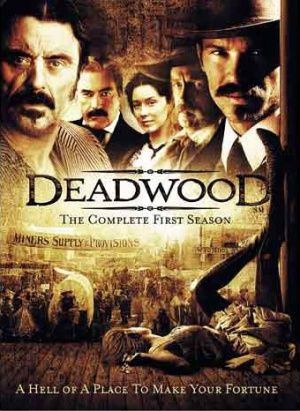
Deadwood (2004): Season 1


Deadwood is one of those things that defies description. Ostensibly a lurid Western with cable TV swearing and cable TV nudity, it is vast and strange and powerful. We think it's about the rise of America's Americanness, the Henry Ford-inspired winners and Howard Zinn-lamented losers as they hack, drink and scrabble their way "from sea to shining sea". It's really difficult to review long form TV shows such as this, but we'll give it a go - if only to spread word of its magnificence!


Hu-fucking-zzah!


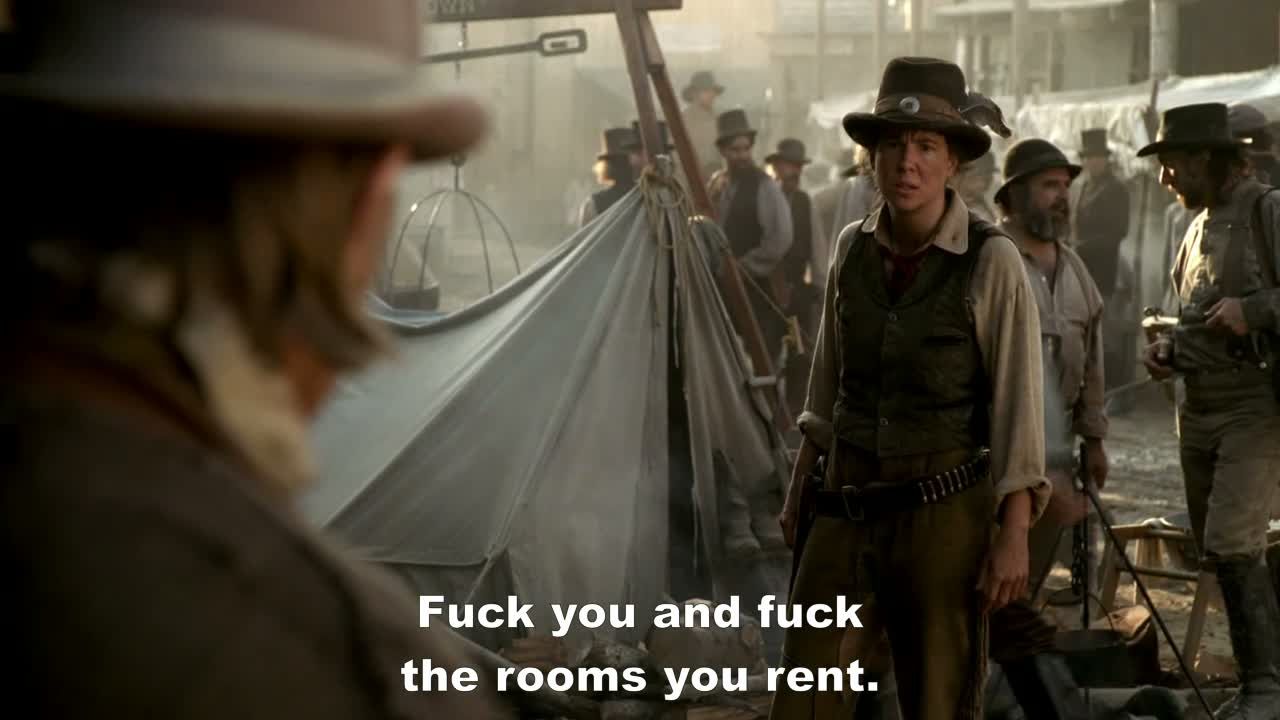
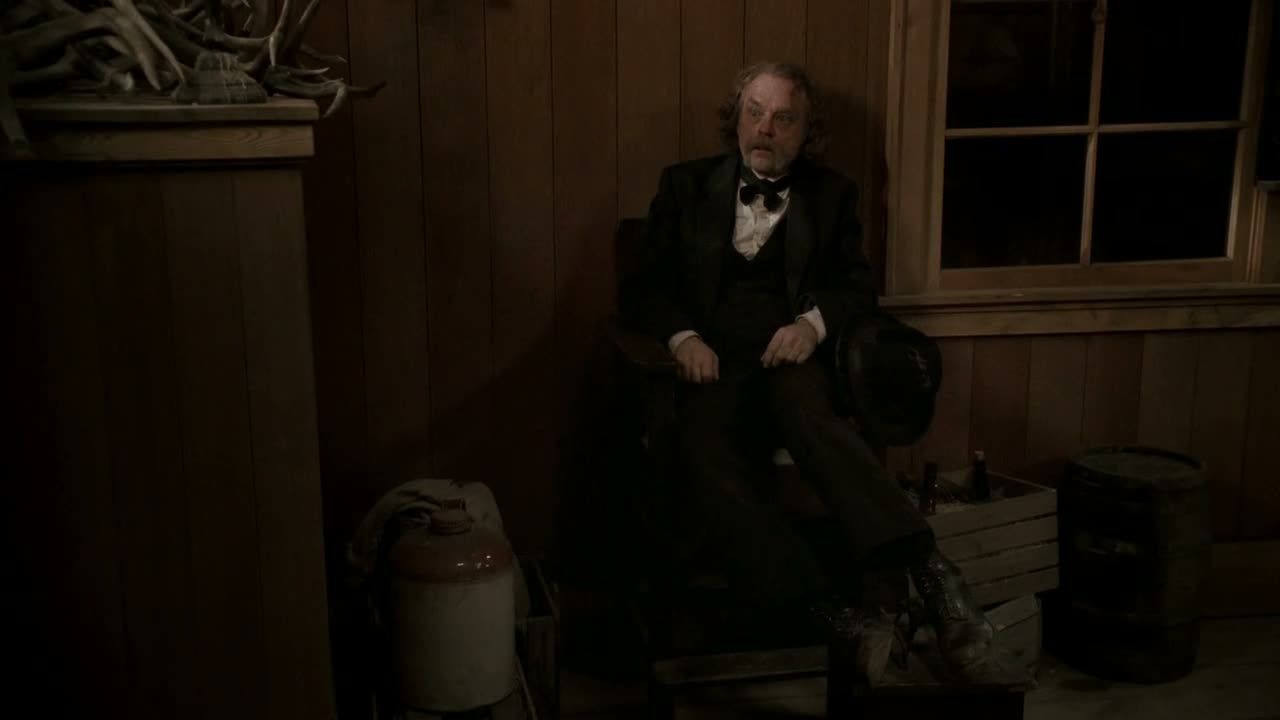
Deadwood aired on American TV from 2004 to 2006. Three measly seasons, two pitiful years! Anyway. The brainchild of the fascinating David Milch, whose previous credits include NYPD Blue, the show is an ensemble piece centering on the violent lives in the lawless, frontier town in what is now South Dakota. The Western genre staples are all present: the noble, handsome and reluctant hero, Seth Bullock (Timothy Olyphaunt), his reliable buddy and fellow hardware salesman, Sol Starr (John Hawkes), his arch-nemesis, the vile, exploitative pimp (and informal town chief), Al Swearengen (Ian McShane), the hooker with a heart of gold, Trixie (Paula Malcolmson, from Caprica), some snobby New York opium-addicted lady, Alma (Molly Parker), and her Scandinavian-Minnesotan semi-mute ward (Bree Seanna Wall), and the cranky old frontier doctor, Doc Cochran (a brilliant Brad Dourif). Oh yeah, and historical figures such as Wild Bill Hickok (Keith Carradine) and Calamity Jane (an excellent Robin Weigert) show up too.

The point of Deadwood, though - and we're not entirely sure this is the point, or the only point, at least - is to challenge, subvert, reinforce and then smash up these Western movie stereotypes while exploring some of the darker historical currents of America's cultural heritage. In particular, capitalism, expansion, exceptionalism and a can-do attitude! Huzzah! Throughout Deadwood, you can't be entirely sure if it's praising or criticizing these American foundational myths; it's certainly giving us a much more ambiguous West, where racist and sexist exploitation are used as regularly traded economic chips. Where power is ad hoc and maintained via brute force and sweaty-palmed corruption. Where everyone needs a bath and a change of clothes, as they dream bonanza gold rushes while wallowing in filth and poverty.

The characters are divided into two camps: the damaged and the damaging. The former - Doc Cochran, Calamity Jane, Trixie, the preacher - are variously healers and helpers, each deeply vulnerable and almost childlike because of that. Life is especially hard on them. Early in the first season, the preacher (Ray McKinnon), with his beatific, vacant, yellow-toothed smile, develops a brain tumor. His long, slow, ugly decline is harrowing. The various cobbled-together attempts to contain and aid this suffering - Al Swearengen kicks him out of the saloon with a sad look in his eye, Calamity Jane hectors him about hiding his symptoms from the Doc, the hookers mock him - only emphasize the setting's ability to strip away all dignity. Get thee back to civilization, for the love of God! This sense of helplessness - both existential (i.e. the Nietschzean "God is dead" symbolism of having your preacher die!) and practical (dude, it's 1871 in the middle of nowhere) - is acute.

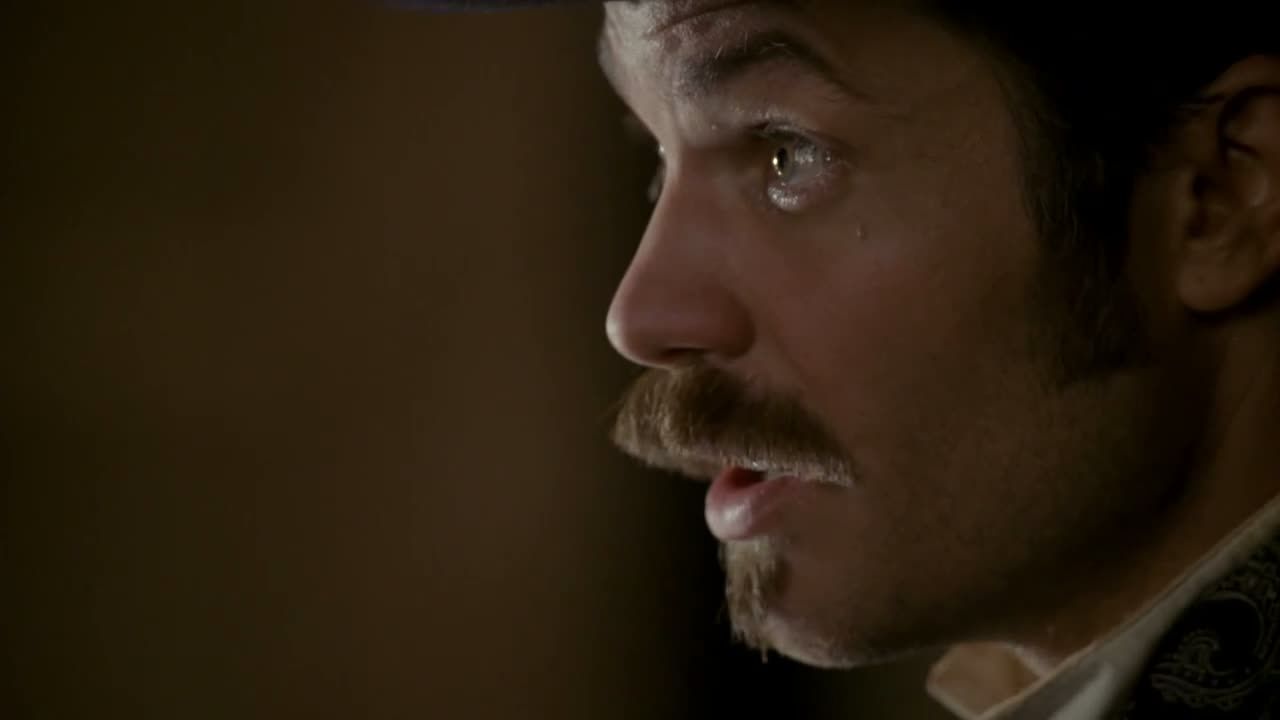
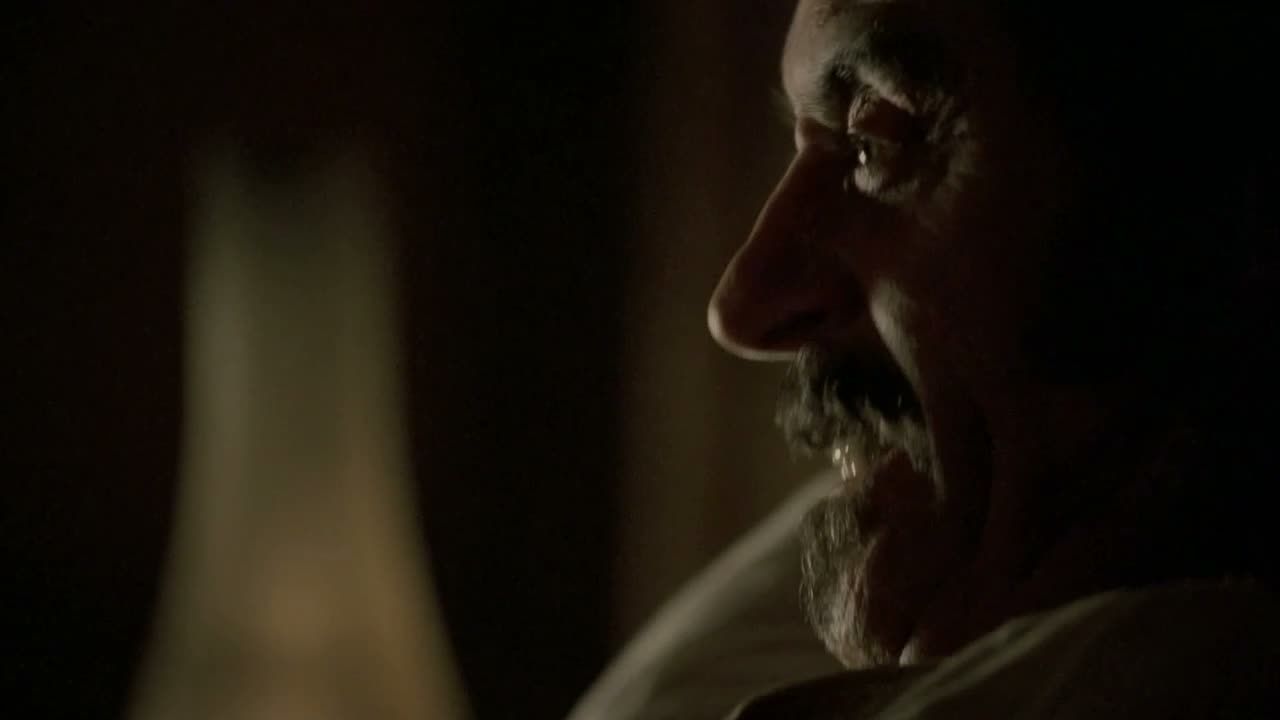
The damaging characters, instead, are the driving forces of the town - and, by allegory, the expansion of America. Embodied in Seth and Al, they play out the conventional narrative of good and bad - mostly by both being very ugly. (OKAY, IT'S A WESTERN REVIEW, WE HAD TO MAKE THAT JOKE.) That is: just like the Jedi and the Empire, what, exactly, is the difference between these two? They both have nasty tempers. They both bully and coerce, when they need to, and exhibit great tenderness and conviction as well. They make hard decisions, usually involving killing or beating someone up. They exact justice. They build the town - Seth as its work, Al as its play - and leave various victims along the way. Presumably the only existential difference between these two is that Seth feels bad about all the bloodshed; but even that could be attributed to his youth. As Al says, you learn to fucking move on!


A blunt Janus shot: the "good" side.


And the "bad".


So the founding pillars of Deadwood/the West/America - Seth and Al - pretend to be in tension, because it's part of the standard story we tell ourselves about Luke and Vader, Clint Eastwood and that other guy (OK, we never actually saw that movie), the post-Enlightenment landed gentlemen in Philadelphia in 1776 and the post-Enlightenment landed gentlemen in London at the same time; but they're really just two sides of the same coin. And they could stand in for any number of such false dichotomies: the Republicans and the Democrats, for instance! What matters is that they are the hegemony. And, in Seth and Al's case, they thrive in the lawless pre-Hobbesian setting where everyone's lives are "nasty, brutish and short". Mostly because they're macho men. And this is a setting that rewards testosterone.

Of course, for we at the PPCC, our sympathies lie with the underdogs, the alternatives, the non-hegemonics. The ones who get churned up in Seth and Al's machinations and who don't fit in. In particular, we are inordinately fond of Calamity Jane and Doc Cochran. Calamity Jane, brilliantly performed by Robin Weigert, is an enigma: a gender role-breaking, child-like misfit who gets drunk (OK, everyone gets drunk in this show) and then naps by resting her forehead against a wall. She is hilarious, endearing, bizarre, contradictory and difficult to understand. The real Jane was similarly enigmatic; especially her manufactured (?) relationship with Wild Bill. What was that about? Tell us more, history!

For the good doctor, we have a soft spot for him because he ticks all of the boxes - grumpy humanist frontier doctor a la our beloved Doctor McCoy (or Hawkeye Pierce!), sci-fi pedigree (dude, Brad Dourif was in Duuune) and, we have just learned in these last few episodes, a Civil War vet. Not many know that we at the PPCC are something of a Civil War nut. And this new fact of Civil War veteranship, coupled with the Doc's total meltdown re: the preacher's awful, moribund state, confirms his victimhood - another person damaged by the great machine of American progress. The other side of the brave new world, that has such people in it!


Sing the praises of Brad Dourif! He is so good in this show. We haven't been this unexpectedly impressed with a sci fi actor knocking it out of the park in a long form TV series since David Warner blew our socks off in the Wallander series.


And this is barely scratching the surface! Season one is complete, now onto seasons two and three. We haven't even mentioned all the other magnificent creations of this show - the vile toady-turned-mayor Farnum (played by another sci-fi vet, William Sanderson), the buffoonish media rep/paparazzo, Mr. Merrick (Jeffrey Jones) - because they merit blog reviews of their own. Suffice to say that this is fantastic, stimulating fun. Strange, sad, touching. We often found ourselves laughing, then crying, then even getting that rarest of movie-evoked emotions: tears of joy! Don't be put off by its vulgarity or its Westernness or its whatever. To quote a period poet, Walt Whitman: "O I say, these are not the parts and poems of the Body only, but of the Soul, O I say now these are the Soul!"

Highly recommended.

Tuesday, 15 February 2011

Una vita difficile (1961)


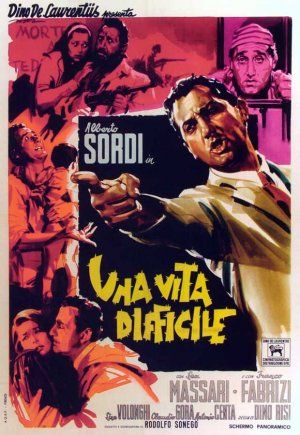
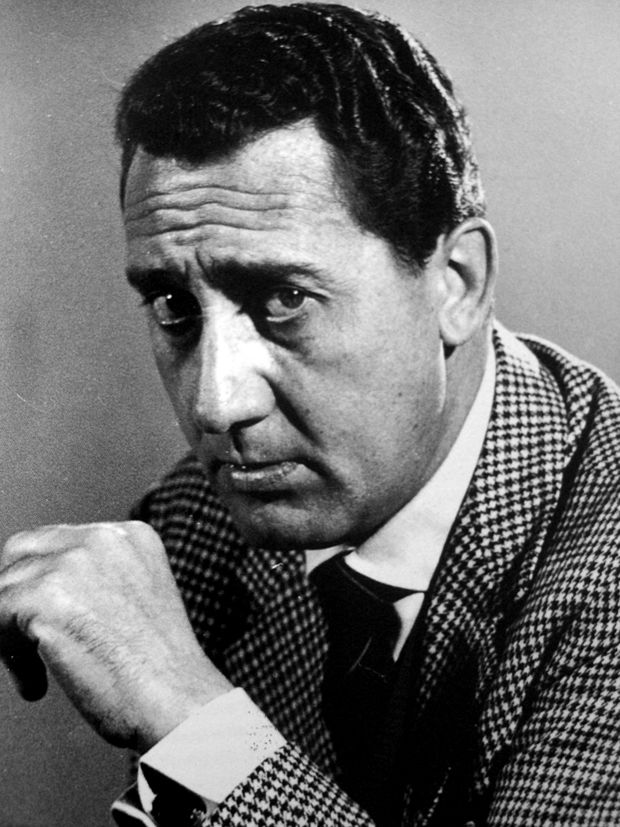
Una vita difficile (A difficult life) is the frustrating, Odyssean tale of Silvio Magnozzi (Alberto Sordi) as he navigates the post-war Italian landscape, trying to balance his partisan ideals against the harsh pragmatism that the poverty-stricken surroundings engender.

Essentially covering the same ground as C'eravamo tanto amati (which we much preferred), Una vita difficile starts with the same nostalgic romance of partisan fighting in WW2. Silvio, suffering from bronchitis as he treks through the Lake Como countryside, narrowly escapes being shot by a Nazi when Elena (Lea Massari), a local girl, kills the Nazi with her iron (whoa). Thus follows their brief three-month affair, after which Silvio flees to join his partisan band and, once the war ends, moves back down to Rome to pick up his pre-war journalism job for a left-wing daily.

A work trip up north reunites Silvio and Elena, who decide to get married. They return to Rome, where they live in borderline starvation. A son is born. Silvio is offered a position which contrasts with his left-wing morals; he refuses. Eventually, his unrestrained idealism lands him in jail, and Elena takes their son back up north.

This basic tension - Silvio's ideals versus cynical reality (often embodied by Elena); the poor, proletarian South of Silvio versus the bourgeois, industrialized North of Elena - is played out throughout the film in a variety of ways.

And all of this stuff was covered in the later, better C'eravamo tanto amati. Certain scenes - the happy crowds following Rome's liberation, the working-class trattorie with the wandering trumpet player - are even identical. Yet while Una vita difficile seems as well-remembered as C'eravamo tanto amati, we prefer the latter. It approaches the same subject with greater grace and more equanimity. Silvio's inability to let go of his idealism (and his indignant righteousness), to the point of driving away his family, is akin to Professor Palumbo's extremes - except Palumbo is articulate, off-kilter, hilarious and a sympathetic caricature. Silvio, instead, alienated us: he seemed an unlikable combination of entitlement and self-pity.

Of course, despite the identical setting, it's a harsher version of the same world that these characters live in, compared to C'eravamo tanto amati. Compare the trattoria scenes: in C'eravamo, the characters struggle by with half-portions, in Vita, they can't even pay for anything and are kicked to the curb. The requisite sell-out scenes, when Silvio succumbs to becoming a vile commendatore's underling, are full of humiliation and corruption. This extreme view just cements Silvio's righteousness, but it doesn't tackle the real issue: what if selling out does lead to a better life? The character of Gianni from C'eravamo also sells out, but his trials and tribulations are largely existential: materially, he is comfortable and happy.

Another reason we didn't particularly enjoy this film is that here, the treatment of women is just terrible. Elena, for however objectively rational and selfless she is (when Silvio implodes, she finds a way to provide a comfortable life for their son), is presented as unimaginative and frosty because she doesn't "get" the cause. Silvio abuses her regularly and, when she leaves him, she is presented as having "abandoned" him.

One of the reasons we love Lina Wertmuller's films so much is that she takes these stereotypes of Italian sexual mores - the frosty northern girl, the lusty southern man - and completely subverts them, most often via Giancarlo Giannini playing an extreme version of southern machismo. Consider, for example, Swept Away, where another left-wing, poverty-stricken southerner humiliates and dominates a bourgeois Milanese ice queen. In Swept Away, that relationship is presented as fundamentally ridiculous: compelling in its absurdity, ultimately false. Una vita difficile, maybe because it was made almost fifteen years earlier, is still earnestly enamored with Silvio's status as a man, from Rome, who is poor.

This is not to say this film isn't good. It's considered a classic, and it is indeed very well-made. The scene when the starving Silvio and Elena are invited into a royal lady's house for dinner while the republic/monarchy referendum results are announced was surreal and powerful, akin to the "lifestyles of the strange and wealthy" scenes from La dolce vita or Signore & signori. It's not a bad film, from a technical point of view. We just don't agree with its underlying philosophy. As the other northern beauty says to the other left-wing Roman in C'eravamo, "You're the first likable Roman that I meet."

<

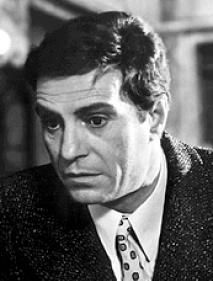
That being Nino Manfredi, who is indeed very likable and who we'll take over Alberto Sordi any day.

Saturday, 5 February 2011

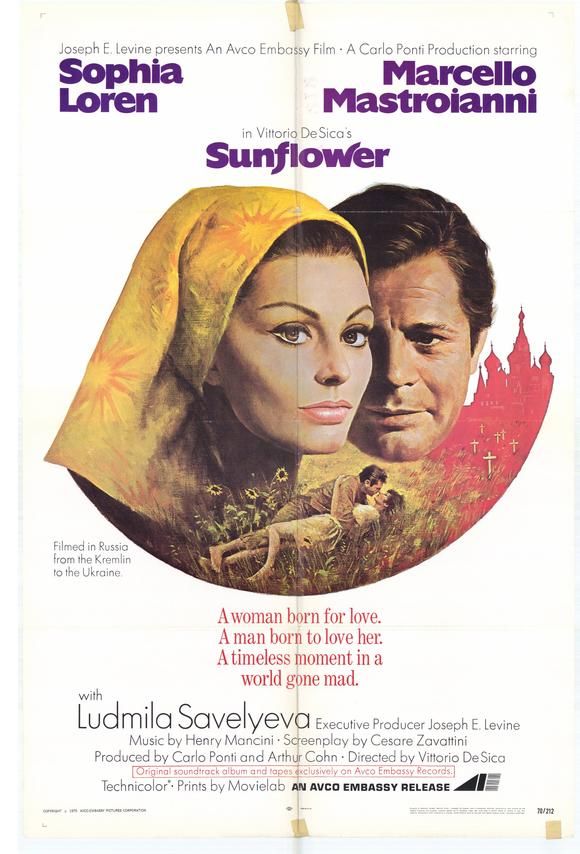
I girasoli (1970)


I girasoli (Sunflowers) is one of those epic WW2 love stories that spans decades and several countries. While hinting at stories like Doctor Zhivago, what with the sense of massive European history pulling and pushing lovers together and apart, it's not quite as good - but it is pretty decent. Its triple pedigree - De Sica, Mastroianni, Loren - makes sure that, while not great, it's good.

Early in the war, Neopolitan Giovanna (Sofia Loren) and not-Neopolitan Antonio (Marcello Mastroianni) are lovers on the beach. They decide to get married, since that'll give Antonio - who's convinced he'll soon be sent to the African front - twelve days of delay. "Who knows," Giovanna says brightly. "Maybe the war will be over by then!" Once the twelve days are up, however, the war is far from over (indeed, one of Giovanna and Antonio's honeymoon frolics is interrupted by a bridge-bombing on day 10) - and so they try to make Antonio seem insane. When that doesn't work, they resign themselves to the inevitable: Antonio is sent to the Russian front.

Years pass, the Italian soldiers return, but still no word from Antonio. Yet more years pass - Stalin dies (!), so it's 1953 (!), so (pencil scribbling) that makes it about ten years apart - and Antonio's mother gives him up for dead. But Giovanna, convinced he's still alive, decides to travel to Russia herself, armed only with her steely determination and an ancient wartime photograph of him. What she finds there (which you can probably Google, but we'll endeavor to be at least a little spoiler-free) is sad.

The film is soaked in shared history between Italy and Russia, and the rest of Europe, as both sides pick up the pieces after the war. De Sica emphasizes this common humanity and common heritage by using visual parallels repeatedly throughout the film: the train that Antonio leaves on, the train that brings news of the front, the train that backgrounds their post-war reunion. Antonio's limp, Giovanna's colleague's limp. The near frost-bitten Antonio collapsing in the Russian snow, becoming just one more fallen comrade as the army moves ahead. And, of course, the sunflowers of Russia ("Each sunflower represents someone who died here - an Italian soldier, a Russian soldier, a German soldier, civilians, men, women, children," a character helpfully explains) and the yellow mimosas of southern Italy. Or whatever those flowers are.

Anyway, the point is that this story is supposed to be a drop in a rainstorm: in Giovanna and Antonio's tender heartbreak, we're supposed to see all the thousands of other Giovannas and Antonios that were ripped apart by the war.

Generally, it works. Okay, yes, we cried. But it's not quite as magnificent as it aspires to be. The cinematography is glorious and large - many of the scenes are impressively enormous, capturing rolling fields, thousands of graves, the pristine blue sky. But we were also constantly distracted by De Sica's overenthusiastic use of the dolly. Had he just bought a new one or something? The jumpy zooming and ambitiously long takes (watch for one where a family moves all their furniture in a pick-up truck, and the camera manages to get all the way around the truck while, presumably, both truck and camera car are in motion). A story of this scale also warrants a richness of characterization which is lacking. While Sofia Loren and Marcello Mastroianni are everybody's favorites, and we certainly like them too, we felt that Giovanna and Antonio weren't clearly-enough defined, apart from their love story narrative. The mother-in-law was the barest sketch of a character.

So, all in all, a decently moving large-scale wartime story. Not mind-blowing, but not terrible. Kinda tearjerking. Like, tearnudging.

Saturday, 29 January 2011

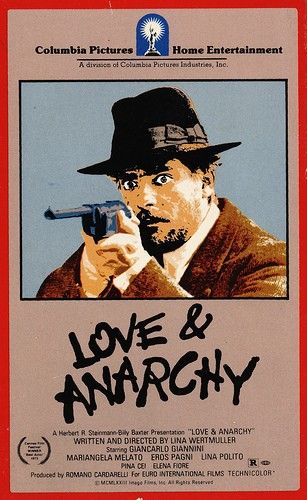
Love and Anarchy (1973)


Good God. Careful with Film d'amore e d'anarchia, ovvero stamattina alle 10 in via dei Fiori nella nota casa di tolleranza... (A film about love and anarchy, that is, this morning at 10 o'clock in Fiori Street, in the well-known whorehouse...; but more often, Love and Anarchy) - it's intense as hell.

It's also very good, and probably Lina Wertmüller's most gripping, gut-wrenching film. Stripping away all the bizarre humor that lightened and spiced up her later hits, Film d'amore e d'anarchia is a straight, sober look at one of Italy's most terrible periods: the rise of Fascism in the 1920s. We follow a few days in the life of the freckle-faced, wide-eyed country boy, Tonino (Giancarlo Giannini), who has come to the big city with plans to assassinate Mussolini. He's taken in by an anarchist prostitute, Salomè (Mariangela Melato). The whorehouse is a bawdy circus, full of sex jokes and impromptu guitar singing. Tonino, visibly out of his depth, is taken in by the prostitutes, who protect him and bicker over him and mock him. Eventually, he falls in love with the equally young Tripolina (Lina Polito).

But, even amidst this atmosphere of fun and frolic, the clock is ticking. The long shadow of Fascism looms, and things become increasingly edgy as the date of the assassination approaches. This slow crescendo of tension builds and builds, creating a sense of terrible foreboding.

A number of films have shown the quotidian nightmare of Fascist Italy: Una giornata particolare explored the day Mussolini and Hitler met in Rome, as seen via two "outsiders", played by Marcello Mastroianni and Sofia Loren, stranded in a deserted suburban apartment building. Roma città aperta and General della Rovere explored wartime, occupied Italy. Film d'amore e d'anarchia fits neatly into this subgenre, in that - like Una giornata particolare, we experience the city under Fascist rule: and it's alien, ugly, oppressive. We see extensive shots of Mussolini's planned communities, such as EUR, with their enormous, repressive architecture. The streets are all empty. Everyone seems unfriendly and on edge.

Also, like Roma città aperta and General della Rovere, Fascist power seems unconquerable, terrifying. The feeling of initial resistance followed by deep fear ("I'm shitting myself," Tonino repeatedly quails. "You can't imagine how scared I am.") followed by absolute desperation is perfectly captured in these films. Indeed, we spent much of the film anxious and upset, almost unable to watch it to the (inevitable) sorry conclusion. This isn't the post-war world of C'eravamo tanto amati, where the partisan fight - having been won - is suddenly seen as nostalgic and noble. Instead, this is narrow, terrifying insecurity. Indeed, that feeling of pervasive terror lingers - we still feel it now, having just finished the film, and we're reminded of another Antonio, the relatively luckier resistance fighter played by Nino Manfredi in C'eravamo tanto amati, who has a great few lines about it:
Listen, Luciana: when you've risked your life with someone, you remained attached to them. It's as if time doesn't pass, and that person could still save you. As if we're not out of danger yet.
Highly recommended. Follow with the lightest chaser you can find - something like this or maybe this or maybe just a glass of water and a nap.

Monday, 3 January 2011

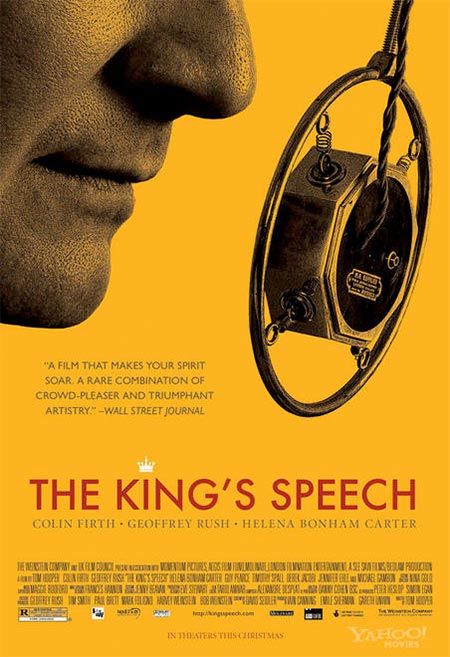
The King's Speech (2010)


The King's Speech is a solid film which never attains the greatness to which it aspires. By choosing the easy route, and smothering the darker, crueler core of its story under a tidy triumph, it ends up a good film, where it could have been a great one.

The King's Speech is essentially a sports film, and sports films are usually the same. They start with our hero, the underdog, undergoing a humiliating defeat. After licking his wounds (and it is usually a 'he'), the underdog discovers the key to his reformation and success - usually an inspiring mentor or coach. After a rousing training montage, we build up to the inevitable denouement - usually a rematch with the earlier opponent - which, after some tense last-minute uncertainties, ends in (inevitable) glorious victory.

The best sports films are those that bend the genre - films like Eight Men Out, that open with victory and end with the abyss. Director Tom Hooper is no stranger to such films - just see his work from last year, The Damned United, which used the harsh clarity of defeat to really examine our ambition to win. The King's Speech should have been such an innovative sports film - a film that let our character, King George VI (Colin Firth), wallow in his misery and explore it. Instead, we get the trials and complexities of England's waning royalty under the gathering storm of World War 2 shoe-horned into a feel-good movie complete with Disney-style pop psycho-analysis.

Behold:

Our hero, underdog Duke of York, is second son to King George V (a spot-on Michael Gambon) and an embarrassment to the family. In an age of the radio, where the royal family has been "reduced to ingratiating" themselves into England's living rooms via the "Pandora's box" of wireless technology, the Duke - Bertie to his wife (Helena Bonham Carter) and family - is a terrible public speaker. He suffers from a stutter and paralyzing stage fright. The film's opening defeat shows him giving a cringe-worthy speech to the crowds at Wembley (?) in 1925.

Ten years later, Bertie meets his mentor and coach - the unorthodox, transplanted antipodean Lionel Logue (Geoffrey Rush - nice to see you again!). Logue insists on equality in the counseling room, and couples his speech therapy with some pop Freud as well. Bertie's stutter will never improve, Logue reckons, if we don't unearth some of the anxieties which eat away at him from the inside. Bertie - clinging to the formalities and automatic distance that his title engenders - rebels. But then comes around. Then, after his father dies and his older brother abdicates in favor of a Baltimore divorcee, becomes king. And then war breaks out. And then he gives his speech.

The best parts of The King's Speech, as we've hinted at above, are the darker parts. Logue's non-speech therapy might be a bit Good Will Hunting, but there is a real edge to seeing the surreal, dehumanizing effect royalty has on everyone involved, not just Bertie - the cavernous palace rooms, the stiff ritualism of family affairs, the easy bullying. Bertie is, of course, the most obviously wounded of the lot - his stutter a paper-thin disguise to the deep insecurities he has been raised to feel. In one harrowing scene, Logue - ever awkward in reconciling his everyman conviviality with the formalities required in dealing with Bertie - attempts to console Bertie shortly after the latter's father's death. Bertie then haltingly describes his gruesome "personal affairs" - up to this point, taboo - and we hear of abuse, neglect, alienation. It's ironic that Geoffrey Rush's performance in this scene - that is, his reactions - almost outshines Colin Firth's. Another excellent detail is the tempestuous anger which Bertie exhibits - and how he explains away his sudden explosions as "one of my many faults".

It's these hints at dysfunction and decay that round out both the character of Bertie and the story of England's royalty under the war. And as war brews and Bertie is faced with his most important public speaking event yet - a cry to rally the troops - we can't help but feel like forcing the complicated private and public issues into one mishmash of "Hurrah for perseverance!" is facile.

Phew.

Anyway, on the purely movie front: Timothy Spall's spot-on Winston Churchill impression was stunning in the lengthier scenes and distractingly funny in the shorter moments, where it began to feel like a caricature. Turning the Archbishop of Canterbury (Derek Jacobi) into a thorny old guard antagonist was uninspired, as were the easy jokes about snobbish, stiff upper lip English royalty looking down on Australians. That said, it was nice, in a meta way, to have Australian actor Guy Pearce, as the dandy older brother and very-briefly-King Edward VIII, speak in the poshest accent ever. Helena Bonham Carter was wonderfully sympathetic as, well, the Queen Mother (what are these people's names, anyway?! Bertie said his at one point and it had, like, ten names in there), while Geoffrey Rush was his usual Geoffrey Rushy self. Colin Firth is a dreamboat as ever, and of course we felt a great rush of tenderness for him, as he was indeed incredibly vulnerable (and often humiliated!). Trivia: He played a WWI vet with a stutter in the glorious A Month in the Country.

Other movie stuff: Tom Hooper's direction was reminiscent of his work in Damned United - canned saturation, geometrical compositions emphasizing dizzying wallpapers, symmetrical perspectives and a tendency to use off-center close-ups. It was nice in Damned United, but we were distracted this time. The use of Beethoven's 7th was DIVINE, I tell you - but then, that music is divine. There was a whole 'nother movie in there. And hearing Bertie describe Hitler as advocating the "primitive doctrine that Might is Right" threw us right back to The Once and Future King - so that's what T.H. White was referring to: Bertie's speech! Oh my God, ARTHUR IS BERTIE, WE SEE IT NOW. Well, that is just something.

So: see it? Yes, definitely, but perhaps wait for DVD.

Monday, 15 November 2010

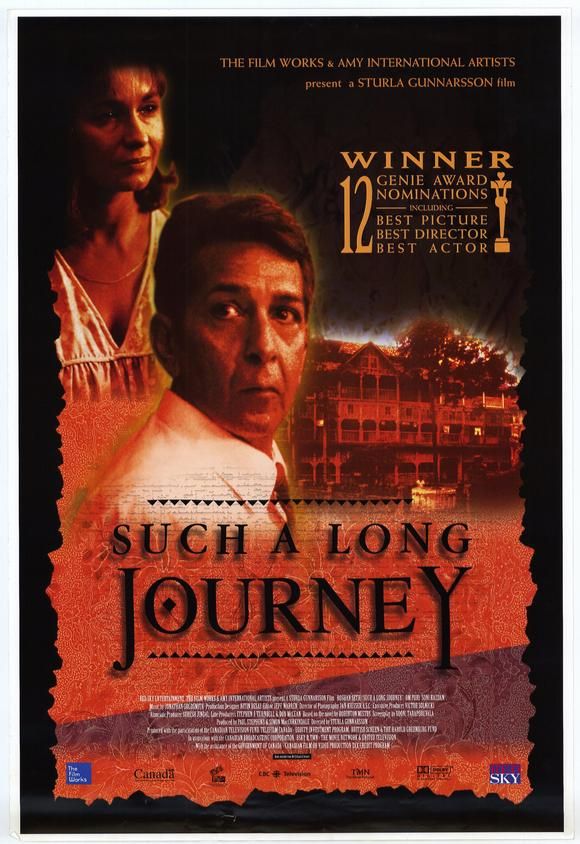
Such a Long Journey (1998)


Such a Long Journey is humanism, fatalism and mysticism all mixed up in one big, chunky mess that looks like an impressionist's painting and smells like pee. It's not particularly coherent, but that seems to be its aim: a pastiche of life, in all its warty glory, from a cross-section of a Bombay shawl in paranoid 1970s Emergency India.

Based on the book by Rohinton Mistry, it carries the flavors of Mistry's other works (e.g. A Fine Balance): Indo-nostalgic, riotous, deeply humanistic. There is the dysfunctional Parsi family, led by Gustad Noble (Roshan Seth) - a middle class bank clerk who is at times infuriatingly self-pitying, at other times gloriously heroic. His wife, Dilnavaz (Sona Razdan), struggles to keep the balance between Gustad and their eldest son, Sohrab (Vrajesh Hirjee), who has just had the (mis?)fortune of being admitted to one of the prestigious IITs. One day, Gustad gets a letter from his charismatic, prodigal friend, Jimmy Bilimoria (Naseeruddin Shah), a military man who spins tall tales about funding Bangladeshi/"East Pakistani" resistance forces.
The strength of Mistry's story, and this adaptation, is how the fine line is juggled - or, shall we say, a FINE BALANCE is maintained - between what is real and what is fantasy. This isn't stereotypical post-colonial magic(al) realism (though that would have been nice too), but rather it's a sort of unreliable narrator - is Jimmy really a big-shot spy? Do the magical potions Dilnavaz concocts really what keep everyone safe? The film leaves these things ambiguous - sometimes frustratingly so. But that ambiguity, like the incoherence, is all part of the package. Look at this! Life is crazy! Just as the chawl's wall to the street goes from over-frequented public urination spot to religious mural and ad hoc shrine, things often just don't make sense. And you're not even sure how to feel about it.

Indeed, religion is shown to be a fragile, important shield against the urine of life. When Gustad, in a slightly Groundhog Day way, becomes the holiest, shiniest, forgivingest (and, if you'll forgive us the Judeo-Christian default, the Jesusiest!) humanist we've done ever seen, he is shown to finally make some progress. Suddenly, he can laugh. He can cry. He has emotional breakthroughs. The wall doesn't smell like pee anymore.

Poor Roshan Seth was never really used as much as he could have been - we still recall, with great fondness and awe, the subtle genius of his performance in Gandhi (particularly when he confronts Gandhiji after one of the fasts) and the wondrous, dreamy texture of his take on a displanted Ugandan in Mississippi Masala (maybe the only movie where he gets his due). That man could be soulful, people! Such a Long Journey is a rare chance for him to play the lead, and it's intriguing and, ultimately, very satisfying to watch his complex, whiny, miserable, redeemable Gustad. Naseeruddin Shah and Om Puri - the usual stalwarts - have very little to do, but it's nice to see them (especially Om Om Om Puri!). Soni Razdan did what she could, given that - yet again - the ladies get relegated to being concerned mothers, shrewish crones, whores or sexualized secretaries. Oh yeah, or Indira Gandhi.

So, to conclude: domestic, lightly mystical (featuring the Sitars of Transcendentalism), and endlessly interpretable, this is a rare glimpse into middle class workaday urban India, when most other stuff tends to be Orientalist poverty porn or Karan Joharified NRI luxury fests.

Saturday, 23 October 2010

Time Stands Still (2010)


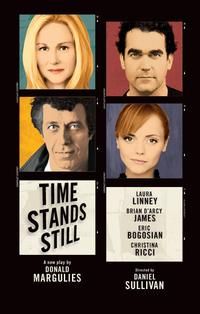
For however powerful and intriguing the play Time Stands Still was, it left us unsatisfied. Alas.

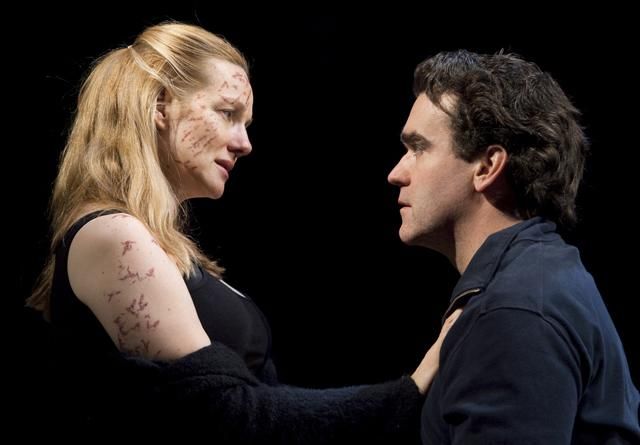
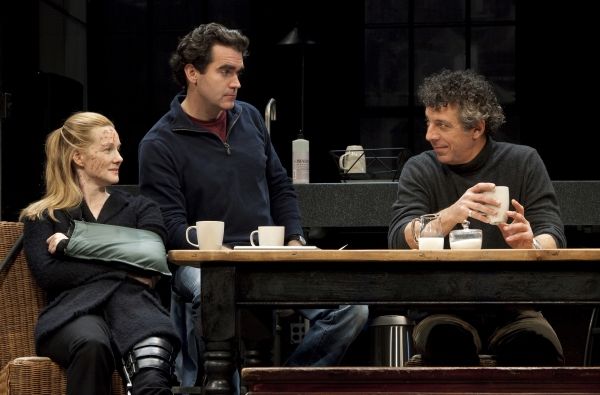
Ostensibly dressed up as a topical drama about a traumatized photo-journalist, Sarah (a graceful, fiery Laura Linney), freshly returned from Iraq, it covers instead a much larger issue of postcolonialism, justice and white guilt. It doesn't go into the nitty gritty surrounding the politics of Iraq or Afghanistan (as we had expected it to), nor the debates around humanitarian aid; its scope is less political and much more philosophical and, to its detriment at times, vaguer. Sarah and her partner, James (Brian D'Arcy James), are both damaged adrenaline junkies - forever chasing the next war zone, the next famine, dancing with death and flirting with notions (delusions?) of grandeur. Does their work mean anything? Does anyone back in the "developed" world actually notice Sarah's pictures or James' essays? When they turn Sarah's latest visit to Iraq into a glossy coffee table book, are they "profiting from the suffering of others"? (Sarah's words.) They are a dark, brooding pair given to an epic sense of significance: even as their romantic lives get mixed up and similarly scorched by their war zone wanderings, it's something they have great difficulty living without. They are, they feel, doing something very important.


Laura Linney and Brian D'Arcy James.


Which is not the case for their close friend and photo editor, Richard (a rakish Eric Bogosian), who - while admitting to "living vicariously" through the duo's adventures - feels likewise shaken by their breakdowns and near-death experiences, eventually swinging around the spectrum to a philosophy of embracing vitality and comfort, debauched West or not. His new love, a young event planner naif named Mandy (Christina Ricci), is both a point of derision between the three old friends and a testament to Richard's dedication to his new life. No more hunting for suffering.

There's no doubt that Time Stands Still is very good - the interplay between the characters is dynamic, energetic and smart. While they risked becoming caricatures - especially Mandy - the writing respected their various positions, and they all played important roles in presenting these "options" for the liberal mentality. How guilty are we supposed to feel for the suffering of those in absolute poverty? Or in war? How responsible is the West for these disasters? These are thorny topics, and the play does a great job of, for example, establishing an uneasy (and funnily Brechtian!) parallel between the escapism of Hollywood horror movies and the "escapism" of going into a land of suffering and documenting it (and the escapism of watching a play about these escapisms). There's this sense of intrusion - Sarah has a great monologue about this, when she describes a PTSD flashback about a market bomb in which she was urged by a wounded woman to "Go away! No pictures!" - and there's a concurrent sense of detachment, of hiding behind a lens (or a coffee table book), all in the (noble?) name of atonement for past geopolitical grievances.


Is it wrong that (1) we think Eric Bogosian looks like Anthony Bourdain, and (2) this renders him hot?


We felt unsatisfied, though, because the play spent so much time setting up this complex, layered look at the effects of living in a powerful white hegemony on white people - just how guilty should white people feel, as humanitarians? as liberals? etc. - but then gave essentially no answers. There was even a scene in which James and Sarah have a raging fight about each other's "imperialist" attitudes, and how even their romantic entanglements carried tinges of exoticism and Orientalism. This is a scathing remark - and it's a very valid argument. Yet it is never pursued; the writing backs away from really damning Orientalists, or damning people who damn Orientalists. We think partly this had to do with the playwright (Donald Margulies) never criticizing Sarah as much as he could have - and perhaps should have. Despite the writing's nominal criticism of Sarah's less virtuous motivations - her trust fund baby guilt, her romanticizing of "adventures", the obvious, self-important pride - it never really undermines her. As a result, the audience never gets an opportunity to really question her role in the same way the other three are questioned. A little more subversion would have gone a long way in challenging us to think more deeply about these issues. At the moment, we were left only with the questions, and no options given as answers.

Nonetheless, it was an amazing opportunity to see the absolutely lovely Laura Linney on stage! She was really fabulous, and gracious to her adoring legions who waited by the cast door later. Christina Ricci did a great job keeping the humanity in her borderline cartoon character; and we may have a crush on Eric Bogosian now (BUT WHATEVS MOVING RIGHT ALONG). Brian D'Arcy James had some strong moments, but we had a hard time finding consistency in his performance. Time Stands Still is playing at the Cort Theater in New York.

Also, we think Saviors and Survivors might be an interesting companion to reading/seeing this play.
Tuesday, 19 October 2010

Adam Resurrected (2008)


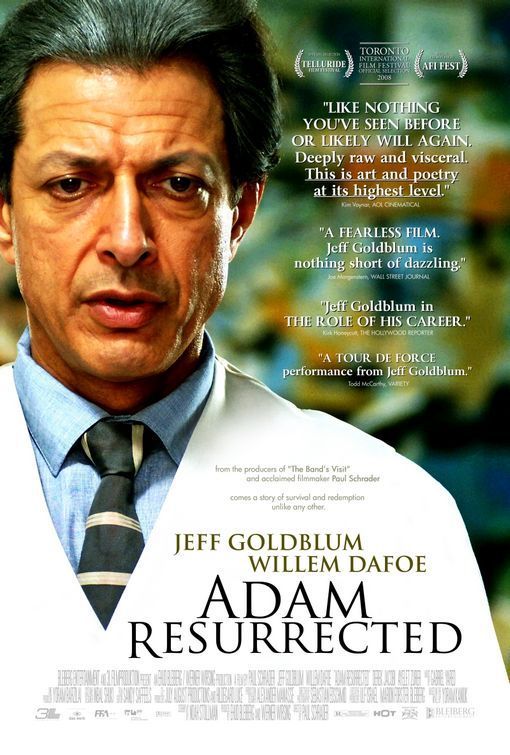
Adam Resurrected is a bizarre, hypnotic tragedy about one German-Jewish circus performer, Adam Stein (Jeff Goldblum), in the years immediately following the Holocaust.

Essentially a character piece, we meet Adam one day in 1960s Tel Aviv when he is - apparently not for the first time - sent to an insane asylum for Holocaust survivors. He is charismatic, loopy and flamboyant - so, basically just Jeff Goldblum. And everyone loves him - the patients, the wry head psychiatrist (Derek Jacobi), the sexy nurse (Ayelet Zurer) and (as always) the PPCC. During this introductory sequence, we get scratchy, black and white flashbacks to pre-war days when Adam was even more Jeff Goldblumy - we learn of his zany cabaret-vaudeville standup routines, his adoring family, and, ominously, his almost magic(al) realist ability to read the mind of one near-suicidal young German, Klein (Willem Dafoe). We should pause here to note that Jeff Goldblum doing his schtick can be very loopy indeed, and his German-Yiddish-English "Ja-haaa!" jokes were genuinely very funny. Ja, ja, ja!

Adam swiftly falls apart, figuratively and literally, when he meets a mysterious patient at the institute - a young boy (Tudor Rapiteanu) who is convinced he is a dog. This sends Adam reeling back into his own private hell, and we relive his trauma of being taken to the concentration camp, re-meeting Klein - now a Nazi Commandant - and being forced to live as Klein's dog while his family suffers in the camp. Here, both Adam and the filmmaking go off the rails - drunken ranting (and drunken camera angles), extreme close-ups and the previously whimsical imagery turning nightmarish. Think Pan's Labyrinth for the same mix of surrealism, magic(al) realism, fantasy and horror. The restoration, or titular "resurrection", of Adam takes the form of healing the boy who thinks he is a dog, whom he names David ("King of the Jews! Descendant of Adam!"). A number of Biblical allusions follow, as well as expected "weeping clown" archetypes.

This film really surprised us. First, because the reviews for it had been so lukewarm (the New York Times called it "flat"!). We were expecting something earnest but dull. Instead, we got something screwy and challenging and, often, gut-wrenching. Second, this is a Holocaust Movie that still manages to remain a Jeff Goldblum Movie - that is, the weird, highly potent charisma that Jeff Goldblum seems to chug out from his pores isn't stifled for this very serious topic, but is instead channeled in an ingenious and powerful way. We were very skeptical of him playing straight and serious - he's never really been a heavy; his performances seem to subsist entirely on bubbles and glitter and airy good humor (the Guardian once called him the "Buddha of Hollywood", likening him to a "unicorn"!). We were even skeptical of his German accent. So it was a real shock to see how entirely believable, and yet entirely himself, he was. It was brilliant casting and a brilliant performance: using that very same jester quality which is Goldblum's brand to flesh out the character of Adam Stein. And the characterization was so varied, with rich highs and devastating lows. It was powerful in ways we weren't expecting at all. Did we mention we had to take a breather about halfway through? Our heart was taking a pounding.

It's not a perfect film - we didn't agree with some of its choices, and especially found Klein uninspiring (despite Willem Dafoe's best efforts to infuse Klein with his own kind of nightmarish instability) - but it is an adventurous and imaginative one.

Friday, 8 October 2010

Never Let Me Go (2010)


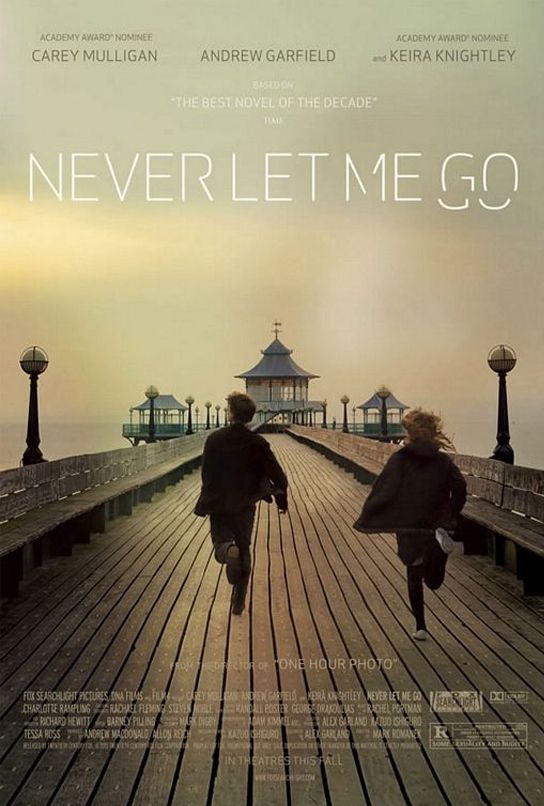
Never Let Me Go, the anemic adaptation of Kazuo Ishiguro's famous book of the same name, puts all its money in a sort of fuzzy, idyllic, Cotswold-saturated nostalgia, and unfortunately it's a waste. Much like the protagonist who waits for people to break up or die, we waited… and waited… and waited for this movie to end.
Ostensibly a dystopia, though we'll remain spoiler-free, the tale is set in recent-past England, and it's a typical look at lost love and wistful childhood memories that abound in other films about the English being bad at love: Atonement springs immediately to mind, with the same country manor setting for a love triangle that goes on for the characters' entire lives. Though another Ishiguro adaptation, Remains of the Day, is also very similar.

Kathy (Izzy Meikle-Small as a child, the cute Carey Mulligan as an adult), Ruth (Ella Purnell as a child, Keira Knightley as an adult) and Tommy (Charlie Rowe as a child, Andrew Garfield as an adult) are students at your Standard English Boarding School - where they frolic in the fields, hide buttons in their little tin boxes, and play deadly amorous games with each other. This could be any other film about the posh and heartbroken, what with their inhibited half-confessions and epic yearning. They grow up, they pine. Some slightly sci-fi stuff happens, but the movie isn't too concerned about it - it's essentially just another way to drive the same point home. And in case you still had any doubts about what, indeed, the point of all this is, Kathy helpfully TELLS YOU THE MORAL OF THE STORY in the end. Thanks, K!

Few films accurately capture the poignant, impermanent transcendence of an English countryside - our recently reviewed A Month in the Country is one of them. Few films know what to do with love too, it seems, and Never Let Me Go presents us with the same fairy tale we've been watching since Disney: pre-pubescent "true love" that lasts a lifetime, the virgin vs. whore (with the whore meeting her usual end), people who are static, unchanging and yearning, YEARNING, so painfully, ALL THE TIME.

Which is not to say that statically yearning unreconstructed romantics aren't occasionally fun. But when their Truly Tragical Romanticness is driven home with a hammer by the director (here, Mark Romanek), we get bored and a little insulted. We get it! We can't help compare Romanek unfavorably to our recent worshipee, John Sayles: in John Sayles's Limbo, there is a stock "nightmare torment angst" scene when tragic fisherman Jumpin' Joe comes awake with a gasp, causing lounge singer Donna to awake and ask what's wrong. A shaken Joe comments only that you can't always save people. END SCENE. DONE. We got it! Great! In Never Let Me Go, there is a stock "sensitive boy has tragical rage angst" scene, which is long, and detailed, and milked for all its juicy tragicalness. We get it! We get it already!

THIS REVIEW WAS ABOUT THE MOVIE NEVER LET ME GO AND HOW WE DIDN'T LIKE IT VERY MUCH. BUT IT'S NOT REALLY A REVIEW ABOUT A MOVIE AT ALL; IT'S ABOUT LIFE. PERHAPS IF ONLY WE HAD VALUED THE PRECIOUS MOMENTS WE HAD ON THIS EARTH WE WOULD NEVER HAVE WATCHED IT/WE WOULD HAVE LIVED LIFE MORE COMPLETELY/LESS TRAGICALLY. SO MANY REGRETS!
(the book!)

Tuesday, 28 September 2010

A Month in the Country (1987)


If there is one movie that is terribly, tragically underrated and unknown, it is A Month in the Country.

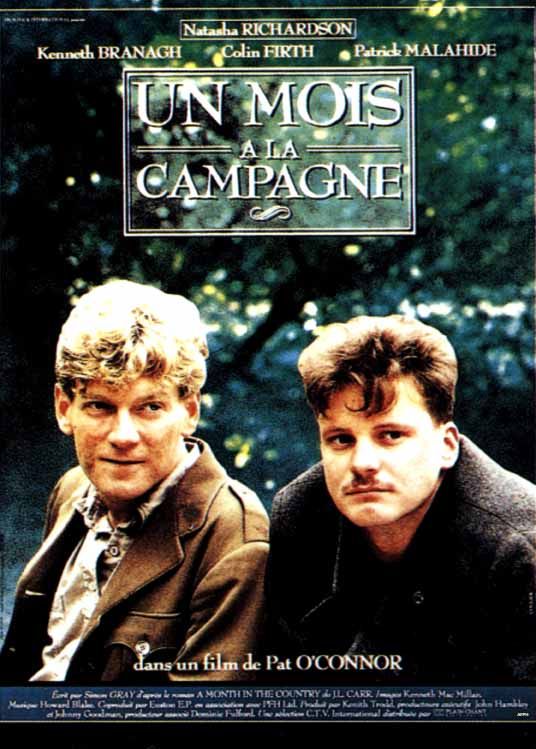
It's ironic because J.L. Carr's novel of the same name, on which the 1980s movie is based, is also terribly, tragically unknown. It just missed a Booker back in 1980, and instead won the Guardian Fiction Prize - a lesser trophy and, it seems, a punishment to anonymity. The movie, in the meantime, stars everyone's favorite English actors, Colin Firth and Kenneth Branagh, as young World War I veterans struggling to cope with their traumatic experiences in the first, Elysian summer after peace is declared. It's great. Really beautiful. And there's no DVD for it!?!!
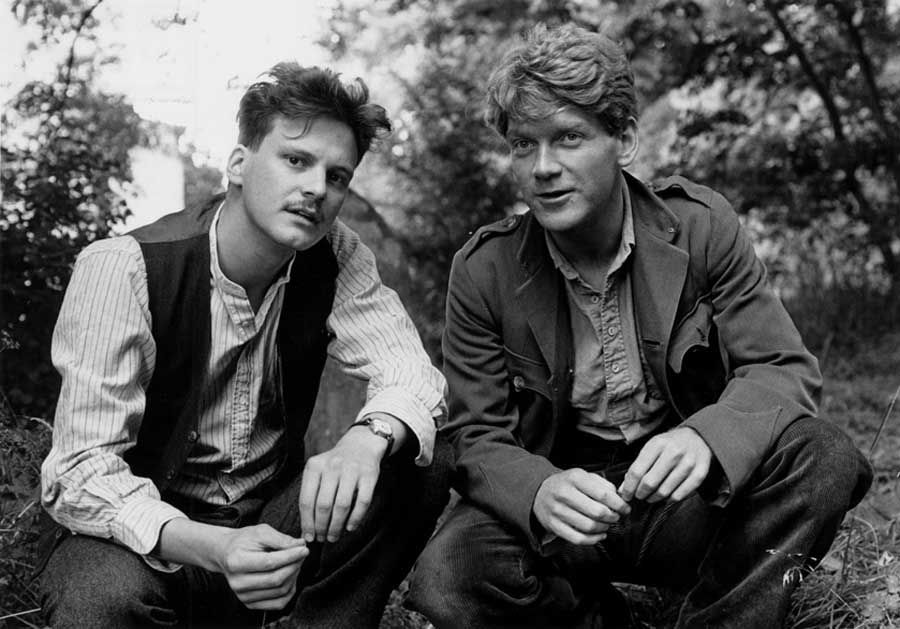
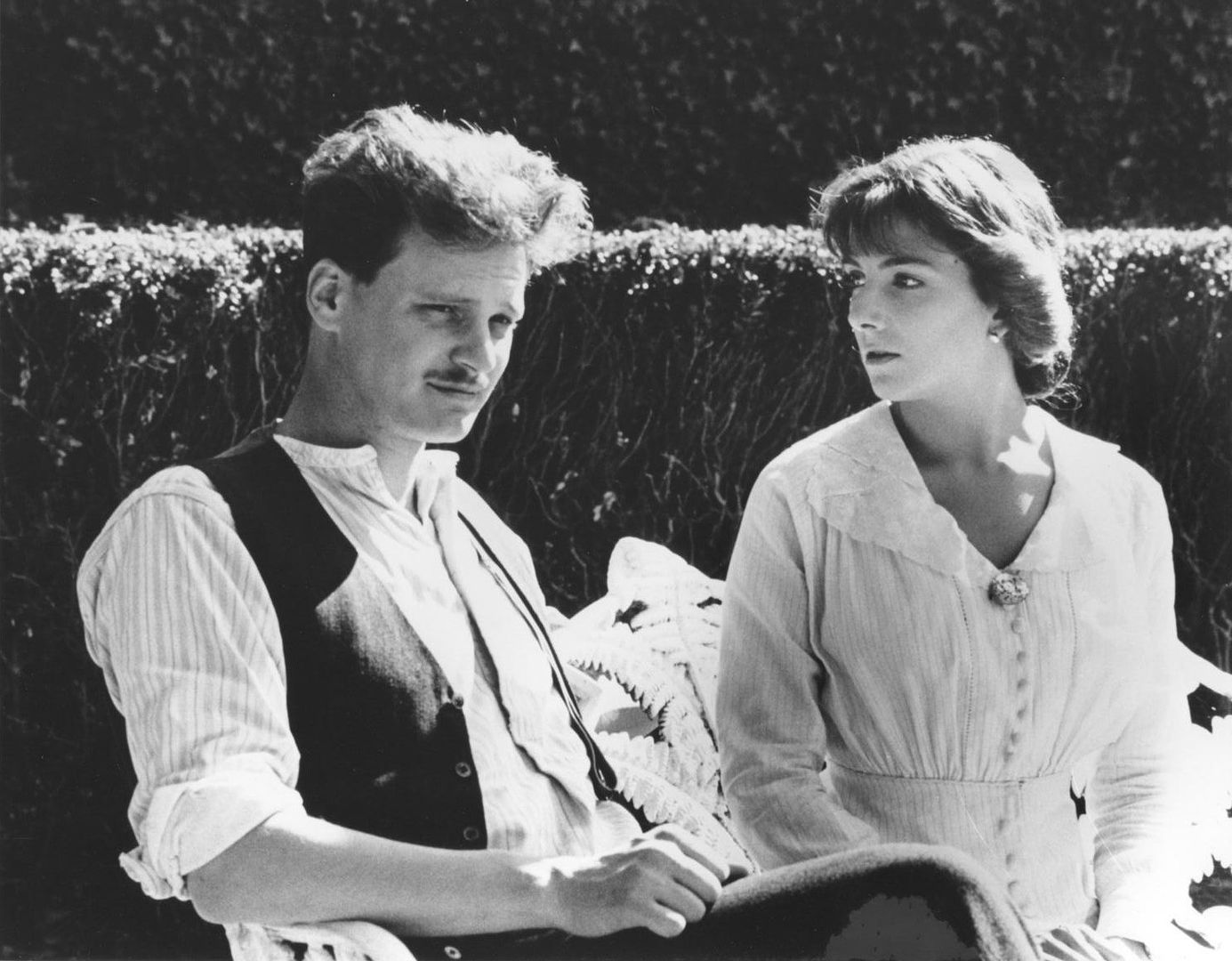
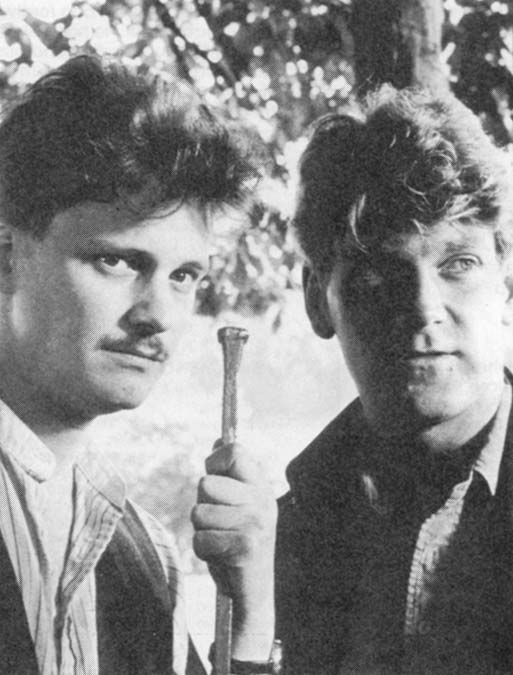
Colin Firth as Tom Birkin and Kenneth Branagh as Moon, both so young!


It's terrible, tragic and ironic, but it also makes sense - in a weird, double-agent-ironic way - that this small, understated story of remembering and loss should be on the verge of falling into the vacuum. The story is, after all, an extended meditation on nostalgia, grieving and renewal. It's about preserving yourself against the abyss; carving a space of light in a world where all seems dark. When Tom Birkin (Colin Firth) arrives in the tiny Yorkshire hamlet of Oxgodsby, he suffers from a stammer, a facial tic and terrible nightmares. He's also freshly divorced and still pining for his ex-wife, Vinnie (never shown on screen). He arrives in Oxgodsby in rainy twilight and makes his way to a gloomy church. His job for the coming summer months is to restore a decrepit, hidden 14th-century fresco from the church's ancient walls.

The pace is slow, matching the drift of motes in sunlight. Birkin meets another young vet, Moon (Kenneth Branagh), who has been paid to dig up the lost grave of a rich townie's ancestor. Moon is, like Birkin, still damaged from the war, though the quality of his suffering becomes an unexpected parallel with the mysterious artist's life. Birkin, when not drinking tea with Moon or brushing turpentine onto plaster, falls into quiet, intense love with the vicar's wife, Alice Keach (Natasha Richardson).


Love with the vicar's wife (Natasha Richardson)! The bit when she explains her apple savantness is so good.


Colin Firth recently waxed nostalgic about director Pat O'Connor's confidence in making this film: the story was allowed to breathe, actors were allowed to be silent. Indeed, the whole point of the film is the profound, emotional intensity that underscores this pleasant facade, and the uselessness of words. The trauma of World War I still lingers like a ghost in the landscape: and O'Connor does a brilliant job of never gazing directly at the war, but rather coming at it sideways. The most explicit war scene we see is the opening shot of Birkin struggling through the mud and barbed wire: the camera is zoomed tightly on him, we have little sense of context, and there's a sense of claustrophobia and horror. The haunting church hymns underscore the usual aphorism: war is hell (in the religious and literal senses). Similarly, Birkin and Moon's PTSD is a smothered suffering that we see only through the cracks of Birkin's twitch or Moon's nighttime howling.

But this story isn't about dwelling in the horribleness of World War I - rather, it's a realist, poignant look at slow healing. Oxgodsby's warm fuzziness is the perfect restorative for the broken vets, even if that healing is fragile and tentative. And the narrative is a looking back, so nostalgia is thick. The greatness of this story is the way it captures ephemeral beauty, a feeling that is vibrant and impermanent. Quite spiritual. And, like all art that does what it's supposed to, it captures and transmits an emotional quality.


We should probably mention that this film is, actually, in color.


The film is also a marvelous companion to the book - they both really enrich each other. And experiencing either is like breathing in purified rural gold. People, get thee to this film - or rather, get thee to preserving this rich work! We can't let gems like these disappear. Ahh, Angleterre. Where's good ol' William Blake when ya need him?
Bring me my Bow of burning gold;
Bring me my Arrows of desire:
Bring me my Spear: O clouds unfold!
Bring me my Chariot of fire!
(the book!)

Friday, 10 September 2010

Il generale della Rovere (1959)


When the Nazi prison commander is telling you you're the scum of the Earth, and everyone's agreeing with him, you've got to wonder just how scummy you really are.

And Emmanuele Bardone (Vittorio de Sica) is pretty scummy. I mean, even the Nazis think he's a spineless dick. Because what's worse - and possibly more dangerous - than explicit malice? Deception. Bardone is a con artist; he exploits the vulnerable. He tells the weeping mothers who come into the Nazi administrative office in Rome that, if they just shell out fifty or a hundred thousand lira (to him), they can get news of their imprisoned sons. While some of the money lines the pockets of corrupt German officials, most of it is just gambled away by Bardone himself.

What's even worse about this already unsavory mess is that Bardone really, sincerely, authentically believes he's a good guy. He doesn't see it as springboarding from one evil (Nazism) to another (his own selfishness) - he sees himself as a guy just trying to get by, as a man who is far too kind to tell the sobbing, weeping families the sordid, unhappy truths of their loved ones: that they're in prison, in a concentration camp, dead.

This painfully self-deluded confession Bardone sweats out in one of Il generale della Rovere's (General Della Rovere) early scenes, when he's outed as a con artist by the crafty Colonel Mueller (Hannes Messemer). Mueller, who is also pretty evil but at least abides by some internal code of honor, decides to use Bardone as a mole. Before being sent to a prison in northern Italy, a sort of way station for Italian political prisoners meant for the concentration camp, Bardone is equipped with a new name - General della Rovere - and a new identity: he is now a legendary resistance fighter. Mueller hopes that Bardone will be able to extract some juicy info from the other, nobly suffering political prisoners, who instinctively trust "General della Rovere" and seek to protect their hero. Bardone is happy to get the perks of being everyone's favorite partisan leader and eager to get out this jail ASAP.

But this is a mess. A frightening, hairy, ugly mess - and Bardone is right in the middle of it. This film - which is not as tight as Roberto Rossellini's masterpiece, Roma, città aperta, but is as gut-wrenching (if not more so!) - is a doozy. If this was 1970s Italian cinema, Bardone would have been played by Giancarlo Giannini and this would have been directed Lina Wertmuller - the whole thing would have been a pitch black comedy in the style of Pasqualino Settebellezze. Indeed, Bardone shares much of Pasqualino's (and other seedy Giancarlo Giannini characters') most notable characteristics: cowardice, vanity, a tendency to stand in bureaucratic lobbies and promise salvation.

But Rossellini - and de Sica - are much more earnest and much less cynical than Wertmuller - who, in cinematic terms, is their descendant. After all, Rossellini and de Sica come from the generation that lived the war. Roma, città aperta was made just months after Rome, actually, was opened up to the world - thanks to the Allied forces liberating it from Nazi occupation. We think that Rossellini and de Sica and the audience of that era just wouldn't have been ready for the shocking, provocative, mind-blowing razor wire satire that Wertmuller would provide their children and grandchildren. The wartime generation needed to believe that Bardone - even scummy, vulnerable, stupid Bardone - would have had an eleventh hour conversion and grow a spine. They needed to see the heroism and nobility of the other prisoners. (Compare these prisoners to Pasqualino's cohort - at least these guys have a code!)

This is not a perfect movie. Roma, città aperta and Pasqualino Settebellezze are, from a technical and artistic standpoint, better films - they're sharper, cleaner, smoother. In this film, we still see the rough edges: Vittoro de Sica's so-so moments of acting, the awkward side swipes, the clunky music. But the story is strong, and it propels the viewer forward, and it makes you care in a deep, intestinal way. Make no mistake: Bardone is an anti-hero, but you care about him - big time. He's conned himself into an impossible corner, and he's miserable, complex, ambiguous and deeply flawed, deeply human. You can't help but feel awful, riding the lows with him. Vittorio de Sica - who, tangentially, was a marvel to see, if only because of how much his son resembles him! - was, in many instances, really beautiful. Not just looks-wise (though he also was that; gosh, that shock of white hair… those eyes!), but also for sheer intensity: the sweat when he's under pressure, the despair when Mueller drags his face through the figurative shit and he has to come to terms with the reality and the horror of Nazi-occupied Italy. Overall, it was a real tour de force. Highly recommended.

Saturday, 4 September 2010

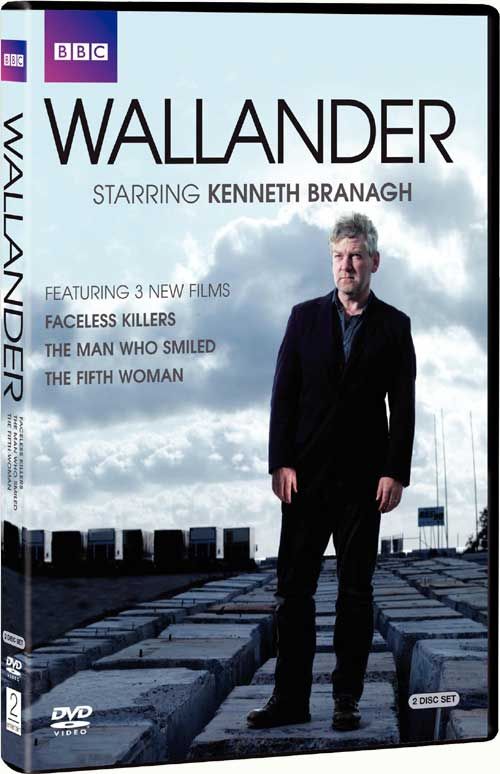
Wallander: The Fifth Woman (2010)


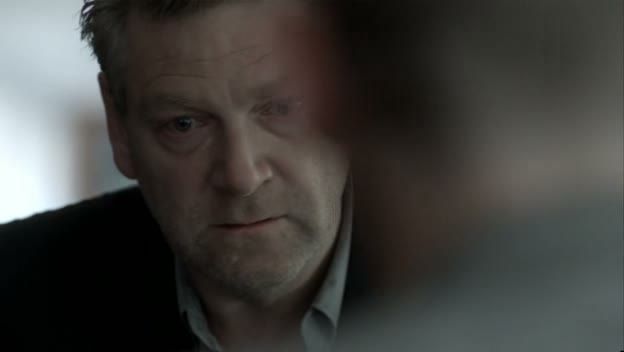
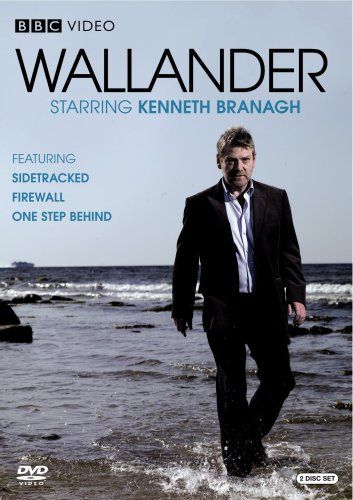
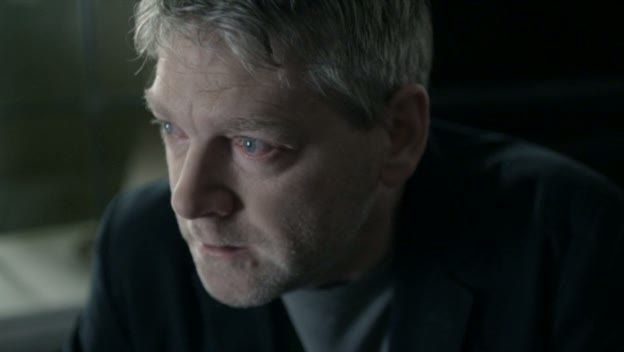
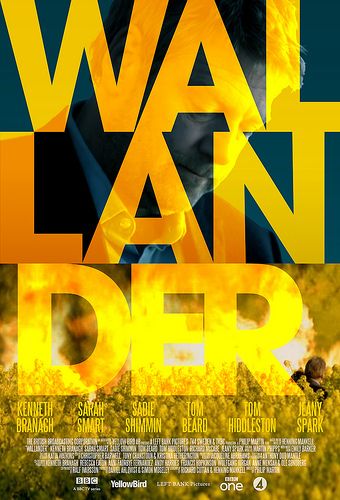
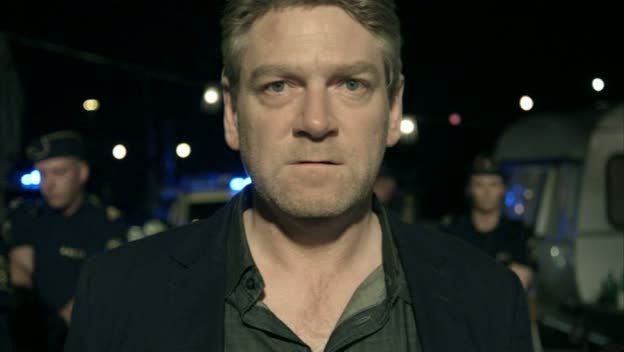
Ah, the Wallander series, where ace Swedish detective Kurt Wallander (Kenneth Branagh) relentlessly picks at the scab that is his life.

We can't help but think constantly to a description Kenneth Branagh gave of Wallander: the man's like an "open wound". And every episode features the same key scenes to show us just how psychologically wounded this teddy bear is: he sleeps only in awkward sitting positions (he broods himself to sleep, every. single. night. people!), is always awoken by the harsh siren call of his detective colleagues, who then take him to see someone who was murdered in some horrible way (in this episode: with spikes!), wherein Wallander becomes even more moody, irritable, depressed and fatalistic.


Kurt: historiam calamitatum.


Sweden is a sad place, apparently.


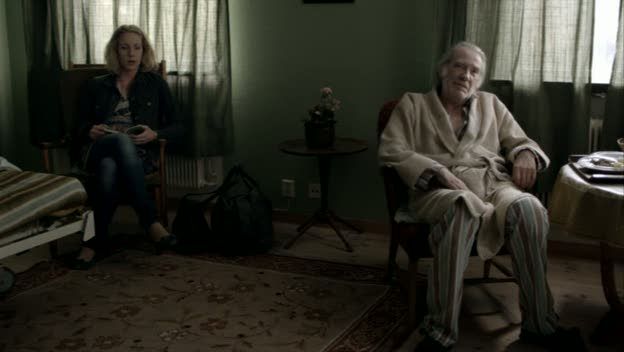
In this third installment of Kurt's Angst, The Fifth Woman, Wallander is busy trying to figure out who killed the birdwatcher (with spikes!) while - on the personal side of things - his father, Povel (the excellent David Warner), deteriorates even further into frailty and old age. In fact, the entire episode is about aging parents, vulnerable adult children, and the ancient wounds we leave on each other. And, in its usual style, it tells us about these scars and hesitant catharses with moody shots of a sagging, exhausted Kenneth Branagh as he drives through the desaturated Swedish landscapes. The murder mystery turns out to be just a convenient thematic parallel for Kurt's familial turmoil, and on the personal side - well - Kurt finally cries in front of someone and lets himself be hugged (thank God).

The genius of this show - the genius of Branagh's interpretation of Wallander - is, as we've mentioned before, his social awkwardness. Because while watching Wallander churn silently in his own self-loathing is compelling (to a point), watching Wallander try to mask this is much more poignant. Of course, he fails every time as his tense explosions or brittle unhappiness are obvious and, well, really out there. But he tries to cover it up - and that's just sad. Also, is it just us, or does Wallander's sympathetic friend, Nyberg (Richard McCabe), solve every mystery only moments after seeing the corpse? "Oh yes, it was Colonel Mustard with the wrench. You can tell by that piece of lint there. Ta!"


Pale and miserable.


Meanwhile: Kenneth Branagh's performance. Ah, Kenneth Branagh. There's something unique about his style of acting: a combination of naturalism with theatrical vulnerability. It worked so well in Henry V. Heck, it worked really well in that reincarnation movie with Emma Thompson which was, btw, totally fun! In Wallander, his pain is obvious - and his attempts to smother it, or hide it, or beat his way through it, are likewise obvious. It's not necessarily subtle, though it is… calming? What's the word? There's a comfortably sympathetic quality to it. An earnestness. That's it! Kenneth Branagh is terribly, terribly earnest. And that's awfully nice.

Monday, 24 May 2010

Wallander: The Man Who Smiled (2010)


Honestly, Wallander should just be called the Soft and Fuzzy Pillow (Death) Show, where that pillow is played by Kenneth Branagh as a man who made a big mistake in choosing a profession. Why on earth did Mr. Kurt Wallander, who takes every murder as a torturous baptism by fire into realizing that the world is immoral, imperfect, violent and horrible, ever become a detective, of all things?! This man should have been a doctor, or maybe a watercolor artist, or a gardener.


For he today that sheds his blood with me shall be my brother.


Be he ne'er so vile.


This day shall gentle his condition.


In The Man Who Smiled, we catch up with a shaky, clammy Wallander, living in uneasy early retirement after the traumatic events of Faceless Killers. Wallander, who was forced to discharge his firearm in self-defense in the previous episode, is clearly suffering from some nasty PTSD - and if you thought Wallander couldn't possibly get any dumpier, frumpier and unhappier, he can and he does. Now chewing through handfuls of pills and gulping them back with red wine, he spends most of his private hours wallowing in wretched misery. (He spends most of his public hours having sweaty panic attacks.) When an old friend, Sten (David Sibley), begs Wallander to come out retirement for one final case (someone killed Sten's dad!), Wallander refuses (!), which leads said friend to kill himself (!!). Wallander now has just that critical level of toxic guilt he needs to spur him back into the office.

The excellent David Warner makes a small appearance as Kurt's equally wretched father, Povel, who spits venom at his son with just enough intensity to amp up Kurt's already considerable self-pity levels. David Warner... you are so great.


But we in it shall be rememb'red.


From this day...


...until the ending of the world!


Personally, we've never seen the point of murder mysteries, especially TV shows about them. In the end, we always discover that the murderer is some random guest actor - a character about which we know nothing and care little about. The "puzzling out" of the crime feels likewise arbitrary, as every "clue" is placed there by the storyteller to give a false sense of discovery. Blah. Give Wallander a sudoku book - maybe someone DIES for every sudoku he doesn't figure out - and we'd have a better sense of tension and moral strain, as well as greater intellectual involvement. It could even be called "Sudoku Death Pillow Soft".

Yeah, yeah, we tease and tease. "But you still watch it!" you note. Well, of course we do. We gobble it up! It stars Kenneth Branagh, with special guest star Angst. It's like french fries dipped in cheese salsa for angst-loving Kenneth Branagh fans such as we!

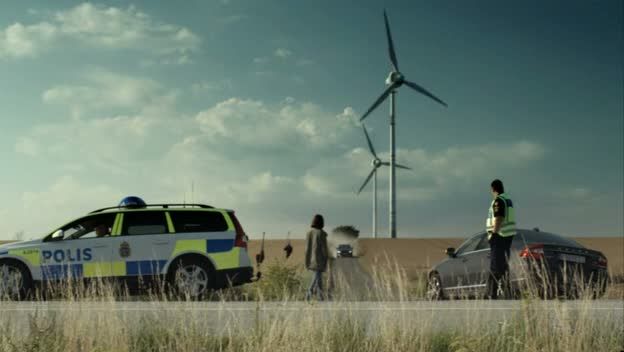
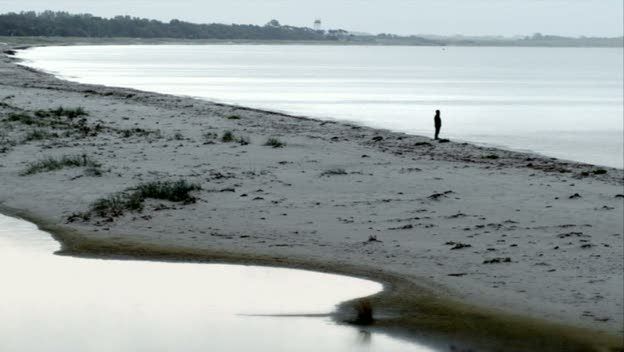
For those of you that don't fetishize emotional suffering with the same relish we do (or pretend not to, anyway), you can tell yourself you watch Wallander for the gorgeous, desaturated shots of an emotionally draining Swedish countryside. (You'll never feel the same in IKEA again.) The direction is beguiling, as we follow Wallander on his disorienting drives down empty rural roads - a symbol for his slow, methodical circling in to who the killer is? Well, maybe it's too literal to be a symbol. Anyway, Wallander is also more than just a walking lump of huggable moping (though he is mostly that); he also, thanks to Branagh, exhibits a terribly realistic social awkwardness. This is a man who does not know how to express himself, and generally fumbles, stutters, mutters and grunts. Watching his bumbling attempts to connect with his daughter ("Uh, er, hmm, how are you? Uh, yeah..." *click*) or his complete verbal shutdown when confronted by the awful co-worker Magnus (Tom Hiddleston) is pure delight. Well done, Kenneth.

Sunday, 23 May 2010

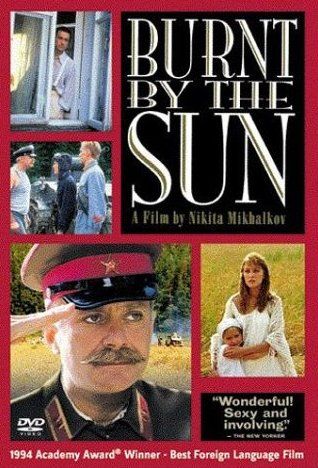
Burnt by the Sun (1994)


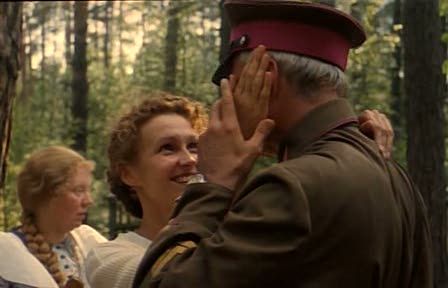
It's easy to be charmed by the lazy, summery feel of Burnt by the Sun. And then it's easy to be horrified by the darker undercurrents which run beneath that charm. A film which tackles (some would say, exploits) the ugly Stalinist purges of post-Revolution Russia, it is an emotional wringer. It also won awards and accolates at both Cannes and the Oscars, though it continues to polarize audiences - mostly because of director/writer/star Nikita Milkhakov's controversial celebrity.

Yet in spite of its awards, mistakes and controversy, Burnt by the Sun is often a very beautiful, moving film. It takes place in 1938, where heroic old Colonel Kotov (Nikita Mikhalkov) is vacationing at the family summer home with his young wife, Marusia (Ingeborga Dapkunaite), gorgeous little daughter, Nadya (Nadya Mikhalkov, the director's real-life daughter) and assorted set of what EVERY reviewer is legally bound to call "Chekovian" characters. Just think white linen pants, croquet, sleepy afternoons, buzzing mosquitos and dainty umbrellas. Think also idiosyncracies, mild arguments and a general feel of casual, chaotic affection.


Cho chweet!


Cherry orchards?


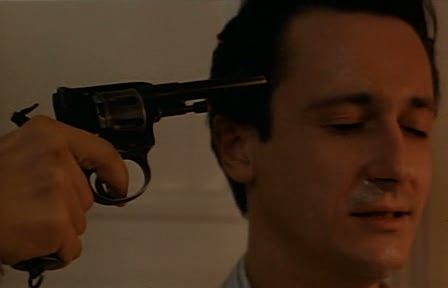
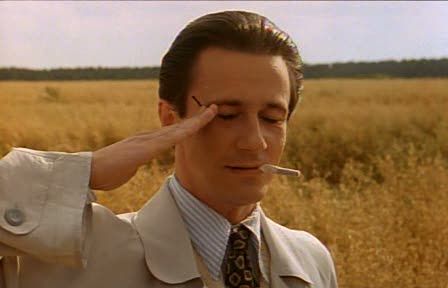
Until in walks old family friend Mitya (Oleg Menshikov), a flamboyant prankster and handsome young man who immediately triggers major alarm bells between Kotov and Marusia. With vague allusions and eerie shots of Marusia's scarred wrists, we learn that Mitya was more than a family friend - on the contrary, he once enjoyed Kotov's privileged position as Marusia's great love and beloved scion of the family clan. But after indeterminate misadventures during the revolution and civil war, Mitya lost that position. His return now is both unexpected and mildly threatening; his strained smiles hide an eerie malice and a deep self-loathing. Things take a turn for the worse when we learn that Mitya's arrival is not merely a personal visit.

The emotional impact of the story largely explains its success, we reckon. Witnessing the easy love within the family, coupled with the pitious loathing of Mitya as an "outsider" and forced villain, is - for the most part - very poignant. Nadya also injects a lot of genuine cuteness; she is cheeky and beloved by all, most of all her father, and there are numerous scenes which focus only on that special bond. This may sound indulgent or cheesy, but some moments - such as when Kotov takes his daughter on a boat ride - are wonderfully touching. Nadya circles her small arms around Kotov's neck, burying herself there, and sighs, "You have no idea how wonderful I feel when I'm with you."


The film's most gorgeous scenes.


(Incidentally, another great moment has the family going down to the river for a swim. Mitya sits on a blanket, taking off his shoes and speaking bitterly with his old flame, Marusia. At the same time, he watches as Kotov, standing in the grass, takes off his shoes. A green broken bottle lies just inches from Kotov's bare feet. It's a great moment for building the tension between the two men.)

The human details are the most affecting, and, while Mikhalkov's Kotov is a sort of overly perfect primordial War Hero (and, yes, it's an ego trip), his performance - as well as Nadya Mikhalkov's, Oleg Menshikov's and Ingeborga Dapkunaite's - are generally pitch perfect. People have talked a lot about the unexpected magic(al) realist touches in the film - such as when the titular sun becomes literal, a floating orb that scalds the surroundings - but these are brief missteps in a beautiful waltz.


Self-loathing, loathsome, poor Mitya.


Oh, Mitya.


AS WE TYPE THIS, Nikita Mikhalkov is releasing his long-anticipated (and completely unneeded) sequel, Burnt by the Sun 2, at the currently-running Cannes Film Festival. Burnt by the Sun 2 has already bombed with Russian audiences and critics, and, well, if you've seen Burnt by the Sun, you'll already feel uneasy about a sequel. We've read a few reviews and just the mere plot summary indicates that they've undermined the point (!) of the original. We can't tell you how, but let's just say it'd be about as offensive as Hamlet 2: Claudius Strikes Back. (And the play? WTF?)

Monday, 10 May 2010

Wallander: Faceless Killers (2010)


Blue/orange, blue/orange, orange/blue, blue/orange, WHY?!?!


A well-worn tale of the world weary detective archetype, Wallander is appealing, if not very original.

A BBC remake of a popular Swedish series, the British version retains the Swedish rural setting and just replaces everyone with British actors - the protagonist being portrayed by Kenneth Branagh (ironic, as we were just lamenting how he's not working enough these days!). Branagh's a good choice for the soft-on-the-outside, soft-on-the-inside Detective Kurt Wallander, a rumplied workaholic who gets skittish when things get too personal. Jowly and awkward, he has an appealing Everyman quality. He also retains, beneath that haunted, vacant stare of the emotionally and physically exhausted, a familiar Branaghian current of drama queen. He is, as he always has been, a wounded puppy, only a trembling chin away from tears, and he inspires the compassionate in his colleagues, Anne-Britt (Sarah Smart) and Nyberg (Richard McCabe), who spend much of the episode we watched shooting tender stares in his direction. (Okay, we did too.)


We few.


We happy few.


Indeed, so endearingly, boyishly vulnerable is Branagh as Wallander, that it's hard to believe he could have such frosty relations with his father, Povel (an unexpectedly old and unexpectedly brilliant David Warner), and his daughter, Linda (Jeany Spark). We have yet to see the barbed, slightly villainous undercurrent that juxtaposed so well against that boyish charm in something like Henry V, where Branagh's performance hinted at a darker core. Wallander is as vanilla as they come; obviously wounded, emotionally inept, weary moral purity personified. But this is a series, and we watched only one episode, so maybe we just need to give it time for the complexities to emerge.


This story shall the good man teach his son. (A divine David Warner.)


"These wounds, I had, on Crispin's Day."


In episode Faceless Killers, an elderly Swedish couple have been brutally murdered on their farm. As Wallander and crew set out on a paltry set of unpromising leads, someone from within the police force leaks that the killers may have been "foreign". This immediately sparks a rash of xenophobic violence in the sleepy Swedish hamlet, enraging Wallander and spurring him to work even faster to give non-foreign faces to the faceless.

Meanwhile, Wallander's piteous personal life is rocky as ever. His daughter introduces him to her new boyfriend, Jamal (Arsher Ali), a young Syrian-Swedish doctor. Wallander's latent racism alienates all three - and leads to a healthy dose of self-loathing on Wallander's part, as well as some suspected overcompensating in fighting the town's xenophobia. Meanwhile, Wallander's father is crumbling further into Alzheimer's.


Narrowness and claustro-/xenophobia, thanks to limited focal depth.


And again.


Other reviews of the series have lauded its moody shots of the gloomy Swedish countryside, as well as Branagh's likably depressed vibe. However, this whole tale shares too many similarities with the Icelandic film Jar City, a film which treats an identical subject with more grit and less squish. Indeed, Faceless Killers' script - apart from often telling us something we have just seen for our own eyes, bad writer! - also includes a number of touchy-feely lines which, even in Branagh's excellent delivery, ring very cheesy.

Nonetheless, it's all enjoyable - if only because the countryside is gorgeous and Branagh is likably rattled all the time. There is a moody theme of caring and being cared for (and being bad at both of those things, see Wallander, Kurt), and the entire production was very sleek. The biggest surprise, though, was David Warner, who we last saw in Star Trek VI: The Undiscovered Country as a Klingon Gorbachev. He conveyed great depth and tragedy in his few scenes. And there was a poignant parallel of his character and the old white stallion who often encounters Wallander during his lonely drives around the farms, only to bolt, wild-eyed.


Once more unto the breach, dear friends!


We look forward to more Wallander, if only for the revelation of David Warner's greatness and the comfort food of Kenneth Branagh's angst. Someone give that man a hug.