Friday, 29 January 2010

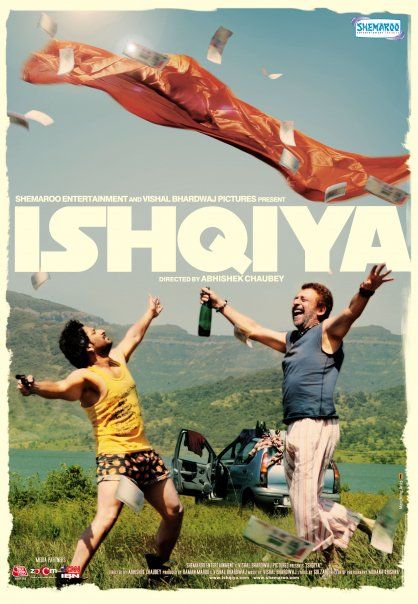
Ishqiya (2010)


When we walked out of Ishqiya (a play on ishq/love and a certain Hindi swear (c---iya)?) last night, a group of well-heeled young folk passed us. Posh Girl loudly declared, "I wish they had used subtitles so that I could actually understand what they were saying!"

Indeed, Ishqiya tests even the nativest of Hindi speakers, as its characters speak almost entirely in thick Bhojpuri dialect, peppered with some adult language which unfailingly yoked hoots and howls from the audience. The movie, which carries Vishal Bhardwaj's stamp of production approval as well as his musical director tastes, feels much like, well, a Vishal Bharadwaj film, only Lite. That is, it is indie, arty, grimy and fun. At times, it feels like a bromantic curry Western in the style of Sholay. At times, it feels like there's a mariachi band right around the corner.

With a heavy disclaimer that we speak only elementary school-level Hindi and hence don't understand rated-R Bhojpuri slang, we think the story was about two buddies, Babban (Arshad Warsi) and Khalu (Naseeruddin Shah). These low-level goondas steal X million rupees from their feather-voiced boss, Mushtaq (Salman Shahid), and hustle away through deepest, dodgiest Uttar Pradesh. Eventually, they find refuge in the home of the beautiful widow Krishna (Vidya Balan). While there, Khalu overhears Krishna busting out some glorious sitar beats at dawn and, immediately smitten, he speedily dyes his beard with henna and begins the courtship dance. Krishna seems to return the affection, mostly because it's hard to hurt someone as soft and fuzzy as Naseeruddin Shah in Love. Meanwhile, Babban is also smitten with Krishna - though his affections are of the more, er, carnal sort. So Khalu's the classical romanticism of ishq and Babban is the more MTV libido-driven lustiness of *ahem*-iya. And meanwhile meanwhile, the trio plot an elaborate kidnapping plot of the local political leader.

The tone of the movie seems to juggle between grimy, ultra-violent action film and quirky, indie romance about middle-aged love. It only really works thanks to the musical cues - Vishal Bharadwaj's songs are lovely (as always!), and special kudos go to his adorable Dil To Bachcha Hai (The heart is a child). Sigh... Just thinking about that song makes us love Naseeruddin Shah EVEN MORE. (If that's even possible.)

Maybe "quirky" is the best word to describe this film, as it doesn't fit into the usual Hindi film mode of using bubblegum star power to propel things forward. There are no item numbers and no big stars. Even Vishal Bharadwaj's other films - Maqbool, Omkara, Kaminey - featured bankable heroes like Irrfan Khan, Ajay Devgan and Shahid Kapoor. It was refreshing to see a film comfortable enough in its premise to cast an older actor and a relatively less-famous star as the two buddies. Ah, how long it's been since Naseeruddin Shah had a more meaty, non-supporting role! It really took us back, man.

Which reminds us: another refreshing thing was the absence of any heavy-duty "Social Themes" which marred many a 1980s Parallel film (including many of Naseer's!). Ishqiya instead is part of the new new wave of indie Hindi films - movies which are smart without being somber, alternative without being obtuse. We are very, very pleased with these films.

Tuesday, 26 January 2010

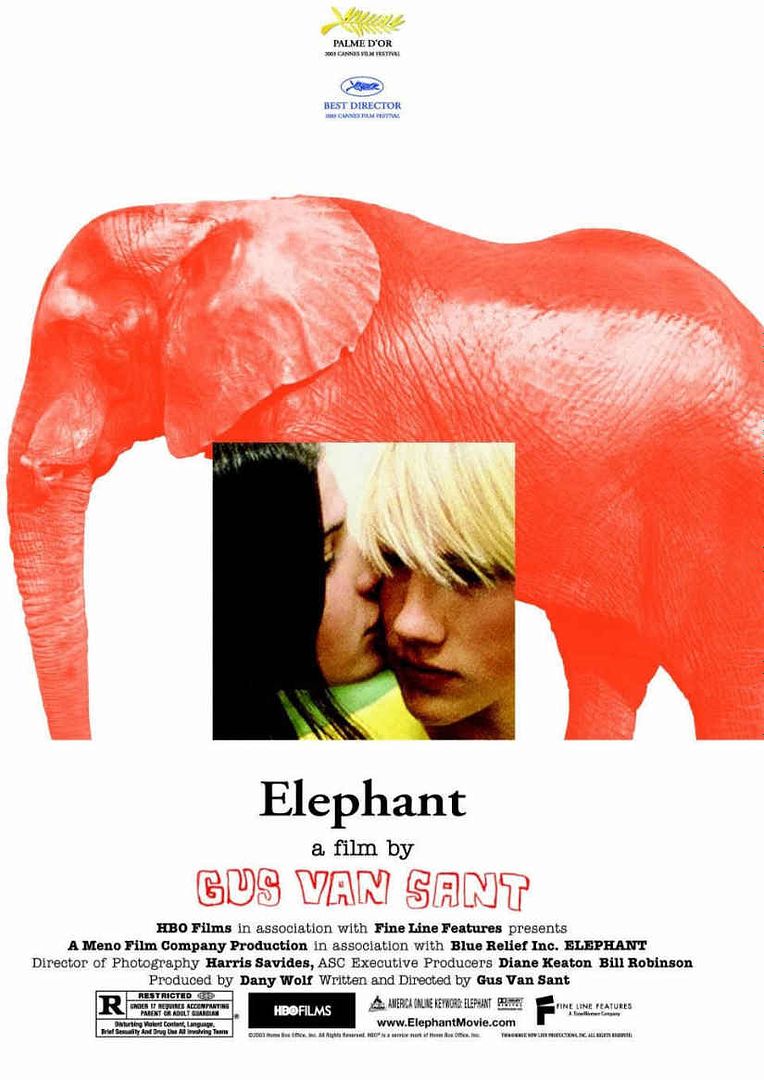
Elephant (2003)


Gus Van Sant's Elephant covers the timely and terrible topic of school shootings. Inherently provocative, it's nonetheless the best film we could imagine about such a thing. Van Sant chooses to present the story using pure ultrarealism, with absolutely no embellishment or explanation. No one is afforded any cinematic villainy, heroism or redemption - though there are, one could argue, moments of all three. In the end, however, you are left with the same questions you might have had in the beginning.

Yet it's also a beautiful film - filmed in gloriously wide aperture (we think?) with gloriously sensitive film, Gus Van Sant's technical skills give brilliance to mundane real life. Before the two shooters enter the doors, we follow them - and a number of other students - as they pass through the labyrinthine halls, their homes, their parents' cars and live their daily lives. It would be easy to label them according to a Breakfast Club menu of teen types: the sensitive photographer Elias (Elias McConnell), the trio of bulimic cool girls (Brittany Mountain, Jordan Taylor and Nicole George), the football player (Nathan Tyson) and his girlfriend (Carrie Finklea), and the charismatic, peroxide-blond John (John Robinson). But these are just the labels we choose to apply; there's barely any dialogue, characterization is at best opaquely hinted at, and most scenes feature only the muted murmurs of passing students, the clatter of closing lockers and the squeak of sneakers on linoleum floors. We spend much of the film following these characters back and forth during their typical day, and we frequently replay the same moments from several viewpoints. In the end, we have an overarching portrait of an average, large, American high school. Everything is then swiftly destroyed in the final twenty minutes, but even that destruction is muted, removed, difficult to follow and therefore terrifying. It could be anywhere, because it looks like everywhere.

One or two moments satisfy stereotypical movie criteria - there's a relatively thin narrative arc surrounding John and his drunken dad - but mostly the film is meditative and exposition-free. The two shooters, Alex (Alex Frost) and Eric (Eric Deulen), are enigmatic. While there is a token scene of bullying for Alex, as well as some ambiguities regarding their relationship, the psychological complexities are never explicitly explored. We never quite understand why they choose to do what they do. We can only watch them as they prepare.

And perhaps that's the film's only condemnatory note: when Alex and Eric lazily browse the Internet and order a gun, we couldn't help but feel activist alarm about American gun control. This will not do! But we can let that debate rest for another day, the film itself provides no argument. Indeed, apparently Gus Van Sant intended the title to refer to the parable of several blind men describing an elephant by feeling its individual parts: in the end, they variously describe the elephant as being like a drain pipe, a fan, a pillar or a throne, based on which part of the elephant they touched. Similarly, the film presents one event through various prisms. Yet even composing all this observational evidence together, we still don't understand the elephant at all.

Monday, 25 January 2010

Caprica (2010)


In 1950, Alan Turing devised a test of artificial intelligence. The basic criteria was that a computer could be called "intelligent" if a human, without realizing it, thought she was talking to another human when interacting with it. Hence C-3PO fails the test, but Rick Deckard passes it. The notion of artificial intelligence (AI) has since become a standard sci-fi theme, as it is fruitful both for philosophy (What makes us human?) and pulp (AI robots rebel! kill all humans!). It's become so well-worn that there isn't much new to say... thankfully, the movie-length pilot episode of the new series Caprica still manages to put an interesting twist on the tale, mostly by loading it down with a bunch of other, unexpected stuff.

Caprica takes place 58 years before the events of the highly popular Battlestar Galactica series (itself a revival of the cult 1970s show of the same name). Whereas the latter show followed humanity's last ditch effort to survive in a galaxy of angry AI robots - "Cylons" - the former is an origin story which precipitates the human genocide. And, like any good Genesis, it features a Promethean fall from grace (knowledge bad! progress bad!), along with Frankenstein-type creation, and a guy named Adam(a). As if the Biblical parallels weren't enough, the writers then throw in some Quo Vadis? sauce: the planet of Caprica is much like a decadant 3rd-century Rome, complete with nightclubs featuring gladatorial-type slaughter and human sacrifice, as well as an underground cult of monotheists who are very keen on moral absolutism, secret symbols (not a fish this time) and overthrowing the Mount Olympus pantheon.

As if the story wasn't busy enough with classical themes, Caprica also attempts to tackle 20th-century racism - as embodied in the trials and tribulations of the off-world Tauran immigrants. Taurus is a stony planet where the mafia thrives. Inland Sicily, perhaps?

"I'm not a person, but I feel like one!"
- definitely not a person, in Caprica


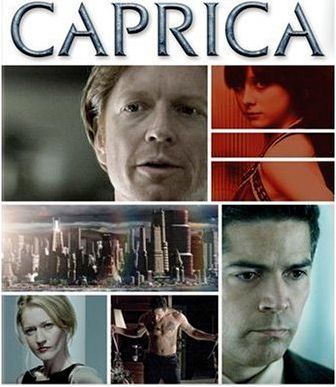
The story opens on the surreal debauchery of Caprican virtual reality nightlife. Here, a small minority of morally indignant youth exists - led by their charismatic leader, Zoe Graystone (Alessandra Torresani). These kids are students of the mainstream Athena Academy prep school by day, but they trawl the virtual net by night. Zoe, a genius with computers, has created a near-perfect AI representation of herself in the net, and they are training this AI Zoe for a mysterious mission which will advance the monotheistic cause (or something). Zoe's parents, computer and robotics mogul Daniel (Eric Stoltz) and Amanda (Paula Malcolmson), neither understand nor approve of her shady rebelliousness. These people are also uniformly filmed in cold, hard colors.
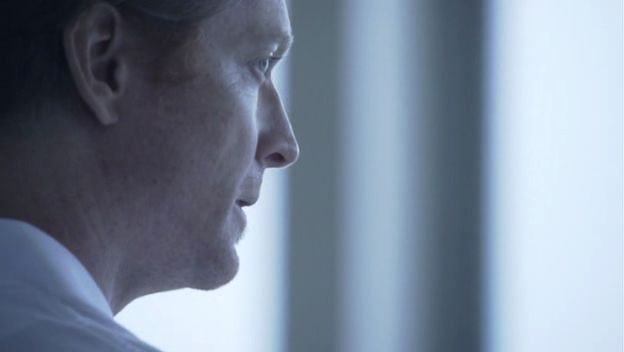

Daniel, man of machine.
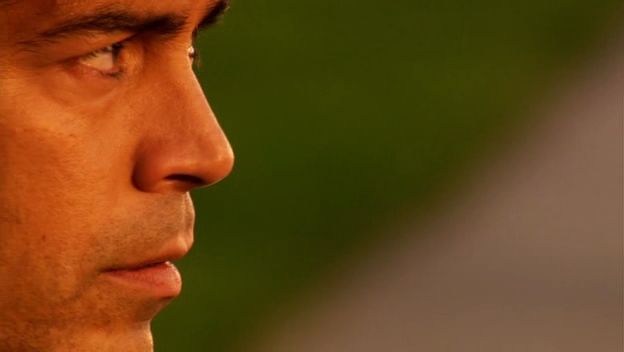

Joseph, man of soil.


Meanwhile, filmed in earthy reds and oranges, an immigrant family, the Adams (later, Adama), from Taurus is introduced - father Joseph (Esai Morales), mother Shannon (Anna Galvin), and their children, Tamara (Genevieve Buechner) and William (Sina Najafi). Joseph is a lawyer with ties to the Tauran criminal world, and he constantly struggles to balance his Caprican new start with his (literally) old world obligations.

Tragedy strikes in the first act when Zoe, as well as Shannon and Tamara Adams, are killed in a terrorist attack on the city metro. After a chance meeting, the grieving fathers form a friendship - yet just as Joseph Adams is busy thwarting misguided mafia offers to punish those responsible, Daniel Graystone discovers his daughter's genius AI designs.

The story calls to mind the pre-New Wave sci-fi of the 1940s and 1950s (e.g. I, Robot), as humans mindlessly rely more and more on robotic assistants. Didn't these people ever see Terminator? The costumes and Italian immigrant allegories also lend a wartime America feel to the proceedings, especially from the Adams side. The Graystone plot, instead, feels more cyberpunk (e.g. Neuromancer) - with its heavy use of cold lighting, metallic surfaces, and the ambiguous juggle between cyberspace and meatspace.

"A difference that makes no difference is no difference."
- Daniel Graystone, creator of robots that think there is a difference


Ethically, the writers unambiguously side with earthy, good ol' boy Joseph, who disapproves of Daniel's attempts to resurrect Zoe using robotics and the AI. As anyone who watched Battlestar Galactica knows, it will be Daniel's creation which ultimately destroy most of the human race. We give some lukewarm kudos to the somewhat lame attempts to humanize and sympathize with Daniel's plight, but overall we still thinks it's a too-easy moral equation. Daniel may be misguided, perhaps even crazed with grief, but he is never afforded a moment to be right.

We at the PPCC would have loved to see a bit more ambiguity in the whole Cylon/AI business - after all, Prometheus may have gotten his liver eaten, and Eve may have gotten us kicked out of Eden, but at least we learned about fire and morality! Daniel's creation of the Cylon is driven purely by his justifiable, but ultimately selfish and single-minded desire to see his daughter again. And what do we get in the end? A Catholic school girl killing machine! From a storytelling perspective, it's too easy. We never get a chance to love, or be awed by, the Cylon. And hence we probably won't get a chance to feel fear when they turn on us. For the audience, we barely meet Zoe before she is gone - and so there's never any investment in having her return. The best we can do (especially given Eric Stoltz' inexpressive performance) is offer some cold appreciation of Daniel's bend towards mad scientist, and then just cluck our tongues when he creates what is clearly a bad idea. We can never really relate, nor certainly root for. The first, working Cylon - whose appearance concludes the pilot - is Evil with a capital E from day 1. A little more ambiguity, a slower slide into moral oblivion, a less blunt foreshadowing of a path paved with good intentions, would have been a lot more compelling.

What if the Cylons had become a standard resurrection device on Caprica, and thousands of people were peacefully and contentedly uploading their consciousnesses into the Graystone Death Insurance net program? (With, of course, some requisite moral discomfort from special interest/religious groups.) And then it was the faulty resurrection of some psycho, who took over the Cylon battle-body, which precipitates the Cylon War? Or perhaps some bug, or hacker virus, turns all these happy-go-lucky cyber-zombies into angry robots on a mission to kill? Honestly, there were a lot more interesting ways to begin a human-AI meltdown. Maybe Caprica will get better. But the beginning is, while certainly clever and interesting for its Greco-Roman allusions, a little uninspired as well.

Wednesday, 20 January 2010

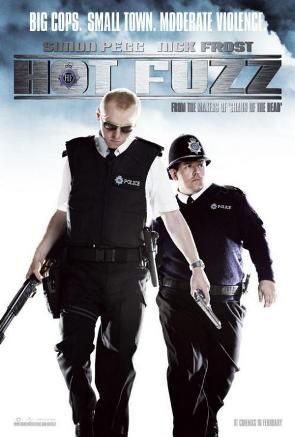
Hot Fuzz (2007)


Hot Fuzz is a sweetly comic British film, part parody and part tribute to the guns-blazing action-packed police thrillers of Hollywood or Hong Kong. While the pacing and style is reminiscent of the indie American film Supertroopers, Hot Fuzz also contains vestiges of a Wallace and Gromit-type sense of humor: a quaint English village setting which hides a grotesque killer, over-the-top spectacles of unexpected gore, and a strong whiff of the absurd.

Nicholas Angel (Simon Pegg, adorable) is a hard-nosed, hard-ass police officer from the "blue fury of the London Metropolitan Police Service". With hyperactive cuts and super-efficient narrative, he is introduced to us as an Übermensch: he excels at everything he does. Of course, this leads his superiors - basically a roll call of current UK funnymen (including our beloved Bill Nighy!) - to speedily transfer him from London's busy streets to the quiet, boring town of Sandford. There, we meet the usual assortment of village clichés - including, importantly, the bumbling police chief (Jim Broadbent) and his goofball son Danny (Nick Frost, also adorable) and the sly, serpentine business boss (Timothy Dalton). All in all, everyone in Sandford is terribly English and terribly, well, white.


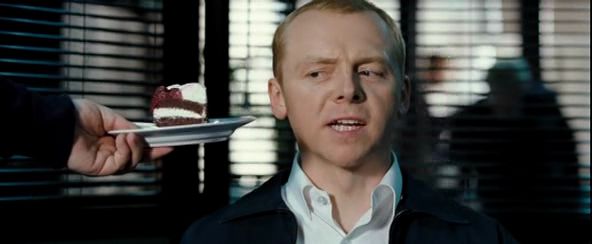
The only one missing is Eddie Izzard. CAKE OR DEATH!


Which brings us to the Wallace and Gromit stuff: it's English middle class horror fantasy gone demented, as Angel is initially reviled for his big city efficiency (of course) until he stumbles upon an elaborate trail of serial killings (of course) but is not really believed (of course!). Everything is then resolved in the usual way. No rabbits appear as toupees, alas, but there are other laughs to be had.


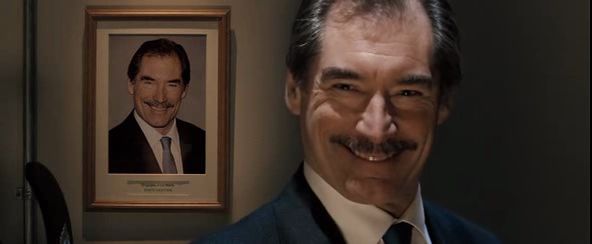
Were we the only ones who thought Timothy Dalton was basically the villain from Wallace and Gromit's were-rabbit movie? And are we the only ones who thought he should have reprised his role as Lord Asriel for the movie version of The Golden Compass?


Much like Supertroopers, Hot Fuzz manages to juggle a sort of surreal comedy which borders on the alienatingly absurd (think Monty Python or Mel Brooks - i.e. not to be taken seriously) that is then unexpectedly combined with some real sweetness (i.e. to be taken seriously). In particular, and as a nod to the legendary bromance of such cop films as... well, anything by John Woo, police partners Angel and Danny fall in love. It's the love between two heterosexual males, but it is as romantic as anything out of Michael Ondaatje. This is all very cute, especially since Simon Pegg and Nick Frost play it straight, without the slightest hint of irony. After reading Manohla's review, as well as learning about Pegg and Frost's Blood and Ice Cream Trilogy, we see that this bromance is intentional and off-screen as well. Huzzah! We want more.


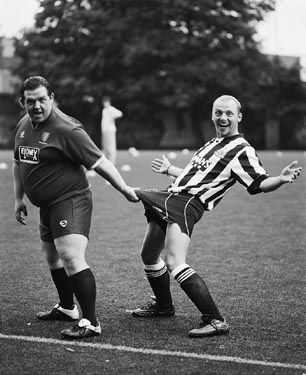
The bromance is strong between these two. And we love it!


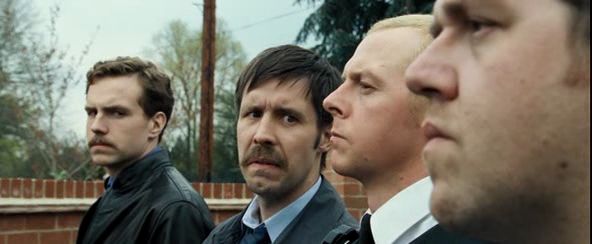
THAT is Paddy Considine, who co-wrote and starred in the magnificent Dead Man's Shoes, which you should all go watch right now. Right now!


Other interesting tidbits are, apart from the obvious nods to other police action dramas, the wide-reaching and fun casting. Often these are just details - such as genius comic Bill Bailey playing identical twin police constables (one with straight hair who reads Iain Banks, and one with curly hair who reads Iain M. Banks... okay, it made us laugh) - or cameos (Peter Jackson?!). But we were also shocked, shocked, to be seeing Indy's arch-nemesis, René Belloq (AKA Paul Freeman), after so many years!

All in all, it made us laugh and it made us like Simon Pegg just a little more. Soon it will be love.

Sunday, 10 January 2010

Working Girl (1988)


"I'm not gonna spend the rest of my life working my ass off and getting nowhere just because I followed rules that I had nothing to do with setting up!"
-Working Girl


We love Working Girl.

There's no two ways about it. It's sexy, smart, feminist and purely lovable. It's got a sweet, clever humanism, managing to balance a dry sense of humor with a strong underlying Girl Power theme. It's one of our Personal PPCC Classics - a movie we always come back to, and, having watched it again today, a little older and wiser than last time, we admire it for its cheeky philosophical touches (more on those later).

First of all, Working Girl is about Tess McGill (Melanie Griffith). The setting is 1980s Manhattan, a land where men were men and admin assistants were still called "secretaries". But things were changing, and Tess - outwardly just another girl from Jersey with a towering hairdo, screaming-loud make-up and sneakers on her pantyhose - also harbors an intense passion for business. She struggles ambitiously, but finds herself repeatedly hitting the glass ceiling: her attempts to climb up the corporate ladder are invariably squashed, with the men implicitly or explicity degrading her to just another sex object.


Some not-so-subtle visual metaphors - in America, even women can make it! Yay!


Joan Cusak's look is GREAT in this film!


When one particularly sleazy boss (a young Oliver Platt!) basically pimps her out to his even sleazier buddy in arbitrage (a young Kevin Spacey!), Tess flips and quits. Her next job turns out to be under a woman, Katharine Parker (Sigourney Weaver). At first, things seem great: Katharine is the same age as Tess, and she gives a lot of lip service to helping her fellow sisters up the ladder. "It's a two-way street in here," she assures Tess, who glows at having finally found her "mentor".

Of course, things are not what they seem: when Tess proposes one of her brilliant business ideas to Parker, Katharine minimizes it. When Katharine then breaks her leg on a ski trip and gives Tess the keys to her flat, Tess finds Katharine's evil notes to secretly steal Tess's work and pass it off as her own.

The PPCC gets pretty into this film, so, at this point, we usually scream, "WELL, THIS WILL NOT DO!!! BRING ON THE CARPE DIEM!"


Could he be more wonderful? No.


And bring on the Harrison Ford! On the same day that Tess discovers that Katharine was stealing her business ideas, she also discovers that her blue-collar Jersey boyfriend, Mick (Alec Baldwin), has been cheating on her. Things seem pretty uniformly shit, until Tess hits on the idea of stealing her idea back from Katharine, re-doing her make-up and hairdo into Career Woman mode, stealing Katharine's clothes (ha!) and showing up at an exec drinks in order to meet and mingle. There, she meets fellow lion of the business jungle, Jack (a glorious Harrison Ford), who is immediately smitten. And, as luck would have it, he's also the go-to man for her business idea! It all seems to be falling back into place, but true love (and true business) never did run smooth... FOR LIARS! So how will Tess make it?!


We've been so inured in 30 Rock Alec Baldwin, we forgot this is what he used to look like!


Okay, so we love this film big time. BIG TIME. We love it for two reasons: first, it's well-made on almost every level. Directed by Mike Nichols, who made us cry for the evil lawyer-turned-good in Regarding Henry, this film has wonderful touches: nothing is ever taken too seriously, nor is anything mocked too much. The vibe is one of irreverent gentleness, and great sympathy for our girl Tess. Melanie Griffith is infinitely charming as the endearing Tess: she's a lovable mix of gentle and ambitious, innocent but sharply intelligent. Harrison Ford is rarely comic in this role, and he even pulls a Shashi by going a bit meta and mocking his own real life status as a stud (more on this below).

The second reason we love this film is that it's pro-girl power message is feminist without being too overt. Because unlike more bumbling attempts, Working Girl portrays the very real trials and tribulations we women folk have to face: the stare-downs from creepy men on the street, the hint of mocking when we stray from our traditional feminine roles. Just watch the men in the background as Tess passes: director Nichols never misses an opportunity to show how constantly, systematically objectified she is. Of course, it's cruelly ironic that this film was made by a dude, and that Harrison - the trophy boyfriend! - gets top billing. But the cheeky visual metaphor of the Statue of Liberty (a lady!) and the cunning musical metaphor of Carly Simon's all-girl gospely Let the River Run make up for these minor sins.


Free prize for anyone who can spot David Duchovny in this picture. His first appearance on screen!


And here's where things get great: Katharine and Jack are the new variations to this feminist tale. Katharine's the scary, predatory woman of post-feminism nightmares; she is aggressive, self-absorbed and demanding. Meanwhile, Jack is used both as a trophy boyfriend (director Nichols never misses an opportunity to objectify him! just watch all the women's expressions as Jack passes, or Joan Cusack's wonderful, "Coffee, tea... me?") as well as a way to undermine traditional norms of manhood while still, er, being manly. Partly this is because, well, he's Harrison Ford. But we also like to think that the movie's about showing how traditional gender roles don't have to end up with meek, subservient women and powerful, career-driven men - nor do women have to appropriate masculinity just to get ahead in business. (One of our favorite lines Jack says to Tess: "You're the first woman I've seen in one of these things that dresses like a woman, not like a woman thinks a man would dress if he was a woman."). You can be a classy lady and a corporate warrior. You can be Indiana Jones and be unsure about yourself. And, if this fairy tale is to be believed, you can get the job and get the boy!

Tuesday, 5 January 2010

Immortal Beloved (1994)

So, it's been a while. Hello, readers. Hello, 2010.


A story: the other night, we at the PPCC had just finished reading Anne Lamott's glorious treatise on writing, Bird by Bird: Instructions on Writing and Life, and, feeling inspired and slightly edgy, we lay awake in bed concocting an elaborate review for one of our favorite films, Immortal Beloved (a review we decided would definitely include, at some point, the phrase "our heart was shattered, our body halved"). Or, as we like to call it, Gary Oldman's Immortal Beloved Starring Gary Oldman, a Tale About Gary Oldman.

Actually, our train of thought was not nearly so pat. The stops on our journey were really really:
    1. A bizarre quasi-nightmare in which Gary Oldman appeared as a gruff, lovable, wounded (!), kimono-sporting ninja master with a great haircut. (Think Splinter. Only with a great haircut.) This was a mere cameo appearance in a dream of epic proportions, but even this 5-second walk-on stayed with us into morning. We think it was all no doubt fueled by watching the Book of Eli trailer, or perhaps the brief reference to Sid & Nancy in Brad Warner's book, Hardcore Zen. However it came gurgling out of subconsciousness, it made us realize, once again, that... 2. ...we love Gary Oldman! We want Gary Oldman! 3. But what is a good Gary Oldman movie to watch? 4. Not Sid & Nancy, as we value our good moods. 5. Not Léon, as we are le tired with it. 6. Not Harry, for the love of God.


But yes! Our guilty, shameful pleasure film, Immortal Beloved!


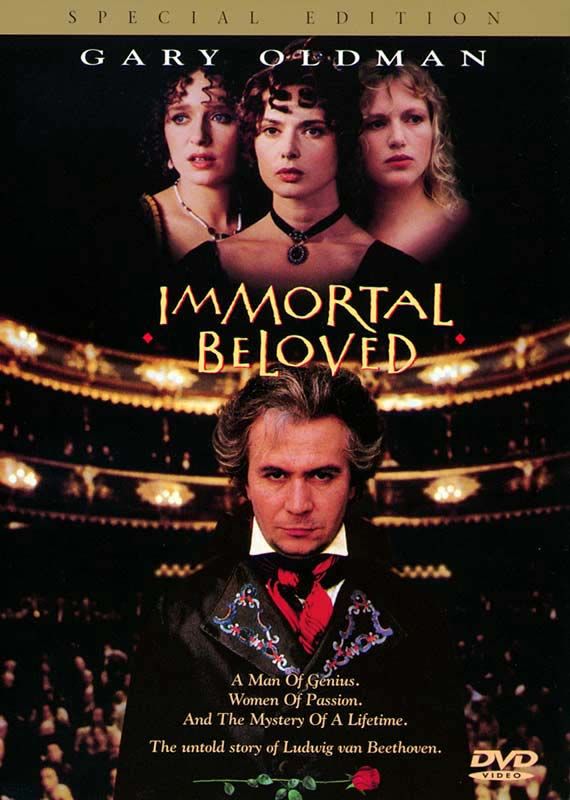
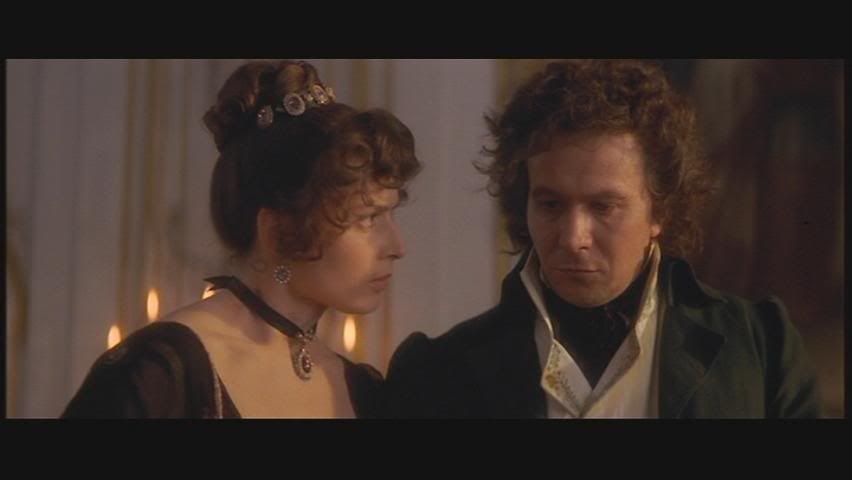
This screencap is required when you talk about this film.


Now, we don't actually have Immortal Beloved on hand, nor have we seen it in several years. But Immortal Beloved is one of those films that has been seared into our memory. Mostly this is because it combines two things which guarantee eternal memory: arousal and shame. Arousal because, even with its glaring, embarassing faults, we are stubbornly unable to dislike it. Not only that, but we find the tale of the eternally-pissed-off Ludwig van Beethoven's numerous doomed love affairs with classy European ladies in the 18th century, all overlaid by some classy Beethoven and Beethoven-era tunes, incredibly romantic. Bodices be-ripped! Beethoven be-played!

And shame, because, it's kind of a clunky, incoherent film with lots of BOLD NARRATIVE MOMENTS (think exclamations marks and capital letters) followed by whimpering nothingness. It's like the director had amnesia or something. It has all this great stuff going for it - tremendous acting, music, cinematographic zeal (the Ode to Joy!) - and yet it never quite hangs together. The narrative jumps around. Momentum is built and then scattered. Dammit, we are not supposed to enjoy films which are so poorly put together!

And yet we do, oh, how we do. After a quick refresher on Wiki and a glance through one fan's YouTube compilation of scenes, we are reminded that the plot centers around the discovery of three love letters, from Beethoven to his secret "immortal beloved", after the composer's death (true fact!). It is now up to his dorky pal, Schindler (Jeroen Krabbé), to figure out which one of Beethoven's numerous exes (ex's?) was The One. As Schindler travels around Europe on his quest, we get flashbacks to various periods of the Life of Beethoven (GARY OLDMAN). These are all tremendously exciting, and feature such things as: Napoleonic meltdowns! evil people who mock the deaf! the Moonlight Sonata! Beethoven familial troubles! drinking troubles! attempted suicide! love-making! and, of course, gorgeous Viennese art and architecture!


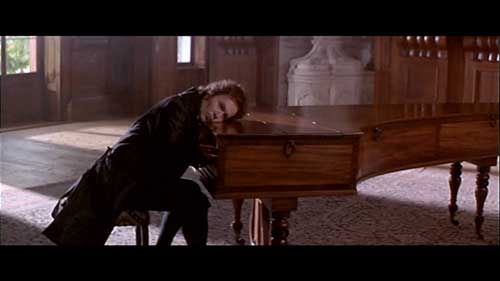
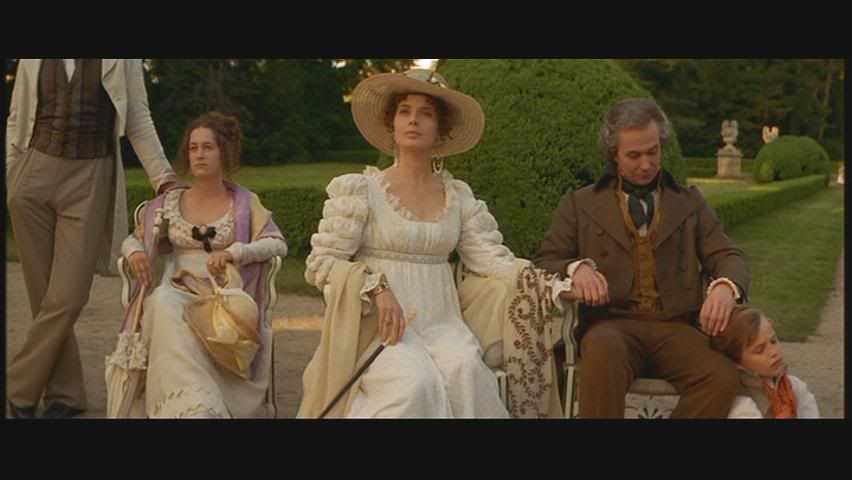
A STRIKING MOMENT OF BOLD ROMANCE! WE LOVE THIS MOVIE!


No, Ludwig! Do not favor Karl! It's always the ones we love the most that hurt us!


There are many striking things about this film, but those which stick out the most are the relationship Beethoven has with his ward and illegitimate son, little Karl von Beethoven (Marco Hofschneider). The film's main theme seems to be: Ludwig von Beethoven was a tortured genius. This heady mix of anger and vulnerability is irresistible to some people (the PPCC principle among them), and leads to him inevitably breaking many hearts as he is serially dumped. Like a moth to flames, I tell ya! Anyway, Beethoven's dual nature as a narcissistic, angry ball of twitchy nerves and epic tantrums and a vulnerable, aging and deaf man is brought to full light with the way he horribly treats, and is horribly treated, by Karl. Their relationship is thornier and more touching than anything else in the film. Oh, the tears we shed! When Karl dumps Ludwig, our heart was shattered, our body halved! Our knees buckled with Ludwig's! How could you, Karl?! HOW?!

It goes without saying that Gary Oldman owns this film. It's remarkable to compare his accent (and even octave!) as Beethoven, as compared to his natural Cockney tenor. The man's a chameleon! The filmmaking relies almost entirely on the power of Oldman's performance and the power of Beethoven's appeal, both his music and as a cultural icon. And hey, it's pretty hard not to revel in the glories of mankind when the Ode to Joy is being pounded out by what sounds to be like a million screaming people. It even gets our blood pumping enough that, Buddhist pacifists that we are, we just want to punch someone (or maybe we should lay off the old knifey moloko).

The plot is shoddily whipped together and scenes don't quite flow as they should, making this film - from the cold eye of a wannabe film theorist/critic - pretty crap. Indeed, the similar Amadeus is superior from a technical and brainy perspective. But, just like you could (could) argue that Mozart's music was more sophisticated and therefore "better" than Beethoven's, both Beethoven's music and Immortal Beloved carry that uniquely raw emotional energy that you sometimes crave - technical brains bedamned! We dare you to watch this (or this clip) and remain goosebump-free and heart-whole.