Monday, 21 February 2011

Beneath the Planet of the Apes (1970)


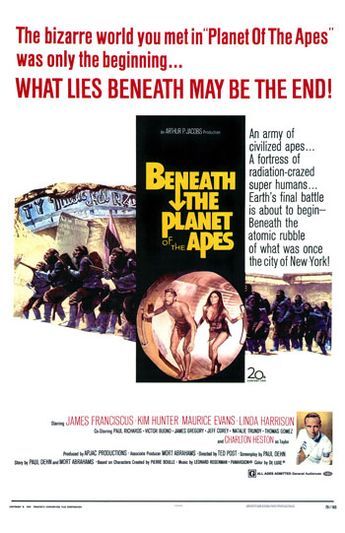
Beneath the Planet of the Apes is slow going at first, but it picks up by the end, eventually letting its story careen away into madness and chaos and Charlton Heston once again on his knees, shouting "Oh, the humanity!" Which is to say: it gets a lot better.

We return to the titular planet only moments after the original left off: "Damn you all to hell!" Taylor (Charlton Heston) cries, on his knees, beating at the sandy beach. Not long later, Taylor and his mute ladyfriend, Nova (Linda Harrison), encounter all manner of strange things in the so-called "Forbidden Zone", a desert wasteland where none dare go. Taylor and Nova dare, and are met with random walls of fire, sudden spurts of pesky lightning, and Land Before Time-esque splits in the earth. When they come upon a rocky outcropping, Taylor walks into it and vanishes.

Meanwhile, astronaut Brent (a tanned, macho James Franciscus) has crash-landed on the Planet in search of the missing Taylor. After coming upon a distressed Nova - okay, admittedly she's always distressed - he hops on Taylor's horse and goes through much of the same terrain (pun intended) we covered in the original: the stumbling upon ape civilization (yay Cornelius! yay Zera! yay sympathetic chimpanzees!), the numerous (and now dull) scenes of flight and capture, the paper-thin allegory to a segregationist, racist society of the 1960s on the verge of social revolution, with gorillas standing in for military hawks/goons, orangutans as the Christian Right and chimpanzees as the intelligentsia.

Things really pick up when Brent eventually finds his way to the title: beneath the Planet. Here, we find remnants of a post-nuclear Manhattan, complete with a crumbling (but intact) subway system and a sometimes-hilarious, sometimes-creepy cult of humans who worship the last, remaining (?) atomic bomb. The plot now starts coming fast and thick, with a conclusion that is as jarring as it is pulpy and paranoid.

This sequel to the 1968 hit is a much paler copy of the original, though it does have its moments. Cocooned in the flash and spectacle of a Saturday sci-fi matinee (George Lucas must be proud!), there were also some very dark scenes of terror and doomsday paranoia. These punctuating bass notes were unexpected, powerful and not altogether welcome to us (especially since we were eating at the time): the ape army coming upon a mirage of their deity on fire, weeping blood, surrounded by apes crucified upside down. The sweaty, desperate, humiliating Spartacus-style fight between mind-controlled Taylor and Brent, for the amusement of the freaky human cult. The freaky human cult, and their freaky Anglican-style service from hell. And the masks! Oh God, the masks!

Tuesday, 15 February 2011

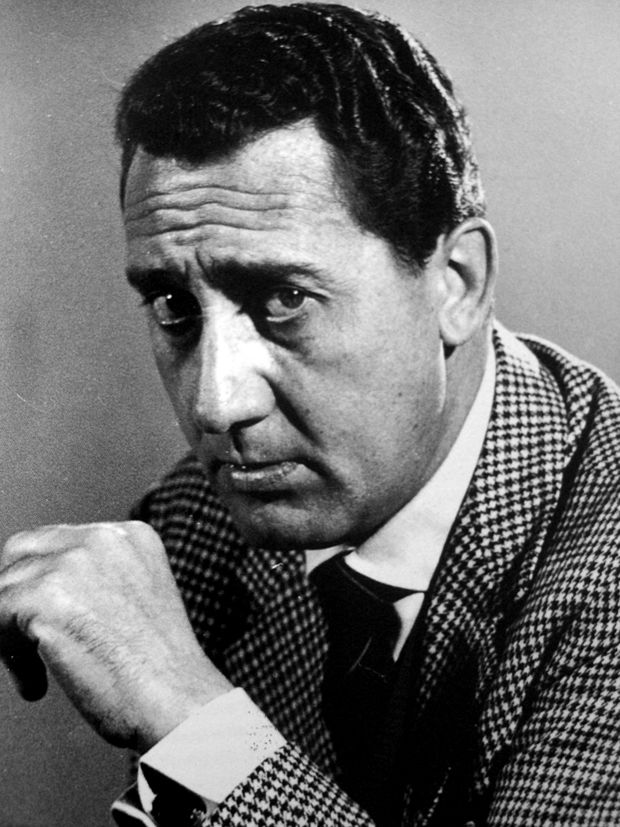
Una vita difficile (1961)


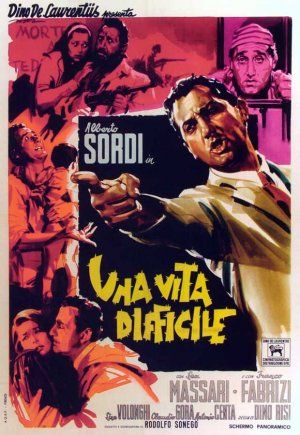
Una vita difficile (A difficult life) is the frustrating, Odyssean tale of Silvio Magnozzi (Alberto Sordi) as he navigates the post-war Italian landscape, trying to balance his partisan ideals against the harsh pragmatism that the poverty-stricken surroundings engender.

Essentially covering the same ground as C'eravamo tanto amati (which we much preferred), Una vita difficile starts with the same nostalgic romance of partisan fighting in WW2. Silvio, suffering from bronchitis as he treks through the Lake Como countryside, narrowly escapes being shot by a Nazi when Elena (Lea Massari), a local girl, kills the Nazi with her iron (whoa). Thus follows their brief three-month affair, after which Silvio flees to join his partisan band and, once the war ends, moves back down to Rome to pick up his pre-war journalism job for a left-wing daily.

A work trip up north reunites Silvio and Elena, who decide to get married. They return to Rome, where they live in borderline starvation. A son is born. Silvio is offered a position which contrasts with his left-wing morals; he refuses. Eventually, his unrestrained idealism lands him in jail, and Elena takes their son back up north.

This basic tension - Silvio's ideals versus cynical reality (often embodied by Elena); the poor, proletarian South of Silvio versus the bourgeois, industrialized North of Elena - is played out throughout the film in a variety of ways.

And all of this stuff was covered in the later, better C'eravamo tanto amati. Certain scenes - the happy crowds following Rome's liberation, the working-class trattorie with the wandering trumpet player - are even identical. Yet while Una vita difficile seems as well-remembered as C'eravamo tanto amati, we prefer the latter. It approaches the same subject with greater grace and more equanimity. Silvio's inability to let go of his idealism (and his indignant righteousness), to the point of driving away his family, is akin to Professor Palumbo's extremes - except Palumbo is articulate, off-kilter, hilarious and a sympathetic caricature. Silvio, instead, alienated us: he seemed an unlikable combination of entitlement and self-pity.

Of course, despite the identical setting, it's a harsher version of the same world that these characters live in, compared to C'eravamo tanto amati. Compare the trattoria scenes: in C'eravamo, the characters struggle by with half-portions, in Vita, they can't even pay for anything and are kicked to the curb. The requisite sell-out scenes, when Silvio succumbs to becoming a vile commendatore's underling, are full of humiliation and corruption. This extreme view just cements Silvio's righteousness, but it doesn't tackle the real issue: what if selling out does lead to a better life? The character of Gianni from C'eravamo also sells out, but his trials and tribulations are largely existential: materially, he is comfortable and happy.

Another reason we didn't particularly enjoy this film is that here, the treatment of women is just terrible. Elena, for however objectively rational and selfless she is (when Silvio implodes, she finds a way to provide a comfortable life for their son), is presented as unimaginative and frosty because she doesn't "get" the cause. Silvio abuses her regularly and, when she leaves him, she is presented as having "abandoned" him.

One of the reasons we love Lina Wertmuller's films so much is that she takes these stereotypes of Italian sexual mores - the frosty northern girl, the lusty southern man - and completely subverts them, most often via Giancarlo Giannini playing an extreme version of southern machismo. Consider, for example, Swept Away, where another left-wing, poverty-stricken southerner humiliates and dominates a bourgeois Milanese ice queen. In Swept Away, that relationship is presented as fundamentally ridiculous: compelling in its absurdity, ultimately false. Una vita difficile, maybe because it was made almost fifteen years earlier, is still earnestly enamored with Silvio's status as a man, from Rome, who is poor.

This is not to say this film isn't good. It's considered a classic, and it is indeed very well-made. The scene when the starving Silvio and Elena are invited into a royal lady's house for dinner while the republic/monarchy referendum results are announced was surreal and powerful, akin to the "lifestyles of the strange and wealthy" scenes from La dolce vita or Signore & signori. It's not a bad film, from a technical point of view. We just don't agree with its underlying philosophy. As the other northern beauty says to the other left-wing Roman in C'eravamo, "You're the first likable Roman that I meet."

<

That being Nino Manfredi, who is indeed very likable and who we'll take over Alberto Sordi any day.

Thursday, 10 February 2011

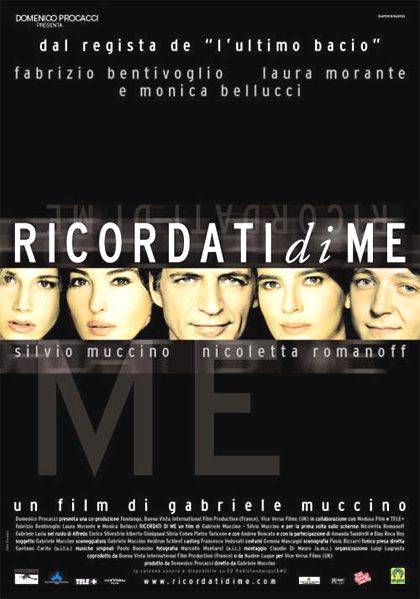
Ricordati di me (2003)


With the allegretto pacing, semi-satirical tone and superficial beauty that is characteristic of all of director Gabriele Muccino's films, Ricordati di me (Don't forget about me, though the US title was Remember Me, My Love) explores and generally eviscerates the modern Roman yuppie.

The family of characters in Ricordati di me run the gamut between limp lettuces and egotistical jerks. Must be hereditary! Parents Carlo (Fabrizio Bentivoglio) and Giulia (Laura Morante) are suffering from the usual cinematic marital ennui. Their teenage children, the insecure Paolo (Silvio Muccino, the director's younger brother) and the predatory Valentina (Nicoletta Romanoff), are in the same predicament, restless and unsatisfied. All four seek external validation and gratification. All four repeatedly seek confirmation that they are still attractive in the eyes of "those outside".

Indeed, solipsism and selfishness run deep in this family. And each cultivates a private ego project: Paolo via an affair with an old flame (Monica Bellucci), Giulia by dusting off her amateur acting career, Paolo via an old crush on the shrewd Ilaria (Giulia Michelini), and - most troublingly - Valentina by becoming one of those awful TV starlets on Italian variety shows (if you're not familiar with these girls, BE GRATEFUL).

As in Muccino's other work, this film is fundamentally a satire of these people, even if it flirts with sympathy for them. But these are the most unlikable of Muccino characters - worse than the philandering 20somethings in L'ultimo bacio or the superficial rebels with adopted causes in Come te nessuno mai - mostly because these are yuppier, superficialer and pettier than all those other people. They're also living in an apathetic, post-political vacuum - something the film hints at by indicating, ever so briefly, at the Fascist heritage of the yuppies' neighborhood and the right-wing whitewashing of the Italian political landscape. These aren't the politicized, concerned citizens of C'eravamo tanto amati or Love and Anarchy; instead, they are as complacent as they are self-centered.

There's better versions of all these things: Signore e signori was a more cutting and more satisfying portrayal of bourgeois moral corruption; Revolutionary Road a better portrayal of a dissolving marriage; and Come te nessuno mai a more fun Muccino film. Plus, this film suffered from vague misogyny in portraying the women as either spineless lumps or sluts: then again, we couldn't tell if the cynicism of Valentina's Becky Sharp storyline or the eventual triumph of limp dishrag/sobbing mother into self-assured theater artiste were subverting the misogyny or condoning it.

The performances were notable, if only because they were all pretty likable or impressive, despite the horribleness of their characters and the meh-ness of the plot. Nicoletta Romanoff was phenomenal as the femmbot from the abyss, Silvio Muccino was his usual laconic slacker, Laura Morante was a pack of nervous energy (in great contrast to her usual roles), and Fabrizio Bentivoglio is our great discovery as the man born to play Lorenzo il Magnifico! Someone get that man a doublet!

Tuesday, 8 February 2011

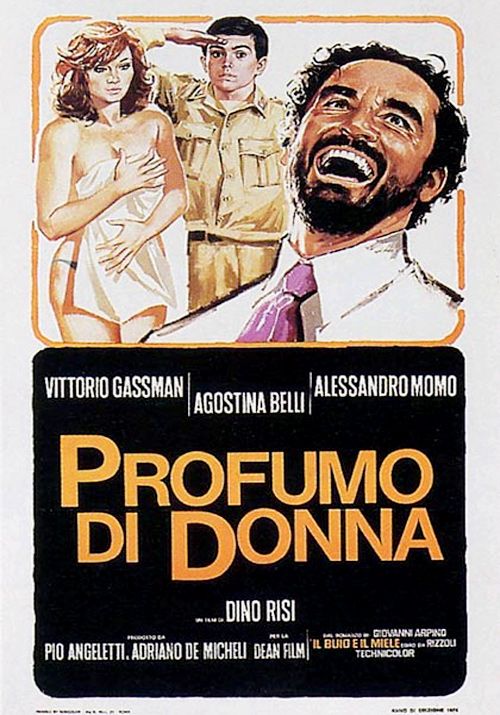
Profumo di donna (1974)


Profumo di donna (Scent of a woman) is a darker, crueler version of the later Americanized adaptation starring Al "HOOAH!" Pacino.

This version - the original - stars Vittorio Gassman as the blind Captain Fausto, a lecherous old goat who travels down the length of the Italian boot, drinking from his flask, heckling his minion - the resentful, boyish Giovanni (Alessandro Momo) - and sniffing the air in search of a "tall blonde with a big ass". While Giovanni huffs and sighs, Captain Fausto wields his cane like a weapon - slashing the air for obstacles or, well, passersby. As Giovanni creeps under Fausto's nose and discovers a pistol and the photo of a girl (Agostina Belli) in the latter's suitcase, their journey down to Naples begins to take on a new, ominous meaning.

While that strange combination of tenderness and raunchiness - "You think I miss seeing the Sistine Chapel?" Fausto shouts. "A big ass! That's what I miss!" - is still present in the Italian version, as is its slightly maudlin conclusion, this version also boasts a much thornier, less likable blind captain and a much frostier relationship between him and Giovanni. The relatively prudish American version - with Al Pacino as the Captain Fausto (now "Frank") and Chris O'Donnell as the Giovanni (now "Charlie") - emphasized the captain's disability as a strange sort of wild wisdom. Through Al Pacino's "HOOAH!"-ing, his classy tango dancing (just to compare, the same scene in the Italian version had Fausto tongue kissing Giovanni's girlfriend and calling her a "whore") and his general vitality, the anemic preppie Chris O'Donnell learns via the rascally blind man to live life to the fullest. Blah blah.

Fausto's quality of societal jester - i.e. his disability places him outside of society's "norm" bounds, and so he is free to break rules and thereby comment on them - is much harsher. And indeed, his hypersexuality, heavy drinking and unvarnished cruelty (think House) seem more like the desperate acts of a very angry man rather than the gentle insights into "really seeing" the world around you. That's not to say the Italian Fausto is any less a Trungpa Rinpoche-style holy fool than the American Frank. Indeed, there's a stunning scene when Fausto asks his priest cousin to bless him - his cousin then admits that he actually envies Fausto his blindness, since that "constant suffering" affords him special status in the eyes of God. He likens him to "the stupid, the ill, the innocent children".

Kind of patronizing, we thought. And kind of interesting, since the entire movie builds up this holy (tom) foolery and then offers that foolery's pearl of wisdom: that life is essentially meaningless suffering, whether you can see or not. Rather than rebelling against that suffering, once Fausto resigns himself to his complete vulnerability (emphasized ghoulishly via a clumsy, exaggerated fall) does he seem to get peace. He stops resisting. (And remember that Faust is the guy who, for ambition and knowledge and worldly stuff, exchanged any chance of everlasting peace with the devil. So this sentimental finale basically unFausts Faust.) Frank's message (apart from "HOOAH!"; did we mention we love that phrase? HOOAH!) seems to be much less existential nothingness and much more "Carpe diem!". Much less Italian, much more American.

Vittorio Gassman disappeared into this role; we could barely recognize him going all Dionysian and such when we knew him so well as a fallen bourgeois. Alessandro Momo and Agostina Belli didn't really register, both were too generically young and pretty. The priest cousin - whoever that actor was - did a great job, but he also had a great scene. Director Dino Risi used light interestingly; often blinding us or filming things in deep shade or at twilight. Great commentary on Italian regionalism, as always (the first scene in Rome has a moped driver scoot by screaming the stereotypical local slang, "Aoh! Ma va' a mori' ammazzato!" ("Go die in a homicide!")).

Saturday, 5 February 2011

I girasoli (1970)


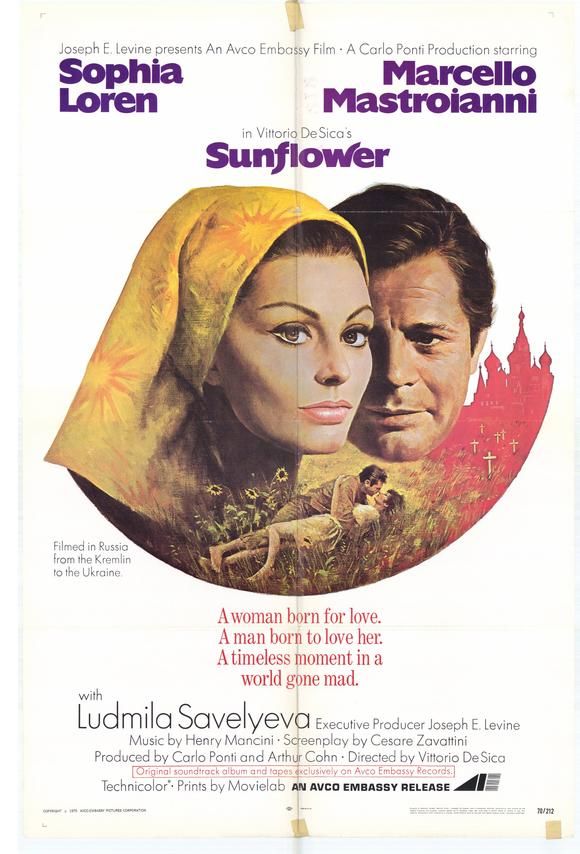
I girasoli (Sunflowers) is one of those epic WW2 love stories that spans decades and several countries. While hinting at stories like Doctor Zhivago, what with the sense of massive European history pulling and pushing lovers together and apart, it's not quite as good - but it is pretty decent. Its triple pedigree - De Sica, Mastroianni, Loren - makes sure that, while not great, it's good.

Early in the war, Neopolitan Giovanna (Sofia Loren) and not-Neopolitan Antonio (Marcello Mastroianni) are lovers on the beach. They decide to get married, since that'll give Antonio - who's convinced he'll soon be sent to the African front - twelve days of delay. "Who knows," Giovanna says brightly. "Maybe the war will be over by then!" Once the twelve days are up, however, the war is far from over (indeed, one of Giovanna and Antonio's honeymoon frolics is interrupted by a bridge-bombing on day 10) - and so they try to make Antonio seem insane. When that doesn't work, they resign themselves to the inevitable: Antonio is sent to the Russian front.

Years pass, the Italian soldiers return, but still no word from Antonio. Yet more years pass - Stalin dies (!), so it's 1953 (!), so (pencil scribbling) that makes it about ten years apart - and Antonio's mother gives him up for dead. But Giovanna, convinced he's still alive, decides to travel to Russia herself, armed only with her steely determination and an ancient wartime photograph of him. What she finds there (which you can probably Google, but we'll endeavor to be at least a little spoiler-free) is sad.

The film is soaked in shared history between Italy and Russia, and the rest of Europe, as both sides pick up the pieces after the war. De Sica emphasizes this common humanity and common heritage by using visual parallels repeatedly throughout the film: the train that Antonio leaves on, the train that brings news of the front, the train that backgrounds their post-war reunion. Antonio's limp, Giovanna's colleague's limp. The near frost-bitten Antonio collapsing in the Russian snow, becoming just one more fallen comrade as the army moves ahead. And, of course, the sunflowers of Russia ("Each sunflower represents someone who died here - an Italian soldier, a Russian soldier, a German soldier, civilians, men, women, children," a character helpfully explains) and the yellow mimosas of southern Italy. Or whatever those flowers are.

Anyway, the point is that this story is supposed to be a drop in a rainstorm: in Giovanna and Antonio's tender heartbreak, we're supposed to see all the thousands of other Giovannas and Antonios that were ripped apart by the war.

Generally, it works. Okay, yes, we cried. But it's not quite as magnificent as it aspires to be. The cinematography is glorious and large - many of the scenes are impressively enormous, capturing rolling fields, thousands of graves, the pristine blue sky. But we were also constantly distracted by De Sica's overenthusiastic use of the dolly. Had he just bought a new one or something? The jumpy zooming and ambitiously long takes (watch for one where a family moves all their furniture in a pick-up truck, and the camera manages to get all the way around the truck while, presumably, both truck and camera car are in motion). A story of this scale also warrants a richness of characterization which is lacking. While Sofia Loren and Marcello Mastroianni are everybody's favorites, and we certainly like them too, we felt that Giovanna and Antonio weren't clearly-enough defined, apart from their love story narrative. The mother-in-law was the barest sketch of a character.

So, all in all, a decently moving large-scale wartime story. Not mind-blowing, but not terrible. Kinda tearjerking. Like, tearnudging.

Wednesday, 2 February 2011

Groundhog Day (1993)


Seasonal PPCC is seasonal!

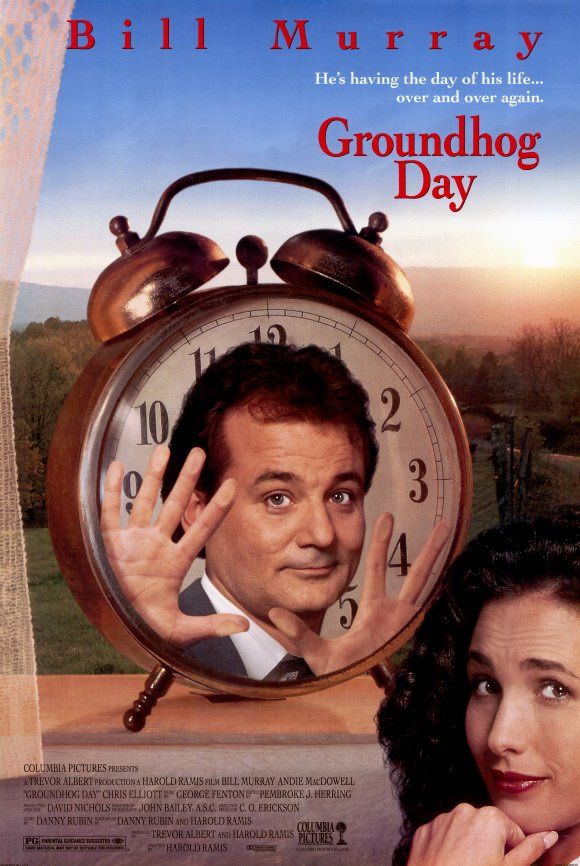
Yes indeedy, folks, it's Groundhog Day! And what better film to review than the wonderful Groundhog Day! One of those Perfect Films that is not only technically perfect, but also tremendously lovable.

Groundhog Day, for our non-American readership, is the peculiar American festival that takes place every February 2nd. On this day, the groundhog - "Prognosticator of prognosticators!" - crawls out of his hole and either sees or doesn't see his shadow. Based on this, we know whether we'll be getting six more weeks of winter or not.

Groundhog Day, the film, is a relentless avalanche of wit and wisdom, as misanthropic weatherman Phil Connors (Bill Murray, in one of his best performances. eva.) gets stuck reliving the same Groundhog Day over and over... and over... and over again. And again. And again again again. While everyone else seems to be experiencing the day for the first time, Phil is stuck in a time loop: he moves forward, time does not.

At first, Phil runs wild. He gorges on sweets, punches the annoying insurance salesman Ned (Stephen Toblowsky), picks up ladies and has zany car chases with the police. He spends an indeterminate - but no doubt inordinate - amount of time trying to pick up his gorgeous producer, Rita (Andie MacDowell, in a fresh, light performance). When tiring of all that, Phil despairs. He stops shaving, stops getting dressed for work, starts killing himself day after day after day. But it's only when Phil starts shedding his cynicism and helping others that things start to look brighter for him.

This film has been claimed by various religious groups - most often Buddhists. The cyclical story with its spiritual overtones certainly lends itself to such an interpretation. And the writing by Danny Rubin is clever enough - with layers upon layers of symbolism and parallels and just plain puns - that there certainly must have been an ulterior, philosophical motive.

But the genius of the film is its wit: it is deep message bottled up in a light and frothy champagne. The comic timing is perfect - just watch the repeated sequences as Phil perfects (and perfects and perfects) his pick-up lines. In fact, Bill Murray's performance is notably good here as well: lots of laugh-out-loud moments. It was also zany and meta to watch the actors repeating their lines; a commentary on filmmaking, perhaps? Or our own chats at work? OR LIFE?!

Whatever way you want to take it - as a deep dharma text or as a bubbly comedy to brighten up dreary Pennsylvania Februarys (or Massachusetts Februarys, for that matter) - this is a great film. Highly highly highly recommended, regardless of the time of year.