Tuesday, 31 March 2009

La Caccia (2008)

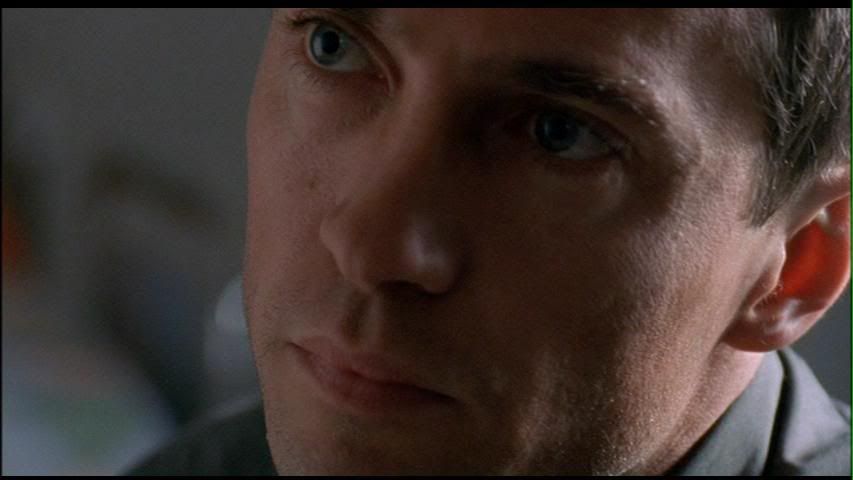
Disclaimer: This is not a proper review, but rather a review of a review, as well as an armchair philosophical meditation on language, culture and the mystique of both Luigi Lo Cascio and the classics.


Themes of this post: Luigi Lo Cascio, language and Italian.


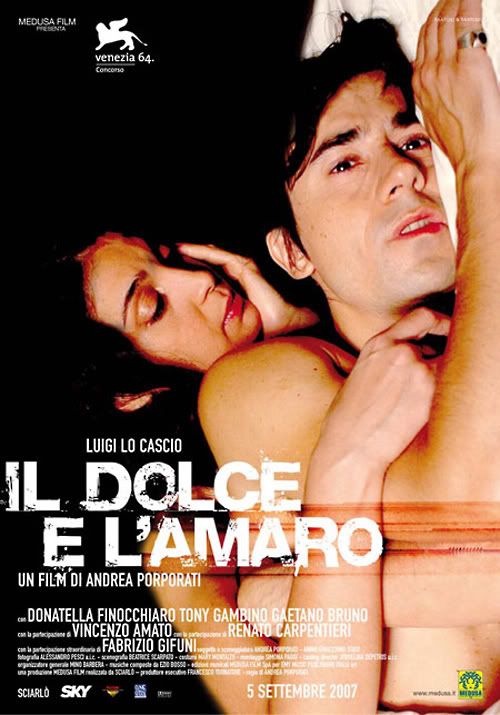
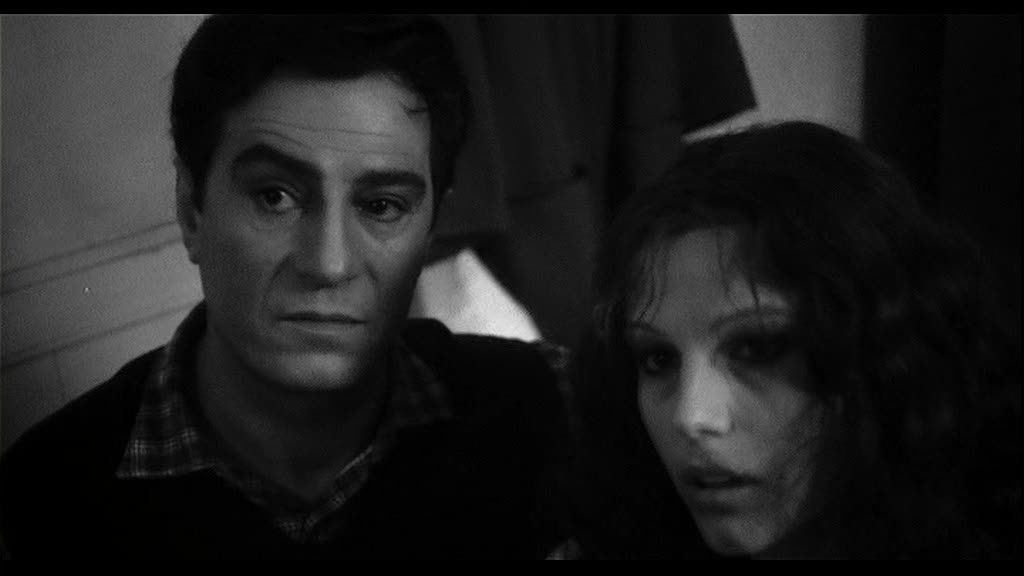
The other day, tired with our paltry selection of gym-suitable music, we decided to better ourselves intellectually and downloaded a bunch of audio interviews, lectures and podcasts. One of these was an MP3 interview with Luigi Lo Cascio regarding his recent prize-winning work on stage: La Caccia (The Hunt), a modern adaptation of Euripides' The Bacchae. La Caccia is essentially a multimedia monologue starring, written and directed by Lo Cascio. The mythological story on which it's based is that of Pentheus, a young king of Thebes, who, after some disagreements with Dionysus, god of wine and madness, is lured into spying on the frenzied Bacchic devotions of Dionysus' screaming female fans. Once Pentheus is inevitably caught, the ladies - including Pentheus' mom and sister - mistake him for a wild animal and tear him limb from limb. Moral of the story: don't mess with Dionysus, fool!
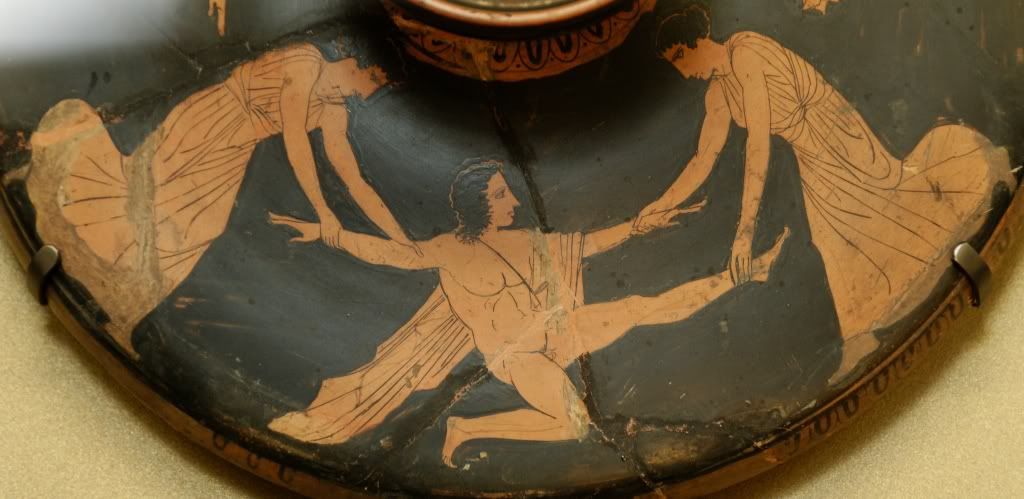

Pentheus getting ripped apart for his troubles.


After listening to the interview, we were properly impressed. First, we were impressed by the play - which sounds fantastic. Postmodern adaptation of Greco-Roman classic? Yes, plz! Second, we were impressed by Lo Cascio - who was smart (gosh, he was moving so fast, we could barely keep up with him!) and articulate in a way that we had forgotten, articulate in a particularly Italian way. This got us thinking about language, and, as S.I. Hayakawa said in his brilliant book, how it affects our thoughts. An important aspect of the theory of general semantics is about revealing that causal loop between what we think, what we say and what we think. Not many people realize that the language we speak can subtly guide and influence our perception of reality. It's not just how we express ourselves, but it's how we express the world to ourselves.

Take a few examples. German is famous for having very long words which express specific emotions - emotions which, in English, would require a couple sentences just to get down to it. Would you feel those emotions if you didn't speak German? Probably, but would you be aware of those feelings? Of course, every language has this - some languages don't have a word for romantic love! others have several different words for it! - and recently we were noticing that our psychological reactions and social cues are different when we speak English versus when we speak Italian. It's like we become a different person, with a different sense of humor! As we've studied Hindi, we've learned with fascination all the various shades of use just for accha. And how do you explain arre to someone? Literally, it's supposed to mean "hey". But surely it's a more Fonz-like "heeeey"? But that's not quite right, either. Italian also has a few words which don't correspond to any English ones: magari, ormai, anzi...


Pentheus being crazy.


Professor Kenneth Bartlett, in his course on Italians Before Italy, mentioned the cultural significance of language in Italy. This doesn't just mean the historical significance of, for example, adopting the Tuscan dialect as the "official" language of Italy, but also the importance of language in everyday mentality. To put it simply, how articulate you are is important. We've always interpreted this as another expression of the bella figura philosophy: you have to sound good - and sounding good can sometimes become more important than the content of what you're saying. American English doesn't have this same stress on everyday eloquence, so when a stylish speaker does pop up, he can have quite an impact (Obama, for example). (And we're referring to a particular type of standard everyday American English, since we assume language might have a stronger role in other English-speaking cultures. For example, it would be interesting to explore language's importance in, for example, the culture of Baptist preaching, or Irish pub storytelling, or standup comedy.)

Of course, sounding good and having great content is doubly intoxicating. But sometimes it can be hard to distinguish the two. After listening to Lo Cascio's interview, we were left bewildered and excited about the play: "That sounds excellent! Gosh, he sounds excellent!" we thought. "But... what did he just say?" Such is the dilemma we often have when listening to Italian philosophical or artistic talk - we get so caught up in the sound of it, we don't think critically. When we're wearing "Italian ears", it just sounds great! So is La Caccia awesome because of the language used to describe it? Or the language used in it? We read (and love) the classics in English - what would they be like in Italian? A tangential example: Shakespeare in Italian loses a lot - he sounds blunt and dull. Is that how Mirza Ghalib sounds in English? So they say.

Anyway, the best thing we can do is use an example. Here's a translation, as faithful as we could make it, of a review of La Caccia by critic Elina Minissale. It will probably sound purple to non-Italian readers, but we think this is actually quite a standard example of the sometimes Baroque, obsessively aesthetic bent Italian can take. Or is this the same sort of adjective-heavy writing style any critic might be accused of using? Are we exoticizing? Hmm.

"It would be simplifying to describe and constrain in these lines The Hunt by Luigi Lo Cascio. Apart from the admirable and essential teamwork which brought this play to the stage (the particularly good supporting actor, Pietro Rosa; art direction Alice Mangano; design by Nicola Console; sound effects and audio by Desideria Rayner; original music by Andrea Rocca; light design Stefano Mazzanti; background score Mauro Forte), apart from the immortal work from which The Hunt springs (The Bacchae by Euripides), the most powerful thing is the passion, culture, brilliant intelligence and scrupulous and enlightened madness which characterizes the character and the man, Luigi Lo Cascio: [describing it] wouldn’t explain why all those people were present on 26 February at the ex-Monastery of the Benedettini in Catania, the completely full theatre and especially why so many young people are interested in this author, actor and intellectual of such charisma.

Thin, somewhat short and dressed in black in the university’s auditorium, he almost seems like he doesn’t want to attract any attention; yet as soon as he appears on stage, he transforms and fills the scene with arrogance and skill: he completely personifies the character, with all his fears and most unmentionable thoughts; Lo Cascio unleashes all the physical and mental energies that a human body can contain.


The spectacle is the man’s mind, his madness. This is a less oppressive portrayal compared to his previous work, In The Lair, adapted from a story by Kafka, yet the same obsessive and anguished themes can be found in The Hunt: ghosts of the soul, fear, doubt, delirium, madness, the predator and prey who are often and willingly confounded, following each other, fighting each other, relying on each other.

The story is notable and summarizing it would debase the psychic anguish of the protagonist and the play itself (rich in surprising desecrations of the tragedy) and, above all, it would omit that small particular which is the key to theatre’s magic: that sense of the play existing, not existing, the play which lets itself be caught, escapes, and plays with the spectator in a vortex of sensations which remain in us even after having left the theatre.

The fundamental, irreversibly tragic point is the capsizing of the character’s condition from butcher to victim: defeated by a powerful and cruel god, the man is transformed and perishes. An exceptional work, an inimitable and superb performance which left its mark as it did In The Lair, from a few years ago. I’ll only criticize one thing, Luigi: a microphone! The magic of theatre, especially Greek theatre, is enclosed in a perfected and much studied acoustic which constantly reminds us how real and vivid the play before us is."

-Elena Minissale, review of La Caccia from Lo Schiaffo (The Slap)


Good, na?! But what does it mean?! We don't know what we like better - the idea of the play, or the reviews of it. All we can say is, Mr. Lo Cascio, per favore, record some of this stuff!

Saturday, 28 March 2009

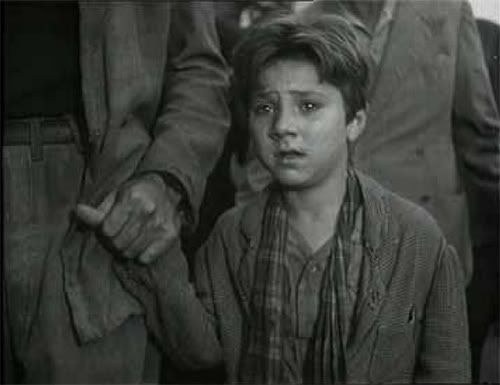
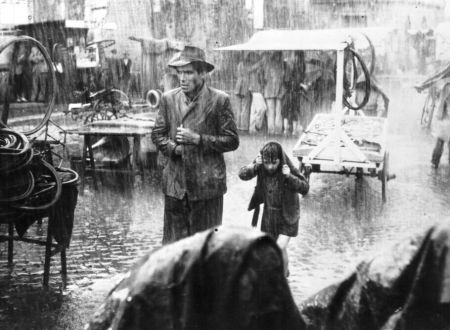
Ladri di biciclette (1948)


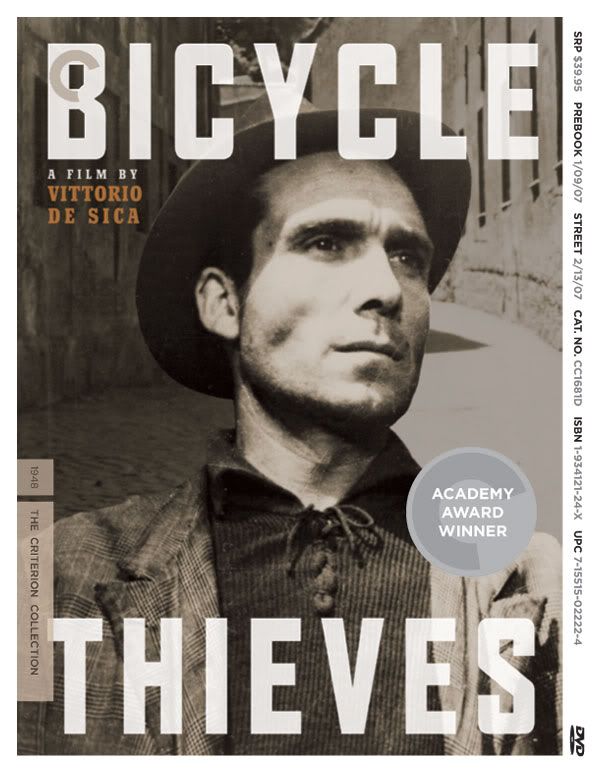
Ladri di biciclette (literally, Bicycle Thieves, though sometimes called The Bicycle Thief) is often cited as one of the greatest films of all time and certainly the best example of Italian neorealism. While it's difficult to ascertain whether it's the best film ever, it's certainly - like Akira Kurosawa's Rashomon - a perfect film. It is entirely flawless, and it manages to infuse its ultra-simple premise - a poor man's search for his stolen bicycle - with tremendous power and grace. We weren't sure what all the fuss was about but now, having seen it, we can understand why it has had such an impact. It's just heartbreaking.

The plot seems thin on paper: in poverty-stricken post-war Rome, Antonio (the gaunt non-actor Lamberto Maggioranni), finally manages to get a job. His new boss informs him that owning a bicycle is a requirement for the job and so, after his wife pawns their matrimonial bedsheets, he gets a bicycle. On his first day on the job, the bicycle is stolen. And for the rest of the film, he searches for the thief, with his seven-year-old son, Bruno (the cherubic non-actor Enzo Staiola), throughout a hot, hostile, Sunday Rome.


The long search.


Many people comment on the richness of the neorealist details - on how accurately post-war Rome is portrayed, or how interesting it is that the cast was made of non-actors - but we think the universality and simplicity of the humanity is the best part of this film. It could be anywhere, about anyone who is stuck in poverty. Thanks to the excellent narrative structure, the gentle pacing and the background score, we found ourselves swept along completely by the doomed search for the bicycle - our heart soared when Antonio and his son made up after an argument, and we cried during Antonio's final, desperate attempt to fix the situation.

Neorealism is all about not calling attention to the act of filmmaking, and indeed we didn't notice any symbolism, any fancy framing or quirky storytelling device. The story is told with great clarity and earnestness, and it leaves it up to you whether you want to turn bicycles into a symbol for something. During the film itself, we were propelled entirely by emotion rather than intellect. And in the end, we only said, "Good!" We can thus add our voice to the consensus: this is a must-see for any cinephile.


:(


A fun thing to note is the effect the film had on popular culture. First, it has plagued many a conversation we've had with various intelligentsia wherever we go. We once attended a screening of Satyajit Ray's Pather Panchali which drew interesting parallels between the neorealist portrayals of poverty in both cases. (Yes, they are very similar aesthetically - both even feature cherubic little child actors!) And, of course, it was a huge hit for Italian films abroad, during that golden age when new Italian films were hip and groundbreaking. (Le sigh.) We reckon Italian cinema is still riding the high of being "the place that made Ladri di biciclette and La dolce vita."

Within Italian pop culture, we've seen Ladri di biciclette pop up in interesting ways. Our favorite was during (our recently faved) C'eravamo tanto amati, where one character is so moved by the film that he decides to abandon his career and family in order to dedicate himself to writing film criticism/cultural commentary and basically promoting this film as the end-all, be-all film. "This is what they should show schoolchildren!" the character declares. The character is a caricature of the socioculturally-minded intellectual and, later in the film, he loses a fortune during a game show since he can't answer the final question (on, of course, Ladri di biciclette) in the time allotted. It's a funny little tribute to how when a film is too good or maybe just too admired, people (especially us intellectuals!) can get a little too enthusiastic and tend to lose perspective. (Goodness, like the Slumdog mania!) We wouldn't say this changed our reality or inspired us to abandon our career, but it is really, really good (much better than Slumdog!).

Friday, 27 March 2009

The thinking couch: Sweeping generalizations time!

Cinema is a language.

We always say that. Even with subtitles, you won't fully understand or accept a non-Hollywood film if you've only been brought up on a steady diet of Hollywood. The different methods of storytelling, references to a different cinematic tradition, and different cultural context all inform and influence the way a film looks and sounds. And it takes a while getting used to it. Different directors have different dialects, too.

Then there's the whole high/low art dilemma - the popular but silly notion that intellectual cinema is somehow "better" or "smarter" or "of higher quality" than popular cinema. (Completely untrue: hello, Nayak is genius!) Often "intellectual" films from different countries resemble each other more than an "intellectual" and popular film from the same country. A good example: Satyajit Ray's Pather Panchali, which looks and feels more like Akira Kurosawa or Vittorio de Sica than other popular Bengali or Indian films.

We at the PPCC like everything. We try not to limit ourselves to any one cinematic tradition or style. There's just too much out there - it's all too interesting! At the moment, we're really excited about French New Wave films and telenovelas - two genres we know little/nothing about.


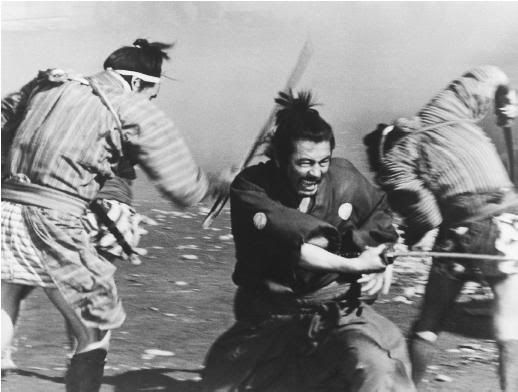
Japanese cinema: Toshiro Mifune kicking samurai butt.


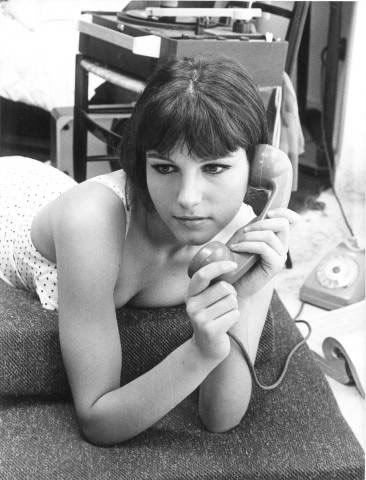
Italian cinema: Stefania Sandrelli as the doomed, vapid bimbo.


Anyway, that was all intro. Recently we've been watching some nice Italian films, and, funnily enough, we've been suffering a bit from reverse culture shock. After two years of intense Hindi cinema-watching, coming back to a specific Western tradition is surprising and challenging. The mood, the aesthetic - it's all so different! So here are some things we like and dislike, so far. (Inspired by BollyWHAT??'s hilarious Hollywood FAQs.)

A list of stuff about movies from everywhere

1. Why so short? No, seriously. Ninety minutes is not very long. Sometimes the movie's over before our tea is.

2. Why so fussy? Luigi Lo Cascio, you are a very slow walker and talker. The man takes his time. We keep noticing those precious ninety minutes being used up to show us a sluggish panorama of... a kitchen. A close-up of the corner of the counter top. Sometimes, this is good. As Manohla Dargis said in her review of The Dark Knight, a film which takes the time to show us the Joker hanging his head outside the police car window is a good and lovable film. But sometimes, this all just seems fussy. Hindi films might be long, but they are packed to the brim with content! No time for contemplative ennui - NO TIME! - too much to do!


Too much life to live! No time for kitchen counter-tops!


3. Sentimentality is not a crime. Nor is it stupid, nor childish. Crying is okay, people! Come on! Especially Hollywood and British films - enough with the emotional inhibitions. Express, EXPRESS! We like it.

4. Nudity and kissing are also not crimes. Ah, we missed this. After so many Hindi films, we found it quaint that even a mere on-screen peck could provoke gasps of shock from us. But now, well, we say it's better to show than not to show. Boo to Puritanism in film. Boo to prudish embarrassment about nakedness or kissing. The human body is beautiful - it should be celebrated! Love (and lovemaking) are some of the happiest human experiences - they should also be celebrated! Sexuality and sex are not crimes, nor should they be treated as "dirty" things (especially in films which purport to be romances!).


Sex is okay, people!


5. Violence, however, is a crime. Sometimes violence can be necessary to the plot or the theme. In Watchmen, we thought some of the violent scenes were an interesting comment on American imperialism. But we thought most of the violence was also unnecessary. This is something Hollywood films are particularly guilty of - prudishness towards sex, but no inhibitions with violence. How is sex bad but violence good? Baffling.

6. Existential ennui? Handle with care. "The problems of people with no problems." We are very dismissive about these types of films, perhaps unfairly. We had an interesting discussion recently with a friend: rich, empowered people can be sad too. And they should be allowed to be sad! So she said. Okay: we'll buy that for a dollar. But we still have a prejudice against these types of films - American Beauty, ughh - though, if the subject is treated well, it can be great - Revolutionary Road, anyone? We see more existential ennui in the films of the West, which inevitably gets us thinking about relative poverty rates, relative comfort and levels of power.

7. And finally, to films from all over the world, no more meta-films! Do we attract them or something? They've all been excellent, but we just long for a grapefruit, as Eddie Izzard would say. Om Shanti Om, Luck by Chance, Mithya, La dolce vita, C'eravamo tanto amati, Io la conoscevo bene, La vita che vorrei... enough! All of you! Tell us a story about people who don't work in films!

Thursday, 26 March 2009

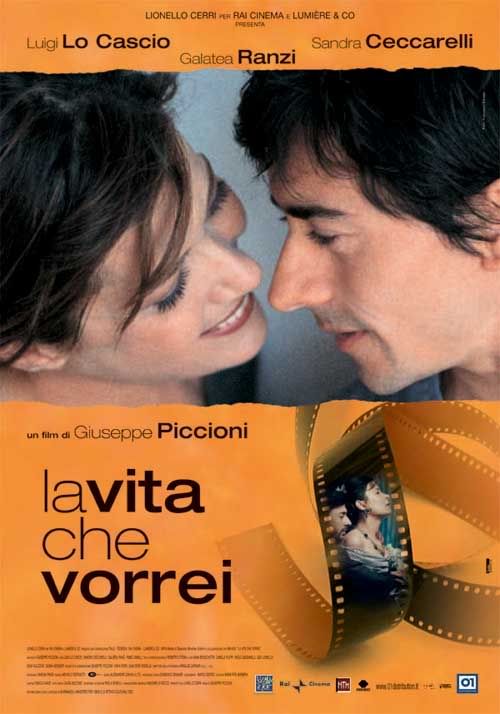
La vita che vorrei (2004)


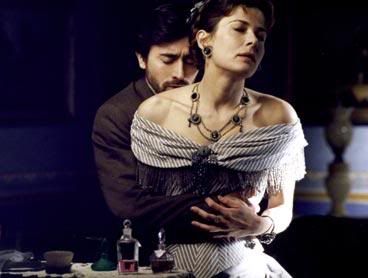
With enough meta to sink a boat, La vita che vorrei (The life I would want) is a film about a film, where actors play actors who play lovers who eventually fall in love in "real" life too. Life imitating art, which imitates life, is a central theme - with several of the "film's" scenes directly mirroring the "real life" scenes. In one of the most satisfying gimmicks, quick cuts between the 19th century costume drama and the actors' 21st century lives are linked by seamless dialogue. "Wait!" he cries at coffee break on the set, and we cut to him chasing her carriage in the 19th century.

Essentially a study about a relationship and the interaction between life and art, this film avoids making too much obvious commentary about glamor or celebrity. But hey - Italian cinema has fallen pretty low since the La dolce vita days, so Italian actors don't have the burden of fame that the Brad Pitts and Amitabh Bachchans or Marcello Mastroiannis of the world live or lived with. (Hence why you can bump into Nanni Moretti or Luigi Lo Cascio on the streets pretty easily in Rome! Whee!) The film-about-a-film is not entirely free of cliché, though, as these actors, Stefano (Luigi Lo Cascio) and Laura (Sandra Ceccarelli), are your pretty standard "actor" characters: insecure, jealous and vain. Laura, however, still has the bright eyes and warm, open heart of a beginner, while the more experienced Stefano has since built a hard shell of bastardliness around himself. Or maybe it's their personalities. Whatever it is, everyone soon falls for the cute, vulnerable Laura, Stefano included, and things are all great until Stefano's bastardliness ruins everything.


On the set.


And off.


The meta travels in the opposite direction as well: as in, it's not only the "real life" romance between Stefano and Laura which informs their "on screen" relationship, but it's also their acting methods which inform their "real life" behaviors. Laura, who everyone agrees is so warm and friendly and open, believes you really need to feel the character. You can't, and shouldn't, fake it. And, importantly, you should be nice to all the nice people around you. Stefano, who everyone agrees is pretty much a "stronzo", is misanthropic and self-centered. Of course, the real tragedy is when Stefano's chilly insensitivity tries to mix with Laura's "heart on my sleeve" attitude. Woe ensues.

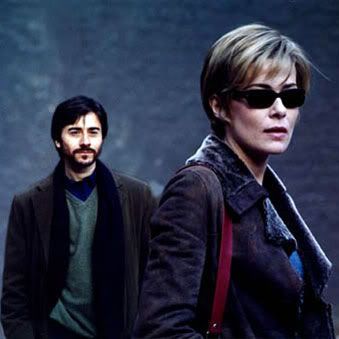
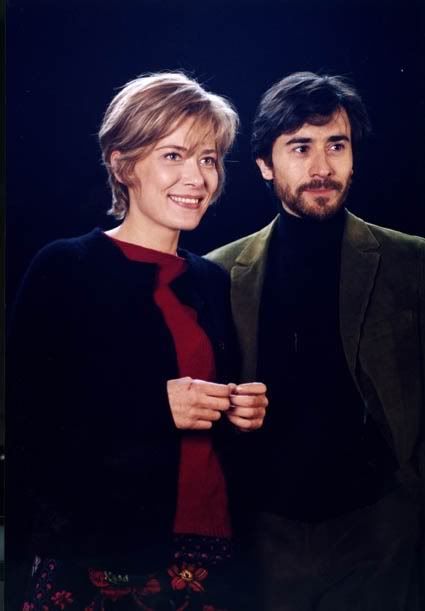
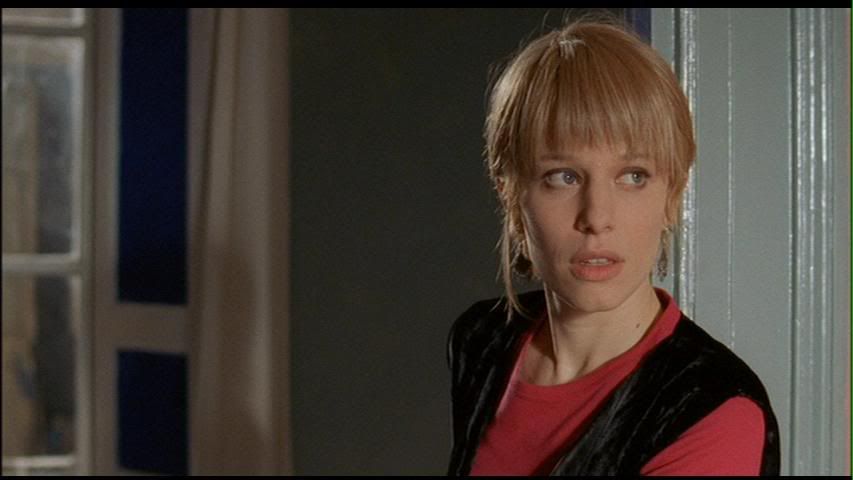
There's a somewhat unexpected humor to this film, especially since the audience naturally sides with Laura and watching Stefano's fall from confident, beloved star to, "Well, we always thought you were a big jerk." is oddly funny. Of course, it's a little painful as well. Sandra Ceccarelli as Laura is wonderfully endearing: she seems both naive and world-weary, both sentimental and cynical. This fits perfectly with Laura's supposed "long, hard road" to becoming a star. Luigi Lo Cascio, who last occupied the special page in our diary we reserve for "Perfect Man/Husband-to-be", thanks to his role as Nicola the Perfect Man in La meglio gioventù, plays his polar opposite in this: Stefano is a frustrating and pitiful Scrooge-like jerk. The trademark intensity, which so defined Lo Cascio's debut in I cento passi, is sadly mostly missing. Oh well, next time. The chemistry between Lo Cascio and Ceccarelli is really intense, though, which made the PPCC yearn for an adoption of Hindi cinematic norms - that is, if a pairing works, sign them on for a kabillion movies together! Apparently Lo Cascio and Ceccarelli have been in another film together: 2001's gloomy Luce dei miei occhi.


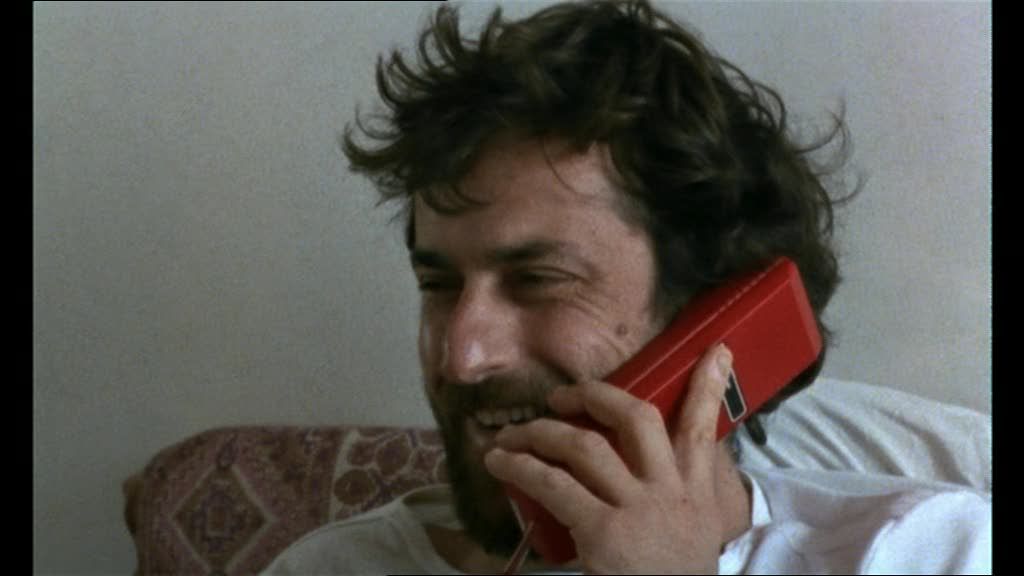
Sandra Ceccarelli and Luigi Lo Cascio: wonderful!


Critic Chris Knipp calls this film a "chick flick" and we have to admit some agreement. First, there's the lovely, indulgent costume drama romance which the PPCC cannot resist. Oh, those Verdi chords and smoldering stares and gorgeous costumes! Second, the girl power levels are on high in this film, as it's the inexperienced and naive Laura who demonstrates herself to be a stronger, better person than silly old Stefano. Laura is very clearly in charge, and much of the filmmaking frames the two in such a way as to emphasize her strength and his weaknesses (this is helped by the fact that Lo Cascio is such a physically small person, appearing shorter and slighter than Sandra Ceccarelli).

We definitely recommend this if you like straight-up romance, music by Verdi, strong women, and Luigi Lo Cascio's cute eyebrows skillful acting.

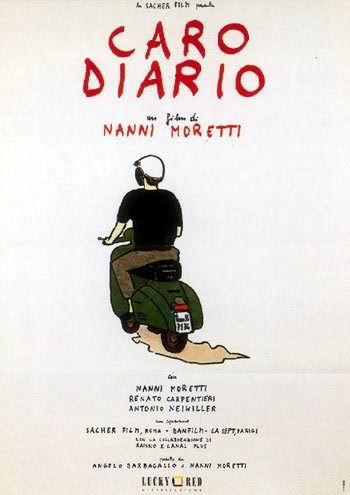
Caro Diario (1993)


Some things are deeply personal, and that makes them hard to dislike. The first "episode" in Nanni Moretti's charming, rambling, autobiographical Caro Diario (Dear Diary) disarmed us completely since it could have been written by the PPCC ourselves - word for word, thought for thought. We too have spent many hours riding our motorino around the Monteverde and Garbatella neighborhoods in Rome, gazing enchanted at the neighborhoods we passed. There's something magical about other people's homes, or maybe we're just a little voyeuristic. But, like Nanni Moretti says, we just love to look at homes. Particularly, in those neighborhoods. Particularly, when flying by on a scooter. When we started recognizing in the film that one road which leads up the Janiculum, or that one piazza in Garbatella, and when Moretti started vocalizing the exact same thoughts we used to have ("I wonder what it's like to live there. I could just watch apartment blocks pass forever.") we were bought and sold. Nanni - man - you're speakin' to us! You're speakin' our language!

But worry not - this whimsical, enjoyable little film is a treat for everyone. Moretti's stream of consciousness voice-over is quirky and refreshing in a universal way. If you've never been to Italy, never watched a Nanni Moretti film before, and don't care for apartment-gazing or mopeds, that's fine. Although our recognition felt nice, it wasn't necessary - the movie was nice enough by itself.


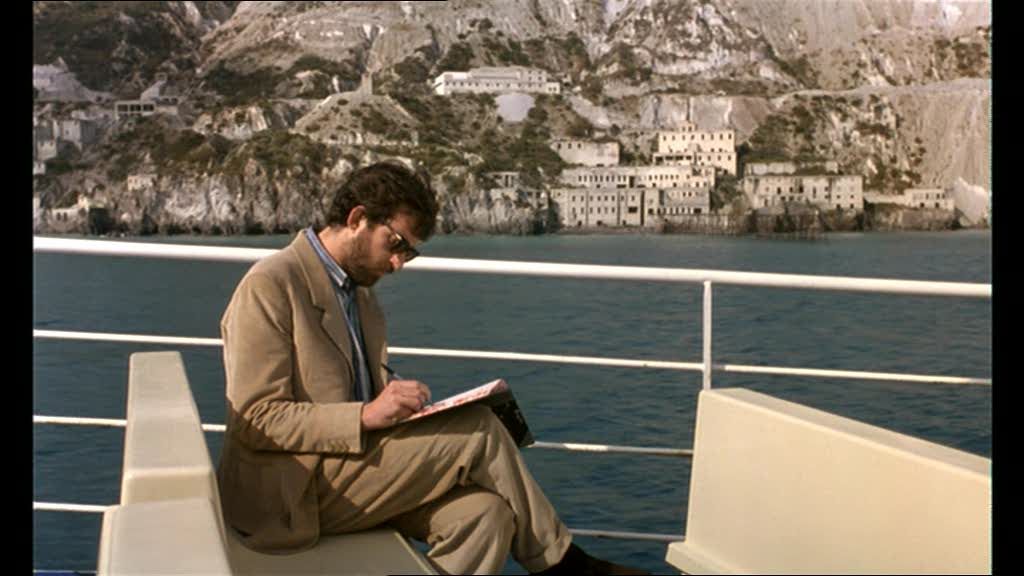
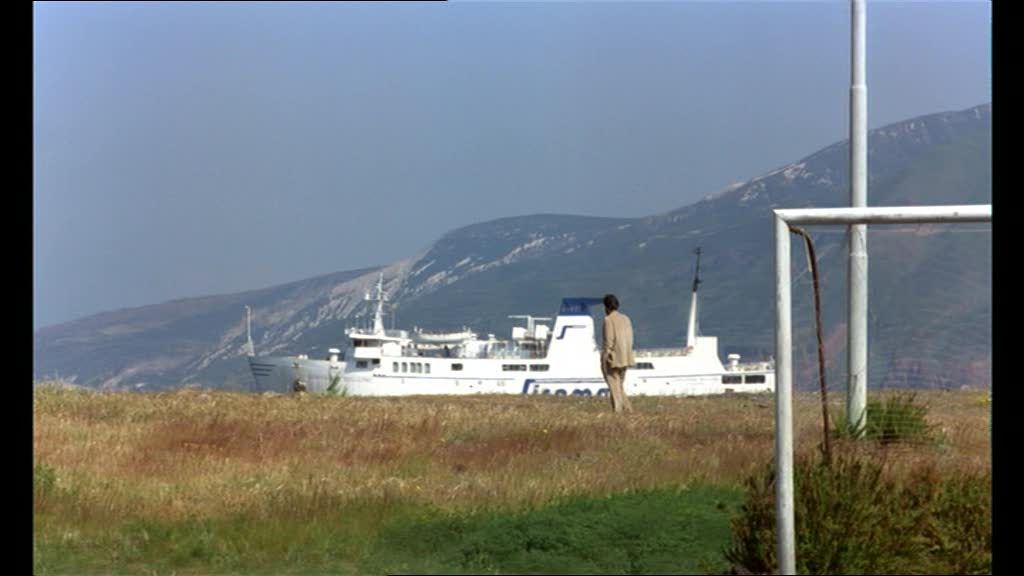
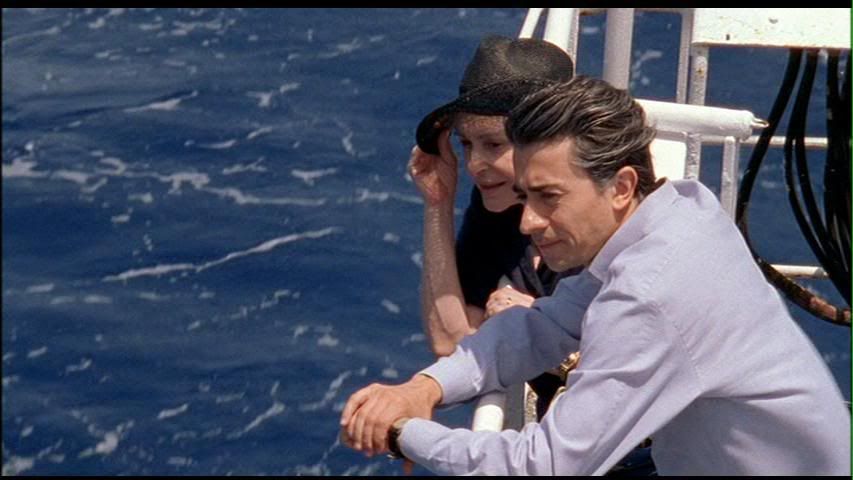
On the way to one of the crazy Odyssean islands.


With the easygoing charisma and low-key narcissism that is Moretti's trademark film persona, this film takes us through three seemingly unrelated episodes. In the first, In Vespa, we follow him as he rides his Vespa around Rome's deserted streets during Ferragosto (the August holidays, when Italians flee the cities). He muses on neighborhoods, pretentious films and his secret desire to dance ("It was the movie Flashdance that changed my life."). In the second episode, Isole ("Islands"), he travels with his TV-phobic/TV-philic friend Gerardo (Renato Carpentieri) around the Italian islands - each characterized by an almost mythical weirdness (one island's inhabitants are ruled by their children). And in the final episode, Medici ("Doctors"), Moretti deals with a mysterious dermatological illness which plagues him and confounds doctors.

The film is airy and unconcerned, yet it feels meaningful and suggestive. For something of an ego project (something Moretti's critics never tire of pointing out is how indulgent his films can be), it's also quite astute. You're never bored - quite the opposite, Moretti is a relaxing, fun companion. In fact, as overconfident and in love with himself as he is, he's not above teasing himself or pointing out his flaws either. One of our favorite moments is when he watches an overly intellectual Italian film in which one of the characters laments the fact that, in youth, "we all yelled terrible, violent things, and now we've aged complacently and turned ugly." A fed-up Moretti responds later, "You yelled terrible, violent things and you have becom ugly. I yelled the right things, and now... I'm a dashing 40-year-old!" And just when you think Moretti has gone a little deluded with self-love, in a later scene, he spots Jennifer Beals - the star of Flashdance - and has no qualms letting himself turn into a laughably starstruck fan (Beals thinks he's a foot-fetishist and treats him like an asylum escapee).


Moretti favors his usual filmmaking style: lots of shots from behind, and some playfulness with perspective, such as this scene when he ambles along with an incoming yacht.


(Side note, but we bumped into Nanni Moretti once in a takeaway pizzeria place in Monteverde years ago. Our behavior? Laughably starstruck! All we did was stare and smile, as the only things which came to mind to say were, "You're Nanni Moretti!", "You're tall!" and "You're a Communist!" None of which are, ahem, really good conversation.)


A mix of fact and fiction: the scenes which deal with Moretti's experience with cancer as autobiographical, and here he even uses real footage of his final chemotherapy session.


Wikipedia calls Moretti the "Italian Woody Allen", and there's some truth to that. Both actor-directors make "happy intelligentsia" films which are full of frothy intellectual musings and cunning analytical tricks. In one scene in Caro Diario, Moretti - overcome by his apartment-love - buzzes himself into an apartment by pretending to scout for locations for his next movie. "What's the movie about?" one of the residents ask. "It's uh... about a Trotskyist sweet-seller in the 1950s," Moretti fumbles. Then he smiles: "It's a musical." Much later in the film, Moretti walks into a sweetshop/bar and sees a 1950s musical on the television. Smiling helplessly, he begins to dance along. It's a smart little bookend to the earlier scene, and something we almost didn't notice until we thought, "Hey, it's the Trotskyist sweets musical!"


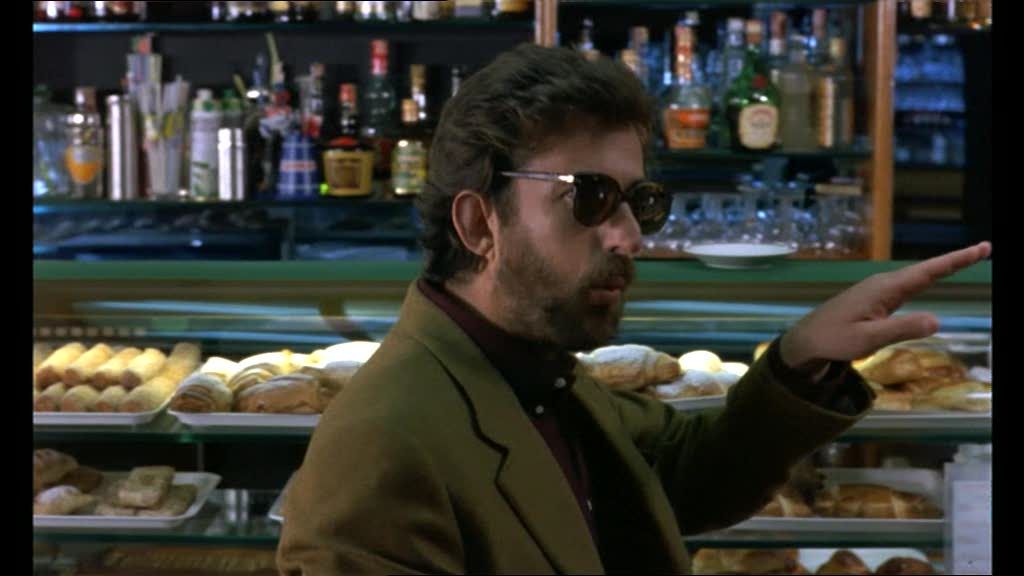
The musical!


There are lots of other notes of low-key intellectual playfulness, such as the constant allusions to Ulysses (both Homer's and James Joyce's) during the Isole episode, and all the islands' surreal jokes (such as "the constant menace of the volcano" on Stromboli making everyone, including Moretti and his friend Gerardo, angry and inhospitable).

There's no narrative or message - the film is just a rambling trip into a variety of places and ideas, with a strong sense of silliness and surreal satire. We highly recommend this and Moretti's Palm d'Or-winning hit, The Son's Room. Be warned of the differences in tone between the two movies, though - this being whimsical, easy and lightly politicized, while The Son's Room is devastating and completely apolitical - but both are excellent films.

Sunday, 22 March 2009

Leap of Faith (1992)


The last of a dying breed, it seems, Leap of Faith is a funny, semi-cynical, semi-sympathetic, incisive look into the modern fad of evangelical Christianity in Small Town, America. Its ability to treat Christian evangelism wryly and cynically, yet without mocking or belittling its adherents, is something people like Richard Dawkins and Christopher Hitchens would do well to learn from. Lordie Lordie, we are tired of those two! But more on them later.

Leap of Faith centers around a charismatic charlatan, Jonas Nightingale (Steve Martin), and his troupe of "Angels of Mercy" (including such unexpected faces as Meatloaf! Philip Seymour Hoffman! a full-on gospel choir!). Jonas, with the help of his top assistant Jane (Debra Winger), runs a traveling Christian roadshow which features lively gospel music, on-the-spot healing, people falling into seizures and speaking tongues, and the like. One day, when their tour buses break down in a nowhere town in the middle of the country, Jonas decides to put on a show and generate some much-needed cash. He meets some resistance from the local sheriff, Will (Liam Neeson), who sees through Jonas' act immediately and disapproves of him taking advantage of the poor townsfolk. The townsfolk, in the meantime, are very poor indeed - long-suffering farmers with various tales of woe. One particularly woeful tale concerns the local diner's young waitress, Marva (Lolita Davidovich), and her disabled brother, Boyd (Lukas Haas). As Jonas and Jane get more and more mixed up with the people's lives, they find it more and more difficult to confront their preconceived notions about faith, suckers and scams.
This film, which establishes itself in the first half hour as a black comedy aimed at the cynical, urban non-Christian ("Ha ha, look at how stupid those Baptist hicks are!"), eventually becomes something much more sympathetic and even-handed. Slowly, as Jonas and Jane meaningfully engage with the community, we see the importance faith has in the lives of this highly vulnerable socioeconomic group. Even better - just when the movie has built up sympathy for the poor man and his reliance on his religion, and you think Jonas is a real jerk for conning people out of the last few pennies they have, the film flips the tables and reveals the unexpected humanity of Jonas himself. No, don't worry. He won't be "seeing the light", or even becoming a particular nice human being. But things do become complicated enough that we can't judge either the conman or the naive, superstitious victims.

Like Jesus Christ Superstar, this film should appeal to both Christians and non-Christians alike (assuming you're not too hardline, ahem, Peter Travers). What we think Travers misses about the "fake sincerity" in the end is that things aren't black and white, "Christian" or "rational", and, yes, it is possible to respect people you disagree with. Goodness, the Anglo-American New Atheism movement could do with a dollop of that humility! It's so frustrating to read those books by Dawkins and Hitchens that, because they can't understand why a human being would choose to hold a non-rational belief, naturally belittle and mock the people that do as ignorant or delusional. A much better book than any of Dawkins' or Hitchens', if you're interested in reading atheist philosophy, is George H. Smith's Atheism: The Case Against God, which makes its case using real philosophy - not ridicule.

Actually, tangential rant about Dawkins and Hitchens: another irritating factor about those two is how they seem entirely guided by a particularly ethnocentric concept of reality. Yes, the post-Enlightenment rationality is a great thing, but, as postcolonial and magic(al) realist writers can attest, the European post-Enlightenment rationality narrative is not the only narrative. There are alternative experiences of history and reality, experienced by people who weren't educated at Oxbridge in the "great classics" of Shakespeare, Eliot and other dead, white men, and who live in a far different world. What's irritating is that Dawkins or Hitchens don't allow for any leeway, they don't seem to have any sympathy for people who might hold "irrational", "non-Enlightenment approved" ideas about reality. As the father from La meglio gioventù tells his son, "You're so intelligent, yet you have so much trouble conceiving of some things!" We'd say the same to Dawkins and Hitchens, two highly educated men who seem incapable of conceiving of transcendental experience and therefore ridicule all religious believers for the logical fallacies in the most superficial interpretation of their beliefs.

We take, as an example, Christopher Hitchens' criticism of Buddhism: see page 23 of his book, God is Not Great: How Religion Poisons Everything:
The god Buddha was born through an opening in his mother's flank.

Illogical? Yes. But also a complete misreading of Buddhism and the role of the Buddha! (Nutshell: He's not a god.) And goodness, selling Buddhism like that is like selling Beethoven as "a composer who couldn't hear a thing" to people who have never heard any Beethoven. (Nutshell: Beethoven was amazing.)

Basically, our bottom line is that there's a lot more complexity, both philosophically and ethically, in criticizing religion. Assuming that all religion is wrong, as Dawkins and Hitchens do, assumes that (1) an ultimate truth exists out there, and (2) oops, only Dawkins and Hitchens understand it and can lead us to righteous rationality. Philosophically, that's just bollocks. Furthermore, there's also an ethical dilemma to these sweeping gestures against "Baptist hicks" or "Eastern cults" (Hitchens' phrase!): the socioeconomic background which leads people to a particular faith is often a big factor in their belief. Not everyone has the fortune to lead an unattached, educated, urban lifestyle where exploring alternative faiths is encouraged and the entire buffet of beliefs is available. It's so easy, for example, to criticize Christianity in America - especially if you're a white, university-educated, middle- to upper-class urbanite. We've always noticed how easy it is to mock Christianity in America, whereas it remains (as it should) taboo to mock Judaism, Islam, Buddhism or Hinduism. We think this has to do with the fact that the most mocked Christians are the "white trash" "rednecks" who liberal urban Americans (the PPCC included, though we're trying to break the habit) assume are all close-minded bigots. In the name of tolerance, then, a great intolerance is practiced. And because the targeted group were historically empowered - that is, Christian white males - we don't allow them any leeway or sensitivity now. And so we mock their beliefs! (Interestingly, this sounds like the way poor Brahmins were treated in a post-affirmative action India - as read in Pankaj Mishra's excellent Temptations of the West.)

Phew. Long tangent. But the point is this: it's not nice to mock other people's religious beliefs, even when they make no sense to us. Leap of Faith demonstrates sensitivity and humanity by showing the mocker (Jonas and his band) and the mocked (the townsfolk) with the same amount of respect and sympathy. It's funny without being mean or cheap, and touching without being schmaltzy. We highly recommend it.

Saturday, 21 March 2009

Star Wars: The Clone Wars (2008)


A disclaimer: a long time ago, in a galaxy not so far away, the PPCC became an emotional slave of the cultural empire that is Star Wars. We saw the movies (and bought them several times in several formats, Mr. Lucas!), we bought the books, the comic books, the merchandise. We wrote the fanfiction. We rode the MGM Studios ride, again and again. So deeply enmeshed is Star Wars into our brain chemistry that anything, anything that comes out remotely Star Wars-ish gets an immediate A+ in our books.

So how does the most recent animated Star Wars film, Star Wars: The Clone Wars, rate? A+?

Well, not really. It's more of a C- effort. It's also an easy target for critics of the franchise, as it looks like little more than an effort to milk that tired Star Wars cow one... last... time. (And as Mr. Lucas has had his way, this is not actually the last time.)

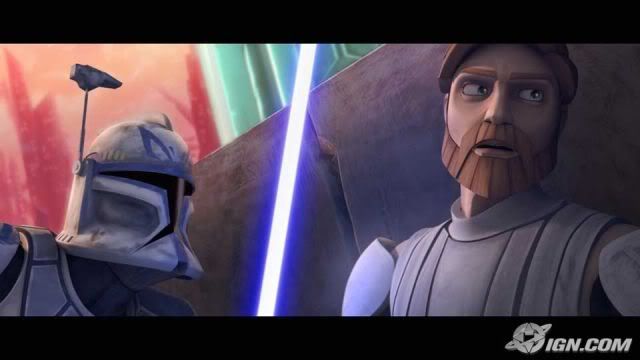
A computer-animated film, The Clone Wars offers a standalone snapshot of life between episodes II (Attack of the Clones) and III (Revenge of the Sith). Generals Obi-Wan Kenobi (voiced by James Arnold Taylor) and Anakin Skywalker (voiced by Matt Lanter) are called on to save Jabba the Hutt's baby son, "Stinky" (*sigh*), from a dastardly kidnapping attempt. As with all things in the prequel trilogy, this kidnapping attempt is really a far more sinister plot orchestrated by Emperor Palpatine as yet another move in his labyrinthine game of political chess with himself. Honestly, we have never understood anything that that man says or does in the prequels. Couldn't he have just taken over as Palpatine, Sith Lord of Evil and Your Overlord, without that whole Kiwi clones versus cheeky, junky robots thing?


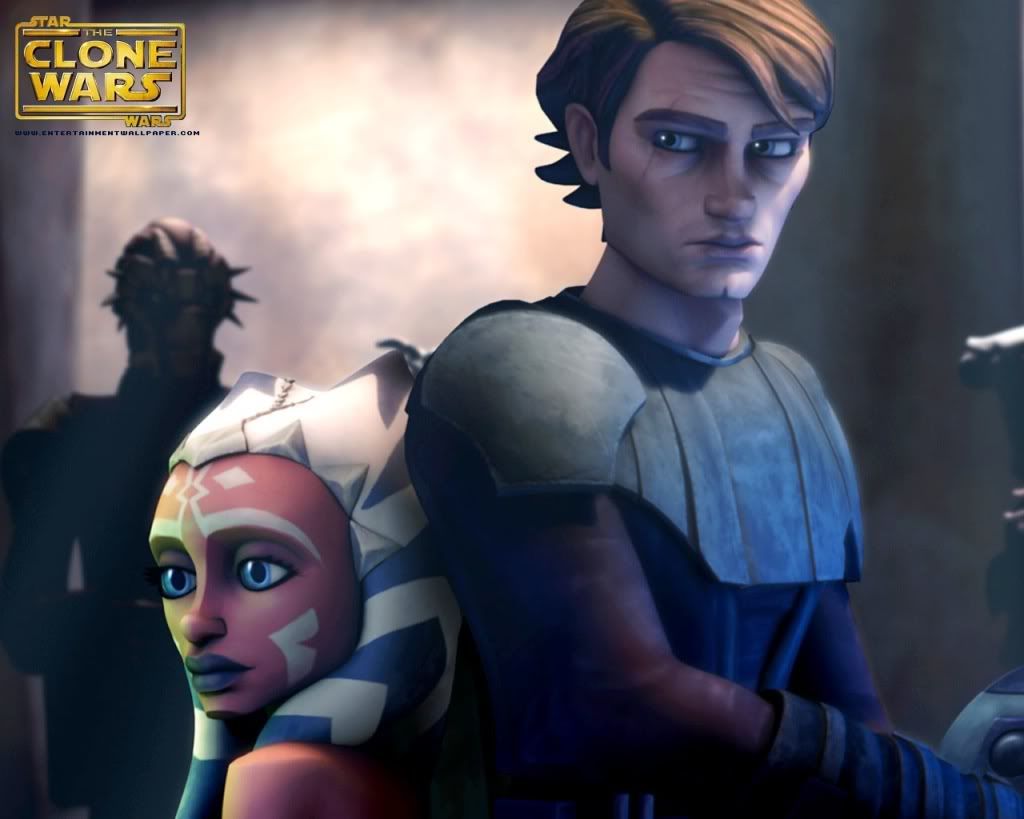
Anakin and Ahsoka. Ahsoka: a subtle commentary on Buddhist politics? Well, probably not.


Anakin unexpectedly gets a fresh, young Padawan to train - Ahsoka (?!) (voiced by Ashley Eckstein). Yes, Ahsoka. No, not Ashoka or Asoka. Ah-soka. So is Ahsoka an NRI? Discuss.

Anyway, this is paint-by-numbers Star Wars. It features all the usual Star Warsy things - elaborate land battles, elaborate space battles, elaborate lightsaber duels and snarky "American cowboy"-style one-liners - except without any punch, without any soul. Alas. Gone is the mystically weird popcorn Zen of the old trilogy. Gone is the admirably confounding political science 101 of the new trilogy. Gone is the edgy fun of the other, much superior animated Clone Wars series by Genndy "genius" Tartakovsky.

Instead, all we have is a lazy rehashing of everything we've already seen before. No insight is given. No interesting plot thing. And not only is it lazy, but it's annoying and, well, stupid as well - the banter is tired, with women* and gays** mocked, and goodness, gracious but Obi-Wan is a condescending prat in this one. Argh. Arrghhh.


OMG, Obi-Wan, OMG.


* Watch out, ladies. If you're a character in this film, you get to: be flung around in all manner of skin-tight and skimpy outfits (with visible butt cracks!), and have not only prat Obi-Wan mock you ("You'll have to do much better than that, my darling.") but the droids as well ("Yes, sir - er, ma'am - er, sir!").

** Jabba the Hutt's uncle, Ziro, is a trance club-owning queen?!


What's honestly most disappointing about this film is that it amply demonstrates how all the life, soul, fun and energy has long ago been sucked out of Star Wars. We're sorry, Mr. Lucas, but it's time to pass the torch. The way in which Star Wars has seeped into American culture is epic, and often the fan-made/non-Lucas-made products are much, much superior to the sterile, mainstream output. Just consider: a Twitter Death Star attack, irreverent comic books and the darker, more dystopian comic books, the Japanese print-style Death Star attack, Admiral "it's a TRAP!" Ackbar cereal, and heck, even just all those funny references on 30 Rock.

Sigh.

Anyway - the PPCC doesn't just stand for "Post-Punk Cinema Club", it also stands for "Positive and Powerful Constructive Criticism"! So how can we fix Star Wars?

Well!

How to fix Star Wars
by the PPCC


Okay. So the coolest parts in the entire Star Wars history, according to us, are:
1. The clone wars.
2. The fugitive Jedi, interregnum period.

After watching the old trilogy, with Obi-Wan's wistful nostalgia about "the clone wars" and fighting with Luke's father and da-di-da, a proto-PPCC's imagination was positively aglow. Unfortunately, all those childhood fantasies about what the clone wars must have been like - majestic! sprawling! epic! - turned into a tinny and bizarre film. And all our hopes were dashed.

But - ! There's still hope - a NEW HOPE - for the fugitive Jedi stuff. Come on, people, come oooon! This is the most fertile ground for new stories! For adventure! For pathos! For new territories! Don't ruin it, Lucas empire!


"I shot the sherrifffff, but I didn't shoot no deputeeeee."

Saturday, 14 March 2009

C'eravamo tanto amati (1974)

This may be obvious to connoisseurs of Italian cinema, but C'eravamo tanto amati (We All Loved Each Other So Much) is really great - who knew! We got it for Christmas, threw it into our Pile O' DVDs, found it months later (today), assumed it was some old school tearjerker and put it in - and what a surprise we got! This was fresh, quirky, self-deprecating, inventive, silly, sweet and intelligent. And many other descriptive words. We loved it!


Stefania Sandrelli and Vittorio Gassman dumping poor ol' Nino Manfredi. Don't worry, Nino, the PPCC will protect and love you.


We at the PPCC, for however much we like Italian films, are really philistines regarding them: we have little sense of history or significance, and only nominally recognize things like neorealismo. We just haven't watched enough Italian cinema critically to make the broad generalizations we're so comfortable making in our Hindi film reviews. But after a film like this one and the recently PPCCed La meglio gioventù, we can only say, Mamma mia, ancora! That's-a one-a SPICY MOVIE! We need-a some-a MORE, please! We want to learn more!

C'eravamo tanto amati - from our uneducated, dominantly Hollywood/Bollywood perspective - was fabulously bizarre. Breaks in the fourth wall, characters addressing the camera and communicating via "internal" spoken monologues, repeated scenes, and an irreverent sense of humor that doesn't even let the attempted suicide of one of the characters make things too grim. That's not to say this film doesn't have heart - it has a sweet, earnest vibe that forgives humans, warts and all, and highlights the ridiculous surreality of our self-made dramas.


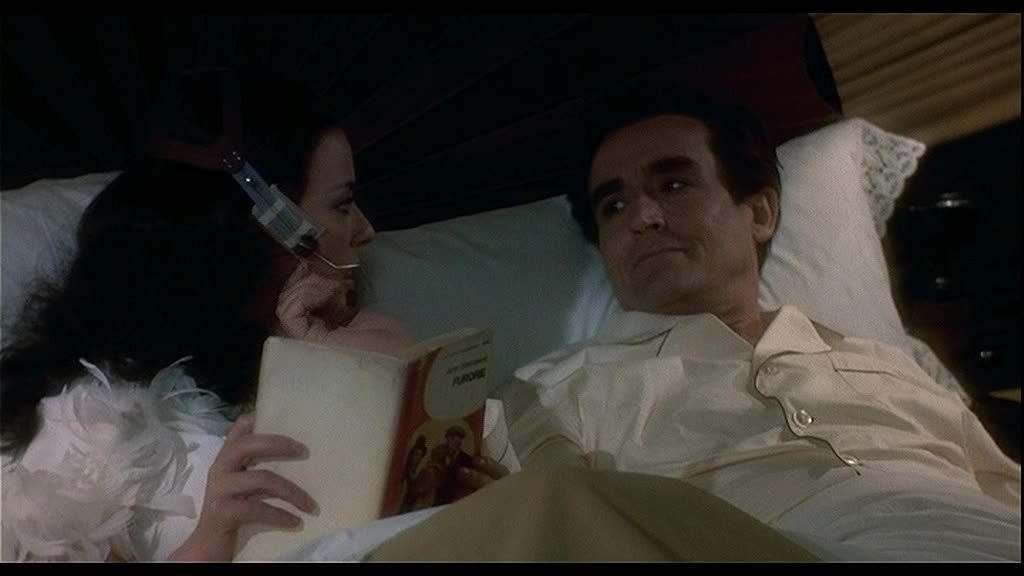
"Should I take off my braces?" she asks. His reply: "Uhm... no."


Antonio (Nino Manfredi), Gianni (Vittorio Gassman), and Nicola (Stefano Satta Flores) are old war buddies, former partigiani - AKA guerrilla fighters in the anti-Nazi resistance in Italy during World War II. After the war, during the notoriously hard times of the 1950s, they each struggle to get by. Antonio, an easygoing working class Roman, is a male nurse. One day, he meets and falls in love with the gorgeous, northern Luciana (Stefania Sandrelli). But as soon as he introduces Luciana to his debonair friend, Gianni, he loses her to him. Then she loses Gianni when the latter meanders away, inadvertently becoming trapped by a family of rich, former Fascist "padroni" (owners) and their well-meaning, ignorant daughter Elide (Giovanna Ralli). Once this happens, Luciana quickly moves onto the intellectual, self-aggrandizing Nicola. And so on.

For a film about heartbreak, economic strife and war, it's awfully upbeat. Antonio especially has a particularly self-deprecating wit, often summarizing difficult and complex tragedies with a single, dry Romanism. "Boh," he says at the film's conclusion.

"What does that mean?!" the over-articulate Nicola demands, fuming.

It just means - boh. Whatever. In the face of the ridiculousness of life, Antonio's response - a resigned shrug - seems to be the most sensible.

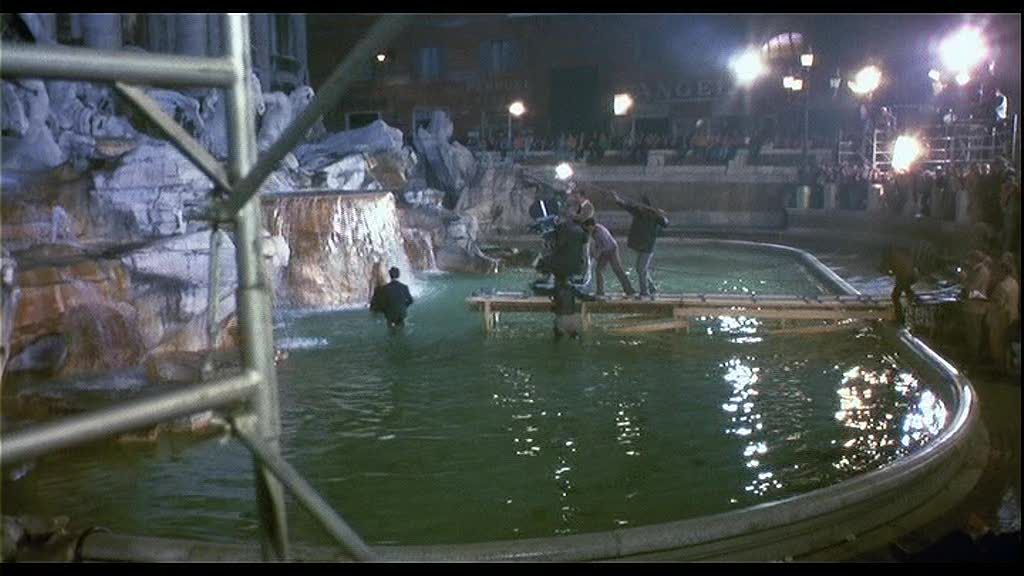
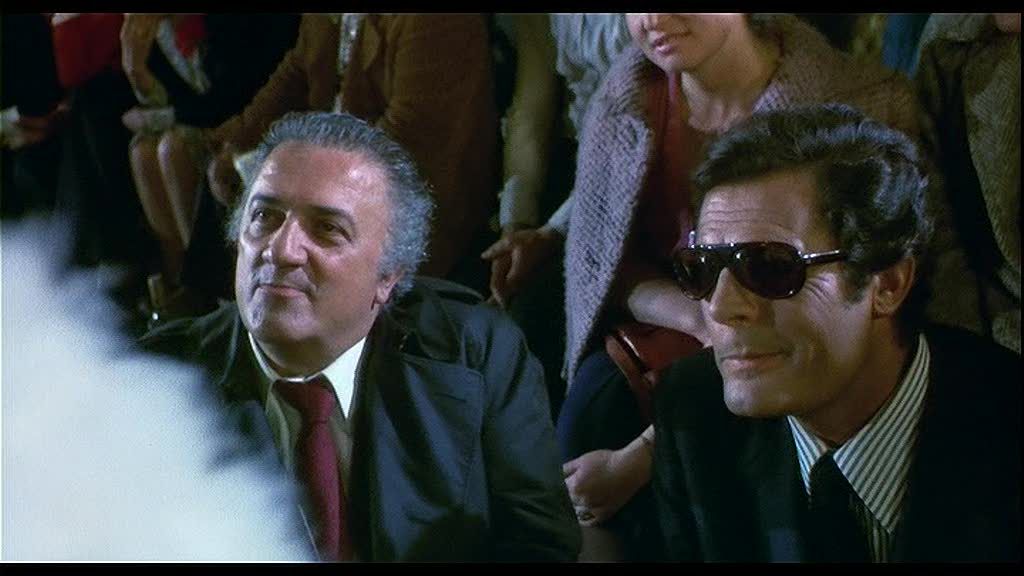
And the film itself is like one big Antonio too - teasing itself and the fashionable Italian cinema which preceded it. This film - which, according to a "citation needed" Wikipedia entry, is the most influential of the commedia all'italiana films - is indeed much more like the later, bizarre tragicomedies of Lina Wertmuller and Giancarlo Giannini. It feels like a conscious break from the dreary gloom of Italian movies from the 1950s and 1960s. There's a running joke throughout the film that only the self-important Nicola fully appreciates Ladri di biciclette (The Bicycle Thieves), a film now renowned as being the Italian neorealist film (after La dolce vita, maybe). Speaking of La dolce vita, there's also a wonderfully bizarre and self-referential sequence when Antonio and Luciana stumble upon the filming of the famous Trevi Fountain scene (complete with great cameos by Federico Fellini and Marcello Mastroianni). It's a film making fun of other films!


OMG, that looks familiar!


Federico Fellini and Marcello Mastroianni playing themselves.


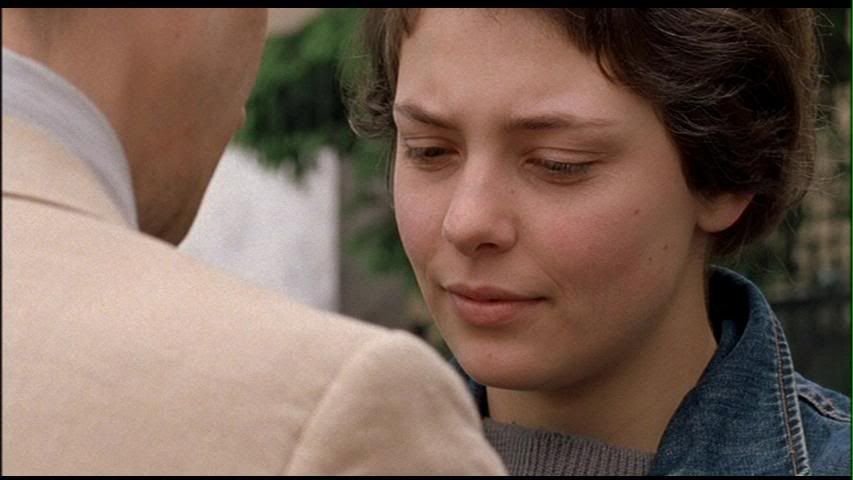
Apart from the fun, lively narrative, we also fell in love with the four principal characters - who were uniformly bumbling and ridiculous. Nino Manfredi was especially lovable as the kindhearted Antonio. There's a very sweet scene when Antonio bumps into Luciana many years after their initial break-up. He notices a little boy hovering around her and, becoming increasingly distracted by the boy and Luciana's hands twirling the boy's hat, he eventually stammers, "Wait, excuse me, is he... is he...?" She nods with a smile. Antonio extends his hand to the boy, "My name is Antonio. What's your name?"

"Luigi," the boy replies.

Antonio turns back to Luciana, voice wavering and eyes tearful, "You named him after my mother's uncle!"


Antonio and Luciana, the early days.


Oh yeah! Mike Bongiorno also makes a cameo, huzzah! We want to be the next Mike Bongiorno.


We can't really find any criticism for this film. We enjoyed every minute of it. This was right up our alley, and we were delighted and captivated. If you too like mildly weird and silly humanistic tragicomedies, this one's a real treat.

Monday, 9 March 2009

Watchmen (2009)


Watchmen, a confused and gruesome film, is disturbing in several ways. Disturbing because of the gratuitous carnage, which seems visibly intent on pushing the envelope of what is acceptable violence in a mainstream film. Disturbing because it is considered a mainstream film, yet it seems to be advancing a sort of twisted Nietzsche-inspired misanthropic nihilism found more commonly in counter culture's dark side. And disturbing because, while we couldn't make sense of it and we found it pretty immoral as a film (sorry, but the needless cannibalism of children was just ridiculous and awful), we still found ourselves admiring some scenes and wanting to give it a chance.

Some critics, like Manohla Dargis on her review of Oldboy or Roger Ebert on his review of Caligula, get all moralistic on films. And usually the PPCC dismissively snorts when we read such reviews: "Tut, tut," we think. "Cinema is an art form, not a spiritual practice!" It's all make-believe anyway, so what's the problem? But then there are some films which challenge this notion, because they advance troubling ideas (e.g. the beautifully-made Jab Jab Phool Khile which advances a Luddite, sexist message) or because they were made in troubling circumstances (e.g. the stuntman's death during the famed chariot race scene in Ben Hur, which, according to the urban legend, was kept in the final release). Watchmen is neither of these things - mostly because (1) we couldn't figure out what, exactly, it was trying to say, and (2) as far as we know, no one was hurt in the making of the film.

Purportedly about the lives and times of a group of (very) morally ambiguous superheroes during an alternative 1985 in New York City, it is a bloated murder mystery following two ex-superheroes, the aging, nerdy Nite Owl II (Patrick Wilson) and the cryptic Rorschach (Jackie Earle Haley), as they attempt to discover who killed their former colleague, The Comedian (Jeffrey Dean Morgan). The solution to the mystery - when we found out who killed him and why - advances the film's only straightforward philosophical message: that sometimes you need to kill millions in order to save billions. Uh... what? So much for the entire history of moral philosophy and welfare economics! A.O. Scott of the New York Times confirms our general feelings about that (as usual):
"This idea is sickening but also, finally, unpersuasive, because it is rooted in a view of human behavior that is fundamentally immature, self-pitying and sentimental."

Right on.

But surely, we thought, this film is about more than just that. After all, weaving into the main mystery narrative are a series of increasingly disturbing and odd back stories for each superhero, the most interesting of which are The Comedian himself and Dr. Manhattan (Billy Crudup). The most fascinating and weird aspects of these back stories are the ways in which they seem to be a criticism of American imperialism and the Nietzschean American "Superhero". Superheroics (lower case s) are a particularly American cultural art form - the idea of non-divine mortals with superpowers who engage in vigilante justice - and this film isn't the first time we've seen modern American culture criticized via its obsession with superheroics (see The Incredibles). Yet while The Incredibles was, well, a children's movie and so obviously a lot more positive and politically inoffensive (and also, ironically, a lot more philosophically coherent), Watchmen tackles the darkest side of American culture: its triumphalism, imperialism, militarism. Even its conspiracy theories! That is, there are incredibly troubling scenes - such as when an enormous Dr. Manhattan (this film's most obvious Superhero in the Nietzschean "beyond good and evil" sense and superhero in the "I have superpowers" sense) marches through the Vietnamese countryside, using his cosmic death ray to make the fleeing Vietcong soldiers explode into fireworks of gore (to Ride of the Valkyries, no less!); or when the assassination of JFK (similarly disgustingly detailed, in all its gore) pulls back to reveal The Comedian as the assassin. These scenes seemed to intimate at a direct criticism of the Pax Americana: showing that, in a world where military interventions run rampant (ahem, ahem), only a nuclear dystopia can result. (And this is a mainstream American film?!) There's a wonderfully surreal scene where The Comedian disperses a mob of rioting hippies by firing a bazooka at them and, at the shocked dismay of Nite Owl II, he declares himself "the American ideal!"


Superhero man says: "Now I am become death, the destroyer of worlds." (Meanwhile superhero girl had nothing to do. Sigh. As usual.)


It is this subplot that is the most interesting, aesthetically and philosophically, and we wish they had kept focus on the frightening figures of The Comedian and Dr. Manhattan. The mystery and its final, silly climax was just a waste of time. And our criticism of the violence extends to this as well: as disgusting and awful as it was to watch the scenes in Vietnam or the riots, it still drove home an important point (i.e. the brutality of the Pax Americana, and how it's hidden from the mainstream American public). The violence during the murder mystery - that is, scenes such as Rorschach's backstory or time in prison - was needless, its only clear aim being to show us how "hardcore" Rorschach was.

The most inspired scene - and a good example of "well-used" violence in film - was the transformation of Dr. Manhattan. With background music reminiscent of haunting Philip Glass and a dispassionate voice-over from Dr. Manhattan, we watch the stereotypical "scientist becomes inadvertent test subject of his own crazy theories" scene. Except since this time it's about building the atom bomb - that is, the Manhattan Project - it is very affecting to watch his violent transformation into a Superhero "beyond good and evil". After Dr. Manhattan is literally pulled apart by the nuclear energy, he gains a radically new perspective of reality - completely informed by quantum physics - where time is truly relative. This has troubling moral consequences, as Dr. Manhattan watches himself grow further and further away from humanity as he can no longer relate to human perceptions. (Hmm, a criticism of Oppenheimer?) As this happens, he begins to lose sight of morality. (For example, a follow-up scene where The Comedian kills a pregnant Vietnamese woman and Dr. Manhattan kills the witnesses who are about to attack them. When Dr. Manhattan confronts The Comedian, appalled at what has happened, the latter asks why he made the witnesses explode rather than their guns.)

Overall: too violent, too long, too unfocused and too grim. This could have been a great, troubling film, and instead it's just troubling.

Saturday, 7 March 2009

La meglio gioventù (2003)

"Are you happy?"
"Of course!"
"Then the time has come to be generous."
-La meglio gioventù

The epic six-hour Italian film La meglio gioventù (The Best of Youth) is a generous feast for the humanist. There's something Renaissance-esque in its grand, open story which celebrates Man. It's big: covering the lives of the Carati family over a period of several decades. It's complicated: the characters are complex and slippery. It's smart: providing a detailed, fascinating history of modern Italy, with clever commentary on the Left and Right, on regionalism, on industrialization and modernization. And yet - even being all these things - it's still accessible and touching. It feels personal. It feels like you've just eaten a very large, healthy meal. And because it succeeds so well, in so many clever little ways, it inspired us to think big. To think human experience big, life big, enlightenment big. Is it... gasp, an enlightened film?!


Now you can all say, "Mah, si!" ("Yeah, sure!") and wave your hands in your most stereotypically Italian way.


Whatever it is, it's hard to make a compelling film about so many things with so many people (and very hard to review it!), but director Marco Tullio Giordana succeeds - we should laud him enough for that. In terms of our review... well, we guarantee nothing. But we can try! The Boston Globe's review is insightful and concise - it says everything we want to say, especially regarding how it shows that people are more than the history they live in. And our hero, A.O. Scott of the New York Times, also makes some interesting points.

So what can we say? Well, we can say something new - and maybe conveniently advance the PPCC's Secret Buddhist Agenda at the same time - by asking the question again: is this an enlightened film? Suffering, and how we deal with it, are the central truths of Buddhism - which says that, in order to be free of suffering (that is, attain "Enlightenment"), we must practice compassion and non-attachment.

Let's take a look at the characters (who we adore). They're basically divided into two camps: those who can manage their suffering, and those who can't. The film's final message - that everything is beautiful (yes, yet another Italian film about that) - is presented with delicate intelligence. Nothing is sugarcoated. Which leads to the interesting, Buddhist-ish premise: with so much suffering in the world, how can it also be beautiful?

Each character responds in a different way:

1. Nicola (Luigi Lo Cascio), the younger brother. Much like Nanni Moretti's enlightened psychiatrist in The Son's Room, Nicola the psychiatrist is an even-tempered and deeply compassionate man - acting, for most of the film, as its moral core. There's an interesting exchange in the beginning, when a young Nicola sits one of his medical exams, and the professor gives him full marks partly "per simpatia". In Italian, "simpatia" can mean "likability", but it can also mean "sympathy" or "compassion". The professor elaborates: he means "simpatia" in the original Greek sense, the ability to "understand suffering".


Nicola (Luigi Lo Cascio), Perfect Man. He gets it, man. Sigh. We're in love.


2. Matteo (Alessio Boni), the older brother. A choice scene mentions that Matteo "suffers for everything" - and unlike his brother Nicola, his attempts to cope with the dark side of life are erratic, tempestuous and largely ineffective. He is moody and intense, moving through life impulsively and unable to connect with people.


The dark, brooding Matteo (Alessio Boni), who is a heartthrob in his own right too. And reminiscent of a certain Vijay (except without being just an "Angry Young Man' archetype).


3. Giulia (Sonia Bergamasco), Nicola's wife. Giulia is another interestingly "dark" character - and her reasons for choosing a path which leads her eventually to the terrorist Red Brigades (a radical leftwing group responsible for political assassinations and bombings in 1970s Italy) is, like Matteo, initially based on goodness. That is, upset and indignant at all the perceived socioeconomic injustices around her, Giulia just wants to make things right. But, just like Matteo, she chooses the wrong way to do that.


Giulia (Sonia Bergamasco), one of the most complex (and increasingly scary!) characters.


4. And finally Giorgia (Jasmine Trinca), the young mentally ill woman who is both a symbol and a catalyst of these various ways of dealing with suffering and finding that elusive happiness we all seek. Several reviews liken Giorgia to the film's conscience - an interesting idea, considering how all of these characters listen to their conscience, yet this doesn't always guarantee that good will be done or they'll be happy.


Giorgia (Jasmine Trinca), AKA this film's Jiminy Cricket!


"Well, gosh, PPCC!" you might be saying. "If good people who follow their conscience can still end up becoming angry and destructive, what are we to doooo?"

Well, PPCC readers, Siddhartha can probably advise us: be nice to people and don't worry so much about changing the world! Remember, think globally, act locally!

(End of today's moral lesson.)

The character who realizes this most is poor old Nicola, who is patient, humane and, well, nice to everyone. The final scene, when he is finally "liberated" from the pain of the past, is one of the most emotionally epic pay-offs we've seen in a film in... well, gosh, EVER. Let's just say, with the amount of tears shed, they should be naming a river after us sometime soon.


Bella Italia! Nicola and his mom (the wonderful Adriana Asti) on their way to Sicily. Meta: Actor Luigi Lo Cascio is (1) Sicilian and (2) gave up a degree in psychiatry to become an actor.


One of the things we found most touching in this film was its celebration of the next generation as a symbol of hope and forgiveness.


And the best thing about this film: that's just one part of the show! With six hours, you can do a lot more than just present a touching humanist portrait. And indeed this is like a more profound Forrest Gump-for-Italy, going through all the major political, economic and social trends in Italy since the 1960s. It also - wonderfully - is truly pan-Italian. Much like India, Italy is divided along clear regional lines in terms of its culture: a northern Italian, for example, is unlikely to understand the Sicilian dialect, and vice versa. La meglio gioventù makes a visible effort to give equal weight and affection to all of Italy's regions: from Turin to Rome to Sicily to Milan to Naples and on.

We can't recommend this film enough: as a window into the Italian heart and mind, and as a simply moving and soap opera-addictive story. Don't be daunted by the six hours - they won't seem like enough!

Sunday, 1 March 2009

Breakfast on Pluto (2005)


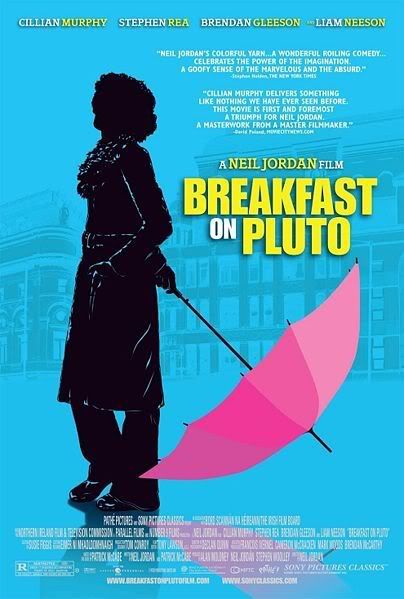
The best thing about Neil Jordan's whimsical Breakfast on Pluto is that it refuses to be a victim. For a story that could have been all about victimization - we follow the exploits of a poor, orphaned, transgender Irish kid during the worst of the 1970s Troubles - it steers entirely clear of self-pity. Because our hero/heroine, Patrick "Kitten" Braden (Cillian Murphy), is relentlessly upbeat. She doesn't seem to believe in holding grudges or letting the ignorance and oppression of her surroundings hold her down. As Kitten often exclaims in the face of terrifying circumstances, "Oh, all of a sudden, everybody's getting serious! Serious, serious, serious!"

The next best thing about Breakfast on Pluto is how funny it is. Once again, this isn't the barbed humor of the gallows. Rather, it's heart-warming, humanistic and humane. On the DVD extras, Irish actor Stephen Rea describes the mood as particularly "Irish" - that is, there's an air of irreverent, bizarre, quasi-postmodern quasi-magic(al) realism. Robins that speak in subtitles. Roses that rise out of tea cups. Chapter titles ("My tights! They're in ribbons!"). It can, depending on how traditional you like your narrative, be pretty alienating. But for the PPCC - lover of postmodern magic(al) realism and wackiness - our disbelief remained suspended and we gobbled it all up.

The story follows a loose, biographical structure around the various adventures of Patrick "Kitten" Braden (Cillian Murphy), who is abandoned on the doorstep of the local priest (Liam Neeson) in a nameless Irish village one day. As Kitten grows up, it becomes clear that "he" really identifies much more with "she" - and she revels in fashion shows and hilariously provocative jokes, much to the chagrin of the conservative adults around her. All Kitten knows about her parents are that (1) her father was the priest himself and (2) her mother was a beautiful Mitzi Gaynor lookalike who had long ago abandoned Ireland in favor of the "city that never sleeps", London. The wide-eyed, loving, desperately affectionate Kitten quickly flees her stifling village for London - along the way falling in love with a revolutionary glam rocker (Gavin Friday), befriending a belligerent womble (Brendan Gleeson) and some mystic Druid-inspired bikers, becoming the beloved of Bertie the magician (Stephen Rea, in a bizarre RP accent), saving her friend Charlie (Ruth Negga) but losing her friend Irwin (Laurence Kinlan), and all the while pursuing her mother, the "Phantom Lady".

The film shares several similarities with director Neil Jordan's other work. In particular, its themes of fluid sexuality and the Irish Troubles are very resonant of his most famous film, The Crying Game. Meanwhile, its surreal aesthetic is very much like The Butcher Boy, except this time, the mood is light and forgiving (rather than gruesome and grotesquely scathing).

Our thoughts: we liked this a lot. The aesthetic was right up our alley (and OMG, Kitten's fashion was FAAAABulous), the story was touching and engaging, and the performances were good. Cillian Murphy was very impressive as the optimistic yet occasionally vulnerable Kitten, and we just loved the young actor playing the preteen version, Conor McEvoy. Ruth Negga was charismatic and gorgeous as Kitten's longtime friend and Liam Neeson played his role with a touching air of weary tragedy (which juxtaposed nicely against his upbeat, cartoon-like behavior in one wacky fantasy sequence!). Brendan Gleeson and Stephen Rea are two of our favorite Irish actors, but we were disappointed in Stephen Rea - at least, what was with the exaggerated London accent? But that's our only tiny arbitrary criticism, and we can't really complain. This was great.

Fun, trippy, refreshing - like T.Rex, if T.Rex was a film and not a band. And we love T.Rex! (And so do Rishi Kapoor and Rakhee apparently!)