Thursday, 29 April 2010

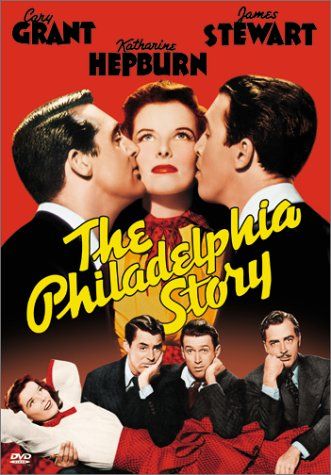
The Philadelphia Story (1940)


1940's The Philadelphia Story starts slowly, with some creaking of the joints, and it initially feels like it's going to be a heavy morality play about an older, purer notion of dignity, equated with privacy and modesty, leading us to write a review about how this generation has become crass with rank exhibitionism (this) and voyeurism (Simon Pegg's tweets). And maybe there'll be some commentary on class too. But then everything gets derailed into farce, seasoned heavily with rapier wits and rivers of champagne. And it's wonderful.

Young divorcée, Tracy Lord (Katherine Hepburn), is old Philadelphia money and kind of intimidatingly amazing (those mile-wide shoulder pads don't help) and she's getting married again - this time to up-by-his-bootstraps self-made man George (John Howard), who everyone agrees is a total bore. As the wedding day approaches, ex-husband C.K. Dexter Haven (Cary Grant) ("What kind of name is that?!" Jimmy Stewart will later yelp) hires two young reporters from a Philly gossip rag, Macaulay Connor (Jimmy Stewart) and Liz Imbrie (Ruth Hussey), to be reluctant paparazzi spies in the fancy Lord estate.


Mon Dieu! Le petite pox?


Now see here... and other expressions.


When the Lords find out they have two seedy media types in their midst, they initially decide to put on a good show indeed. Little sister Dinah (Virginia Weidler, great) comes pirouetting into their room in a tutu, speaking French and slamming away at the piano, before Tracy sends her away for possibly having "le small pox". The reporters are properly horrified, but then, it's time for the party, laaaaa -

And everyone gets wasted and goes crazy. And it all ends happily.


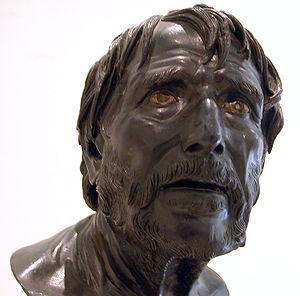
The bromance between these two was too cute. And keep your eyes peeled for Cary Grant's bust of Pseudo-Seneca! His cool-and-fineness factor just multiplied.


So this movie was, like, a big deal back in the day. We mean 1996, when we first saw it and were all about that foreign land called The Past. The dialogue is just exotic enough to intoxicate us present day types. These people hadn't even seen the end of World War II yet! (Leading to an incidentally bizarre moment when a drunk, gushing Jimmy Stewart likens the radiant Hepburn to "hearth-fires and holocausts!") They also hadn't done the whole political correctedness, second wave feminism, alcohol-for-breakfast-is-bad thing. They were wild! Such creatures.

But ultimately lovable, very much so. Especially for how articulate and inventive the screenplay was. People said things like, "You're so cool and fine and always so much your own. There's a kind of beautiful purity about you." Well, golly. What else? Go on!

The actors in this were all heavy-weights, and it shows in their easy glamour and tremendous confidence. Watch your retinas don't detach when they flash one of their sparkling, superstar smiles. And take the character of C.K. Dexter Haven, who is a self-described alcoholic and should be a tragic figure, as all he does for much of the film is mope, brood bitterly and accuse Tracy of cruelly ditching him. But played by Cary Grant, he has a sort of edgy dashing thing going. You're like, double whiskey in the morning? How sexy! Jimmy Stewart is great in this self-righteous "intellectual snob" role - it's almost a cheeky commentary on his sugary idealism with Frank Capra. He also, oddly, reminded us of Obama. Or vice versa? Cary Grant and Jimmy Stewart also have amazing chemistry, especially in the late-night scenes.


Gee!


Katherine Hepburn! Vah! Luminous and fierce, she was just great - much like Nargis in the Hindi remake of It Happened One Night, Chori Chori. It was entirely understandable that all three men were periodically reduced to whimpering piles of mush in her fiery presence. Gosh, she was like a real, live Galadriel. The other ladies were also very "cool and fine" - especially the cynical Ruth Hussey and the puckish Virginia Weidler.

So was the film talking about dignity, celebrity and class? Sort of, but it just concludes that the upper class aren't all evil, the media is a totally not-classy weapon, not Big Brother, and if you want to be a "first class human being", you need to learn to forgive a little human frailty... including that time your alcoholic ex-husband punched you in the face, he's, like, really sorry about that. Have any of you read F. Scott Fitzgerald's Tender is the Night? Because this movie sure looks like that book, with its dizzying fortunes and near-constant drunkenness. Except here, it's a fun, frothy fantasy where everyone is fundamentally good, only a little cheeky from time to time. Given that Tender Is the Night left us in a bad mood for days, and Philadelphia Story made us sigh with happy satisfaction, we'll take the latter.


Help us, readership, you're our only hope!

It's a Cary Grant movie. It's black and white. It's not really a comedy, more like a bittersweet war or post-war romance with strong Manchurian Candidate (minus the psycho) vibes. An exotic locale - a bar. South America? Panama? Cary Grant in a uniform and some lady. Cary Grant punches an obnoxious dude at the bar, and it hurts his hand. He and the lady make bittersweet, cynical and witty exchanges. What movie was it? (Because we have no idea.)

Wednesday, 28 April 2010

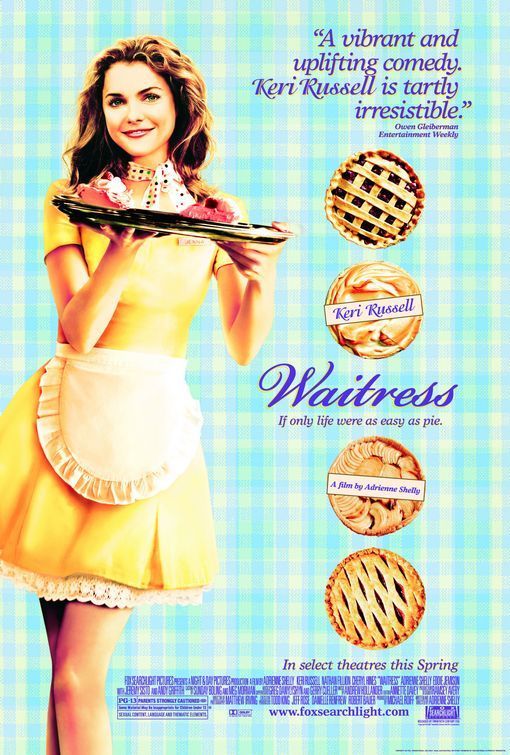
Waitress (2007)


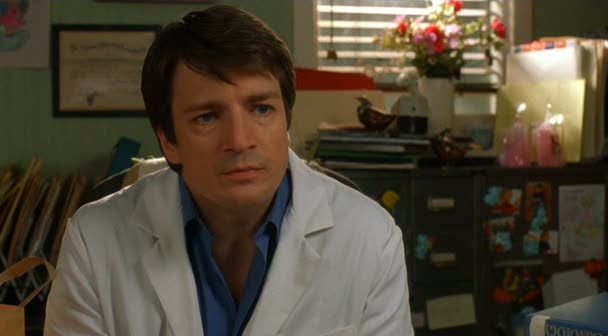
Halfway during the film Waitress, when the reluctantly pregnant heroine, Jenna (Keri Russell), experiences an existential reinvigoration thanks to her affair with the sexy new doctor in town, Dr. Pomatter (Nathan Fillion), a song by the band Cake plays.

For those who don't know Cake, it's a perfect choice. Not only does this film concern, well, pie-making, but it also exhibits that same sardonic delivery and dry wit, that same blunt deadpan style that Cake is so fond of. This is a film where one character says monotonously, "Maybe I'm not such a bad guy after all." And the other character replies, without inflection, "Maybe you're not such a bad guy after all." At first, the dialogue sounds awkward, the acting stilted: they're like robot people reciting things. And the semi-mythical Small Southern Town feels false. But gradually you warm to it, and the same sense of low-key, smirking humor seeps into you like... well, like when you listen to Cake.

Somewhere in a Small Southern Town, caught sometime in the 1950s, the local pie diner's favorite waitress, Jenna, discovers she's pregnant. This is probably the worst news she could get, as she was planning to flee her abusive, narcissistic husband, Earl (Jeremy Sisto), right after winning big at the upcoming Pie Contest. Jenna is unapologetically grumpy about this news, and even instructs her new Yankee gynecologist, Dr. Pomatter, not to make a big deal about. "Un-congratulations," he supplies.

During their regular visits, Jenna becomes increasingly bemused with Pomatter, who is bumbling, perpetually nervous and very adorable. He is also, unfortunately, very married, but this doesn't stop the two of them from unexpectedly assaulting each other in one of the film's best sequences. Carpe diem indeed!

Meanwhile, the other waitresses (Adrienne Shelly, who also wrote the screenplay, and Cheryl Hines) are having their own romantic tangles, Andy Griffith (like, the real Andy Griffith) drops by to play the curmudgeonly diner owner, Earl the Evil keeps getting worse and Jenna concocts a series of wonderfully appropriate new recipes. Our favorite being Pregnant Miserable Self Pitying Loser Pie: "Lumpy oatmeal with fruitcake mashed in. Flambé, of course."


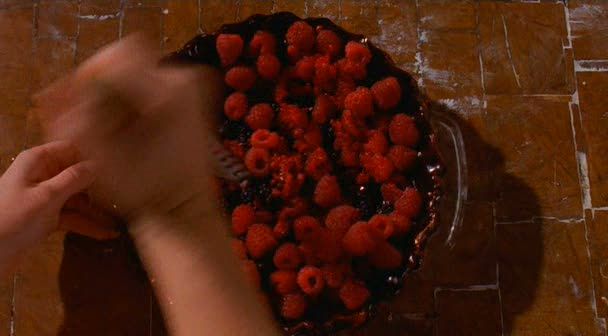
Pie.


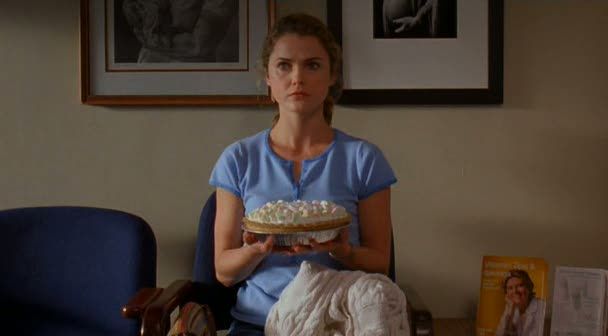
Giving the pie.


Beautiful boy.


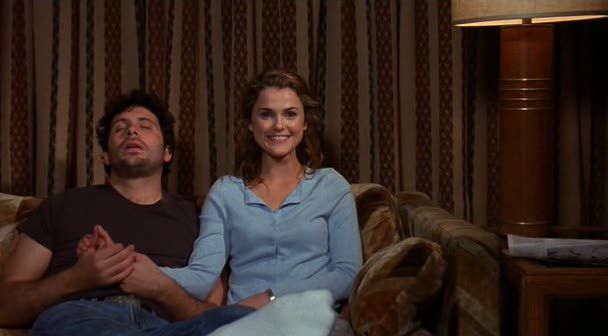
Happy forever!


This film is a fairy tale that flirts dangerously along the border between an an age before Betty Friedan and a sort of uber-ironic post-post-feminism. Thankfully (?) it's pretty light fare, and doesn't aspire to any great revelations about the second sex. Though there is a lot of freshness in that adultery isn't demonized, nor is being less-than-enthusiastic about the fruit of your loins. The cinematography is very geometrical, with angular profiles and neatly aligned pie-making supplies. (This is all lovingly messed up with the arrival of Pomatter and his very doctorly disorganization and adorably confused hair. But I digress.) Things never get as self-consciously ironic or aesthetically stylized as a Wes Anderson film, and we, at least, were grateful for that. As Andy Griffith describes the perfect pie in one scene, there's a bittersweet chocolate middle followed by a familiar strawberry sweet ending.
Keri Russell makes the perfect heroine here, with her baby doll features and icy cynicism. You sense a great mix between sass, sympathy and (despite the earlier pie) rarified self-pity. Cheryl Hines and Adrienne Shelly provide great foils as the stereotypical gang o' girlfriends from the diner. Jeremy Sisto does an admirable job in his thankless role, investing in Earl such childlike vulnerability that we felt a sort of retrograde sympathy for him when we weren't feeling nauseous. And Nathan Fillion! Ah, one in a million, Nathan Fillion. Rediscovering Nathan Fillion was like rediscovering Spiritualized - or maybe we just make that comparison because both happened today. But anyway, we forgot just how much we like Fillion (and Ladies and Gentlemen We Are Floating In Space) and how it's a gosh darn, twitchy, Han Solo-ey shame that Firefly got cancelled and Serenity was only two hours instead of, like, sixteen. Man! He was like the perfect pie, and just as cute.

Tuesday, 27 April 2010

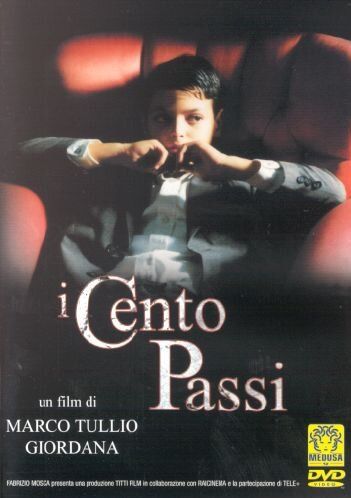
I cento passi (2000)


The electrifying I cento passi (The hundred steps) tells the true story of Giuseppe "Peppino" Impastato, a Sicilian anti-mafia activist who was killed at the age of 30. Told with passion and clear-eyed convinction, it is an important and beautiful film - hopefully it can act as an antidote to the Hollywood portrayals of Italian criminal organizations which still recklessly glamorize it. As Gomorrah emphasized: the Cosa Nostra, Camorra, 'Ndrangheta, et al., are leeches on the socio-economic growth of southern Italy, and they reign by terror and violence.
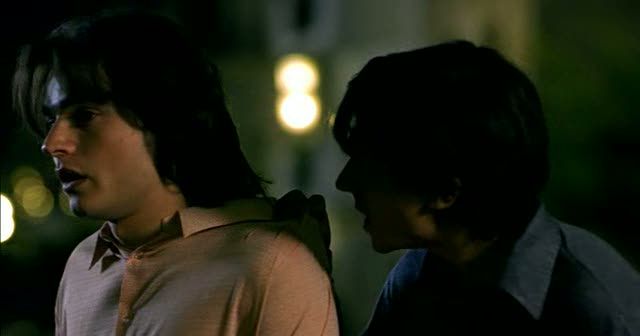
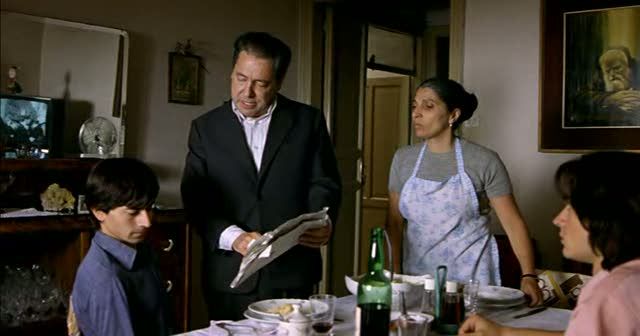
The story begins when Peppino (Lorenzo Randazzo) is a young kid, beloved by his family and their friends. At a sunny lunch following a cousin's wedding, Peppino recites a poem, impressing the adults, and is then whisked around the courtyard by his favorite uncle (Pippo Montalbano). Young Peppino has only a vague sense that his family is involved in the mafia, though he's not sure what this means. One day, while he and his uncle are out, they hear a left-wing activist, Andrea Tidona (Stefano Venuti), publicly denouncing the mafia. Shortly thereafter, Peppino's uncle is murdered by - as Tidona explains - "those who want to take his place". Peppino, confused and deeply disturbed, is taken under Tidona's tutelage and begins his re-education.


Brothers Giovanni (Paolo Briguglia) and Peppino (Luigi Lo Cascio) in the famous scene which gives the film its title.


The personal becomes political and back again.


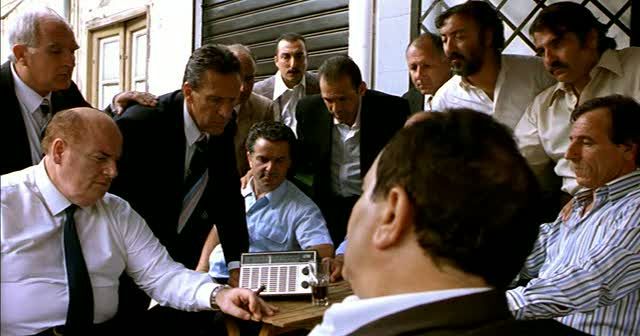
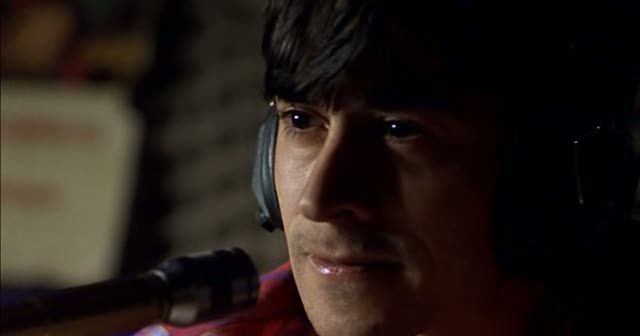
We fast forward fifteen years, and Peppino (Luigi Lo Cascio) is now a young political activist in his small town's Communist Party branch. More and more, he sets his sights on the local mafia leaders, publishing manifestos and organizing demonstrations - even as the older Tidona warns him against stirring the hornet's nest (which Peppino ends up comically calling "Mafiopolis"). The film does a great job in capturing the perfect storm which propels Peppino into his now-legendary position as icon: youthful rebellion, especially against his father (a low-level mafia man), is fueled by 1960s leftist idealism (student protests everywhere!) and channelled into that most righteous of Sicilian political causes: anti-mafia work. Peppino is like any other angry young man, and it's the tragedy (or glory?) of his circumstances (as well as his wild courage) which lead him to eventual immortality. Using a local ham radio station, he gains notoriety and becomes a hero for the small town Sicilian fighting against the Goliath.

Meanwhile, he experiences various pressures - most notably from his father, Luigi (Luigi Maria Burruano), who becomes desperate, even violent, in his attempts to shut Peppino up. Once again, we have that feeling of seeing the personal through a prism of the political: Luigi is much like any other father who feels himself rebelled against, shut out and alienated by his son. His despair is so painful and so authentically private: no one, especially Peppino himself, can see quite how much his father suffers. There's a telling scene early in the film when Peppino is imprisoned with other demonstrators and is there heckled for being a wimpy "son of the mafia" - just in that moment, Luigi comes barrelling in with the policeman to get Peppino released. The son's humiliation before his peers, and his resentment towards his father (who was helping him!), is terribly palpable. This comes into play towards the end again when, following Luigi's death, Peppino is warned that the only thing keeping him from the mafia's hit list was his father. It's a universal tragedy - filial resentment and rebellion, parental sacrifice and self-pity - played out in the most volatile of settings.


Peppino at Radio Aut.


In town.


This schism between the older and younger generations, between the mafia and the anti-mafia, is interestingly textured with the visual of flying. Director Marco Tullio Giordana (who went on to make one of our favorite films, La meglio gioventù) peppers the film with symbols of flight: from the "national anthem of Mafiopolis" and Peppino's childhood favorite (Volaaaare, whoa whoa! Cantaaaaare, whoa oh oh oh!), to a number of scenes where characters look longingly at the nearby airport. Everyone, it seems, wants to escape things - poverty, Gaetano Badalamenti (Tony Sperandeo) and his goons, this "provincialism" (as one northern Italian hippie says) - but everyone is grounded, strangled even, by their circumstances.

Luigi Lo Cascio came crashing onto the Italian movie scene with this role, which he got straight out of Silvio d'Amico Accademia Nazionale d'Arte Drammatica and ended up winning the Donatello for. His wiry energy feels like a coiled spring - every so often, he explodes, and there are moments when you think of him as an otherworldly archetype for Angry Youth. Luigi Maria Burruano and Lucia Sardo are beautiful as Peppino's long-suffering parents - how they deal with the pressure is very different, and equally heart-breaking. Familiar faces - Stefano Venuti, Claudio Gioè, Ninni Bruschetta - were great to see, though their parts were relatively small, and Paolo Briguglia, as Peppino's younger brother, Giovanni, projected great sympathy.

It's interesting to compare this film, which is very serious and earnest, to anti-mafia films like the Neopolitan Mi Manda Picone, which makes its attack using satire and surrealism.


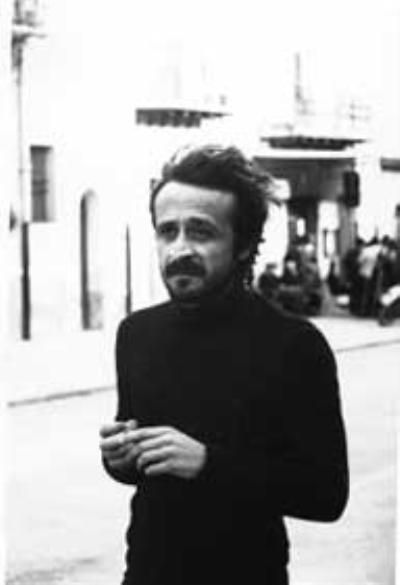
The real Peppino Impastato.


The real life ending: after 24 years, in 2002, the Italian government convincted Gaetano Badalamenti to life imprisonment for the murder of Peppino Impastato.

Monday, 26 April 2010

Moon (2009)


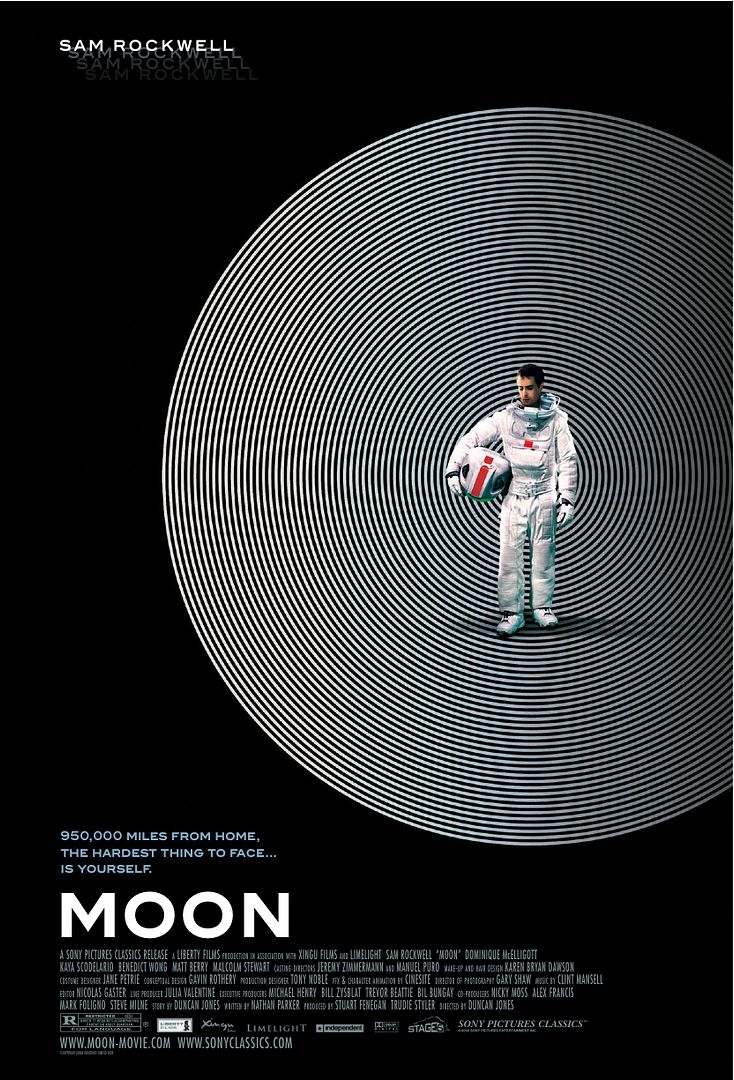
Moon, a pensive and spare sci-fi film, may not have much cross genre appeal - it's too slow and opaque for that - but, for those who enjoyed Solaris (er, the book), 2001: A Space Odyssey (uh, the movie) and other thoughtful sci-fi classics, this will be a treat indeed.

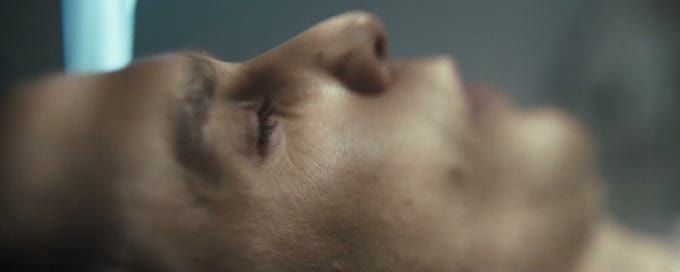
Unfortunately, much of the plot is best kept secret, as there are great narrative moments which hinge entirely on the revelations encountered by Moon's solitary protagonist, Sam Bell (Sam Rockwell). Sam, bedraggled, lonely and infinitely bored, is just nearing the last two weeks of his three-year contract on the moon, where he manages an energy harvesting base station. It is the near future, and Lunar Industries has solved Earth's energy crisis with a new source of clean fuel: moon rock... or something. The details aren't important, as it's not the technology of Moon which is its point, it's its heroic quest for Sam (if you can call it that). After experiencing some hallucinations and mysterious blips in his days (pretty par for the course when it comes to lonely astronauts on film), Sam takes one of the cruisers out to check on a broken moon rock harvester... or whatever. On his way, he gets distracted by something and hits the harvester. He wakes up later, back in the lunar station's infirmary, and there begins his tumble down the rabbit hole.


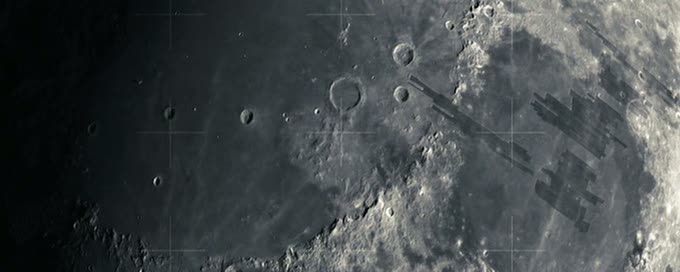
Some beautiful, quiet spacescapes.


How did they change the focal depth from right to left? HOW?


A film as ponderous and minimalist as this made us worried that it would go for a weird, ambiguous ending - thankfully, Moon does actually, really, truly end, and it's a pretty satisfying conclusion to a slow, methodical build-up. For a movie about the blurring of reality and identity, with a protagonist leaving smudges and stains on his fancy lunar station, everything finishes quite tidily.

Sam Rockwell carries the film with ease - ranging from the vitality of Sam at his highs to the wretched wasting away of Sam at his lows. Kevin Spacey provides the voice of Gerty, Sam's station computer, and - while we were distracted by the fact that (1) Gerty was "I can't let you leave, Sam!"-ing under HAL's lengthy shadow, and (2) Kevin Spacey lives in London now, right? is this why he's in this British film? just wondering - he is fine. There is no other character of importance. Um, sort of.


Farming the moon.


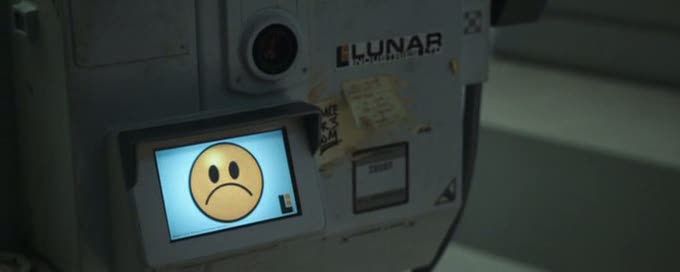
Sad robot.


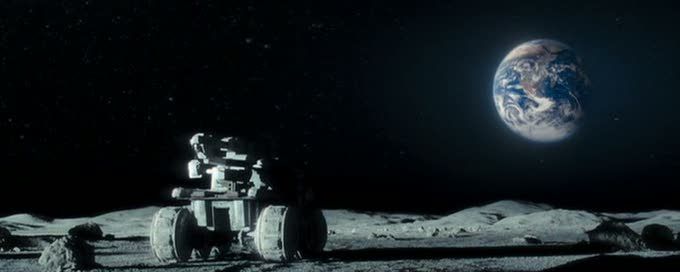
Looking home.


It's nice to see genuine sci-fi now and again, since the genre seems to have been kidnapped by comic book fanbeings and big explosions ever since George Lucas decided to revive Star Wars (and then murder it repeatedly). Everything's gone a bit pulpy and popcorn-brained, and we can't think of a single sci-fi film from the last 10 years that was confident enough to be (1) slow, (2) filmed on a low budget, and (3) not using any guns or lasers or aliens or killer robots. The only film that sort of approached serious sci-fi high art recently was Sunshine, but then it too was derailed into a sort of half-baked Event Horizon sequel (and, much as we love Sam Neill, the world really only needs one Event Horizon). Moon then is refreshing in its adult simplicity.

Sunday, 25 April 2010

The Four Feathers (2004)


Foreshadowing happens early in Shekhar Kapur's bomb, The Four Feathers. Over the wailing "Oriental" vocals, reminiscent of India, Arabia or Persia, or even just the dystopias of near-future Los Angeles, anyway, reminiscent of the Other, we watch a good ol' boy rugby match at a military training college in late 19th century England. With each tackle and toss, the characters (and their destinies) are swiftly established: the cautious Harry Feversham (Heath Ledger), his reliable and loyal BFF, Jack (Wes Bentley, spectacularly beautiful), the child-like Castleton (Kris Marshall), and his protector, Trench (MICHAEL SHEEN!), and the guy who never listens to his mates to just pass the bloody ball, Willoughby (Rupert Penry-Jones). This juxtaposition of Eastern music set to the most stiff-upper-lip of British rituals, at the edge of Western imperialism's height, is indeed a nice moment. You can sense the blurring of boundaries, and how increasingly irrelevant Kipling's pronouncement becomes as colonies rebel and twains do, sometimes painfully, meet. It's an interesting comment on how much of British identity during the colonial period was defined elsewhere, away from the actual island.

But for a film with such a broad, epic palette, the story is much less concerned with the geopolitics of Orientalism. It barely touches these themes in any meaningful way (such a shame! Mr. Kapur, why!?), but instead it remains insular, telling its narrow story dutifully and telling it with very pretty aesthetics indeed. Mr. Kapur films some of those soul-trembling vistas with the same love and awe that dominated David Lean's "of Arabia".


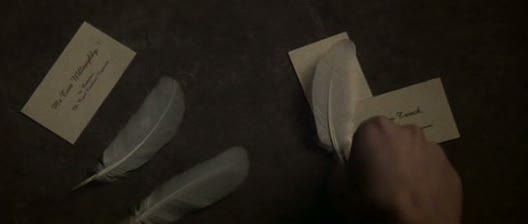
The titular feathers.


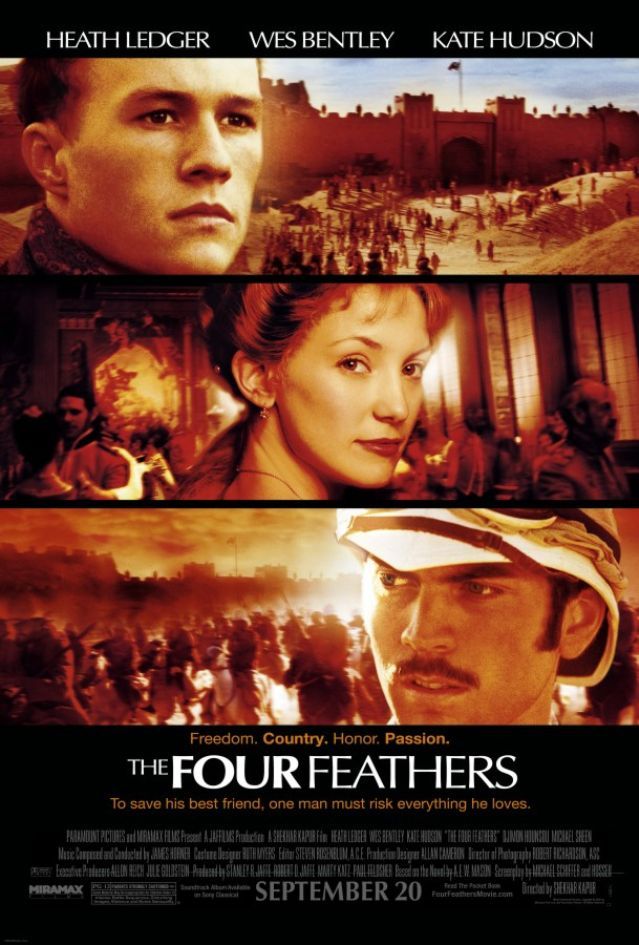
The reason we watched this movie.


It's no Mr. India, but it'll do.


The story, based on a colonial-era novel by A.E.W. Mason, explores the rocky road to redemption one scion of British imperialism must endure after he gets cold feet before his first orders to war. When Harry Feversham, one of the bright young stars in officer training, is given orders to ship from his cozy British Elysium to the harsh bloodletting in the Sudan (to replace, his superiors tell him, a British regiment which was slaughtered "to the man"), he waffles for a day or two and then resigns. No, thank you, old chap. This earns him the shock and scorn of his once-admiring loved ones. He receives four feathers, symbolizing cowardice, his fiancee breaks off the engagement and his old military father disowns him. After waffling a bit more, Harry decides it's worse to live like a social zombie and so he packs up his things and heads to Sudan anyway to see if he can earn back his manly pride.

In the meanwhile, his army buddies are having a helluva time beating off the repeated guerilla attacks of a local rebel leader, Muhammad Ahmad, the self-proclaimed Mahdi. In a beautifully filmed sequence, the British forces are ambushed - just as Harry comes barelling in to warn them. He spends the rest of the film collecting his friends and shipping them home - one has been blinded, one killed, another imprisoned. Eventually, his dedication, courage and strength earn everyone's admiration again. At one point, his friend, Abou (Djimon Hounsou), laughs at him for waaay overcompensating. After Harry confesses that he is a coward, Abou starts to laugh: "When I found you, you were half-dead in the desert! Traveling alone!"

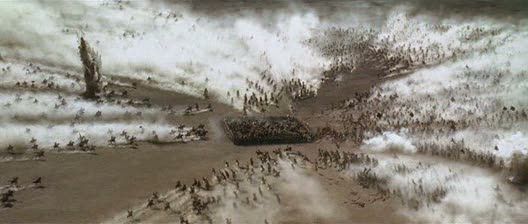
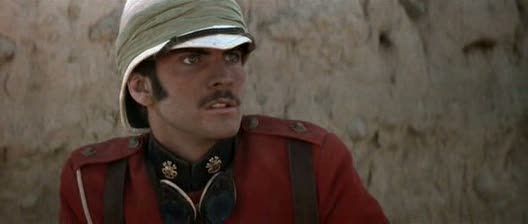
There are some clever visual parallels which run throughout the film. When Harry and his fiancee, Ethne (Kate Hudson, so cute), announce their engagement, the British soldiers form a square around them, boxing in their celebratory dance. Later, this same square is used - to disastrous effect - as a military strategy in Sudan. The destruction of the square signals the end of our fancy British character's colonial confidence. ("You British walk too proudly upon the Earth," Abou chides Harry in one scene.)


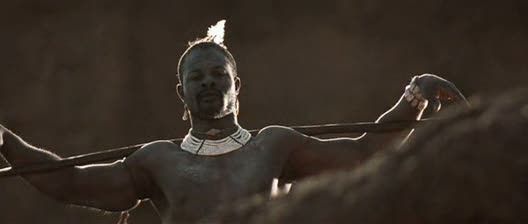
Djimon Hounsou, god of the bicep and pectorals.


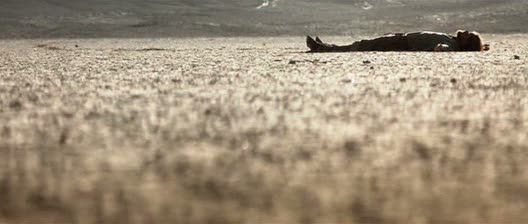
Desert curvature. Not a right angle in sight!


We could probably wax theoretical about how squares and sharp edges - Harry and his buddies are all crisp uniforms and clacking heels, and the most disastrous strategist turns out to be the one who was fussiest about keeping every hair in place - are placed in contrast to the rolling, softening dunes of the desert and the curve of Djimon Hounsou's biceps (which are glorious). No right angles here, old chaps! Similarly, Harry and Trench, in the lengthy sequence which accompanies their escape from prison, undergo radical physical changes, the sharp edges of their haircuts and jawlines are replaced by unruly beards and haphazard curls. This reminded us of a brilliant bit in Michael Ondaatje's The English Patient, when the narrator marvels at the changes undergone by the Canadian thief, Caravaggio, during his time in wartorn Italy: the exact description is that he's been "softened".
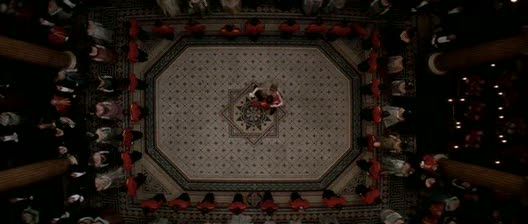
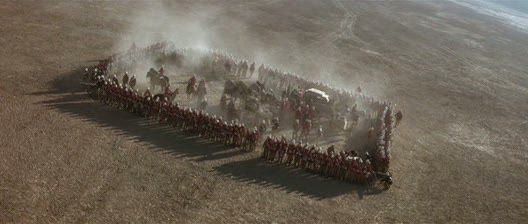
British box of Britishness, part 1: the social.


Part 2, the military strategy.


Part 3, the very bad idea.


Djimon Hounsou seems perpetually stuck in the stereotypical and limited role of the noble savage. As usual, he is dignified and physically magnificent, and our (white) heroes rely on his sympathy and aid to get them through this Foreign Adventure. Okay. Sure. Fine. When will he stop being the Other? Mr. Hounsou, please fight against this type-casting! You can be Anakin -Skywalker in our Star Wars-as-neo-dystopia remake!

Heath Ledger's performance is charming and authentic, his inherent likability making even the earlier scenes, when Harry chickens out, entirely sympathetic. Wes Bentley, who disappeared from films after his smash debut in American Beauty and has now reemerged after rehab from drug addiction is almost mind-blowingly beautiful. His role is likewise built to maintain an aura of modest heroism. That said, he could have invested an interesting character with a lot more depth, but he keeps things just skin-deep. We have a soft spot for Kate Hudson, since we love Goldie Hawn, but she has absolutely nothing to do - this is a very male-only film.


Wes Bentley, looking fabulously pretty.


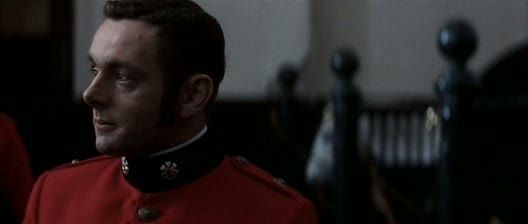
Michael Sheen, looking rough as hell.


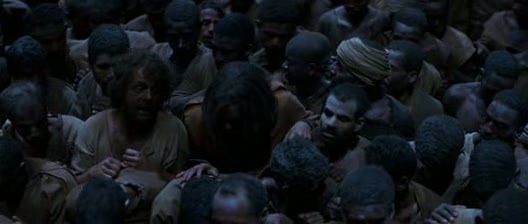
We saw this in theatres back in 2002, and remembered it only for being vaguely insubstantial and unsatisfying. Now, with the sharpening of our movie feelings thanks to this blog (yay PPCC!), we can identify that airiness as coming from a lack of follow-through: Kapur had such an opportunity to inject this movie with passion - about politics, about colonialism, about machismo or about forgiveness - but he never really goes for it. Anyway, the reason we came back to it now was because of our Michael Sheen binge, and his role, as the clownish officer Trench, who later becomes a prisoner of war, is (we were surprised to realize!) one of the only things which we did remember well from 2002. Harry's discovery of Trench in the thronging mob of Omdurman prison is a moment of almost magical elation - and Trench's recognition of Harry is even better.

Indeed, while the film frittered away a nice opportunity to say something more, it did do just service to a neat story - there are some brilliant, evocative moments centered around Harry's deception and recognition, and some moments were nice enough to yoke a tear or two. All in all, the narrative drive was fabulous, and we reckon we could use this story as an example on how to build a good plot structure when we write the book that will make us millions: Movies: A Guide to Life and Watching Movies.

Run Fatboy Run (2007)


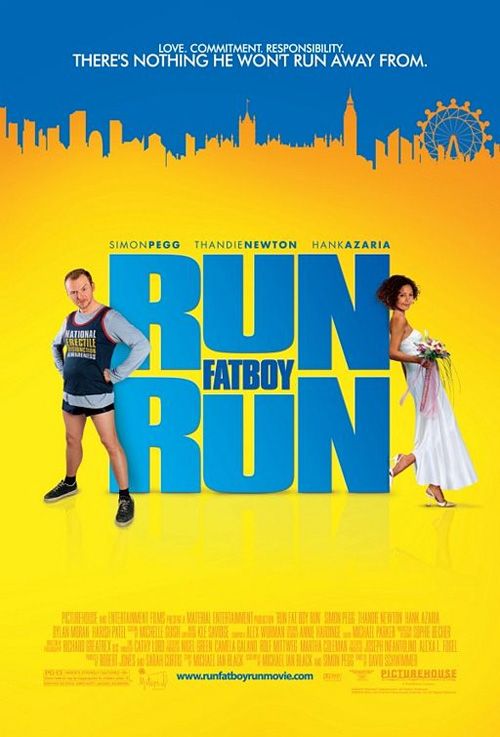
The unfortunately titled Run Fatboy Run comes from that risky, murky water where comedians decide they want to be sweeties. Sometimes, this can be golden: Simon Pegg, who stars as the slobbering, unreconstructed-on-the-way-to-construction hero, Dennis, is particularly talented at juggling the flatulent with the heartwarming. However, it's a dangerous idea, as comedians can sometimes get derailed on their way to sensitive, saccharine warmth, and end up in the horribly, gouge-your-eyes-out maudlin. For example, Robin Williams in a number of films (though What Dreams May Come may be the most notorious), or Adam Sandler's nauseating self-pity in the gratingly unfunny Funny People.

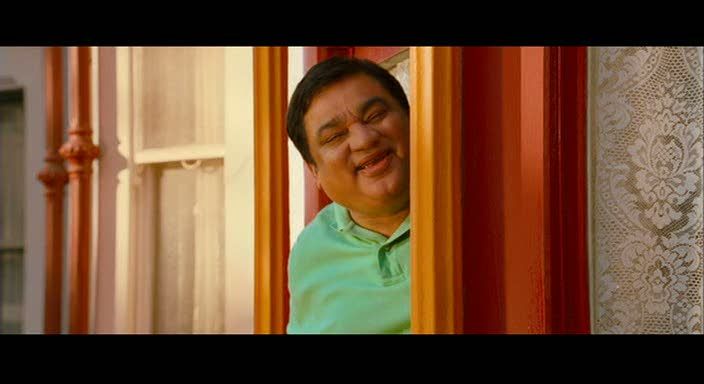
Adam Sandler's actually a good match for Simon Pegg, as they both specialize in frat boy (or, well, the British equivalent) humo(u)r that is underscored by a genuine authenticity - they are both adept at playing man-children. Run Fatboy Run introduces us to Dennis (Simon Pegg) on the day of his wedding: his gorgeous, pregnant bride-to-be, Libby (Thandie Newton), chats with her amiable cousin, Gordon (Dylan Moran), and Dennis? He's the one sprinting down the street, away from the garden party. Fast forward five years and fifteen kilos, and Dennis, now a dumpy security guard, is now sprinting after a (incidentally hilarious!) transvestite shoplifter. He lives in a basement flat, where he is periodically heckled by his (incidentally hilarious) landlord, Mr. Goshdashtidar (Harish Patel, from My Son the Fanatic), for perpetually forgetting his keys.


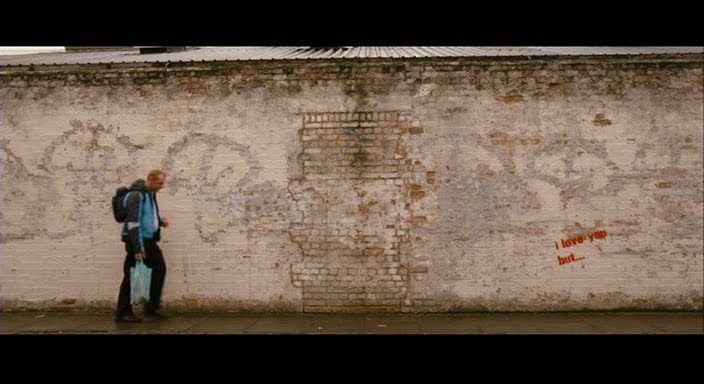
We love you, Simon Pegg, but...


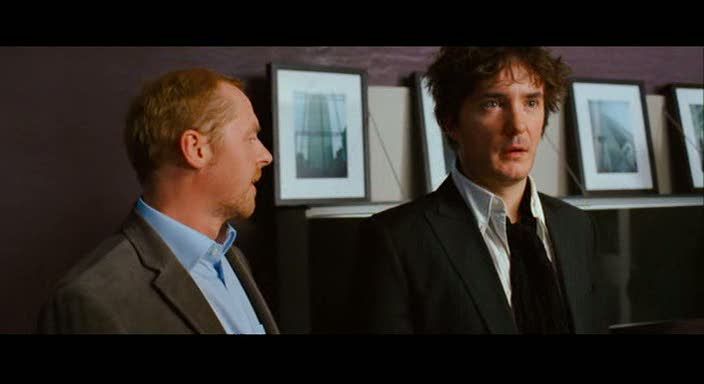
Dylan Moran was very comically spacey as well.


When Dennis visits Libby to pick up their son, Jake (Matthew Fenton), he is introduced to Libby's new boyfriend: Whit (Hank Azaria). Whit is everything Dennis is not: a successful hedge fund manager, he showers Libby and Jake with expensive gadgets and affection, is breezily self-confident in a very American way, and runs charity marathons for fun. Dennis, privately, seethes. He decides to remedy his broken heart and dead-end life by challenging Whit to his own marathon. Everyone does a lot of scoffing and snorting with laughter - what, Dennis? the fat guy? a marathon? - and Dennis, meanwhile, with his gambling buddy, Gordon, and Mr. Goshdashtidar, gets down to training. The rest of the film follows the usual course.

Run Fatboy Run generally avoids some of the disasterous pitfalls which threaten a movie like this, mostly because, as we said above, Simon Pegg has a good handle on balancing sympathy with humor, and we have a very high tolerance for seeing him be sad before we consider it over-the-top and indulgent. We think this is generally because Pegg sparingly uses that most deadliest of comic weapons - irony - and hence never distances himself from the character. Yes, Dennis is a clumsy, Homer Simpson-esque buffoon, but he's also, always, human. Everything is played straight. Example: when Dennis, in usual Disney-style manipulation, momentarily loses his son, there is real horror and panic. It's a credit to Pegg, who specializes in airy comedy that's been deep fried in pop culture, that he is actually a very authentic actor indeed.


Then he got a niiiice foot massage.


Other cast members, such as Dylan Moran and Harish Patel, have a good ol' time and offer charming support to the central conceit. For the most part, the film succeeds because it feels more like a Nick Hornby movie (we were specifically reminded of About A Boy), though things spiral slightly out of control with the climax, which becomes so sticky with sugar that we had to go wash our eyeballs. All in all, it's not a memorable film and Pegg's characteristic surrealism is missing, but it's a modest and inoffensive heart-shaped fluff piece. We can handle that.

FANCY NEW THING!

We've finally figured out how to get those fancy Amazon links on our posts now. FINALLY. (insert heavenly music of capitalist consumption)

Saturday, 24 April 2010

Ghost Busters (1984)


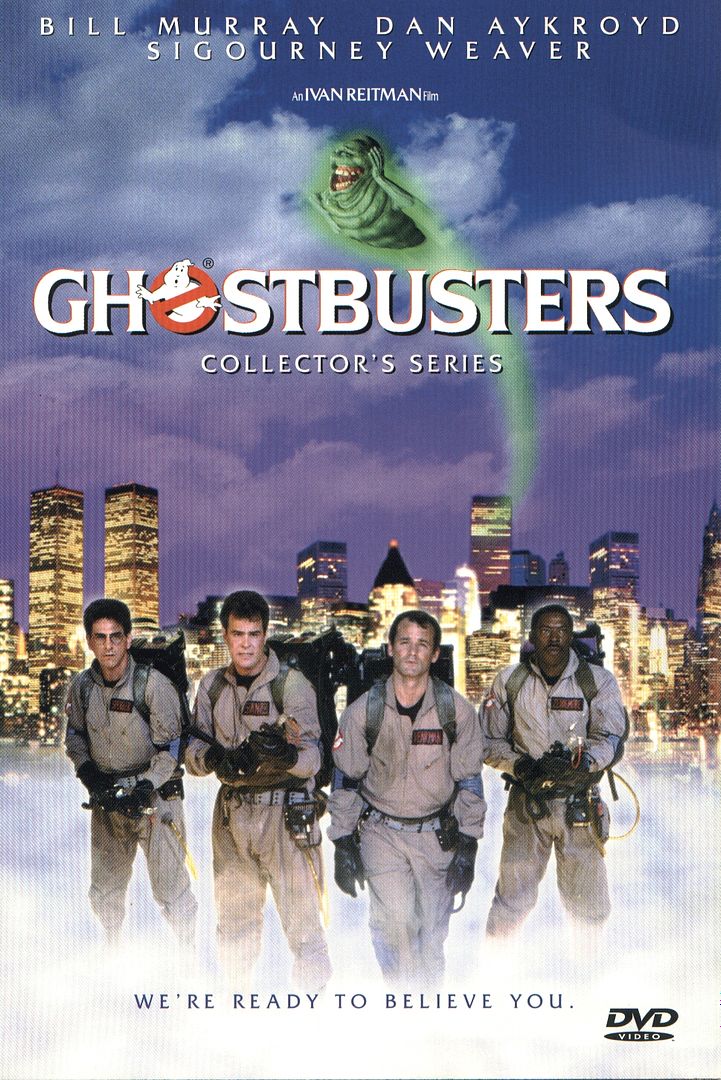
Ghostbusters, which may as well be titled Whitebusters, is, apart from its white-washing which we'll discuss below, a near-perfect film. Deeply ingrained into our 1980s childhood, some lines - such as, There is no PPCC, there is only Zool! - are eminently quotable and appropriate for all occasions. Or, even better, Choose the form of the destructor!

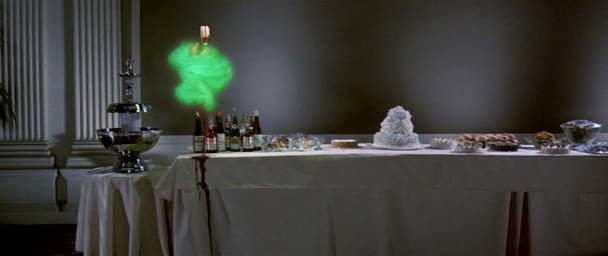
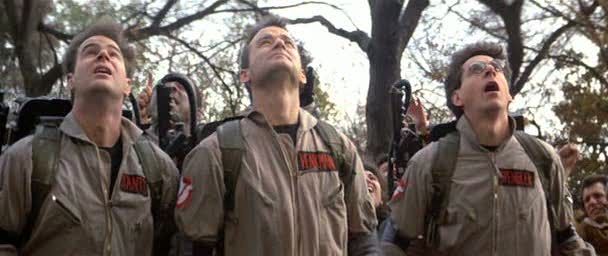
Set in the same bouncy, cynical, synthesizer-soaked 1980s urban landscape that the Enterprise crew found itself stumbling into once, a trio of paranormal aficionados are kicked out of Columbia University and their research grant terminated. While good ol' boy Ray (Dan Aykroyd) and nerdy Egon (Harold Ramis) are genuine in their interest in the paranormal, charlatan Pete Venckman (Bill Murray) is more interested in getting the girls and schmoozing with the crowds. His skepticism quickly evaporates, however, when the trio are called in by the New York Public Library to rid it of a spectral Victorian lady hovering through the stacks (and really messing up the Dewey index cards!).


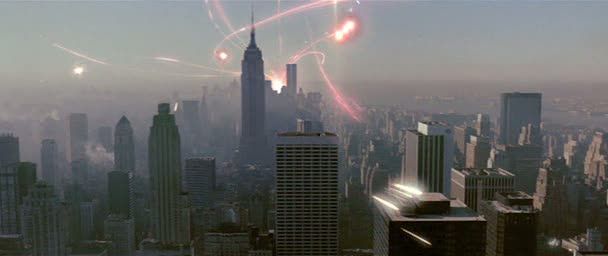
This crazy town.


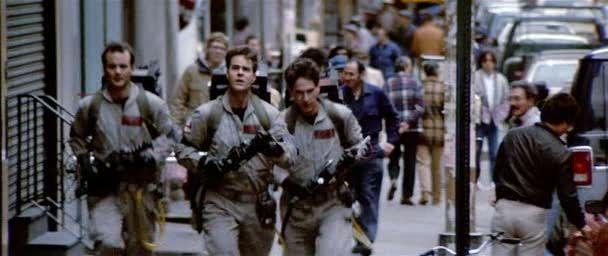
The three!


Without income, but with a renewed belief in the otherworldly apparitions which haunt Manhattan, they put a new mortgage on Ray's childhood home and decide to go in business as the Ghost Busters, paranormal exterminators. Business is slow at first, but when a posh apartment lady, Dana (Sigourney Weaver), starts getting harassed by her refrigerator - which, incidentally, opens onto another dimensions where ancient Sumerian demi-gods chant, ZOOOL!, into the steamy flames - business positively booms! And if demonic possession, floating grubby green things and 8000-year-old pissed off deities wasn't enough, the Ghostbusters eventually get harassed by the Environmental Protection Agency, as represented by the snide skeptic, Walter Peck (William Atherton).


One of the funniest ghosts: we love when he starts idly making loops around the chandelier and going, "Vroooom. Vroooom."


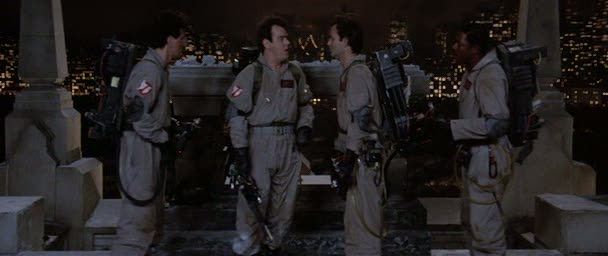
The reason we noticed this film's uncomfortable white-washing/colorblind racism/callitwhatyouwill, is because, when business really gets going, the Busters hire an additional member of the team: Jesus-loving, down-to-Earth guy, Winston (Ernie Hudson). And then we spend the rest of the move watching him get ignored - sometimes even, literally pushed aside! There were shots where the original three would have their conferences about what to do about Gozer the Gozerian, and Winston would just kinda be off to the side - we think Bill Murray was probably even blocking his line of sight! Then little, insidious things, like when the Busters have to cross their beams, and they each get a close-up shot of their face as they fire up - except, of course, for Winston, who is just shown in the end as being in the crossed beam group. So much for individuating him - out of a group of four, he becomes the only member who is truly amorphous, without distinction. It's really lame.


WTF? Why is Ernie Hudson stuffed behind Bill Murray's power pack?


WTF?


We don't think it's real racism, but we do think it's colorblind prejudices which are playing out in the details. And it brings an otherwise perfect, awesome movie down a notch. Blah.

Friday, 23 April 2010

Underworld: Rise of the Lycans (2009)


The planets have aligned in such a way these days that the PPCC finds itself watching movie after movie featuring classical horror themes. Zombies, ghosts (and their busters), and now, vampires and werewolves seem to be our lot, and we're not entirely averse, maybe because we never really paid much attention to these strange creatures and their comical ways.

Underworld: Rise of the Lycans fell in our To Watch list because it features Michael Sheen, who impressed us so much with his performance in The Damned United that we became ravenous for more. We were furthermore encouraged because Bill Nighy, the lovely and wonderful, also featured. Unfortunately, it wasn't really worth it. We were so bored by the end of this mindless, endless, 90-minute junk food that we felt not unlike vampire Viktor (Bill Nighy) when he meets sunlight: fizzling away into a blackened crust of our former selves.

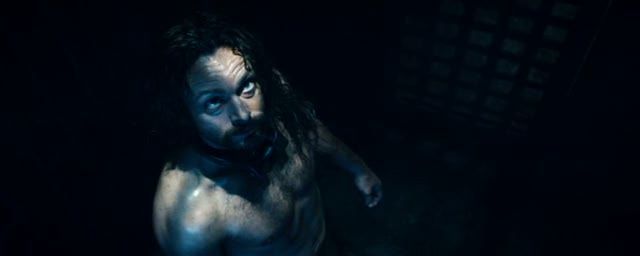
Set in an unplaceable Gothic wonderland filmed in various shades of blue, Underworld: Rise of the Lycans tells the story of the nobly laboring Lycans (werewolves) and their evil vampire overlords. While the bastardly vampires, led by Viktor, are all icy irises and hissing lisps, the werewolves toil with oily hair and oily muscles. And everyone is in black leather. The Lycan Spartacus, Lucian (Michael Sheen), is the only character afforded any warm colors as his muscly torso glistens in various firelights while he plots the slave uprising.


Our hero! Hairy, the Nobly Naked.


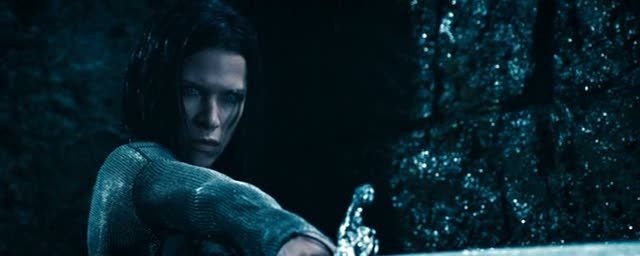
Our distressed damsel! Lady Poutsalot.


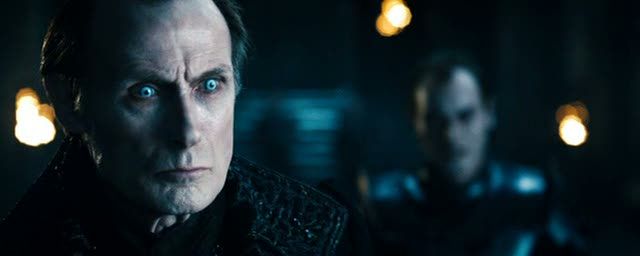
Our dastardly villain! Bill Nighy, the Vampire Guy.


Yes, it's all vaguely eroticized in an S&M way, and indeed the studly Lucian is carrying on an illicit affair with Viktor's daughter, the sword-wielding, perma-pouting Sonja (Rhona Mitra). Their love, which already kinda disgusted us to begin with, is furthermore grossified by the vampire elite comparing it to the unholy love child (no pun intended) of bestiality and incest. (There's some hazy stuff about a shared heritage between the two groups, except that the werewolf side of the family, well, look like dogs.)

After interminable fight scenes, numerous escapes and re-captures, and Lucian getting (sexily?) whipped or Lucian (sexily?) transforming back into human form only to find all his clothes are missing (!), this film finally grinds to a halt. We couldn't have been happier.

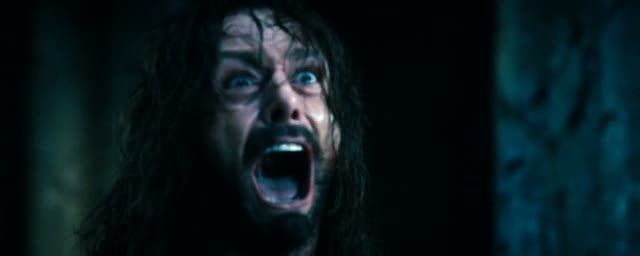
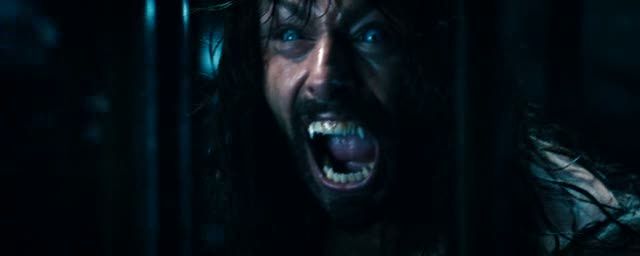
Performance-wise, Michael Sheen flexes his muscles - especially the ones in his neck - and delivers some vague sparks of life. He submits a few meltdowns, which the PPCC always accepts with pleasure, but otherwise he is saddled with a cardboard hero role in a cardboard movie. Rhona Mitra likewise pouts and sulks and sometimes, refreshingly, lops people's heads off, but even this token feminism doesn't redeem an otherwise typical damsel-in-distress. Around her, characters start saying things like "My lady!" and "My love!", and she even ends up under house arrest. Only her hairy, snarling knight can save her! Bill Nighy, who is making a (great!) career out of playing slightly off-center, slightly sniffily posh old lords is his usual demented self. We amused ourselves with imagining his performance as Viktor to be a natural extension of his performance in Love, Actually.


Two-flavored meltdown: the human flavor.


And the beastly flavor.


Theme-wise, with all the bizarre sexualization that vampires must endure (and werewolves?! only one werewolf is allowed to be attractive, and that is Remus Lupin!), we wondered a bit about this film's relationship to the highly popular and highly Victorian Twilight series, with all its virginal angst. Unfortunately, we soon lost interest in that comparison, as we lost interest in this film entirely. Goodness, at least Twilight has a kickin' soundtrack! Maybe a bonus track by Thom Yorke would have woken us up, as clearly even Michael Sheen screaming enough to pop a blood vessel only barely roused us from nodding off.

Well, we can't fix the film, but we can make sure this review isn't boring anymore. Enjoy!