Showing posts with label graphic novel. Show all posts

Saturday, 14 August 2010

Scott Pilgrim vs. the World (2010)


Transferring a beloved graphic novel to the screen can work, or not work, or sort of work, or whatever. Uh, stuff. And Scott Pilgrim, and all his six volumes, is well-beloved by the PPCC. We don't remember how he came into our life, but one day, he was there, and we were in love. Scott Pilgrim!

A lot of people love Scott Pilgrim, actually, and his Canadian exploits full of indie bands and Mortal Kombat and the archetype of the 20something quarter-life-crisis-ing slacker. Such as Brianosaurus or the director of Scott Pilgrim vs. the World, Edgar Wright. Wright's well known to us as the director of the Simon Pegg (another SP!) classics, Hot Fuzz and Shaun of the Dead, though the style he uses in Scott retains only the deadpan portrait shots and super-rapid cuts of his previous hits. The rest of Scott Pilgrim's aesthetic is very much... Scott Pilgrim. That is, the Bryan Lee O'Malley graphic novel version of Scott: pixelated, 8-bit, abstract, absurd and very ADHD.

The story: Scott Pilgrim (Michael Cera) is a 20something slacker, going nowhere. He lives in a basement flat in Toronto with his gay roommate, Wallace Wells (a glorious Kieran Culkin). Scott's dating a 17-year-old Chinese Catholic school girl, Knives Chau (Ellen Wong), who, after hearing Scott jam with his stereotypically bad-in-a-charming-way band, Sex Bob-Omb, gets sparkles in her eyes and falls in love. Meanwhile, Scott's starts falling for a rollerskating American girl with kaleidoscope eyes hair, Ramona Flowers (Mary Elizabeth Winstead).

What begins as a standard adolescent love triangle soon becomes a multi-level Nintendo game: Scott must defeat each of Ramona's seven evil exes in order to continue dating Ramona. These battles are much like scenes from Mortal Kombat or Naruto: defeated exes explode into jingling coins, the soundtrack is 8-bit techno, and opponents mostly power up, run really fast towards each other, and then explode away from each in melodramatically slow motion while a bass-voiced narrator bellows, "K.O.!" And it's all a clever parable for the emotional baggage we bring to relationships blah blah blah. OK, we actually read that somewhere else, but it makes sense so we're repeating it.

For the most part, the film is a super-faithful reproduction of the graphic novel: scenes exactly mimic frames, the narrated "SO ANYWAY..."s float above the actors, pages from the actual comic book are used in the flashbacks, and sounds are often emphasized with floating closed-captioning ("RIIIIIIING"). For this reason, for a lover of the graphic novel, the movie just feels rushed, superficial and unoriginal. The only novel ideas which the movie can provide are: (1) Broken Social Scene provides the music for Sex Bob-Omb, and that's great, and (2) the climactic final duel with Gideon (Jason Schwartzman), the Big Evil Ex, turns very annoyingly, boringly Hollywood, and that sucks. This is kind of a shame. A new medium (movies) could have built up some cool stuff, if only Edgar Wright had been a bit less slavish to Bryan Lee O'Malley and the Standard Hollywood Narrative and had branched out a bit more. It's a very conventional take on a story which broke, and teased, conventions.

That said, this movie is also pretty much required viewing for hip, young 20somethings suffering their own quarter life crises, as seen through the prism of Super Mario Bros. The graphic novel is hilarious, and, if you've never read it, the movie will probably be eye-popping and very funny (did we mention it's very funny? thank Kieran Culkin and the vegan police for that). So watch it! Read it!

Sunday, 9 August 2009

Y: The Last Man (2002)

There's a delightful, meta moment in the superb graphic novel, Y: The Last Man, when the main character, Yorick, is reading a graphic novel about the last woman on Earth. He describes it as "this quasi-feminist, sci-fi thing. Very po-mo." When asked if it's good or bad, he thinks and finally concludes, "Meh."


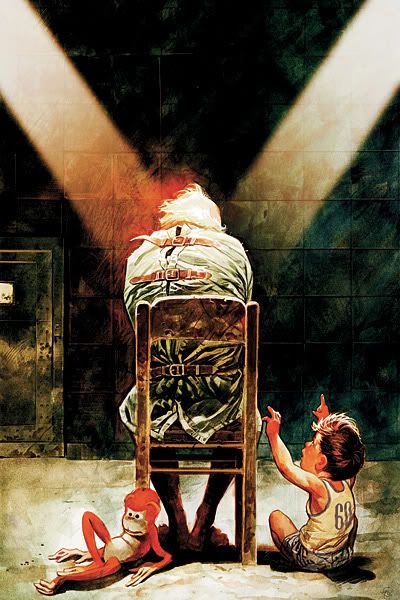
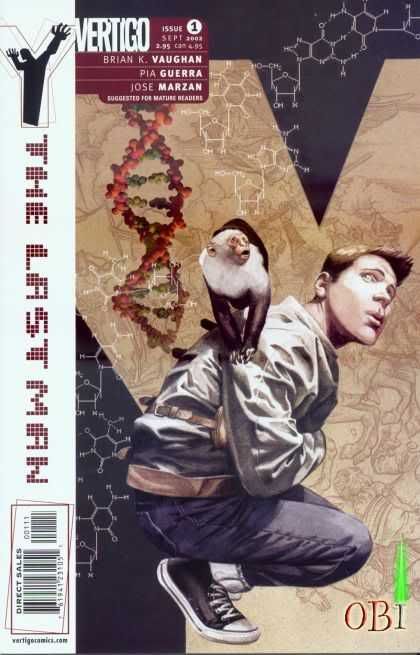
The cover of the first issue.


Oh, Y: The Last Man! Where have you been all my life? This snarky vignette of self-satire perfectly encapsulates why we at the PPCC loved this graphic novel: feminism, sci-fi, po-mo, and twentysomething nerd chic. Oh, Y: The Last Man, you are not "meh" at all, you are awesome. After sixty issues and countless hours, we finally finished this glorious story last night at 1am. And - pray - is that a tear in the PPCC's eye? Why, yes. Yes, it is.

Taking place in the year 2002, the story opens with a mysterious plague that kills every mammal with a Y chromosome. In an instant, every man in the world is struck dead. The only survivors are a young amateur escape artist, Yorick (the titular "Y"), and his Capuchin monkey, Ampersand (i.e. "&"). Now it's up to Yorick to navigate the dystopian, post-gendercide landscape in a trek to reunite with his girlfriend, Beth, who was studying in the Australian outback when the plague hit. Along the way, he runs into all manner of adventures: a group of radical, nihilistic feminists calling themselves the Daughters of the Amazon, mad scientists, ninjas (!), pirates (!!), crazy Republicans, crazy Secessionists, and loads and loads of snappy commentary on gender.


We cannot recommend this enough. The story is smart, fast, nerdy, funny and touching. Did we mention it's also really, really smart? The dialog zips back and forth at lightspeed, with a whip-snap snark reminiscent of Joss Whedon when he's really on his game (think the best of Buffy, or Firefly). The plot twists and turns in unexpected - and often completely delightful and fascinating! - ways, such as when we bump into the post-plague Pacific heroin trade, or when a war-mongering Israeli general decides to use the post-plague geopolitics to her advantage (Israel is, after all, one of the few countries where women are drafted to serve in the military, and where women have seen combat). All in all, the general idea - What would happen if, one day, all the men died except one? - is explored in a variety of interesting, and often very realistic ways. This inevitably leads to a wicked smart commentary on gender - on the gender balance in the workforce, on gender roles across cultures, on gender and sexuality, and on gender and evolution. (Wo)Man, it really blows your hair back.

The storytelling is also top-notch, and it's chock full of (sometimes very) cheeky literary references (with Shakespeare and 20th century intelligentsia cinema up the wazoo) and cross-cuts between all the various plot threads. It seems to have been written specifically for the PPCC's demographic (twentysomething intellectual uber-nerd? XKCD lover?) - we practically imploded with glee when Yorick admitted to not writing much except for "Knightrider fanfic", or when someone used Ampersand to make a comment on "Stick enough monkeys in a room, and you get Shakespeare!" Or when Yorick accuses his travelling companions, ultra-kick-ass Agent 355 and the grumpy Dr. Allison Mann, of engaging in "Spock/Bones slash fiction"!


Another cover.


And we think the gloriousness of the story will appeal to a lot of people, regardless of where you sit on the pop culture spectrum. Heck, the fact that you're reading a blog called the "Post-Punk Cinema Club" pretty much guarantees you'll enjoy this title.


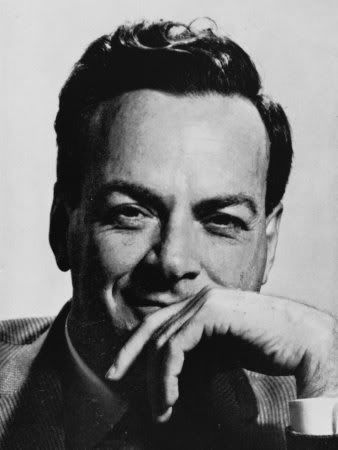
Gratuitous Richard Feynman picture. We love you, Mr. Feynman! We're not joking!


Now, a graphic novel like this just begs to be turned into a film, and apparently there is something in the works, with the possibility of young Shia LeBeouf playing Yorick. We saw Yorick more as a Luke Wilson type, but... meh. The novel is pretty hardcore - with numerous, quite violent (and sometimes repetitive) fight scenes, occasional complete nudity, sexual scenes and frequent swearing - so we expect it would have to be an R. At least, while we could live without all those stabbings and gunshot wounds, we think - to respect the interesting arguments about sexuality - you would have to give this an R rating. Indeed, a small warning: this story was pretty heavy-duty, both on your gray matter and your heart. Even we at the PPCC - lovers of the dystopia - found the dystopia occasionally oppressive, and just wanted everything to be okay again. But maybe we're just big lumps of vulnerable goo. We won't tell you if there's a happy ending, but we can tell you that there were some strong Richard Feynman vibes in the end, and we love Richard Feynman, so we were pretty happy. We can also say that this story covers sex, death and EVERYTHING (the name of our new band) and is like purified John Hughes (RIP) and Joss Whedon for the Y generation, so you must read it now.

...GEDDIT?!

Saturday, 8 August 2009

Barefoot Gen (1973)

Okay.

So we have a backlog of Star Trek and Hindi and Tamil and Italian films, but - dammit all - we're not going to address any of that today. Today, we want to talk to you about our new favorite media: the graphic novel. And since most graphic novels are turned into films eventually, we figure its totally within our mandate to turn the PPCC into the CBG for today. Or this month...

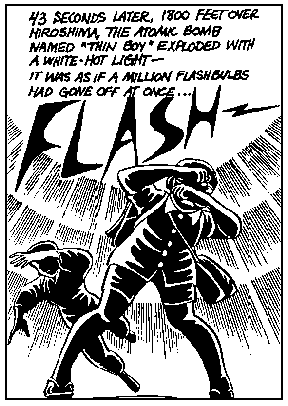
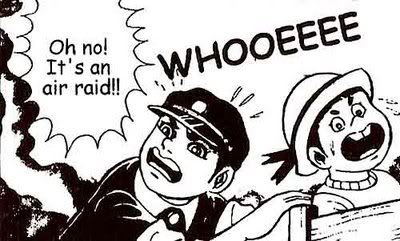
Our rabid desire to consume ALL GRAPHIC NOVELS EVER PRODUCED IN THE HISTORY OF THIS PLANET NAY GALAXY all started with Keiji Nakazawa's Hadashi no Gen (Barefoot Gen) - which, incidentally, is a film (we just can't find a copy). We picked it up a few weeks ago, intrigued by the cover and description: a graphic novel about Hiroshima. Having just finished a fabulous biography about J. Robert Oppenheimer - American Prometheus, which you must all drop what you're doing and go read NOW - we were very curious to see the same topic - the atomic bomb - treated from a dramatically different perspective in a dramatically different medium. American Prometheus is the mother of a biography: nearly a thousand pages, and full of Pulitzer Prize-winning writing about all the fascinating details of being Oppenheimer. How could a graphic novel (we were still calling it a "mere cartoon" two weeks ago) compare?


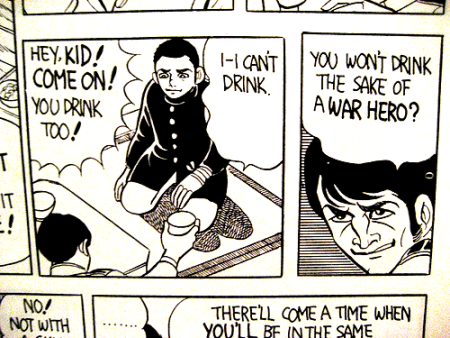
Well, the best - and most startling - thing about Barefoot Gen was that it held its own against the Oppie bio (and how!), offering an insightful, provocative and deeply affecting portrayal of a working class family from Hiroshima struggling to get by in the last days before city was bombed. Told from the perspective of the family's middle child, Gen ("Roots"), the story follows the quotidian joys and sorrows of being poor and pacifist when everyone else seems to have caught war frenzy. Gen's father, a tough-yet-kind patriarch drawn in heavy, block-like lines, is stubbornly pacifist - and this brings endless grief to the family, who are humiliated and attacked again and again by the other townspeople for their beliefs. Eventually, this even drives the oldest son to join the Imperial Navy in a last-ditch effort to alleviate the family's shame. This son's experiences then form an important anti-war subplot in this already very anti-war book - with one of the most powerful moments occurring when he runs into a pair of kamikaze pilots on one last, desperate bender before they fly out the next day.

Our edition of the book has an introduction by Art Spiegelman, who has some interesting reflections on the book: the Disney-like drawing style for Gen and his little brother, the blunt storytelling, the ambiguous attitudes towards America. This is all true: Barefoot Gen offers a very straightforward portrayal of Japan during the war. Its only accusations are inward: against the bourgeoise, xenophobic attitudes of the wartime Japanese elite. And it goes to great pains to reveal the cultural pressures that drove so many soldiers and citizens to support the war and Emperor unquestioningly. From a national perspective, it's a biting, cynical criticism of "patriotism" and "valor in war". Interestingly (even eerily), from an international perspective, America isn't present at all. In light of slightly more recent evidence which shows that President Truman dropped the bomb after learning that Japan would surrender (see American Prometheus for a lot more on this), this book's attitudes towards the US seem too forgiving. But enough of politics.


The narrative structure is blunt and lacking in nuance, but the story still remains incredibly affecting. Partly this is because we know the story is semi-autobiographical, and the weight of the topic is enough. Also, while the storytelling isn't subtle, it is very skilfull - the use of the burning sun to mark the passage of time, like a countdown to the bomb we know will soon drop, steadily builds the tension. Indeed, the bombing itself occurs in the very last few pages, and the impact is enormous: by this point, we had become so immersed in Gen's life that we had almost forgotten about the bomb! Plus, we had become incredibly invested in all the characters - watching the inevitable catastrophe occur was devastating!

Another great (and very cinematic) moment occurs earlier in the book, when the oldest son, after an argument with the father, leaves town to join the Navy. Everyone - the mother, the other children, the PPCC - are freaking out, because this might be the last time the father sees his son. We have a few short panels of the son in the train, thinking about his family, and then, just as the train speeds up out of the station, he sees his father standing in the field by the train tracks, raising his arms and yelling, "Banzai!" (Live long!) It's a wonderful moment which lends itself perfectly to the screen, reminding us of some of those epic sequences from Steven Spielberg's early film about wartime Asia, Empire of the Sun.


In conclusion, this was just great. We read this on a packed airplane, stuffed between two large men, and bawled into our tray table (before storing it in an upright and locked position). We also discovered a whole new world (a new, fantastic point of view!) - the graphic novel - and learned yet more about things which fascinate us (Japan, Oppenheimer, etcetera). Definitely check this out.

(PPCC Readership in Japan: Anyone catch the 2007 live action TV drama of this?)