Showing posts with label hong kong. Show all posts

Thursday, 17 June 2010

Xin jing cha gu shi (2004)


Now that Jackie Chan's getting older, he's going for the darker, more serious characters. We remember seeing - with shock! - the grizzled, unhappy Jackie of The Shinjuku Incident in those grim trailers. Could our favorite kung fu muppet - he of the bubbly hopping around, bumbling martial arts, he the happy drunk - pull off serious?

Well, sort of.

2010's The Karate Kid is one example, and 2004's Xin jing cha gu shi (New Police Story) is another. Both are pretty good, if not the usual roundhouse double-jab madness and the reason we like Jackie Chan in the first place.


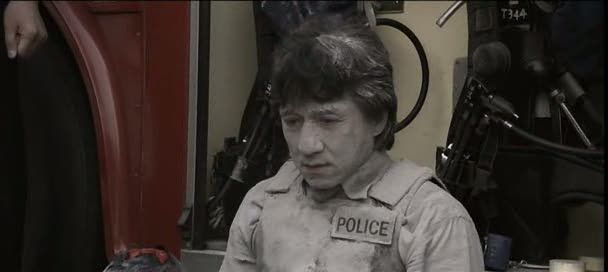
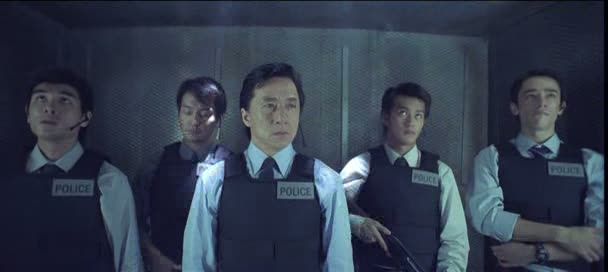
Appropriate color, since Jackie will be in some serious mourning for most of this film.


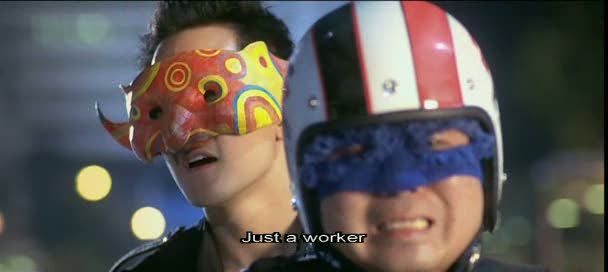
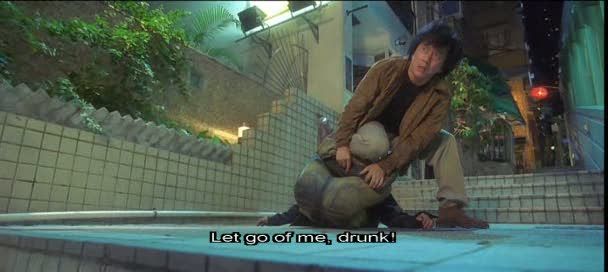
But what movie does THIS guy think he's in?!


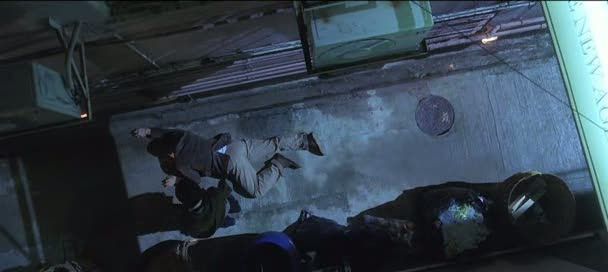
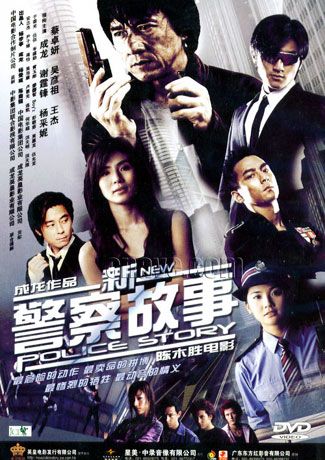
New Police Story - a continuation of the highly popular 1980s Police Story films - finds Senior Inspector Chan Kwok-Wing (Jackie Chan) drowning his very evident sorrows into shot after shot of liquor. After collapsing into his own vomit in a nearby alley, we're treated to an extended explanatory flashback: Back in the day, Chan was an upright and noble police officer, everyone's buddy, a leader, and about to get engaged with the pretty Ho-Yee (Charlie Yeung). But then all his plans were ruined at the hands of a gang of infantile, animal mask-wearing video game sadists, who - driven by their passionate cop-hate - killed every single member of Chan's team, slowly and painfully (and often embarrassingly), in an elaborate Doom-style reality RPG thing.

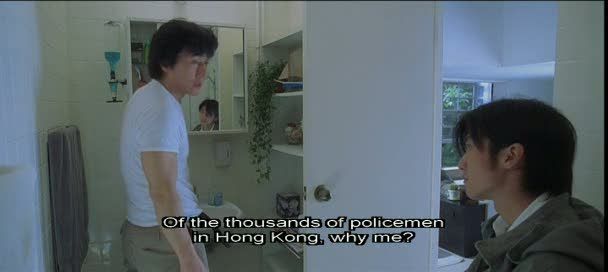
Since then, Chan has been unable to forgive himself. Alienated from the force and his ladyfriend, he nows spends his nights boozing and his days recovering... for more boozing. Until, of course, a bouncy muppet named Frank (Nicholas Tse) pops into his life.


Of all the gin joints!


Okay, maybe a little too much gin.


Frank makes Kermit the Frog look somber and morose, and his complete inability to JUST CALM DOWN initially irritates, well, everyone. Frank hero-worships Chan and is all about fixing his life, both romantic and professional. And, well, emotional. And because Hyper Kermit and the gamers are cut from the same cloth - the one kept aside for MAN-CHILD - it all works out in the end.

The problem with this movie is twofold. Fold one is: everyone seems to have radically different ideas about the type of film they're making, and for this reason, we have to endure a wild ride of mismatched tones. Is it an Infernal Affairs-type cop tragedy? Or is it a Saturday morning action cartoon? Jackie seems to think the former, while the actors playing the villains, the girlfriend and the buddy, think the latter. As does the director, really, what with his whiplash-inducing swoosh cuts and so on. It's hard to get a grip on this, hard to build up an emotional investment - since the emotional core of the movie, Jackie's grief over all his buddies, doesn't really work. The villains are just too ridiculous.


Guns?! What about some furious fists?!


Argh, are you gonna let him talk to you like that?


Fold two of the problem is that the kung fu is very toned down. It's not Shanghai Noon-toned down, where it's hardly recognizable as martial arts at all, but the fights are slower and shorter than, say, the visual extravaganzas of Drunken Master 2. Jackie Chan has incredible talent when it comes to physical expression, and he usually uses this for clownish, exciting stunts. Get his character drunk and voila! Fun! New Police Story's fight scenes are, ironically, much more sober and, well, boring. Apart from a chaotic romp on a careening, out-of-control bus (reminiscent of the bit in Blues Brothers), or a very long plug for Lego (okay, we love Lego too), there's not much to feast the kung fu lover's eyes on. Alas.

In short: Jackie Chan is cool. Hong Kong is cool. This movie isn't very cool.

Monday, 29 December 2008

Dubei dao (1967)


Dubei dao (The One-Armed Swordsman) is much touted as a staple classic in the martial arts wuxia genre of Hong Kong cinema. According to this article, the film's significance is that it established a number of trends which would later define the genre: heavy bloodshed, alienated anti-heroes and - disappointed "aww!" from the feminists among us - the shift from a female to male perspective. The PPCC doesn't know enough about old school wuxia to comment on this; can anyone recommend some of the female-perspective classics pre-One-Armed Swordsman?

The One-Armed Swordsman's titular protagonist begins with two arms. Back in the day, Qi Rufeng's (Feng Tien) Golden School of martial arts was attacked by some bandits. Rufeng's servant, Fang Cheng (Feng Ku), died trying to defend him and - in exchange - Rufeng agreed to teach Cheng's son, Fang Gang (Yu Wang), in the ways of awesomeness. Yet as Fang Gang grew up, the other students - who we like to call Lavender (???), Lumpy (???) and Crazy (Yin Tze Pan) - were always bullying him. One evening, they confront Fang Gang in the forest and, after repeated challenges for a martial arts showdown which he refuses and/or easily brushes aside, they satisfy themselves with... cutting his right arm off!

It is, in particular, Crazy Lady who cuts off Fang Gang's arm, later claiming she did because of her tumultuous love/hate feelings towards him. Whatever, crazy lady! Keep her away from sharp objects!


Fang Gang's got one arm and half a broken sword. And he can still kick your butt.


Anyway, Fang Gang hobbles off and collapses into the boat of the pretty (and sane) Hsiao Man (Chiao Chiao). As Hsiao Man nurses him back to health, he despairs that his life will now be meaningless without martial arts. Yet, after the pair are harassed by some wandering goons, Hsiao Man finds her father's old kung fu manual which - irony of ironies! - was accidentally set afire and only the chapters on left-handed techniques remain! Despite promising the pacifist Hsiao Man that he will soon abandon martial arts to lead a pastoral existence in the country with her, Fang Gang trains himself in left-handed swordsmanship - just in time for the massive showdown which is brewing between his old Golden School and the villainous brothers, Long-Armed Devil (Yang Chih-Ching) and Smiling Tiger Cheng Tianshou (Tang Di). As Long-Armed Devil and Smiling Tiger pick off the more inept Golden School students one by one, it's up to the mysterious one-armed swordsman to defend the very people that maimed him.


The Golden School of martial arts, good at losing and quasi-accidentally cutting each other's arms off.


This is a fairly entertaining film told, to our eyes, in a straightforward, lightweight way. Indeed, if we hadn't been told it was a classic, we would have assumed it was just a throwaway 60s martial arts flick. This article provides interesting commentary:
"Virtually every aspect of this film has been exceeded and improved upon by later offerings, but this is where it all began in its primitive violent form...With One Armed Swordsman the ultimate anti-hero was born; a macho, resolute, honour-bound character who had little to live for, but a lot to die for."

Since we live in a post-One-Armed Swordsman world, it's difficult to gauge the importance of this film - much like it's difficult to explain the importance of, say, Dilwale Dulhanie Le Jayenge to Hindi cinema to someone who's only ever watched Shah Rukh Khan films. As we said earlier, we'd be very interested in seeing a typical wuxia film from the pre-One-Armed Swordsman days.

Something that did make us understand the cult legendary status of the One-Armed Swordsman was his later appearance in the Japanese Zatoichi film series. Just as Toshiro Mifune's legendary Yojimbo appeared in the film Zatoichi Meets Yojimbo for some clashing of the titans, so too do Zatoichi and Gang Fang duke it out in Zatoichi Meets the One-Armed Swordsman. Now that sounds cool!

Pics from Wikipedia and DVD Beaver: One-Armed Swordsman.

Monday, 3 November 2008

Chi bi (2008)

A PPCC exclusive!


Whoa! Big time!


Yes, the PPCC has got its grubby little hands on a bad-ass Chinese epic - before its international release! Mwahaha! And before you start all going, like, "OMG the PPCC is totally such a buyer of illegal DVDs!" We swear on our love of Shashi that this is the real deal, purchased from a reputable movie and music chain in China. Even more interestingly, this 2.5-hour film is merely part 1 of a promised four-hour epic (source: Red Cliff Wiki article). Outside of China, the international version will merely be a single 2.5-hour film. Envy us! Enveeeeee!

So. The film: Red Cliff.

Since the original rumors began, almost two years ago, that John Woo was going to direct some mega historical martial arts film, the PPCC had been in a tizzy of excitement. The original star line-up was practically a roll-call of our favorite Asian actors: Tony Leung Chiu-Wai, Chow Yun-Fat, Ken Watanabe... Unfortunately, the tide of rumors changed, and Chow Yun-Fat and Ken Watanabe eventually dropped out, to be replaced instead by that ultimate stud of hotness, Takeshi Kaneshiro. Totally OK by us.

Anyway, we knew that the Time of Red Cliff's Release was soon approaching, and when we were sent to China on an errand last month, we quickly carpe diemed the opportunity to buy anything - any-thing - Red Cliff and/or Tony Leung Chiu-Wai-related. (Whose name, incidentally, is not pronounced like that at all in Cantonese... and this led to much jocularity and confusion.) When we went down to the (legitimate!) movie store and browsed the Tony Leung stacks, we were surprised and delighted to see Red Cliff all prim and ready to be purchased. "Wow!" we thought, idiotically. "They really are technologically advanced here! They've got DVDs of movies that haven't even finished filming yet!" (Hmm.) So we bought it and petted it and hugged it and loved it. And then we watched it.

"Enough of this gonzo reviewing, what about the freakin' film?" you ask.


Sigh, Takeshi Kaneshiro... you look so fly when you get all contemplative and such.


Well, first, a couple disclaimers. Disclaimer #1: This is our first John Woo film. We reckon it always takes a bit of time to get into the rhythm of a director's style. John Woo's style, seemingly characterized by swooping, ultra-fast cuts and a general impatience in all matters action, was like a new language for us. Disclaimer #2: Maybe the international release (which you minions will be forced to watch, ha ha ha!) will be more non-Chinese-friendly and full of helpful exposition, but this film seemed to assume a whole canvas of background historical knowledge. We got heavy Trojan War-esque or Devdas-esque vibes - you know, this was the type of story that everyone (except us) is apparently familiar with. We, however, had no idea who Zhou Yu and Zhu-ge Liang were, and so we spent quite some time going, "Wait, what? Who? Where? WHY?!"

Here, then, are our (uneducated) thoughts.

What: So back in the day, there was the Han Dynasty. The Dynasty's Prime Minister was this super-corrupt dude named Cao Cao (Zhang Fengyi... resembling uenxpectedly Takashi Shimura). One day, Cao Cao was all like, "I'm gonna proclaim war on the world!" And the bird-loving twentysomething Emperor Xian was like, "Uh... okay." So Cao Cao embarked to kick some ass.

Who: Arrayed against him are a motley troupe of legendary awesomenesses, led by the rebel Liu Bei (You Young). There's the smooth-talking Chief Strategist, Zhu-ge Liang (Takeshi Kaneshiro). There's the wild-haired Zhang Fei (Zang Jinsheng). There's the stoic and heroic Zhao Yun (Hu Jun). With their forces combined, they are awesome... but they're still missing the key to magnificence. That key is discovered in the new-formed alliance with the southern state of Wu. When the uber-diplomatic (you'll agree with anything he says!) Zhu-ge goes off in search of some military help, he's introduced to Wu's commanding officer and viceroy, Zhou Yu (Tony Leung Chiu-Wai). Immediately, the sparks of recognition and awesomeness fly: apart from sharing a sort of good-humored meditative personality, a love of fans and music, both Zhu-ge and Zhou are military masterminds. When Zhou rocks out on his guqin (sort of like a lap guitar), and when Zhu-ge helps Zhou's horse give birth to a little horseling, the friendship is solid. Yay!

Where: Now, armed with the diabolically clever Zhou, the rebel army is ready to kick some butt. When Cao Cao's forces ride up along the Yangtze to Red Cliff, the final climax mounts up into an enormous battle.

Why?!: All to be continued in part 2!


Tony Leung Chiu-Wai as Zhou Yu (left) and Takeshi Kaneshiro as Zhu-ge Liang (right).


So what sort of impression did this film make to a person as ignorant in Chinese history as the PPCC? Generally, very good! It was a straightforward epic - calling to mind Lawrence of Arabia, Return of the King and anything else large and glorious. It was all sweeping shots of moving armies, sprays of blood and gold-tinted horizons. The music was similarly evocative, resembling more (to our ears) 60s-era Hollywood epic rather than, for example, the minimalist traditional Chinese of Tan Dun. The emotional tone was also fairly simple, in keeping with the unambiguous Legendary-ness of the story: no one was morally gray, everyone was brave and honor-bound to kick-ass. There were some half-hearted attempts to be gender friendly in a clearly very gender unfriendly historical context with the occasional, "Girls are people too!" line from the tomboy princess lady (who resembled very much Juhi Chawla, by the way).

That's not to say the characterizations weren't complex. Quite the opposite! Soaked in that Stuff of Legend vibe, Zhou Yu and Zhu-ge Liang leaped out from the screen as fully-formed and quite interesting heroic ideals. Both seemed more philosophical musicians than hard-bitten military commanders, carrying themselves like young Obi-Wan Kenobis (only with a sense of humor). Their interactions were also wonderfully sweet, such as in one scene, when Zhou approaches Zhu-ge while the latter is fanning his pigeons.

"What are you doing?" Zhuo asks.

"I just gave them a bath," Zhu-ge explains as he fans. "I'm drying them off."

"Won't they catch a cold?"

Zhu-ge quickly stops, a look of horror on his face.

These gentle, humorous exchanges were wonderfully juxtaposed against the harsh bloodbaths that were the battles. Indeed, when, in another scene, Zhou Yu sighs that, "After my first war, I never wished for a second," you actually believe him. Unlike the macho, strutting war heroes of the usual Western war epic, Zhou Yu and Zhu-ge Liang genuinely seem like easygoing pacifists with an ironic talent for war. Zhou Yu's not just paying lip-service to the world weary idea of "one too many battles" - he genuinely wants to just get back to rocking out on his guqin and tending to all things domestic with his gentle wife, Xiao Qiao (Chiling Lin).

Now we at the PPCC have no idea if these characterizations are in keeping with the legendary mythos, or if they've been colored by the performances and interpretations of Tony Leung Chiu-Wai and Takeshi Kaneshiro. Both actors are indeed known for their "strong, silent type" roles - they're both very good at exuding charisma and intensity with merely a glance or wry half-smile (especially in Tony Leung's case - oh, be still, our heart!). Note, for example, Kaneshiro as the earnest warlord in the previously PPCCed The Warlords. Note also Tony Leung Chiu-Wai as the evil-yet-vulnerable collaborator in Ang Lee's X-rated Lust, Caution or as the calligraphy-inspired, softspoken Broken Sword in Zhang Yimou's marvelous Hero. Suffice to say, both of these guys just ooze thoughtful reserve.

The rest of the cast unfortunately falls a bit by the wayside thanks to Tony Leung Chiu-Wai and Takeshi Kaneshiro's talents. Chiling Lin, as the reportedly "most beautiful woman in China", seemed nice and... well, cute. The fiery tomboy princess was a lot more fun - though we were a little annoyed to see her "tomboy" behavior ridiculed and relegated to sitcom-ish buffoonery. Thankfully, she gets to kick butt in the final battle and set off some sparks of mutual attraction with Zhu-ge (who knows awesomeness when he sees it!). Zhang Fengyi, who played the villainous Cao Cao, was pretty fun - chewing up some scenery here, lazily lopping off some messenger's head there, but we're still waiting to see that bombastic, warlord spirit we're expecting from that type of character.

Overall, the film drops us in media res and leave us hanging with a To Be Continued. The main plot arc centred on Zhu-ge convincing Zhou to come fight, but the film ends before we get to see a proper gloriously large (and thankfully inevitable) showdown between Cao Cao and the rebel forces. But no worries - this is, after all, Part 1 of a 2-part film series. And we expect that many of the Chinese viewers will already be familiar with the conclusion (?).

For those, like the PPCC, that tend to devour cultures like they were chocolate cake, this is a great and fun dip into Chinese history and culture, starring two of Hong Kong's most likable actors. Recommended!

Friday, 5 September 2008

Jui kuen II (1994)

Is it just the PPCC or are Jackie Chan and Shah Rukh Khan the same person?


What?!


No, really. Hear us out. They are the same age-ish. They are both manic mainstream powerhouses of their national cinema. They both have poofy blow-dried hair and a bouyant, likable charisma. Both are great at physical comedy but kind of maudlin and melodramatic when it comes to serious stuff. Both tend to tread hyper-pop bubblegum cinema rather than anything more offbeat. And both are very talented performers, especially in the defining characteristic of their respective genres (dancing for SRK, martial arts for Jackie).

We resisted Jackie Chan for very, very long. Even though we're fans of Hong Kong cinema and consider ourselves amateur connoiseurs of the wuxia genre, we have seen all of two Jackie Chan films. He's very Hollywood, you could say, and indeed we were being snobbish and dismissive. But after the silly yet likable Forbidden Kingdom, we decided to get over ourselves and just give in.


Andy Lau even has a cameo! We love you, Andy Lau!


Even Anglicized villains!


Jui kuen II (Legend of the Drunken Master) is a sunny, irreverent take on 19th century China. Fei Hung (Jackie Chan) is the bouncy son of medicine man and martial arts master, Wong (Ti Lung). One day, while Wong and Fei Hung are travelling on the train, Fei Hung accidentally misplaces his father's super-expensive ginseng root. In an effort to get it back (insert mega-awesome fight sequence), he happens upon an ancient jade artifact. It turns out the evil British (yes, yet another movie where the white man is a bane upon the rest of the world) are intent on stealing China's heritage. "Eventually, our young people will have to go abroad to learn about their culture!" one character despairs.

Well. That is clearly not gonna fly, and so Jackie embarks to kick some ass. When some Anglicized goons threaten his stepmom (the amazingly awesome Anita Mui) Jackie uses the expressly forbidden Drunken Master technique. Egged on by his hilarious and bad-ass stepmom, who feeds him bottles of hard liquor, Jackie seriously kicks some ass but gets seriously trashed in the process. His father is horrified to see his son (1) drunk, (2) using the Drunken Master technique (which is just a slippery slope to alcoholism, the father warns) and (3) fighting in the streets. Despite Stepmom's hilarious attempts to dissuade and distract Father, Father still canes the hell out of Fei-Hung and kicks him out of the house. Cue melodrama. We'll skip this bit.

Suitably chastised, Fei Hung promises not to use the Drunken Master technique. However, the goons are still robbing China of its cultural heritage, and soon enough a show-down is brewing at the local steel factory. You'll have to watch it for yourself, but the final fight scene is so freakin' fun, and includes Jackie drinking what are possibly tubes of lighter fluid (though he burps bubbles later, so maybe it was soap).

There are several things that make this movie SO awesome:

1. Jackie Chan's kung fu.

We at the PPCC normally go for wuxia. Popularized by Ang Lee's Crouching Tiger Hidden Dragon, wuxia are Chinese martial arts stories that are heavy on the magical realism. Wuxia films - such as Zhang Yimou's Hero, or House of Flying Daggers - feature slow, luxurious, elegant fight scenes making heavy use of wires. These fight scenes are stylized and mystical, where characters fly through bamboo forests and narry a drop of blood is shed. They are just looovely.

They are also a far cry from the more meat and potatoes kung fu genre, popularized by Bruce Lee. This genre of martial arts films instead make heavy use of stunt fighting and indeed these fight scenes rely critically on the actors' genuine martial arts skills. Hence Bruce Lee, Jackie Chan and Jet Li are all real-life martial arts champions, whereas Tony Leung Chiu-Wai and Chow Yun-Fat, two actors who have starred in well-known wuxia films, are just actors.


One scene of Bruce Lee-esque intensity.


Jackie Chan's martial arts skills are powerfully evident in Legend of the Drunken Master. His manic energy and flexibility are really impressive, and indeed, unlike the screaming intensity of Bruce Lee (HEEEEEYAAAAAAA!), Jackie's fighting style always borders on the physical comedy. He gets into a number of contortions which are really quite funny, infusing slapstick into his punches. It's exhilirating and fun to watch.

2. Go girl power!

Throughout the film, Jackie's character, Fei Hung, is identified with women, especially his powerful stepmom. This lady is hilarious; she is not only as charismatic and energetic as Fei Hung, but she is also a firebrand and apparently Fei Hung's secret instructor of the forbidden Drunken Master technique.


Jackie's just one of the ladies.


There's a very funny sequence when, in an effort to calm Fei Hung's father after Fei Hung's disastrous drinking, she feigns fatigue resulting from a surprise pregnancy. When she accidentally falls on her stomach, her horrified husband anxiously asks, "Are you all right? Is the baby all right?" She thinks hard, shifts her stomach around and then pats it, saying in dead-pan, "He's fine." OMG!

The relationship between Fei Hung and his stepmom is also very sweet, as she's constantly looking out for him and encouraging him on. They were the best part of the story!


Kicking ass... together!


Aww!


3. History can be fun, too.

We love Chinese films with a historical bent, regardless of genre - e.g. The Emperor and the Assassin, or The Warlords, or even Fearless. And, regardless of genre, we've always seen the historical context treated with dignity and respect. So it was unexpected and unexpectedly freeing to see a movie with a historical setting but without the austerity. Sure, this movie was bubblegum silliness, but even Fearless, which was similarly pop, still maintained a very serious attitude towards its context. In Legend of the Drunken Master, however, there's complete irreverence. In one sequence, the family is discussing the terrible drought in some village.

One character reports, "People there are so poor that some families have to share a single pair of pants!"

"Wow," Fei Hung gasps, wide-eyed. "Who gets to wear them?"

"If you have a job, you get the pants!"

OMG!

Our overall judgment is that, if you can cringe your way through a couple horribly melodramatic moments, you will gain ample rewards in KICK-ASS kung fu! (Plus, bloopers run during the credits - and that's always awesome.)

Monday, 7 April 2008

Tau ming chong (2007)


Trailer with English subtitles.


Peter Chan's Tau ming chong (The Warlords) brings together three towering icons of popular Chinese cinema: Jet Li, Andy Lau and Takeshi Kaneshiro. This historical war epic is much less elegant than the wuxia-style martial arts films which have become popular in the West ever since Ang Lee's Crouching Tiger Hidden Dragon. The Warlords, like its title, is a film almost fanatical in its love of war; it is bloodlust on celluloid. Expect no elegant flying through trees, no bloodless Buddhist scuffling, no meditations on discipline and duty. This is a film where limbs fly, gore splatters, and the noise is deafening.


Nice composition.


Even nicer.


In some ways, it resembles Kenneth Branagh's Henry V in showing the exhiliration and horror of the battlefield. Like Branagh's film, it follows an army making its bloody way to history. And, like Henry V, The Warlords is careful to emphasize the honorless, hero-less difficulties of war. It glorifies nothing, though it does sometimes linger on particularly nasty details like a macabre voyeur. The three heroes of this film - the ruthless and tormented Pang (Jet Li), the slightly more moral but equally tormented Er Hun (Andy Lau), and the blindly devotional Zhang (Takeshi Kaneshiro) - wax and wane in their morality. They are ambiguous, violent creatures - sometimes revelling in their success on the battlefield, sometimes appalled by it. Just as greed was the driving motivation of everyone in Zatoichi Meets Yojimbo, hunger seems to be the driving motivation of everyone in The Warlords. Literal hunger drives the former bandits Er Hun and Zhang to become soldiers, and hunger for military validation drives Pang. In one sequence, a siege ends just because both sides are just... so... hungry!


And yet more excellent composition.


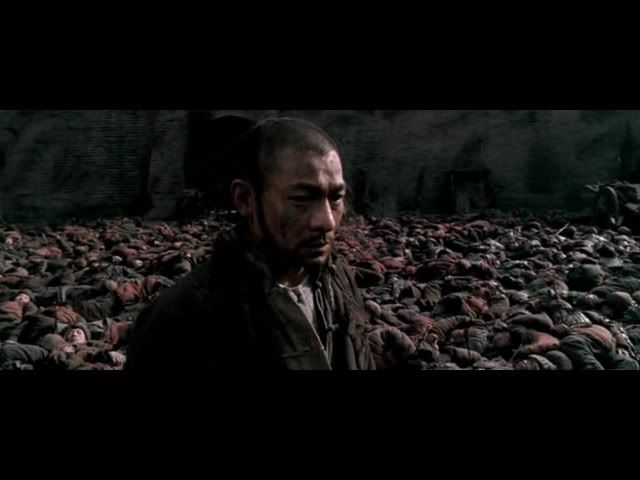
The plot is very strong. The film opens during a vicious battle, and a moment later, we are shown the smoking carnage. From a pile of corpses, Pang emerges, dazed and unharmed. He stumbles along dusty country roads, eventually following Lian (Jinglei Xu) back to her village, obviously starving. There, he breaks down and tells her: he was a general, but all of his men died, and he had played dead in order to survive. "He died in that battle," the narrator informs us. The narrator - who continually intimates to Pang's moral backslide - turns out to be the (unbelievably handsome, but no matter) Zhang. After tussling with Pang over the latter's shiny boots, Zhang is revealed to be a bandit - since Pang is such a good fighter, he invites him to join their bandity crew. Leader of the bandit crew is Er Hun (Andy Lau), who is introduced to us as rough, vicious, but with a dose of honor. After every fight, he pours a drink to his fallen comrades. Zhang, Er Hun and Pang attack a passing army in order to steal their food. When Imperial troops charge their village, humiliate Er Hun and demand that they give themselves up, Pang hatches a better scheme: join the army!


Yep, you guessed it. Great composition. Also, best scene in the film. Behold, the ultra handsome and morally weird Zhang (Takeshi Kaneshiro).


And behold the noble-fied, tormented Er Hun (Andy Lau).


Naturally, everyone is stunned. This is the dishonorable, cowardly general, who just attacked his own side after joining the bandits. Pang, however, reasons that the army will give the men in the village a steady supply of income and food. Zhang suggests that the three become blood brothers - since no one trusts Pang's suggestion, only by the ceremony of blood brotherhood will they agree to join the army. Of course, Zhang ominously narrates during these scenes: "Pang later told me he did not believe in the blood brothers ceremony."

And off they go! While Er Hun and Zhang are teased as country bumpkins by the Imperial commanders, Pang impresses them with his ruthlessness. Soon, the three men have become veritable warlords - winning battle after battle thanks to Pang's tactics and Er Hun and Zhang's bravery. This is certainly the first movie the PPCC has ever seen where warlords are given a musical montage of success as if they were the underdog baseball team continually winning upsets. Anyway, along the way, a number of difficult moral situations are presented, establishing a tense triumvirate: Er Hun finds it more and more impossible to stomach the ugliness of Pang's belligerance, Pang is becoming more and more blindly ambitious, and Zhang is getting caught between the two - doing Pang's dirty work, but feeling as bad as Er Hun does about it.


Fab composition. Yet again.


Do I even need to say it?


At its best, the film is exhilirating, epic, devestating and fun. The sequence with the SouZon prisoners of war is very powerful, and the following sequence of the three men's rise to power - where cuts of a meta-play-within-the-film are interspersed with the actual events - is truly wonderful. Yet, at its worst, the film turns macho and melodramatic. The music is relentless, and while it hits the right notes sometimes, we spend a lot of time listening to cheesy bombast. The emotional cues are overpowering and (mostly) overdone - again, with the exception of the SouZou POW scene, which was large and loud, but absolutely spot-on.

Jet Li is wonderful when he plays ruthless, driven characters - such as the nameless protagonist in Hero - and here that ruthlessness is wonderfully complex. For a character that shows vulnerability so early on, it is remarkable to watch Pang harden into the film's villain. Also notable is how beefy and tired he looked compared to other roles. But maybe Jet's just gettin' older.

Andy Lau is great as the tormented Er Hun - we've seen him play sinister before (Infernal Affairs, House of Flying Daggers), and we were expecting more of the same here. Yet he surprised us continually by softening into the film's screaming conscious (literally). He also looked very beefy and exhausted, though this was integral to the role. Or maybe Andy's just gettin' older too.

Meanwhile, the deceptively innocent good looks of Takeshi Kaneshiro are used well in this - his boyish charm and easy smile masking a frighteningly weird logic. It's easy to forget that he's the blood brother who is the most violent - because, even as he commits the film's gravest evils, he does so without malice. Once again, the SouZou POW scene is a good example. (And it doesn't appear that Takeshi's aged a day since heating the screen in House of Flying Daggers.)


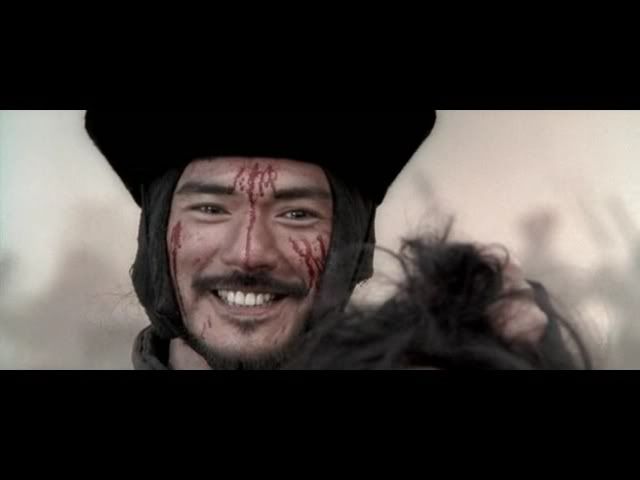
He's holding a head in this scene.


Overall, a really interesting film in terms of its themes and complex characterizations, but expect a good dose of cheese as well.

Friday, 3 August 2007

Mou gaan dou (2002)


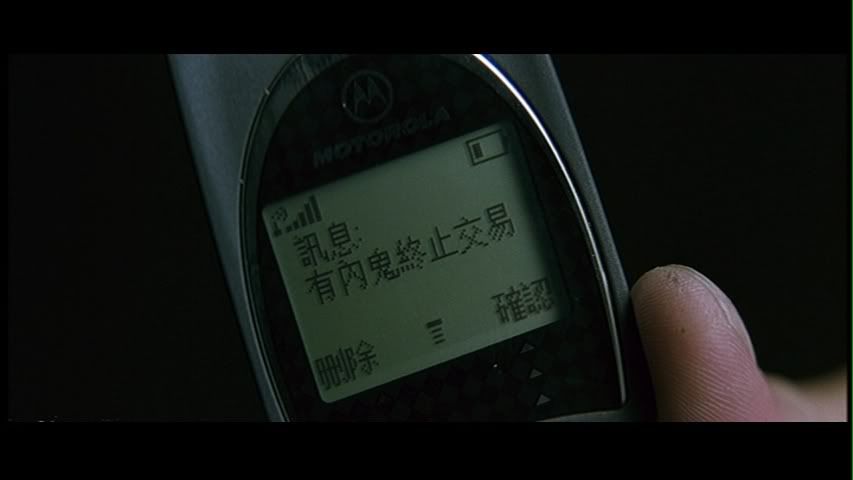
Cell phone mind games. Cue Admiral Akbar: IT'S A TRAP!


Before Martin Scorcese took it and shook it and won ten billion Oscars with it, the story of double agents and mixed identities that was Muo gaan duo (better known as Infernal Affairs, later Scorcesified into The Departed) was but a simple tale of two very good-looking morally ambiguous double agents.

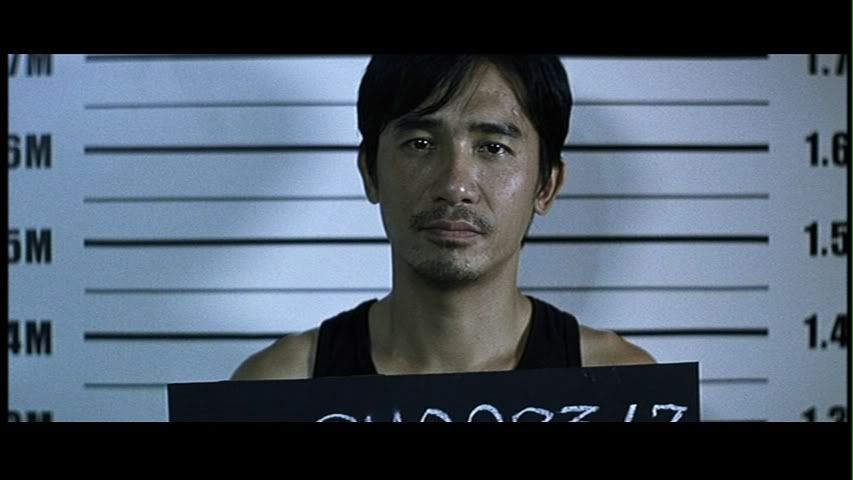
One man was Yan (Tony Leung Chiu Wai), known to wuxia fans as that bad-ass Broken Sword from Zhang Yimou's Hero. Here Leung has shed his long hair and long flowing robes but retained his quietly brooding demeanor and knack for getting into scraps. Yan is an undercover cop who, for ten long years, has worked his way up in the maniacal Sam's (Eric Tsang) criminal organization. He's a fake mobster and he's tired.

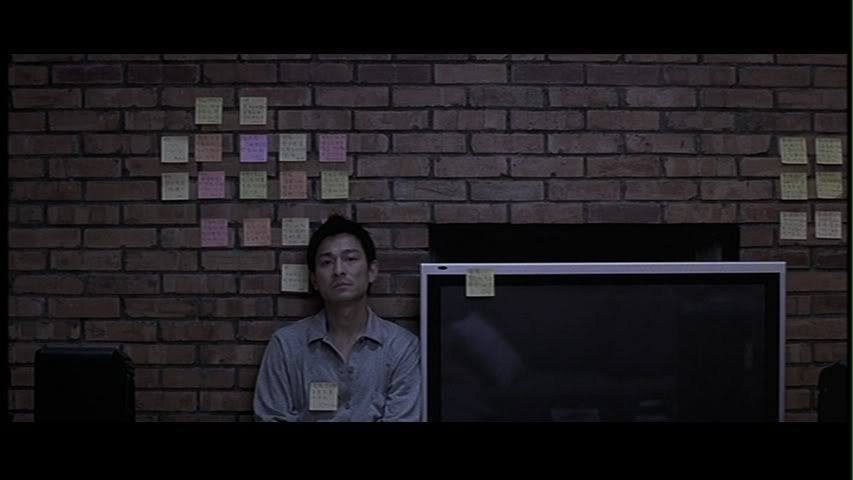
His counterpart is Lau (Andy Lau), again known to wuxia fans as that bad-ass Leo from Zhang Yimou's House of Flying Daggers. Lau may have also shed the long hair and dagger in his back, but he's kept his icy straight-laced demeanor and knack for being creepy. Lau is a gangsta who, for ten long years, has worked his way up the noble Wong's (Anthony Wong) police force. He's a fake policeman and he wears nice, crisp suits very well.


Yan is fine.


So is Lau. Who do we root for?


Confused? It's not so terrible: two double-agents, like mirrors of each other, working away at each other's employers. The real confusion (and fun) comes in the moral ambiguity and philosophical queries. We're not talking about their fineness, but rather how living this life of lies is wearing away at their emotional cores. Because if you do X in the name of Y, are you X or Y really? No, really really? This is all fine and well for Lau, who, after living in the sleek, shiny world of police enforcement, where pretty girls bring him tea and everyone has a nice haircut, he's starting to get a feel for this whole Being Good thing. Poor Yan, on the other hand, is falling apart as he falls further and further into criminal depths, and he's desperate to get out.

The movie implicitly and explicitly asks the big question: is Yan a good or bad man? What about Lau? Things are further complicated when the mob boss and police chief, like two chess kings, realize they have a mole in their organization and (in delightful irony) assign their mole to find the mole. Meanwhile the moles are really much more interested in finding the mole in the other organization, the one they really care about.


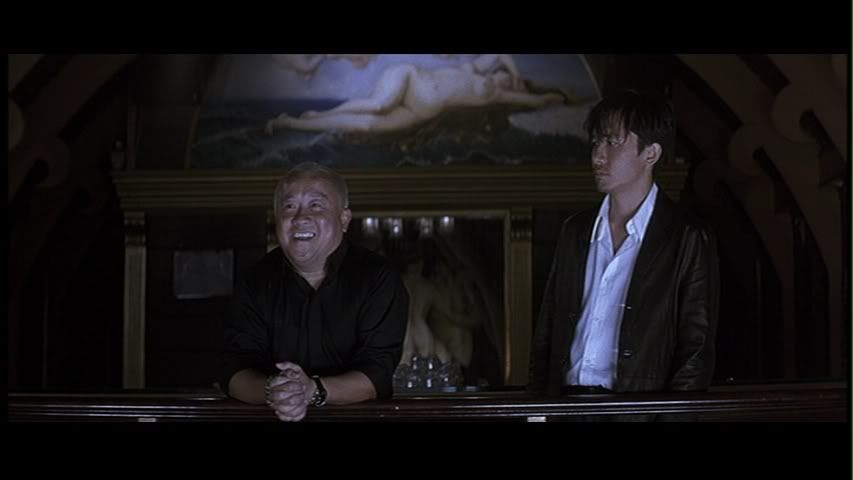
Boss, I'm confused.


More confused? Don't worry about it. The movie is slick and fun and speedy. When you start to get lost, a character helpfully explains a plot point. New moles appear. A lot of the action revolves around receiving and making cell phone calls, though, for the bloodthirsty, there are also the requisite crime thrilled scenes of mob violence. The two leads are excellent, partly because they look the parts of the good-but-grimy versus evil-and-slick. They're also quite well-suited; Lau, in particular, is particularly effective in the ending twist since, while the film presumably delivers a neat emotional finish, we can never be quite sure as he just looks so, well, morally ambiguous. Leung is his usual charming self, where it's difficult to believe he's actually turning bad, even as he snorts that last line of cocaine (see Wong Kar Wai's 2046 for further examples).


Check-mate! Mwahahaha...


We at the PPCC are not fans of the police-mobster genre, but we still enjoyed the twists and turns of this kooky movie. While less stylish than a similarly ambiguous and surprising tale such as Oldboy, it's also (thankfully) much less violent and hence easier on the gullet.


Hungry? For your looooove...