Showing posts with label subhash ghai. Show all posts

Monday, 26 January 2009

Taal (1999)


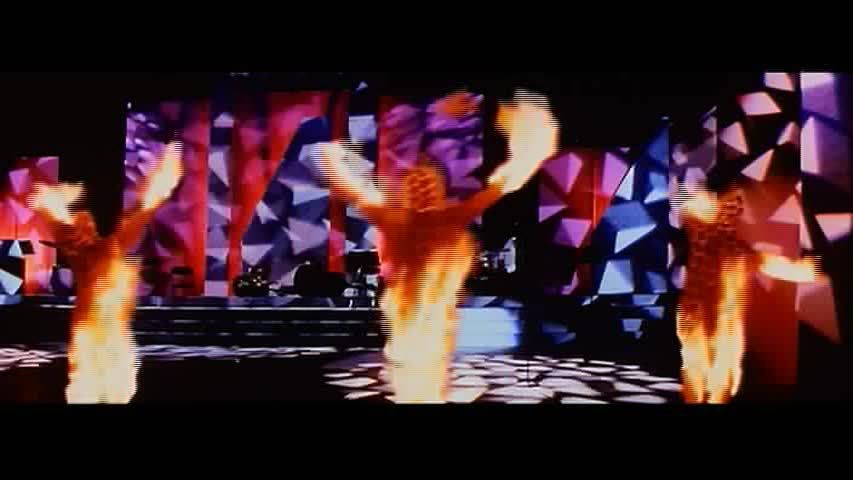
Thank you, thank you. For my next number, I will set my backup dancers ON FIRE.


Taal (Beat) is a flashy, tacky spectacle that is a lot of fun as long as you can cope with Akshaye Khanna's hideous haircut. The music by (Oscar-nominated!) A.R. Rahman is, as in Yuvvraaj, leagues beyond the film's quality - except that Taal is a very decent little story with pitch-perfect narrative form, whereas Yuvvraaj was a car careening around with no driver. Taal demonstrates again - as Black & White and Ram Lakhan - that director Subhash Ghai has a cunning ability to just crash into genius sometimes. Because Taal was really, really well-told, with an ending that aspired to Dilwale Dulhania Le Jayenge or Kabhi Alvida Naa Kehna in terms of sprinting, sobbing, gargantuan satisfaction.
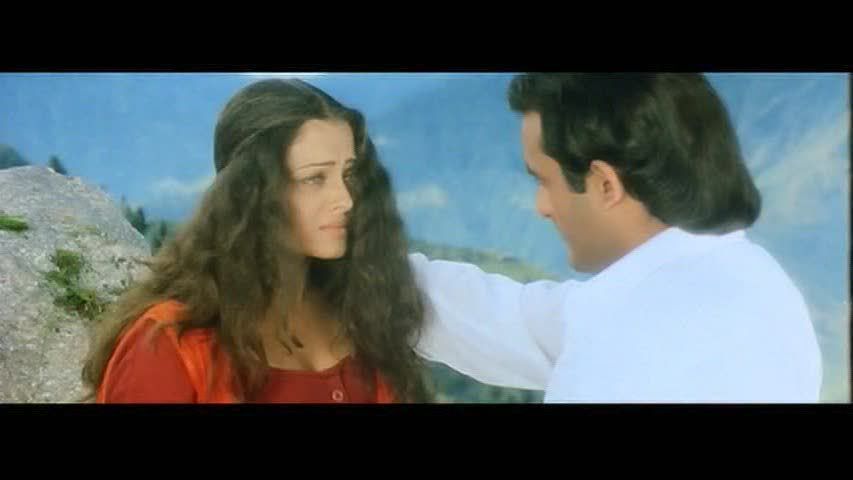

THE HAIR. LOOK AT HIS HAIR.


The story is simple. London-based rich boy Manav (Akshaye Khanna, in The Hair) accompanies his dad, Jagmohan (Amrish Puri, in gentle paternal mode), to India for the first time. There, in the gorgeous setting of Himachal Pradesh, Manav spots village girl, Mansi (Aishwarya Rai). Her father is a locally famous folk musician, Tara Babu (Alok Nath), and, when not accompanying her dad on one of his folk songs, she teaches yoga and runs around in the rain. The lovers are smitten, leading some of Manav's evil relatives to grumble and gripe about gold diggers and poor folk who don't know their place. Eventually, Manav and his wealthy family head down to Bombay - but not before Manav and Mansi exchange tender embraces, an onscreen kiss (!), a scarf embroidered with "Manavsi" (GET IT?! LIKE BRANGELINA!) and promises of eternal commitment.

Not long later, Mansi and her father head to Bombay too in hope of setting up the marriage. Unfortunately, they come to the mansion "without an appointment" and on a day when Manav is out - so the evil relatives have a helluva time prolonging the tortures and making Mansi and her father undergo a nine-hour game of musical chairs in the burning sun (this started to feel very Alice in Wonderland after a while). Properly humiliated and grumpy, Mansi and her father confront the Evils, and things degenerate into name-calling and bitch-slapping. They storm out.

And who should they run into but - yes, Anil Kapoor! We mean "Vikrant Kapur", the hugely successful and hugely trashy music producer, who cheerfully rips off Tara Babu's folk songs according to his personal Seven Commandments of Selling Out and Getting Ahead in Mumbai. Vikrant, who Prof. Lutgendorf describes as "postmodern" and an older, cynical-er SRK from Dil To Pagal Hai, operates at a mile-a-minute, and he speedily invites Tara Babu and Mansi to join him. At least they'll be able to join him in profiting from their music!

And thus, the love triangle square has delineated. Well, reader, should Mansi choose:
    1. The arrogant yet sweetly endearing Manav, whose puppy-dog pouts reveal a tender sensitivity.
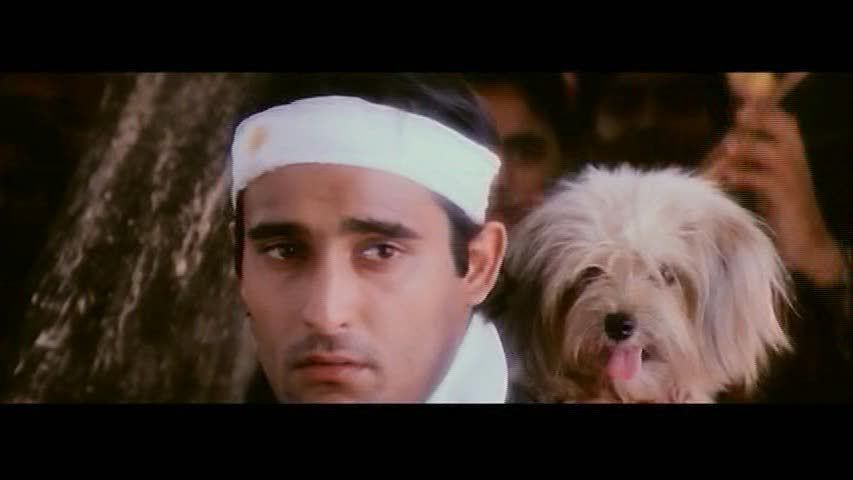

The Pout #1: includes wounds that need to be tended, puppies that need to be cuddled, and woobieness.

    2. The arrogant yet sweetly insane Vikrant, whose puppy-dog pouts reveal a tender, wounded sensitivity.
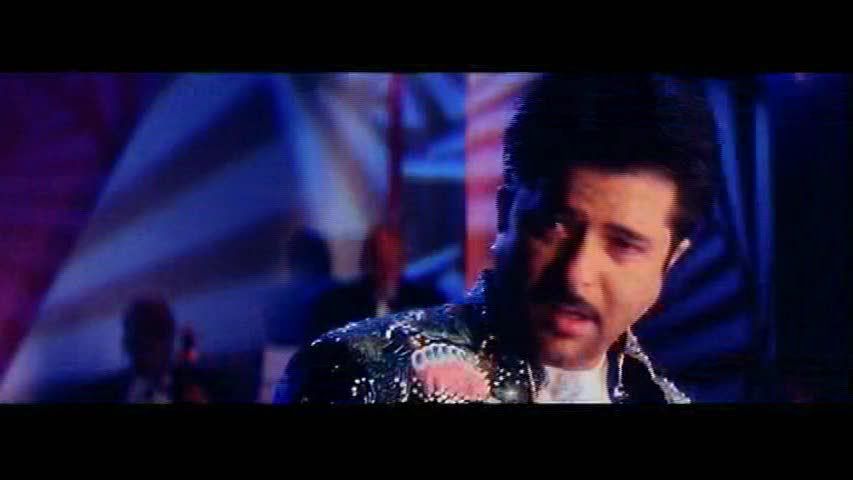

The Pout #2: includes older wounds that need to be tended, REAL TEARS COMING ON, but, alas, no puppy.

    3. The puppy.


The Pout #3: dispenses with other formalities and just GIVES US THE PUPPY.

We know what you're thinking ("THE PUPPY!"), but you'll just have to watch the film to see how it all plays out.

Now onto the main thing that everyone mentions about Taal (Prof. Lutgendorf, Carla, Beth...): the product placement. We think the product placement - in particular, the use of Coca-Cola - in this film was GENIUS. Pure, unbridled, postmodern GENIUS. Don't believe us? Read on!

Never has beverage choice been so inextricably linked with matters of the heart - behold, as Beth names it, the "Coke-bottle flirting". There is a notable scene when, at a party, Manav drinks from a Coke bottle and cheekily sends it to Mansi. Prof. Lutgendorf notes:
Cultural point here: this is not merely bad manners, but a violation of the strong Indian taboo against jutha, or food/drink contaminated by someone else’s saliva, so when Manasi daringly takes a sip it is somewhat akin to kissing Manav. Not surprisingly, this will follow ‘ere long…

Indeed, "sharing the Coke bottle" comes to mean a lot more than just, well, sharing a Coke bottle.
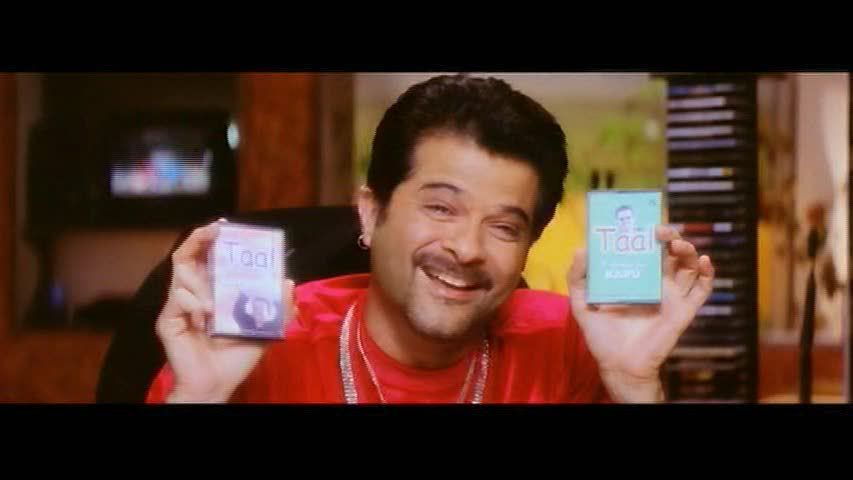

The odd and funny "moohahahHAHAHAHA!" Dr. Evil laugh moment.


The puppy again. What?


Later, as the more world-wise and cynical Vikrant begins to fall for his heroine, he starts to hit the liquor and, interestingly, his love is finally given raucous, epic expression in a drunken Sufi-esque chant, Ramta Jogi, where he recalls "drinking everything available" and "living entire centuries in a moment". This all seems to imply that Vikrant has aged past the era of young, pure Coca-Cola love and is now in the more hard-edge, emotionally baggaged red wine love. This is, of course, much more appealing and interesting (who needs bubblegum heroes? not us! Han Solo, all the way!) and has poignant Sufi undertones. Interestingly, this is also the only scene in the film where it seems that Mansi feels the slightest flicker of affection for Vikrant. Gasp! Is the Rumi working?

Well, no. Behold another symbolic scene: when we see Manav and Mansi's fathers laughing over a couple Coke bottles together. When we the audience and Vikrant witness this, we know it's time for Vikrant's heart to pack up. And when Vikrant drinks from a Coke bottle and hands it to Mansi, urging her to, "Drink up! They're our company sponsors!" she is hesitant. Sorry, my Sufi man, Coke love has beat wine love!

The music of Taal is just gorgeous - which is right and proper, as Taal is about music, after all. There's the spectacular Jungle Mein Bole Koyal, the touching Ishq Bina and the repeatedly-used leitmotif Taal Se Taal Mila. A vibrant and addictive soundtrack, we've actually been listening to it ever since the post-Yuvvraaj "A.R. Rahman is AMAZING!" boom here at the PPCC.
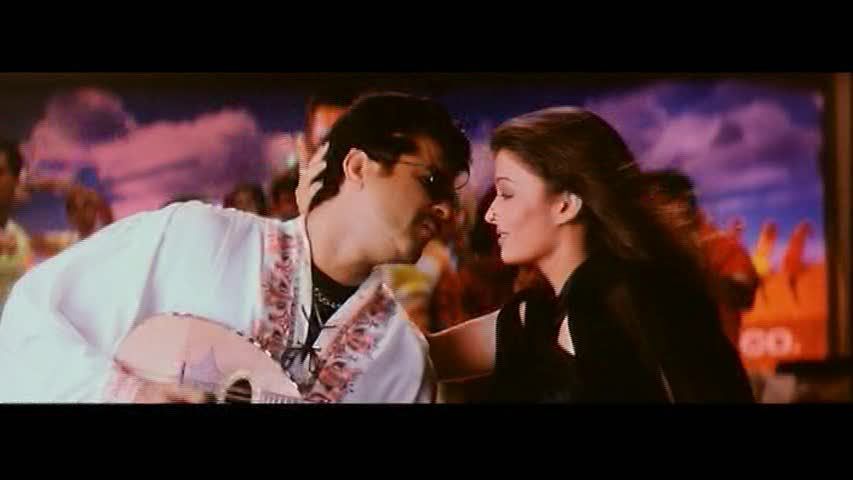

Beneath that hard, sleazy, oily shell of a man, there is a tender, loving spirit. Not convinced? Perhaps you'd prefer...


Performance-wise, Prof. Lutgendorf is, of course, right in noting that Anil Kapoor owns it and manages to make Vikrant a parody of his earlier screwball performances (and of SRK's performance in Dil To Pagal Hai): he is clearly OTT insane, pinballing from crazy to crazy, with moments of unexpected depth and vulnerability. When Vikrant asks Mansi desperately, again and again and again, "Do you love me?" We at the PPCC kept going, "YES, WE LOVE YOU!" And we do. We'll take one Vikrant and one puppy, please.


...THE PUPPY?!

Saturday, 10 January 2009

Trimurti (1995)


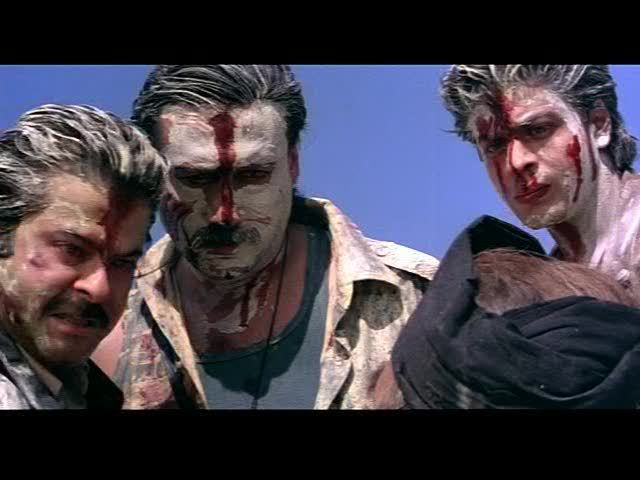
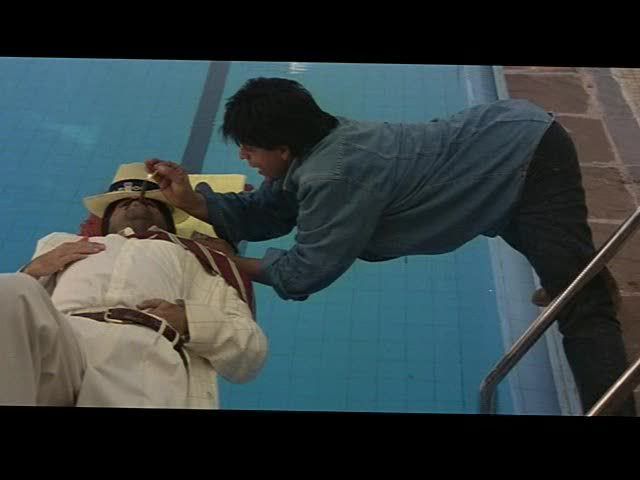
"Trimurti" also means "three statues" - and, look, the "destroyer" brother, "preserver" brother and "creator" brother have been caked in clay and adorned in the markings of the temple divinities! Hmm, subtle!


The epic flop Trimurti (a Hindu concept "in which the cosmic functions of creation, maintenance, and destruction are personified by the forms of Brahmā the creator, Viṣṇu the maintainer or preserver, and Śiva the destroyer or transformer") is good for a number of laughs, some epic pulpy spirit and the usual "awww!"-inducing glorification of brotherly love. Don't go into it expecting Subhash Ghai's usual masala fireworks, as you'll just be disappointed. The narrative is clunky, you could lose a Pinto in the plot holes, and the few sparks of life are quickly doused in pure badness. That said, if we at the PPCC were in the habit of grading films, we would give this a C. It's not good, but it doesn't FAIL as spectacularly as some other films.

The entire narrative relies on the stupidity of Saeed Jaffrey's character, Uncle, and the quasi-funny, quasi-melodramatic love between young Romi (Shah Rukh Khan) and Radha (Anjali Jathar). But wait - we should start at the beginning. Back in the day, there was a bad-ass female (!) police officer named Satyadevi (Priya Tendulkar). Satydevi's arch-nemesis was the kooky Kooka Singh (Mohan Agashe), who, apart from his wild fashion sense and facial tics, annoyed Satyadevi by being violently territorial over for the local Kali shrine. The Satyadevi/Kooka face-off escalates to increasingly grisly heights - he kills her husband, she kills his son - and Kooka eventually wins this round by framing Satyadevi and having her sent to jail. While in jail, Satyadevi gives birth to her third son, Romi, and, rather than placing him in the care of her brother, who we'll call Uncle Bumbling Idiot (Saeed Jaffrey), she tells him to give the baby to her prepubescent sons, Shakti and Anand. "Tell them they must raise their little brother!" she says.

Now, this may sound outrageous, but you'll see that Uncle Bumbling Idiot really is a bumbling idiot, and you wouldn't want him raising your children either. In particular, his most egregious idiocy and the one thing that drives the whole story forward: He forgets to tell the kids about Kooka Singh, the villain of the film! This would have saved everyone a lot of grief.


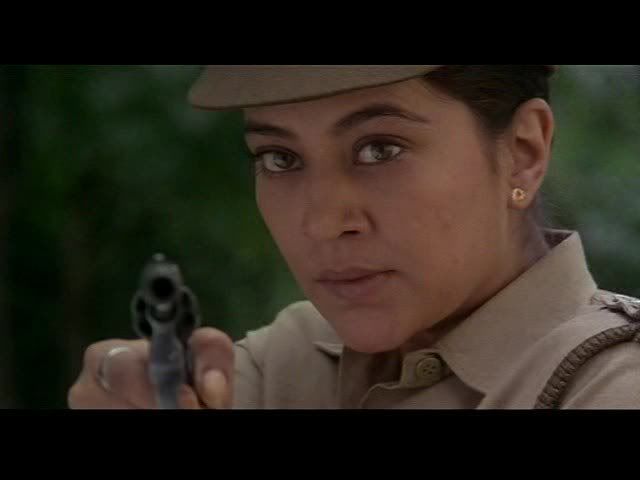
Strong, martial women - YES!


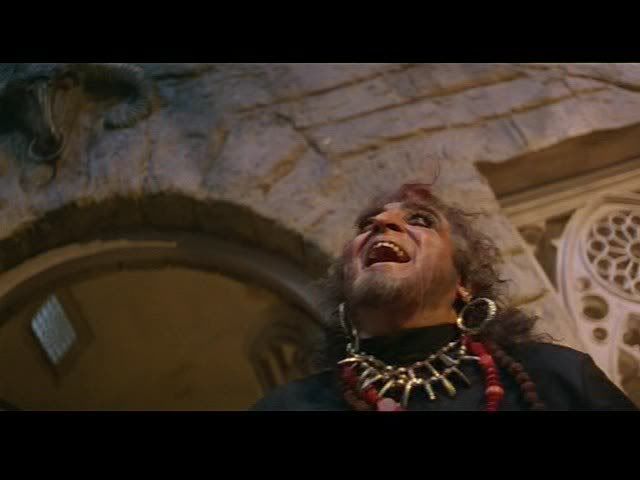
Mohan Agashe hams it up as the monstrous, ridiculous Kooka. Man, we last saw Mohan kicking it in the excellent Mississippi Masala. This was certainly a change.


Anyway, the little boys do what they can with their new little brother but eventually, as parents are wont to do, they disagree over how he should be raised. The eldest Shakti insists that their little brother follow the straight-and-narrow path: working hard, earning little and keeping his moral principles intact. The middle brother, Anand, instead thinks that they should get right down to opening liquor joints and selling cocaine as that's the only way to get ahead in the big, bad world. After one final argument, Anand storms out, moves to Mumbai and reinvents himself as Sikandar (Alexander/"conqueror"), the foster son of a low-level gangster (Satyendra Kapoor). Anand is, like, eight years old or something. Clearly a total bad-ass! (And guess who he grows up into? Yessss.)

Fast-forward to the present. Shakti (Jackie Shroff) is a now a poor, hardworking truck driver for the military. Little Romi (Shah Rukh Khan) has just completed his IB and is now very keen on marrying his childhood sweetheart, Radha (Anjali Jathar). Radha's family (among them, Tinnu Anand) is richer than Romi's, and so they refuse the brothers' proposal and humiliate them. An enraged Shakti flips out and breaks their Ming vase while a despairing Romi decides to abandon his brother's hard-work ethic and join the underworld in a hasty "get rich-enough-to-marry-Radha quick" scheme. And whose crime syndicate should he join but... yes, Kooka's! After a hilarious job interview in Kooka's dungeon lair, where Kooka sucks rooster bone marrow and scoots around on an office chair he's decorated in fur and horns, Romi gets the job. A few days later, at the similarly hilarious office party, Romi meets... yes, the legendary Sikandar (Anil Kapoor)! Romi and Sikandar immediately hit it off and become best friends, and it's only a matter of ninety minutes for identities to be revealed, families to be reunited and Kooka's demise via a trimurti of "land, sea and air" to come.

Honestly, if the story had been better-told, this film had the potential to be a really spectacular pulpy masala classic. Alas, the tone was often mishandled, and this made the logical inconsistencies all the more glaring. Part of the problem with tone was the mismatch between Shah Rukh Khan's performance and the performances of Anil Kapoor and Jackie Shroff. They were just on different wavelengths: Jackie and Anil playing it straight, SRK playing it... well, like mid-1990s over-the-top SRK. So much of the narrative depended on Shah Rukh Khan's character, too: it's because of his love for Radha that he joins Kooka's gang, meets Sikandar, causes Sikandar and Shakti to meet and everything to come to a climax. Furthermore, it's for Romi's love and Romi's loyalty that the older brothers fight. Should Romi follow the moral righteousness of Shakti, or the criminal rebellion of Sikandar? Yet, as we've argued before, Shah Rukh Khan has never had particularly good chemistry with his male co-stars. Since the masala genre depends so critically on believable fraternal love, SRK's failure to convince us of Romi's love for his brothers compromised the entire emotional weight of the story. Jackie Shroff and Anil Kapoor - veterans of fraternal love - were much more convincing.

The next problem with the film's tone was the hollow romance: the script couldn't decide whether Romi and Radha's relationship was lighthearted and funny, or melodramatic and intense. On this front, we can't really blame SRK: if there's one thing he is good at, it's romance.


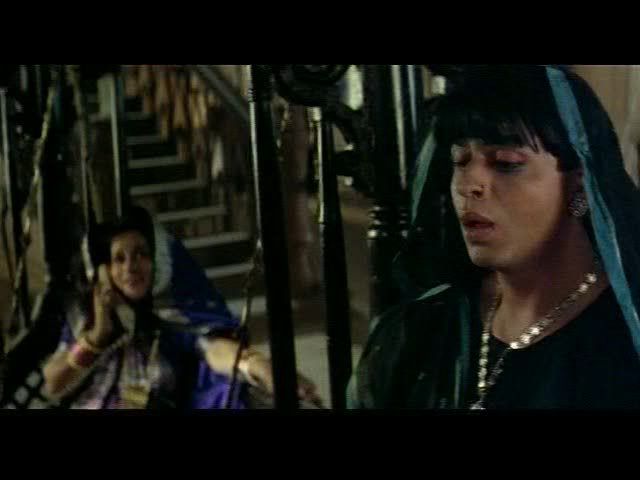
A rare opportunity to see SRK in drag! See, the romance should have just gone for comedy. It was certainly making us laugh.


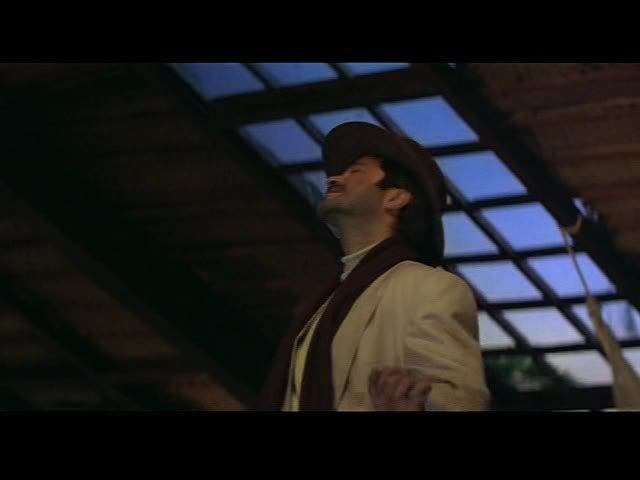
Now, we bought this film for Anil Kapoor and, while not really paisa vasool for an Anil Kapoor fan (his bombastic entrance cues intermission), he is one of the film's saving graces. Anil Kapoor worked extensively with director/producer Subhash Ghai and he has a particular skill at being consistently excellent, even in Ghai's poorer efforts. As this review notes, it is only during Anil's scenes that we have any sense of emotional realism (or sweet pulpy goodness - tears! breakdowns!). Anil's scenes with SRK are also the best in the film: SRK playing the adulating and worshipful younger brother, Anil the macho elder brother with a distinctly dorky hidden side. These scenes are broadly comic, and some moments - SRK fanning himself while Anil works the Stairmaster, SRK walking in on Anil's private jam out to old Hindi film songs - were very funny and very cute.


The scenes of Romi's growing devotion and love for his brother were the film's sweetest and most charming scenes.


And the hard-ass Sikandar's not-so-secret dancing dorkiness was also very cute.


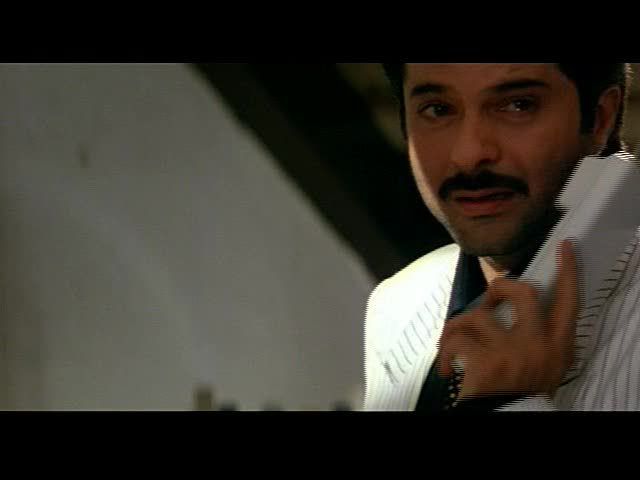
Not only dorky, but a woob as well! Oh, Anil Kapoor, don't cry. The PPCC loves you!


We at the PPCC consider ourselves very forgiving of trashy films. The one thing we cannot tolerate are trashy films with stupid, regressive messages - that combination of shoddy aesthetics and evil message-mongering is toxic for us. Trimurti is that rare case of a trashy film with an almost empowering message: the film is positively awash in feminine power, from the hardcore Satyadevi - who is more "Angry Young Lady" in the Amitabh Bachchan mode than the typical long-suffering Mom of masala films - to the constant thematic references to the goddess Kali. Even the eldest son's name, Shakti, refers to "divine, feminine power". In a genre which is rife with male-centric tales of passive, victimized women, it was very nice to see a more martial, kick-ass femininity (though it is, alas, the brothers who end up saving the day in the end... well, you can never have everything!).

Anyway, now that the review's done with, PPCC Readers in Delhi, we have a mission for you. Our current house favorite Anil Kapoor is auctioning a date with himself in Delhi (dinner and a movie!) for charity. One of you must bid in this auction, win it, and convey the PPCC's love and regards (and website address) to His Stacheliness himself. And then you must report back. Go, loyal minions!

Wednesday, 26 November 2008

Black & White (2008)

Subhash Ghai's Black & White is, unlike its title, full of ambiguity. Though the story itself may feel typical, its presentation is (surprisingly!) low-key and subtle. This was a refreshing change, since we had just finished criticizing Subhash Ghai for his overwrought and awkward directing in Yuvvraaj, and we were a little worried.


One big happy family. Sort of.


"Humanizing the terrorist" is a strange subgenre in Hindi films - all the films we've seen which tackle this issue inevitably come out like half-formed art films. They're not quite mainstream, but they're certainly already provocative because of the subject. Dil Se is one such film - and one of our favorite Hindi films ever - which examined the twisted infatuation of a naive Delhi boy for the tortured female suicide bomber. Dil Se was intelligent, dark, disturbing and fascinating - we highly recommend it. Another film from this genre which was made with less success was Fanaa. We would place Black & White somewhere between these two - not quite as engaging as Dil Se, but a lot better than Fanaa.

Mehmood (impressive newcomer Anurag Sinha) is a young, angry Afghan - the "Mr. Black" of the title. He is speedily introduced to us as a cold-hearted terrorist who kills a spying reporter in the first scene. Like Dil Se's Meghna, Mehmood plans to blow himself up in the Red Fort, Delhi, on Indian Independence Day (August 15). He changes his name to Numair Qazi, develops a cover story, and travels to Delhi's bustling Chandni Chowk area, where he is to lie low for the two weeks before the act.


The studly Anurag Sinha. And check out that composition? Is this the same guy that made Yuvvraaj?! How?!


Hey, it's Evil Guy from Devdas, Droh Kaal and Parinda. Looks like he's grown a new head, but no heart yet, alas.


Chandni Chowk is a hustling, bustling labyrinth of picturesque alleys and market stalls. It's also fairly representative of India's pluralism: the neighborhood is infused with Muslim culture, though there are also strong Hindu and Sikh presences. Generally, it's all very agreeable - everyone's friendly, everyone knows each other. Indeed, Numair/Mehmood eventually meets the locally famous Professor Mathur (Anil Kapoor) and his wife, Roma (Monsoon Wedding's Shefali Shetty). These two are an adorably wholesome, enlightened, activist Hindu couple - they're the type of people who would read The Guardian in the UK or listen to NPR in the States. Professor Mathur is a Professor in Urdu at the local college, and he's clearly well-versed in and enamoured with Islamic culture: he quotes Mirza Ghalib, corrects his Muslim pals on their Qur'anic interpretations, and is generally a peace-loving "Can't we all be brothers?" kinda guy. Yep - "Mr. White". Roma is instead a fire-brand social worker who has no qualms about publicly confronting ignorance and communalism. Yeah! You go, girl!

By some deviousness, Numair/Mehmood connives to enter their happy life. Since the Mathurs are well-known and well-respected in Delhi, he knows that they will be able to get him a VIP ticket for the upcoming Independence Day celebrations. However, as is typical of the genre, their goodness - and the humanity around him, including an unexpected infatuation from the girl next door - slowly wears down his badness until... well, you'll have to see just what happens and why.


Yet another fantastique composition. Go, Subhash!


The hustle and bustle of busy Chandni Chowk.


What's so satisfying about this film - apart from the fantastic set-up (strong women! religious pluralism! moral reformation!) - is how underplayed everything is. Never once does Subhash Ghai use aesthetics to emphasize Professor Mathur's goodness and Numair/Mehmood's badness. Instead, the realist treatment meant that we saw only their actions, sans embellishments. Gosh, it was almost hyper-realist! Not something commercial Hindi films are known for. Even the songs were fully-integrated into the plot: for example, when Numair/Mehmood and Professor Mathur visit a party or when Numair/Mehmood overhears the local garage band jamming out their most hypnotic qawwali tune.

Because of the lack of emotional cues, Numair/Mehmood remained a frighteningly ambiguous figure: he kills several people in the film, and yet he is not necessarily demonized. Rather the camera often pulls in to examine his expression: tormented and driven. There were several excellent subtleties which added texture: Numair/Mehmood witnessing the ground-level corruption of Hindu-Muslim youth leaders who jokingly threaten communal rioting in exchange for political gifts, for example, or the cynicism of his superiors. This was certainly the first film we've seen, Western or Hindi, which examined terrorism as not only religious fundamentalism (and, whoo boy, Numair/Mehmood's a pretty hard liner) but also as something which is driven by Machiavellian realpolitik. Indeed, ideologically-driven Numair/Mehmood's disgust and disappointment at these things were important catalysts in his road to redemption - again, another first! It wasn't just the gooey love of the Mathurs, it was some cold, harsh realities, too.

The whole "redemption" thing is treated in several other new ways. Gosh, we can't give too much away, but let's just say the ending was ambiguous and very un-masala. Also, following along this realpolitik cynicism, the movie seems to advance another interesting notion unlike other films in the "terrorist" subgenre (even Dil Se!): that is, horrible tragedy does not necessarily lead to revenge. Again - massive spoiler that we won't reveal - but Numair/Mehmood witnesses some pretty gruesome stuff and, most importantly, witnesses Professor Mathur's painful but iron-willed acceptance of it. This reminded us of Paul Collier's work on the socio-economic causes of civil war; his basic argument is that it isn't ideology or ethnicity or race or religion, those are just cards played by economic players seeking what everyone else wants: economic and political power. Black & White was surprisingly complex film in that it seemed to be saying the same thing. It therefore seemed to imply that terrorists may not be totally to blame - it's the people that guide them, lure them in and use them. As one character in the film says (incidentally, the terrorist leader himself!): "You have to understand the causes of terrorism to end terrorism, you can't just target the terrorists themselves." Watching Numair/Mehmood's gradual awakening to these realities - the fundamental reality that the world is never black and white, and he's been essentially conned into thinking so - is especially powerful.

The performances - on which so much depended in a film like this - generally delivered. Anurag Sinha was especially impressive as the tormented, brooding Numair/Mehmood. He toes the very fine line between remaining true to the character's intolerance, ignorance and ruthlessness while also displaying the character's humanity. Such a performance could have easily been mishandled - too evil, too maudlin, too fake. Instead, Anurag Sinha managed the amazing task of making Numair/Mehmood appear both vulnerable and frightening, both boyish and far from naive. And all he did was basically glower! Amazing. He has a great intensity of expression and we look forward to his future work.


Goodness us! Can Anil Kapoor do any wrong these days? Well, yes. But this guy is just on the up and up on the blog circuit and in our dil. Go, Anil, you amazing performer you!


Anil Kapoor... ah, well, Anil. We're starting to think there's been some big mistake in Mumbai. Why did Anil even waste his time going for that brand of SRK/Salman Khan/Amitabh Bachchan Bollywood hero performing in the 80s and 90s? He's clearly a very talented actor - on the par with Om Puri or Naseeruddin Shah or Raj Kapoor - and he clearly has only just started to do roles which merit his time. We're also happy that after five (or six?) Anil movies so far, he's provided profound, complex performances in all except one. In Black & White, he is generally very good again, but not great. In particular, his performance reminded us of Naseeruddin Shah's performance in Chakra - both began with a sort of forced light-heartedness and only came into their own towards the end, post-some trauma. There's a scene in particular which was very impressive (and affecting), as Anil attempts to hide his grief, it could have been something straight out of The Son's Room. And no one is doing that sort of work in Bollywood right now - except maybe Naseer. So, happy to report: Anil Kapoor Month continues merrily along at the PPCC!

We had high hopes for Shefali Shetty, as we hadn't seen her since Monsoon Wedding and weren't even aware she worked in mainstream/semi-mainstream Hindi cinema. Although her character was great, we felt there were several moments when she bordered on becoming a caricature of the fiery, headstrong woman. If we can fantasize, this would have been a perfect role for Neetu Singh - Neetu, where are you?! When are you coming back to the industry?! Pleeease!


Shefali's character was a bad-ass and we loved her. You tell 'em, girl!


That's all a lot of gushing, you might be thinking, but alas, the film is far from perfect. The most glaring problem is that it failed to emotionally engage us. That is, our brain was happy, but our dil was mostly left out. We blame this completely on whoever wrote the background music. Background music is a pretty integral part of the movie-watching experience - at the most facile, it gives us our emotional cues. While we appreciate Subhash Ghai going for a tamer, more documentary-style style in this film (complete with hand-held cameras!), we couldn't make heads or tails of the background music. It was mostly tinkling piano tunes that ranged from sounding weirdly elevator jazzy to Mister Rogers-esque. Suffice to say, it didn't engage us and instead impeded a lot of our emotional involvement (dude, you don't want to be thinking about Mister Rogers when you watch this movie). The songs, however, were all tasteful (considering the gruesome topic!) and enjoyable.

When we asked around, it seemed that no one's seen this film. "The trailer looked terrible," one friend said (rightly, we think). But come on - are we really the only ones? If so, all you PPCC readers, get thee to a DVD place and check this out. It's not the best, but it's different and thoughtful and we want to hear your opinions too!

Thursday, 20 November 2008

Yuvvraaj (2008)

It's a little disconcerting how often we've tagged films with both the "trash" and "transcendental aesthetics" labels. But just like Arun Krishnan astutely remarked, Bollywood movies have that strange ability to swing from ridiculous to sublime at the drop of the hat.


Following on our trend of being super timely!


Now, don't get too excited. The sublime moments in Subhash Ghai's latest film, Yuvvraaj, come few and far between. In fact, we can count them all on two fingers. And they both involve Anil Kapoor, who was SO FREAKING AMAZING OUR DIL PRACTICALLY EXPLODED WITH LOVE. But more on that later.

Yuvvraaj follows the trials and tribulations of three alienated brothers as they fall out of and back into brotherly love. Eldest is the autistic Gyanesh (Anil Kapoor), a musical mastermind described as suffering from "genius disorder" (AKA Williams syndrome?). OK, we'll buy that for a dollar - but only because Anil is so good. Next in line is the proud, turbulent-with-a-heart-of-gold Deven (Salman Khan) - he is ostensibly our hero. Third and last is the spoiled, cruel Danny (Zayed Khan). When the three brothers' ultra-billionaire father passes away, there is a scrambling within the family to see who has inherited all the wealth. Unsurprisingly, the father has left everything to Gyanesh, and filled his will with caveats that it's basically Gyanesh's or charity's. To ensure that no foul play occurs, the will entrusts Gyanesh's safety to two men whom we will call Evil Uncle (argh, we don't know his name, but he was Meena's uncle in Mississippi Masala and SRK's dad in Kabhi Haan Kabhi Naa and he was fabulous) and Good Uncle (Mithun Chakraborty).

At first, there is indeed a lot of foul play. Danny, motivated by pure evil, tries various methods of getting the money out of Gyanesh - manipulating, harassing, slapping. Deven is likewise trying to pry that cash free, though his motives are marginally more acceptable: he's in love with the serene cellist, Anushka (Katrina Kaif), but he can't marry her until he proves to her father (Boman Irani) that he has the means to support her rich-girl lifestyle. Deven hatches a great scheme: get close to Gyanesh, butter him up with affection and convince him to hand over the cash willingly. Predictably, the three brothers are on the road for some masala-style dil-squishing reconciliations. We get the usual satisfyingly juicy melodrama and sweeping shots of European country roads (this time, near Prague!) on our road to a very Aa Gale Lag Jaa-esque ending.


The sets were totally stolen from Sanjay Leela Bhansali's Black.


So our thoughts? Well: it is a horrible, poorly-made film with wonderful music. The finale was terrible, yaar, and we cried a little too. Hence the trash/transcendental problem. It was bad. Terrible. And yet, for a few brief moments, it all came together perfectly and moved us tremendously. But no! No! Our intellect couldn't handle the badness. And Subhash Ghai is supposed to be one of the best?

Because the problem, as far as we could tell, was really the direction. The pacing was all wrong. The emotional tone of many scenes was mishandled or jumbled up. It felt Sanjay Leela Bhansali-esque: ridiculous and falsely over-the-top emotionalness, bordering on the farcical. (Indeed, we spent most of the first act thinking this film suffered from the SLB Devdas effect: that is, a series of amazing and poignant song picturizations linked by cringe-worthy scenes.)

And yet, some things were so well-done that they lifted us momentarily out of the trash: in particular, A.R. Rahman's divine music and Anil Kapoor's performance. Just earlier today, we were speculating with optimistic curiosity about Anil's role over at Filmi Girl's. Well, Filmi Girl, get thee to the cinema! And Rum, you too - tum bhi jao! Because Anil delivers, and how. Where do we sign up for the fan club?

Indeed, it's the combination of Rahman's music with Anil's performance which brings us to sublime moment #1: the picturization of the song, Manmohini Morey. As soon as this gets up on YouTube, we're adding this to our Moments of Transcendental Aesthetics series. Because this scene was so good it made our guts churn (as Suketu Mehta described good Bollywood... or was it Anupama Chopra?). We're not kidding. We haven't felt so moved, in such a raw way, in a very long time. And it was the memory of this scene which made us cry when poor, poor Anil suffered all that emotional violence later in the film. And what's even crazier - this same scene is played for laughs in the trailer we saw last week! Ah, but it was so freaking good. We won't tell you much, since that'll spoil things, but suffice to say that it was perfect - the awe of Prague's music scene, his piercing joy which visibly frightens him, his growing crush on Anushka.


OMG, Anil, don't cry, we'll protect you forever.


Yeah. He did it. Anil Kapoor delivered the equivalent of a Raj Kapoor in Awaara type of performance. The type of performance which not only forgives past sins but all future ones too. And he did it in a terrible film, too! While everyone else floundered amid the crazy direction and odd cuts - Salman Khan, Katrina Kaif, Boman Irani, even Mississippi Masala Uncle! - Anil knocked it out of the park. Just amazing.