Showing posts with label anil kapoor. Show all posts

Tuesday, 28 April 2009

Make this movie, universe!: Lord of Light

Many people in the West think that, in my country, because of our religions, because of our history, because of I don't know what, somehow we are more in tune with our spirituality, more at one with the forces of Nature. Well, we are! So well done, all those people who said that!
- Guru Maharishi Yogi, Goodness Gracious Me

His followers called him Mahasamatman and said he was a god. He preferred to drop the Maha- and the -atman, and called himself Sam. He never claimed to be a god. But then, he never claimed not to be a god. Circumstances being what they were, neither admission could be of any benefit. Silence, though, could.
- the first lines in Roger Zelazny's Lord of Light

A new project here at the PPCC: Make This Movie, Universe!
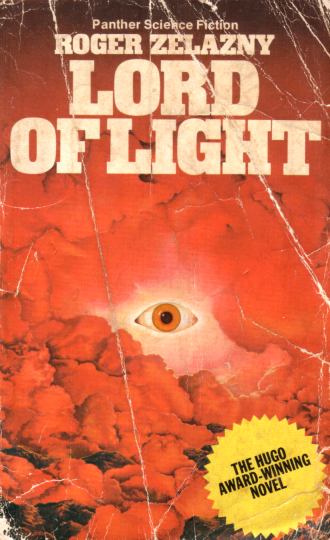


Roger Zelazny's Lord of Light is one of our favorite books. It combines cross-cultural pollination, spirituality and wacky science fiction with irreverence, comedy and genuine humanism. It is RIGHT up our alley.

Plot: In the far, far, far future, Earth is dead and a nameless new planet has been colonized by the crew of an old ship (the "Star of India"). Living in a post-Singularity-type world, they use advanced technology to transfer consciousness from body to body, as well as get up to other fancy tricks (nuclear-powered chariots, for example). Many generations have passed since the original colonizing of the planet, and the original ship crew (the "First") have now manufactured a literal Hindu reality: they've taken on the roles of gods, reincarnating themselves into Brahma, Vishnu, Kali and so on, and meanwhile keeping the rest of the population (their descendants) stuck in a superstitious, pre-industrial society.


The new British (?) cover. Classy.


One of the "gods" becomes disgusted and disappointed with this endless, unfair cycle of reincarnated oppression, and he decides to shake things up a bit by repeating Earth history and introducing Buddhism. Adopting a new body and calling himself Prince Siddhartha, he goes through the motions of the original story of Buddha - who, for those a bit rusty on their 2,500-year-old Indian history, rose to be one of the main challengers to the Brahmin/Hindu hegemony of the time. Annoyed, the other gods exile him and eventually there is a great battle over the fate of the new planet's humanity and - especially - its soul (if, well, Buddhism believed in a soul).

The book is chock full of hilarious anachronisms and philosophical ironies that turn your brain pretzel-shaped. Shiv Sena's probably not going to like it - the crew member currently reincarnated as an ultra-macho Brahma was a lesbian originally. Similarly, Christian fundamentalists might be annoyed by the subplot of the ship chaplain who rebelled against the faux Hindu hegemony and attempted to mass convert the planet to Christianity using an army of zombies, meanwhile earning the moniker "Prince of Darkness" for himself. And what would Buddhists think of the idea that you can "fake it 'til you make it" on the way to Enlightenment? Or the mish-mashing of the critical atman/anatman (i.e. soul/no-self) discussion?

Well, the book's vibe is more comedy than provocation, and its gentle probing of philosophical issues and ambiguous interpretation should make it stimulating and palatable to anyone who likes to think about this sort of stuff. Such as the PPCC!

"For a spur of the moment thing, you came up with a fairly engaging sermon."
"Thanks."
"Do you really believe what you preached?"
Sam laughed. "I'm very gullible when it comes to my own words. I believe everything I say, though I know I'm a liar."


The film: Now the ever-enthusiastic PPCC is not the only one who thinks this would make a great film. Indeed, Zelazny sold the book rights way back in the 70s, and a truckload of money was set aside to film it and then later market the sets as a science fiction theme park (!). This idea was shelved and then - another twist in the increasingly weird story - the script was used by CIA agents, who posed as film producers, in order to rescue Americans during the Iran hostage crisis! REALLY!

Gosh! They could make a movie about making this movie!

The dream: What would make this movie the end-all, be-all coolest movie ever? Well: the perfect cast and crew, of course! And who would they be? We'll tell you.

Director

Since a Lord of Light film would require a sort of primordial, steampunk-ish, Vedic/pre-Vedic-era India setting, as well as the sci-fi spectacle that is the "Mount Olympus" heaven zone, we need a director with a strong, saturated, zany vision.

Our top choice would be Terry Gilliam. He of former Monty Python fame, we think his bizarre, LSD aesthetics (as seen in Fear and Loathing in Las Vegas) would be perfect for the acid trip that is this neo-Hindu/neo-Buddhist world of fakes and charlatans. We also think hippie-fying the proceedings would add an interesting meta critique of the whole Karma Cola hippie trail "New Age"-ist misunderstanding of Hinduism and Buddhism. Eh? EH?!

Otherwise, Mira Nair... no, not because of Monsoon Wedding or (our beloved) Mississippi Masala, but because of her oft-overlooked Vanity Fair, which featured flamboyant fashion (Jonathan Rhys-Meyers' hairstyle, ho ho ho!) and the most spectacular, elephant-riding "oh, dammit, let's just move to India!" ending ever found in film.

Cast

The "hero" role of Sam would require someone who is at once down-to-earth and epic. Someone who can project a sense of superheroics coupled with Everyman good humor. And who is the best Everyman superhero? Duh. Anil Kapoor.

And if Anil Kapoor's going to be Sam, then clearly the role of Kali - who was Sam's wife in previous incarnations, but is now his arch-nemesis - must go to Madhuri Dixit.
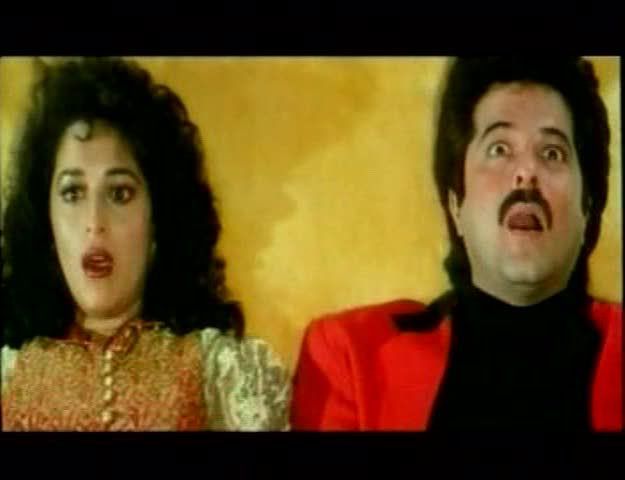

No, we never miss an opportunity to sell Anil/Madhuri. And what a comeback vehicle this would be!
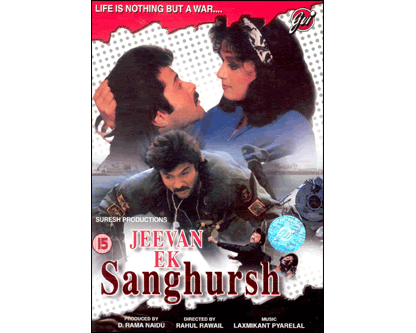

Jeevan Ek Sanghursh = Life is a struggle. AKA the First Noble Truth, according to Buddhism. Coincidence? WE THINK NOT! This film - this cast - clearly, it was meant to be!


Now that basically seals the movie's coolness for us, but perhaps there are some philistine unbelievers out there who are not so easily swayed by seeing the Anil/Madhuri pairing in a cheeky film about sci-fi Buddhism. Well, all we can say to such tough nuts is...

A pox on you! Hex, hex!

Goodness gracious us, edited to add: We forgot to talk about one of the main determinants of a film's awesomeness: its soundtrack! No doubt we'll spend the rest of the week fiddling with our iTunes playlists to make the Greatest Most Excellently Awesome Lord of Light Soundtrack Ever... but, off the top of our head, we can say such a soundtrack is likely to include:

1 part Philip Glass or Michael Nyman
1 part Explosions in the Sky or Radiohead in Kid A mode or Sigur Ros
season with old school 1970s masala to taste
a dash of carnatic vocals
and a pinch of George Harrison learning the sitar from Ravi Shankar

...and voila! It would be delicious.

Sunday, 26 April 2009

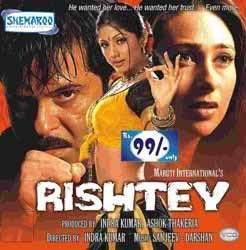
Rishtey (2002)


Inoffensive and sweetly trashy, we didn't mean to watch all of Rishtey (Bonds)... but we ended up sticking with this film to the very end, cheering our beloved Anil Kapoor on as he boxed against an evil, towering white man named "Scorpio" (or, as Scorpio himself would prefer, "SCORPIOOOOOO! RAAAH!") in the film's finale. What can we say? Watching Anil Kapoor perform is like receiving a direct injection of opium to the heart. It's addictive, and we LOVE IT.

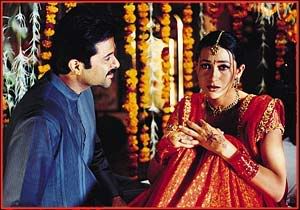
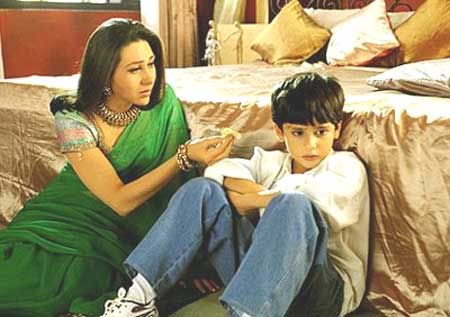
There were other addictive ingredients to Rishtey - plot twists reminiscent of the lovely Aa Gale Lag Jaa or the gloriously pulpy Calcutta Mail - as the film follows the beleaguered, working class Suraj (Anil Kapoor) in an extensive and violent custody battle against his evil, rich in-laws (led by Amrish Puri, of course). Suraj's brainless, estranged wife, Komal (Karisma Kapoor, lacking a lot of charisma indeed), gets entangled in her evil father's evil attempts to keep her apart from her loving husband and son because, as he sees it, it's better to be dead than poor. The film and we, the audience, naturally side with the poor all the way through - for example, Komal's family pad is a cheesy Art Deco mansion (yuck!), while Suraj and son live in maybe the coolest slum/chawl neighborhood ever (complete with Ferris wheel and a step well! in the middle of Mumbai!). Clearly interior decoration is a sign of moral righteousness, and tackiness is far from godliness! Throw in one PPCC audience stand-in, a plucky working class fish-seller, Vyjanti (Shilpa Shetty), who falls for Suraj big time and begins to see Anil's smiling face superimposed on random babies and butter-churners (insert your own comedy sequence here), and you have an enjoyable junk food film.


Pre-problems.


The best-made Custody Battle Hindi film, we reckon, is 1973's Aa Gale Lag Jaa (Come and Embrace Me), whose glorious gloriousness relies on the son and father's matching cutenesses. Master Tito and Shashi Kapoor were at the height of their adorableness in 1973 - and, heck, even the evil, rich father-in-law (Om Prakash) and easily-confused wife (Sharmila Tagore) were sympathetic.

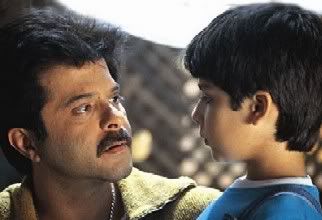
Rishtey, unfortunately, is peopled by less charismatic types, all of whom are in their decline. Indeed, the entire film's quality rests on Anil Kapoor's shoulders. Thankfully, we love Anil Kapoor - BIG TIME - and we think his particular post-2000 brand of barrel-chested, mustachioed, father-as-superhero charisma is perfect for a role like this.

"Go, Anil, go!" we cheered, as he punched goons into orbit while bellowing No one touches my son!

"Awww!" we sighed, as he wept over the endless court cases and had various emotional breakdowns on the shoulder of his sympathetic Punjabi stereotype friend.


Mom?


Or Dad? Clearly Dad. Hello!


There was also an appealingly stupid side plot in which poor old Suraj, who used to compete in World Wrestling Federation-esque boxing matches (rings of fire! pits of spikes! artificial rain!), decides, damn it all, to perform one last time in order to get money to pay for the court fees. Or something. And all of this when, uh oh, Suraj's ancient injury from an old WWF match has left him with brain damage! "If you get hit right here again," the doctor informs Suraj, pointing to his forehead, "you may be paralyzed... or be left a vegetable... or DIE!" Of course, the evil father finds out about this and swiftly hires "SCORPIOOOOOOOOO! RAAAH!", a mercenary American WWF wrestler (not Mickey Rourke... alas), to punch Suraj repeatedly in the forehead.

Hmmm, a hardened ex-wrestler with a gooey center and Achilles-like weakness who, after familial estrangement, steps into the ring again for one final, possibly fatal fight? Clearly The Wrestler was a remake of Rishtey! We rest our case.

Music-wise, Suraj and Komal's love anthem, Har Taraf Tu Hi, was well-filmed and catchy - we've been singing, "Hai... hai-hai-hai-HAI chaahata ho itna tujhe!" all the way to the elevator and local Indian restaurant, where it's been playing on loop as well. And Anil's school-boy haircut in the song? The jerky posing? The columns?! The priceless.

And guess what sign we are? SCORPIOOOOOOO, RAAAH! Anil: plz make more boxing melodramas. Perhaps a remake of Crying Fist? We've already noted that Anil and Choi Min-Sik are the same person.

We love you, Anil Kapoor!!!

Saturday, 7 February 2009

Reality implosion #4: Aneel Kaporre's continued adventures in Amreeka!

Oh, "Aneel". Bless. The surreal adventures continue.


"Whoops! 'Slumdog Millionaire' baddie Anil Kapoor gets in the wrong car in New York!

This video makes the PPCC happy it's not Aneel, though, here accosted by a warbling flock of autograph-seekers and smartasses ("What can I do to be a good Bollywood actor?" "Come on, bust a move for him, Anil!").


This is like that freaky video of Shah Rukh Khan drowning in a sea of crazy people and having his hat ripped off his very head!

Thank God we're not famous, especially in the Web 2.0 age.

Wednesday, 4 February 2009

Reality implosion #3: Aneel Kaporre takes on Amreeka!

The contents of our "anil kapoor" Google alert are getting more and more surreal with each passing day.

What? Don't judge us if we have a Google alert on Mr. India. We were serious when we said we're joining his fanclub. It came with the membership.

Anyway: "A-neel Kapore" is living it up big time in Hollywood, conspicuously consuming and pimping his fly wheels, getting a full bio on CNN, dancing with that lady on the Today Show, bear-hugging Regis, having his facial hair scrutinized and his stache declared a "Yes!" from Esquire Magazine, being called the "bees knees" by New York Magazine, and achieving a weird sort of "the alt.hipsters love you in a cultish ironic way!" status on TMZ.

This is all very strange.

Let's hope Misterrr Aneel "Millin-aaaiihhrrr" Kapore can keep surfin' these waters even after the tidal wave of Slumdog settles. We don't want this to be a Benigni repeat, where Hollywood gets briefly enamored of a quirky, delightful "foreigner" and then everything fizzles out into nothing.

In the meantime: a photo!


You all know what we think of His Stacheliness.

Tuesday, 3 February 2009

Saaheb (1985)

Ahh, the unique, hidden grandeur of mediocrity! The glories of being pedestrian!

If Pixar's The Incredibles showed that not everyone can or should be considered super, then Saaheb shows that not everyone has to be super to be special, needed, happy or loved. It is a veritable celebration of the middle child - the kid that's neither the hero nor the underdog, the one who isn't rebellious, spectacular or often even noticed. In a clever symbolism, the titular protagonist, Saaheb, has only one talent: goalkeeping. Like the goalkeeper, he occupies an unglamorous but critical and unique role. "No one notices whether I'm here or not!" Saaheb says. And yet, like the goalkeeper everyone forgets about or even disparages ("He can't even score a goal!" his father grumbles. "All he does is stand around!"), it's Saaheb who is the family's protector and, in the end, savior. In fact, so touching is this theme of hidden joy and uncelebrated sacrifice that, even as the audio skipped and the cameraman forgot to focus, the PPCC ended up a blubbering pile of soggy, used tissues.


Don't cry, middle child, you're a star!


In a drab, crowded working class house, a hypertensive widower (Utpal Dutt) lives with his three married sons, their wives, his unmarried son - Saaheb! (Anil Kapoor) - and his unmarried daughter, Bulti (Nandita Thakur). Our secret hero, Saaheb, is the typical child lost in the middle: he is the peacemaker and, often, the errand boy for everyone else in the house. His best friends in the family are the young Bulti, with whom he scraps and teases, and his protective older sister-in-law, Sujata (Rakhee). Both Saaheb and Bulti are constantly made by the rest of the family to feel that they're worthless weights: Saaheb because he has failed college (again!) and is jobless and prospectless, Bulti because she is still unmarried. A suitable husband is eventually found for Bulti, but the family despairs: they can't afford the wedding! While their father grieves over leaving his children with nothing and having to sell the house to pay for Bulti's wedding, the older children connive and plan on what they'll do with their share. The only ones who seem to care about keeping the house intact are Saaheb and Bulti. And in the end, it's goofy, forgotten Saaheb who saves the team.


The family.


Grafted over this story is the obligatory romance which, while a little extraneous, is still quite charming: Saaheb's neighbor is the outgoing, tomboyish Natasha (Amrita Singh) who initiates the courtship by brazenly calling over from her balcony: "Hey! Want to be friends?" Saaheb resists for about half a song, and then they frolic around for yet more songs - sometimes on the pavement, sometimes in their fantasy future.


An Anil Kapoor character dominated by a strong woman yet again.


Like Virasat, this is another Anil Kapoor movie that intelligently tackles dharma. Except here the dharmic duty - the submission of the individual to the larger community - is just portrayed as straightforward, poignant sacrifice. So none of those hairy moral consequences and ambiguities - thank goodness for our brain! - but with the same delicate, humanistic touch - thank goodness for our heart!

There was also an interesting Buddhist shout-out in the end. This gives the whole dharma issue a fresh, new spin, as we're not talking about being a cog in the almighty caste system à la Hinduism, instead we're talking about being a drop in the large, amorphous, interdependent ocean à la Buddhism.

OOH! Time out for a completely unrelated Buddhist joke!
What does the Zen Buddhist ask the hot dog man? "Make me one with everything."

Wait, wait - we've got another one!
How many Buddhists does it take to change a light bulb? Two. One to change it, and one not to change it.


Harr harrr harrrrr...

Anyway.

Where were we?

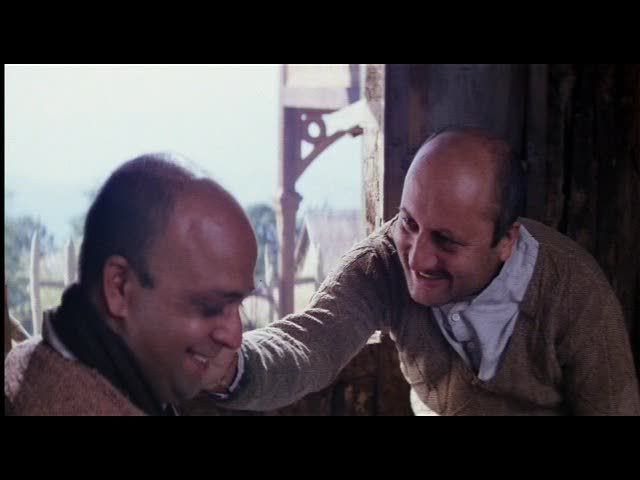
Oh yes - so Saaheb is directly likened to Siddartha Gautama, the founder of Buddhism. While this is a bit of a stretch - Saaheb's a great guy and clearly in tune with the Buddhist philosophy of interdependent existence and humble compassion, but uh... - it's still a really novel parallel. Good ol' Siddartha just doesn't come up in movies that often! And maybe it's not such a stretch: compared to his selfish brothers, Saaheb's definitely further along the path to Enlightenment, that's for sure.

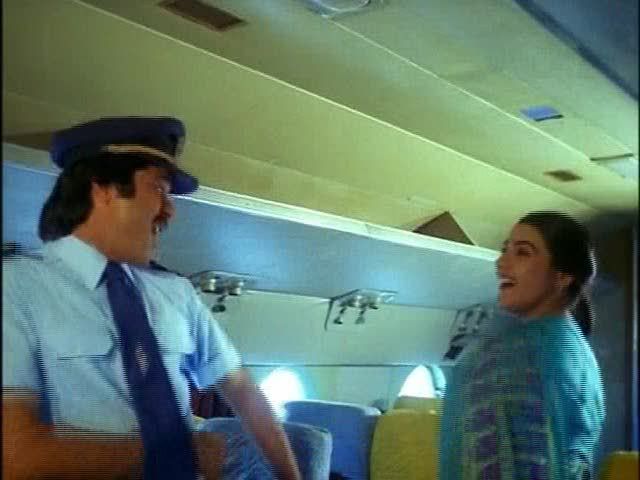
The other great thing about Saaheb, as we mentioned earlier, is this glorification of the ordinary. Generally, films either deal directly with the realization of your wildest dreams, or deal with the painful fall-out of realizing that your wildest dreams are not so great or just plain unattainable. Saaheb and his beloved Natasha instead dream small: and yet even these humble aspirations (working as flight attendants or train ticket collectors) are transformed into something Elysian and grand and perfect, just by their sheer joy. In the end, we cried a lot more than Saaheb did for his new future because we just couldn't accept it with the same easy-going malleability as him!


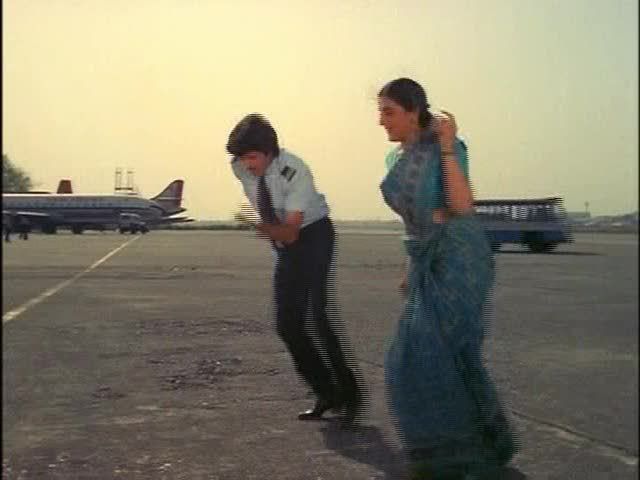
This song became our favorite when Anil and Amrita started cavorting around the airport.


This cap doesn't capture the grand, open-space fun of dancing on the tarmac while planes take off. Wheeee!


All the performances are relatively understated and charismatic (and Anil Kapoor is awfully boyish and skinny!). The production value is low, in keeping with the setting, and there are few songs. Yet this was such a sweet nugget of a film, with such a contented (even enlightened!) message, that we definitely recommend it.

And don't forget, PPCC readers, Anil on Regis tomorrow!

Monday, 2 February 2009

Reality implosion #2

We live in a world where Anil Kapoor gets billed over Steve Martin, who is referred to as an afterthought.

From the Orlando Sentinel blog:
Tuesday morning: "Who Wants to Be a Millionaire" host meets "Who Wants to Be a Millionaire" host.

Regis Philbin, who helped make "Millionaire" a sensation in the United States, talks to Anil Kapoor, who plays the host of the Indian version of the game show in "Slumdog Millionaire." You can see the interview at 9 a.m. on "Live With Regis and Kelly" on WESH-Channel 2.

Kapoor has been called the "Indian Regis Philbin." I wonder what Philbin thinks of that designation if he's seen the movie, which is the front-runner for the Academy Awards' best picture.

Steve Martin will be another guest Tuesday.


"Oh yeah... and Steve Martin" is the name of our new band.

Gentle PPCC readers in America: please watch and report back!

Monday, 26 January 2009

Taal (1999)


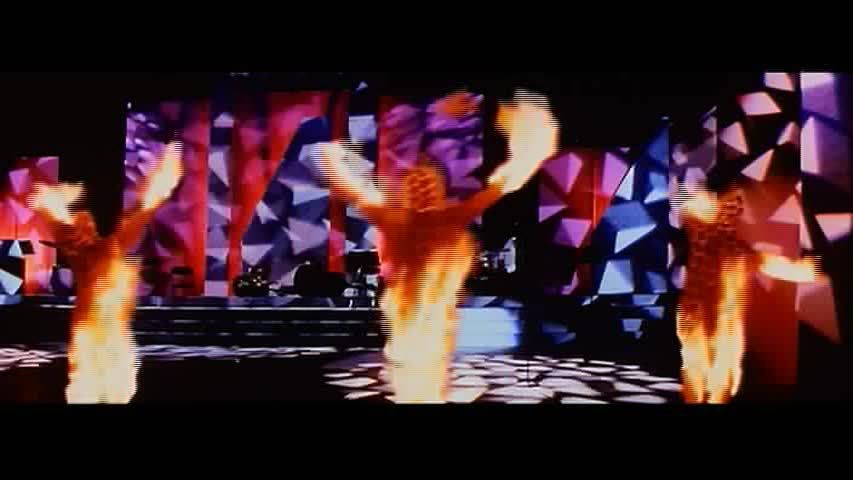
Thank you, thank you. For my next number, I will set my backup dancers ON FIRE.


Taal (Beat) is a flashy, tacky spectacle that is a lot of fun as long as you can cope with Akshaye Khanna's hideous haircut. The music by (Oscar-nominated!) A.R. Rahman is, as in Yuvvraaj, leagues beyond the film's quality - except that Taal is a very decent little story with pitch-perfect narrative form, whereas Yuvvraaj was a car careening around with no driver. Taal demonstrates again - as Black & White and Ram Lakhan - that director Subhash Ghai has a cunning ability to just crash into genius sometimes. Because Taal was really, really well-told, with an ending that aspired to Dilwale Dulhania Le Jayenge or Kabhi Alvida Naa Kehna in terms of sprinting, sobbing, gargantuan satisfaction.


THE HAIR. LOOK AT HIS HAIR.


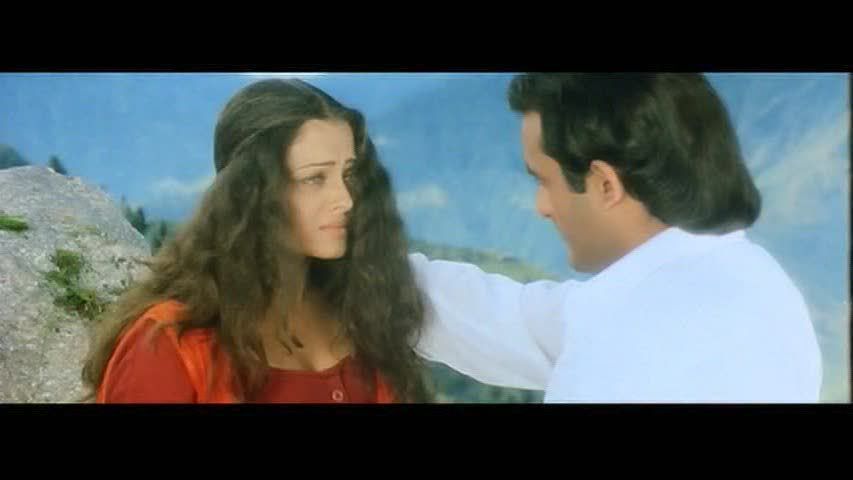
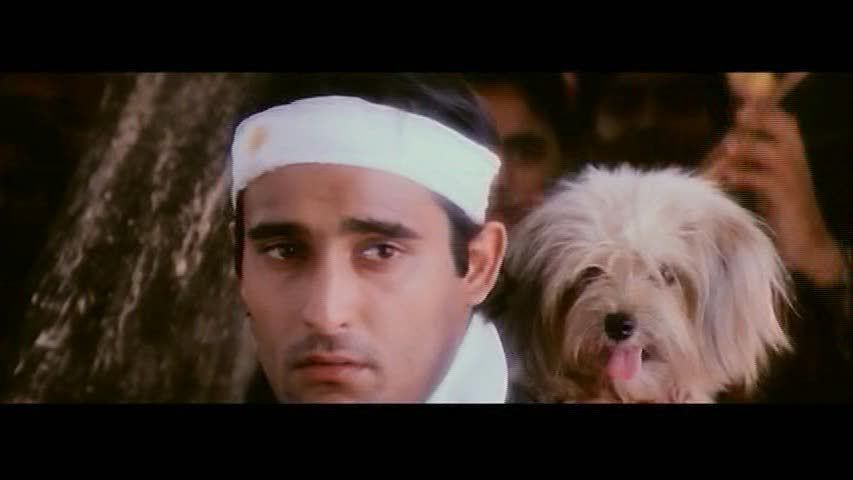
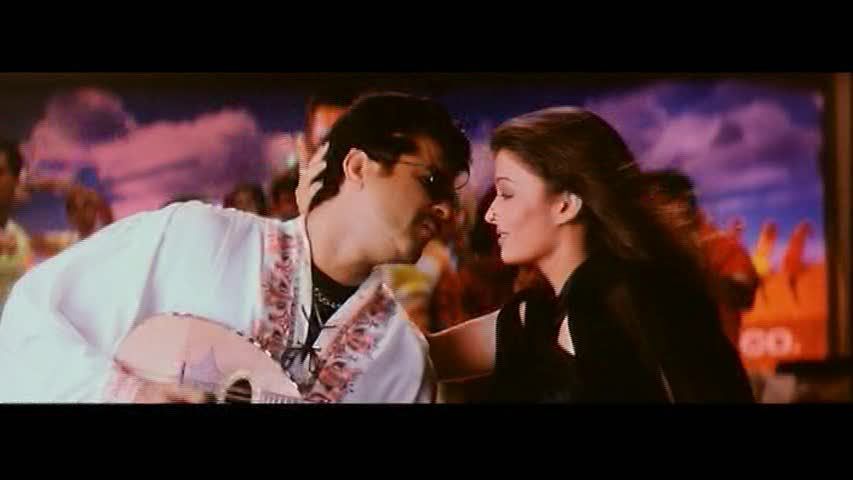
The story is simple. London-based rich boy Manav (Akshaye Khanna, in The Hair) accompanies his dad, Jagmohan (Amrish Puri, in gentle paternal mode), to India for the first time. There, in the gorgeous setting of Himachal Pradesh, Manav spots village girl, Mansi (Aishwarya Rai). Her father is a locally famous folk musician, Tara Babu (Alok Nath), and, when not accompanying her dad on one of his folk songs, she teaches yoga and runs around in the rain. The lovers are smitten, leading some of Manav's evil relatives to grumble and gripe about gold diggers and poor folk who don't know their place. Eventually, Manav and his wealthy family head down to Bombay - but not before Manav and Mansi exchange tender embraces, an onscreen kiss (!), a scarf embroidered with "Manavsi" (GET IT?! LIKE BRANGELINA!) and promises of eternal commitment.

Not long later, Mansi and her father head to Bombay too in hope of setting up the marriage. Unfortunately, they come to the mansion "without an appointment" and on a day when Manav is out - so the evil relatives have a helluva time prolonging the tortures and making Mansi and her father undergo a nine-hour game of musical chairs in the burning sun (this started to feel very Alice in Wonderland after a while). Properly humiliated and grumpy, Mansi and her father confront the Evils, and things degenerate into name-calling and bitch-slapping. They storm out.

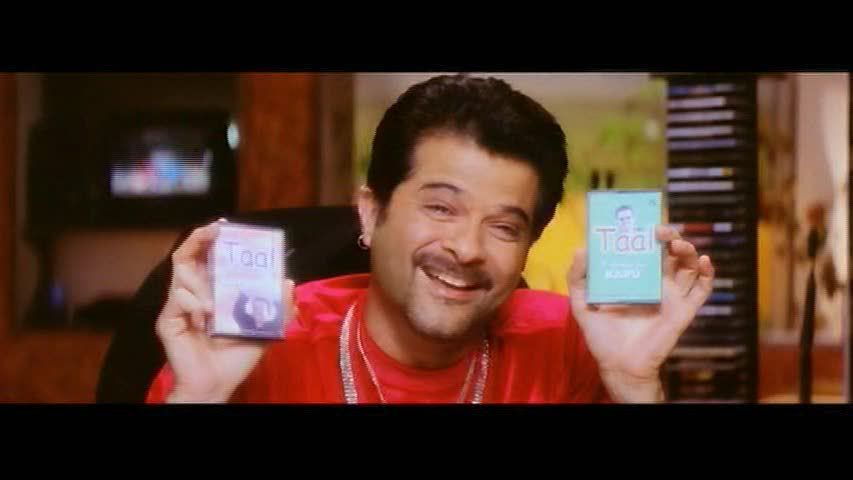
And who should they run into but - yes, Anil Kapoor! We mean "Vikrant Kapur", the hugely successful and hugely trashy music producer, who cheerfully rips off Tara Babu's folk songs according to his personal Seven Commandments of Selling Out and Getting Ahead in Mumbai. Vikrant, who Prof. Lutgendorf describes as "postmodern" and an older, cynical-er SRK from Dil To Pagal Hai, operates at a mile-a-minute, and he speedily invites Tara Babu and Mansi to join him. At least they'll be able to join him in profiting from their music!

And thus, the love triangle square has delineated. Well, reader, should Mansi choose:
    1. The arrogant yet sweetly endearing Manav, whose puppy-dog pouts reveal a tender sensitivity.


The Pout #1: includes wounds that need to be tended, puppies that need to be cuddled, and woobieness.

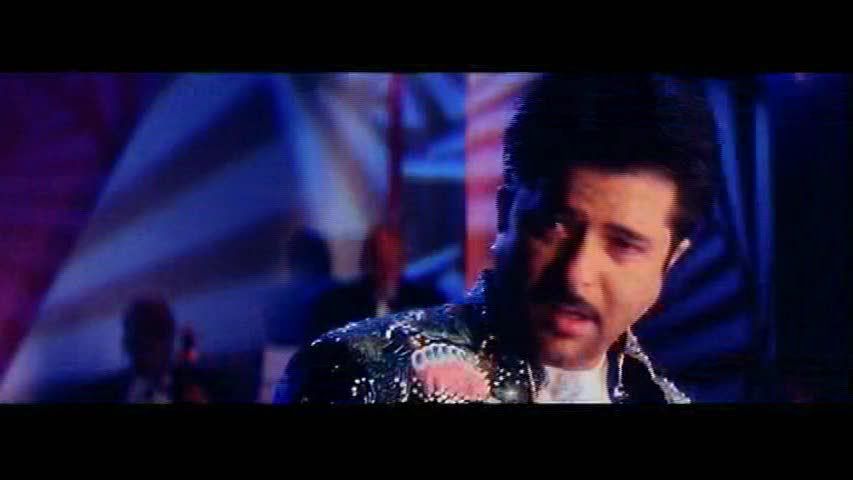
    2. The arrogant yet sweetly insane Vikrant, whose puppy-dog pouts reveal a tender, wounded sensitivity.


The Pout #2: includes older wounds that need to be tended, REAL TEARS COMING ON, but, alas, no puppy.

    3. The puppy.


The Pout #3: dispenses with other formalities and just GIVES US THE PUPPY.

We know what you're thinking ("THE PUPPY!"), but you'll just have to watch the film to see how it all plays out.

Now onto the main thing that everyone mentions about Taal (Prof. Lutgendorf, Carla, Beth...): the product placement. We think the product placement - in particular, the use of Coca-Cola - in this film was GENIUS. Pure, unbridled, postmodern GENIUS. Don't believe us? Read on!

Never has beverage choice been so inextricably linked with matters of the heart - behold, as Beth names it, the "Coke-bottle flirting". There is a notable scene when, at a party, Manav drinks from a Coke bottle and cheekily sends it to Mansi. Prof. Lutgendorf notes:
Cultural point here: this is not merely bad manners, but a violation of the strong Indian taboo against jutha, or food/drink contaminated by someone else’s saliva, so when Manasi daringly takes a sip it is somewhat akin to kissing Manav. Not surprisingly, this will follow ‘ere long…

Indeed, "sharing the Coke bottle" comes to mean a lot more than just, well, sharing a Coke bottle.


The odd and funny "moohahahHAHAHAHA!" Dr. Evil laugh moment.


The puppy again. What?


Later, as the more world-wise and cynical Vikrant begins to fall for his heroine, he starts to hit the liquor and, interestingly, his love is finally given raucous, epic expression in a drunken Sufi-esque chant, Ramta Jogi, where he recalls "drinking everything available" and "living entire centuries in a moment". This all seems to imply that Vikrant has aged past the era of young, pure Coca-Cola love and is now in the more hard-edge, emotionally baggaged red wine love. This is, of course, much more appealing and interesting (who needs bubblegum heroes? not us! Han Solo, all the way!) and has poignant Sufi undertones. Interestingly, this is also the only scene in the film where it seems that Mansi feels the slightest flicker of affection for Vikrant. Gasp! Is the Rumi working?

Well, no. Behold another symbolic scene: when we see Manav and Mansi's fathers laughing over a couple Coke bottles together. When we the audience and Vikrant witness this, we know it's time for Vikrant's heart to pack up. And when Vikrant drinks from a Coke bottle and hands it to Mansi, urging her to, "Drink up! They're our company sponsors!" she is hesitant. Sorry, my Sufi man, Coke love has beat wine love!

The music of Taal is just gorgeous - which is right and proper, as Taal is about music, after all. There's the spectacular Jungle Mein Bole Koyal, the touching Ishq Bina and the repeatedly-used leitmotif Taal Se Taal Mila. A vibrant and addictive soundtrack, we've actually been listening to it ever since the post-Yuvvraaj "A.R. Rahman is AMAZING!" boom here at the PPCC.


Beneath that hard, sleazy, oily shell of a man, there is a tender, loving spirit. Not convinced? Perhaps you'd prefer...


Performance-wise, Prof. Lutgendorf is, of course, right in noting that Anil Kapoor owns it and manages to make Vikrant a parody of his earlier screwball performances (and of SRK's performance in Dil To Pagal Hai): he is clearly OTT insane, pinballing from crazy to crazy, with moments of unexpected depth and vulnerability. When Vikrant asks Mansi desperately, again and again and again, "Do you love me?" We at the PPCC kept going, "YES, WE LOVE YOU!" And we do. We'll take one Vikrant and one puppy, please.


...THE PUPPY?!

Wednesday, 21 January 2009

Ram-Avtar (1988)

Ram-Avtar starts out very strong, with a fun, quirky vibe, drunken "tapori bastard" antics and some "Aww!"-inducing bromantics. But then, at around the halfway mark, the film starts to rot away like that perfect papaya you left on the counter for too long. With each passing scene, it rots and rots, eventually crumbling into a lesser copy of the already trying Sangam. Dude, we've already seen this film, and it was such a drag.


Ram (Sunny Deol). This scene awakened an intense craving in us for some Sound of Music action. Expect that from your local PPCC soon.


Avtar (Anil Kapoor)! This scene awakened an intense craving in us for... well, more Anil Kapoor action. Expect that from your local PPCC soon. Okay, you probably already do.


The strong opening: businesslady Sangeeta (Sridevi) lives in a village near Srinagar and keeps getting hassled by the wicked Gundappaswami (Shakti Kapoor, in heavy "South Indian" makeup) and his "Seven Bald Men" gang (yes, really). To fight them off, Sangeeta hires her own muscle: a silly, drunken cartoon named Avtar (Anil Kapoor). In a grand entrance reminiscent of Anil Kapoor's introduction in Ram Lakhan, or even Toshiro Mifune's introduction in any number of Toshiro Mifune movies, Avtar is thrown from the bus in the middle of town square, dead drunk. As the goons encircle and harass a pair of poor villagers, the tension rises, the noon sun burns quietly, and suddenly, at the nagging of a rooster, Avtar rouses himself to ass-kicking effect. "Khalaaaas!"

Now who doesn't love an ass-kicking tapori with a heart of gold? Uh, NO ONE. So after this single bombastic entrance, the entire, grateful population of the village (and the PPCC) falls in love with Avtar, and he meanwhile falls in love with Sangeeta. But it's clear that Sangeeta, for however endearingly scruffy she might find him, is not interested.

Enter the hunky, squeaky-clean Ram (Sunny Deol), Avtar's childhood friend. Ram and Sangeeta bump into each other a few times, and while Ram is smitten, Sangeeta's not really interested... that is, until he saves her from a Rohypnol-wielding Italian stereotype (!) Marconi (Manik Irani). Then, grateful, she falls for him. (Gratitude and love are really the dominant feelings here.)


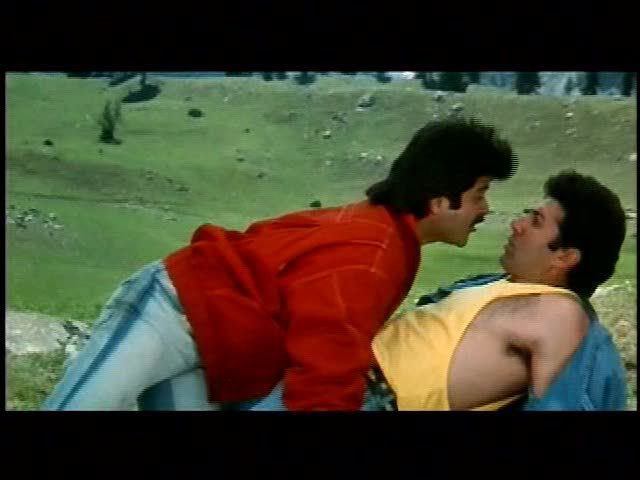
The boys have a lot of funnily effeminate moments, such as when Ram wraps himself in a shower curtain of cuddliness.


Or Avtar squees because of his new suit.


And then starts mugging in the mirror and pulls the French face fart the Italian shrug! Oh, bless.


Yet while Ram and Sangeeta's relationship soars into the usual Himalayan heights, Avtar is getting similarly swept away by his growing crush for Sangeeta. Eventually, both boys approach her father for marriage arrangements on the same day, at the same time, and when one of them figures everything out - in this case, Ram - the rest of the film progresses much as you would expect: it turns into Sangam, with Ram and Sangeeta quietly suffering as they protect the increasingly fragile Avtar from the cold, hard reality that... OMG! They had feelings for each other! But Avtar would be so sad and lonely if they just told him! Clearly that means someone has to get out of the way... BY KILLING THEMSELVES.

Sigh. If you know old Hindi films, you know several things in filmi love triangles are certain: no one JUST SAYS IT, no one can apparently cope with break-up, marriages are sacrosanct and an unhappy, shambolic marriage is better than a divorce (even if a divorce would make everyone concerned happier), "love is just a feeling that happens, marriage is a fact" (Sangeeta's words!), and love triangles are deadly. By the end of the film, when the three characters were wrestling each other over who gets to commit suicide first, the PPCC couldn't help but laugh. Filmi morality can get so contorted at times. Goodness, yes, breaking up is hard to do (and hard for audiences to accept, apparently), but, gosh, when it's a question of triple suicide and breaking up... come on, people!

It's interesting, though, isn't it? So many Hindi films are moral fables which propagate cultural norms (sometimes effectively, sometimes ineffectively) and it's always striking to see films martyr their characters in the name of ideals. In this case, marriage is shown to outvalue human life. And, unsurprisingly, it's the woman who preserves the cultural norm: as in Woh 7 Din, even though she is unhappy in her marriage, Sangeeta does everything she can to preserve it.


Who loves each other more? Him and her?


Or him and him? We rest our case.


We at the PPCC were just bewildered that this film decided to go the Sangam way at all. The beginning was so breezy! It was Salaakhen-style charm: fun fluff, a tongue-in-cheek vibe, everyone in visible good humor. When Ram realizes that he and his best friend love the same girl, and Anil Kapoor pulls a face of such heartbreaking vulnerability, we thought, "Awww, the poor dear! Now they better not undermine this by playing it for laughs." Little did we know they would swing the entire narrative to the other side and play it for maximum melodrama! Sigh.

It's like the film was suddenly wrestled away from the original director. Similarly, the performances, which were bright-eyed, bushy-tailed and sweetly ridiculous in the first half, suddenly came clunking down into dead-eyed moral pontificating. There was some fun in watching Anil have his trademark scene of meltdown (now in Johnny Walker Black Label variety), but even that couldn't rouse us from the stupor of boredom the second half provoked.


So we'll use this opportunity to note the best physical asset of Anil Kapoor: his surprisingly shapely, muscular legs! Wow! Has he been blessed by the squat god or what?!


Review: khalaaaaaaas!

In site news, check out our newest fiddly widget below this review: the REACTIONS buttons! For those readers too lazy/shy to comment, now you can have your feelings articulated at the CLICK OF A BUTTON. OMG SQUEEEEEE!

Monday, 19 January 2009

Janbaaz (1986)

Moral purists, beware: Janbaaz (Daredevil) is not for you. It is a raunchy, sleazy, anti-morality fable that is sometimes nightmarishly (sometimes hilariously!) anti-puritan. The heart and soul of the film - the lustful attraction between the thoughtless hedonist, Amar (Anil Kapoor), and the badass, hard-core Reshma (Dimple Kampadia) - is not very vanilla or even masala. It's actually a lot more... Rocky Road (da dum shhh - thank you, thank you, we'll be here all night). Rocky Road with a strong helping of 1980s tackiness and SLEAZE. So if you recoil from vile anti-heroics and dodgy fashion sense, stay away. If instead you are like the PPCC and you suspend not only disbelief but also moral indignance when watching certain films, then Janbaaz is a plain ol' hoot and a hog. Or should we say: (insert your own poultry-related double entendre here). We loved it! It was a spectacle of pulp! Gosh, Anil's good at those. We also think (drumroll) that what it's really really about is not the 1980s fashion of drug dramas, but the modern cult of Dionysus.


Your brain on drugs.


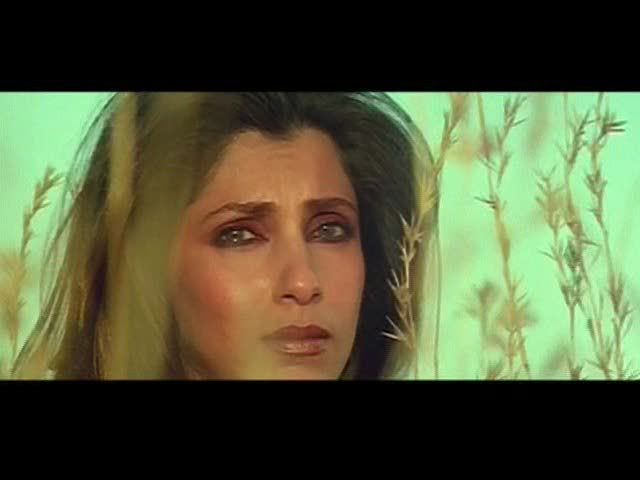
The gorgeous and (mostly) empowered Reshma (Dimple Kampadia).


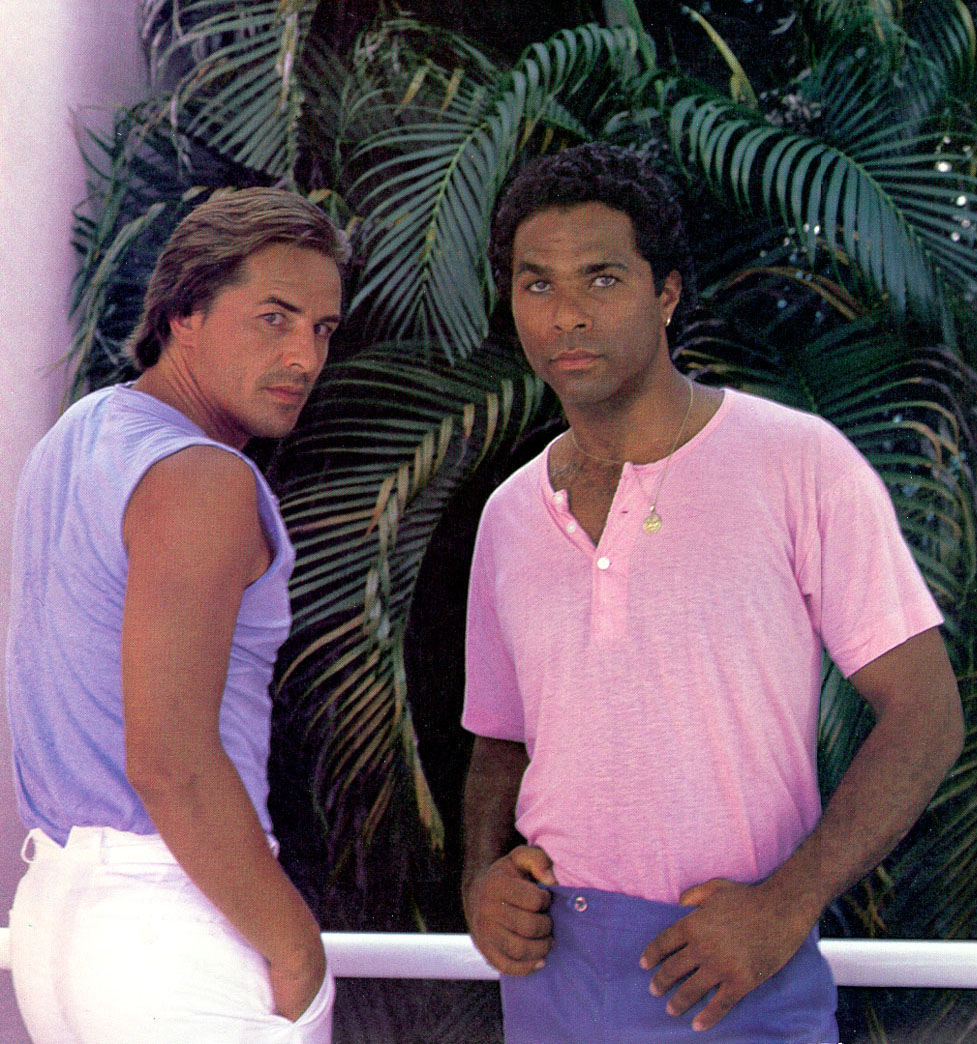
Molding itself along the two-brothers masala standard, only with a filter of old school Miami Vice, Janbaaz concerns itself with the strange moral quagmire that is the Singh family. These people run the gamut of the usual Mother Theresa-meets-Gandhiji fare (a favorite of masala moral tales!) to... well, Anil Kapoor in full-on bastard mode. The father, Rana Vikram Singh (Amrish Puri), is an aging epicurean (small e) who finds his older, straight edge son, Rajesh (Feroz Khan), incredibly dull, and instead showers praise and encouragement on his permanently-in-a-stupor younger son, Amar (Anil Kapoor). On a night when Amar lurches home after snorting lines of cocaine and playing Russian roulette, father Rana laughs with gusto: "Bravo, son, well done!" What's an honest Stoic (big S) to do in this house of sin?

Well, poor, harassed elder son Rajesh asks himself this, again and again. A police officer in the Narcotics squad (Hindi Movie Irony Bell goes CLANG!), he toils in a sighing, hang-dog way under the moral contradictions of his father and the moral vacuum of his brother, still grieving over his lost love (Sridevi in a cameo) and getting no love from anyone - except maybe his similarly bewildered-lost-lamb mother (Sushma Seth).


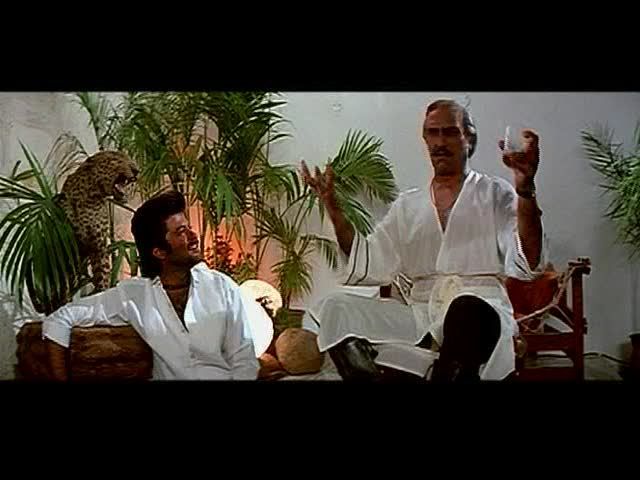
Father and son yakking it up over the most inappropriate party stories.


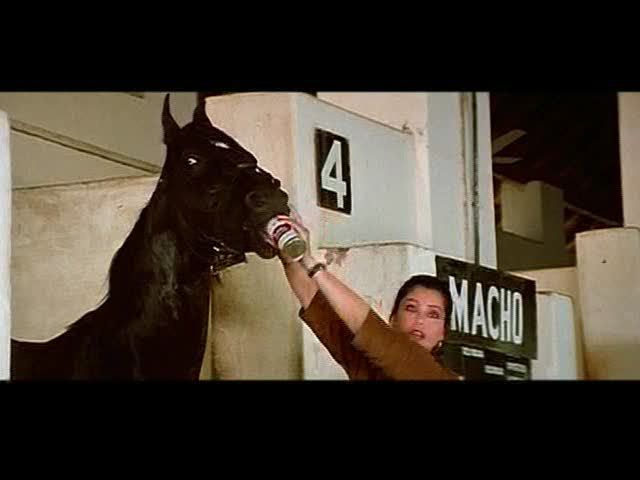
See what Reshma can do to your Macho!


One day, a new element is thrown into the mix with the arrival of the strong, capable Reshma (Dimple Kampadia). Recently orphaned after her gambler father (a dashing Kulbhushan Kharbanda) was killed by the local drug gang (among them Shakti Kapoor), Reshma is more like Rajesh: serious, hard-working, living unhappily under a shadow of sin (she's an illegitimate child, something no one ever tires of reminding her), and she doesn't suffer fools gladly. Or, for that matter, lecherous fathers and wastrel sons. As Amar tries his usual come-on strategy of strutting around and making godawful double entendres, Reshma does what any self-respecting girl would do: she rolls her eyes, gives him a good slap now and again (including ramming pie down his throat in one of the most satisfying scenes) and even - interestingly! - shows him who wears the pants by unmanning him via his horse (appropriately named, "Macho"). And then - surprise! - she falls for him, or falls for something, and soon enough they're rolling around in the hay.

And it's all fun in the hay until someone gets a pitchfork to the back, and we find ourselves on the run with Amar and Reshma on the motorcycle and Rajesh following close behind. Throw in one disgruntled drug gang, and the fact that it's 1986, and you're in for some full-throttle, grenade-explosion, flame-thrower dishoom dishoom.

There's a word in Italian for what Anil Kapoor looks like in this film: "sbronzo". Basically, it means sozzled - but not just drunk, it means that sort of tanned, bleary-eyed, ravaged nose drunkenness found only in the most devoted long-term drinker. As he guzzles champagne for breakfast, snorts coke for lunch and knocks back Johnny Walker for supper, you can only imagine what Amar's liver must look like! That man may be young, but - thanks to Anil's constant blush and trademark scraggly stubble - it looks like it's taking its toll, too. A tough cookie like Reshma is just what this guy needs if he's going to live past 35.


Sbronzo! Not to be confused with "stronzo", which is, well, also applicable.


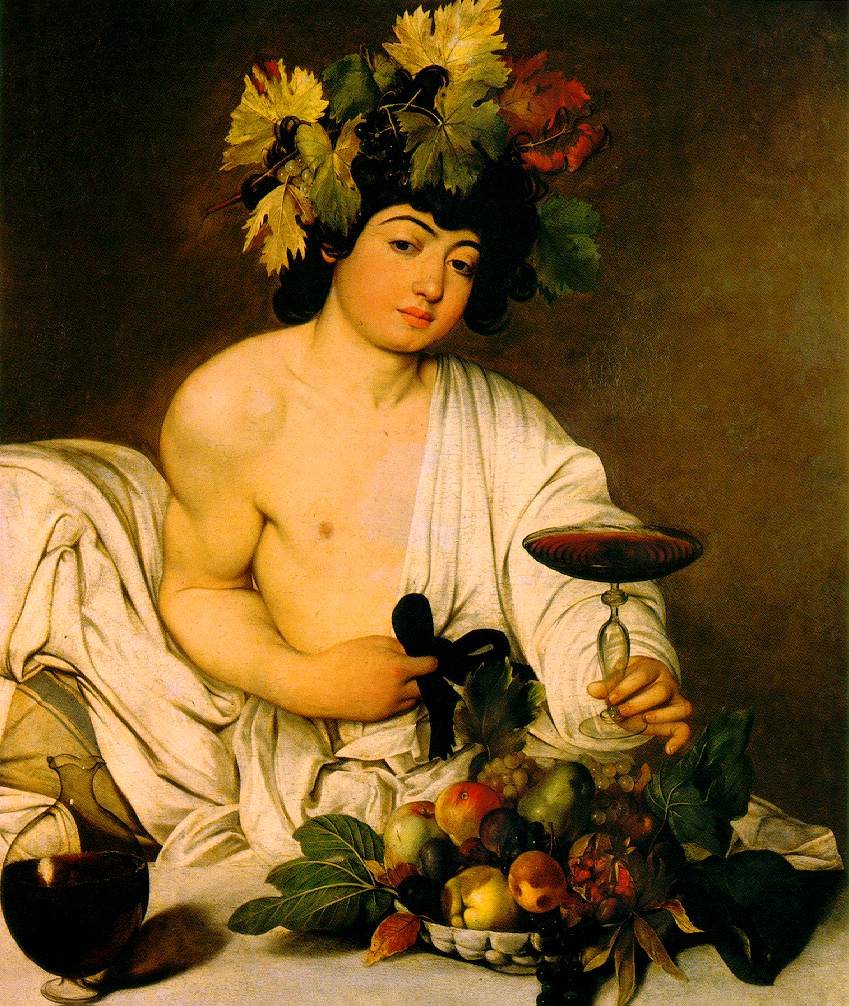
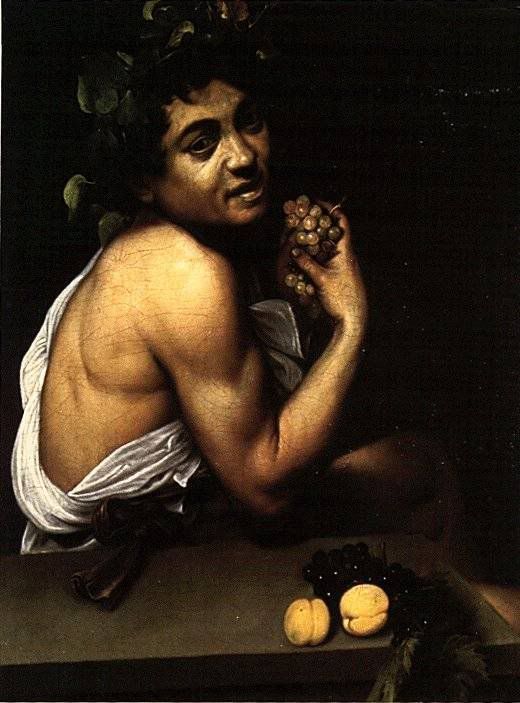
Which segues nicely into Reshma and the relationship: a more typical masala heroine would have fallen for the poor, quietly tragic Rajesh, not the jackass Amar. And yet Reshma falls for Amar! Is it his gracious charm? (Definitely not, he has none!) Is it his studly mustache? (Possible!) We actually think she falls for that glamorously tawdry Dionysus in him. For those not up on their Greco-Roman mythology, Dionysus (called Bacchus by the Romans) was the god of wine, women and theater. He had all sorts of colorful, grisly things happen to him (including getting ripped apart by the Titans during one of his various deaths) and he represents, in modern aesthetics (and thanks mostly to Nietszche's reinvention of him), that sort of loose cannon, unregulated, uninhibited and unintellectual art that comes straight from the gut. A good example would be Jackson Pollock: an alcoholic painter famous for a style where he used to fling, dribble and pour the paint onto the canvas.

So Dionysus - the original and most archetypal "black sheep" of Olympus - has an attractively rebellious anti-hero quality to him, and he has become - like the Byronic loner - a standard character found in various incarnations in various media (film, music, art, etc). Dionysus has long been associated with the primal, and the marginal strata of society - back in the day, there was the cult of Dionysus which was renowned for its frenzied, crazy meetings and shrieking female fans. So of course Amar - the Dionysus of Janbaaz - is (1) going to be a male chauvinist jackass whose sole motivations are satisfying base, primal impulses and (2) Reshma, a "marginal" of society (lady! tough lady who wears pants! illegitimate daughter!), is going to fall for him. Tellingly too, their relationship is all about lust initially - even from Reshma's side (as baffling as that may be considering Amar's fashion sense - off-the-shoulder sweaters! - and hairiness), a rarity in the genre. Things go a lot more Hindi when that initial attraction turns into the emotional investment of real love and Reshma becomes a helpless damsel in distress. But everything up until that point: pure, seedy Dionysian. And the point of this film and the source of its notoriety is, after all, its envelope-pushing seediness, not its somewhat deflated ending.


Dionysus and Ariadne?


A short interlude about the PPCC's critical philosophy

Now, just to preempt a comment that could be made: yes, we know that Feroz Khan probably wasn't thinking explicitly about Dionysus/Bacchus when he made this film. But that doesn't mean the meaning's not there!

We at the PPCC are followers of the "death of the author" school of thought - that is, we don't believe that the author/artist/filmmaker's intentions are the most valid interpretation of a text/art/film. Just because the author didn't consciously put something into his art doesn't mean it didn't end up in there anyway. To take an example, J.R.R. Tolkien intended Lord of the Rings to be a Catholic allegory, but he also ended up with a World War II allegory - something he fervently denied. Does this make interpreting Lord of the Rings as a World War II allegory wrong? Not at all! In fact, it would be silly to dismiss the idea, considering Tolkien's background and context. (For crying out loud, he wrote it during the war!) You can go even further: people have argued that Lord of the Rings is an environmentalist allegory. Indeed, ecocriticism - the interpretation of literature through the lens of environmentalism - is a very recent development that by definition relies on reevaluating older texts in a completely modern way - a way which was probably furthest from the authors' minds. Of course Shakespeare probably didn't mean to make King Lear a "green" play, but that doesn't mean a green interpretation is wrong or invalid. Quite the opposite! And it's one of many, many valid interpretations. The possibilities are really endless!

Before you think we're just critical theory anarchists who'll accept any interpretation about anything, we do have two rules. An interpretation is valid if:
1. It presents a genuinely novel, stimulating way of understanding both the text/art/film and, where possible (brownie points awarded), reality. For example, Film X is a meta-representation of Swiss cheese...
2. It does so in a convincing, rigorous way, using real evidence from the text. For example, ...because its plot is full of holes!

So basically the argument is important - as long as you've got evidence and facts (Amar is a wastrel, Dionysus is the god of wastrels, Dionysus was worshiped by marginalized women, a marginalized woman falls for Amar) then you've got a valid argument (Amar is Dionysus). The fact "Feroz Khan probably doesn't know that much about Dionysus" is just as important as the "Amar is a wastrel" fact - one doesn't cancel out the other. QED. Ta da!

Back to the review

Anyway.

In terms of performances, everyone is fine - with the real stand-out being Amrish Puri. Feroz Khan, who also directed the film, channels Manoj Kumar both in his directorial style and in his performance: he's the put-upon, quietly suffering, noble fighter for justice. The only problem is: we like it better when Manoj Kumar does it, perhaps because of his quirky, mumbling delivery style and nervous hands. Feroz, for however cute he is in an aging post-evergreen sort of way, seems to suffer from Frozen Face Syndrome.


Feroz's frozen face, item 1: Interrogating a drug lord.


Item 2: hearing something horrible has happened to a loved one.


Anil Kapoor has the more colorful role and basically hams it up. He's already played a rated-PG Dionysus for comedy value in Welcome, and he's always been very good at projecting maximum sleaze. Plus, his OTT performance style is perfectly suited to characters with tenuous grips on their serenity (and sobriety). Yay for Anil (again!)!


Dionysus doesn't feel too hot in chiaroscuro.


Dimple is new to the PPCC and, based on this debut performance, we give her two big thumbs up. In particular, she managed to find herself in a very feminist-unfriendly role - the girl who falls for the chauvinistic player and, later, the damsel-in-distress - and yet she manages to project strength, assurance and general badassness throughout the film. When she knees Shakti Kapoor during the dennouement - priceless. This girl doesn't need any help!

The standout performance though was Amrish Puri. He proved again and again that he could play the bug-eyed villain, but in Janbaaz, he gets a meatier role. The patriarchal Rana is a complex, contradictory figure: lecherous on one occasion and gently loving on another, a rebellious hedonist who becomes morally indignant about illegitimacy, and very, very flawed. But - like Anupam Kher in 1942: A Love Story - this was a role we could get behind, a role that gave an iconic villain a chance to flex some of those hidden acting muscles. It gave Amrish a lot of room to maneuver, and his gruff, morally ambiguous father figure was the best part of the show.

And finally, we should mention the aesthetics. Feroz Khan has taken a big lesson out of the Manoj Kumar School of Directing: hallucinogenic imagery (eggs exploding! hammers smashing into flowers! a cresting wave!) and INCREDIBLY BLUNT symbolism (wild, untamed stallions! the stud farm! passionate people literally catching fire!). He also seemed hell-bent on pushing the Hindi mainstream envelope. We all know about the roll in the hay by now, but there's also the overall theme of humanizing the immoral anti-hero and tough illegitimate daughter as well as the crazy amounts of on-screen drug use, violence and eroticism. This still doesn't get much further than an American PG-13 rating but it was, in a Hindi film, very unexpected!

Anyway, there's still more we could talk about - the Sufi presence was well-noted, and it would be interesting to compare Sufi and Dionysian aesthetics; also, Rekha's WTF cameo - but we'll leave that for another day. Today, we can only encourage you to enjoy Janbaaz, but please, watch responsibly.

Thursday, 15 January 2009

Jeevan Ek Sanghursh (1990)

Well, yesterday the PPCC braved a torrential downpour, gushing sidewalks and a broken flip-flop to visit our trusty Uncle Everything DVD-wallah ji. Uncle E ji's really got almost everything, and he prides himself on being the premier supplier of Hindi DVDs in the country. (Very possible. He's certainly our premier supplier.) Anyway, after a huge disappointment when Uncle E ji's only Tamil films were Aaj Ka Boss (which, as the title implies, is not actually Tamil but Hindi) and an ancient, unsubtitled, black and white film from Singapore (?! again, not actually Tamil, but what do any of us know apparently), we requested our usual binge of Anil Kapoor films. At this point, assistant Nephew Everything had a brainwave and said, smiling, "I am thinking you are very keen on Anil Kapoor lately."

The PPCC smiled with a distant look in our eyes. "Yeeeah. Gosh, he's dreeeamy." We felt a haze of affection coming on.

(Never mind that after a YEAR of requesting only the most esoteric Shashi Kapoor titles, the Es pretended to never notice our devotion to Shashilicious. Anyway.)
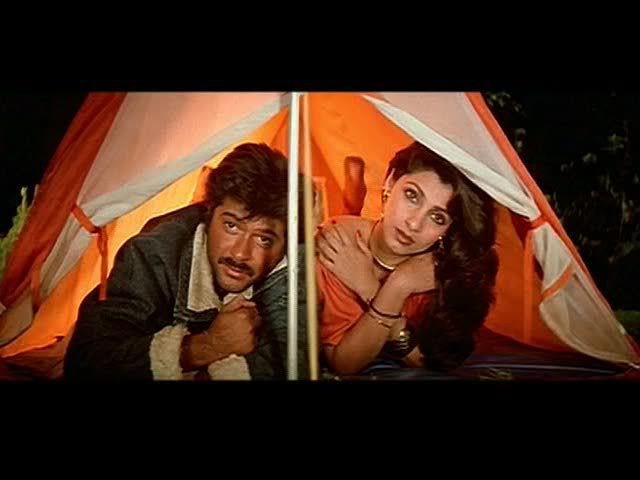
"Well," Nephew E said, "Have you seen... JAANBAAZ?"

Gasp! The infamous Jaanbaaz of the infamous roll in the hair hay scene? Isn't that one of those hilariously seedy Miami Vice-esque drug movies, too?! And one of the few films the all-forgiving and always-optimistic Rum... disliked?!

"No, we haven't," we said. "But we have a perverse curiosity to watch it RIGHT NOW!"

"Set!" He added it to the pile. "Have you seen... Jeevan Ek Sanghursh?"

"Huh?"

"Jeevan Ek Sanghursh," he said, enunciating loudly over the thundering rain. "It's Anil Kapoor."

"Uh..." We were skeptical. After all, the Es had just tried to pawn off a movie from Singapore as being Tamil. Who knew what Nephew E was talking about.

"And Madhuri, too."

We gasped. "Oh my God, YES PLEASE!"

"And look, it's a two-in-one," he chirped happily, "with Rajkumar!"

Oh God. Now we at the PPCC KNOW that Rajkumar was hideous, but a mystery Anil/Madhuri movie was just too hard to resist. Had we just bought a two-in-one faux medieval-done-badly Anil/Madhuri themed DVD? We decided to watch Jeevan Ek Sanghursh first and find out.


Maybe because your mother is DEMENTED.


Penned by Javed Akhtar, one of Hindi cinema's premier screenwriters and lyricists, and starring the dyn-o-mite combination of Anil Kapoor and Madhuri Dixit, with a strong helping of Rakhee in her most ridiculously insane Demented Mother mode, Jeevan Ek Sanghursh (Life is a Struggle) turned out to be an inoffensive fluff piece with a few genuinely charming moments. It features one of the laugh-out-loud funniest scenes ever - a scene that was like something out of Monty Python, a scene that was on the level with the infamous moment in Sharmilee where Shashi drops the baby. That definitely merits some respect.

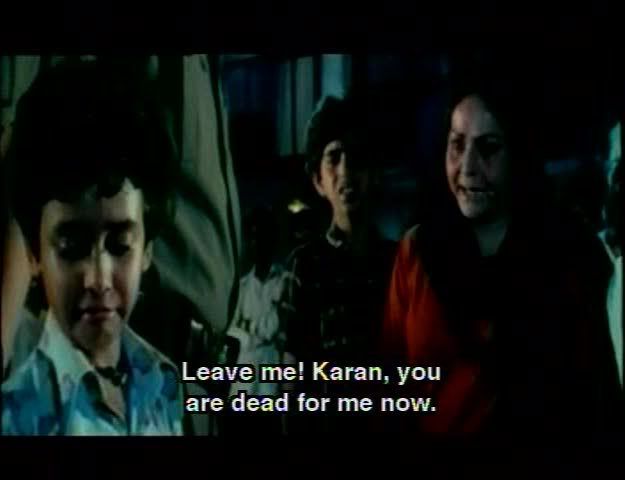
The story begins with your usual masala prologue, except today, since the mother is played by Rakhee, things go demented pretty quickly. Rakhee has three children: two sons, Arjun and Karan, and a daughter, Suman. After the younger Karan, in his rapscallion ways, picks one too many pockets, Rakhee speedily disowns him and sends him to the orphanage. After a pang of guilt, she decides to at least visit the orphanage once to let him know that they're leaving town - except apparently he's run away! Oh well, she thinks, she has train tickets for Mumbai this afternoon - no time to waste looking for your prodigal eight-year-old boy! Funnily (and typically), Karan has also made his way to Mumbai, where he's picked up by a kind-hearted garage owner. At least someone cares.


Where is Child Services?!


Karan grows up into Anil Kapoor, and, when not tending to his mustache or outrageous fashion sense (two trousers he's stitched together at the crotch?!), he lives in a converted double-decker - possibly the pimpest pad ever. On Day 1 of the narrative, Karan picks up a huffy lady, Madhu Sen (Madhuri Dixit!), who's all nouveau riche and pompous attitude. This is another one of those instances where, because it's Madhuri, we love her so much, but if it had been Sridevi... well, that's another story. On Day 2 of the narrative, Karan - through the twists and turns typical to masala - ends up working for Dr. Devraj Kamat (Anupam Kher), a doctor/vigilante criminal mastermind who orchestrates heists in the name of cleaning up the streets, and whose arch-nemesis is the evil mafioso, Rattan Dholakia (Paresh Rawal), who's just bad in the normal, greedy way. Both the villains were disarmingly silly: Dr. Devraj obsessively perfuming his hands, while the gluttonous Rattan yawned and gobbled up food continuously.

Anyway, Karan's first vigilante justice job: to intercept a load of cocaine and dispose of it. This leads to the funniest and most outrageous scene, when Karan attempts to dispose of the a ton of cocaine by burning it on the beach... right next to an open-air cafe at the local hotel! Inadvertently, clouds of crack drift through the hotel and everyone - Karan, Madhu Sen (who he inadvertently runs into during every heist), the waiters, the other patrons - gets high, and everything becomes immediately very surreal. "Like a decent man," Karan says in a monotonous haze, "I take tea on a camel. Waiter, bring me two pots of tea and one hot, hot camel." The waiter pours milk all over himself. Madhu starts giggling uncontrollably ("The hotel's brakes are broken!") and then dissolves into tears ("Where have my arms gone?!"). And this is all followed by a bizarre song, where the drug-addled Karan and Madhu romp through a series of nightmarish settings - miniature cities, undulating roads, smoking skeletons, Escher paintings. We've never seen anything like this in masala before - unless you count Anil and Rani's hallucinogenic romping in Nayak, though at least that was only implied. ("We've eaten a 'papaya' and taken some 'paan' and now we're going to roll around in the grass, wheeee!") Here it's explicit! And what's even stranger: this highly controversial scene (for the love of God, they just inhaled CRACK!) isn't demonized, but rather played for sitcom-style laughs! Oh Hindi cinema, you never cease to amaze us.


...!


...tiara...!


...three hands...!


Anyway, after everyone's recovered from those hijinx (PPCC included), the story tumbles along to its next masala port of call: the family reunion. Now usually the PPCC is all about reunions, but we found this entire section of the film tiresome - basically, Karan finds his family in Mumbai and, too shy to reveal his true identity, spends a lot of time gazing with puppy-dog eyes through windows and across streets. But it was a little hard to sympathize with the truly demented mother. Even after Karan finally announces his identity, she still kicks him out. So Karan spends the rest of the film making puppy-dog eyes at her while she keeps repeating variations of, "Get away from me! I don't like you! I don't want you as a son! Shoo!" In the end, the film dissolves into some gratuitous and incomprehensible dishoom dishoom, involving both crime bosses (Dr. Do-Good having now slipped into Just Evil mode as well) and people misusing hospital gurneys. Yawn.


Oh, you two loons. We love yous.
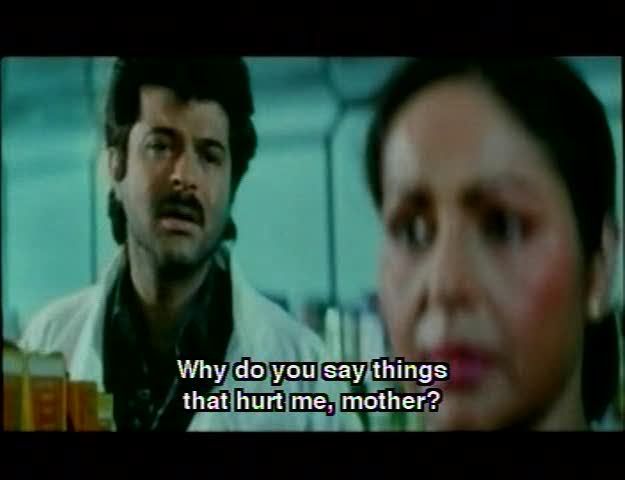

The best thing about this film - apart from the crack comedy scene - is the chemistry between Anil Kapoor and Madhuri Dixit. The film would have been heaps better if we had just abandoned the stupid family reunion narrative altogether and followed Karan and Madhu on their courtship. Their scenes were the liveliest of the film, and, as usual, they were endearing and romantic. Blogger brimful made a good argument on their blog about the unfair double standard against which men and women's beauty is held: "According to these movies, if you look like Madhuri Dixit, you're lucky if you end up with Anil Kapoor." Ha! And yet, the more Anil/Madhuri films we watch, the cuter we find them as a couple - she, an empowered diva, and he, a big goof! It's so sweet. And then there's this old interview where Anil Kapoor discusses the magic with Madhuri:
What do you have to say about Madhuri Dixit's marriage?

Obviously, I felt bad initially (smiles). I said, 'Oh God, she is gone!' She is a friend and I felt happy for her. I think she has become more mysterious and exciting after she got married. When she was unmarried, it was impossible to get her. Now, it is next to impossible. I don't think in this life, I will be able to get close to her!

But I was fortunate enough to come close to her in all my films -- I wooed her and got married. I fell in love with her and she reciprocated, on celluloid at least.

Among all the heroines you've worked with, who do you think complements you the best?

I think Madhuri. We made the best pair.

Most totally! When's the comeback film?!

Anyway, as this film's narrative got further bogged down with Rakhee's dementia and tiresome indignation, the Anil/Madhuri songs became the sole source of any fun. With music by Laxmikant-Pyarelal, all of them were fab - from Madhu's initial Clockwork Orange-style nightmare about the predatory Karan and his Alex-like goons (hey, we'd be scared too!) in Bachke Tu to their adorable excursion to Holland (complete with baffled Dutch onlookers!) to - and this one was our favorite - the romantic and ridiculous Mil Gai. Jeevan Ek Sanghursh isn't a particularly good film - Rakhee makes sure of that - but it is memorable for the comedy and likable for Anil, Madhuri and Anil/Madhuri.

Monday, 12 January 2009

1942: A Love Story (1993)

Well, let's face it. It's a party in the PPCC's heart and only Anil Kapoor is invited.


We wuv u.


Actually, scratch that - Pran, you can come too. And Madhuri, of course. But all you other folk - you Radioheads, you Shashi Kapoors, you pizzas, you family members - can get out. Sorry, there's just no more space for you anymore. Maybe if you grow a mustache and go, "Ah-hyuk, HAH HEYYYY!!!" we'll let you in purely on novelty value (a pizza in a mustache?), but if you're not willing to compromise your individuality in the name of His Stacheliness then it's the road for you! See ya, wouldn't wanna BE YA.

Some of you loyal readers might marvel that, between the known flop Trimurti and the known super-hit 1942: A Love Story, we chose to watch and review Trimurti first. But that's just how we roll. We'd much rather watch something that flopped and find it's a hidden gem for the PPCC than (1) just confirm that, yes, the super-hit classic really is good (booooring), or, even worse, (2) we don't think the super-hit classic is any great shakes (perish the thought!). (Too bad Trimurti really was bad...) And then there's the usual problem: what can we say about 1942: A Love Story that hasn't already been said? And said? And said?

Well, if some of you are coming here from a certain science fiction magazine today, then allow the PPCC to make some wild assumptions about your demographic: white? American? unfamiliar with Bollywood? maybe you just watched a certain little film win Best Picture at the Golden Globes last night? Then stick around, because this may be the only way the PPCC can contribute anything of value in our review of 1942. We can say, behold!, Bollywood virgin, that sleazy game show host from Slumdog Millionaire is a lot more famous in India for this (aaand this) than some flashy yet likable quasi-Orientalist super-hyped glittering bauble that wins like ten gazillion unexpected awards. Ta da!


One of the film's many iconic moments.


"I saw a girl and it was like... like... " JUST SAY IT, FOR GOD'S SAKE. IT WAS LIKE FLOWERS BLOSSOMING. LIKE A POET'S VERSE. Oooooh, ek ladki ko dekha to aisa lagaaaaaa...


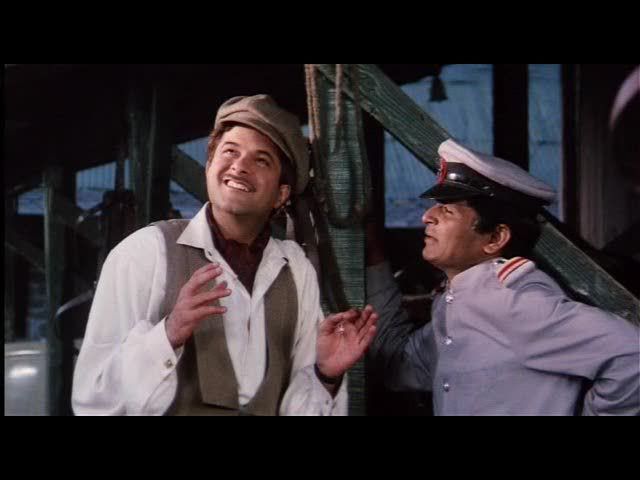
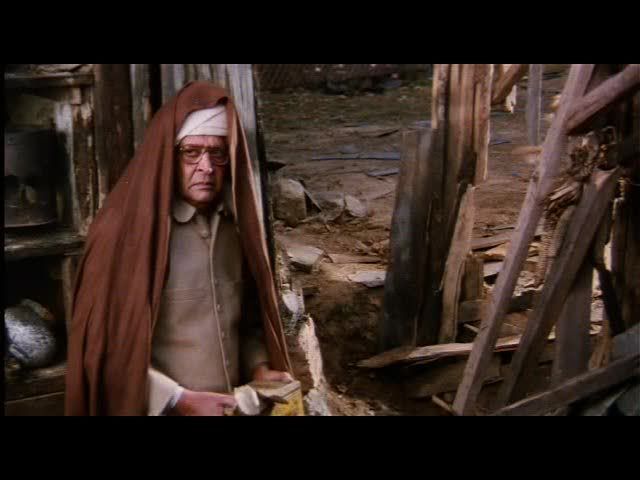
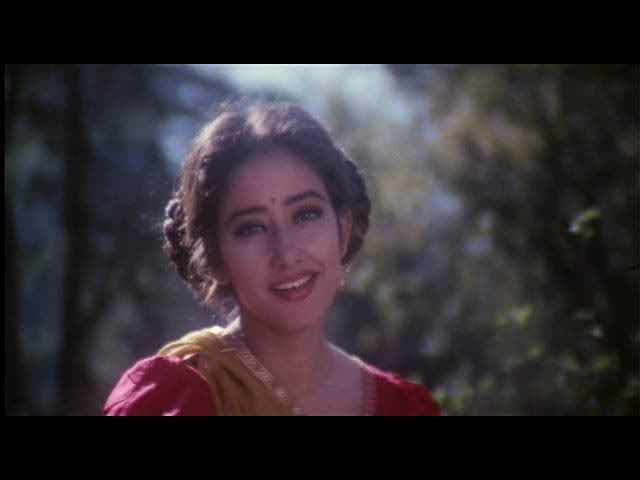
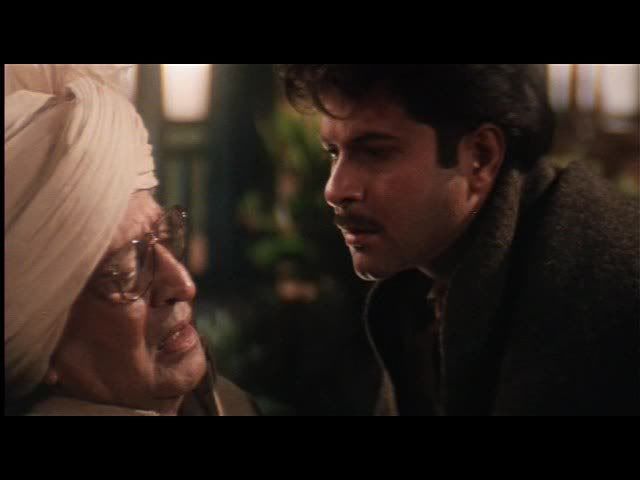
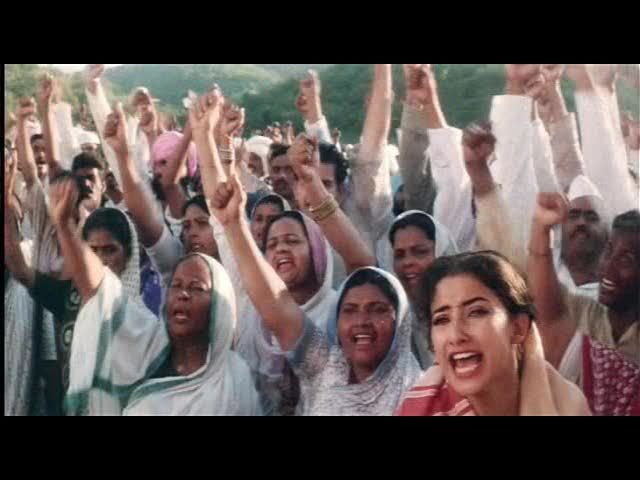
A rare historical romance, 1942's lovers are the bouncy, bourgeois Naren (Anil Kapoor) and the kind-hearted Rajeshwari (Manisha Koirala). He is a pampered, upbeat muppet whose father (Manohar Singh) is an evil collaborator with the British Raj, while she is a quiet working class girl whose father (Anupam Kher) is an underground revolutionary. The lovers meet via a couple coincidences and Naren's local amateur theater director, played by - wait for it, wait for it - we can't say it, it's too wonderful - okay, yes, yes, we can say it - PRAAAAAAN (!!!!!). The year is, yes, 1942 and hence we are thick in the heat of the Indian Independence Movement. For once, some effort has gone not only into authentically recreating the historical context - pageboy hats, old cars, and saddle shoes abound - but also in presenting a believable portrait of oppression under the British Raj. The film's villain, the British General Douglas (Brian Glover, looking distinctly like he could be Colin Mochrie's dad), speaks in a caricatured raspy growl, but everything else is presented realistically and sans outrageous embellishment. Throw in one hunky freedom fighter, Shubhankar (Jackie Shroff), and one hunky tormented collaborator, Major Hisht (Danny Denzongpa), and the fun abounds. Throw in a secret plot to assassinate General Douglas, and the tension skyrockets!

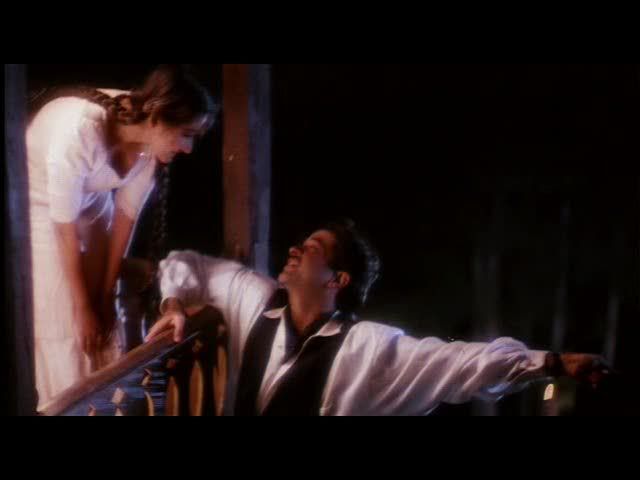
This film is really an enjoyable little number. Director Vidhu Vinod Chopra has an excellent eye for iconic framing, and the narrative has a sort of epic drive that makes even the most throwaway scene feel cataclysmic and gargantuan. Some moments - such as when Naren pursues Rajeshwari through the town's alleys, or Pran's arrest - aspired to sublimity. The film also made innovative use of Romeo and Juliet - indeed, this is the first time we've seen Shakespeare's lovers used in a Hindi film rather than the more typical Laila and Majnu myth. In 1942, the local theater company is performing a Hindi translation of Romeo and Juliet, and Naren and Rajeshwari naturally fall into these roles. We at the PPCC have been culturally indoctrinated into Romeo and Juliet, and so when this film passed all the same defining moments - the balcony scene, the secret marriage, the misinformation about their lover's death - it got an immediate emotional response from us. Even better, like West Side Story to racism, this film managed to successfully graft the classical Romeo/Juliet mythos over the much larger narrative about the freedom struggle.

The balcony scene squeezed squishy feelings from our heart, and we relived the thousand other balcony scenes we've all seen and loved.


PraaaA
AAAAAAAaaaaAAAAAAAAAaan! Admit it, this is not the craziest thing we've caught Pran doing.


Another interesting thing to note were the visual and aural allusions to the freedom struggle. Director Chopra often uses classical Western pieces in his background score, and here he makes heavy use of a certain recognizable Western piece to herald the British Raj's oppressive military presence. Which one is it? Why, it's Holst's Mars, God of War. Clever! Meanwhile, the scenes of Indian resistance are accompanied by the rousing anthem, Saare Jahan Se Accha, or a really phat, speedy sitar riff.


A cunning visual reference to the anti-imperial struggle: Princess Leia buns!


The performances were all fine. We should admit that another reason we were not so excited to see this was that we're not very interested in soft focus romances - and we certainly don't watch Anil Kapoor for his straightforward, vanilla hero roles. Nonetheless, he's effectively Mickey Mouse in this. Manisha Koirala does her usual ethereal moping thing. But the real stand-out of this film was Anupam Kher. See! Anupam Kher is a good actor - a very good actor! Just give the man something to work with! In 1942, he is worlds apart from the usual grating comedy antics he was forced to do: here, his performance is extremely understated, quietly passionate, fragile and compelling. We found his scenes more moving than the lovers!

Oh, Anupam Kher!


Pran and Anil Kapoor sharing celluloid is almost too much for the PPCC to handle.


Much is made of this being legendary music director R.D. Burman's final film. The oft-parodied Ek Ladki Ko Dekha (I saw a girl) is lovely (if overly familiar), but - and please don't burn the PPCC down for this - we actually didn't really dig the rest of the soundtrack. Plus, it was one of those relentless soundtracks with song after song after song - for once, we wanted to skip the songs and get back to the most excellent story!


Guh, just look at that composition! "Jai Hind!" indeed!