Showing posts with label madhuri dixit. Show all posts

Tuesday, 28 April 2009

Make this movie, universe!: Lord of Light

Many people in the West think that, in my country, because of our religions, because of our history, because of I don't know what, somehow we are more in tune with our spirituality, more at one with the forces of Nature. Well, we are! So well done, all those people who said that!
- Guru Maharishi Yogi, Goodness Gracious Me

His followers called him Mahasamatman and said he was a god. He preferred to drop the Maha- and the -atman, and called himself Sam. He never claimed to be a god. But then, he never claimed not to be a god. Circumstances being what they were, neither admission could be of any benefit. Silence, though, could.
- the first lines in Roger Zelazny's Lord of Light

A new project here at the PPCC: Make This Movie, Universe!


Roger Zelazny's Lord of Light is one of our favorite books. It combines cross-cultural pollination, spirituality and wacky science fiction with irreverence, comedy and genuine humanism. It is RIGHT up our alley.

Plot: In the far, far, far future, Earth is dead and a nameless new planet has been colonized by the crew of an old ship (the "Star of India"). Living in a post-Singularity-type world, they use advanced technology to transfer consciousness from body to body, as well as get up to other fancy tricks (nuclear-powered chariots, for example). Many generations have passed since the original colonizing of the planet, and the original ship crew (the "First") have now manufactured a literal Hindu reality: they've taken on the roles of gods, reincarnating themselves into Brahma, Vishnu, Kali and so on, and meanwhile keeping the rest of the population (their descendants) stuck in a superstitious, pre-industrial society.


The new British (?) cover. Classy.


One of the "gods" becomes disgusted and disappointed with this endless, unfair cycle of reincarnated oppression, and he decides to shake things up a bit by repeating Earth history and introducing Buddhism. Adopting a new body and calling himself Prince Siddhartha, he goes through the motions of the original story of Buddha - who, for those a bit rusty on their 2,500-year-old Indian history, rose to be one of the main challengers to the Brahmin/Hindu hegemony of the time. Annoyed, the other gods exile him and eventually there is a great battle over the fate of the new planet's humanity and - especially - its soul (if, well, Buddhism believed in a soul).

The book is chock full of hilarious anachronisms and philosophical ironies that turn your brain pretzel-shaped. Shiv Sena's probably not going to like it - the crew member currently reincarnated as an ultra-macho Brahma was a lesbian originally. Similarly, Christian fundamentalists might be annoyed by the subplot of the ship chaplain who rebelled against the faux Hindu hegemony and attempted to mass convert the planet to Christianity using an army of zombies, meanwhile earning the moniker "Prince of Darkness" for himself. And what would Buddhists think of the idea that you can "fake it 'til you make it" on the way to Enlightenment? Or the mish-mashing of the critical atman/anatman (i.e. soul/no-self) discussion?

Well, the book's vibe is more comedy than provocation, and its gentle probing of philosophical issues and ambiguous interpretation should make it stimulating and palatable to anyone who likes to think about this sort of stuff. Such as the PPCC!

"For a spur of the moment thing, you came up with a fairly engaging sermon."
"Thanks."
"Do you really believe what you preached?"
Sam laughed. "I'm very gullible when it comes to my own words. I believe everything I say, though I know I'm a liar."


The film: Now the ever-enthusiastic PPCC is not the only one who thinks this would make a great film. Indeed, Zelazny sold the book rights way back in the 70s, and a truckload of money was set aside to film it and then later market the sets as a science fiction theme park (!). This idea was shelved and then - another twist in the increasingly weird story - the script was used by CIA agents, who posed as film producers, in order to rescue Americans during the Iran hostage crisis! REALLY!

Gosh! They could make a movie about making this movie!

The dream: What would make this movie the end-all, be-all coolest movie ever? Well: the perfect cast and crew, of course! And who would they be? We'll tell you.

Director

Since a Lord of Light film would require a sort of primordial, steampunk-ish, Vedic/pre-Vedic-era India setting, as well as the sci-fi spectacle that is the "Mount Olympus" heaven zone, we need a director with a strong, saturated, zany vision.

Our top choice would be Terry Gilliam. He of former Monty Python fame, we think his bizarre, LSD aesthetics (as seen in Fear and Loathing in Las Vegas) would be perfect for the acid trip that is this neo-Hindu/neo-Buddhist world of fakes and charlatans. We also think hippie-fying the proceedings would add an interesting meta critique of the whole Karma Cola hippie trail "New Age"-ist misunderstanding of Hinduism and Buddhism. Eh? EH?!

Otherwise, Mira Nair... no, not because of Monsoon Wedding or (our beloved) Mississippi Masala, but because of her oft-overlooked Vanity Fair, which featured flamboyant fashion (Jonathan Rhys-Meyers' hairstyle, ho ho ho!) and the most spectacular, elephant-riding "oh, dammit, let's just move to India!" ending ever found in film.

Cast

The "hero" role of Sam would require someone who is at once down-to-earth and epic. Someone who can project a sense of superheroics coupled with Everyman good humor. And who is the best Everyman superhero? Duh. Anil Kapoor.

And if Anil Kapoor's going to be Sam, then clearly the role of Kali - who was Sam's wife in previous incarnations, but is now his arch-nemesis - must go to Madhuri Dixit.


No, we never miss an opportunity to sell Anil/Madhuri. And what a comeback vehicle this would be!


Jeevan Ek Sanghursh = Life is a struggle. AKA the First Noble Truth, according to Buddhism. Coincidence? WE THINK NOT! This film - this cast - clearly, it was meant to be!


Now that basically seals the movie's coolness for us, but perhaps there are some philistine unbelievers out there who are not so easily swayed by seeing the Anil/Madhuri pairing in a cheeky film about sci-fi Buddhism. Well, all we can say to such tough nuts is...

A pox on you! Hex, hex!

Goodness gracious us, edited to add: We forgot to talk about one of the main determinants of a film's awesomeness: its soundtrack! No doubt we'll spend the rest of the week fiddling with our iTunes playlists to make the Greatest Most Excellently Awesome Lord of Light Soundtrack Ever... but, off the top of our head, we can say such a soundtrack is likely to include:

1 part Philip Glass or Michael Nyman
1 part Explosions in the Sky or Radiohead in Kid A mode or Sigur Ros
season with old school 1970s masala to taste
a dash of carnatic vocals
and a pinch of George Harrison learning the sitar from Ravi Shankar

...and voila! It would be delicious.

Friday, 6 February 2009

Aaja Nachle (2007)

Oh, Madhuri.

Ooooh, Madhuri.

We love you, Madhuri.

We love you so, so much.


MAAAAADHURREEEEEEE!!! MADZ!


Madhuri is DA BEST, DA BOMB, DAAAAA BEARS. She is our shining heroine, the one the PPCC aspires to be like. We want to glow like Madhuri! Dance like Madhuri! Kick ass like Madhuri!

In Aaja Nachle (Come dance), Madhuri's wonderful comeback vehicle, the whole film is about - as Beth would say - finding your inner Madhuri. And while Carla and Beth rightly note that Aaja Nachle skirts away from the controversial issues it brings up (and Roswitha and Amrita note that it's controversial anyway), it is nonetheless (or perhaps because of this) a light, fluffy and intoxicatingly free Madhuri-style entertainer. Back in November, when we started watching Anil Kapoor movies like it was going out of style, we quickly came up against the bombest pair of the 90s: Anil Kapoor and Madhuri Dixit. And while we've already talked about how much we love these two, and how much we love Anil, we've never really talked about what makes Madhuri so great. So we'll do that here: if every performer has a brand, then her brand is freedom. Often playing strong women who get things done, she was glamorous yet approachable, confident, daring and fun. In a type of cinema whose female roles were often populated by wet lettuces, self-sacrificing martyrs and idiots, Madhuri brought back the strong woman. Suddenly heroines were cool again! Gosh, we hadn't identified with anyone like that since the days of Nargis - another strong, beautiful, fun heroine.

Aaja Nachle is based firmly on the Madhuri brand: the mythos of her dancing, her gutsiness, her sparkle, even her flight to America. With obvious meta implications (Madhuri married an American NRI and abandoned her filmi career in the early 2000s, much to the woe of Anil Kapoor), the story tells of Madhuri's rapprochement with small town, India. It also tackles the obvious tension which any successful heroine faces: that old school, conservative notion that purity and performance are incompatible, that marriage and a successful acting career cannot coexist. It uses the ever-lovable trope of bringing a ragtag ensemble together to achieve unexpected greatness, and it aims (but doesn't always shoot) at issues like NRI-versus-Indian, future-versus-past, global-versus-local, Westernized-versus-traditional and man-versus-woman. Sure, it leaves a lot of these significant issues unexplored or just blandly acknowledged, but, well, how - HOW!? - can you expect the PPCC NOT to love a film stuffed full with incredibly hot guys, incredibly fun dancing, an incredibly pretty setting, all led by an incredibly strong, lovable heroine?! It was too much! Aaja Nachle captured our dil big time - we loved it!

The story: Back in the day, Dia (Madhuri Dixit!) was the star of her local dance company. Independent and charismatic, one day she fell in love with a handsome Westerner (Felix D'Alviella) and - defying small town Indian conventions - eloped with him to America. There, they divorced and she became the single mother of their daughter. After eleven years of living in Manhattan and managing her dance studio there, she receives word that her beloved childhood dance instructor is terminally ill. She makes a hasty return to India only to find that he has passed away. Once back in town, however, she learns that her legacy shamed her family and her dance company into destitution. Now the dance stage is threatened to be bulldozed to make way for a new mall and it's up to Dia to save it! Yet the smarmy (and unexpectedly super-hot) local MP, Raja Uday Singh (Akshaye Khanna), gives her an ultimatum: she has to successfully mount a performance using only local amateurs in TWO MONTHS and everyone in the town must LOVE IT in order for the Anjana stage to be saved. OMG can Madhuri do it?!!?!!

The PPCC's reaction here was approximately: "Squeeeee!! Goooo, Madhureeeeee!"


Huzzah!


Dia quickly attacks her problem head-on: she decides to stage the classic Laila-Majnu and, after auditions yield little promise, she just starts hand-picking town residents to be her cast. In the role of Majnu, she picks the monosyllabic goon, Imran (Kunal Kapoor, who is apparently like ten feet tall). Laila's role is quickly taken by Anokhi (Konkona Sen Sharma), the goofy, brash tomboy who harbors an intense secret crush on Imran. Meanwhile, Dia's spurned ex-fiancee, Mohan the chaiwallah (Ranvir Shorey), agrees to help and ends up playing the evil king. The cast begins to fill out - a goon leader (Akhilendra Mishra) here, a clumsy husband (Vinay Pathak) there - and eventually even 1980s child actor Jugal Hansraj and his cute Pinocchio nose show up as the straight-laced stockbroker who ends up playing Laila's brother. He even gives odds of success throughout the film ("Twenty percent today, guys") - how adorably nerdy! This film is clearly at 110% awesome now.


Awww, Konkona.


Now it's just a matter of tackling the various obstacles - a surly crowd, conservative gender norms, and a smoking hot evil businessman, Farooque (Irrfan Khan) - for Dia to mount the most gloriously glorious spectacle of Laila-Majnu you done ever saw. As the PPCC's viewing companions commented, "That was better than the film!" It was like the perfect icing to a highly satisfying cake - it was that extra 10% of fun.

We weren't wearing our thinking cap during this, nor did we focus too hard on the issues or the logic or anything. But that wasn't the film's aim: it wanted to be mainstream, and therefore non-provocative, but also liberated, so, much like Dostana, it made some compromises. Anyway, its set-up was open-minded enough: NRI Dia ends up showing that you can be divorced, Westernized, happy and in tune with your Hindustani dil! In a nice ironic twist, it's also NRI Dia who cares about the town's traditional dance stage, and it's NRI Dia who saves the town from the onslaught of a Westernized shopping mall.

There was also a nice theme of moving outside of your comfort zone and falling in love (charmingly captured in the song, Ishq Hua - "Love Happened"). For example, Imran is a brutish, macho goonda who is embarrassed by the idea of playing the classic softie, Majnu. Meanwhile, Anokhi is clumsy and blunt in expressing her feelings and she doesn't do herself any favors either: wiping her nose on her hands, picking fights in the dirt and so on. Neither of them make particularly good potential mates for each other, and both are initially resistant to the idea that they should change. Yet thanks to Dia's advice, the two meet in the middle and fall in love: Anokhi, well, grooming a bit and learning how to attract his interest (via the tried-and-tested "hard to get"/"watch out or these boots are gonna walk all over you" routine), Imran embracing his inner theater geek and allowing himself to appear vulnerable and sensitive (and thus EVEN MORE HOT). Other examples of this theme are Dia, of course, and her initial romance with the videshi, and the straight-laced, middle-aged Mr. Chojar (Vinay Pathak) joining the theater troupe in a roundabout way to woo his wife and inject some pizazz into their marriage.


The cutest Laila and Majnu.


When these people weren't all falling in love with each other, the PPCC was falling in love with all the other fine studs in the house. We will now just list them and their most sizzling qualities because we really are only thirteen years old in spirit.
    1. Mohan the grieving, sensitive chaiwallah.
    Oh, don't cry, Ranvir! We'll light up your neon dil!
    Ranvir Shorey has that hurt-puppy look throughout the film, and apart from eliciting a group "awwww!" for the moment he's left at the altar to cry quietly in front a giant flashing neon heart sign, he won our hearts completely with his epic "wounded, pining & sensitive" routine (the name of our new band, incidentally). He defends Madhuri! He helps Madhuri! He still loves Madhuri! Even though she humiliated him in front of the wedding guests! He gives sage, world-weary love advice to Imran! All he does in the evenings is drink and cry about Madhuri! All he wants in the world is to open a hotel and live with Madhuri in "our little world" and serve chai! ACK, MY DIL JUST EXPLODED. WE'LL LIVE IN YOUR LITTLE WORLD, MOHAN! 2. Uday Singh the post-modern, globalized raja.
    Harr harr harrr. Another round of golf?
    What should have been a straightforward villain role is instead, via Akshaye Khanna's irresistible little dimples, cute Abercrombie & Fitch prep style and cheeky offers of gourmet pizza, something much more morally ambiguous and quite lovable! Uday's not out to get Madhuri. He's not angry or morally indignant or insane. He's just like, "Dude, I just want what's best for the town. What do I care?" Mall, theater, meh. A slice of sexy with pepperoni on top? WHY THANK YOU. 3. Farooque the evil, dashing businessman.
    OMG IRRFAN'S HOTNESS KILLED US DEAD.
    Okay, so this guy is just plain evil but never have we seen Irrfan Khan looking quite so delectable too! What? Okay, we've gone a bit schoolgirl, but, whatever, it's an objectification party in this review and EVERYONE'S INVITED! Just check Irrfan out in that elegant black sherwani, as he looms his tallness over the other party guests and gently suggests that Madhuri is really a spawn of the Great Satan in disguise. Please don't make Irrfan play any more villains, movie producer, we just find him far too attractive when he does! 4. Sanjeev the dorky stockbroker.
    Cute in 1983. Cute in 2007. Go, Jugal!
    What a most pleasant surprise! We've watched Jugal Hansraj grow from adorable child actor to awkward child actor to adorable adult actor to this. He's still got those to-die-for hazel eyes and that cute nose and now, even better, a little Raj Kapoor pencil mustache and a fashion sense that just SCREAMS "seduce me, I'm a socially awkward nerd". Man, we'll buy your shares any day of the week, Jugal! 100% on fire! SELL SELL SELL!


And that is all. Watch this movie! Whoo!

P.S. Can a nice reader tell the PPCC what happens in the very end? Our last five minutes were missing! Spoilers bedamned, just tell us that Mohan and Dia finally get together.

Thursday, 15 January 2009

Jeevan Ek Sanghursh (1990)

Well, yesterday the PPCC braved a torrential downpour, gushing sidewalks and a broken flip-flop to visit our trusty Uncle Everything DVD-wallah ji. Uncle E ji's really got almost everything, and he prides himself on being the premier supplier of Hindi DVDs in the country. (Very possible. He's certainly our premier supplier.) Anyway, after a huge disappointment when Uncle E ji's only Tamil films were Aaj Ka Boss (which, as the title implies, is not actually Tamil but Hindi) and an ancient, unsubtitled, black and white film from Singapore (?! again, not actually Tamil, but what do any of us know apparently), we requested our usual binge of Anil Kapoor films. At this point, assistant Nephew Everything had a brainwave and said, smiling, "I am thinking you are very keen on Anil Kapoor lately."

The PPCC smiled with a distant look in our eyes. "Yeeeah. Gosh, he's dreeeamy." We felt a haze of affection coming on.

(Never mind that after a YEAR of requesting only the most esoteric Shashi Kapoor titles, the Es pretended to never notice our devotion to Shashilicious. Anyway.)

"Well," Nephew E said, "Have you seen... JAANBAAZ?"

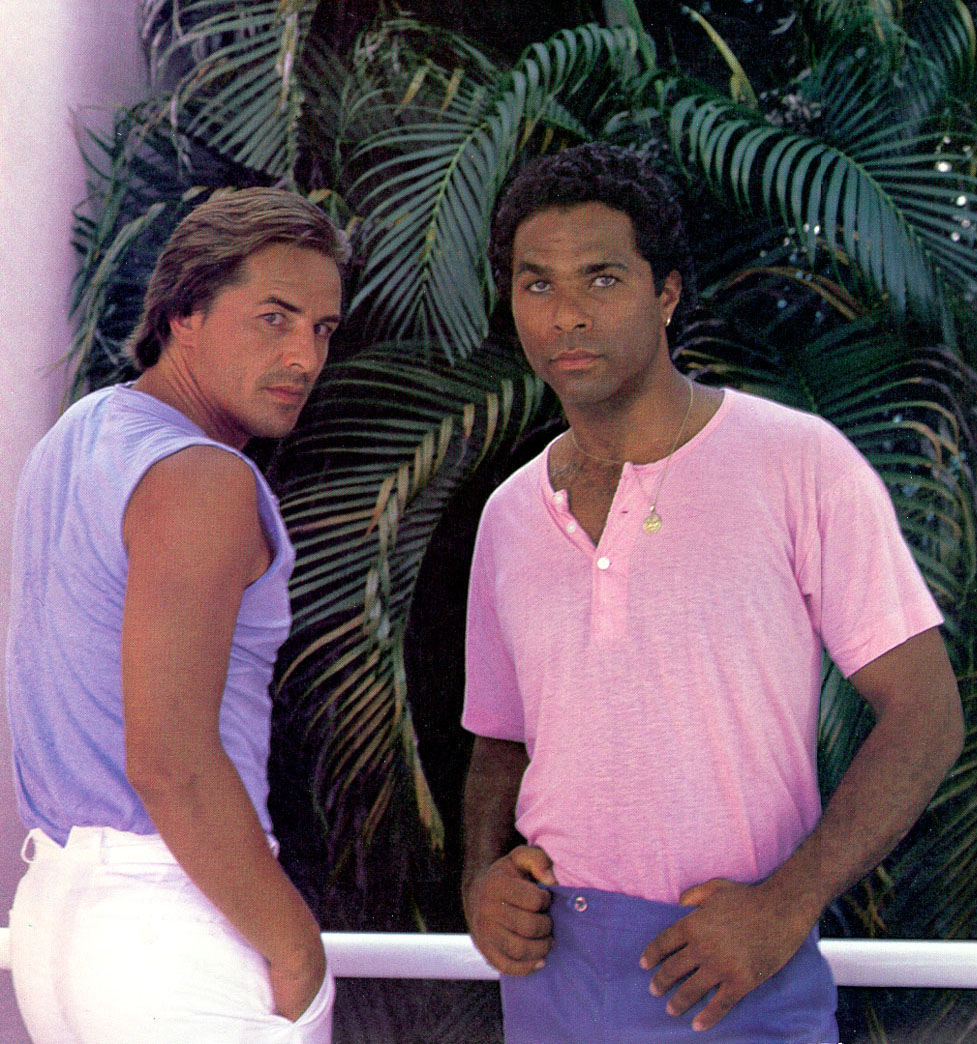
Gasp! The infamous Jaanbaaz of the infamous roll in the hair hay scene? Isn't that one of those hilariously seedy Miami Vice-esque drug movies, too?! And one of the few films the all-forgiving and always-optimistic Rum... disliked?!

"No, we haven't," we said. "But we have a perverse curiosity to watch it RIGHT NOW!"

"Set!" He added it to the pile. "Have you seen... Jeevan Ek Sanghursh?"

"Huh?"

"Jeevan Ek Sanghursh," he said, enunciating loudly over the thundering rain. "It's Anil Kapoor."

"Uh..." We were skeptical. After all, the Es had just tried to pawn off a movie from Singapore as being Tamil. Who knew what Nephew E was talking about.

"And Madhuri, too."

We gasped. "Oh my God, YES PLEASE!"

"And look, it's a two-in-one," he chirped happily, "with Rajkumar!"

Oh God. Now we at the PPCC KNOW that Rajkumar was hideous, but a mystery Anil/Madhuri movie was just too hard to resist. Had we just bought a two-in-one faux medieval-done-badly Anil/Madhuri themed DVD? We decided to watch Jeevan Ek Sanghursh first and find out.


Maybe because your mother is DEMENTED.


Penned by Javed Akhtar, one of Hindi cinema's premier screenwriters and lyricists, and starring the dyn-o-mite combination of Anil Kapoor and Madhuri Dixit, with a strong helping of Rakhee in her most ridiculously insane Demented Mother mode, Jeevan Ek Sanghursh (Life is a Struggle) turned out to be an inoffensive fluff piece with a few genuinely charming moments. It features one of the laugh-out-loud funniest scenes ever - a scene that was like something out of Monty Python, a scene that was on the level with the infamous moment in Sharmilee where Shashi drops the baby. That definitely merits some respect.

The story begins with your usual masala prologue, except today, since the mother is played by Rakhee, things go demented pretty quickly. Rakhee has three children: two sons, Arjun and Karan, and a daughter, Suman. After the younger Karan, in his rapscallion ways, picks one too many pockets, Rakhee speedily disowns him and sends him to the orphanage. After a pang of guilt, she decides to at least visit the orphanage once to let him know that they're leaving town - except apparently he's run away! Oh well, she thinks, she has train tickets for Mumbai this afternoon - no time to waste looking for your prodigal eight-year-old boy! Funnily (and typically), Karan has also made his way to Mumbai, where he's picked up by a kind-hearted garage owner. At least someone cares.


Where is Child Services?!


Karan grows up into Anil Kapoor, and, when not tending to his mustache or outrageous fashion sense (two trousers he's stitched together at the crotch?!), he lives in a converted double-decker - possibly the pimpest pad ever. On Day 1 of the narrative, Karan picks up a huffy lady, Madhu Sen (Madhuri Dixit!), who's all nouveau riche and pompous attitude. This is another one of those instances where, because it's Madhuri, we love her so much, but if it had been Sridevi... well, that's another story. On Day 2 of the narrative, Karan - through the twists and turns typical to masala - ends up working for Dr. Devraj Kamat (Anupam Kher), a doctor/vigilante criminal mastermind who orchestrates heists in the name of cleaning up the streets, and whose arch-nemesis is the evil mafioso, Rattan Dholakia (Paresh Rawal), who's just bad in the normal, greedy way. Both the villains were disarmingly silly: Dr. Devraj obsessively perfuming his hands, while the gluttonous Rattan yawned and gobbled up food continuously.

Anyway, Karan's first vigilante justice job: to intercept a load of cocaine and dispose of it. This leads to the funniest and most outrageous scene, when Karan attempts to dispose of the a ton of cocaine by burning it on the beach... right next to an open-air cafe at the local hotel! Inadvertently, clouds of crack drift through the hotel and everyone - Karan, Madhu Sen (who he inadvertently runs into during every heist), the waiters, the other patrons - gets high, and everything becomes immediately very surreal. "Like a decent man," Karan says in a monotonous haze, "I take tea on a camel. Waiter, bring me two pots of tea and one hot, hot camel." The waiter pours milk all over himself. Madhu starts giggling uncontrollably ("The hotel's brakes are broken!") and then dissolves into tears ("Where have my arms gone?!"). And this is all followed by a bizarre song, where the drug-addled Karan and Madhu romp through a series of nightmarish settings - miniature cities, undulating roads, smoking skeletons, Escher paintings. We've never seen anything like this in masala before - unless you count Anil and Rani's hallucinogenic romping in Nayak, though at least that was only implied. ("We've eaten a 'papaya' and taken some 'paan' and now we're going to roll around in the grass, wheeee!") Here it's explicit! And what's even stranger: this highly controversial scene (for the love of God, they just inhaled CRACK!) isn't demonized, but rather played for sitcom-style laughs! Oh Hindi cinema, you never cease to amaze us.


...!


...tiara...!


...three hands...!


Anyway, after everyone's recovered from those hijinx (PPCC included), the story tumbles along to its next masala port of call: the family reunion. Now usually the PPCC is all about reunions, but we found this entire section of the film tiresome - basically, Karan finds his family in Mumbai and, too shy to reveal his true identity, spends a lot of time gazing with puppy-dog eyes through windows and across streets. But it was a little hard to sympathize with the truly demented mother. Even after Karan finally announces his identity, she still kicks him out. So Karan spends the rest of the film making puppy-dog eyes at her while she keeps repeating variations of, "Get away from me! I don't like you! I don't want you as a son! Shoo!" In the end, the film dissolves into some gratuitous and incomprehensible dishoom dishoom, involving both crime bosses (Dr. Do-Good having now slipped into Just Evil mode as well) and people misusing hospital gurneys. Yawn.


Oh, you two loons. We love yous.


The best thing about this film - apart from the crack comedy scene - is the chemistry between Anil Kapoor and Madhuri Dixit. The film would have been heaps better if we had just abandoned the stupid family reunion narrative altogether and followed Karan and Madhu on their courtship. Their scenes were the liveliest of the film, and, as usual, they were endearing and romantic. Blogger brimful made a good argument on their blog about the unfair double standard against which men and women's beauty is held: "According to these movies, if you look like Madhuri Dixit, you're lucky if you end up with Anil Kapoor." Ha! And yet, the more Anil/Madhuri films we watch, the cuter we find them as a couple - she, an empowered diva, and he, a big goof! It's so sweet. And then there's this old interview where Anil Kapoor discusses the magic with Madhuri:
What do you have to say about Madhuri Dixit's marriage?

Obviously, I felt bad initially (smiles). I said, 'Oh God, she is gone!' She is a friend and I felt happy for her. I think she has become more mysterious and exciting after she got married. When she was unmarried, it was impossible to get her. Now, it is next to impossible. I don't think in this life, I will be able to get close to her!

But I was fortunate enough to come close to her in all my films -- I wooed her and got married. I fell in love with her and she reciprocated, on celluloid at least.

Among all the heroines you've worked with, who do you think complements you the best?

I think Madhuri. We made the best pair.

Most totally! When's the comeback film?!

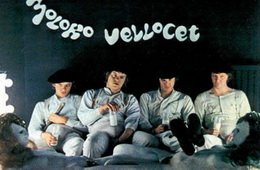
Anyway, as this film's narrative got further bogged down with Rakhee's dementia and tiresome indignation, the Anil/Madhuri songs became the sole source of any fun. With music by Laxmikant-Pyarelal, all of them were fab - from Madhu's initial Clockwork Orange-style nightmare about the predatory Karan and his Alex-like goons (hey, we'd be scared too!) in Bachke Tu to their adorable excursion to Holland (complete with baffled Dutch onlookers!) to - and this one was our favorite - the romantic and ridiculous Mil Gai. Jeevan Ek Sanghursh isn't a particularly good film - Rakhee makes sure of that - but it is memorable for the comedy and likable for Anil, Madhuri and Anil/Madhuri.

Monday, 22 December 2008

Pukar (2000)

For lovers of maximum meltdown, Pukar (Calling) is for you. Kind of like a superficial version of Dil Se, it has all the same juicy ingredients - gorgeous, dream-like song sequences (music by A.R. Rahman!), a demented heroine who drives her hero similarly demented, an unhealthy and very doomed love triangle, fabulous fight sequences, an impressionist, colorful aesthetic, a Himalayan backdrop and heaps o' crazy. Heck, it even has a "we must avert the evil terrorist plot to blow something up on August 15" climax. Unlike Dil Se, however, Pukar isn't worried about advancing any sociopolitical message or philosophical conundrum. It's just about the crazy. WELCOME THE CRAZY!

We at the PPCC are highly appreciative of actors who can melt down like steel at high temperatures. We like to see The Flip-Out, that moment when he or she just loses it completely - flailing, yelling, havoc-making. Our best-of-the-best, Toshiro Mifune, used to go all frenzied on enemy samurai. Hayaaaaaaah! Dil Se's Shah Rukh Khan won our hearts with that fight scene in the sewer - he was at 200%! And the reason we can't get off the Anil Kapoor All the Time train, no matter how hard we try, is because - happy surprise! - the man is just so good at flipping out. And Pukar is just one, long flip-out. Usually a character flips out only after he or she's reached the end of his tether. Well, in Pukar, Anil reaches the end of his pretty early... with Madhuri following close behind! So most of the film is just watching these two charismatic actors go demented, again... and again... and again... Enjoy! We know we did!


At the top...


...and at the bottom.


Pukar is essentially the story of an angry, young PPCC Amitabh Anjali (Madhuri Dixit). When Anjali's old school crush, Jai (Anil Kapoor), returns home as a conquering hero, all the old, squishy feelings come flooding back. And Jai's pretty awesome - with his goofy smile, poofy hair and bad-assness, he's just come from single-handledly taking down terrorist mastermind, Abhrush (a bald and scary Danny Denzongpa). Yet after skimming past Anjali with some pleasantries, he falls for beauty queen Pooja (Namrata Shirodkar) at the awesome West Side Story-esque bop. Argh, Madhuri's dil! Heck, our dil! Anil, how could you break it like that?! It's Madhuri, your pyaar, for crying out loud! This does not bode well.


At the top (and incidentally, YAY OM PURI!!!)...


...and at the bottom.


Poor Anjali, rather than picking herself up and gathering the pieces of her heart off the floor with some dignity, quickly spirals into Medea-esque spurned-and-insane-now destructiveness. Lured by the Mississippi Masala Uncle - who, by the way, looks a lot like our beloved Giancarlo Giannini at certain angles; and is, in the film, in cahoots with the evil Ambhrush - Anjali steals some military code from Jai and basically succeeds in ruining his life. Her plan to hurt him works a little better than expected - as the beauty queen, military glory, joie de vivre, raison d'etre and sobriety flee from Jai like... uh, something that flees from something else very quickly. Hindus from a beef buffet? New Year's Resolutions from the PPCC?

Anyway, the rest of the film is just one protracted meltdown at maximum voltage, with a hasty patch-up cobbled together for the required "happy ending". Though honestly, everything that does go wrong, can go wrong to Jai and Anjali, so the only reason we think they're smiling in the end is because they've finally completely lost their minds.


Check out that fabulous composition! The ladder's diagonal, the rough texture of the stone wall, and poor Anjali dwarfed by the size of her HUGE, exponentially-expanding problems.


Even though this wasn't a very profound film in terms of content, it was very well-done in several ways. The music, as we said, was absolutely divine. It was so good, even Lata ji shows up in a rare on-screen appearance. It was so good that - we kid you not - the PPCC actually loved the song Kismat Se Tum from long ago, before having seen a single Hindi film. Yes, it was that good. It crossed temporal borders and went BACK IN TIME to make us love it! Many of the compositions were striking - with excellent colors, textures and lines. The choreography in the "love is great, no, love sucks" dance-off was inspired.

And the acting!

Vah!

Well, Anil himself thinks and others agree that this is his "best performance ever" - and nota bene that he won the National Award for Best Actor in this. What can we say? This is probably one of the few films that amply showcases his very wide range - from the comedy with Pooja's mom ("My daughter won't marry an army man. You should probably just leave.") to the crazy (yay!) to the bad-ass to the romping around on icebergs and singing love duets. But hey - we don't need National Awards or Pukar or Anil himself to tell us how talented he is. We know, dude, we know.

Anyway, Anil's notable scene which has been mentioned by others and yet more others is - similar to Mashaal's - the drunken breakdown scene, with its forced smiles, tenuously hidden despair and the Amitabh Bachchan sweaty, tearful drunk face (except done right this time). Vah! But what made that scene really heartwrenching was... Madhuri! Oh, Madhuri. Poor Madhuri. When she gives Anil his roti parcel (stuffed with cold, unmicrowaved GUILT) and then watches him eat it and CRIES quietly, we at the PPCC felt like the movie had just blended our dil into a Frappe of Woe.

Where have all the charismatic heroines gone? Madhuri has the difficult task of maintaining sympathy for a character that the script didn't seem to know whether to make a villain or anti-heroine or what, and yet she succeeds. Not only is Anjali likable, even during all the ups and downs, she's also got three dimensions. We understand, little by little, just how important her childhood sweetheart has become in her life, and her hurt at being quickly dismissed in favor of some "plastic girl" was all too painful to watch. Her scenes of desperation and bad ideas were heart-breaking! Even when she went all crazy lady, we couldn't get angry, we were just disappointed.


Another movie where the most unexpectedly affecting scene was when someone ate.


A lot of other good actors show up - Om Puri was a very welcome surprise, and Danny Denzongpa was wonderfully evil - but this film, once again - belongs to Anil, Madhuri and Anil/Madhuri.

Alas, apart from a very good slice of melodrama, the film makes plenty of silly mistakes. The characterizations are uniformly superficial and everyone seems motivated by... well, it's a mystery. Ambhrush is evil because he just... is evil. He hates India because... well, he does. Anjali likes Jai... because she does, and Jai doesn't respond to Anjali's initial advances because... Oh well, you get the idea. And no one seems to have second thoughts or self-doubt - excepting, of course, Anjali (but you'd be having second thoughts too if people are starting to throw their shoes - that's a pretty blunt message!). We were ready to forgive these paper-thin characters since the plot was just rootin' tootin' along like a steam train, but then things started dragging in the second half and there were enough logical inconsistencies in the climax (why did Jai's parents attend the ceremony? why did Jai threaten to blow someone up in order to stop people from blowing up?) that we eventually went, "Oh, come on now." Also, hairy ethical moments: We didn't much care for all the hawkish India/Pakistan warmongering (Jai and Abhrush spend way too much time trash-talking each other's countries), and the gender relations were pooh. That is, this movie failed Mo's Movie Measure big time - I mean, as perversely fascinating and fun as it is to watch people get a little crazy about their crush, it was just disappointing to see Anjali's entire characterization built around her obsession with Jai. Massive HMMM! of Feminist Disapproval.

Friday, 19 December 2008

Tezaab Is Acid (1988)


Raaah, Anil Kapoor is ACID!


Tezaab Is Acid is pulp. Beautiful, graphic novel, gut-punching pulp. It is a film filled with unsavory concepts (acid burns! rape! abuse!) and sweaty, sleazy people. The emotional climax comes when our unwashed, bruised anti-hero screams to a courtroom full of people: "YES! YES! I AM ACID!" The acid which burns down society! The acid which eats away at his heart! But don't worry, gentle readers: this is Hindi commercial cinema, and so even after all the gangs and slums and exploitation, after all that hideous heartburn, our hero's still got a heart o' gold. And even though awful things happen, the film is at times ridiculous, at times sensitive enough that you're never really worried. Instead, you can sit back, relax and enjoy watching Anil Kapoor do what he does best: kick ass and meltdown (like acid indeed!) and exchange burning (acidic!) stares with the beautiful Madhuri Dixit.

The fun of Tezaab is seeing how Mahesh Deshmukh (Anil Kapoor and his towering pompadour) is transformed by societal injustice from a uniformed, naive goody-two-shoes into a really rough, low-level hoodlum called Munnabhai. From naval cadet academy, a series of bizarre tragedies propel squeaky-clean Mahesh out of his uniform and into the clink, where he emerges as a hardcore punk with a thirst for revenge. Yaaay! Young Anil Kapoor made his name playing angry tapori kids - Mashaal, the glorious Ram Lakhan - but he was also great at playing naive simpletons - Beta, Woh 7 Din, Eeshwar. We don't know which avatar we like better - and in Tezaab, you get both!

Apart from the fun "haah heeey!"-to-punk transformation, the heart and soul of Tezaab is the romance between the increasingly sleazy Munna and his poor, victimized Mohini (Madhuri Dixit). After all, the movie bills itself as "A VIOLENT LOVE STORY" in the title credits. Most of the highly contorted narrative - flashbacks within flashbacks! tangential fantasy sequences! - concerns Munna's various attempts to free Mohini from the grasp of her evil, exploitative father (an excellent Anupam Kher) and the also-evil, seemingly irrelevant goon Lotiya (Kiran Kumar). After being thrown in jail several times and emerging each time with a new scar and new shade of brown to his clothes, Munna employs the help of his old buddies (a strangely hot Chunky Pandey and a very young Johnny Lever) and the noble, sympathetic Police Inspector Singh (Suresh Oberoi) to finally get justice, save Mohini and cleanse the tezaab from his heart.


The early "upstanding members of society" days...


...the later, outlaw days.


One of the most romantic moments from the fantasy song, where Anil and Madhuri climb over the audience's shoulders to dance together. And Anil rips his shirt apart from the intensity of his devotion! And then they hug and the PPCC's heart implodes! Sigh, we love these two.


The romance is really what drives the film's emotional impact. We at the PPCC have no shame in admitting that we actually got teary-eyed every time Munna and Mohini were ripped apart and then reunited by the tides of CRAZY. Even if their relationship was absolutely insane and a not a little unhealthy - there's a lot of, "If you leave me, I'LL KILL MYSELF AND YOU TOO!" talk, and Munna throws himself from the roof at one point - it also had that vulnerable intensity and subsequent sweetness of... gosh, something Italian! Except with the added bonus of the highly charismatic Anil/Madhuri duo!

Everyone else was a lot of fun and surprisingly thoughtful - we're speaking, in particular, of Anupam Kher and Johnny Lever. We've been going through a rough patch with Anupam lately, and Johnny Lever's never really appealed, but this film showed us that - yes! - Anupam is a good actor and, well, Johnny Lever just didn't have much to do. Phew! Meanwhile, behold the surprise appeal of Chunky Pandey!


Earlest sighting of Johnny Lever, and check out how studly Chunky Pandey is!


For fans of Anil, Madhuri and Anil/Madhuri, this film definitely delivers. From a tender, cute courtship to flamboyant motorcycle stunts, it is wacky, trashy goodness.


The main reason we love Anil Kapoor: his trademark MELTDOWN scene of MAXIMUM DRAMA.

Monday, 15 December 2008

Ram Lakhan (1989)

Ahhh, there's nothing quite like well-cooked masala. Why did this beautiful, wonderful genre have to die? Well, as with all things this season, we think the fault rests squarely on Shah Rukh Khan and Aditya Chopra. If it wasn't for Dilwale Dulhania Le Jayenge and the advent of NRI romance cinema, our precious masala wouldn't have been abandoned, dammit. In the 90s and 2000s, Bollywood starting churning out weepy melodramas about rich, jet set NRIs living in international capitals - that's fine if you're targeting the lucrative diaspora market, but what about all of us who want something set in India? With poor people? And outrageous coincidences? And estranged brothers? And a Mom who grabs her hair and shrieks,


"NAHIIIIIIIIIIIIIIIIIIIIIIIIIIIIIIIN!!!!!!!"


When Rakhee does that in Subhash Ghai's Ram Lakhan, the PPCC sighed in happiness. All was right in the world.

They just don't make masala like they used to. Using Filmi Girl's term, the "post-modern" masala genre - Farah Khan's films, Jhoom Barabar Jhoom, Tashan - isn't really the same. It's squishy heart is all calloused. There's a self-aware, slightly tongue-in-cheek, slightly cynical vibe to things - it teases the genre even as it mimics it. But real, wholesome, honest-to-God masala - that which you find in the 70s and 80s, and that which we love - was earnest and righteous and pure. It was Shakespearean. It had other fish to fry. It didn't worry at all that the probability of two estranged brothers running into each other in the heaping, super-populated Mumbai is close to zero. They do. Of course they do! They always will! Real masala wasn't about reality, it was a fable - a LEGEND - and always the same story, too: There are two brothers. One is a little morally ambiguous. One is a policeman. They have a hard time in the prologue and live on the edge of poverty. Their mom suffers for a really long time. Their dad dies, or is otherwise unavailable (e.g. he might be in his criminal lair). Amrish Puri will probably show up at some point. There is revenge, romance, great songs, lots of tears and laughter. Sometimes, in the sad-sala subgenre, one of the brothers will die. But most of the time, all ends well.

This is what we want. Nothing more!

Another reason real masala is dead: since the origin fable of masala depends on two brothers and the very important connection between them, a good jodi is critical. The angry, young Amitabh Bachchan had great jodi power with our beloved Shashi Kapoor, Vinod Khanna, Dharmendra. In Ram Lakhan, Jackie Shroff and Anil Kapoor have similarly great chemistry. But nowadays? Well, SRK's basically a one-man show, and while there are some feeble sparks of jodi potential in the current generation, it's just not the same - Akshay Kumar and Saif Ali Khan, as ..so they dance! is slowly convincing us, are decent together; we also enjoyed Nana Patekar and Anil Kapoor's vibe in the otherwise dismal Welcome (then again, we like anything Anil Kapoor these days), but what else? Nuffin'. SRK and Zayed Khan? Cute, but come on. They're like a caramel soy latte, when we're talking about Vat 69!


The Jackie-Anil jodi magic again!


Anyway, Ram Lakhan is buttery, bloated masala, a veritable feast of operatic enormity. An epic three hours, its Standard Prologue lasts an astounding forty minutes (!)... heck, it even takes us twenty minutes just to get to the title! While this sort of long-windedness usually merits some criticism - I mean, come on, we all know the story, so let's be efficient, naaaa? - we were very beguiled by everything, from Amrish Puri's droopy Lazy Eye of Evil, to Rakhee getting splattered in blood and going properly demented, to the exuberant introduction of the young, rapscallion Anil Kapoor (complete with a curled mustache and scruffy mullet, YES!). There were even more major brownie points: Saeed Jaffrey (if ever there was a case of "What the hell am I doing in this movie?!"...), Madhuri Dixit (yay!), a surprisingly super-hot Jackie Shroff (our knees went wobbly when he appeared all svelte and stoic in that police uniform of his), and faaaaabulous songs. And the direction! Subhash Ghai's direction is hit and miss with us, but he was definitely on his game in Ram Lakhan. The emotional climax was so gargantuan that the film threatened to explode, yet Ghai managed to hold it all together - creating something that was loud, fast, fun, anarchic and EXTRA-LARGE.

The story is all the standard stuff. Evil relatives, led by Amrish Puri and his drooping eyelid, plot a massive, intra-familial coup, killing off the noble father (Dalip Tahil), stealing the family home and sending the widow (Rakhee) and two sons, Ram and Lakhan, into the gutter. This fairly straightforward plot point takes, as we said, forty minutes. Anyway: Ram and Lakhan grow up into the super-fine Jackie Shroff and the super-fly Anil Kapoor. Ever since they were kids, Ram was the upright maintainer of rules and justice, whereas Lakhan was a cheeky little bugger who skipped school to go dancing in the streets. Now, as adults, Ram is an upright maintainer of justice - in other words, a cop - while Lakhan spends his time ogling Radha (Madhuri Dixit), waxing the tips of his stache (good move) and basically loafing around with his tapori crew. The story gets interesting when Lakhan weasles his way into the police force to become an inspector - like his brother. Except - unlike his brother - Lakhan becomes immediately corrupt, schmoozing and conning the enemy, and just crashing from crazy idea to crazy idea. Clearly, he's on the road to disaster, but you'll never guess what happens during the final show-down (except for the marching band with secret machine guns, which we saw coming a mile away).


Trying to contain Anil Kapoor's REAL, ULTIMATE POWER (!!!). Good luck! Anil is a mammal and his purpose is to FLIP OUT.


As Rum hilariously notes, the villains are eco-mindful and carpool. Good for them! As Beth wisely put it, "Why bother taking over the world if there's no planet left to enjoy?"


This film is really the Lakhan/Anil Kapoor show. Naturally, the bad brother of masala movies is the one we root and cheer for - whether that's Amitabh Bachchan in Deewaar, Amitabh Bachchan in Suhaag, or... well, Amitabh Bachchan in Amar Akbar Anthony. And it's the same here: Ram Lakhan's entire narrative depends on the choices of hot-headed, tumultuous, Puckish Lakhan and, even as he is mischievous and corrupt and irreverant, the audience loves him. Anil Kapoor delivers an absolutely awesome performance - channeling a sort of weird combination of Amitabh Bachchan's Angry Young Man, Shashi Kapoor's schmoozing charmer, Toshiro Mifune's flipped out samurai and Goofy the cartoon. More than once, Lakhan's character receives a grand entrance full of pageantry, build-up and booming drums. He even has a couple great mottos: "My name is Lakhan!" and "1, 2 ka 4!" Believe us, every time Lakhan kicks ass or takes bribes or hustles and then tips his hat with, "My name is... Lakhan!" you just wanna give a big ol' cheer.


Some cute Anil-Madhuri jodi moments of pure pyaar.


Subhash Ghai gives himself a cameo. But hey, we'd give ourselves a cameo too if we had made a kick-ass masala movie like this!


We should also just say that we love, LOVED this film. Maximum masala! It was massive and hugely satisfying and hilarious and pitch-perfect. It toed that intoxicating line between the sublime and the ridiculous - and we just couldn't get enough! Three hours? How about ONE MILLION MORE! We watched it with the volume way up, because we wanted to just soak in all the glorious, endless choral reprises of, "RaaaaaaamLAKHAN! (boom boom boom) RaaaaaaaamLAKHAN!" There was silliness galore - that enormous man who works for the evil Sir John (Raza Murad), the marching band with hidden machine guns, the Tapori vs. Sleazy Man dance-off - and there was feel-good fun galore as well - demented Rakhee becoming an action hero mom, girls with machine guns, the silly mottos ("India is great!", "Hey, bad man!", etc.). And the dishoom! It was maximum late 80s, high octane, full of mud battles and force-feeding and explosions and one awesome, vicious fight between the brothers. It was mental! We loved it!

The operatic excellence was only enhanced by the fantastic use of music throughout the film. Apart from the Ram Lakhan anthem which was the standard leitmotif punctuating all the many moments of extreme emotion, the background score was also full of pounding, crashing percussion. This near-constant aural barrage made our heart go dhadak-dhadak - it was fab! The songs were great as well. Our favorite might be Madhuri's melodramatic dance extravaganza, Beqadar Bekhabar - which was part of the enormous dennouement and thus might contain spoilers, though, honestly, the plot takes many more unexpected left turns after this song, so you may as well just watch it. And behold! Madhuri's pointy hat! Her and Anil shooting hateful, suffering glances at each other! The sweeping cameras! The compositions! The pageantry! The worst aspect, of course, is those back-up dancers in blackface (?!), but we just pretend they're not there. And our second favorite song was the other melodramatic Madhuri dance extravaganza, O Ramji, which took a more Courtesan's Ghazal of Doom-esque flavor (and ends with one of Lakhan's mega-entrances).

Overall, heaps and heaps of fun. Highly recommended!

Sunday, 30 November 2008

Beta (1992)

Beta would have been the perfect Hindi film, if Anupam Kher hadn't ruined it.


The PPCC likes empowered, intelligent women who get shit done. We can do it!


Check this out: a masala with a giddy, wholesale reversal of gender roles. All those great masala tropes, switched around so that all the heroes and heroines' usual gestures are reversed. Just to show you how much this film was crazily, bizarrely, extremely feminist, we found ourselves even worrying about the male character's empowerment. In the last scene, we found ourselves exclaiming, "OMG, no, Anil! You don't have to go back to her! You can live your life independent of women! Respect yourself!"

We absolutely loved this one. Everything about it - except for Anupam Kher - was perfect, beyond perfect. It did things we dared not to even dream of seeing in a Hindi film. It even made Chak De! India - a film which methodically established all the feminist issues and tackled them, one by one - look stodgy and even a little backward (it is, after all, a man who emancipates the women in Chak De...). Beta seems to say: why beat around the bush and make grand proclamations when you can have much more fun just switching all the genders around in your standard masala epic?

Indeed! (We even thought it might be fun to switch all the gendered pronouns around, in keeping with the film, but then we thought that would just be confusing.)

The film starts predictably enough. Cue prologue: once upon a time there was a little boy, Raju. Raju, whose mother died in childbirth, had only one wish: to have a mother again. One day, he got his wish - his father married a seemingly OK lady, Lakshmi Devi (Aruna Irani). However, as in all fairy tales, she was an evil stepmother. Intending to strip Raju and his father of their wealth, she brings all her evil relatives along - her evil son, stepbrother Ramesh (Ajitesh Kumar Irani), and her evil brother, Totaram (an awful Anupam Kher), and his wife - and proceeds onto Operation Gold Digger. Her two main methods of assuring future success are: (1) instill in Raju a case of mammismo so acute that he worships her in a most unhealthy way and is absolutely incapable of doubting her and, (2) never send him to school, just in case he should get any bright ideas there. Honestly, the scene when Evil Stepmother tells the silly, little Raju that "educated people just serve... to rule, you must work in the fields!" and sends him out onto the mud patch with a sickle was... absolutely outrageous and hilarious.

Raju grows up into a bouyant Anil Kapoor. Operation GD is working like a charm: he almost kills a man who dares criticize his beloved stepmother, and he can't read. One day, Raju and Evil Stepmom go to a wedding in town - there, Raju's hit by a bolt of lightning called Saraswati (an incredibly awesome Madhuri Dixit). This scene - when Saraswati's dupatta flies off the balcony and accidentally gets draped all over Raju - is symbolic, we think, of the complete transfer of power. The dupatta has strong connotations about the virginity, purity and modesty of women. Many Hindi films feature coy heroines peeking shyly from below their dupatta. The fact that this scene instead features the innocent, guileless Raju peeking up to become enamoured with his savior is incredibly fun and thought-provoking. Basically from this point on, Raju is no longer the hero - Saraswati is, and Raju henceforward plays the role of heroine and damsel-in-distress.


A pure and virginal Raju finds his hero.


This is what happens when people say bad things about his ma. Can you guess what he's screaming? MAAAAAAAAAAA!!!


Indeed, while Raju flies off into never-never lands of love and cuddles, the wiser, bad-ass Saraswati shrugs off his advances. (An aside: there is a magic moment which merits commenting, when Raju follows Saraswati to a fair and, by a series of baroque and funny coincidences, ends up rolling down a hill on a rice trolley with her while a mob runs after them. Saraswati demands, "So you've finally caught me. What the hell do you want?" And a bewildered and giddy Raju says, "Well, gosh, I feel shy now." It was the cutest, most romantic scene ever.) After Raju helps Saraswati fight off some rapist goondas (though, again, she was doing pretty well by herself and kicking tons of ass), he offers to accompany her home. On the way, it rains and they take refuge in a barn. When, the next morning, they return to Saraswati's village, they are confronted by a mob of loud, stupid, angry men who make the usual proclamations of lost honor, lost purity and other such rubbish. Saraswati's father (Satyendra Kapoor!) wails in despair: "Who will marry you now?!" Saraswati and Raju insist on their innocence, but things degenerate - Raju picks a fight with Saraswati's ex-fiancee, the man-mob attacks Raju and then Saraswati saves Raju's ass, beats up the man-mob and asks him to marry her!

Our jaw dropped so low it hit the basement.


Madhuri saving Anil from the man-mob.


And it gets better! A coy, bewildered Raju (OK, Anil spends a lot of time in this film being coy and bewildered) giddily (...and giddy...) accepts. Yet when they return home in triumph, Evil Stepmom takes one look at Saraswati and recognizes a worthy adversary. (And a wonderful touch: when Stepmom asks Raju where he was last night, and he tells her about the barn escapade, she just shrugs with an, "Oh, OK.") After some quick thinking, Evil Stepmom decides to try to poison the marriage from the get-go. She tells Saraswati that, according to some esoteric astrology, there can be no love-making EVER (as otherwise Raju will basically die in childbirth... yes, really). So much for suhaag raat... or any other raat, for that matter. Except Saraswati figures it out pretty quickly, and decides to make amends... by seducing Raju the next day in some other barn! So much for "the husband's right" - this film has completely moved everything over to Saraswati! (And it even features a triumphant, post-coital song by all the women!)


The woman takes charge in the bedroom (well, shed) too!


Saraswati (Madhuri) and Evil Stepmom (Aruna Irani).


And indeed, the rest of the film concerns how Saraswati basically duels with the Evil Stepmom, saving Raju's ass again and again. In the end, it threatens to become a bit farcical - as the house o' melodrama is divided along clear battle lines (Good Dad, servants, Madz on one side; Evil Step-people on the other; illiterate Raju in the middle) and their warfare degenerates into bizarre and extreme practical jokes (including drinking a bottle of urine!). However the final dishoom-dishoom was so magnificent that we forgave the previous thirty minutes of silliness.

Well, we just could not get over the gender relations in this film. They were frickin' AWESOME. Saraswati kicks ass. She hammers things into walls. She figures things out. She gets her man out of jams and, when desired, out of his dhoti. She is completely and totally in control. And her villain - another woman! Indeed, the entire narrative structure hangs on the decisions and conflict between two women. Raju - disappears for long stretches, just like a heroine! has basically little understanding and no say in the serious matters of the household, just like a heroine! is used as a pawn by the hero and villain, just like a heroine! It was crazy!

If movies are supposed to be the place to air our fantasies, the PPCC has always had a bit of trouble with Hindi films. What self-respecting lady honestly fantasizes about being a trophy love-token whose purity is a source of conflict for a bunch of men? Who gets to come onscreen a few times, bat her eyelashes, heave her bosom and then get spirited away as the men beat each other up? Where the best we can hope for is that Shah Rukh Khan will decide he needs a come-back and the best way to do it is by coaching the women's team towards self-confidence and success?!

No!

We, like everyone else, want to be the heroes of our stories! We want to save our beloved from the bad guy, we want to take charge and make decisions and kick ass! Beta is the perfect film for this because it's like action-hero Madhuri... and yet never is her behavior implied to be butch or masculine or anything. She just gets shit done. It was so fabulous!


Saving Raju's ass, yet again. Milk is such a great liquid for slow-motion sprays.


WHY, ANUPAM, WHYYYYY?


The performances, of course, drive the awesomeness (and, in Anupam's case, the terribleness) of this film. Madhuri is charismatic, heroic and fun - indeed she won Filmfare Best Actress for this. She's a wonderful dancer, too, so the songs are a hoot. Anil Kapoor, who also won Filmfare Best Actor, does a great job of making Raju ignorant, but not unintelligent; as well as damsel-in-distress-esque but not effeminate. Also, he wears a dhoti throughout the film and we have a semi-secret love of the dhoti. Aruna Irani plays along most of the stereotypes of the Evil Filmi Ma - see Swayamvar for more of this genre. And Anupam - oh, Anupam. His "comic relief" role was so torturous and awful that he ruined many a scene. This is such a silly shame. Anupam Kher is a great actor - watch him in Lust, Caution or that movie with Sridevi and Sanjay Dutt about cocaine trafficking in Hong Kong - and yet this role, complete with buckteeth and an exaggerated limp, was just awful. Thankfully, the goodness of this film (mostly) outweighed the stupidness of his performance.

(Finally, we're especially interested to hear if other people found this film as feminist as us or if we've just been blinded by the Anil-Madhuri jodi.)