Showing posts with label rakhee. Show all posts

Tuesday, 3 February 2009

Saaheb (1985)

Ahh, the unique, hidden grandeur of mediocrity! The glories of being pedestrian!

If Pixar's The Incredibles showed that not everyone can or should be considered super, then Saaheb shows that not everyone has to be super to be special, needed, happy or loved. It is a veritable celebration of the middle child - the kid that's neither the hero nor the underdog, the one who isn't rebellious, spectacular or often even noticed. In a clever symbolism, the titular protagonist, Saaheb, has only one talent: goalkeeping. Like the goalkeeper, he occupies an unglamorous but critical and unique role. "No one notices whether I'm here or not!" Saaheb says. And yet, like the goalkeeper everyone forgets about or even disparages ("He can't even score a goal!" his father grumbles. "All he does is stand around!"), it's Saaheb who is the family's protector and, in the end, savior. In fact, so touching is this theme of hidden joy and uncelebrated sacrifice that, even as the audio skipped and the cameraman forgot to focus, the PPCC ended up a blubbering pile of soggy, used tissues.


Don't cry, middle child, you're a star!


In a drab, crowded working class house, a hypertensive widower (Utpal Dutt) lives with his three married sons, their wives, his unmarried son - Saaheb! (Anil Kapoor) - and his unmarried daughter, Bulti (Nandita Thakur). Our secret hero, Saaheb, is the typical child lost in the middle: he is the peacemaker and, often, the errand boy for everyone else in the house. His best friends in the family are the young Bulti, with whom he scraps and teases, and his protective older sister-in-law, Sujata (Rakhee). Both Saaheb and Bulti are constantly made by the rest of the family to feel that they're worthless weights: Saaheb because he has failed college (again!) and is jobless and prospectless, Bulti because she is still unmarried. A suitable husband is eventually found for Bulti, but the family despairs: they can't afford the wedding! While their father grieves over leaving his children with nothing and having to sell the house to pay for Bulti's wedding, the older children connive and plan on what they'll do with their share. The only ones who seem to care about keeping the house intact are Saaheb and Bulti. And in the end, it's goofy, forgotten Saaheb who saves the team.


The family.


Grafted over this story is the obligatory romance which, while a little extraneous, is still quite charming: Saaheb's neighbor is the outgoing, tomboyish Natasha (Amrita Singh) who initiates the courtship by brazenly calling over from her balcony: "Hey! Want to be friends?" Saaheb resists for about half a song, and then they frolic around for yet more songs - sometimes on the pavement, sometimes in their fantasy future.


An Anil Kapoor character dominated by a strong woman yet again.


Like Virasat, this is another Anil Kapoor movie that intelligently tackles dharma. Except here the dharmic duty - the submission of the individual to the larger community - is just portrayed as straightforward, poignant sacrifice. So none of those hairy moral consequences and ambiguities - thank goodness for our brain! - but with the same delicate, humanistic touch - thank goodness for our heart!

There was also an interesting Buddhist shout-out in the end. This gives the whole dharma issue a fresh, new spin, as we're not talking about being a cog in the almighty caste system à la Hinduism, instead we're talking about being a drop in the large, amorphous, interdependent ocean à la Buddhism.

OOH! Time out for a completely unrelated Buddhist joke!
What does the Zen Buddhist ask the hot dog man? "Make me one with everything."

Wait, wait - we've got another one!
How many Buddhists does it take to change a light bulb? Two. One to change it, and one not to change it.


Harr harrr harrrrr...

Anyway.

Where were we?

Oh yes - so Saaheb is directly likened to Siddartha Gautama, the founder of Buddhism. While this is a bit of a stretch - Saaheb's a great guy and clearly in tune with the Buddhist philosophy of interdependent existence and humble compassion, but uh... - it's still a really novel parallel. Good ol' Siddartha just doesn't come up in movies that often! And maybe it's not such a stretch: compared to his selfish brothers, Saaheb's definitely further along the path to Enlightenment, that's for sure.

The other great thing about Saaheb, as we mentioned earlier, is this glorification of the ordinary. Generally, films either deal directly with the realization of your wildest dreams, or deal with the painful fall-out of realizing that your wildest dreams are not so great or just plain unattainable. Saaheb and his beloved Natasha instead dream small: and yet even these humble aspirations (working as flight attendants or train ticket collectors) are transformed into something Elysian and grand and perfect, just by their sheer joy. In the end, we cried a lot more than Saaheb did for his new future because we just couldn't accept it with the same easy-going malleability as him!


This song became our favorite when Anil and Amrita started cavorting around the airport.


This cap doesn't capture the grand, open-space fun of dancing on the tarmac while planes take off. Wheeee!


All the performances are relatively understated and charismatic (and Anil Kapoor is awfully boyish and skinny!). The production value is low, in keeping with the setting, and there are few songs. Yet this was such a sweet nugget of a film, with such a contented (even enlightened!) message, that we definitely recommend it.

And don't forget, PPCC readers, Anil on Regis tomorrow!

Thursday, 15 January 2009

Jeevan Ek Sanghursh (1990)

Well, yesterday the PPCC braved a torrential downpour, gushing sidewalks and a broken flip-flop to visit our trusty Uncle Everything DVD-wallah ji. Uncle E ji's really got almost everything, and he prides himself on being the premier supplier of Hindi DVDs in the country. (Very possible. He's certainly our premier supplier.) Anyway, after a huge disappointment when Uncle E ji's only Tamil films were Aaj Ka Boss (which, as the title implies, is not actually Tamil but Hindi) and an ancient, unsubtitled, black and white film from Singapore (?! again, not actually Tamil, but what do any of us know apparently), we requested our usual binge of Anil Kapoor films. At this point, assistant Nephew Everything had a brainwave and said, smiling, "I am thinking you are very keen on Anil Kapoor lately."

The PPCC smiled with a distant look in our eyes. "Yeeeah. Gosh, he's dreeeamy." We felt a haze of affection coming on.

(Never mind that after a YEAR of requesting only the most esoteric Shashi Kapoor titles, the Es pretended to never notice our devotion to Shashilicious. Anyway.)

"Well," Nephew E said, "Have you seen... JAANBAAZ?"

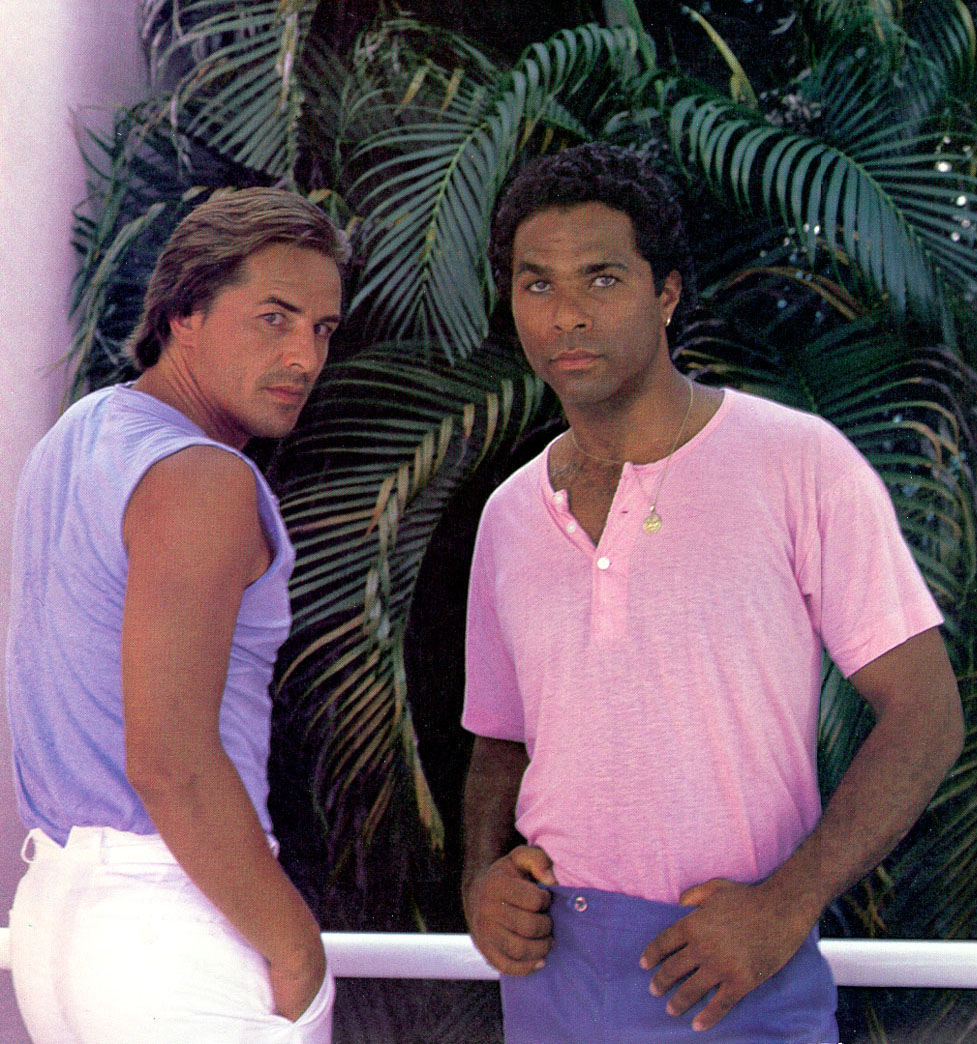
Gasp! The infamous Jaanbaaz of the infamous roll in the hair hay scene? Isn't that one of those hilariously seedy Miami Vice-esque drug movies, too?! And one of the few films the all-forgiving and always-optimistic Rum... disliked?!

"No, we haven't," we said. "But we have a perverse curiosity to watch it RIGHT NOW!"

"Set!" He added it to the pile. "Have you seen... Jeevan Ek Sanghursh?"

"Huh?"

"Jeevan Ek Sanghursh," he said, enunciating loudly over the thundering rain. "It's Anil Kapoor."

"Uh..." We were skeptical. After all, the Es had just tried to pawn off a movie from Singapore as being Tamil. Who knew what Nephew E was talking about.

"And Madhuri, too."

We gasped. "Oh my God, YES PLEASE!"

"And look, it's a two-in-one," he chirped happily, "with Rajkumar!"

Oh God. Now we at the PPCC KNOW that Rajkumar was hideous, but a mystery Anil/Madhuri movie was just too hard to resist. Had we just bought a two-in-one faux medieval-done-badly Anil/Madhuri themed DVD? We decided to watch Jeevan Ek Sanghursh first and find out.


Maybe because your mother is DEMENTED.


Penned by Javed Akhtar, one of Hindi cinema's premier screenwriters and lyricists, and starring the dyn-o-mite combination of Anil Kapoor and Madhuri Dixit, with a strong helping of Rakhee in her most ridiculously insane Demented Mother mode, Jeevan Ek Sanghursh (Life is a Struggle) turned out to be an inoffensive fluff piece with a few genuinely charming moments. It features one of the laugh-out-loud funniest scenes ever - a scene that was like something out of Monty Python, a scene that was on the level with the infamous moment in Sharmilee where Shashi drops the baby. That definitely merits some respect.

The story begins with your usual masala prologue, except today, since the mother is played by Rakhee, things go demented pretty quickly. Rakhee has three children: two sons, Arjun and Karan, and a daughter, Suman. After the younger Karan, in his rapscallion ways, picks one too many pockets, Rakhee speedily disowns him and sends him to the orphanage. After a pang of guilt, she decides to at least visit the orphanage once to let him know that they're leaving town - except apparently he's run away! Oh well, she thinks, she has train tickets for Mumbai this afternoon - no time to waste looking for your prodigal eight-year-old boy! Funnily (and typically), Karan has also made his way to Mumbai, where he's picked up by a kind-hearted garage owner. At least someone cares.


Where is Child Services?!


Karan grows up into Anil Kapoor, and, when not tending to his mustache or outrageous fashion sense (two trousers he's stitched together at the crotch?!), he lives in a converted double-decker - possibly the pimpest pad ever. On Day 1 of the narrative, Karan picks up a huffy lady, Madhu Sen (Madhuri Dixit!), who's all nouveau riche and pompous attitude. This is another one of those instances where, because it's Madhuri, we love her so much, but if it had been Sridevi... well, that's another story. On Day 2 of the narrative, Karan - through the twists and turns typical to masala - ends up working for Dr. Devraj Kamat (Anupam Kher), a doctor/vigilante criminal mastermind who orchestrates heists in the name of cleaning up the streets, and whose arch-nemesis is the evil mafioso, Rattan Dholakia (Paresh Rawal), who's just bad in the normal, greedy way. Both the villains were disarmingly silly: Dr. Devraj obsessively perfuming his hands, while the gluttonous Rattan yawned and gobbled up food continuously.

Anyway, Karan's first vigilante justice job: to intercept a load of cocaine and dispose of it. This leads to the funniest and most outrageous scene, when Karan attempts to dispose of the a ton of cocaine by burning it on the beach... right next to an open-air cafe at the local hotel! Inadvertently, clouds of crack drift through the hotel and everyone - Karan, Madhu Sen (who he inadvertently runs into during every heist), the waiters, the other patrons - gets high, and everything becomes immediately very surreal. "Like a decent man," Karan says in a monotonous haze, "I take tea on a camel. Waiter, bring me two pots of tea and one hot, hot camel." The waiter pours milk all over himself. Madhu starts giggling uncontrollably ("The hotel's brakes are broken!") and then dissolves into tears ("Where have my arms gone?!"). And this is all followed by a bizarre song, where the drug-addled Karan and Madhu romp through a series of nightmarish settings - miniature cities, undulating roads, smoking skeletons, Escher paintings. We've never seen anything like this in masala before - unless you count Anil and Rani's hallucinogenic romping in Nayak, though at least that was only implied. ("We've eaten a 'papaya' and taken some 'paan' and now we're going to roll around in the grass, wheeee!") Here it's explicit! And what's even stranger: this highly controversial scene (for the love of God, they just inhaled CRACK!) isn't demonized, but rather played for sitcom-style laughs! Oh Hindi cinema, you never cease to amaze us.


...!


...tiara...!


...three hands...!


Anyway, after everyone's recovered from those hijinx (PPCC included), the story tumbles along to its next masala port of call: the family reunion. Now usually the PPCC is all about reunions, but we found this entire section of the film tiresome - basically, Karan finds his family in Mumbai and, too shy to reveal his true identity, spends a lot of time gazing with puppy-dog eyes through windows and across streets. But it was a little hard to sympathize with the truly demented mother. Even after Karan finally announces his identity, she still kicks him out. So Karan spends the rest of the film making puppy-dog eyes at her while she keeps repeating variations of, "Get away from me! I don't like you! I don't want you as a son! Shoo!" In the end, the film dissolves into some gratuitous and incomprehensible dishoom dishoom, involving both crime bosses (Dr. Do-Good having now slipped into Just Evil mode as well) and people misusing hospital gurneys. Yawn.


Oh, you two loons. We love yous.


The best thing about this film - apart from the crack comedy scene - is the chemistry between Anil Kapoor and Madhuri Dixit. The film would have been heaps better if we had just abandoned the stupid family reunion narrative altogether and followed Karan and Madhu on their courtship. Their scenes were the liveliest of the film, and, as usual, they were endearing and romantic. Blogger brimful made a good argument on their blog about the unfair double standard against which men and women's beauty is held: "According to these movies, if you look like Madhuri Dixit, you're lucky if you end up with Anil Kapoor." Ha! And yet, the more Anil/Madhuri films we watch, the cuter we find them as a couple - she, an empowered diva, and he, a big goof! It's so sweet. And then there's this old interview where Anil Kapoor discusses the magic with Madhuri:
What do you have to say about Madhuri Dixit's marriage?

Obviously, I felt bad initially (smiles). I said, 'Oh God, she is gone!' She is a friend and I felt happy for her. I think she has become more mysterious and exciting after she got married. When she was unmarried, it was impossible to get her. Now, it is next to impossible. I don't think in this life, I will be able to get close to her!

But I was fortunate enough to come close to her in all my films -- I wooed her and got married. I fell in love with her and she reciprocated, on celluloid at least.

Among all the heroines you've worked with, who do you think complements you the best?

I think Madhuri. We made the best pair.

Most totally! When's the comeback film?!

Anyway, as this film's narrative got further bogged down with Rakhee's dementia and tiresome indignation, the Anil/Madhuri songs became the sole source of any fun. With music by Laxmikant-Pyarelal, all of them were fab - from Madhu's initial Clockwork Orange-style nightmare about the predatory Karan and his Alex-like goons (hey, we'd be scared too!) in Bachke Tu to their adorable excursion to Holland (complete with baffled Dutch onlookers!) to - and this one was our favorite - the romantic and ridiculous Mil Gai. Jeevan Ek Sanghursh isn't a particularly good film - Rakhee makes sure of that - but it is memorable for the comedy and likable for Anil, Madhuri and Anil/Madhuri.

Monday, 15 December 2008

Ram Lakhan (1989)

Ahhh, there's nothing quite like well-cooked masala. Why did this beautiful, wonderful genre have to die? Well, as with all things this season, we think the fault rests squarely on Shah Rukh Khan and Aditya Chopra. If it wasn't for Dilwale Dulhania Le Jayenge and the advent of NRI romance cinema, our precious masala wouldn't have been abandoned, dammit. In the 90s and 2000s, Bollywood starting churning out weepy melodramas about rich, jet set NRIs living in international capitals - that's fine if you're targeting the lucrative diaspora market, but what about all of us who want something set in India? With poor people? And outrageous coincidences? And estranged brothers? And a Mom who grabs her hair and shrieks,


"NAHIIIIIIIIIIIIIIIIIIIIIIIIIIIIIIIN!!!!!!!"


When Rakhee does that in Subhash Ghai's Ram Lakhan, the PPCC sighed in happiness. All was right in the world.

They just don't make masala like they used to. Using Filmi Girl's term, the "post-modern" masala genre - Farah Khan's films, Jhoom Barabar Jhoom, Tashan - isn't really the same. It's squishy heart is all calloused. There's a self-aware, slightly tongue-in-cheek, slightly cynical vibe to things - it teases the genre even as it mimics it. But real, wholesome, honest-to-God masala - that which you find in the 70s and 80s, and that which we love - was earnest and righteous and pure. It was Shakespearean. It had other fish to fry. It didn't worry at all that the probability of two estranged brothers running into each other in the heaping, super-populated Mumbai is close to zero. They do. Of course they do! They always will! Real masala wasn't about reality, it was a fable - a LEGEND - and always the same story, too: There are two brothers. One is a little morally ambiguous. One is a policeman. They have a hard time in the prologue and live on the edge of poverty. Their mom suffers for a really long time. Their dad dies, or is otherwise unavailable (e.g. he might be in his criminal lair). Amrish Puri will probably show up at some point. There is revenge, romance, great songs, lots of tears and laughter. Sometimes, in the sad-sala subgenre, one of the brothers will die. But most of the time, all ends well.

This is what we want. Nothing more!

Another reason real masala is dead: since the origin fable of masala depends on two brothers and the very important connection between them, a good jodi is critical. The angry, young Amitabh Bachchan had great jodi power with our beloved Shashi Kapoor, Vinod Khanna, Dharmendra. In Ram Lakhan, Jackie Shroff and Anil Kapoor have similarly great chemistry. But nowadays? Well, SRK's basically a one-man show, and while there are some feeble sparks of jodi potential in the current generation, it's just not the same - Akshay Kumar and Saif Ali Khan, as ..so they dance! is slowly convincing us, are decent together; we also enjoyed Nana Patekar and Anil Kapoor's vibe in the otherwise dismal Welcome (then again, we like anything Anil Kapoor these days), but what else? Nuffin'. SRK and Zayed Khan? Cute, but come on. They're like a caramel soy latte, when we're talking about Vat 69!


The Jackie-Anil jodi magic again!


Anyway, Ram Lakhan is buttery, bloated masala, a veritable feast of operatic enormity. An epic three hours, its Standard Prologue lasts an astounding forty minutes (!)... heck, it even takes us twenty minutes just to get to the title! While this sort of long-windedness usually merits some criticism - I mean, come on, we all know the story, so let's be efficient, naaaa? - we were very beguiled by everything, from Amrish Puri's droopy Lazy Eye of Evil, to Rakhee getting splattered in blood and going properly demented, to the exuberant introduction of the young, rapscallion Anil Kapoor (complete with a curled mustache and scruffy mullet, YES!). There were even more major brownie points: Saeed Jaffrey (if ever there was a case of "What the hell am I doing in this movie?!"...), Madhuri Dixit (yay!), a surprisingly super-hot Jackie Shroff (our knees went wobbly when he appeared all svelte and stoic in that police uniform of his), and faaaaabulous songs. And the direction! Subhash Ghai's direction is hit and miss with us, but he was definitely on his game in Ram Lakhan. The emotional climax was so gargantuan that the film threatened to explode, yet Ghai managed to hold it all together - creating something that was loud, fast, fun, anarchic and EXTRA-LARGE.

The story is all the standard stuff. Evil relatives, led by Amrish Puri and his drooping eyelid, plot a massive, intra-familial coup, killing off the noble father (Dalip Tahil), stealing the family home and sending the widow (Rakhee) and two sons, Ram and Lakhan, into the gutter. This fairly straightforward plot point takes, as we said, forty minutes. Anyway: Ram and Lakhan grow up into the super-fine Jackie Shroff and the super-fly Anil Kapoor. Ever since they were kids, Ram was the upright maintainer of rules and justice, whereas Lakhan was a cheeky little bugger who skipped school to go dancing in the streets. Now, as adults, Ram is an upright maintainer of justice - in other words, a cop - while Lakhan spends his time ogling Radha (Madhuri Dixit), waxing the tips of his stache (good move) and basically loafing around with his tapori crew. The story gets interesting when Lakhan weasles his way into the police force to become an inspector - like his brother. Except - unlike his brother - Lakhan becomes immediately corrupt, schmoozing and conning the enemy, and just crashing from crazy idea to crazy idea. Clearly, he's on the road to disaster, but you'll never guess what happens during the final show-down (except for the marching band with secret machine guns, which we saw coming a mile away).


Trying to contain Anil Kapoor's REAL, ULTIMATE POWER (!!!). Good luck! Anil is a mammal and his purpose is to FLIP OUT.


As Rum hilariously notes, the villains are eco-mindful and carpool. Good for them! As Beth wisely put it, "Why bother taking over the world if there's no planet left to enjoy?"


This film is really the Lakhan/Anil Kapoor show. Naturally, the bad brother of masala movies is the one we root and cheer for - whether that's Amitabh Bachchan in Deewaar, Amitabh Bachchan in Suhaag, or... well, Amitabh Bachchan in Amar Akbar Anthony. And it's the same here: Ram Lakhan's entire narrative depends on the choices of hot-headed, tumultuous, Puckish Lakhan and, even as he is mischievous and corrupt and irreverant, the audience loves him. Anil Kapoor delivers an absolutely awesome performance - channeling a sort of weird combination of Amitabh Bachchan's Angry Young Man, Shashi Kapoor's schmoozing charmer, Toshiro Mifune's flipped out samurai and Goofy the cartoon. More than once, Lakhan's character receives a grand entrance full of pageantry, build-up and booming drums. He even has a couple great mottos: "My name is Lakhan!" and "1, 2 ka 4!" Believe us, every time Lakhan kicks ass or takes bribes or hustles and then tips his hat with, "My name is... Lakhan!" you just wanna give a big ol' cheer.


Some cute Anil-Madhuri jodi moments of pure pyaar.


Subhash Ghai gives himself a cameo. But hey, we'd give ourselves a cameo too if we had made a kick-ass masala movie like this!


We should also just say that we love, LOVED this film. Maximum masala! It was massive and hugely satisfying and hilarious and pitch-perfect. It toed that intoxicating line between the sublime and the ridiculous - and we just couldn't get enough! Three hours? How about ONE MILLION MORE! We watched it with the volume way up, because we wanted to just soak in all the glorious, endless choral reprises of, "RaaaaaaamLAKHAN! (boom boom boom) RaaaaaaaamLAKHAN!" There was silliness galore - that enormous man who works for the evil Sir John (Raza Murad), the marching band with hidden machine guns, the Tapori vs. Sleazy Man dance-off - and there was feel-good fun galore as well - demented Rakhee becoming an action hero mom, girls with machine guns, the silly mottos ("India is great!", "Hey, bad man!", etc.). And the dishoom! It was maximum late 80s, high octane, full of mud battles and force-feeding and explosions and one awesome, vicious fight between the brothers. It was mental! We loved it!

The operatic excellence was only enhanced by the fantastic use of music throughout the film. Apart from the Ram Lakhan anthem which was the standard leitmotif punctuating all the many moments of extreme emotion, the background score was also full of pounding, crashing percussion. This near-constant aural barrage made our heart go dhadak-dhadak - it was fab! The songs were great as well. Our favorite might be Madhuri's melodramatic dance extravaganza, Beqadar Bekhabar - which was part of the enormous dennouement and thus might contain spoilers, though, honestly, the plot takes many more unexpected left turns after this song, so you may as well just watch it. And behold! Madhuri's pointy hat! Her and Anil shooting hateful, suffering glances at each other! The sweeping cameras! The compositions! The pageantry! The worst aspect, of course, is those back-up dancers in blackface (?!), but we just pretend they're not there. And our second favorite song was the other melodramatic Madhuri dance extravaganza, O Ramji, which took a more Courtesan's Ghazal of Doom-esque flavor (and ends with one of Lakhan's mega-entrances).

Overall, heaps and heaps of fun. Highly recommended!

Wednesday, 25 June 2008

Doosra Aadmi (1977)


It's 1977, and I'm buying condoms. Yes. Yes, really.


The coolest thing about Doosra Aadmi (The Other Man) is how different it is from what was happening in the mainstream masala of the 1970s. Rishi Kapoor, Neetu Singh and our beloved Shashi Kapoor would team up again two years later to make the spectacularly pulpy Duniya Meri Jeb Mein - a film which was far more in line with the usual dishoom dishoom funkiness of that great era. Since we saw Duniya Meri Jeb Mein first, we expected something similar from Doosra Aadmi. What we got was instead something that resembled very much a Donald Sutherland movie with songs.


It's 1977 and I've (possibly) got Marc Bolan of T. Rex on my wall. 'Cuz I'm hip and with it.


The plot is straightforward. Meet Karan (Rishi Kapoor) and Timsi (Neetu Singh). Karan and Timsi are young hipsters who meet, fall in love, get married, go on a honeymoon... and then proceed to do what it is real people actually do on honeymoons. This already generated a "WHOA!" from the PPCC, since Hindi films from the 1970s rarely acknowledged sex, and if they did, it was usually in a coy, roundabout suhaag raat (wedding night) way. Further "WHOA!"ing was obtained when Karan's parents (Gita Siddarth and the lovely Satyendra Kapoor, who we recently mentioned in our Mard review, here in a rare bourgeoise role) revealed themselves to be flexible, open-minded people. These parents had such progressive ideals as: young couples need their space! (They do?!) Maybe there is such a thing as being too young for marriage! (There is?!) What is this strange film we're watching? Who are these strange even-tempered people?


We love to boogie.


Anyway, Karan is an excitable, ambitious ad man, and he sets his sights on hiring advertising genius and classy lady Nisha (Rakhee). No one thinks Nisha will stoop to join such a fledgling ad firm, but once Nisha lays eyes on Karan, she agrees! "It can't possibly be Rishi Kapoor's muppety looks and funky threads," we think, and indeed it isn't. In a series of wonderfully delirious and disjointed flashbacks, we learn that there was... another man (don't ya love it when you can use the title?) in Nisha's life, way back when, and that man was none other than the lord of all things hot, Shashi (Shashi Kapoor). Karan reminds Nisha of Shashi - a wonderfully meta exploitation of the resemblance between real-life uncle Shashi and real-life nephew Rishi - and so she's all about hanging out with him. Karan, who's been going through a rough patch with Timsi recently, basks in the attention and happily responds in kind. Did I just hear the bell of adultery go clang? Timsi certainly did - and much drama ensues.


The movie had a lot of great moments of visual parallels. Rishi and Neetu.


Rishi and Rakhee.


Rakhee and Shashi.


This movie's vibe is snazzy and adult. It treats things like adultery, marriage and regret in open, generally mature ways - and this was a real treat! All the characters are more open-minded and semi-scandalous than usual - Beth already noticed things like Shashi surprising Rakhee just out of the shower, or Neetu appearing in aggressive, Western clothing when she confronts her man. And the narrative structure is similarly sleak: more in line with that cynical, urban vibe of the French New Wave or Donald Sutherland's Don't Look Now (well, sort of). The cross cuts between Shashi, Rishi and the zooming wheels of the car were particularly effective at creating tension and thickening the slightly surreal, slightly eerie flashbacks. Basically, it was the type of movie that looked like it would have jump cuts (though, tellingly, it didn't actually have any).


More crafty visual parallels. Uncle Überhot.


Nephew Knucklehead.


Major kudos go to Neetu and Rishi, who were both endearing as the young married couple - we just loved their teasing, "How are you, Baba?"/"Fine, Baba!" mock phone calls. Also, Rishi keeps impressing us with his acting; as in Duniya Meri Jeb Mein and Fanaa, there were many moments when we found ourselves going, "Whoa, Rishi. You're so... actorly!" Meanwhile, Neetu filled her role with gutsy aggression - a nice change from the usual passive, victimized cuckoldess. Rakhee was unfortunately in her demented avatar, an image she perfected over the course of many films: Sharmeelee (mod demented!), Baseraa (realist demented!), Trishna (inadvertently demented!), Muqaddar ka Sikandar (evil demented!) and Kasme Vaade (maybe not really but certainly acts demented!). Sigh. We've never liked the whole demented thing.

And this leaves our beloved, our adorable, our favoritest Shashi ji. As in Sharmeelee, Shashi's job here was merely to be the Other Man - the slightly objectified Perfect Boyfriend from long ago. Shashi was doing his typical masala thing of laughing really loudly and powering his charm with nuclear energy. OMG, when Shashi was like, "We're stalling, Nisha. I think we need to change gears," the PPCC actually burned down. Could he be any sweeter? Clearly no. Or when he flings himself into the snow?! Beth made a great post at Bollywood Fugly about all the various fashion Dos and Don'ts of this film, with special note going to Shashi for such fun as neckerchiefs and shirts which are unbuttoned but tucked in anyway. Wheee!


Rishi impressed us by looking really rough in his emo scenes. A movie where the actors don't always look fab?! What is this realism that you speak of?!

Friday, 6 June 2008

Baseraa (1981)

First, a funny meta story: For many weeks, a Friend of the PPCC had been badgering the PPCC to go get a pedicure, since the local pedicurist kept telling the friend that the pedicurist had a Shashi movie for the PPCC. Long ago, the PPCC had gone for a pedicure, and, oh, the fun we had, discussing Shashi this and Shammi that. Anyway, the PPCC was skeptical - a Shashi movie we had not yet seen? Ha. But today the pedicurist delivered (and how!): a double-whammy of Shashi/Rekha films, including Gulzar's notable Baseraa and the Shashi-Rekha-Pran Do Musafir. Yes. YES! One, a movie with a thoughtful, early 80s Vijeta-era Shashi, all greying temples and wormy moustache (YEAH! we love that look!). The other, 1978 and including PRAN. Could it get any better?!


No, it clearly cannot get any better. Shashi and Rekha are fab! And remember Koncam Koncam?! (Ooh-ooh-ooh!)


By the way, India Weekly: it's been a month now, and we are still waiting on Vijeta. Any day now. Any day now.

The real review: First of all, large kudos to Gulzar for tackling a thorny, oft-mishandled subject - mental illness - with sensitivity and sympathy. Baseraa is a quiet, unassuming movie that instantly appeals by combining (1) the painful emotional ironies of your standard, squishy masala dil with (2) interesting variation, intelligence and maturity. It reminded us a lot of Masoom, in that it was a naturalist portrayal of domestic life gone horribly awry. Also, like Masoom, the narrative structure was like an onion: as things progressed, important points were revealed, layer by layer. This was in startling contrast to the usual 1970s masala convention of beginning immediately on a prologue/info dump. Baseraa, instead, often teases you with allusions to unknown past events which are only later explained. Despite our love of straightforward, populist masala, we at the PPCC are actually BIG BIG fans of zero exposition. We like to work for our narrative. Hence, we were lovin' Baseraa.


Have Rekha and Rakhee been in anything else together? They were fab!


More wonderful Shashi-Rekha. With some angst, plz.


The story follows the your usual happy family clearly on the way to destruction. There is, as per usual, the jolly father, Balraj (Shashi Kapoor), the good-humored mother, Nima (Rekha), and their two sons, Sagar (Raj Kiran, who played Shashi's romantic rival in Bezubaan released the same year) and Babbu (Master Vikas). Sagar is now of marriageable age, and he has fallen in love with the pretty, smart med student Sarita (Phoonam Dillon). Sarita is clearly your Perfect Daughter-in-Law, and in one sweet scene, she stuns the family by singing early morning pooja. The parents heartily approve, and all seems well.


There's even a children's song, like the one in Masoom.


However, already there are cracks in the perfect façade. It is revealed that the mother of Sagar is actually Sharda (Rakhee, real-life wife of Gulzar) - Balraj's first wife, Nima's older sister. Fourteen years ago, it seems Sharda had been having psychotic episodes. Eventually, she had to be taken to the local asylum. The family still grieves for Sharda, and they are in close contact with her doctor, Dr. Gokhale (Iftikhar, who is always in everything!). Sharda has recently had a minor accident in the asylum. When she recovers, however, her mental illness seems to have dramatically improved, and Dr. Gokhale decides to try to continue the improvements by sending her home to heal. He informs the family, however, that Sharda's mental health is fragile, and so no big emotional shocks, please. Ergo, Balraj and Nima must revert to their roles from 14 years earlier: Balraj as Sharda's husband, and Nima as a widow. The rest of the film watches this impossible drama unfold.


There is much angst, as you'd expect.


Which is juxtaposed nicely against flashbacks where everyone was a lot happier. Rekha, in particular, is so much fun when she's allowed to be a bit crazy! (e.g. her Punjabi disguise with Amitabh in Suhaag!)


The weakest point of the film, for us, is the somewhat tenuous tension. Sharda's mental illness is never specified, and Dr. Gokhale's advice that everyone must pretend it's fourteen years ago is a little hard to believe. Sure, it must suck to be Sharda, when your sister has wed your husband, but we couldn't really imagine her going demented over it - at least, the movie seemed far too realistic to resort to such a filmi convention. Another weak point was the misguided use of whatever drum that was. It was your standard comedy slapstick drum sound, but they kept using it whenever they needed to emphasize a tragic point.

Nonetheless, the film was so well done in other ways that we overlooked the kind-of-silly plot idea and the drum. Rekha, Rakhee and Shashi all gave good, honest performances - in other words, they were in their 'Parallel Cinema' modes, which we love! But the best aspect, for us, was the portrayal of Sharda's mental illness. Rather than exploiting it for laughs or demonizing it, Sharda's illness is portrayed as just that - an illness. In one poignant scene, Balraj loses patience with Sharda, and she reminds him that she never wanted to be ill, and she hates it as much as he does. Another effective scene is in a brief flashback, when Balraj and Nima remember the day Sharda was taken away. In a very long tracking shot from the bedroom, down the stairs, to the living room, the camera follows the tumult as hospital workers restrain Sharda, while her husband and her doctor try to calm her. It's very painful to watch, and thankfully it is presented honestly and straightforwardly, with little melodramatic embellishment.


The most painful scene, done with a great tracking shot.


Poor Rekha, too! Poor son! Poor all of you!


The songs were mostly OK, with our favorite being the one where Balraj remembers his life with Sharda. It had a lovely haunting quality, relying mostly on Lata's voice and the piano. But we don't feel confident to judge the songs or the dialogue, since Gulzar is always lauded as being such a poet, and yet we can't understand Hindi all that well (and our subtitles kind of sucked too).

Overall, we've been really enjoying these early 80s Shashi films. After all the excitement of the 60s and 70s, they are a welcome respite. One of these days, we'll make a list of our favorite Shashi movies, and a lot of these 80s movies are definitely going to show up. And ARRGH India Weekly! Now we're dying to see Vijeta - especially after this wonderful clip and after learning that it was directed by Govind Nihalani, who directed the powerful Droh Kaal! Aaarghhh.

Monday, 2 June 2008

Sharmeelee (1971)


The Rakhee-Rakhee duo! Not to be ridiculous, but honestly how do they do the doubling in Hindi movies? Because it's always really impressive.


Sharmeelee is a flurry of motion and energy. We went into it with a firm intent to study its gender relations and approve/disapprove of its treatment of the Modern Woman, always so controversial in 1960s Hindi movies with Shashi ji, and instead we came out at the other end, bewildered, confused and not a little charmed. Because everyone in this movie - everyone, even the anti-Shashi, Ranjeet - is compelling. Everyone seems to be enjoying themselves, and some really crazy shit goes down, too. The PPCC was shocked repeatedly by things like bunny and lamb cameos, dropping babies, underwater fistfights and attempted molestations. It was just SHOCKING, all of it. It was also, often, hilarious and wonderful.

The plot is your standard masala fairy tale/moral parable. Once upon a time, there lived two twin sisters. The sisters looked so much alike that even their closest relations could not tell them apart. One sister, Kamini (Rakhee), was a feisty, go-get-'em Modern Girl, on the fast track to a Master's in Modernness. The other sister, Kanchan (also Rakhee), was chronically shy - we're talking Social Anxiety Disorder shy. Kanchan had little education and less personality, so her parents were anxious to marry her off. Yet every suitor who met the spunky Kamini first immediately lost interest in her mute twin sister, and, alas, poor Kanchan seemed doomed to spinsterhood.


Shy twin Kanchan kind of sucks initially but grows on you.


One day, Kamini went to Kashmir and ran into a load of jolly army guys. After attempting to steal some fruit and sandwiches from their barracks, she was intercepted by the dashing, incredibly handsome Ajit (Shashi Kapoor). Ajit seems to have inherited the Prince Charming gene. He is an army man, yet he writes poetry. He has a great sense of humor. He has great hair (very clean, all shiny, Herbal Essences perhaps?). He does this thing with his voice that's just...

Oops. Getting carried away. Anyway, he is clearly perfect. Or is he? (cue music)

Anyway, Kamini and Ajit hit it off and then - amidst the torturous ironies that are standard to the genre - Ajit arrives at the Kamini-Kanchan home in order to marry Kanchan. He doesn't recognize the difference, and takes the shy twin for the sassy one. But then realizes what's up, and switches back to the sassy one, leaving the shy one destitute. But then the sassy one has the evil, thuggish Kundan (Ranjeet!!) on her tail - a goonda who mixes with the wrong crowd.


Shy Kanchan and Prince Charming.


One of the coolest fight scenes ever.


And that's when the really crazy shit starts happening. People start hallucinating, slapping each other senseless, dropping babies, running each other over in cars, exploding in cars, returning from the dead, and slipping time bombs into each other's purses. It was like the plot just went HOG WILD EVERY WHICH WAY. That's not to say it was confusing, or meandering. No, no. We were clearly on our way to Crazyville with purpose. Nothing that happened could be described as predictable, but, once it did happen, we weren't so surprised. When you've got a good twin, a bad twin, and a hot guy, you can just imagine all the potential shenanigans.

Since the film left our head spinning so speedily, we have practically nothing to say on the gender relations. Gender relations definitely are present, but what the film is trying to say is beyond our capabilities to comprehend. Maybe after watching it again a couple dozen times, we'll be able to disentangle everything into something a bit more coherent. What we did notice was:
  • The objectification of Shashi Kapoor (something we too are guilty of). The character of Ajit is objectified to no end. He serves only one purpose: to be the Hot Guy, the object of love and lust for both twins, and the ultimate tension between them. His personality is clearly made of plastic, all shiny and new, just like the rest of him. As we told Beth, there were a number of scenes that also objectified him visually. Scenes, for example, where it is one of the twins singing to him, cradling his head, kissing him, and so forth. Ajit is clearly the Trophy Boyfriend.


    Our mini-mission was to cap as many scenes of obvious Shashi objectification (Shashectification?) as we could. Here are some samples. Sample #1: sassy Kamini cuddles Shashi by the pool.


    Sample #2: Shy Kanchan cuddles Shashi by the river.


    Sample #3: Shy Kanchan pretends to be Sassy Kamini and nurtures Shashi by the mountains.


    Sample #4: Shashi cuddles his way under the dupatta. Does he want to wear the dupatta? We know not. We hope not.

  • The modern twin becomes the evil twin. We know, we know. You're probably sighing and groaning and rolling your eyes and feeling disappointed with 1960s/early 1970s mainstream Hindi cinema. But there was something about evil, modern, demented Kamini that was... hard to pin down (like the rest of this movie!). She was sympathetic and repugnant at the same time, and the film doesn't seem to fall hard on either side. For example, the most disturbing scene in the film is when Kamini is almost raped by Ranjeet's character. It is very unlike other "rape scenes" from similar films in that it's much more realistic and gruesome. It's also shockingly explicit by the genre's standards, and it's also surprisingly morally ambiguous. So what are we supposed to think at the end of it? We don't know! But it clearly illustrates the dilemma of Kamini! We don't think she demonizes the modern woman, but, well, she doesn't not demonize her either.
  • The super-lame shy twin becomes sympathetic. In the beginning, the movie treats Kanchan's shyness with more than a hint of disdain: her interactions with the caged bird (ahem, the bell of symbolism goes clang) are a little, well, painful to watch. But then the vibe changes: Ajit the Perfect Man is undermined and revealed to be quite morally ambiguous and scary himself, and Kanchan suddenly becomes a real person! Dammit, what is going on in this movie!?
It's too much for our tiny brains to cope with. Thank goodness it's a lot of fun. The fun comes well-wrapped. Three of the film's songs are real stand-outs. The PPCC's personal favorite was the horny O Meri Sharmilee which featured such typical icons of fertility as bunnies, heavy breathing, and an athletic Shashi Kapoor. (OK, OK, we promise that's the last of our objectifying him!) Then there is the melodious Khilte Hai Gul Yahan and its haunting reprise.
Captain Cute says it's springtime somewhere!
In terms of performances, we already noted that everyone was fully invested and in form for the film. Rakhee, in the dual role, demonstrated amazing range. In fact, what's a shame about Rakhee is that - like Jaya - she had the capability of playing really in-your-face colorful characters, and instead she often got stuck playing these straight-laced and conservative characters, so buttoned up they sometimes seemed demented or even were. As a result, while the men got to go off and have fun being crazy cool cats, really cool women like Jaya and Rakhee and Rekha got stuck in the background with their eyes perpetually lowered. Sigh! Carla and Beth have already made ample notes on the Power of Shashi in this film, and we can concur that, indeed, Shashi is at full blast here. If you can sit through this movie and not fall in love with him, you are clearly missing the critical gene for Shashi Kapoor appreciation. That is sad.
Ranjeet was so young in this!
A very special note about Ranjeet must be made. Poor, poor Ranjeet. We at the PPCC often hate him with the passion of numerous suns, and that's only because we are stupid and tend to conflate actors with their onscreen personas. He's probably a really nice guy. He certainly doesn't seem mean. Anyway, apparently he really made a splash (ha! pun intended) in Sharmeelee, because that's when his whole Ranjeet the Rapist persona became huge in the masala industry. Indeed, there is something incredibly compelling about Ranjeet in this film. Just watch the scene when he's confronted by the evil Prem Nath-lookalike villain (ah, no duh, he was played by the younger bro, Narendra Nath): Ranjeet's acting up a storm! OH YEAH. And because we almost forgot...
When in doubt, ask Iftikhar. Why? Because the man is in EVERYTHING.