Tuesday, 30 March 2010

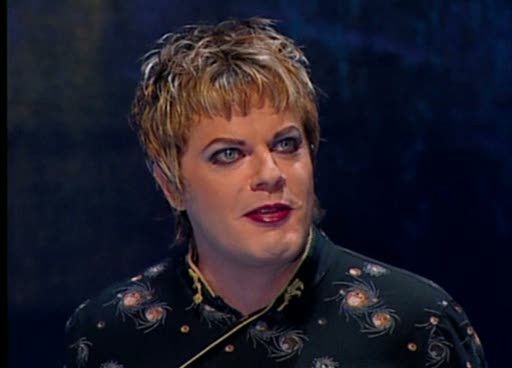
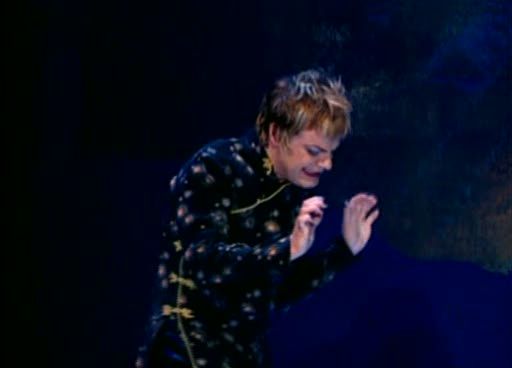
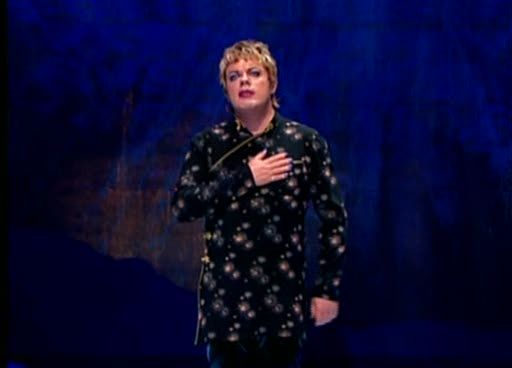
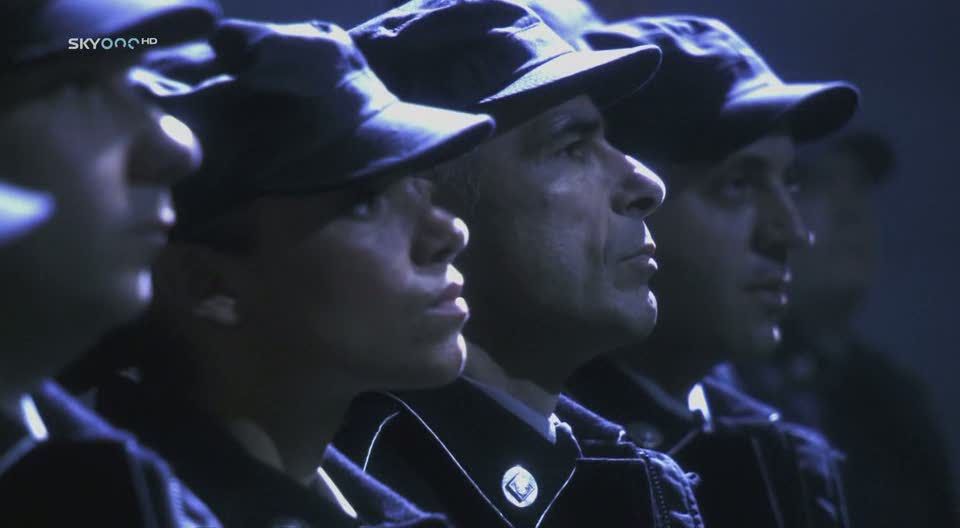
Dress to Kill (1999)

There seems to be a niche cult of Eddie Izzard fans in the world; we're always encountering either one of two types of people. The first type is like, "Eddie who?" And the second type is like, "OMG I CAN QUOTE EVERY SINGLE SHOW!" Either you don't know him, or YOU LOVE HIM. There is no third option. We fall into the latter category. This review is for the former.


"I claim India for Britain!" They're going "You can't claim us, we live here! Five hundred million of us!" "Do you have a flag...?"


There is something about Eddie Izzard that is eminently quotable: his unique, self-deprecating wit covers vast terrains of science, religion, history and epic-scale ridiculousness - he's perfect for all occasions! And this makes him a rarity, since stand-up comics seem to fall into genres depending on what they mine for laughs: they either go for the humor of daily life (like Jerry Seinfeld), politics (Jon Stewart, Lewis Black), race (Chris Rock, Russell Peters), shock (Denis Leary, George Carlin) and such like. Eddie Izzard breaks the mold by taking what would be boring bourgeoise interests - World War II, film theory, Druids - and bringing them down to the level of the absurd. Everything can and is mocked; subjects from your school Social Sciences curriculum are especially fertile territory.

Sometimes called the "Lost Python" by Monty Python members, he shares with them a sense of the ridiculous coupled with a searching intelligence. Nothing is not used as fodder in his shows. Like early Monty Python sketches, he delights in surreal set-ups - Jesus preaching to the dinosaurs, for example - and his jokes don't usually finish with punchlines, so much as they circle around ideas, reflections and bizarre images. Whatever happened to Pavlov's cat, for example?


Indeed, you have to pay attention during an Eddie Izzard show, because often he'll unexpectedly bring out earlier ideas in later moments. Of course, it's dead easy to pay attention because he is just captivating. His verbal tics - falsetto hums and remarks such as, "Uh, what was I talking about?" - lend an air of casual stream-of-consciousness, easy-going spontaneity to his stand-up. (This is somewhat staged, given his multi-venue tours.) It feels like spending time with your smart, silly, most imaginative friend.

Dress to Kill aired on HBO in 1999 and went on to win Emmy Awards and introduce Izzard to an American audience. Since then, he's become increasingly popular both in the UK and US, eventually migrating to work in films (by his account, his original passion).


Dress to Kill - an allusion to Izzard's transvestism - is a genius tour of ancient English history, World War II, Star Wars, the Heimlich Maneuver and the Church of England. It features Izzard's most notorious joke, which comes from a meditation on religious extremism:
But you can't do that in Church of England, you can't say, "You must have tea and cake with the Vicar, or you die!" You can't have extreme points of view, you know. The Spanish Inquisition wouldn't have worked with Church of England.

"Talk! Will you talk!"

"But it hurts!"

"Well, loosen it up a bit, will you? Fine..."

‘Cause that's what it would be. "Tea and cake or death? Tea and cake or death? Tea and cake or death!" Students with beards, ( mimes demonstrating with picket signs ) "Tea and cake or death! Tea and cake or death! Little Red Cookbook! Little Red Cookbook!" ‘Cause, "Cake or death?" That's a pretty easy question. Anyone could answer that.

"Cake or death?"

"Eh, cake please."

"Cake or death?" has since become its own viral phrase - making the rounds at party conversations like a secret password. We at the PPCC became rabid fans of Izzard ever since first seeing this show in 1999, and his quotes and ideas have served us well - at least, they've lightened the most horrible moments (grad school exams) with the most delightful and slightly inappropriate soundbites ("But Jesus was a white man from Oxford!"). You may not always want to vocalize the Izzard re-run constantly going in your head (we've found it can lead to some very awkward moments indeed) - at least not without context. Hence, we bring the context to the PPCC for future Izzard references: watch this! Love it! You will! We steal all our jokes from him anyway!

Saturday, 27 March 2010

Siddhartha (1972)


The prodigal Shashi has returned!


It's Buddhist Film Festival for an Indeterminate Time Period here at the PPCC! So basically, readers, the PPCC was all up in McLeod Ganj recently, soaking in the Buddhist vibes and learning more about Tibetan cuisine culture (okay, side note, but tsampa is like Tibet's gift to the world). While there, we took advantage of engaging in a little DVD buying splurge, and ended up trucking home a number of dharma and quasi-dharma titles - including the one, the only, the long-sought-for, Siddhartha! YES. WE FINALLY HAVE A COPY.

And then there's a thin guy called Siddhartha, who started it all. And it's not 'Sid Arthur' like an East End of London (does accent) "'Ello, Sid Arthur 'ere. Apples and pears, dog and bone, the middle way, that's what I think. Wotcher want? Couple a pound of raspberries? No problem, there you go. Buddhism: take it or leave it."
- Eddie Izzard


WHO IS SIDDHARTHA/THE HISTORICAL BUDDHA? A PPCC CLASSROOM INITIATIVE
First of all: the historical legend of Prince Siddhartha Gautama goes like this: Once 2500 years ago, there was a prince named Siddhartha. He was born and lived in what is now Bihar or Nepal (we're not sure). Anyway, the kingdom was called Kapilavastu. At birth, he was predicted to become either a great king or a great spiritual teacher. Siddhartha's father, Sudhodhana (a great king), was hoping for the great king part. To ensure Siddhartha's great kingliness, he metaphorically locked his son up in a golden cage where only beauty and awesomeness could reside. Thus Siddhartha lived into his twenties not knowing about anything (or, at least, anything that sucked).

But he was not satisfied with this arrangement! Under cover of night, accompanied by a servant, and against his father's wishes, he ventured out into the great wide world beyond his palace walls. There, he was confronted with: a sick person, an old person, a dead person. All new for him! Siddhartha was appalled that human life was guaranteed to have such suffering - who wants to grow old and die?! - and he brooded over ways out of this existential pickle. He decided on the spiritual path and, leaving his wife and infant son behind, embarked on a spiritual journey which would end with his Enlightenment, the spread of Buddhism, and his family reunited again.

For six years, he lived as an ascetic - wasting away to skin and bones, probing the philosophies of the rishis he met, and generally trying it all out. After six years, he realized this ascetism wasn't getting him anywhere, and he accepted - to the shock and horror of his six (?) rishi companions - a bowl of curd (or was it rice?) from a village girl passing through. He then resolved to find his own way to spiritual awakening. Sitting down under the what-is-now-legendary bodhi tree, he vowed not to get up until he had achieved Enlightenment. That night, the forces of Mara - a demon representing the roller coaster of desire - attacked him, but Siddhartha was very chill and hardly cared. Eventually, Siddhartha achieved Enlightenment. He opened his eyes and saw: the full moon! This became Vesak, an important Buddhist holiday celebrated during May's full moon.

Siddhartha, who would now be called the Buddha (or, Enlightened One), thought this was great, but hesitated about sharing his newfound wisdom with the rest of humanity. Just then, Brahma (as in, THE Brahma) came down from heaven - or wherever it is Brahma hangs out nowadays (?) - and told Siddhartha/Buddha that he totally needs to tell everyone because, as he put it (I think?), there are people "with only a little dust" in their eyes. So Siddhartha/Buddha started teaching, and wandered around the Gangetic plain spreading his ideas, and then died, leaving the cycle of rebirth entirely.


So that's all great. And that's all legend and religious fiction, in our opinion. What we know of Siddhartha and Buddhism was written down 200-300 years after he died, and is now compiled in the Pali Canon. For a slightly more historical take on Siddhartha's life, you can read Pankaj Mishra's An End to Suffering (very blah) or Osamu Tezuka's 8-part manga series Buddha (very amazing!) or the Pali Canon (very encyclopedic - it covers everything). What you should definitely not do... is watch Conrad Rooks' Siddhartha.

Or, for that matter, read Herman Hesse's book, on which the film is based.

That's because Hesse (and Rooks, by default) wasn't interested in (1) a historically authentic, or (2) an according-to-legend portrayal of Siddhartha. Instead, he reinvents the story in an attempt to synthesize what struck him about Buddhism and Hinduism - both of which, by most accounts, he deeply respected. The result is a bit of a mash-up of the two (which, as Buddhists, we doth protest! but more on that some other time) in a kinda New Agey kinda Euro-centric thing. The film, which sticks pretty close to the book, is likewise vague and a little Orientalist.

In the film, Siddhartha (Shashi Kapoor) is a young, scrappy Brahmin, impatient with the spiritual sluggishness of his current lifestyle. With his friend, Govinda (Romesh Sharma), he defies his conservative father (Amrik Singh) and goes off to join the nearest group of wandering ascetics.
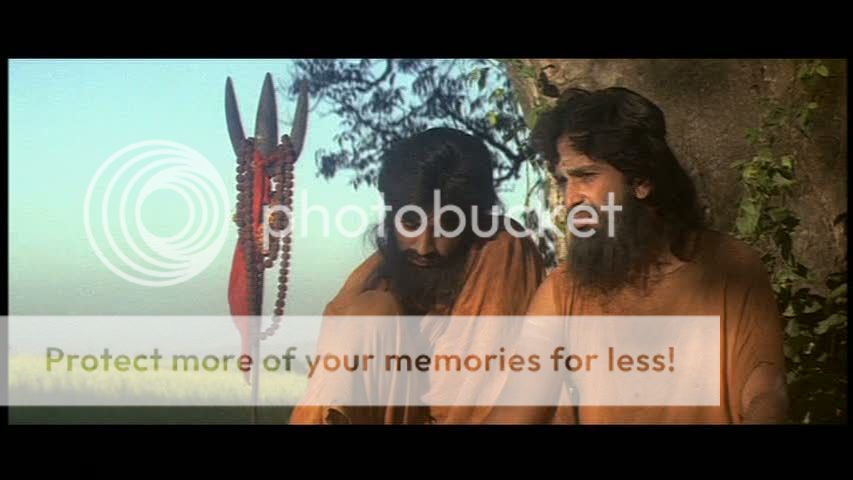

Govinda and Siddhartha, hanging with their new crowd.


Things take a sharp left turn when Siddhartha hears a teaching by the Buddha (!) - never shown on camera, hence enhancing his remotely divine vibe. Govinda is immediately convinced and signs up. Siddhartha, ever the skeptic, is... well, skeptical, and he tells the Buddha that, okay, that all sounds great, but he doesn't want to take some teacher's word for it - even if the teacher seems great and it's all very logical. He says he wants to figure out a spiritual path for himself. This is, actually, a very Buddhist thing to do, so well done there. The Buddha offers Siddhartha a flower and wishes him good luck.

Interlude: Siddhartha takes a ferry with a very nice boatman who talks philosophy.

Act Two. Siddhartha shows up in the nearest bustling town and is immediately smitten by the courtesan/noblewoman/Representative Vagina, Kamala (Simi Garewal). He approaches her, but she totally doesn't go for his rishi robes. So he shaves, oils his hair, and tries again - and she tells him that maybe, if he gets a job, they can date. But what employable skills does Siddhartha have? (We LOVE this line!) "I can think. I can wait. I can fast."
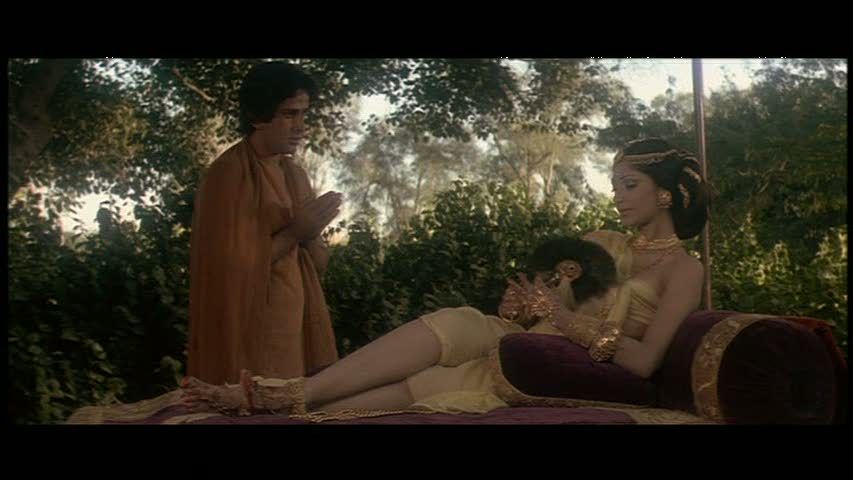

Ah, a woman! Will she offer some insights about the spiritual path?
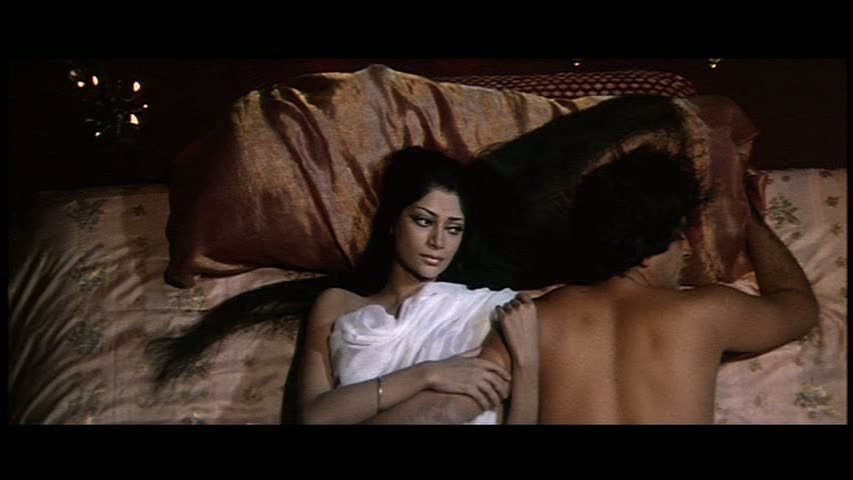

Only in the bedroom!!


He is also literate, thanks to his Brahminly heritage. So a local merchant, Kamaswamy (Pincho Kapoor), hires him as an accountant and, together, they make millions! Siddhartha's life is suddenly full of inflation, payments pending, inventories and other material stuff. And, yes, both his new friends have "kama-" as the root to their names. "Kama" as in the Hindu concept of kama - the same kama making appearances in kamana ("to earn") and Kama Sutra. Insert one infamously awkward sex scene here.

Interlude: Siddhartha is now old, fat and grumpy. Being materialistic sucks! He sires a son and flees to the river.

Act Three. After convincing the philosopher-boatman to apprentice him in all things watery and deep, Siddhartha sheds his fancy silks for plain cotton, grows out his beard and meditates on the Now while ferrying people across the river, Provider of Many Metaphors. Eventually, Kamala and their son, Hassan (Kunal Kapoor, Shashi's real-life son), arrive to hear the Buddha's final teaching...
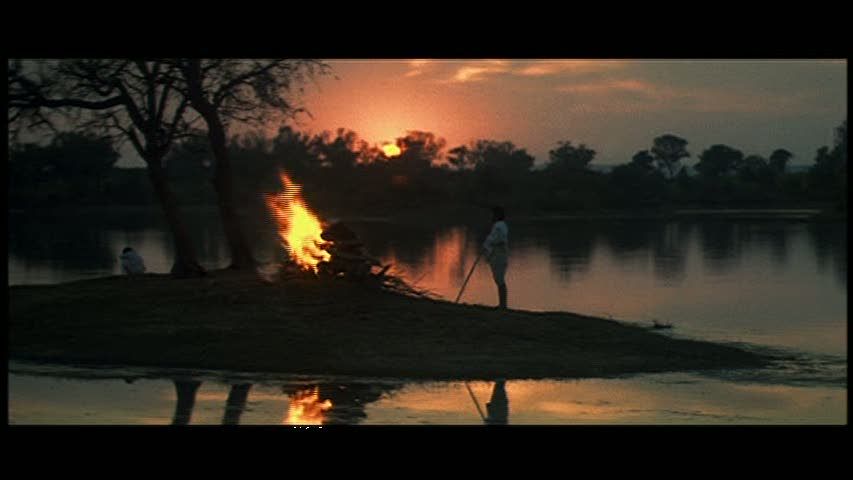

Beautiful cinematography makes up for a lot of vacuity.


From a Buddhist perspective, this film touches on several ideas which could easily fit into the standard Buddhist philosophy - the wisdom of accepting impermanence, beating your own spiritual path, the opportunity to learn from a wide variety of life experiences - but it's also vague enough that it could probably be shoe-horned into any religious framework. Consider, for example, Siddhartha's dip in the river following his materialistic period - a very Christian symbol for rebirth. Honestly, Groundhog Day is a more cutting, direct approach to Buddhism-on-film than this.

From a movie-nut perspective, the film is mediocre at best. It is only 80 minutes, but it drags those minutes into an eternal Now indeed. In its best moments - when the actors aren't speaking and the background music or symbolism is nice - you can admire the gorgeous cinematography, the luscious framing and color, the sheer aesthetics. At its worst, the movie is sluggish, meaningless and indulgent, with uniformly hideous acting. Unfortunately the film suffers from the common sin of mistaking obtuse pronouncements for wisdom, open-ended metaphors for deep insight. But with all the philosophical ambiguity, we're left with nothing in the end.
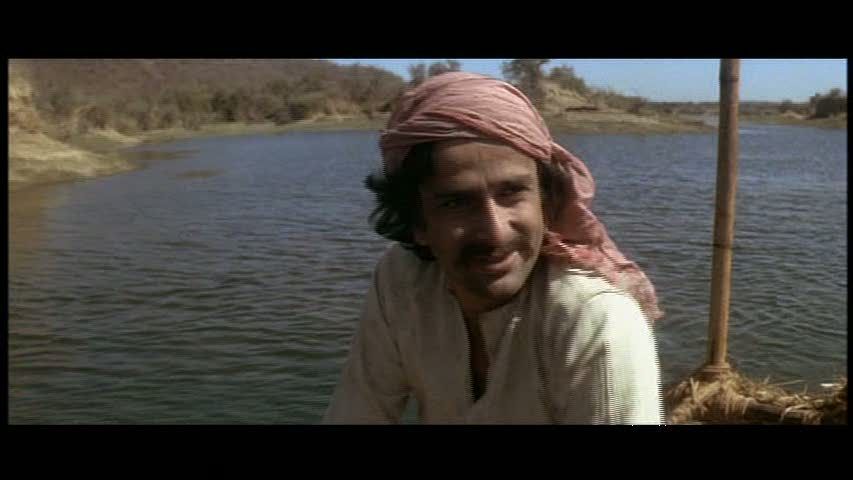

The moral of the story, in haiku form: The flowing river/How it flows so profoundly/Flow, river, flow on!


We also can't really enjoy a film with such tedious gender politics: the only woman is little more than a sex education course, far too inferior to either be angry that her husband abandoned her on a self-indulgent quest for "peace" or even hope for that peace for herself. Please! Show a woman attaining Enlightenment, Conrad Rooks/Herman Hesse, then we'll talk.
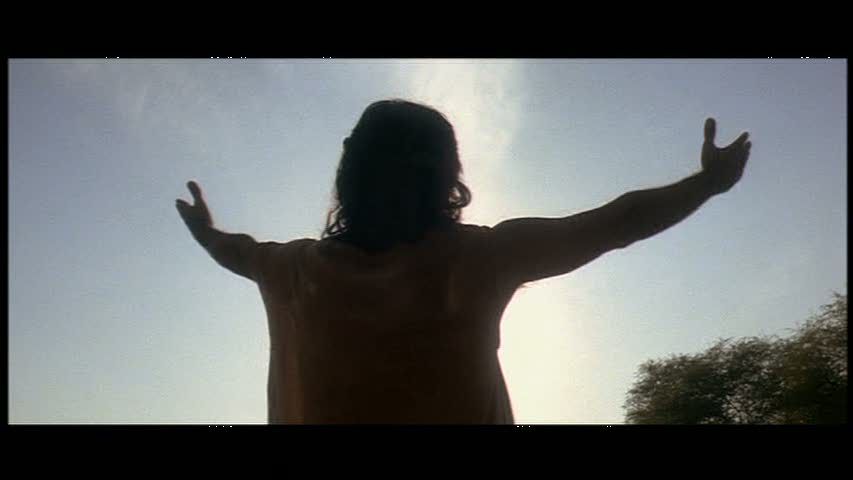

Laudamus te!


Thursday, 25 March 2010

The (spectacular) Ends

Endings can be hard.

Pulling the audience in with a snappy idea can be relatively straightforward - we at the PPCC usually rely on some scatological goodness to draw the reader's eye (POOP) - but letting them go in a satisfying, glorious, sunsetty way is hard.

So what makes a good ending (apart from the sunset)? We think it has to satisfy certain criteria:
  • The payoff. This is the MUST of any skilful ending: presumably the story has been building to some sort of conclusion and an ending can be judged by how well it serves that final, match point.
  • The ability to make the PPCC feel a glowing sense of bittersweet finished-ness. In other words, emotional satisfaction.
  • Music! Honestly, this is a deal-breaker. Good music has raised mediocre endings to heavenly heights, and lackluster music has muted even the most powerful of conclusions.


So here are, according to us, some of the BEST ENDINGS EVER. As is obvious, MASSIVE SPOILERS for all of these - don't bother reading further if you haven't seen some of these and you value your virginity (narratively-speaking).

1. Dilwale Dulhania Le Jayenge


Jaa, Simran, jaa! Is larke se zyada pyaar tujhe aur koi nahin kar sakta! / Go, Simran, go! No one could love you more than this boy!


The best ending prop that we can think of, apart from a golden sun, is a train. What better symbol of quickly-accelerating opportunity, of the LAST CHANCE for change, redemption, resolution and joy?

The Hindi classic, DDLJ, cashes in on a 3-hour courtship full of anxiety, hoodwinking and desperate hopes to show us that - yes, YES - the Pater Familias can let his daughter go. Oh my Lord.

Tissue Rating: Pretty epic.

2. Kabhie Alvida Naa Kehna


Preity Zinta forgives you. Shah Rukh Khan loves you. Now you can be happy forever!


Basically, the same deal, the only variation being that this time, parental authority isn't the main obstacle for our lovers, it's chronic misunderstanding and a bad knee. Also features a train.

Tissue rating: Embarrassingly monumental.

3. Battlestar Galactica


I will never deny my agricultural heritage again.


Many people got all huffy with the Luddite deism of the BSG series finale (and, yes, it was a bit facile), but it did - thanks to composer Bear McCreary and actor James Callis, mostly - contain one of the most epic payoffs we've recently experienced. First of all: the long-simmering romance between Admiral Adama (Edward James Olmos) and the dying President Roslin (Mary McDonnell) finally reached the climax that we had been waiting eighty episodes for. And, far more unexpectedly, a single line by Gaius Baltar (James Callis) both resolved and redefined his Odyssean journey in a completely new way for us - talk about backward revisionism! Oh, Gaius. His name means Earth? OF COURSE IT DOES.

Tissue rating: We cried through the credits, through a shower, through a change into our pyjamas and, finally, to sleep.

4. Glory


Start at 5:16.


Talk about going out in a blaze of.

Tissue rating: Huge. HUGE.

5. Goodbye, Farewell and Amen


The end-all, be-all ending from a movie dedicated to the epic conclusion of our favorite series, what can better encapsulate the impermanence of everything (especially the beautiful!) than a simple, honest exchange of love, coupled with some Zen rock gardening?

Tissue rating: If we were to be honest with ourselves, we never really got over this.

6. Insert your ending here

That's what the Comments button is for! We have this itchy feeling on the back of our tongue that we've forgotten some major ones, so please: sharing is caring.

Saturday, 6 March 2010

Battlestar Galactica: Season 3, Episode 1 (2006)

Standard spoiler warning applies!

Things take a sharp left turn at the beginning of Battlestar Galactica's third season, as we jump ahead by over a year and return to the life of a pioneering human race on an inhospitable planet, New Caprica, now at the mercy of an occupying Cylon force. Beginning, as is its way, with a number of disparate plot threads - which will weave more or less harmoniously throughout this epic season premiere - it seems like the writers of BSG just suddenly decided to be Very Very Clear about what they want to talk about.

Suddenly introducing timely themes of unwanted occupations, civilian insurgency, torture and suicide bombings, the human- and Cylon-occupied planet of New Caprica is at once a recollection of American colonies, early Israel, World War II, and Iraq. Forget all that Old Testament stuff, we are now being much more relevant - uncomfortably so! Mixing and matching from our recent history, the episode demonstrates the dangers inherent in an occupation - even a well-meaning one.


The first thing we thought of.


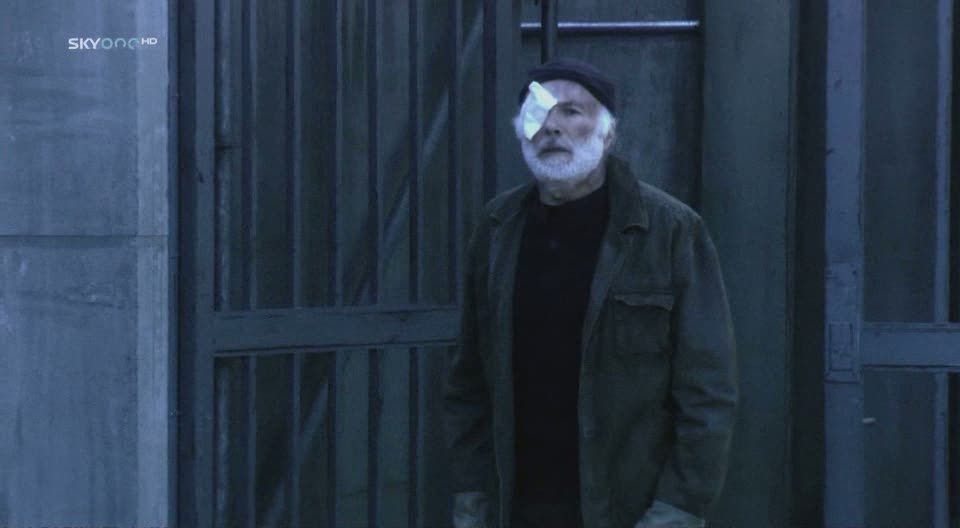
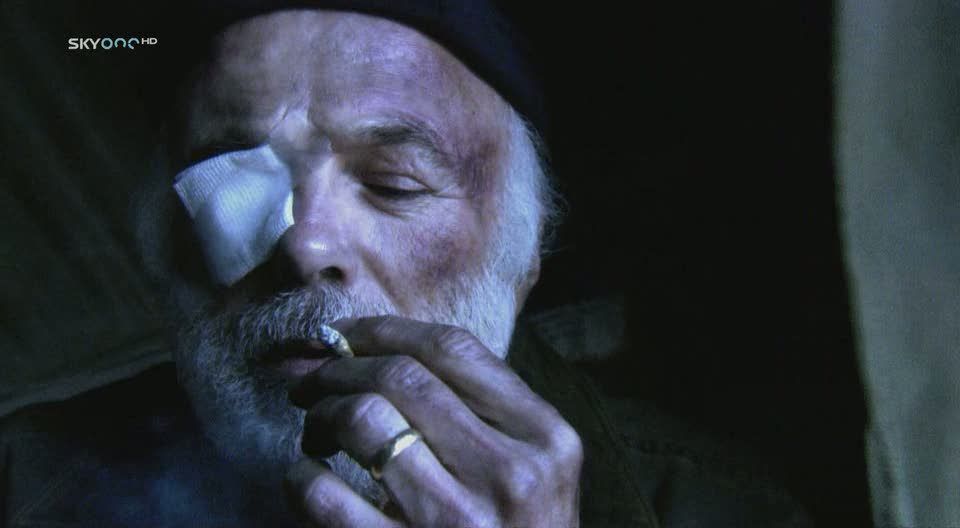
To signify the passage of time and significant life experiences, almost all of the characters exhibit visible signs of change: the former Colonel Saul Tigh (Michael Hogan) has lost an eye, Admiral Adama (Edward James Olmos) now has a mullet and moustache (deadly combination), Kara "Starbuck" Thrace (Katee Sackhoff) has longer hair and Lee "Apollo" Adama (Jamie Bamber) has put on about ten kilos. Furthermore, in their new roles as pioneers, insurgents, oppressed people, collaborators and would-be saviors, characterizations have suddenly expanded and developed. The decent Chief Tyrol (Aaron Douglas) is a Karl Marx-like agitator for socioeconomic justice and prominent member of the insurgency, Gaius Baltar (James Callis) has devolved into a debauched and reviled collaborator, wallowing in clammy self-loathing, and our favorite Cylons - Caprica Six (Tricia Helfer) and the original Sharon (Grace Park) - are pro-human advocates from within the Cylon administration.

It is, overall, insidiously depressing and beautifully told.

It's sad because everything and everyone has changed for the worst. Suddenly, in this post-apocalyptic landscape, everyone is a well-meaning murderer and everyone is suffering. Everyone's a victim. There's a lot to be said that even the Cylon occupiers, with an allegorical vibe hovering uncomfortably between Fascist Germany and the Coalition Provisional Authority (CPA), are shown to be just as terrified, incompetent and hate-filled as their human counterparts. It makes for highly provocative viewing, and seems to advance further along the difficult path of moral relativism. Is motivation or action more important? And which should be punished? How? By who? Suddenly the idea of an all-knowing, all-powerful God is comforting. It means we don't have to take the horrible responsibility of deciding what to do with those we deem "wrong" - we can let God handle it. But, since divine justice is difficult for we mortals to depend on (and, often, just plain believe in), both humans and Cylons take things into their own hands - with disastrous results.

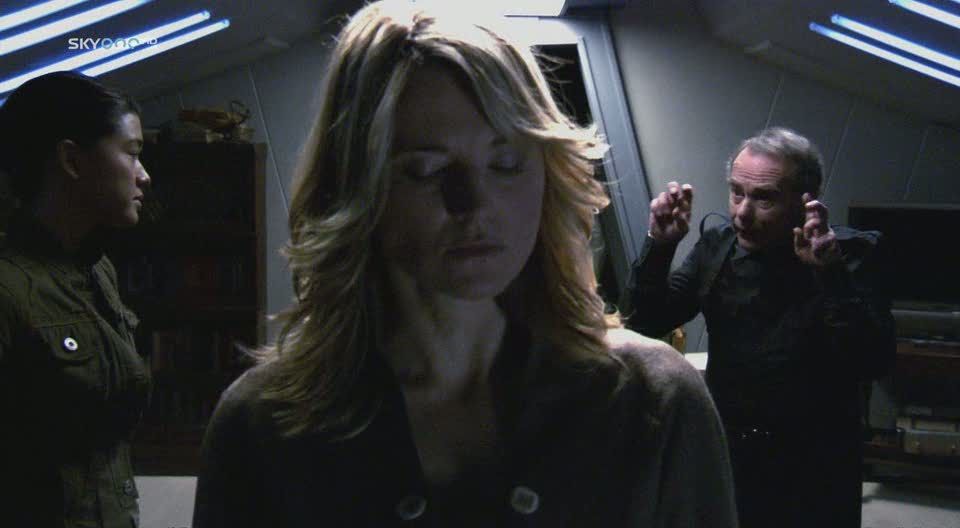
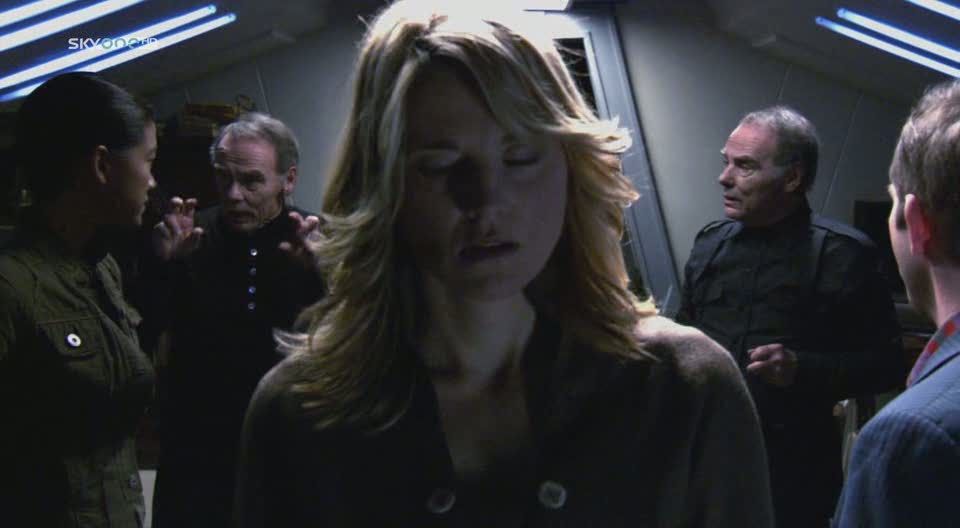
A very alarming (and refreshingly funny) character to be introduced is Brother Cavill (the wonderful Dean Stockwell!), an older Cylon who is whimsically cynical and, seemingly, an atheist. This contrasts sharply with the misty-eyed monotheistic mysticism of the creepier Leoben (Callum Keith Rennie) Cylon model, or even the earnest devotionalism of the Six. Indeed, two Brother Cavill models - who constantly refer to God using air quotes - have a very good monologue/dialogue about their Cylon compatriot's destructive evangelism:


"Uh, we're supposed to bring the word of 'God' to the people, right?"

"To save humanity from damnation by bringing the love of 'God' to these poor, benighted people?"


BROTHER CAVILL(S): "Let's review why we're here, shall we? Uh, we're supposed to bring the word of 'God' to the people, right? To save humanity from damnation by bringing the love of 'God' to these poor, benighted people... But I want to clarify our objectives. If we're bringing the word of God, then it follows that we should employ any means necessary to do so, any means. Yes, fear is a key article of faith, as I understand it. So perhaps it's time to instill a little more fear into the people's hearts and minds."

Oh dear.

There's a very good book about the CPA in Iraq during 2003-2005-ish, Imperial Life in the Emerald City by Rajiv Chandrasekaran. It shows the destructiveness of well-meaning evangelism, especially when driven by a single-minded (here, almost exclusively Republican and pro-Bush) mentality steeped in ignorant ethnocentrism. The Cylon occupation doesn't outwardly exhibit the same monochromatic political spectrum as the Republican-heavy CPA did, but it does carry the same prosletyzing earnestness and frightening mismanagement.


Out of the gulag? Or Abu Ghraib?


Poor, destroyed and destructive Tigh.


Which brings us to the insurgents: the triumvirate of the grizzled and tortured Tigh, the heroic resistence fighter Sam Anders (Michael Trucco), and the idealistic Chief, they are at once sympathetic and repugnant. We sympathize because of their suffering, but we are horrified by their "desperate measures in desperate times" (i.e. suicide bombing). It is, ultimately, tragic - almost harrowing. Particularly Tigh, who's tenuous grip and losing battle with inner demons, lends him a terrible frailty - when you couple that with murderous rage, it's just awful. He has, unexpectedly (but as many people predicted!), become our favorite character, if only for the amount of sheer change he's undergone and the awesome complexities. Poor Tigh! Terrible Tigh! Oh my, oh my.

Friday, 5 March 2010

Battlestar Galactica: Season 2, Episode 12 (2006)

In an effort to stop binging on Battlestar Galactica and try to break up this weekend with something fresh and new, we've decided to review some... Battlestar Galactica.


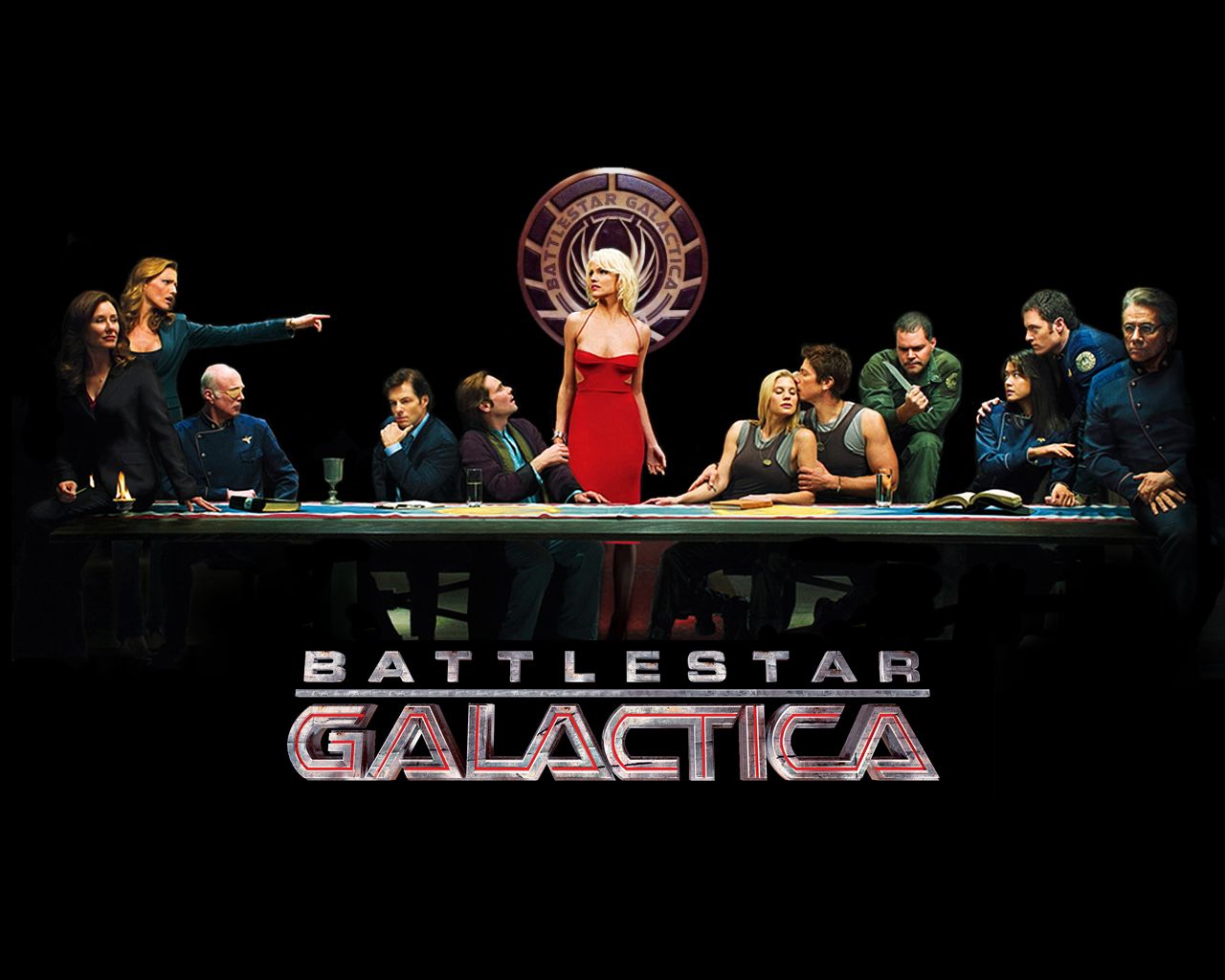
Based on Da Vinci's Last Supper, we love it! Commander Adama as Simon the Zealot, Gaius Baltar as Judas and the heart-warming Cylon, Caprica Six, as Jesus?! CAN THIS SHOW BE MORE AMAZING?!


Disclaimer: Because it's really hard to review individual episodes of a TV show with a long-scope narrative arc, we'll just put a big fat spoiler warning on this review. In case you are, like us, one of the last people on this planet who hasn't seen this show. Nonetheless we'll try to be as vague as possible.

As our review of the miniseries noted, one of the main themes in BSG (yes, we're on acronym-only basis now) is the difference or non-difference between humans and their Cylon "descendants", and how pure survivalism can sometimes unveil the disturbing similarities between the two groups. All this is textured with classical myth in the form of a conflict between Greco-Roman gods (whom the humans worship) and Abrahamic monotheism (which the Cylons promote). In plainer terms, the humans are constantly faced with tough moral choices, and their behavior becomes increasingly relativist - kind of like the way Zeus et al. were so morally ambiguous. As Commander Adama (Edward James Olmos) notes, "Context matters." The Cylons, on the other hand, resemble any hard-line moral absolutist in their unambiguous belief that they are right and the humans are wrong. The ultimate absolutist and judge, God, they believe, will eventually punish the humans for their various sins - and, to help Him along, the Cylons will put an end to their race. Interestingly, there are only twelve models - matching the twelve apostles? Hmmm.

By season two, episode Resurrection Ship, a new character has been introduced - Admiral Helen Cain (Michelle Forbes). Now, considering we're steeped in a story full of Old Testament allusions, Commander Adama and his ark of survivors flying to a promised land aboard the Battlestar Galactica don't take well to this new person named Cain and her militant commando-style Battlestar Pegasus. After a near-civil war between the two battlestars over the manslaughter of a Pegasus man (long story, other episode), the two agree to unite forces to destroy a Cylon spaceship dedicated to "resurrecting" Cylon consciousnesses into new bodies. In a secondary plotline, the ever-unstable Dr. Gaius Baltar (James Callis) has been assigned the task to interrogate the Pegasus' Cylon prisoner - an unnamed woman (Tricia Helfer) who is (1) a visible victim of torture, and (2) an identical copy to Baltar's ex-girlfriend and hallucination-companion, Cylon model number six (Tricia Helfer, duh). He, understandably, empathizes, as does the audience.


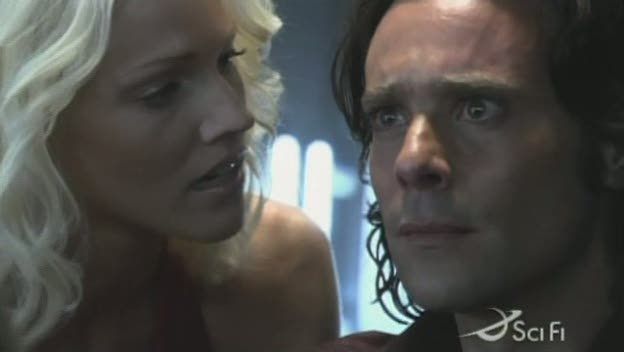
Jesus and Judas - err, I mean Caprica Six and Gaius Baltar the Traitor. Love it!


Now, a lot is going on here. An intimidating amount, in fact. So we'll start with what we know:

My brain! MY BRAIN!

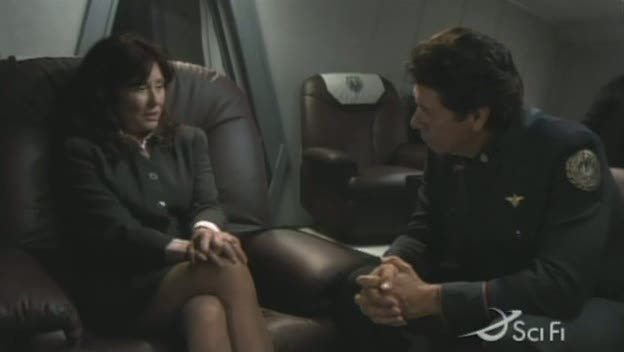
There's no spoiler in acknowledging that one of the Galactica's former pilots, Sharon (Grace Park), is a sleeper Cylon agent. (This is revealed in the pilot episode.) As the show progresses, her character becomes increasingly complex - she is, right now, our absolute favorite. Without giving too much away, Sharon is now a prisoner aboard the Galactica, and the rest of the humans have very mixed feelings about her. Adama, in particular, has a tendency to get a little upset. (PPCC aside, but their interactions are the best!) In one scene, an exasperated and brooding Adama calls Sharon to his room to sit her down and ask, "Why do the Cylons hate us so much?"

Her response captures the entire issue: Adama himself once noted that humanity is a "flawed creation", and that humans can still be petty, hateful, even murderous, thus provoking the question, Do they deserve to survive?

"Maybe you don't," Sharon says bluntly.

This, of course, prompts Adama to prove that damned Sharon wrong by being the best human he can be, and hence deserving of survival. He shares his insights with the crew, too. But we can't help thinking Adama (Adam?) is a very flawed creature himself - his occasional tough decisions to cut the fleet's fat are pretty traumatic. Furthermore, we can't help wondering where, exactly, he is regarding the knowledge of good and evil? His relationship with the wonderful President Laura Roslin (Mary McDonnell) - apart from being sweetly romantic - often takes the hint of the seemingly pure and maternal Laura showing the gruff Adama just how much more hardcore she is than him. (No apples to appear, yet.)


Can we love these two even more? The answer is no. They are our peanut butter and jelly. They are our Saturday morning and Super Mario Bros. Can we just have an episode about how much they love each other? Please?!


The pageantry of science fiction

This show has made us cry a number of times now, often because of the beauty with which it presents the dystopian crises and interstellar battles. The lovely aesthetics are aided by atmospheric and interesting music by Bear McCreary, the show's composer. Often McCreary's music feels like a mix of minimalist Philip Glass (in one episode, one of Glass's piano pieces is heard) and the evocative Tan Dun (composer for films like Hero and House of Flying Daggers). In the episodes surrounding the Resurrection Ship, the Cylon warships are sometimes introduced with music resembling the chanting of Tibetan Buddhist monks. In some ways, it's reminiscent of the Tibetan long horns heard in War of the Worlds.

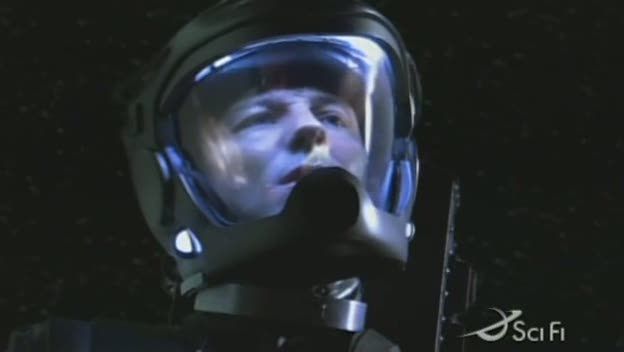
One scene, in particular, captures the grand-scale myth-making imagery found in the series. Ace pilot Lee Adama (Jamie Bamber) has ejected from his fighter, and he floats peacefully through space - the battle before him is spread silent and distant, and we take a moment to watch it with him, and to marvel at the tragedy. It's a lovely piece of filmmaking!


Captain Apollo watches the destruction as he floats through space.


And the moral of the story is...

...no idea!

This is what we consider to be the genius of Battlestar Galactica: it is so ambiguous. Because we empathize and follow the storylines of a large ensemble of flawed characters, we can only watch the terrible things happen and lament at the iron-clad rules of cause and effect. Ideas such as free will feel deeply unstable when characters are often at the mercy of their own ignorance and heated emotions (ah, how Buddhist). And often we're faced with the "most pure" characters - Laura Roslin, Lee Adama - making decisions which force us to redefine purity so we can keep shoe-horning them in.

Similarly, the Cylons are progressively more and more humanized - such that, by this episode, it is unclear just how "morally correct" the humans really are in the war. Is it wrong that we love the Cylons too?!

So maybe the moral of the story is just that: Shit is complicated.