Monday, 31 May 2010

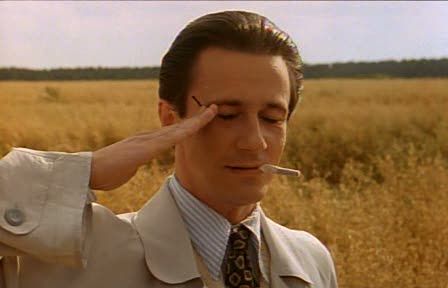
Control (2007)


One of the most influential bands to come out of the 1970s post-punk movement was Manchester's Joy Division. Their sound - dark, looming, ethereal, sinister and sad - went on to influence bands in the 80s, 90s and now, the post-punk revival of the 00s and 10s. You can still detect traces of Joy Division's sound in recent bands such as Interpol, The Editors or The National, or even recenter stuff like Miike Snow.

Control is a biopic of Joy Division's lead singer, Ian Curtis, who would commit suicide in 1980 at the age of 23. (Following Curtis's death, the remaining members formed New Order - another titan in the post-punk pantheon.) Curtis, played by Sam Riley as an inscrutable, brooding, quiet young man, is also the spark and life of Joy Division.


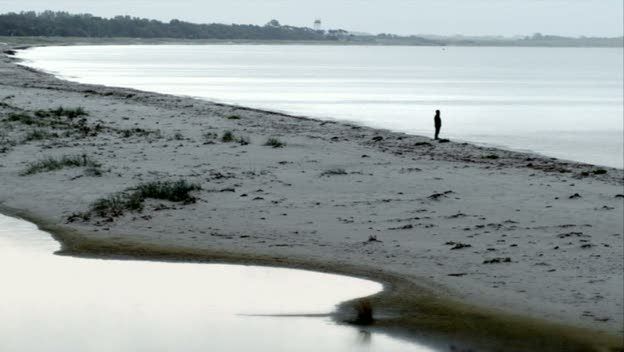
Great cinematography.


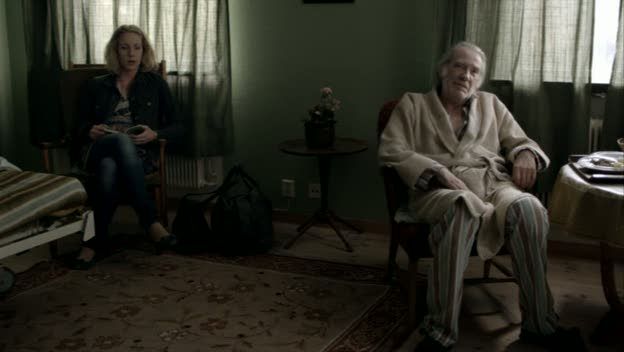
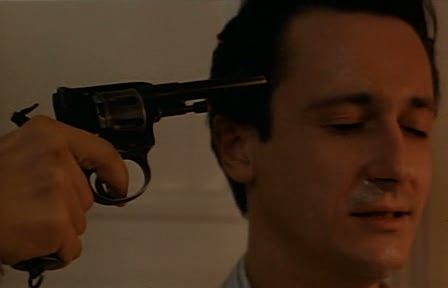
Not drugs, just meds.
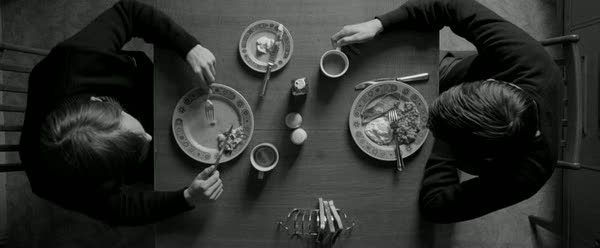

Sometimes 1984-ish.


This isn't a typical rockstar biopic featuring "sex, drugs and..." - Curtis and his bandmates (James Anthony Pearson, Joe Anderson and Andrew Sheridan) are too thoughtful and sober for that. Director Anton Corbijn even plays on this cliché in one sequence where Curtis is shown walking down the street wearing a large black coat with "HATE" scrawled on the back. After moodily smoking a cigarette, he enters the Employment Office - only he's not going to pick up his weekly unemployment benefit, he's going to work. Indeed, Curtis is a bureaucratic drone, and his private life is likewise conservative: he married his high school sweetheart (Samantha Morton) at 19 and was a father by 22. His creative interests - we see influences of David Bowie, the Sex Pistols, and William Wordsworth - are channeled into Joy Division's lyrics, and everything seems great for a while as he runs his life during the day and has some fun singing gigs at night.

But then he starts to "lose control", and so begins his slide into depression and helplessness. Coming back from their first London gig, Curtis experiences a seizure. He is diagnosed with epilepsy and given a long list of medications to take, all which have their nasty side effects. The band takes off, and suddenly more energy, passion and commitment are demanded of him. He unexpectedly falls in love with a Belgian journalist, Annik Honoré (Alexandra Maria Lara), and his marriage becomes strained.
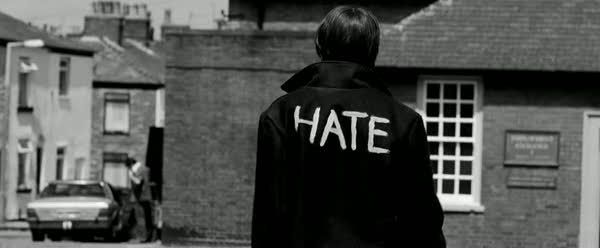

Off to the office.
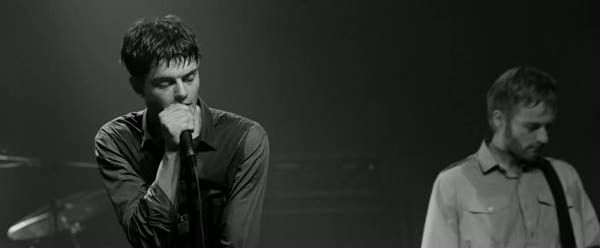

The performance scenes were great - and eerie, when you compare them to the real thing.


Most people's lives don't fit into the standard heroic quest pattern, and director Corbijn doesn't bother with trying to force Curtis' into that narrative mold. Nor does he intend to explain him or his suicide. The film has only one instance of background music, and that too lasting only a few seconds, so there is no emotional hand-holding. Instead, Corbijn intersperses the biographical scenes with Joy Division songs. This is a wise choice, since the lyrics are probably the best window we have into his states of mind. For example, in one sequence, after Curtis has just learned of his epilepsy, he calls to check up on a young epileptic girl whom he helped get a job for - and discovers that she had been fired for having a seizure at work. This later fades into the recording and performance of She's Lost Control.

We think this film, which is ponderous and ambiguous, may have limited appeal. This is a shame; it's a good movie. It's also technically impressive since the actors perform the songs, and do it remarkably well. But if you like Joy Division, or want to learn more about them, this will be very rewarding.

Sunday, 30 May 2010

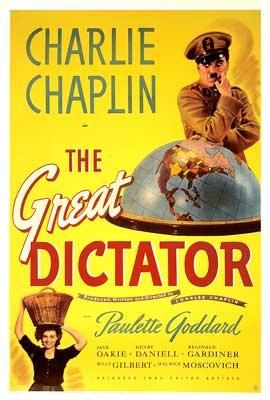
The Great Dictator (1940)


Strange, surreal and impassioned, Charlie Chaplin's The Great Dictator is part satire, part slapstick, part indignant humanitarian rage. It's still an edgy film seventy years on, because it's always rare to see a gutsy director take a direct jab at current events. Hitler invaded Poland in 1939. A year later, The Great Dictator came out. And no one in this film had any idea how the war would turn out (!).

With the fictional "Tomania" and "Bacteria" standing in for Germany and Italy, respectively, The Great Dictator follows the dual lives of Tomania's maniacal dictator, Adenoid Hynkel (Charlie Chaplin), and a Jewish barber (Charlie Chaplin, again) living in a Tomanian (or should we say Tomaniac?) ghetto. Beginning in World War I, the unnamed barber - a bumbling klutz of a soldier - manages to save a Tomanian pilot, Schultz (Reginald Gardiner). After some clowning around and a plane crash, the barber suffers memory loss and spends most of the interwar period in a hospital. When he returns, he finds his neighborhood radically different: it's now a violent, volatile ghetto where stormtroopers regularly harass shopowners and families, threatening them with concentration camps.


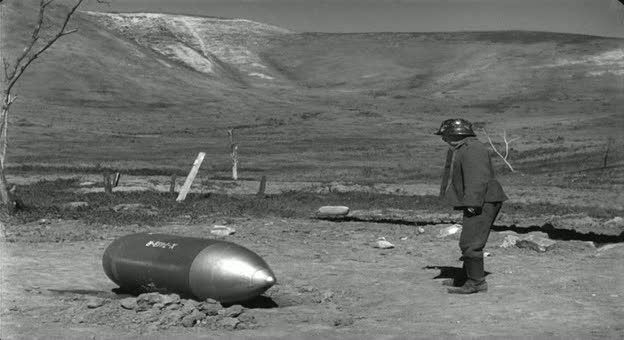
Man at war. Sort of.


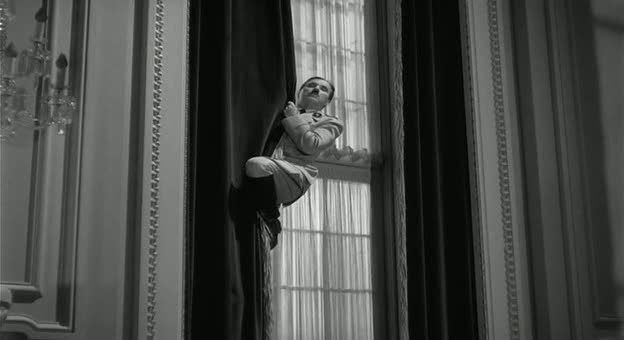
Hitler, er, Hynkel, in a private moment.


While the barber's story is at best tragicomic, and follows a genuine narrative arc full of suspense and suffering, Hynkel's story is just a blow-by-blow mockery of Hitler's Greatest Hits. There's his infamous speeches to the screaming hordes, which Chaplin performs in full-on pidgin German ("Der bratwurst und der saurkraut!" Hynkel screams). There's his meeting with "Benzino Napaloni" (Jack Oakie), and the (very funny) ego war between them ("Der cheesy ravioli!" Hynkel seethes). And there's a bizarre, ridiculous sequence in which a daydreaming Hynkel dances daintily with an inflatable globe.


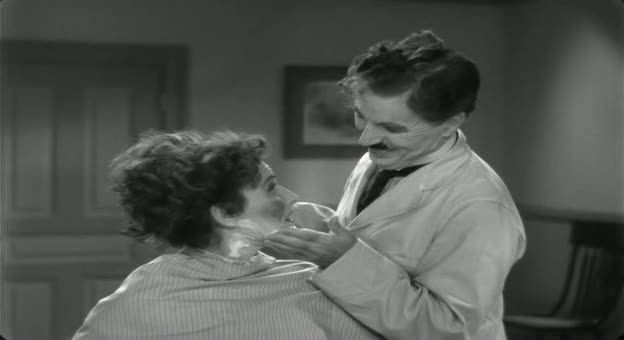
We were about to comment on the oddly smoking chemistry between Chaplin and Goddard, and how oddly sexy Chaplin was as the barber, but then we read about Chaplin's ladykilling on Wikipedia, so... um, I guess we're not the only ones who were a bit charmed.


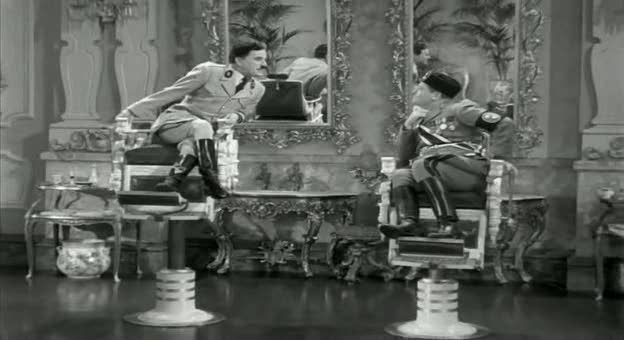
All of the Hynkel scenes are genuinely funny; they are bizarre, eviscerating, silly and smart, such as when Hynkel's propaganda man, "Garbage" (er, Goebbels), instructs Hynkel in the psychological warfare they intend to wreak on Napoloni to ensure the latter's feelings of inferiority. Napoloni's easy evasion of their tactics, such as putting him in a low-seated chair ("They've-a put me in-a the toddler chair!" Napoloni mutters), is whimsical and fun.


Some great moments between Hynkel and Napaloni. That cheesy ravioli!


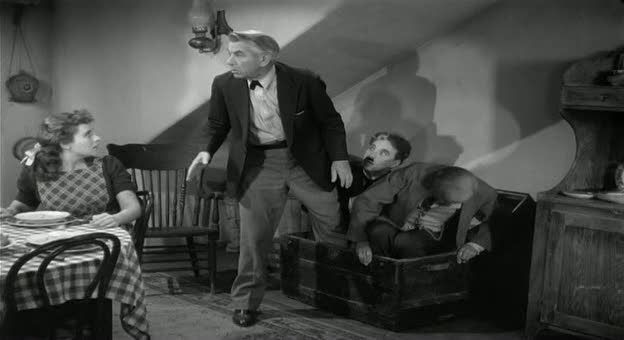
A rare funny moment from the Jewish barber plotline; Mr. Jeackel (Maurice Moscovitch) was absolutely lovely, and him climbing into the crowded trunk was the best!


All of the barber scenes, on the other hand, cut too close to be funny. In a post-Holocaust world, it's hard to keep your hackles down when the barber is beaten up for refusing to paint "JEW" on his windows. Chaplin goes for some jokes here, mostly of the slapstick kind (the barber being a very close relative of the disaster-prone Tramp), but the real-life references are too somber. Chaplin is aware of this too, and indeed the barber's story is allowed to be frightening and sad at times, such as when the barber and his crush, the feisty laundry girl Hannah (Paulette Goddard), have their first date interrupted by a declaration of Kristallnacht. Watching their falling expressions while the terrified crowds flee into their homes, effectively emptying the street behind them, is truly horrible.


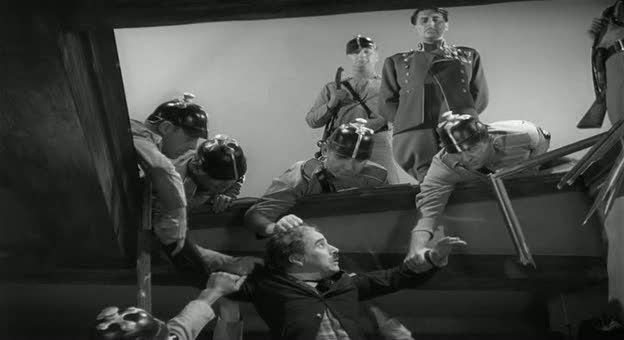
Some less funny scenes. The Jewish barber is captured and sent to a concentration camp (!).


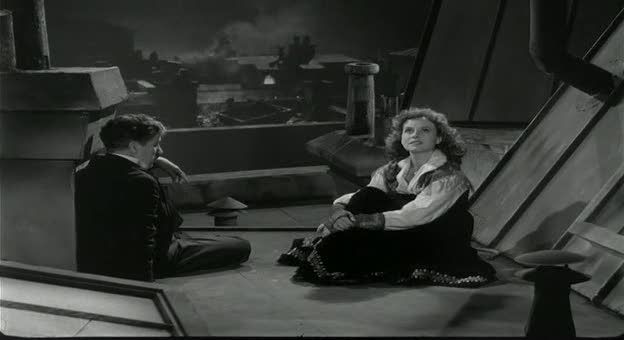
Things become progressively more somber...


The film is more message than joke, and so it ends with the barber - and his (in)famous sermon to the masses in the name of peace and love. Some critics, such as Ebert, say this ruins the film - basically turning it into a mouthpiece for Chaplin's personal political beliefs. (Other people, like zany Slovenian philosopher Slavoj Žižek, note the interesting parallels between Hynkel and the barber in how they sway the masses.) Our take was much more meek, partly because we were feeling a little emotionally bruised by the end of this film, and earnest pleas for justice and humanity were a welcome respite from all the preceding fictional and non-fictional insanity.

Saturday, 29 May 2010

FlashForward: Season 1, Episode 1 (2009)


Yesterday, 27 May 2010, there was another casualty in the war of Sci-Fi versus TV. The promising new show FlashForward has been cancelled by ABC. Now it shall make its way across the river Styx and into the TV show graveyard, that solemn underworld where, if it's lucky, it will develop into a small cult. So it was with the now-legendary Firefly, so it shall probably be with Caprica. Need we remind these impatient, Nielsen-hungry execs that M*A*S*H, God of Television, had very poor ratings in its first season? Or that no one watched Star Trek until it was cancelled?

Anyway.


Let's talk fruit. Tasty, tasty, literal in media res fruit.


FlashForward comes with a fun, frothy premise - to be discussed below - and a sparkling pedigree from the pantheon of geekery (Sulu 2.0! Gaius frakkin' Baltar! Merry Brandybuck!), but even these assets couldn't save it yesterday. So be it. If we're lucky, all N of you who read this blog will tell N of your friends, and the FlashForward fanbase will grow exponentially until, at worst, we get a movie to tie up all the loose ends or, at best, the SyFy Channel picks it up.


Reminiscent of an early panel from the excellent Y: The Last Man.


The ties that bind.


One day in downtown Los Angeles, recovering alcoholic and FBI agent, Mark Benford (Joseph "Will Shakespeare" Fiennes, brother of Voldemort), lost consciousness for 2 minutes 17 seconds while at the wheel of his big FBI jeep. Unbeknownst to him, everyone else on the planet also lost consciousness and, in a shared reality-bending mindfrak reminiscent of the glorious Y: The Last Man's opening number, everyone wakes up in topsy-turvy WTFville. Because in those 2+ minutes, humanity experienced a "flashforward" - a hippocampus-tickling memory of things yet to come. To put it more plainly (as the characters often do), everyone's consciousness jumped forward six months, to April 29 of the following year. And while Mark struggles to mend all the broken cars and exploding buildings that the shared blackout induced (insta-dystopia!) in this part of the timeline, he - as well as his partner, Demetri Noh (a badass John "Sulu!" Cho), his wife, Doctor Top Lady (Sonya Walger), his AA sponsor, Aaron (Brian F. O'Byrne), and others - must struggle with the unsavory fate he saw, hence raising that old Oedipal concern: how do you hoodwink your destiny?

By playing into its hands, of course! And who doesn't like a little self-fulfilling prophecy baked in sci-fi sauce?


From here to dystopia in under three minutes.


Not, oddly, the first time we see a director trying to be clever by using a bus ad in a TV premiere this season: see the final few minutes of House's "Broken".


Like the exquisite first season of that old 90s classic, Sliders, FlashForward gives us a premise which is just lightly mind-bending enough to be a perfect ending to a day's hard slog at the office. This is distorting the time-space continuum in an easy, fun way, a way that doesn't require you to think about paradoxes and multiple dimensions too much, and with none of that hardcore sciencey stuff of Primer, Michio Kaku or Rudy Rucker. Mark, who saw himself wearing a "silly friendship bracelet" and - more horrifically - drinking, spends much of the episode anxiously assuring his loved ones that whatever was seen in the flashforward is not necessarily guaranteed to happen. But when, in the final scenes, Mark's daughter, unable to sleep, climbs into his lap and offers him that very bracelet - how can he but accept the first domino push? And how can we at the PPCC not get all giddy and goosebumpy with vicarious thrills?

This premise is strong enough to cover up for some questionable dialogues as well as Joseph Fiennes' incredibly distracting American accent (it's good, just really distracting; talk properly, man!). This is no Battlestar Galactica, with its urgency and political concerns and wonderful frakkin' Tigh, nor is it even Firefly-quality. It's too serious and not smart enough. But it is like a really good Quantum Leap episode, and who didn't love Quantum Leap, deep down in their hearts? No frakkin' one. So please help save this rejected show!

Tuesday, 25 May 2010

A Single Man (2009)


Talk about a misleading poster! This is a gay film, people. GAY. Accept it. Julianne Moore's in it for 10 minutes!


The elegant A Single Man is a classy, funereal film about grief, love, living and death. Based on a book by Christopher Isherwood, it follows a day in the life of the titular single man, George Falconer (Colin Firth), as he flutters in a desaturated netherworld between life and death.
Eight months ago, Falconer's lover, Jim (Matthew Goode), died in a car accident. Since then, Falconer has led a withered half-life. While everything is perfectly in order, the tidiness of his home and job is shallow, just a skin-deep surface to a crushing sense of loneliness and loss. Falconer, a professor of English, goes through the motions during the day - all the while organizing his living space for a final goodbye. The sparks of attraction from a beautiful, otherworldly student (About A Boy's Nicholas Hoult, all grown up!) or the loving attentions of an old friend (an exquisite Julianne Moore) do little to rouse him from his elegiac march.


"Looking in the mirror staring back at me isn't so much a face as the expression of a predicament."


Or so it seems. The film does not lack its notes of humor and humanity, and - despite its morose subject - its ultimate message is one of vitality. In particular, life as a reaction against and complement to death. When, in one moving sequence, Falconer takes an impulsive late-night swim in the Pacific, he is baptized back into the vibrancy of living. This is a touching parallel to his recurring nightmares of drowning and death.


Eyes are used throughout the film, very Blade Runner.


A prison of fossilized memories.


With the haunting violin music of In the Mood for Love's Shigeru Umebayashi and the fussy 1960s aesthetics of... well, In the Mood for Love, A Single Man could be read as a direct response, or even companion, to the Hong Kong piece. Like Wong Kar Wai's film, A Single Man examines grief driven by love and finds a profound beauty there. As Falconer drifts closer and closer to death, his flirtations with life - which literally flush the screen with color - are exuberant punctuation notes: leave life to the living! Drink and be merry, for tomorrow we die! Or, as one character says, "The future is death."


Marat-ish?


A flush of color.


Sexuality is, of course, an integral part of this film, as Falconer's moments of lust pierce the monochromatic scale into full, brilliant color. There are also the obligatory references to 1960s homophobia, though the story seems little concerned with taboo and oppression. Falconer's grief, loneliness, and his drive to life and lust are universal. Julianne Moore's character, a permanently tipsy divorcee and fellow English expat, provides an interesting complement in that regard.


Yeah.


Everything, everything...


The filmmaking, by director Tom Ford (apparently a designer?), is impeccable and enchanting. He mixes up very long, dragging slow-motion shots with snappy, plucking cuts. There are even notes of humorous surrealism, such as when Falconer imagines a colleague standing in a bomb shelter/barn with his family and a cow during said colleague's rant about Soviet nuclear annhiliation. The human body is filmed in loving detail, calling to mind the tenebroso works of Caravaggio or the detailed musculature of da Vinci. And the use and release of saturation, while essentially a gimmick, is sometimes very resonant. Colin Firth has used inscrutability often in his acting career, and the silent shifts in palette (or the tremors of Umebayashi's violins) give wonderful expression to the turmoil roiling around beneath that Sphinx-like mask.

A beautiful, heartbreaking film which we liked a lot. Highly recommended.

Monday, 24 May 2010

Mr. and Mrs. Iyer (2002)


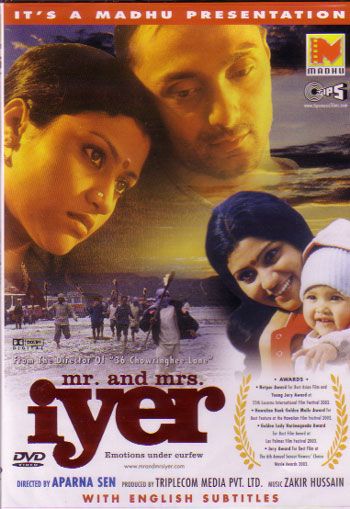
Mr. and Mrs. Iyer is a real tearjerker. Confronting the hairy problems of India's sectarian violence, it appends an unexpectedly romantic edge (think Cairo Time!), as the titular "Mr." and "Mrs. Iyer" - a Bengali Muslim and a Tamil Brahmin - go from uneasy trust to a rare and special bond.

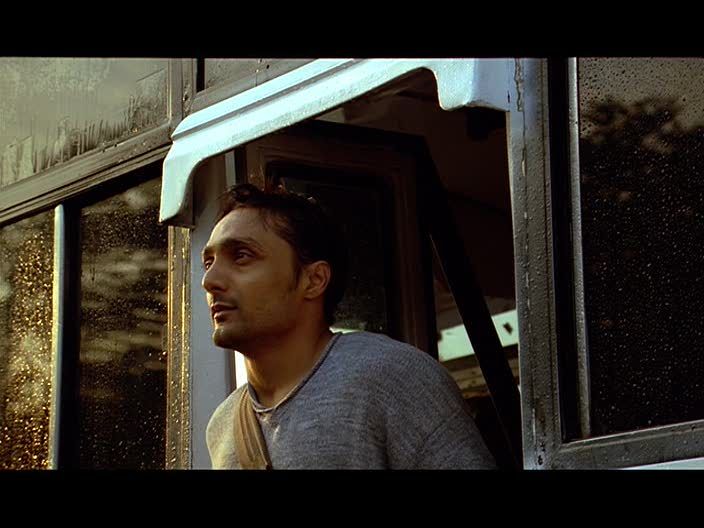
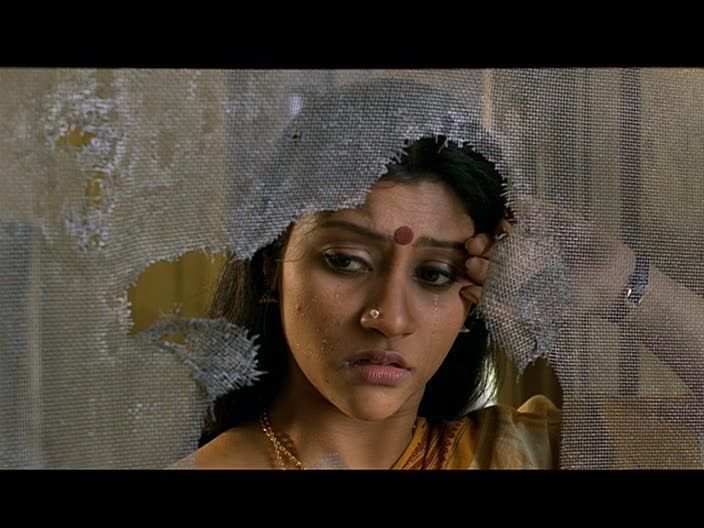
The story begins when Meenakshi Iyer (Konkona Sen), the real Mrs. Iyer, readies herself and her infant son for a long journey to meet her husband in Calcutta. Amid the fluttering of her assorted family members, Meenakshi is introduced by a mutual friend to Raja (Rahul Bose), who is also travelling and has agreed to help out.


Him.


Her.


The initial bus journey begins innocently enough, with a charming, Altman-esque sequence where the bus passengers - and, importantly, their diversity - are introduced. Director Aparna Sen (who we last saw in Immaan Dharam, another tearjerker!) uses light, breezy gestures to touch on issues such as modernism ("When I met you," an elderly Muslim man huffs to his wife after having a youngster's bare midriff in his face, "the only thing I could see of you was your hands!"), communalism ("Bloody terrorists," a young Hindu grumbles), and the ever-present tensions lurking beneath the happy, chaotic surface. In the prologue, Sen splashes the screen with a mess of newspaper headlines, all screaming the same thing: VIOLENCE! DEATH! RACISM! FEAR! The bus passengers wrap their food in newspapers with grotesque headlines. But it's hard to imagine that such violence could ever touch the easy-going domesticated vibe in the bus.

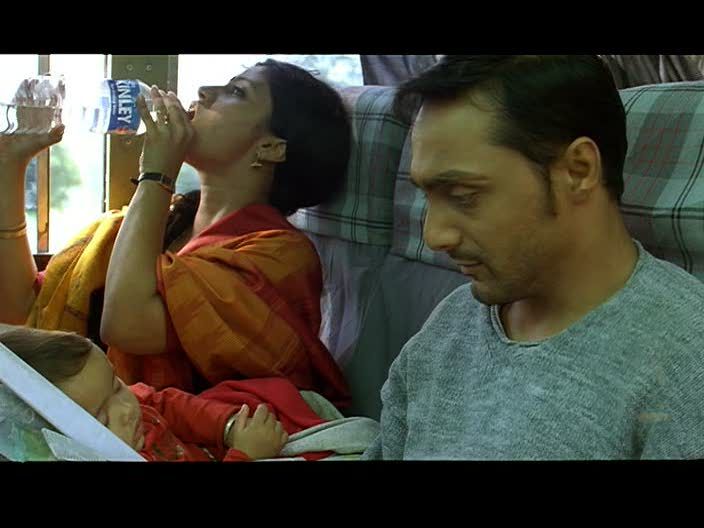
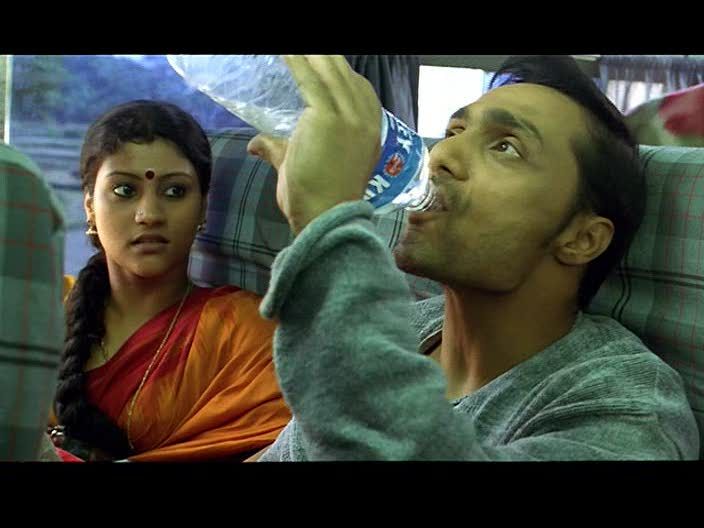
But that, of course, is Sen's point: juxtaposing this innocent diversity with the horrors to come. After an unexpected detour, the group encounters a long traffic jam on the solitary country road. Wild rumors run up and down the line of waiting vehicles: there was an accident. Someone was murdered. And, finally, the worst: communal riots have started. Hours pass, and a harried policeman (Bharat Kaul) eventually arrives, begging everyone to stay in the bus. Raja, who has helped Meenakshi throughout the journey with taking care of the infant, and with whom Meenakshi has generally struck up a friendship, announces that he is Muslim and must therefore flee. At first, Meenakshi is horrified that she shared a water bottle with a Muslim - but, when a group of torch-bearing Hindus arrives - she quickly claims him as her "Mr. Iyer".


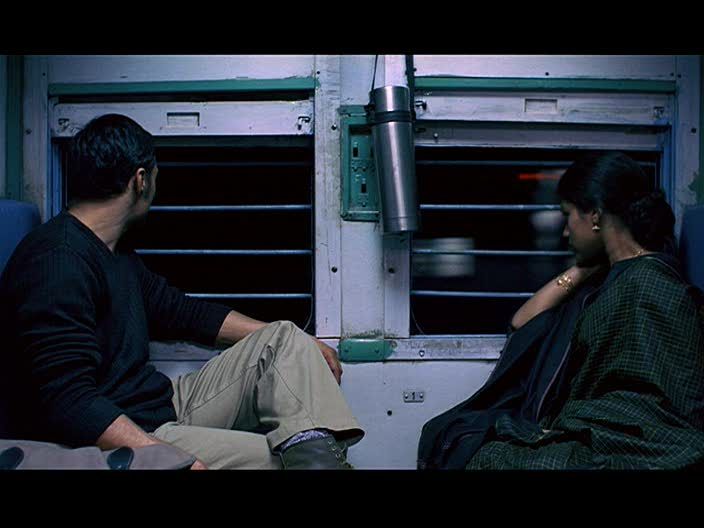
A brief plug for the excellent Indian railway system.


A great thing about the film is that it never wallows in the violence. Instead, we remain with Mr. and Mrs. Iyer as they skirt along its edges. Mostly, they and the other bus passengers must wait and wait and wait while the roads clear. Scenes of any real bloodshed are rare, and the passengers' general naivete regarding their situation is underscored by their occasional quasi-ghoulish delight in relating the gory details of the rioting. "You know that old couple?" one fellow passenger tells Mr. and Mrs. Iyer at one point. He draws a line across his neck. It's a harrowing reminder that, until you are physically confronted with violence, that violence can be difficult to imagine.


A very sweet moment: Mrs. Iyer drinks her water bottle using the usual way.


...and is horrified to watch Mr. Iyer drink it in the "modern" fashion! Juthaaaaa!


Of course, the big Moral of the Story is that communalism is bad, and the cycle of vengeance is pointless. This is, if anything, a tired, well-worn notion. What's slightly more interesting is how modernism, as represented by the jet-set Raja and his enormous Nikon camera lens, is not necessarily portrayed as always right. "Oh, don't give me that Tam-Brahm bullshit!" he spits uncharitably in one scene. Similarly, traditionalism and orthodoxy - as represented by Meenakshi - has both its own benefits (the preservation of culture, via her son's name) and shortcomings (her bigoted views of other castes). It's only when Mr. Modernism and Mrs. Conservative overcome their differences and learn to trust one another that the evils of communalism can be overcome. Given India still struggles with endemic prejudices, it seems that Mr. and Mrs. Iyer have much to teach us!

...Or that India needs Sesame Street diversity education, like that one excellent article said!

Wallander: The Man Who Smiled (2010)


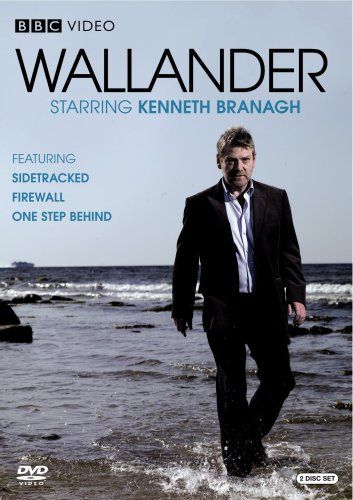
Honestly, Wallander should just be called the Soft and Fuzzy Pillow (Death) Show, where that pillow is played by Kenneth Branagh as a man who made a big mistake in choosing a profession. Why on earth did Mr. Kurt Wallander, who takes every murder as a torturous baptism by fire into realizing that the world is immoral, imperfect, violent and horrible, ever become a detective, of all things?! This man should have been a doctor, or maybe a watercolor artist, or a gardener.


For he today that sheds his blood with me shall be my brother.


Be he ne'er so vile.


This day shall gentle his condition.


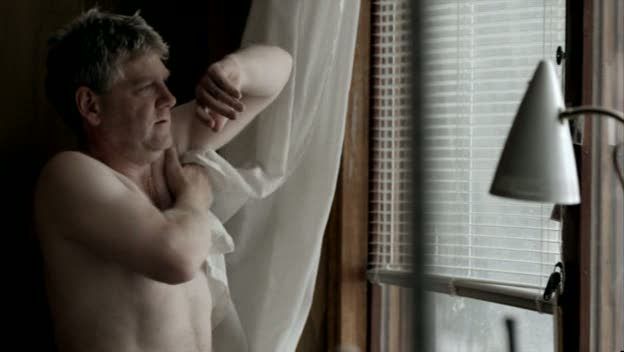
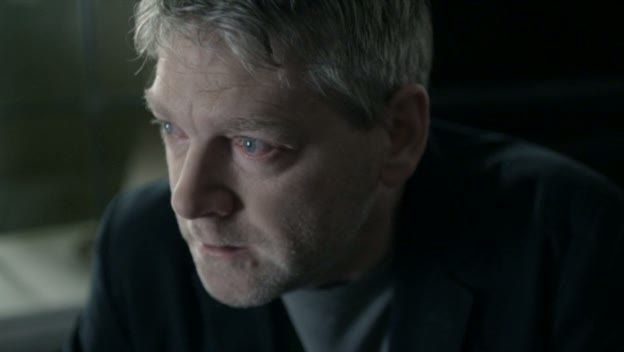
In The Man Who Smiled, we catch up with a shaky, clammy Wallander, living in uneasy early retirement after the traumatic events of Faceless Killers. Wallander, who was forced to discharge his firearm in self-defense in the previous episode, is clearly suffering from some nasty PTSD - and if you thought Wallander couldn't possibly get any dumpier, frumpier and unhappier, he can and he does. Now chewing through handfuls of pills and gulping them back with red wine, he spends most of his private hours wallowing in wretched misery. (He spends most of his public hours having sweaty panic attacks.) When an old friend, Sten (David Sibley), begs Wallander to come out retirement for one final case (someone killed Sten's dad!), Wallander refuses (!), which leads said friend to kill himself (!!). Wallander now has just that critical level of toxic guilt he needs to spur him back into the office.

The excellent David Warner makes a small appearance as Kurt's equally wretched father, Povel, who spits venom at his son with just enough intensity to amp up Kurt's already considerable self-pity levels. David Warner... you are so great.


But we in it shall be rememb'red.


From this day...


...until the ending of the world!


Personally, we've never seen the point of murder mysteries, especially TV shows about them. In the end, we always discover that the murderer is some random guest actor - a character about which we know nothing and care little about. The "puzzling out" of the crime feels likewise arbitrary, as every "clue" is placed there by the storyteller to give a false sense of discovery. Blah. Give Wallander a sudoku book - maybe someone DIES for every sudoku he doesn't figure out - and we'd have a better sense of tension and moral strain, as well as greater intellectual involvement. It could even be called "Sudoku Death Pillow Soft".

Yeah, yeah, we tease and tease. "But you still watch it!" you note. Well, of course we do. We gobble it up! It stars Kenneth Branagh, with special guest star Angst. It's like french fries dipped in cheese salsa for angst-loving Kenneth Branagh fans such as we!

For those of you that don't fetishize emotional suffering with the same relish we do (or pretend not to, anyway), you can tell yourself you watch Wallander for the gorgeous, desaturated shots of an emotionally draining Swedish countryside. (You'll never feel the same in IKEA again.) The direction is beguiling, as we follow Wallander on his disorienting drives down empty rural roads - a symbol for his slow, methodical circling in to who the killer is? Well, maybe it's too literal to be a symbol. Anyway, Wallander is also more than just a walking lump of huggable moping (though he is mostly that); he also, thanks to Branagh, exhibits a terribly realistic social awkwardness. This is a man who does not know how to express himself, and generally fumbles, stutters, mutters and grunts. Watching his bumbling attempts to connect with his daughter ("Uh, er, hmm, how are you? Uh, yeah..." *click*) or his complete verbal shutdown when confronted by the awful co-worker Magnus (Tom Hiddleston) is pure delight. Well done, Kenneth.

Sunday, 23 May 2010

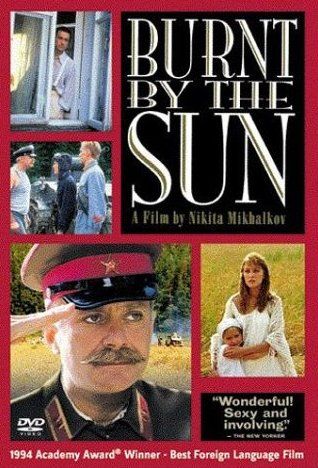
Burnt by the Sun (1994)


It's easy to be charmed by the lazy, summery feel of Burnt by the Sun. And then it's easy to be horrified by the darker undercurrents which run beneath that charm. A film which tackles (some would say, exploits) the ugly Stalinist purges of post-Revolution Russia, it is an emotional wringer. It also won awards and accolates at both Cannes and the Oscars, though it continues to polarize audiences - mostly because of director/writer/star Nikita Milkhakov's controversial celebrity.

Yet in spite of its awards, mistakes and controversy, Burnt by the Sun is often a very beautiful, moving film. It takes place in 1938, where heroic old Colonel Kotov (Nikita Mikhalkov) is vacationing at the family summer home with his young wife, Marusia (Ingeborga Dapkunaite), gorgeous little daughter, Nadya (Nadya Mikhalkov, the director's real-life daughter) and assorted set of what EVERY reviewer is legally bound to call "Chekovian" characters. Just think white linen pants, croquet, sleepy afternoons, buzzing mosquitos and dainty umbrellas. Think also idiosyncracies, mild arguments and a general feel of casual, chaotic affection.


Cho chweet!


Cherry orchards?


Until in walks old family friend Mitya (Oleg Menshikov), a flamboyant prankster and handsome young man who immediately triggers major alarm bells between Kotov and Marusia. With vague allusions and eerie shots of Marusia's scarred wrists, we learn that Mitya was more than a family friend - on the contrary, he once enjoyed Kotov's privileged position as Marusia's great love and beloved scion of the family clan. But after indeterminate misadventures during the revolution and civil war, Mitya lost that position. His return now is both unexpected and mildly threatening; his strained smiles hide an eerie malice and a deep self-loathing. Things take a turn for the worse when we learn that Mitya's arrival is not merely a personal visit.

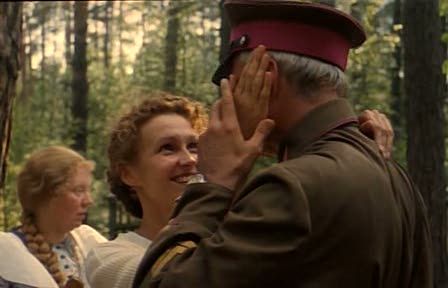
The emotional impact of the story largely explains its success, we reckon. Witnessing the easy love within the family, coupled with the pitious loathing of Mitya as an "outsider" and forced villain, is - for the most part - very poignant. Nadya also injects a lot of genuine cuteness; she is cheeky and beloved by all, most of all her father, and there are numerous scenes which focus only on that special bond. This may sound indulgent or cheesy, but some moments - such as when Kotov takes his daughter on a boat ride - are wonderfully touching. Nadya circles her small arms around Kotov's neck, burying herself there, and sighs, "You have no idea how wonderful I feel when I'm with you."


The film's most gorgeous scenes.


(Incidentally, another great moment has the family going down to the river for a swim. Mitya sits on a blanket, taking off his shoes and speaking bitterly with his old flame, Marusia. At the same time, he watches as Kotov, standing in the grass, takes off his shoes. A green broken bottle lies just inches from Kotov's bare feet. It's a great moment for building the tension between the two men.)

The human details are the most affecting, and, while Mikhalkov's Kotov is a sort of overly perfect primordial War Hero (and, yes, it's an ego trip), his performance - as well as Nadya Mikhalkov's, Oleg Menshikov's and Ingeborga Dapkunaite's - are generally pitch perfect. People have talked a lot about the unexpected magic(al) realist touches in the film - such as when the titular sun becomes literal, a floating orb that scalds the surroundings - but these are brief missteps in a beautiful waltz.


Self-loathing, loathsome, poor Mitya.


Oh, Mitya.


AS WE TYPE THIS, Nikita Mikhalkov is releasing his long-anticipated (and completely unneeded) sequel, Burnt by the Sun 2, at the currently-running Cannes Film Festival. Burnt by the Sun 2 has already bombed with Russian audiences and critics, and, well, if you've seen Burnt by the Sun, you'll already feel uneasy about a sequel. We've read a few reviews and just the mere plot summary indicates that they've undermined the point (!) of the original. We can't tell you how, but let's just say it'd be about as offensive as Hamlet 2: Claudius Strikes Back. (And the play? WTF?)