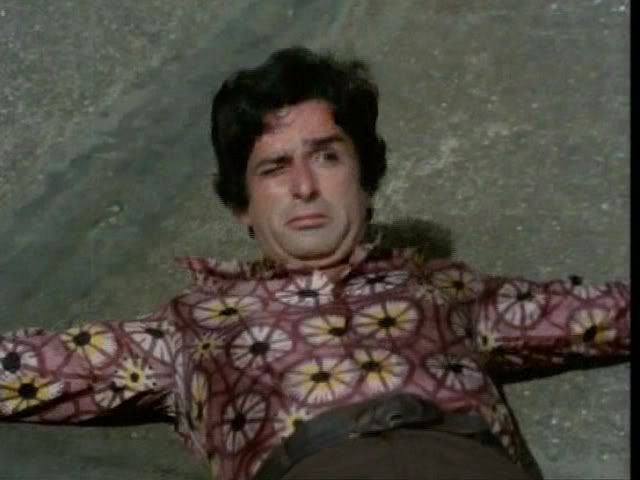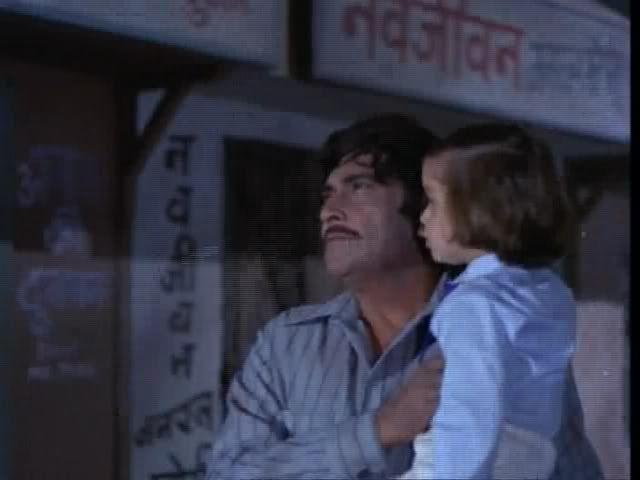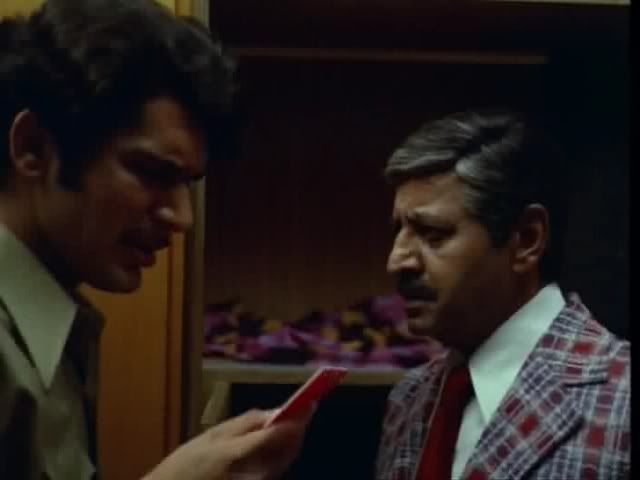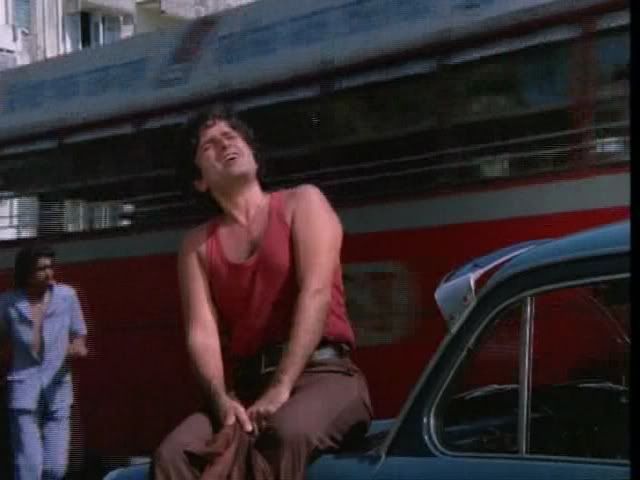
Showing posts with label zeenat aman. Show all posts

Saturday, 14 February 2009

Ugly aur Pagli (2008)

Back when we saw Ugly aur Pagli (Ugly and Crazy) on a tiny, flickering television on a semi-deserted island, we had only one significant criticism: it tries too hard.


Wake up, Mallika, the review has started.


This is hardly damning, as surely it's better to try too hard than not try at all. And the worst thing Ugly aur Pagli does is proclaim its quirkiness loud and clear when, in many moments, a lighter touch would have been better. Rather than narrating the odd adventures of Kabir (Ranvir Shorey) and Kuhu (Mallika Sherwat) via a relentless voice-over, it would have been far more effective and fun to let the story speak for itself. Indeed, the best part of the film is the last half hour, when Kabir finally shuts up and lets us watch in peace.

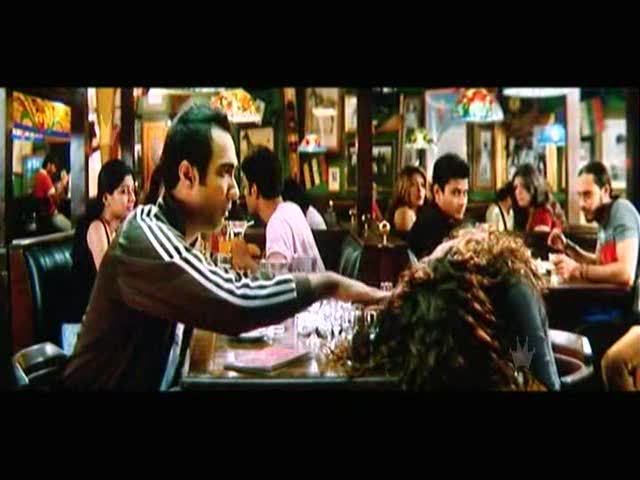
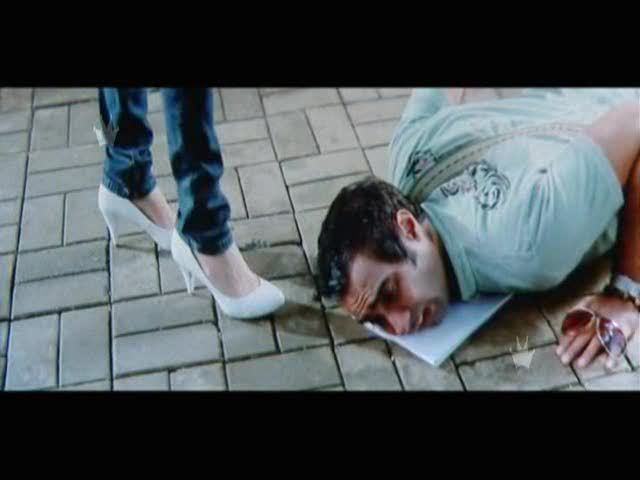
But maybe our criticism is missing the point, as Ugly aur Pagli is a veritable celebration of the ignored, imperfect, weird couples out there in the world. The ones that aren't chocolate box fluff beings from the Planet Perfect. The ones with pimples and drinking problems. And it wants to PROCLAIM this quirkiness IN CAPS (including from a skyscraper's rooftop). Beginning with the very first frame, being different is celebrated: while a tinkling anti-filmi indie anthem plays, we see snapshots of quirky love in all its guises. A pair of transvestites. A lesbian couple. A dwarf and his average height girlfriend. It is, thanks to the music and gentle affection on display, oddly touching. And a good start to a story about a loser "ugly", Kabir (Ranvir Shorey), falling in love with his aggressive, binge-drinking "pagli" friend, Kuhu (Mallika Sherwat). When Kabir first meets Kuhu, she vomits all over herself. As they become friends, she slaps him repeatedly and challenges him to outrageous dares (such as wearing her stilettos across a busy Mumbai intersection). Kuhu is loud, combustible, feminist and angry. She writes action-packed screenplays about heroines saving their wimpish heroes from disaster and expresses her growing affection for Kabir by dragging him around by his shirt. The wimpish, bewildered Kabir spends most of the time scrambling to keep up with her wild mood swings and impulsive decisions. It's only when the two are separated that they, and we the audience, realize how meaningful their attachment was.


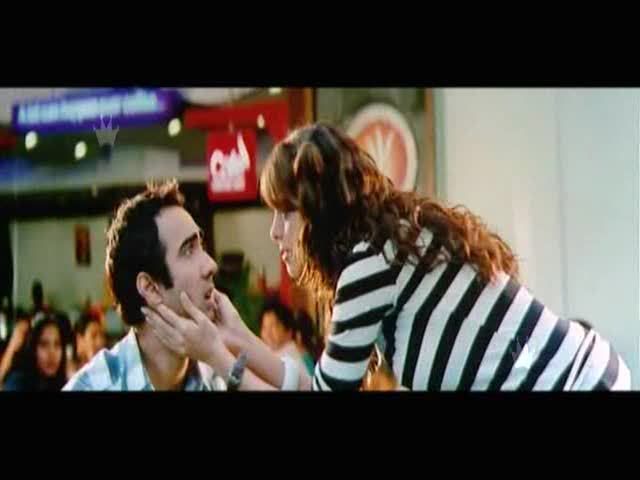
The dominatrix stuff was sometimes tiresome...


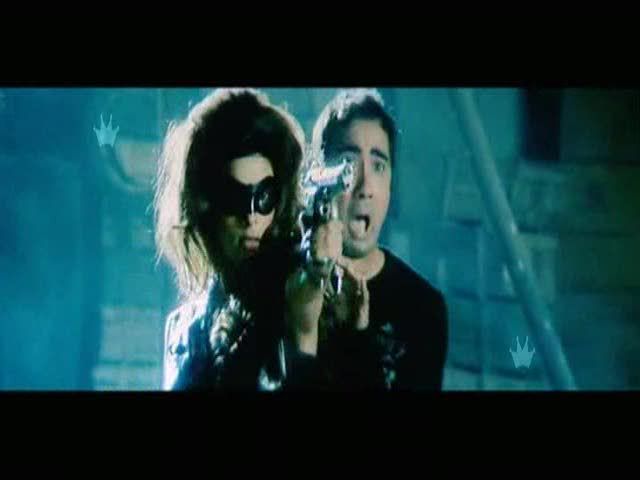
...but the action heroine fantasies were hilarious.


Much of the film's humor is tiresome and forced (though we did laugh very hard at Kabir attending swimming lessons, for some reason), and many have criticized that the movie's transfer from Seoul to Mumbai lost a lot of... soul (ba-dum-shhhh, thank you, thank you very much). Indeed, this movie is saved almost entirely by the performances of the two leads. Mallika Sherwat and Ranvir Shorey both work their particular brands of offbeat, unconventionally attractive performers perfectly. Both known for envelope-pushing work - they each made their debuts in racy films (Khwahish for her, Ek Chotisi Love Story for him) - they seem to be teasing this image as much as they're exploiting it. At least, the S&M vibes were strong (the DVD menu features whips and handcuffs!). Furthermore, they're both playing to their image of fiery, free-spirited pagli for her and sensitive loser for him. What can we say? We love these two just like that. And so the film - despite its flaws - works because of them.


The drinking buddy song! Featuring Punjabi rap artist Hard Kaur, which definitely upped the film's street cred. If you want to kick it old school, see Naina's excellent drinking buddy anthem, Jane Mujhe Tune. (No, we will never stop plugging that song.)


We also just appreciate quirkiness on a philosophical level. Yay quirky! Yay different! Because of that, and the heart-squishing finale, we put this film in the Decent pile. We'd like to see more of the same from Bollytown, just with a bit more polish next time.


Oh, you two.

Saturday, 3 May 2008

Roti Kapada Aur Makaan (1974)


This one goes out to all the bleeding heart liberals in the house!
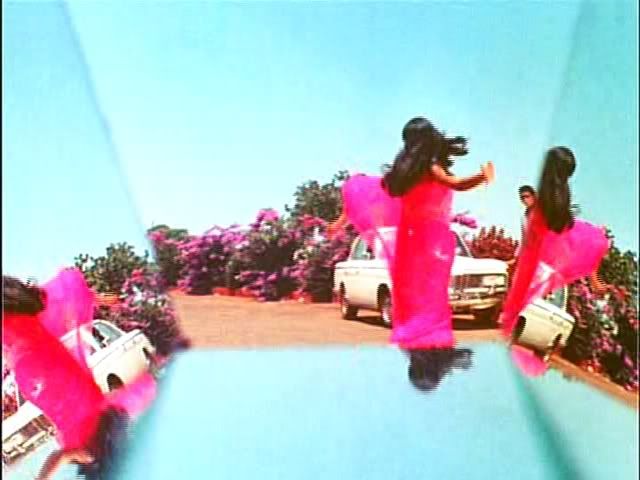

And this one's for all my psychadelic hippies in the hooouse!


The PPCC has several buttons. If you push these buttons, we will be eternally in your subjectitude. These buttons are:
1. A proletarian aesthetic.
2. Jump cuts between contrasting scenes, tracking shots that either follow or pass by characters, tasteful slow-motion, and the cunning use of wind machines.
3. Shashi Kapoor with long curls.
4. Ass-kicking heroines.
5. Little babies.
6. A hero who smolders like his cigarettes and broods like his chickens.
7. A blunt, bleeding-heart socioeconomic message.

Roti Kapada Aur Makaan (Food, Clothes and Shelter) has all this and more. It also has some seriously mental psychadelic song sequences, lots of fun and innovative imagery, proto-Shashitabh who eventually steal the show, several awesome songs, several reprises of awesome songs, and enough symbolism to sink a boat with.
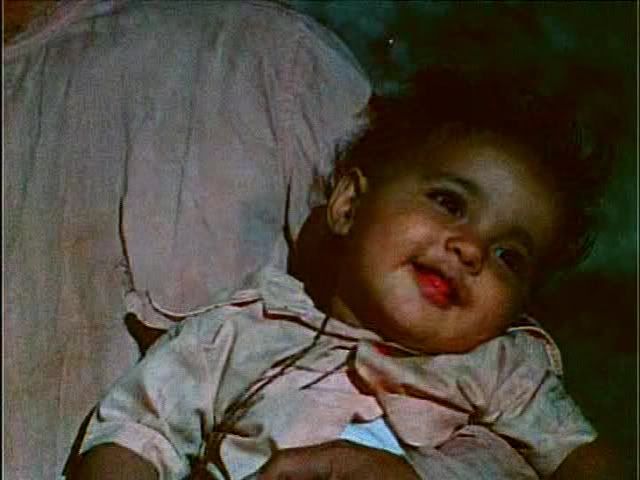

BABY.
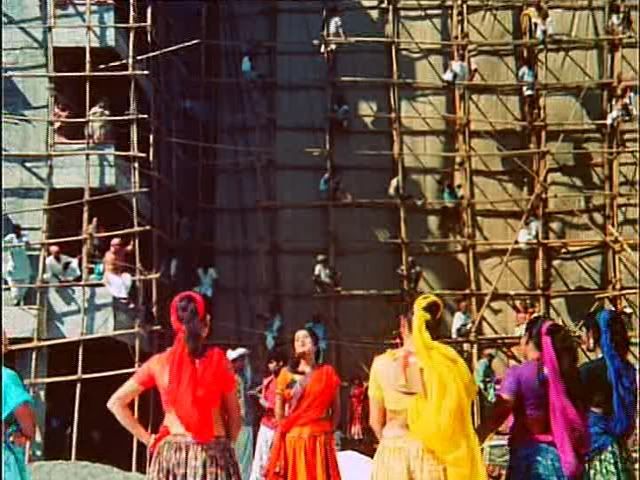

Epic songs by the disadvantaged.
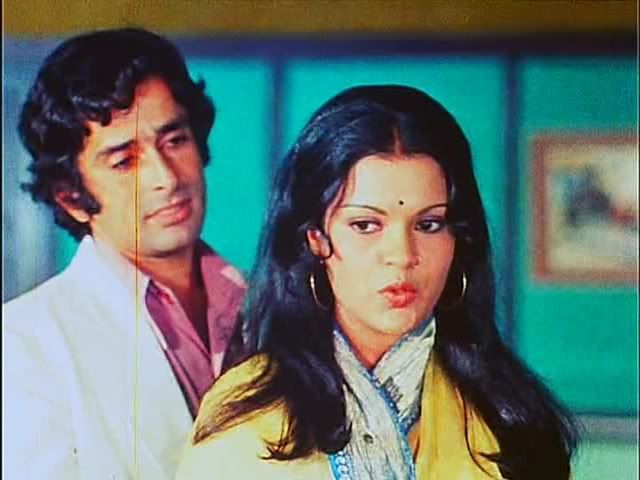

Shashi looking so fine he looks like a plastic doll. According to some people.


We should probably say: this movie goes for your heart, your stomach and your brain with a battering ram. The PPCC prefers loud, blunt symbolism over hollow subtlety any day, so we loved this movie. Like loved it big time. It was fun, it was tragic, it was truly epical. Yeah! Even Manoj Kumar, who we only knew via the Om Shanti Om scandal and his way oversensitive behavior regarding it, even that guy, managed to be a compelling hero and an excellent director. You go, Manoj, you use that glitter and you brood the hell out that scene and you keep touching your face, man! Go, man, go!

The songs! The fashion! The unshaven, returning hero Amitabh! The unshaven, gilded bourgeoise Shashi! The sacrificial Zeenat! The everything!

But let us begin at the beginning. Cue entrance of Bharat (Manoj Kumar, or, as he'd prefer, Mr. India Himself). Bharat is the older brother of a swarming family. He has a degree and cannot find a job. The middle brother, Vijay (Amitabh Bachchan, very proto-himself) is angry and young (!). The youngest brother, Deepak (some guy), is part of the wallpaper until the end. Anyway, Bharat's girlfriend, Sheetal (Zeenat Aman), is fun and zesty and lands a job secretarying for this incredibly hot businessman, Mr. Mohan (The Shashi Kapoor). It's not long before Sheetal melts in Mr. Mohan's hotness like butter in the microwave. Bharat is hurt, almost inconsolable. He touches his face a lot.

Bharat lands a job at a building company. He befriends the zesty, proletarian Tulsi (Moushumi Chatterjee) and the Sikh stereotype (Prem Nath). Tulsi is a rape victim. In maybe the bluntest symbolism we've seen in a while, Tulsi was gang-raped by the Food Man, the Clothes Man, and the Shelter Man. OMG.
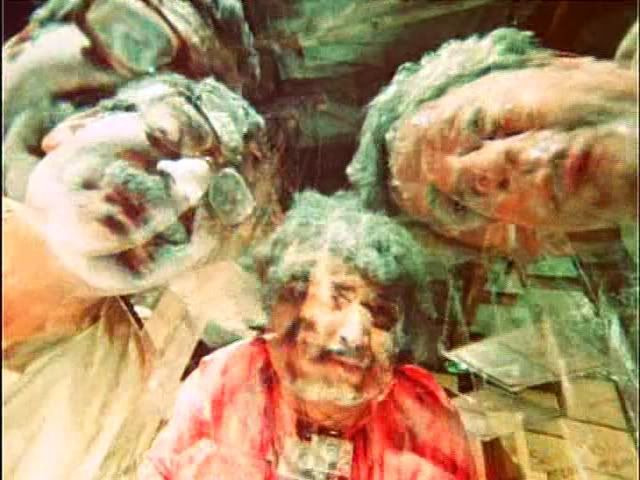

The highly disturbing, highly stylized rape scene.
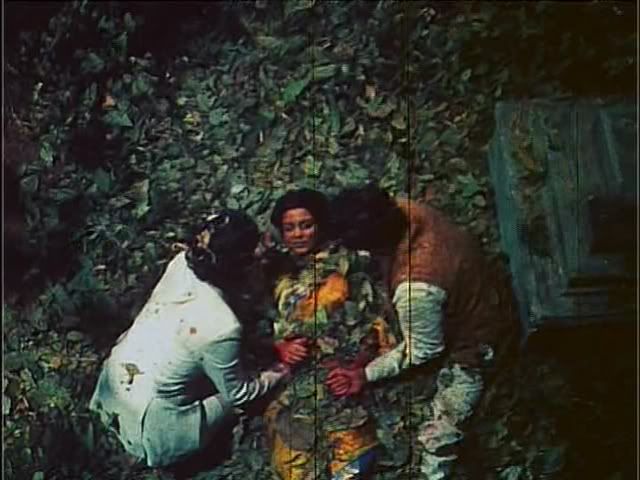

Honestly, we think this might be one of the most gorgeous moments ever captured on film.


So basically everyone's under a lot of economic pressure, like big time. Bharat is freaking out. His dad passes away. He has no money. His girlfriend just left him for Mr. Heartbreaker Kapoor. Argh! Bharat starts to fall in with the wrong crowd: a bunch of smugglers, gangsters, and economic evildoers led by an evil Madan Puri and an interestingly morally ambiguous Poonam (Aruna Irani).

Thankfully, the return of a one-armed brother, the gregariousness of the Shash, the love of his girlfriend, and the massive brawn of Prem Nath help Bharat save himself, first, and then save India. It really is a wonderful movie.
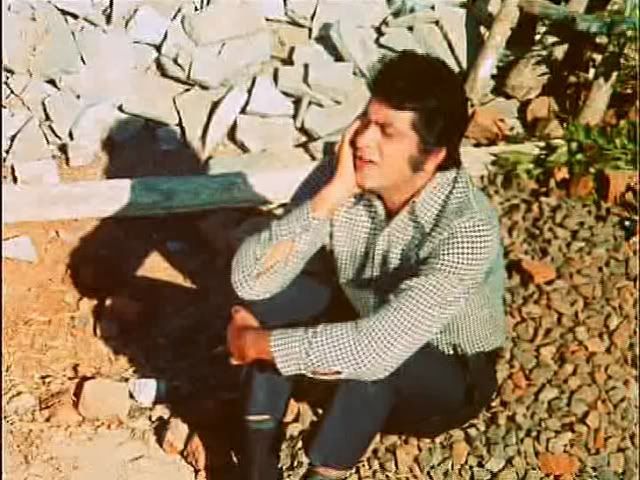

Another moment from out favorite song, wherein Manoj is wonderfully sweet and poignant. The bit when he sings his verse is just lush.


We just loves ensemble casts where everyone fits together like puzzle pieces and everyone is sympathetic. And they all work together to make a better world, sigh! But to say that made the movie for us would be untrue, because what we loved and enjoyed - more! more! - was the crazy, intense imagery and the film's overall aesthetic style. It was so freaking interesting. Manoj Kumar seems to have taken a big lesson out of the Woody Allen school of directing, because he favored lovingly long shots which zoom in, zoom out, pan across the room, follow characters, linger on meaningful objects, return to the action, and so forth. Several conversations were shot in single takes! Yeah! Manoj also favored geometric patterns and classical set-ups, where tension is built via lighting or stares. Yeah yeah!
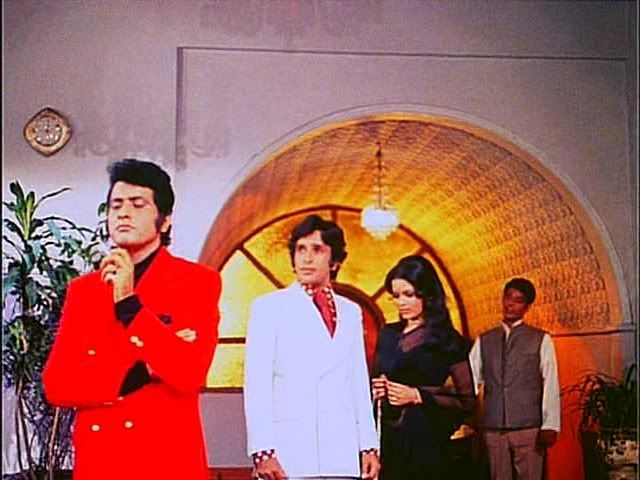

Their heads form a diagonal, their lines of sight form the tension. Gush!


And (big and here) the songs! They ranged from the absolutely tripping Main Na Bhuulunga - the anthem of Bharat and Sheelat's love, which became more and more poignant with each reprise (three!) - to the stylized and geometrical Aur Nahin Bas Aur Nahin, to the sublime and proletarian Mahengai Mar Gai (memories of Immaan Dharam's gorgeous Konjam Konjam!), to the bittersweet and zany Panditji Mere Marne Ke Baad. Guh. We loved 'em all. ALL. We loved the moment after Aur Nahin when the Shash has clearly understood everything, he blows out the fire ("A singer like that ignites fire in the audience's hearts!"), and engages in a slightly sinister, slightly piss-take, slightly joyous whistling reprise! (And note that when Zeenat and Shash start clapping and spinning, it's all one take.) We loved the moment when poor, hopeful Tulsi, who can't stop talking about how great Bharat is, gushes, "Oh, Dad, you know what he said once?!" And the scene zips to Mahengai Mar Gai, where the singer croons, "They said, 'Who are you?' I said, 'Your love.'"

But we could fill up a book with all the little moments we loved. We took more than 50 screencaps of the movie, because there were so many beautiful little shots that we wanted to keep. But how can you catch a cloud and pin it down? Alas, we lose the kinetic magic of the movie itself in just posting some stills like this.
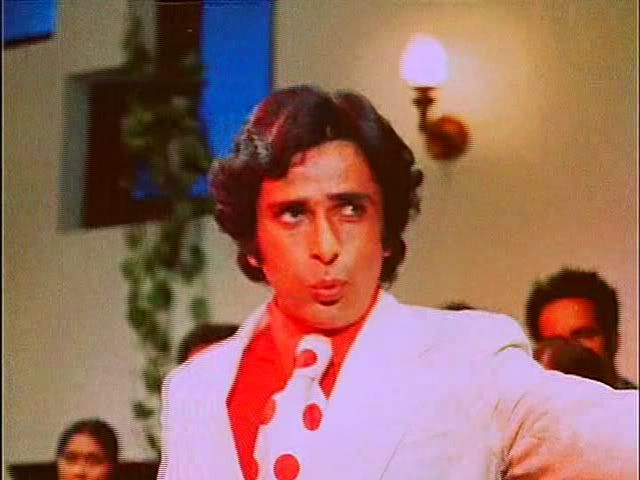

We loved the tension in this song. So emo! So complex!


In terms of performances: first, as we said, Manoj Kumar was bad-ass awesome as the brooding, struggling, weight-o'-the-world-right-here first son. Like Zeenat, we were torn: Shashi's the hottest thing since fire, but poor Manoj - look at him! He's gonna get a pimple if he keeps rubbing his hands all over his face like that! Indeed, we felt a lot better when (spoiler spoiler) Shashi rights his inadvertent wrong and joins the Amitabh jodi instead (where he belongs, you could say). Manoj only became annoyingly preachy towards the end, but this was also because he was starting to get outshone by Shashitabh and Zeenat. Which brings us to: Shashitabh and Zeenat! Shashitabh first. Both Amitabh and Shashi were FINE in 1974, gush. Or, as my friends never tire of pointing out, Shashi looked like a plastic doll. Whatever. A FINE plastic doll. It was odd to watch these two towering icons of awesomeness play second banana to the face-touching guy, but then they ended up becoming progressively more and more awesome until their sheer force of awesomeness could not be denied. We can just imagine the Bombay producers in those cinema seats: "Look at these two! That's GOLD, right there. Freakin' GOLD." Zeenat, likewise, was kicking ass big time - and, while we usually share Beth's weariness with the whole self-sacrificing archetype in Hindi cinema, we actually got quite weepy during that one scene where... you know. We won't say it.


When there's something bad, in the neighborhood. Who you gonna call?
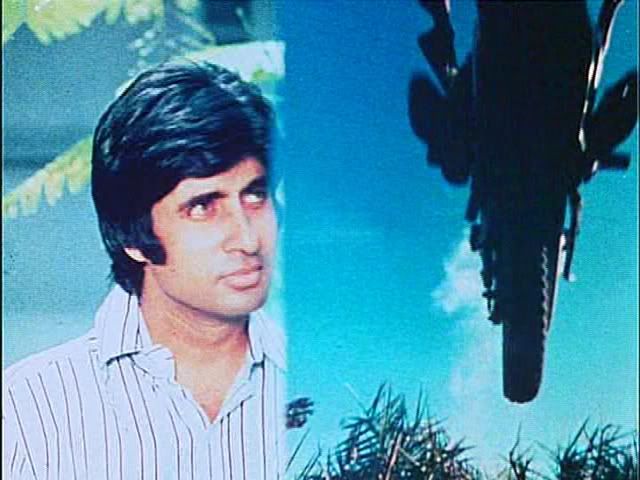

The freakin' Shashitabh, that's who. I ain't 'fraid o' no ghost.


All in all, this was the type of the movie where we ended up yelling into our TV screen, "GET HIM!" and, when the credits rolled, "SEQUEL. WE MUST HAVE A SEQUEL." The sequel could be called The Black Ishtone.

Monday, 17 December 2007

Chori Mera Kaam (1975)

For however superficially similar Chori Mera Kaam (Stealing Is My Job) may be to our recently reviewed Chor Sipahee - both star a proletarian Shashi Kapoor, talk about criminality, and feature 'chor' in the title - there is a fundamental difference between the two films. The latter is primarily existential, a real bummer - a beautiful bummer - but a bummer nonetheless. The former is instead a fun frolic through the lives of a pair of lawless Bonnie and Clyde, Bunty aur Babli type characters. Also, the films feature two distinct versions of Shashi's Proletarian Man: in Chor Sipahee, he is weighed down by the sins of the world and has a beard; in Chori Mera Kaam, he is fun-loving, carefree, clean-shaven and bouncy like a muppet.


You runz mera polyester dil ovrr, whyyyy?


There's a prologue, but we'll ignore it, since it adds nothing interesting or new to the plot and seems to have been included sheerly because it was such a familiar device of 1970s Bollywood. The only important thing to remember is that Pran the Policeman is Shashi's dad, and that's cool, because Pran is cool.


Shankar (Ashok Kumar) and that awful child actress from Mukti who was in far too many of these unnecessary prologues. Ugh.


PRAN!!!!


The real fun begins when Bhola (Shashi Kapoor) and Sharmili (Zeenat Aman) are released from prison on the same day. Both of them are identical: good-humored, dumb, and chatty. When the policeman bids them goodbye at the prison gates, they both cheerfully list the virtues of being in prison: free meals, free clothes, pre-set schedule, what's not to love? But free as they now are, they dance around in the Bombay suburbs, both singing "Chori mera kaam!" ("Stealing is my job!") while picking pockets. In Shashi's case, the scenes are once again very reminiscent of brother Raj Kapoor's Awaara Huun scenes in Awaara. The PPCC can only conclude this was intentional. The only difference is how chubby Shashi is in these scenes, enough so that the screenwriters thought it merited comment, as Sharmili immediately exclaims: "Look at you! You gain a kilo each time you go in!" Ahem.


Moments from the first song. Note Shashi's delightful un-self-conscious pudge.


Another moment. Zeenat fishes for purses at the beach. Note the sharp diagonals, very mod.


Anyway, Bhola and Sharmili are partners in petty crime, and though Bhola tries a few come-ons, Sharmili firmly reminds him that she is not and has never been interested. Whatever, Sharmili! It's only a matter of time.

Bhola and Sharmili attempt a number of cons and eventually end up holding a manuscript entitled Chori Mera Kaam. Whoa, meta! Judging it worthless, they pick a policeman's pocket and go gorge themselves in a posh restaurant. Things get hairy, and they're thrown out by the seat of their pants. Sharmili pretends to be hit by a car, and these scenes are truly the film's delight. Bhola immediately catches on, hunkering down and slapping himself on the forehead in a very hammy imitation of the Common Man: "My woman! My woman! You killed my woman! Brothers, brothers! The rich man thinks he can run over the poor!" The "rich man" turns out to be an anxious publisher, Pravinbhai (???), who promises to give Bhola 50,000 rupees in compensation. After they bury a coffin full of rocks, Bhola discovers Pravinbhai's job and demands further compensation in the publication of his stolen manuscript. Poor Pravinbhai agrees, Bhola and Sharmili secretly rejoice, and meanwhile a third man, Shankar (Ashok Kumar), has emerged from the woodwork: he heard everything and he wants a cut too. Bhola and Sharmili shrug and give in. (Unbeknownst to them but beknownst to us is that Shankar was Bhola's foster father for about five minutes in the prologue. This is actually not important to the plot.)


The external shots were interestingly claustrophobic.


Caught out at the restaurant.


The dead-Sharmili scam. This sequence is lovable and funny, with both Shashi and Zeenat chewing up lots of scenery.


While all this is happening, a rash of robberies and murders have been occurring in the city. The serial killer/robber leaves only a card reading 7, and, through the use of masks and cons and the villain from the prologue, Pran the Policeman is framed and sent to prison. Eventually, after a wonderful lovers' spat song (TRULY glorious) which features Bhola literally removing his heart and Sharmili tossing it in the ocean, after an extended sequence where everyone gets a disguise - Shankar as Colonel Sanders, Bhola as Keith Moon, Pran as... we have no idea - and confuses everyone else, after Iftikhar appears only long enough to be punched (the man is in everything!), and after much more confusion, the villain is revealed to be the evil Number Seven after all, Bhola is revealed to be Pran's son, Shankar is revealed to be the author of the manuscript, the PPCC is revealed to be Pran, and, yea, all is righted in the world.


Ashok Kumar as Col. Sanders, Shashi Kapoor as Keith Moon, and Zeenat Aman's reflection as Zeenat Aman.


Color-coded thievery.


Who the hell is Pran supposed to be?! Maybe he's just... PRAN!!!!!


The heart bit. Watch out, it really pumps in his hand.


A small reenactment of Blade Runner, starring the PPCC's beloved Pran and the omnipresent Iftikhar.


Worry not about the plot, the film is packed full with delightful moments of jocularity and tom-foolery. Shashi and Zeenat are infinitely adorable as the two, airhead crooks, and their moments of tenderness, as when Bhola pinches the "dead" Sharmili's cheek, or Sharmili ruffles the disguised "sleazy" Bhola's hair, made the PPCC go all, "Aww. They're so cute together!" The film has only four songs, and the only romantic one, Kaahe Ko Kaahe Ko, outshines the others, in that it's playful and catchy and then there's just that weird thing with the heart. It's the kind of song the PPCC would like to BLAST and full volume from its headquarters. "DIL DIL DIL, YEEEEE LE. RRRRAKH RRRRRAKH RRRRAKH!!!" For lovers of the Voice of Shashi (and we at the PPCC know you're out there), there are hugely pleasurable vocal acrobatics to melt your eardrums with. Most hilariously being Bhola's despairing: "Main dusri shaadi karunga!" ("I'll get married again!") But really the whole dead-Sharmili scam is worth the price of the DVD alone*.

We have to note that Zeenat's hair looked terrible in some scenes, and Lord knows what the hair and makeup people were thinking. But she was fun and seemingly a trifle more intelligent than Bhola, which made the PPCC happy. Ashok Kumar was acceptable as Shankar, though the PPCC thinks that much of his presence was nostalgic, especially the sudden importance of his character as the film went on, despite being no one's long-lost father. Pran, who was the long-lost father (rather than the villain, for once), was wonderful, as usual. Allow us a moment to gush: PRAN!!!!!!!!! Sigh. The PPCC loves Pran so much. PRAAAAAAAN!!!!!!!

Regarding the music, the opening Chori Mera Kaam is acceptable, though nothing to blog extensively about. Kaahe Ko Kaahe Ko, as we mentioned, is delightful and this film's slice of heaven or cheesecake. The insane Main Kachche Angoor Si, with everyone in disguise and everyone going a bit lecherous and trampy, is fun in that it resembles Don's Yeh Mera Dil, except it drags a bit towards the end and the spoken word arguments are tedious. However something must be said for watching Shashi leer and grope. PRAN (!!!!!) even has an item number (?), Meri Nazar Se, which makes one think immediately of Zanjeer, but unfortunately a Pran item number does not Yaar Meri Zindagi make.

*The PPCC purchased this film for USD 1.25, but we'd value our pleasure from the dead-Sharmili scam and the second song at about USD 10.

Saturday, 29 September 2007

Satyam Shivam Sundaram (1978)


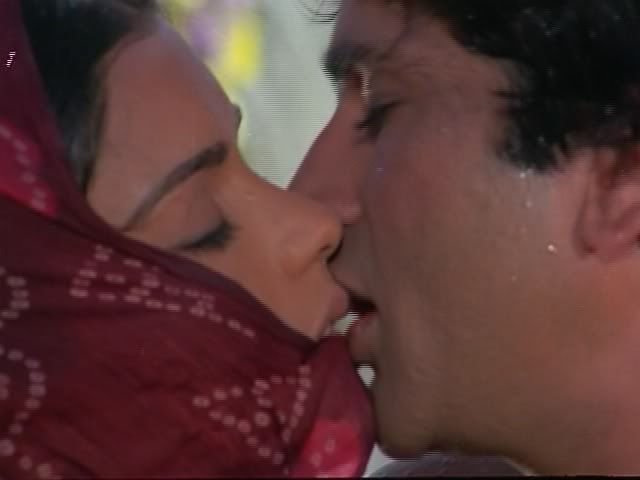
Mother of God. They're kissing.


There's a lot going on in Raj Kapoor's Satyam Shivam Sundaram (Truth, God, Beauty): Hindu spirituality, some accompanying eroticism, meditations on beauty, meditations on male-female relations. It's all related and all a bit entangled and, admittedly, we often felt bewildered by all the thematic nuances - we didn't really know what to make of it. Add to that the fact that the film is told as a modern day fairy tale complete with Willy Wonka-on-LSD-inspired aesthetics, and we felt more than a bit alienated. Everyone was just a bit too archetypal, every turn of the plot a bit too stylized, every plastic flower a bit too fuscia.


Keywords: Willy Wonka, bad acid trip, nightmarish.


Yet despite all that, we had to recognize some of Raj Kapoor's intentions as being pretty awesome (in the original meaning of the word). The dennouement is truly epic, and it's when this film stops making proclamations that it gets really good. There are moments when the cinematography is gorgeous too - though there are a lot of mistakes along the way (hello, two tone filters, what?!) - and we really have to thank Zeenat Aman for holding the whole thing together by presenting the protagonist, Rupa, as a real human being with real hopes and vulnerabilities.


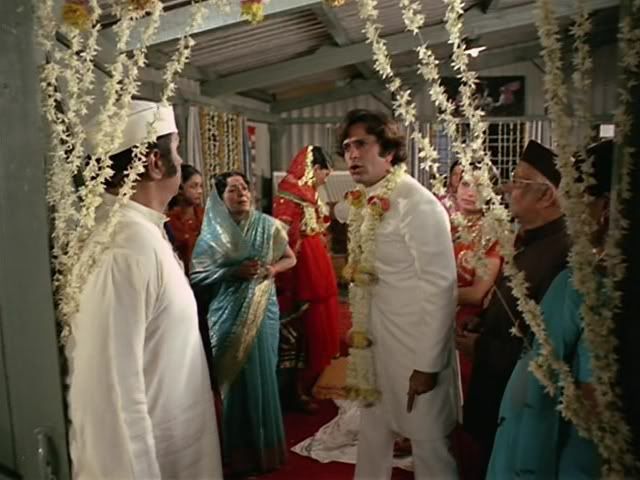
Hey, Shashi, you so fine, you so fine, you blow my mind!


The story is pretty kooky. Somewhere in an idealized, highly religious rural India, there is a village. And in this village, the local priest is celebrating Krishna's birthday just as his daughter, Rupa, is being born. His wife dies in childbirth, and apparently this is the first time it's happened in this poor village (?!), because everyone decides that Rupa must be some sort of really unlucky hell-spawn. For whatever reason, the priest backs this unenlightened opinion, and little Rupa grows up much like Cinderella or a 1950s housewife: totally screwed and unempowered. None of the kids play with her. Her father blames random incidents on her presence. The only person who's nice to her is her next door neighbor, Caca (A.K. Hangal) but even that goes awry when Rupa's face is scalded in a cooking accident at his home.


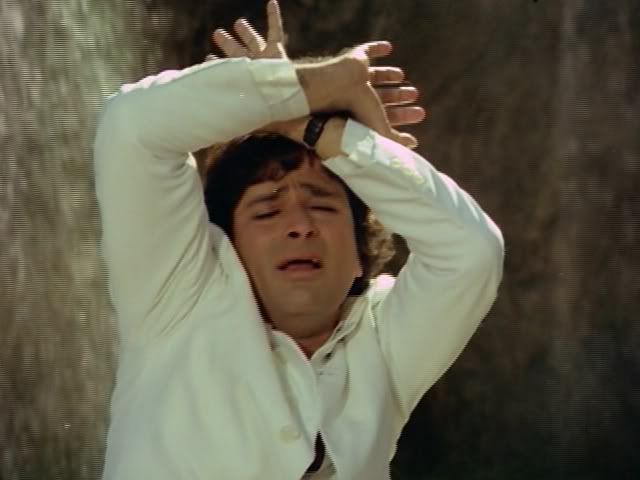
Woe. Woe.


So Rupa grows up into Zeenat Aman with a huge burn scar on her face. Everyone trash talks her, and she spends most of her days begging the temple gods to get her out of this mess and then crying herself to sleep. One day, as if he's been sent by the future, a good-looking Engineer from the City, Rajiv (Shashi Kapoor), disembarks at the train station. Rupa sees him and is immediately struck by his hotness. As is every other woman in the village, who then pursue him with zeal. Hot he may be, but Rajiv is also a little weird - he's "all alone" in the world, no family, no ties, he admits that he happily lives in a world constructed of his own fantasies, and he has a massive phobia of ugliness. To the point that he has a panic attack in front of the distorted mirrors in the local fair's funhouse. WTF?


The titular song. Usually we hate it when titles are mentioned in movies ("Ha. Dil se."), but we thought this was used to great effect. And we actually cried a bit in the end when they play it again.


Anyway, Rajiv hears Rupa singing in the temple one morning and falls immediately in love. Or lust. Or whatever. He pursues her, she hides her face and lets this painful fantasy play out for her - thinking, "Oh, it'll never work out. But it's nice to have Shashi Kapoor on my tail." One day, she gives him an ultimatum: the veil will only be lifted on her marriage night. "So let's get married!" he decides. Rupa is horrified. But her father is thrilled - finally someone's going to marry his ugly duckling, and it's even a bourgeoisie professional! But the wedding night arrives, the veil is lifted, and, yes, Rajiv has the inevitable freak-out wherein he goes totally demented. "You're not my Rupa! This is some other Rupa hell-spawn!" he cries. Even though the villagers assure him that, actually, there's only one Rupa in the village.

But Rajiv is inconsolable. He even faints. No one seems to care what this is doing to Rupa, but that's OK, because Rupa is a bad-ass who doesn't need to be empowered, thank you, she can take what she needs, you damn stupid society. And since she now has the right to Rajiv's underpants, she endeavors to live a double-life: by night, she is Veiled Rupa having an "adulterous" affair with Rajiv, by day, she is the Rejected Rupa who is actually married to Rajiv. Rajiv, in the meantime, comes out looking like a proper idiot. Oh dear. Inevitably, Rupa becomes pregnant, thus provoking the dennouement, which involves a flood a la The Ten Commandments. And the moral of the story is beauty is more than skin-deep.


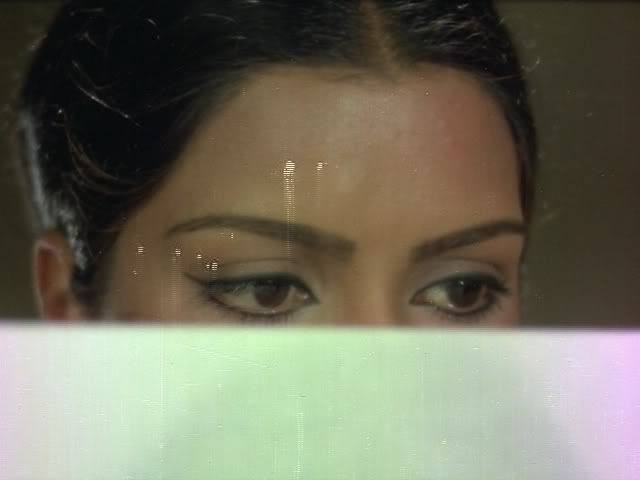
Captain Crazy.


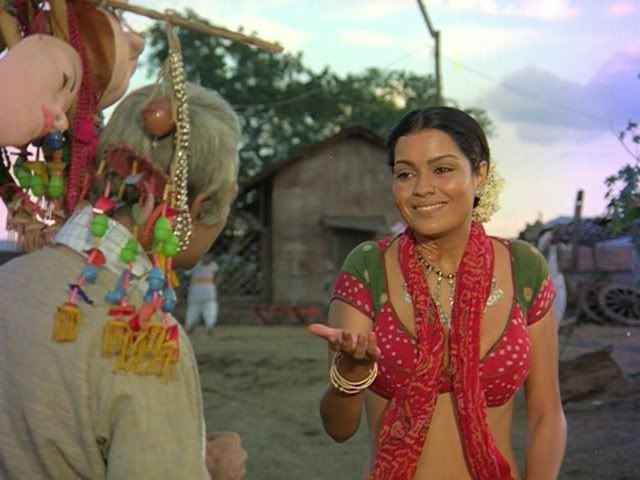
Poor, happy Rupa.


Performance-wise: Zeenat Aman is very good. While she starts off as a bit hazy and enigmatically sad, those scenes when Rajiv has started courting her and she's all Shashified and so happy really break your heart. In fact, she has this great ability to show the 15-year-old girl trying to get out; we have these windows into what she should be like (happy, frothy, energetic) but can't be, thanks to how much her situation sucks. Thanks to this three-dimensionality, the fairy tale makes more and more sense. We at the PPCC have often cried at The Ugly Duckling, and there were moments in this film when we felt tears coming on for poor Rupa's crappy life. And Shashi, he was so stupid.


So stupid.


In fact, onto Shashi: he was fine (in both definitions of the word), though obviously it's a bit easier to just play a mental Prince Charming than the complex Rupa. He disappointed us a bit in the end, since his complete turnaround seems forced and pasted on - but that may have been the writer's fault too. All that said, however, there were some very cute moments which showed us a Shashi Kapoor we had never seen before. All the scenes where the village girls are pursuing him are really hilarious, from his aghast stares to his nervous squeaking. We at the PPCC just love Shashi Kapoor's voice and delivery, especially when he does that croaky thing ("Kya baaa-aaaat hai, bete?" in Kabhi Kabhie is a good example), and so it was likewise adorable to watch his squirming: "Huh. Huh huh. W-w-w-which girl? Heh. Err."

Now onto the thematic and filmi stuff. Like Beth, the PPCC was confused by the highly eroticized costumes Rupa wore. It's certainly commented on in the film - the other village women (also missing their sari petticoats) say she's still wearing her old clothes from childhood, and that she's half naked most of the time. But why? We at the PPCC just felt embarrassed for her, because, well, she was wearing a transparent handkerchief as a top. We think (OK, this is a theory) that, given this was directed by a man (Raj Kapoor, Shashi's older bro) and much of the Bollywood audience is men, maybe having a 3/4-nude Zeenat Aman toil under a hideous scar was meant to inspire conflicting feelings of sexy/ugly for the typical male viewer. That way they could better understand Rajiv's dilemma of being simultaneously attracted and repelled. But Beth makes the good point and we agree: why sex her up when the message is about the superficiality of such "beauty"?

That said, female viewers get their share of male erotics as well: Shashi appears wet and also 3/4-nude in a few scenes, and his own hotness is often referred to. Indeed, a troupe of village valley girls are all simultaneously smitten on first sight of him, leading to much jocularity.

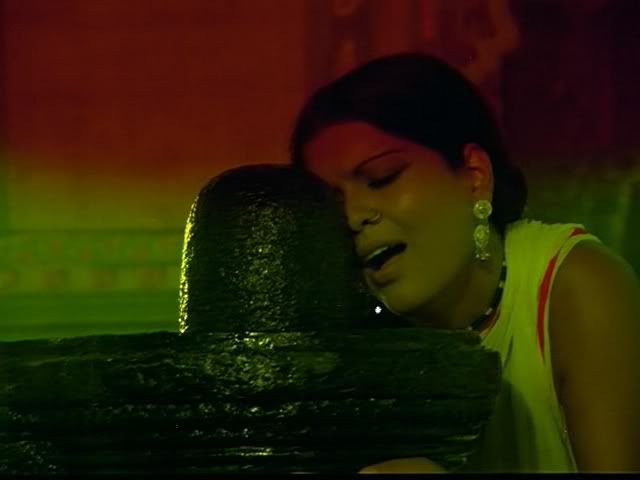
And then there's the soft porny aspect of it all. We were warned about this before viewing, and we thought it referred to Zeenat's non-outfits. But, as we said, Shashi's not embarrassed to stand around wearing nothing but soaked-through boxer briefs either. This leads to most private parts being not-so-private anymore. Add to that the kissing, which shocked the hell out of the PPCC, so used to Bollywood non-kissing are we, as well as some tawdry lovemaking, and, well, yeah, it's a bit soft porny. Maybe our mind started getting a bit dirty, but we also noticed a lot of sexual imagery: Rajiv opening the waters of the dam, Rupa dancing with a sitar that's starting to look a bit phallic, Rajiv exploring that cave behind the waterfall, Rupa caressing that stone in the temple...


Remember that scene from Almodovar's Talk to Her?


Two-tone filters and sexual imagery. Oh my.


Enough! Enough!

Anyway, the cinematography's nice too. We especially enjoyed the scenes when the dialogue audio cut out and we only saw their lips moving while music played. OK, this is really starting to sound porny now. Ummm.


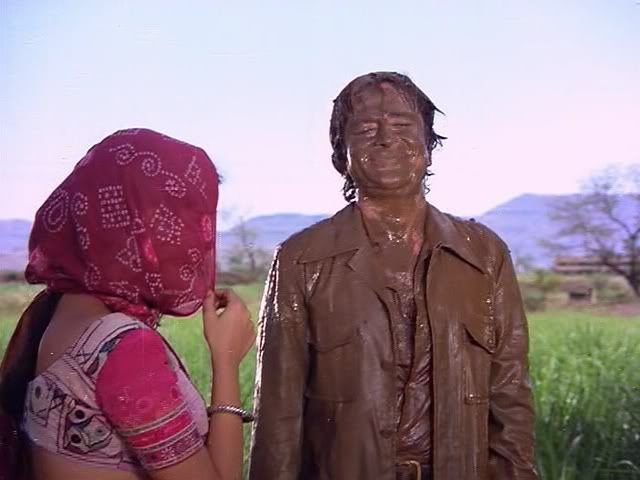
Let's see that muddy Shashi again...