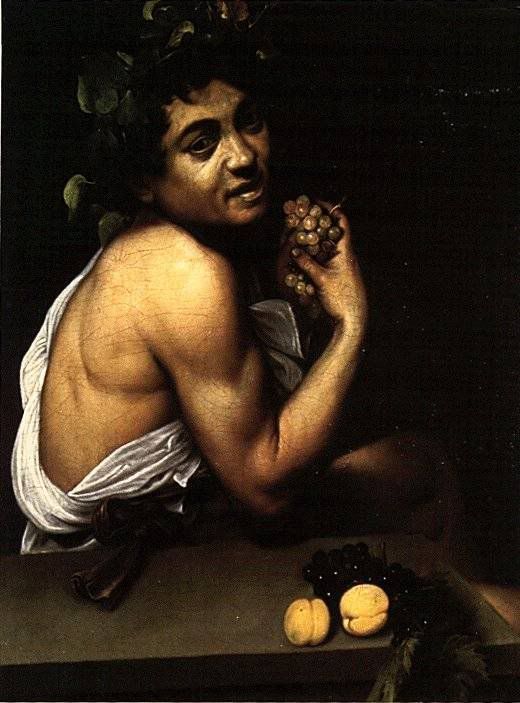
Moral purists, beware:
Janbaaz (
Daredevil) is not for you. It is a raunchy, sleazy, anti-morality fable that is sometimes nightmarishly (sometimes hilariously!) anti-puritan. The heart and soul of the film - the lustful attraction between the thoughtless hedonist, Amar (Anil Kapoor), and the badass, hard-core Reshma (Dimple Kampadia) - is not very
vanilla or even
masala. It's actually a lot more... Rocky Road (da dum shhh - thank you, thank you, we'll be here all night). Rocky Road with a strong helping of 1980s tackiness and SLEAZE. So if you recoil from vile anti-heroics and dodgy fashion sense, stay away. If instead you are like the PPCC and you suspend not only disbelief but also moral indignance when watching
certain films, then Janbaaz is a plain ol' hoot and a hog. Or should we say: (
insert your own poultry-related double entendre here). We loved it! It was a spectacle of pulp! Gosh, Anil's
good at those. We also think (drumroll) that what it's really
really about is not the 1980s fashion of drug dramas, but the modern
cult of Dionysus.

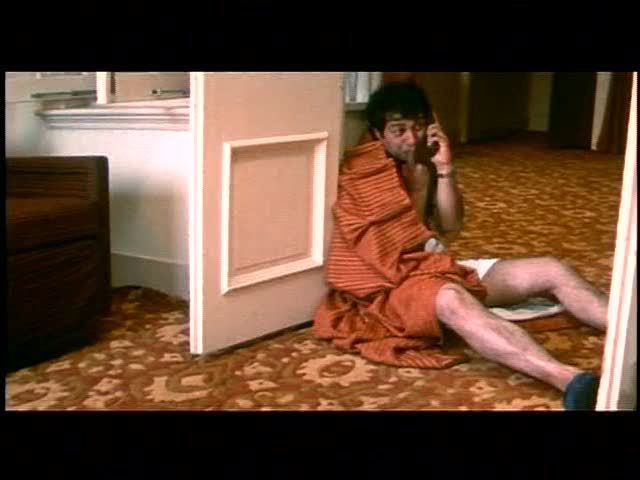
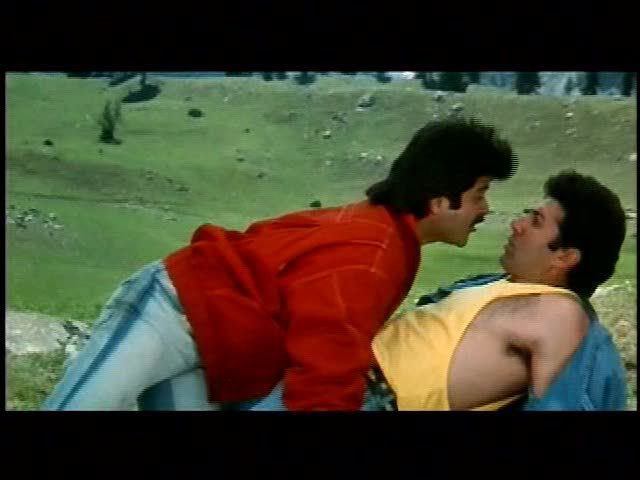
Your brain on drugs.
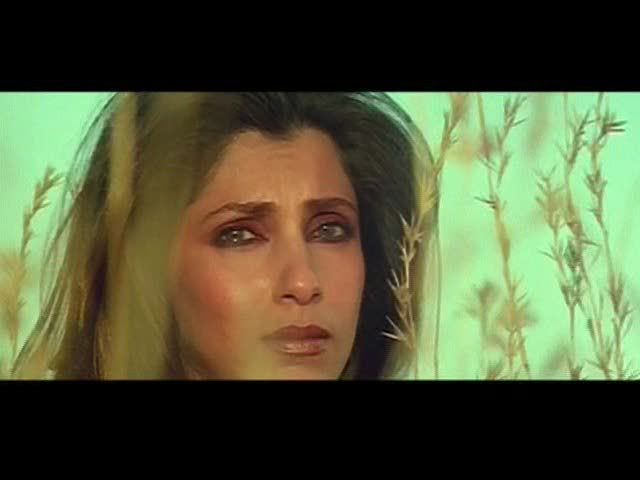
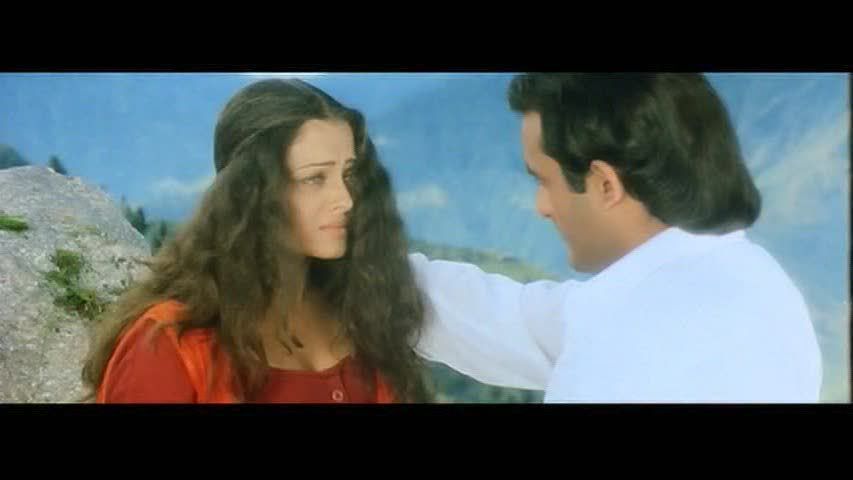
The gorgeous and (mostly) empowered Reshma (Dimple Kampadia).
Molding itself along the
two-brothers masala standard, only with a filter of
old school Miami Vice, Janbaaz concerns itself with the strange moral quagmire that is the Singh family. These people run the gamut of the usual Mother Theresa-meets-Gandhiji fare (a favorite of masala moral tales!) to... well, Anil Kapoor
in full-on bastard mode. The father, Rana Vikram Singh (Amrish Puri), is an aging
epicurean (small e) who finds his older,
straight edge son, Rajesh (Feroz Khan), incredibly dull, and instead showers praise and encouragement on his permanently-in-a-stupor younger son, Amar (Anil Kapoor). On
a night when Amar lurches home after snorting lines of cocaine and playing Russian roulette, father Rana laughs with gusto: "Bravo, son, well done!" What's an honest
Stoic (big S) to do in this house of sin?
Well, poor, harassed elder son Rajesh asks himself this, again and again. A police officer in the Narcotics squad (Hindi Movie Irony Bell goes CLANG!), he toils in a sighing, hang-dog way under the moral contradictions of his father and the moral vacuum of his brother,
still grieving over his lost love (Sridevi in a cameo) and getting no love from anyone - except maybe his similarly bewildered-lost-lamb mother (Sushma Seth).
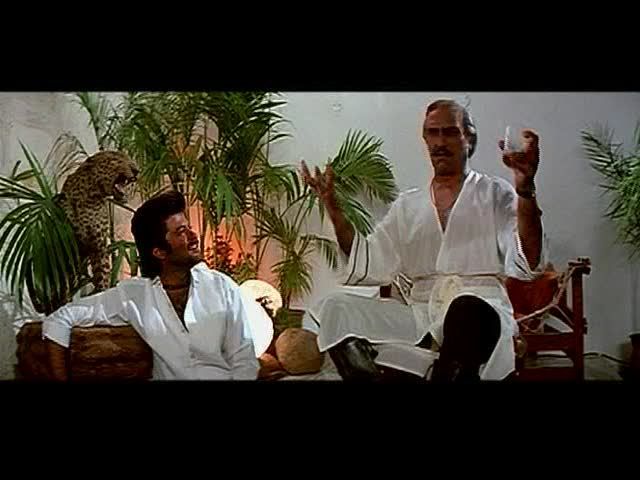
Father and son yakking it up over the most inappropriate party stories.
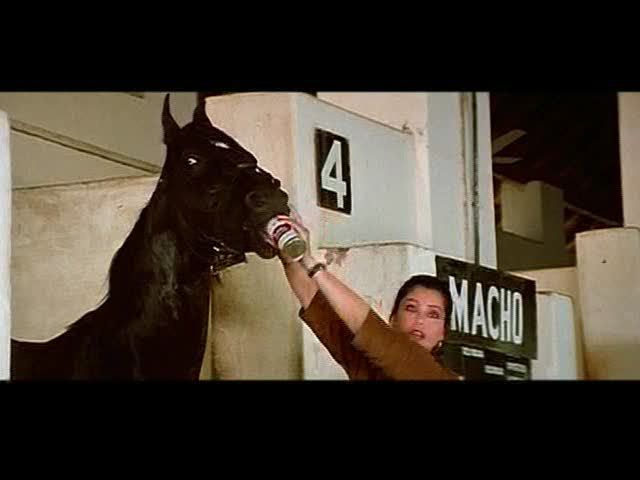
See what Reshma can do to your Macho!
One day, a new element is thrown into the mix with the arrival of the strong, capable Reshma (Dimple Kampadia). Recently orphaned after her gambler father (a dashing Kulbhushan Kharbanda) was killed by the local drug gang (among them Shakti Kapoor), Reshma is more like Rajesh: serious, hard-working, living unhappily under a shadow of sin (she's an illegitimate child, something no one ever tires of reminding her), and she doesn't suffer fools gladly. Or, for that matter, lecherous fathers and wastrel sons. As Amar tries his usual come-on strategy of strutting around and making godawful
double entendres, Reshma does what any self-respecting girl would do: she rolls her eyes, gives him a good slap now and again (including ramming pie down his throat in one of the most satisfying scenes) and even - interestingly! - shows him who wears the pants by unmanning him via his horse (appropriately named, "Macho"). And then - surprise! - she falls for him, or falls for
something, and
soon enough they're rolling around in the hay.
And it's all fun in the hay until someone gets a pitchfork to the back, and we find ourselves
on the run with Amar and Reshma on the motorcycle and Rajesh following close behind. Throw in one disgruntled drug gang, and the fact that it's 1986, and you're in for some full-throttle, grenade-explosion, flame-thrower dishoom dishoom.
There's a word in Italian for what Anil Kapoor looks like in this film: "
sbronzo". Basically, it means sozzled - but not just drunk, it means that sort of tanned, bleary-eyed, ravaged nose drunkenness found only in the most devoted long-term drinker. As he guzzles champagne for breakfast, snorts coke for lunch and knocks back Johnny Walker for supper, you can only imagine what Amar's liver must look like! That man may be young, but - thanks to Anil's constant blush and trademark scraggly stubble - it looks like it's taking its toll, too. A tough cookie like Reshma is just what this guy needs if he's going to live past 35.
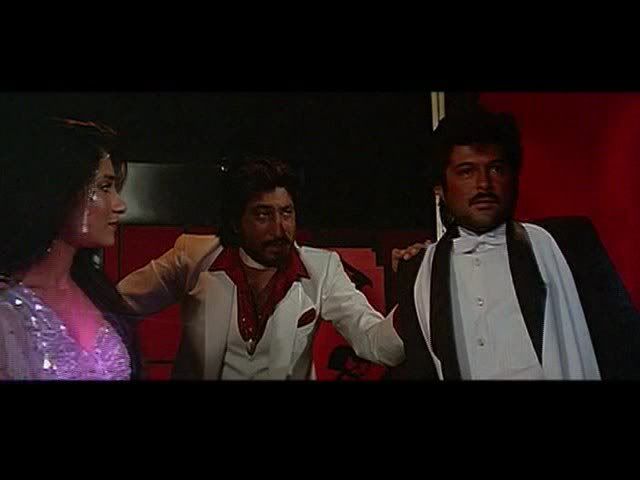
Sbronzo! Not to be confused with "stronzo", which is, well, also applicable.
Which segues nicely into Reshma and the relationship: a more typical masala heroine would have fallen for the poor, quietly tragic Rajesh, not the jackass Amar. And yet Reshma falls for Amar! Is it his gracious charm? (Definitely not, he has none!) Is it his studly mustache? (Possible!) We actually think she falls for that glamorously tawdry Dionysus in him. For those not up on their Greco-Roman mythology,
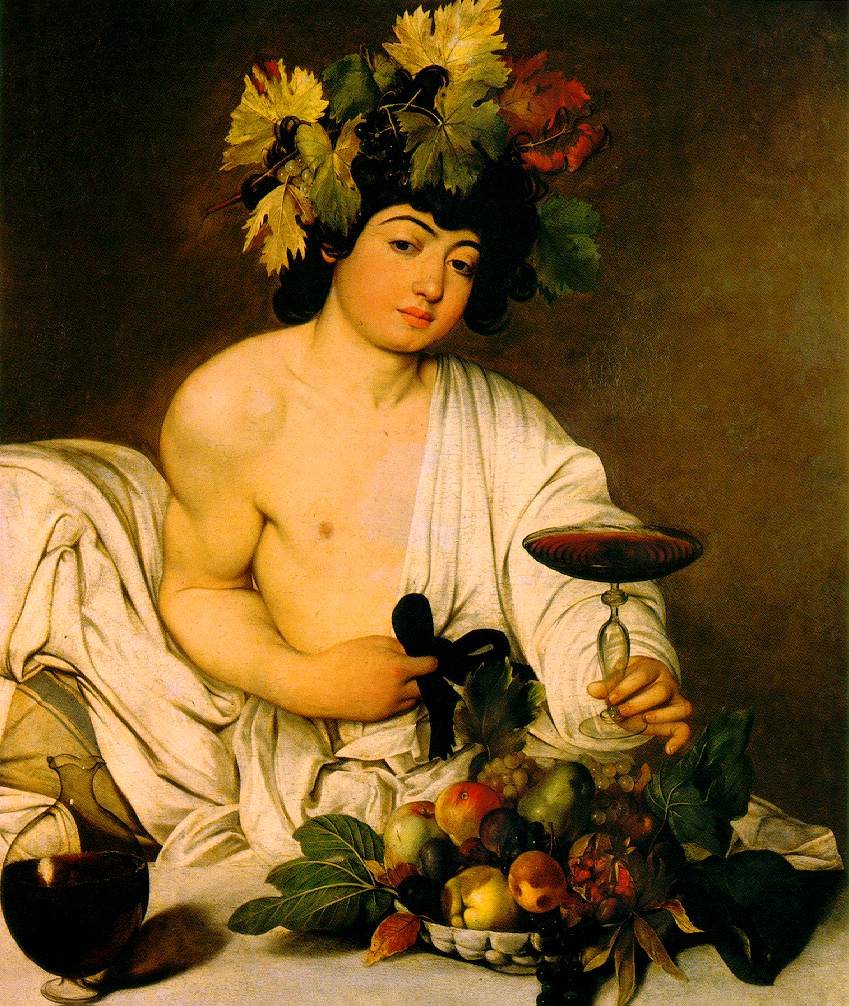
Dionysus (called Bacchus by the Romans) was the god of wine, women and theater. He had all sorts of colorful, grisly things happen to him (including
getting ripped apart by the Titans during one of his various deaths) and he represents, in modern aesthetics (and thanks mostly to
Nietszche's reinvention of him), that sort of loose cannon, unregulated, uninhibited and unintellectual art that comes straight from the gut. A good example would be
Jackson Pollock: an alcoholic painter famous for a style where he used to
fling, dribble and pour the paint onto the
canvas.
So Dionysus - the original and most archetypal "black sheep" of Olympus - has an attractively rebellious anti-hero quality to him, and he has become - like the
Byronic loner - a standard character found in various incarnations in various media (
film,
music,
art, etc). Dionysus has long been associated with the primal, and the marginal strata of society -
back in the day, there was the
cult of Dionysus which was renowned for its frenzied, crazy meetings and shrieking female fans. So
of course Amar - the Dionysus of Janbaaz - is (1) going to be a male chauvinist jackass whose sole motivations are satisfying base, primal impulses and (2) Reshma, a "marginal" of society (lady! tough lady who wears pants! illegitimate daughter!), is going to fall for him. Tellingly too, their relationship is all about lust initially - even from Reshma's side (as baffling as that may be considering Amar's fashion sense - off-the-shoulder sweaters! - and hairiness), a rarity in the genre. Things go a lot more Hindi when that initial attraction turns into the emotional investment of real love and Reshma becomes a helpless damsel in distress. But everything up until that point: pure, seedy Dionysian. And the point of this film and the source of its notoriety is, after all, its envelope-pushing seediness, not its somewhat deflated ending.
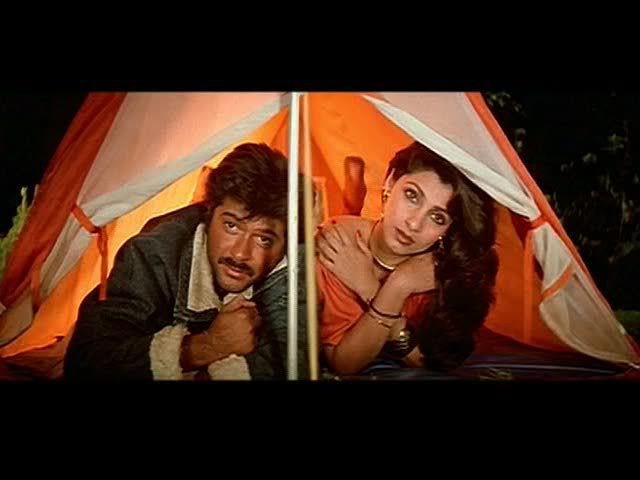
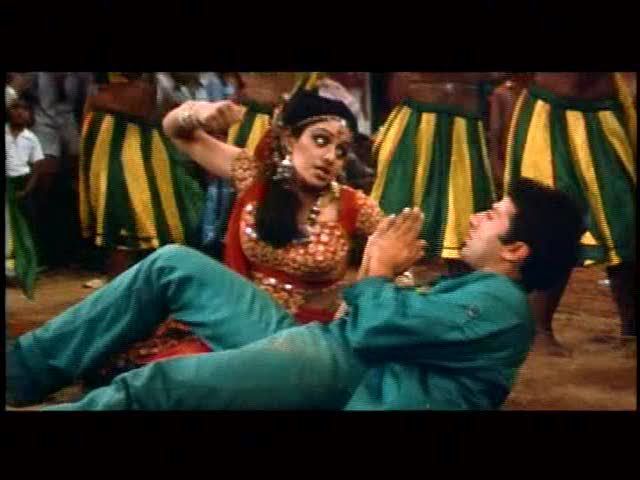
Dionysus and Ariadne?
A short interlude about the PPCC's critical philosophy
Now, just to preempt a comment that could be made: yes, we know that Feroz Khan probably wasn't thinking explicitly about Dionysus/Bacchus when he made this film. But that doesn't mean the meaning's not there!
We at the PPCC are followers of the
"death of the author" school of thought - that is, we don't believe that the author/artist/filmmaker's intentions are the most valid interpretation of a text/art/film. Just because the author didn't consciously put something into his art doesn't mean it didn't end up in there anyway. To take an example, J.R.R. Tolkien
intended Lord of the Rings to be a Catholic allegory, but he also ended up with a World War II allegory - something
he fervently denied. Does this make interpreting Lord of the Rings as a World War II allegory wrong? Not at all! In fact, it would be silly to dismiss the idea, considering Tolkien's background and context. (For crying out loud, he wrote it during the war!) You can go even further: people have argued that
Lord of the Rings is an environmentalist allegory. Indeed,
ecocriticism - the interpretation of literature through the lens of environmentalism - is a very recent development that by definition relies on reevaluating older texts in a completely modern way - a way which was probably furthest from the authors' minds. Of course Shakespeare probably didn't mean to make King Lear a "green" play, but that doesn't mean a green interpretation is wrong or invalid. Quite the opposite! And it's one of many, many valid interpretations. The possibilities are really endless!
Before you think we're just critical theory anarchists who'll accept any interpretation about anything, we do have two rules. An interpretation is valid if:
1. It presents a genuinely novel, stimulating way of understanding both the text/art/film and, where possible (brownie points awarded), reality. For example, Film X is a meta-representation of Swiss cheese...
2. It does so in a convincing, rigorous way, using real evidence from the text. For example, ...because its plot is full of holes!
So basically the
argument is important - as long as you've got evidence and facts (Amar is a wastrel, Dionysus is the god of wastrels, Dionysus was worshiped by marginalized women, a marginalized woman falls for Amar) then you've got a valid argument (Amar is Dionysus). The fact "Feroz Khan probably doesn't know that much about Dionysus" is just as important as the "Amar is a wastrel" fact - one doesn't cancel out the other.
QED. Ta da!
Back to the review
Anyway.
In terms of performances, everyone is fine - with the real stand-out being Amrish Puri. Feroz Khan, who also directed the film,
channels Manoj Kumar both in his directorial style and in his performance: he's the put-upon, quietly suffering, noble fighter for justice. The only problem is: we like it better when Manoj Kumar does it, perhaps because of his quirky, mumbling delivery style and nervous hands. Feroz, for however cute he is in an aging post-evergreen sort of way, seems to suffer from Frozen Face Syndrome.
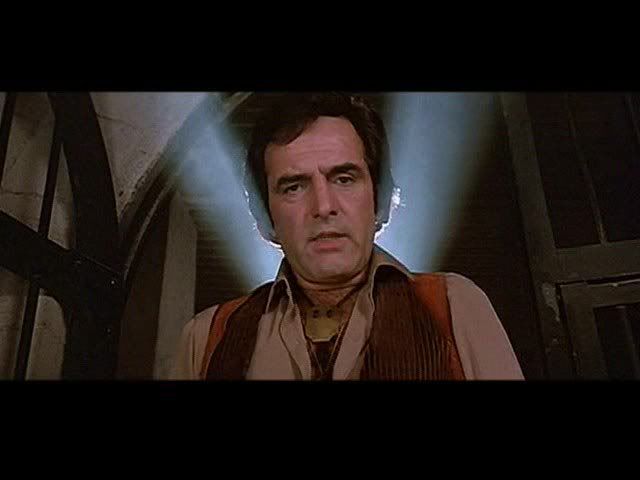
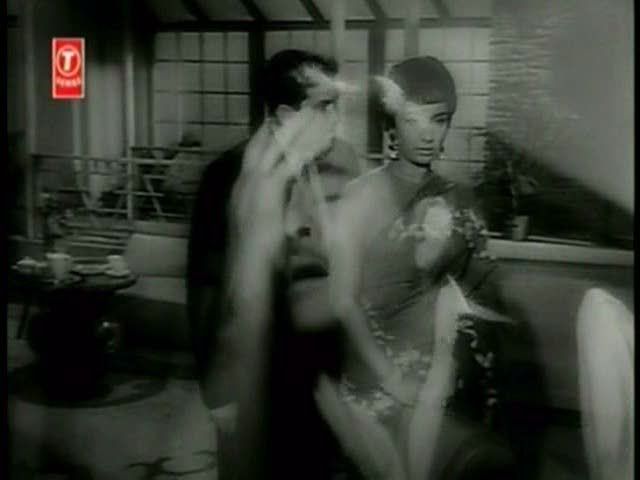
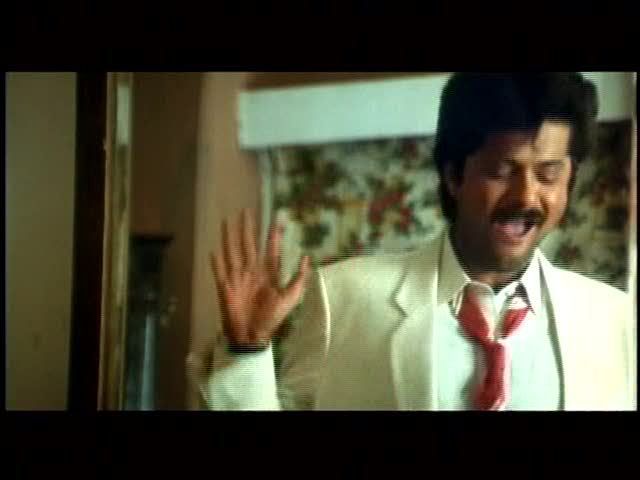
Feroz's frozen face, item 1: Interrogating a drug lord.
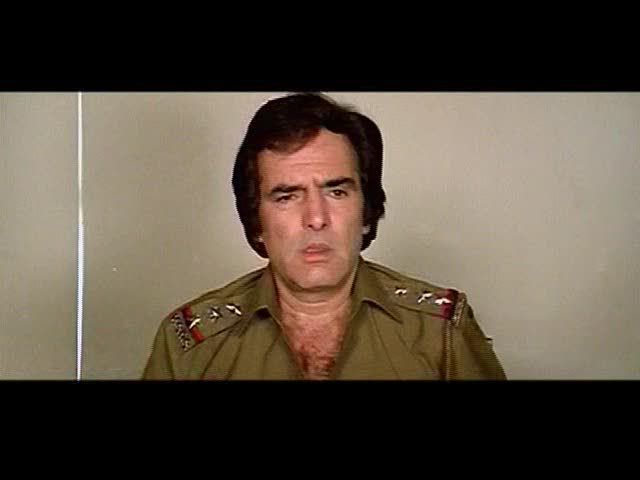
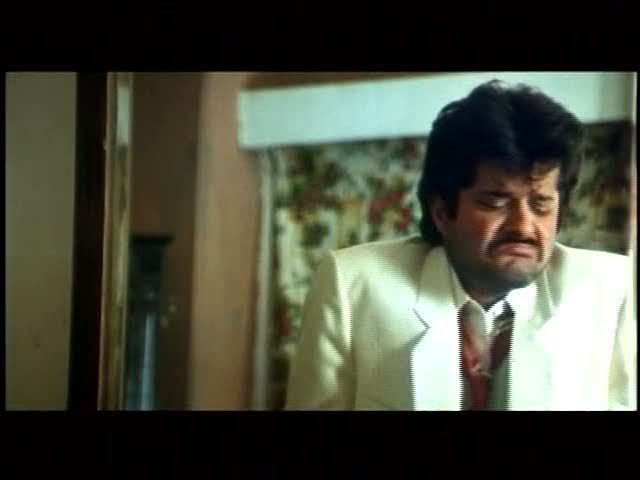
Item 2: hearing something horrible has happened to a loved one.
Anil Kapoor has the more colorful role and basically hams it up. He's already played a rated-PG Dionysus for comedy value in
Welcome, and he's always been very good at projecting maximum sleaze. Plus, his OTT performance style is perfectly suited to characters with tenuous grips on their serenity (and sobriety). Yay for Anil (again!)!
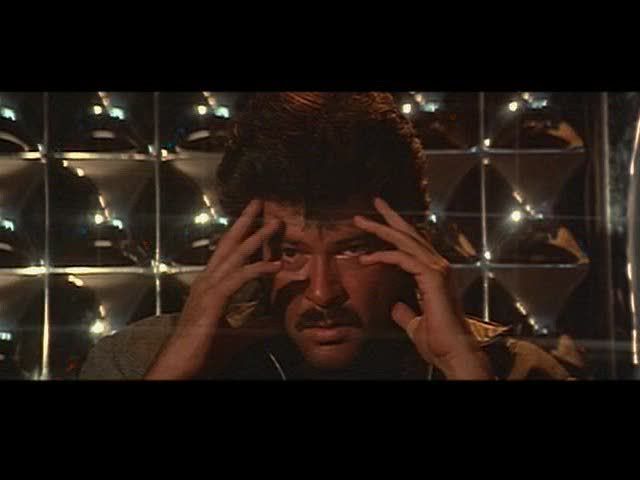
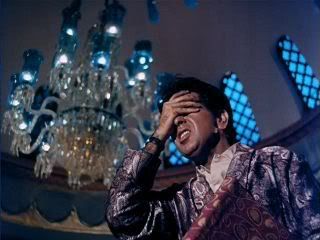
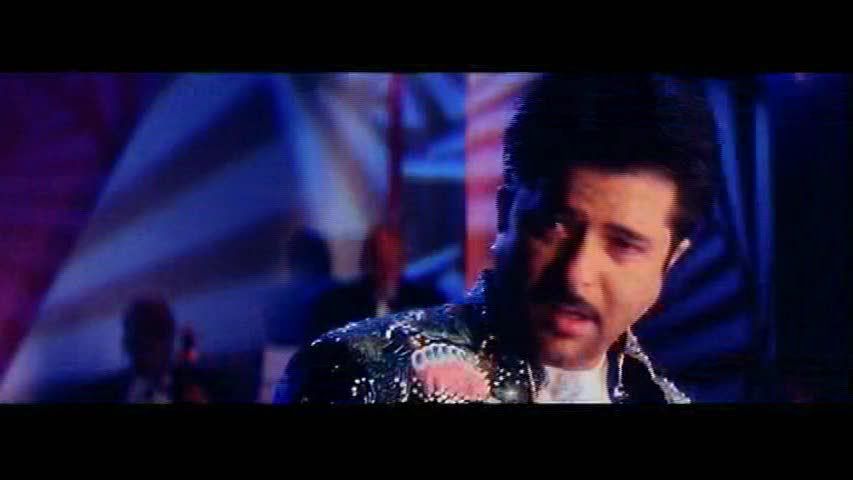
Dionysus doesn't feel too hot in chiaroscuro.
Dimple is new to the PPCC and, based on this debut performance, we give her two big thumbs up. In particular, she managed to find herself in a
very feminist-unfriendly role - the girl who falls for the chauvinistic
player and, later, the damsel-in-distress - and yet she manages to project strength, assurance and general badassness throughout the film. When she knees Shakti Kapoor during the dennouement - priceless. This girl doesn't need any help!
The standout performance though was Amrish Puri. He proved
again and again that he could play the bug-eyed villain, but in Janbaaz, he gets a meatier role. The patriarchal Rana is a complex, contradictory figure: lecherous on one occasion and gently loving on another, a rebellious hedonist who becomes morally indignant about illegitimacy, and very, very flawed. But - like Anupam Kher in
1942: A Love Story - this was a role we could get behind, a role that gave an iconic villain a chance to flex some of those hidden acting muscles. It gave Amrish a lot of room to maneuver, and his gruff, morally ambiguous father figure was the best part of the show.
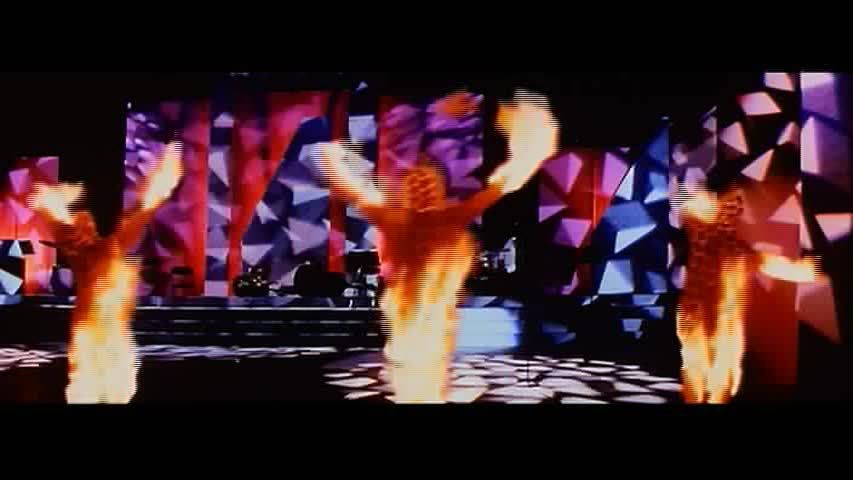
And finally, we should mention the aesthetics. Feroz Khan has taken a big lesson out of the Manoj Kumar School of Directing: hallucinogenic imagery (eggs exploding! hammers smashing into flowers! a cresting wave!) and INCREDIBLY BLUNT symbolism (wild, untamed stallions! the stud farm! passionate people literally catching fire!). He also seemed hell-bent on pushing the Hindi mainstream envelope. We all know about the roll in the hay by now, but there's also the overall theme of humanizing the immoral anti-hero and tough illegitimate daughter as well as the crazy amounts of on-screen drug use, violence and eroticism. This still doesn't get much further than an American PG-13 rating but it was, in a Hindi film, very unexpected!
Anyway, there's still more we could talk about - the Sufi presence was well-noted, and it would be interesting to compare Sufi and Dionysian aesthetics; also,
Rekha's WTF cameo - but we'll leave that for another day. Today, we can only encourage you to enjoy Janbaaz, but please, watch responsibly.