Saturday, 21 February 2009

PPCC on hold!

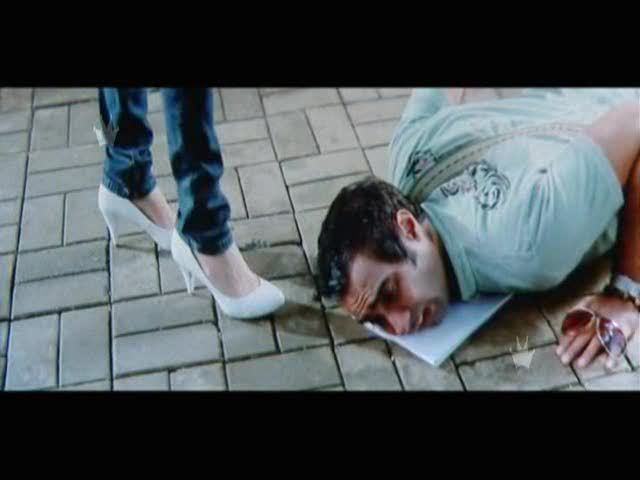
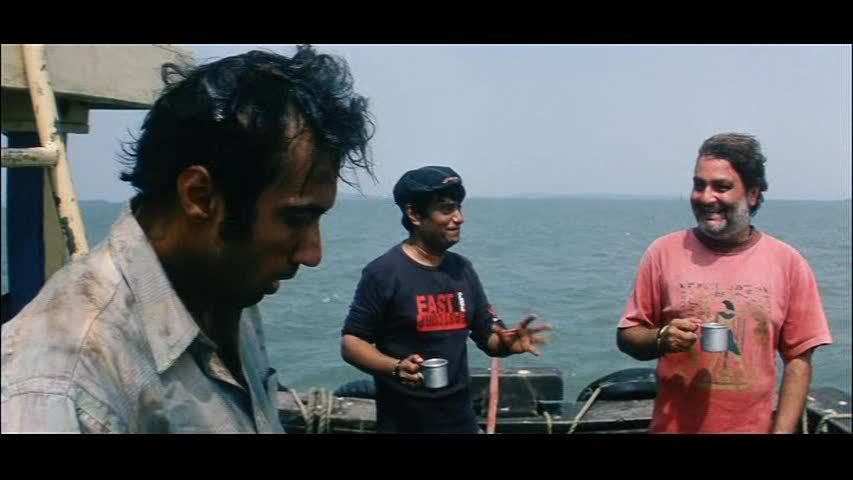
Alas, sad news, folks: the PPCC will be on hold for the next one or two weeks! We've been called to do some fieldwork, and it looks unlikely that Remote Village will have any internet.

We're sorry. We can just imagine your expression.


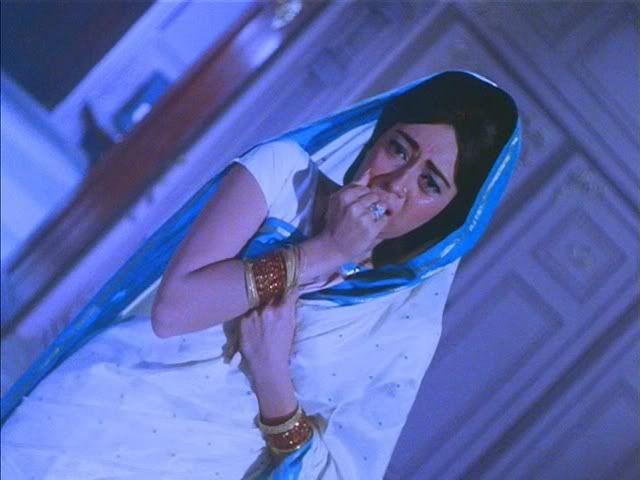
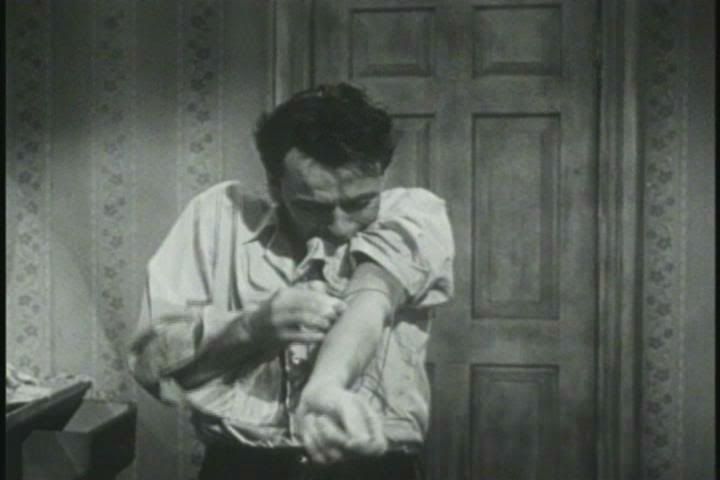
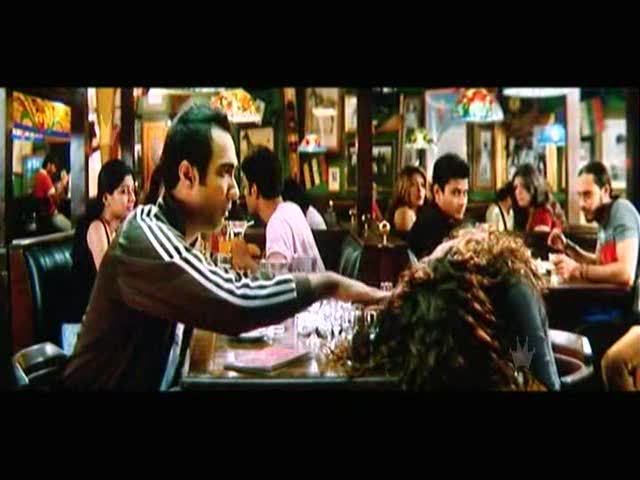
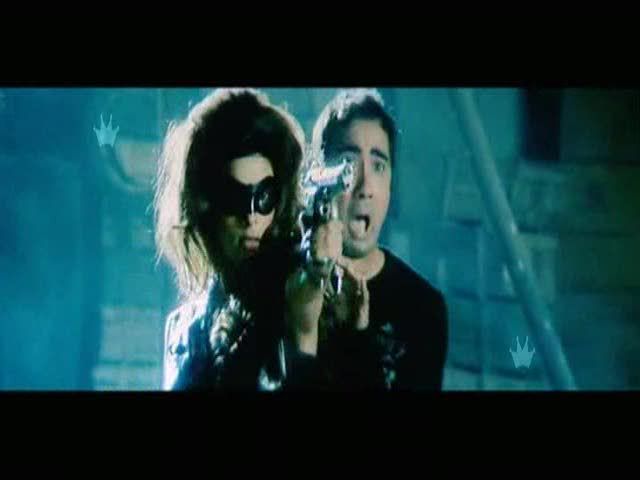
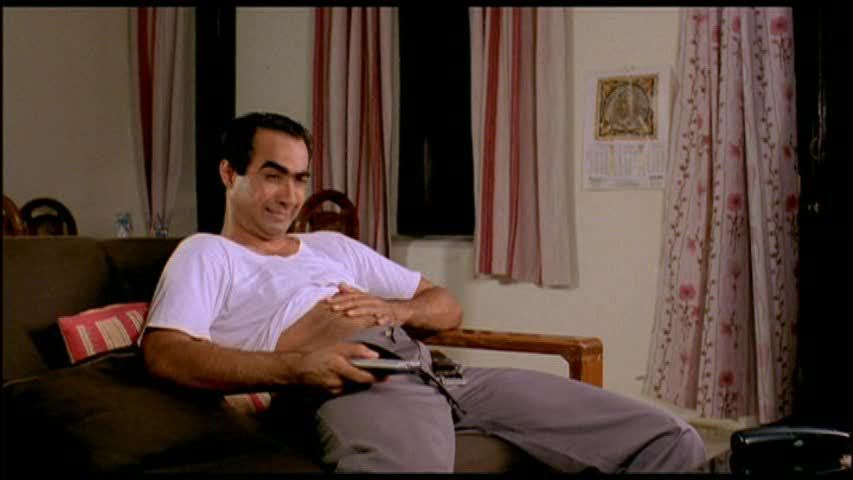
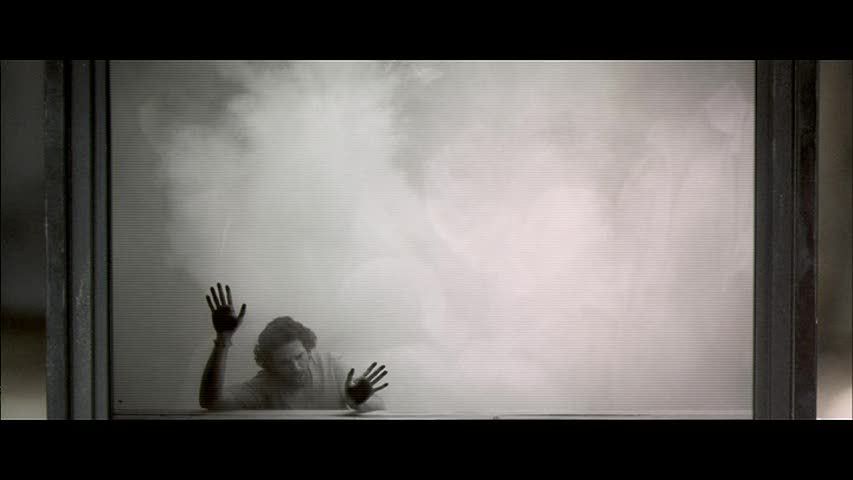
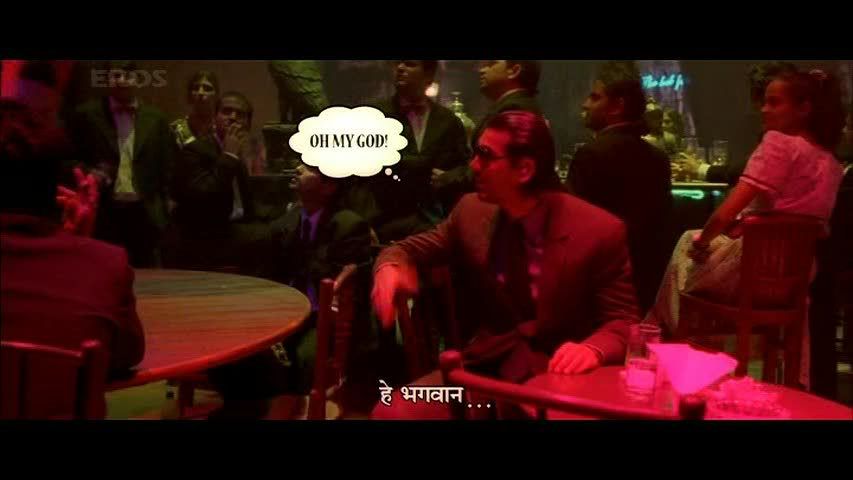
But before you resort to this...


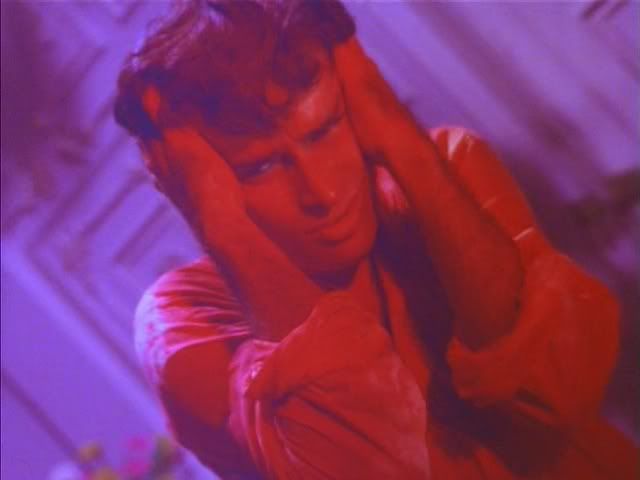
...or this...


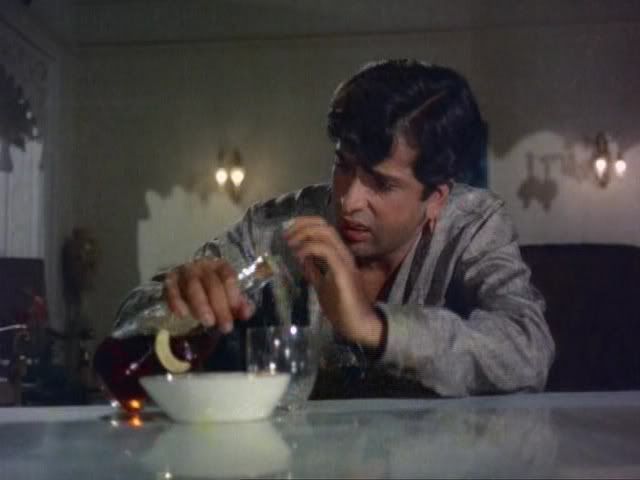
...we'd like to assure our loyal PPCC reader log that we will be back soon, barring any unforeseen natural disasters.

So what can you do in the meantime?! You can do anything at Zombo.com!

Friday, 20 February 2009

Delhi 6 (2009)

Tai: Do you think she's pretty?
Cher: No, she's a full-on Monet.
Tai: What's a monet?
Cher: It's like a painting, see? From far away, it's OK, but up close, it's a big old mess.
-Clueless (1995)


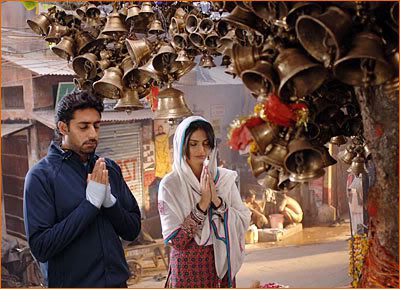
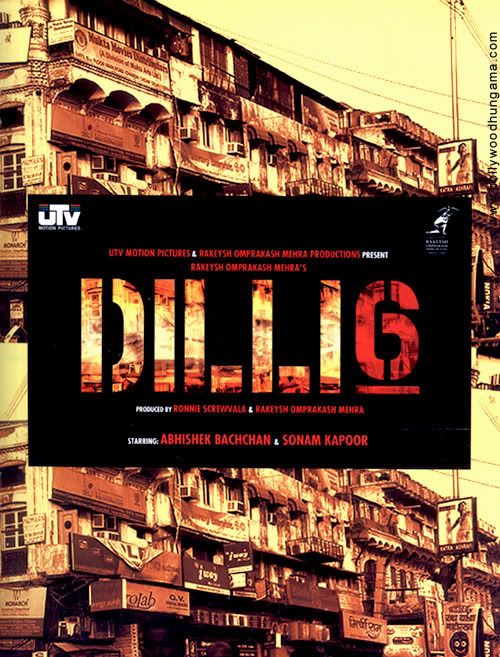
The sprawling, humanist Delhi 6 is a bit of a Monet. Sentimental and impressionistic, it's quite sweet when you step back from it. But, close up, it's a big old mess. The characters, while vivid, are rough sketches, and the tone swings wildly around - one minute, you're laughing, one minute, crying. Oh, the humanity!


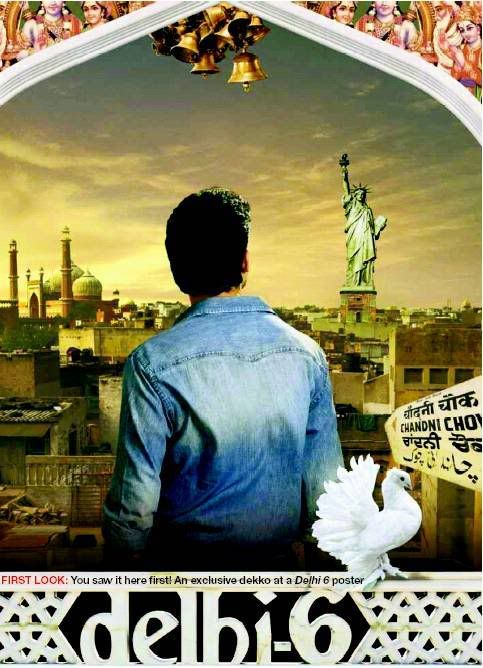
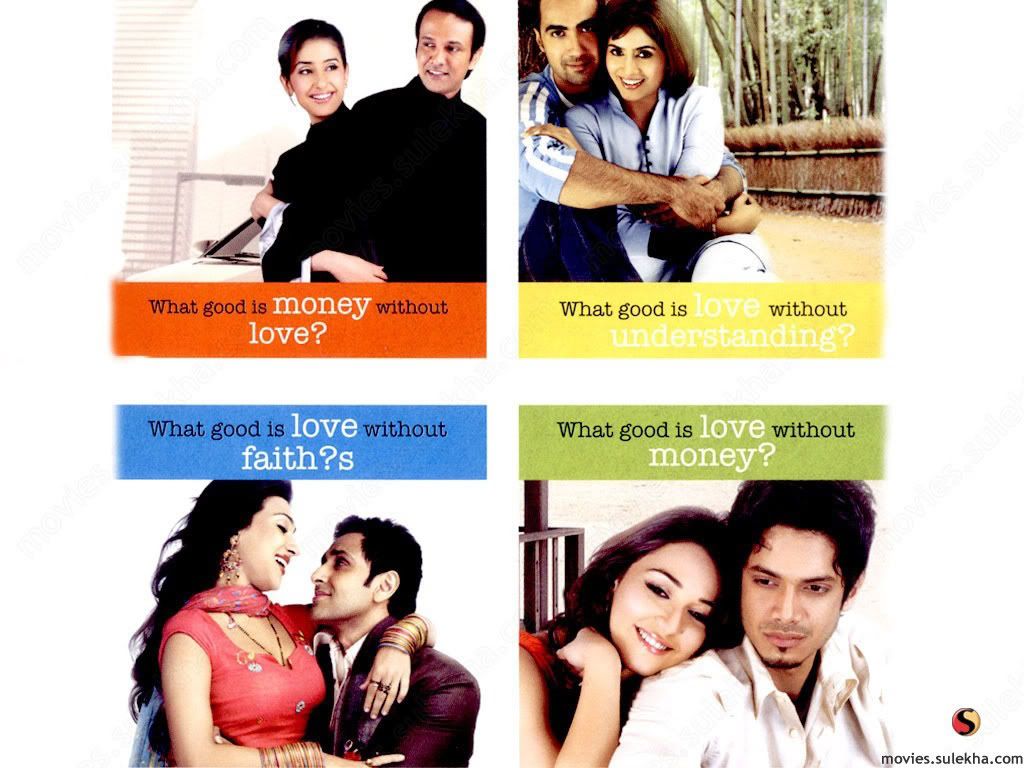
Lovely aesthetics though: great poster! But see how busy it is, too?! American, Indian. Hindu, Muslim. Dove, no dove!


If you give up trying to follow a coherent narrative, or being able to predict the emotional cues, it's enjoyable - in particular, its earnest humanism is endearing. Director Rakesh Omprakash Mehra has gone to great lengths to show humanity's light and dark in equal measure. He uses blunt symbolism - the Ramleela festival runs like a leitmotif throughout the meandering narrative, and scenes of Ravana cackling in front of flames are used to punctuate moments of drama. As if that wasn't enough, Mehra also uses the 2001 New Delhi "monkey-man" scare as yet another symbolic parallel of man's "dark nature". Personally, we liked the monkey-man symbolism more - it's certainly the first time we've seen urban lore used in such an innovative, aesthetic way! (That said, some of those Ramleela scenes were pretty spectacular too.)

The film is crowded with characters, each stepping over the other in a bid to get your attention. At the center of it all is American-born NRI Roshan (Abhishek Bachchan), who has brought his ailing grandmother (Waheeda Rehman, how about that!) back to Delhi's Chandni Chowk for her remaining months. But then there's: the aging, broken-hearted, paan-chewing Uncle Ali (Rishi Kapoor), the corrupt and lazy policeman Inspector Ramvijay (Monsoon Wedding's Vijay Raaz, long time no see), the fire-breathing and feisty Dalit Jalebi (Divya Dutta), the warring brothers Jai Gopal (Black Friday's Pavan Malhotra) and Madan Gopal (Om Puri), Madan Gopal's Indian Idol-dreaming daughter Bittu (Sonam Kapoor, daughter of Anil) and...

PHEW. Deep breath.

...the sleazy money-lender (Prem Chopra), the "village idiot" Gobar (Atul Kulkarni), the Muslim paan-wallah with the sensitive cheekbones Mamdu (Deepak Dobriyal), the woeful aging spinster Rama (Aditi Rao), a bunch of super-cheeky kids, a false Hindu sage ("God will make everything okay, okay?!") and loads of other people.


Abhishek Bachchan was his usual Americanized self. Sonam Kapoor was gorgeous, but clearly inexperienced.


This film is about ALL of these people, so you can imagine: there's no space for a story! Everything interweaves, spirals, bumps into and wanders. We see quotidian joys, sorrows, fears. It is to director Mehra's credit that he truly captured the crowded, jostling busyness of one of the most notoriously crowded and busy country's most notoriously crowded and busy neighborhoods. It is also heart-warming to see the mundane, even decrepit aspects of the buildings and our inner selves painted in such loving, compassionate detail.


The fussy detailing of life in Chandni Chowk was great, and thanks for including all the humanity, Mr. Mehra! This was a refreshing change from the lonely, depopulated Chandni Chowk in Black & White, another film which used the neighborhood as a harmonious communalism-free, casteism-free, ism-ism-free microcosm of India.


However, this enormous canvas also works to Mehra's detriment: it's just too large. While a sense of humor is great, sometimes the bittersweet, humorous undertones undermined moments of serious drama. And the symbolism was also often bluntly vocalized: we get it, sir, we get it!

For example, there's a scene when the daydreaming Bittu laments her inability to break free from the confines of her conservative home: the arranged marriage, the predetermined traditionalist life. Already likened to a dove in the earlier song Masakali, the characters then directly vocalize the parallels: just like the dove, Masakali, had her wings tied by the loving, overprotective Madan Gopal, so too is Bittu tied by the loving, overprotective Madan Gopal. Sheesh. A less sledgehammer-like scene (though still pretty blunt) was when Madan Gopal arranges Bittu's marriage at the moneylender's: the men interlace their conversation with a discussion on selling cars, while a television blares the latest stock exchange announcements. There were some scarce moments when Mehra's touch was lighter - such as when the feuding Madan Gopal and Jai Gopal are likened, via only a few lyrics and tasteful cuts, to the feuding Ram and Lakshman, or when the aggressive female politician is likened to Durga. But alas, these moments are all too rare. We even get a West Side Story-style final monologue, complete with a "moral of the story". Oh, the humanity indeed!

In conclusion: impressionism is nice, but it's also nice in small doses. Next time - and our previews included the most excellent-looking trailer for Vishal Bharadwaj's Kameenay, starring a sleazified Shahid Kapoor - we'd like something a bit more humble in scope and clear-sighted in vision. As an occasional treat, this will do.

Monday, 16 February 2009

Billu (2009)


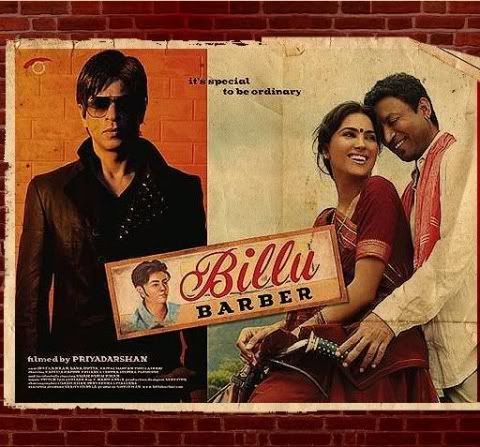
After all the glowing praise Billu (formerly known as Billu Barber) had been receiving from our trusty blog colleagues, Filmi Girl and Beth, we're a little disappointed to be coming to you as the Grumpy PPCC. Because here's the truth: we squirmed through Billu. We checked our watch. We waited for it to end.

The main problem, we reckon, is that Billu comes at the wrong time: during a veritable glut of films which tackle the exact same themes. Things like the mesmerizing, paper-thin world of our Bollywood dreams, the insanity of Shah Rukh Khan's fame, and the nobility of the common man have been tackled, with more subtlety and wit, in other films. For example, Om Shanti Om and Luck by Chance already addressed the mystique of Shah Rukh Khan and Hindi commercial films - the former via worshipful parody, the latter via a cynical satire. And the last properly masala film we watched - the early Anil Kapoor vehicle, Saaheb - told the same moral ("ordinariness is great!") in a more meaningful, touching way. In Billu, after the usual 2.5 hours, an ordinary nice guy was embarrassed and then, finally, acknowledged. The end.


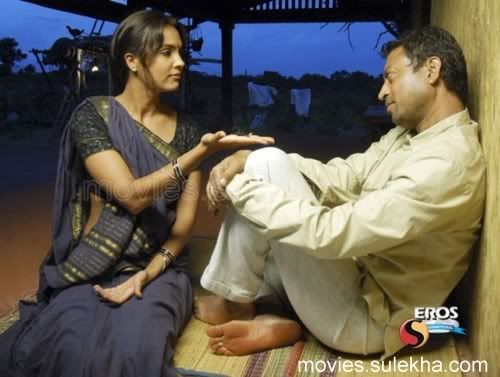
Nice, simple Billu (Irrfan Khan) and his wife (Lara Dutta).


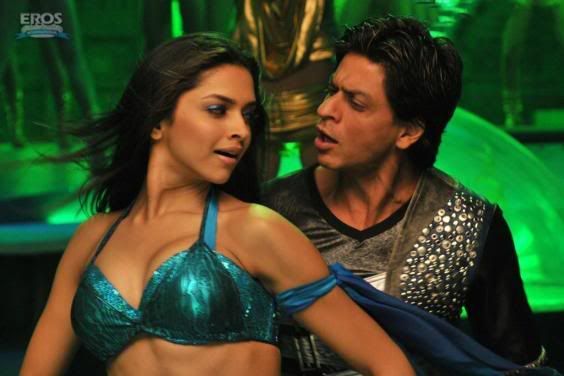
Nice, glamorous Sahir Khan (Shah Rukh Khan) and his co-star (Deepika Padukone).


Based on the friendship between Krishna and the humble Sudama, the story transposes things to a modern-day setting: Krishna is now the Bollywood superstar and SRK parody, Sahir Khan (Shah Rukh Khan), while Sudama is the humble village barber, Billu (Irrfan Khan). Although Billu has a gorgeous wife (Lara Dutta) and two cheeky little kids, he's got nothing but tension: his barbershop is losing business to the place across the street, the town big man (Om Puri) hassles him, his amateur poet friend (Rajpal Yadav) won't stop reciting his half-baked poems to him, the electricity just got cut and the kids are going to be thrown out of school if the fees don't get paid.

Next thing he knows, Sahir Khan and his entourage small army of acolytes and screaming fans descend upon the town for a film shooting. Soon, the sleepy hamlet is whipped up into a frenzy of celebrity worship and news of a long-past friendship between Billu and Sahir increases the excitement to a fever pitch. Everyone wants Billu to introduce them to his glorious Sahirness, while Billu is reluctant: will Sahir even remember him?

The story is straightforward, with few surprises. For this reason, it felt protracted and thin to us, with overly blunt symbolism. We know how it's going to end - the tagline pretty much gives it away - and so it's only a question of going through the motions. No great philosophical insight is given into why Billu's ordinariness should be preferable to Sahir Khan's glamour: both Billu and Sahir are pretty much regular, decent guys. The film seems to be saying that common kindness goes a long way, longer than celebrity, and it shouldn't be overlooked. But then - Billu's not the saintly, mini-bodhisattva that was the title character of Saaheb, another film which glorified the mundane (to much greater effect). He's just... nice.

Filmi Girl made some very interesting notes about the nature of icons and fame, but this isn't the film first this year to show us the vulnerability of unmasked celebrity. Luck by Chance, which we prefer to Billu, addressed the same issues via the scenes where superstar Zafar Khan (another meta-performance, this time by Hrithik Roshan) laments his status as an "image" and via the small, humane details of his day-to-day reality (his scene mugging to the children from his car window).

Thin plot, thin themes and next, thin characterizations. Alas, everyone just seemed one-dimensional to us: we started yearning for the complexity of Rishi Kapoor's aging, vulnerable producer from Luck by Chance, Romy "VOLCANO of talent! (write that down!)" Rolly. The acting was everything expected from everyone involved. Irrfan Khan was dependably believable, though, if we really wanted to emphasize Billu's noble loser-ness, Ranvir Shorey would have been more fun - hello, Mohan the chaiwallah! Shah Rukh Khan was playing, yet again, a parody of himself and, alas, we only felt feeble sparks of the SRK magic during those gargantuan songs. Is the spell broken? (Nahiiiin!) Lara Dutta and Om Puri are two actors that we find ever-lovable, but Lara didn't have much to do and Om Puri was misused (poor Om).

And even director Priyadarshan's cinematography was often a direct copy from Virasat! I swear, that's the same village! And that shot of the long line of carts on the curved path with the mountains in the distance?! Hello, end of the Sun Mausa Sun Mausi song!

So after all this disappointment, can we find anything positive to say? Yes! The songs were pretty grand, and the self-indulgent spectacle was a welcome respite from all that monotonous trudging through the "does Billu know Sahir really really?" village dialogues. Also, interestingly (because of the Krishna-Sudana undertones), all the songs referenced God directly - while the most spectacular song's refrain was "mar jaani mar jaani" (which our subtitles translated as, "they can go to hell!").

Edited, after a chocolate: Okay, here's another good thing: while Priyadarshan may have recycled some shots and the setting, he did have a lot of fun in some scenes - especially during the Sahir Khan sequences. That rock concert was a hoot, and there's am impressive long take of Shah Rukh Khan struggling to contain his pain when a local amateur actor massacres his single line of dialogue. Long takes are always notable, and it was fun to see how Priyadarshan films SRK's reactions rather than the bumbling amateur actor: it gives SRK a chance to show off his underused (at least in films), slightly edgy and subtle sense of humor.

Saturday, 14 February 2009

Black Friday (2004)

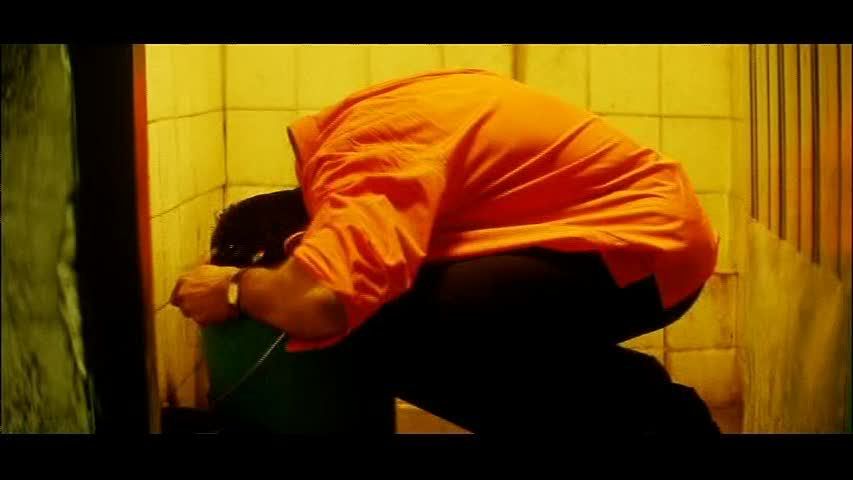
The relentlessly dark, hyperrealist Black Friday whittles everything down to its most raw and still manages to be incredibly complex and emotionally intense. Director Anurag Kashyap presents the 1993 Mumbai bombings without embellishment, and yet the film is very rich in detail and implied depth. Scenes such as the wandering, fugitive terrorist's lingering stare at a dog being teased by his master, or the harried police inspector dunking his head in a bucket of water to silence the screams from the interrogation room are like stark punctuation notes in this film. Some scenes, such as the interrogations or the communal rioting, are almost too intense to watch.


Pavan Malhotra as Tiger Memon, the terrorist mastermind.


Kay Kay Menon as Rakesh Maria, the police inspector.


The film doesn't follow a standard narrative, nor does it have any central character. Instead, we follow a large ensemble of players on both sides of the investigation, while the story loops around, flashbacks and jumps forward, becoming a sprawling documentary of the bombings. The first half of the film is mostly concerned with Inspector Rakesh Maria's (Kay Kay Menon) investigation into the men responsible for the blasts. This quickly brings us in contact with the group of fugitives. In particular, we follow Badshah Khan (Aditya Srivastava) as he flees through the villages and cities of Uttar Pradesh, Rajasthan and Bengal, constantly chasing the promises of his leader, the orchestrator of the blasts, Tiger Memon (Pavan Malhotra). It becomes increasingly clear that Memon, who has since fled Mumbai for Dubai, has abandoned the men who worked for him. The film is then book-ended with scenes of the blasts themselves and a quote from Gandhi: "An eye for an eye makes the whole world blind."

This film makes for heavy viewing: it is chilling, disturbing and sans any sort of optimism. Torture is presented in a disturbingly real light, yet it is not excused, as the police are constantly confronted with the inhumanity of their work. Similarly, the flat ultrarealism doesn't sympathize with or accuse any of the characters: for example, we spend quite some time with Badshah Khan, one of the bombers, at his most vulnerable. Yet he is never repentant, so much as angry at Memon for having deceived and used him (this theme of terrorist puppeteering has also been explored elsewhere in Hindi cinema).


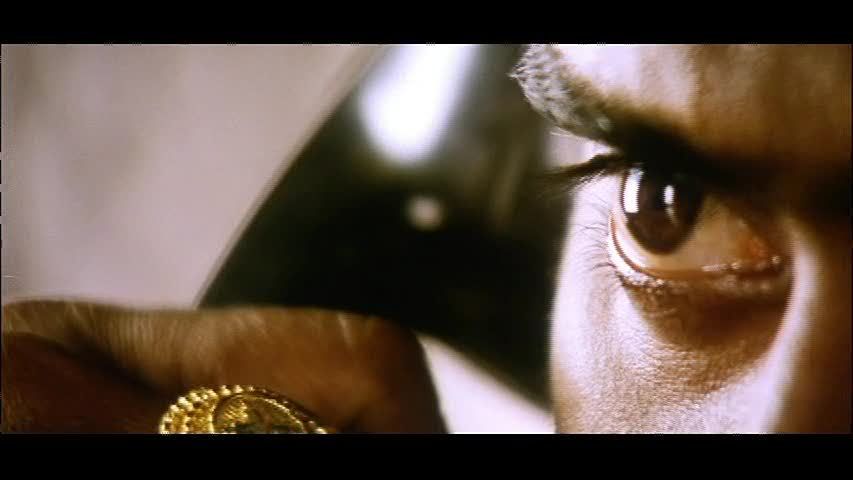
Director Anurag Kashyap had a great way of creating a sense of claustrophobia: using super-tight close-ups...


...or just small, restrictive spaces.


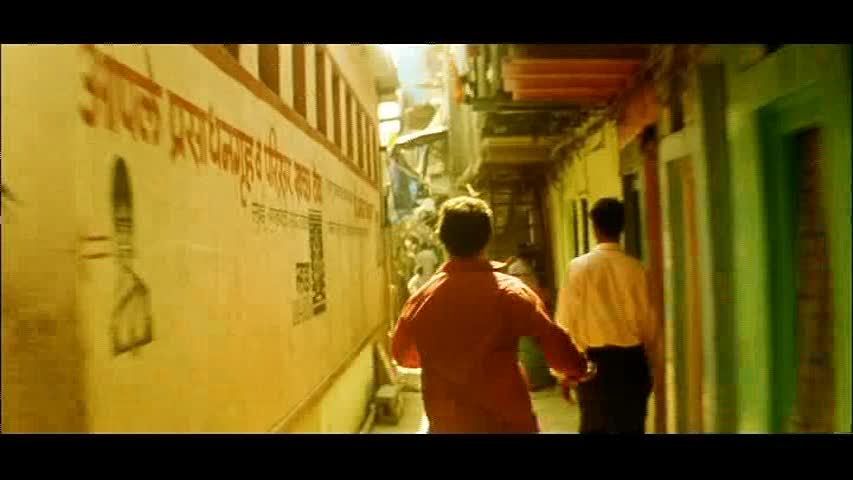
A notable thing about this film, apart from its obvious historical importance, is its role as an aesthetic predecessor to the much fluffier, much lighter Slumdog Millionaire. Slumdog's director, Danny Boyle, has said that the iconic "O Saya" chase scene from Slumdog was a direct tribute to the similar chase scene in Black Friday. (Indeed, both were filmed in the Dharavi slums and - in one brief moment - we see two little boys run past the fleeing suspect. Could those two have been Jamal and Salim?) Given that we at the PPCC think that the "O Saya" scene is the moment when most audiences fall for Slumdog, it's funny to hear that it's actually a remake. (There are other visual relics from Black Friday in Slumdog Millionaire - it seemed that Danny Boyle shot in the same locations (e.g. the underground passage).)

It goes without saying that, in a film like Black Friday, the acting is great. We only knew Kay Kay Menon - who was wonderful - and this one guy, who barely had a line. The other two main performers were Aditya Srivastava as Badshah and Pavan Malhotra as Tiger Memon - both of them were notably good.


The famous chase scene in the Dharavi slum, which inspired the similar scene in Slumdog Millionaire.


Overall, this is an exhausting, informative film that covers an important historical event in much more blunt detail than the relatively more evasive Bombay, which was reluctant to point any fingers. Black Friday names names and doesn't avoid the gruesome realities. Director Anurag Kashyap made interesting comments regarding the "overhype" of Black Friday, and we agree with him: "Black Friday is not a great film, it's an important film...it's a necessary film." The cinematography and visuals are gorgeous, but the film is really much more concerned with its content than with any groundbreaking filmmaking. And for its content, we highly recommend it.

Ugly aur Pagli (2008)

Back when we saw Ugly aur Pagli (Ugly and Crazy) on a tiny, flickering television on a semi-deserted island, we had only one significant criticism: it tries too hard.


Wake up, Mallika, the review has started.


This is hardly damning, as surely it's better to try too hard than not try at all. And the worst thing Ugly aur Pagli does is proclaim its quirkiness loud and clear when, in many moments, a lighter touch would have been better. Rather than narrating the odd adventures of Kabir (Ranvir Shorey) and Kuhu (Mallika Sherwat) via a relentless voice-over, it would have been far more effective and fun to let the story speak for itself. Indeed, the best part of the film is the last half hour, when Kabir finally shuts up and lets us watch in peace.

But maybe our criticism is missing the point, as Ugly aur Pagli is a veritable celebration of the ignored, imperfect, weird couples out there in the world. The ones that aren't chocolate box fluff beings from the Planet Perfect. The ones with pimples and drinking problems. And it wants to PROCLAIM this quirkiness IN CAPS (including from a skyscraper's rooftop). Beginning with the very first frame, being different is celebrated: while a tinkling anti-filmi indie anthem plays, we see snapshots of quirky love in all its guises. A pair of transvestites. A lesbian couple. A dwarf and his average height girlfriend. It is, thanks to the music and gentle affection on display, oddly touching. And a good start to a story about a loser "ugly", Kabir (Ranvir Shorey), falling in love with his aggressive, binge-drinking "pagli" friend, Kuhu (Mallika Sherwat). When Kabir first meets Kuhu, she vomits all over herself. As they become friends, she slaps him repeatedly and challenges him to outrageous dares (such as wearing her stilettos across a busy Mumbai intersection). Kuhu is loud, combustible, feminist and angry. She writes action-packed screenplays about heroines saving their wimpish heroes from disaster and expresses her growing affection for Kabir by dragging him around by his shirt. The wimpish, bewildered Kabir spends most of the time scrambling to keep up with her wild mood swings and impulsive decisions. It's only when the two are separated that they, and we the audience, realize how meaningful their attachment was.


The dominatrix stuff was sometimes tiresome...


...but the action heroine fantasies were hilarious.


Much of the film's humor is tiresome and forced (though we did laugh very hard at Kabir attending swimming lessons, for some reason), and many have criticized that the movie's transfer from Seoul to Mumbai lost a lot of... soul (ba-dum-shhhh, thank you, thank you very much). Indeed, this movie is saved almost entirely by the performances of the two leads. Mallika Sherwat and Ranvir Shorey both work their particular brands of offbeat, unconventionally attractive performers perfectly. Both known for envelope-pushing work - they each made their debuts in racy films (Khwahish for her, Ek Chotisi Love Story for him) - they seem to be teasing this image as much as they're exploiting it. At least, the S&M vibes were strong (the DVD menu features whips and handcuffs!). Furthermore, they're both playing to their image of fiery, free-spirited pagli for her and sensitive loser for him. What can we say? We love these two just like that. And so the film - despite its flaws - works because of them.


The drinking buddy song! Featuring Punjabi rap artist Hard Kaur, which definitely upped the film's street cred. If you want to kick it old school, see Naina's excellent drinking buddy anthem, Jane Mujhe Tune. (No, we will never stop plugging that song.)


We also just appreciate quirkiness on a philosophical level. Yay quirky! Yay different! Because of that, and the heart-squishing finale, we put this film in the Decent pile. We'd like to see more of the same from Bollytown, just with a bit more polish next time.


Oh, you two.

Monday, 9 February 2009

Sirf (2008)


The excellent premise of Sirf - the idea that, as the Zutons say, everyone's got problems, everyone's got stress - is unfortunately quickly ruined by behavior so unrealistic we wondered if these people even CAME FROM THIS PLANET.

But, alas, what little fun we had reinterpreting Sirf as a sci-fi odyssey didn't compensate for the spork-inducing ridiculousness of this movie. This is a damn shame. The set-up is fantastic: welcome to big, bad Mumbai! And meet four couples, each facing their own believable problems and each comprising two vulnerable, imperfect individuals. First, there's the puppy love couple (Ankur Khanna and Nauheed Cyrusi), anxious to get married and set up their perfect home. Next, there's the working class couple (Ranvir Shorey and Sonali Kulkarni) with the seriously ill daughter, trying (and generally failing) to juggle hectic work schedules with quality home time. After them, the newlyweds (Parvin Dabas and Rituparna Sengupta) encountering city-versus-country cultural tensions (she copes about as well as cheese copes with vanilla ice cream). And finally, the wealthy, middle-aged couple (Manisha Koirala and Kay Kay Menon) who flirt with adultery, workaholism and suspicions.


Parvin Dabas, Manisha Koirala and Rituparna Sengupta.


The cute Ankur Khanna.


Basically, the plot's originality and initial appeal (for us) was in the first two couples: the experience of the young couple who just gets excited shopping at Ikea together is rarely seen in film, and it was engaging and cute. The husband-wife dynamic between the working class couple was also well-done and believable. Once we got into the two more cliché couples - the culture clash couple and the middle-aged bored couple - things took a telenovela turn, complete with melodramatic lines such as: "He was out eating paani puri with that witch!" Ay Dios mio! Es todo muy ridicolo.

The similarities between this and other "humanity quilt" films is notable. As with the other films in this genre, we follow a large number of seemingly only tangentially-related couples through their personal turmoils which become more and more entangled. If you'll allow us to be glib, Sirf's role in this long, illustrious line of quilts can be summarized as follows:

An interesting idea! Indeed, the four stories are linked by one character admiring the next couple and literally thinking, "God, I wish I was like them..." We then get to follow that envied character to their own very imperfect home life. It seems everyone's pretty far from domestic Elysium!


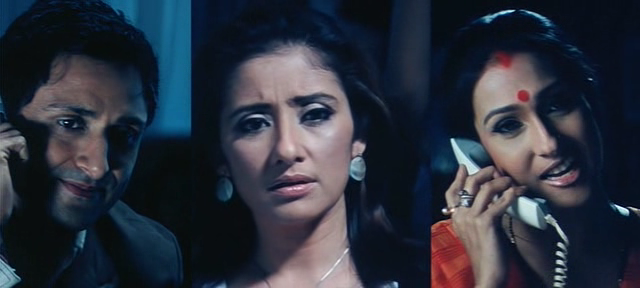
Is Kay Kay Menon crying because he lost his mobile?


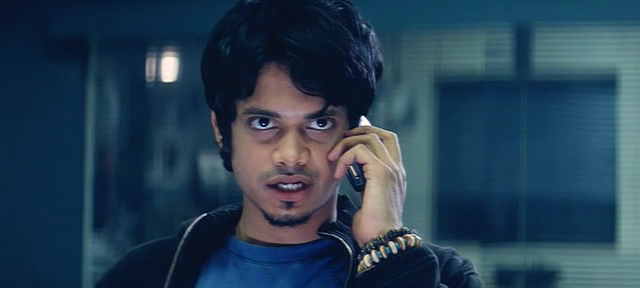
Ranvir Shorey trying - TRYING - to make sense of his climactic scene.


Some minor spoilers...

Yet what ruins this film is the outrageous behaviors and a script which strains credulity. For example, when the film wants to show us the culture shock the naive country wife gets when she attends her new husband's birthday party, it does this by having the husband's birthday cake shaped like a pair of breasts. All the "city people" laugh and jest about this but the PPCC couldn't help but think: Who ARE these people!? Does anyone actually buy boob cakes? Even jokingly? What is he turning, twelve?! Or what about the parents who talk with their doctor about their eight-year-old daughter's chances of surviving a risky surgery... in front of the daughter. (?!!) And that same doctor who, when tragedy strikes, goes, "Well, I told you so!" WTF?!

And then - icing on the boob alien people cake - just listen to this:
  • Wife suspects husband of cheating and is generally tired of husband's workaholic nature.
  • Husband is, when present, attentive, sensitive and upbeat.
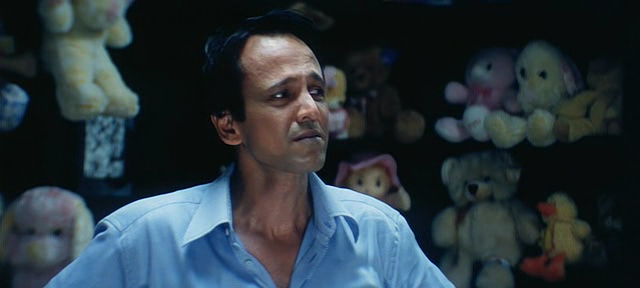
  • One day, during a work meeting, husband is told that wife is pregnant. He flips out with joy! He buys a million toys! When wife comes home, husband has buried himself in a pile of stuffed animals and declares that, paraphrasing, "This half of the room is for me junior, that side of the room is for you junior."
  • Wife declares she has had an abortion.
  • A distraught husband expresses concern: "Were there complications?! Are you okay?!"
  • No, wife says. No complications. She just didn't want to bring a being in the world with such an absent, workaholic father.

What?

What?!!


It's a good thing the PPCC was sitting down for that one, otherwise we would have had a Ranvir Shorey-esque collapse of pure SHOCK.

Which segues nicely into the performances, which were uniformly strong. At least, all these talented actors - Manisha, Kay Kay, Ranvir - were clearly trying very hard with the material they had. Kay Kay Menon's elation and despair in the scene we described above was well-done, as were moments when we saw Manisha's weary hurt at being ignored. We look forward to seeing more from the young 'uns, Ankur Khanna and Nauheed Cyrusi. If we had been more invested in Ranvir's storyline, we probably would have cried in the end, rather than just admiring his technical ability in a cold, hard shell-of-a-PPCC way. The most uneven couple were Parvin Dabas and Rituparna Sengupta. Their story, which began earnestly, slowly devolved into straight dramedy TV serial-style acting: Rituparna Sengupta seemed to morph into someone fresh off the saas-bahu drama set, while Parvin Dabas became the bumbling, put-upon husband. ¿Por qué, filmmaker, por quééééééé? (Side note but Parvin Dabas, who we last saw in Monsoon Wedding, was a revelation: that man was like a cross between Abhishek Bachchan and Shashi Kapoor. Beth, get thee to his movies! ¡Andalé!)

Alas, we can't really recommend this one. The best part about this film was the complementary can of ice-cold Coca Cola that the DVDwallah gave us when we cleared his Ranvir Shorey stock.

Edited a few hours later, after baking a chocolate cake: Forgot something! A pleasant surprise in this film was the occasional use of Western classical which featured, in particular, our two favorites: Philip Glass (!!!) and pieces from Yann Tiersen's soundtrack for Amélie (including possibly J'Y Suis Jamias Alle or Pas Si Simple - anyway, one of the delightful accordion-heavy ones edited like two minutes later: NO! It was definitely Les Jours Tristes... okay, done now, for real). What a weird surprise! We've seen Western classical used in Hindi films before - Parinda and 1942: A Love Story - but never has it been with such TASTE. Yay Philip Glass! Yay Yann Tiersen!

Bheja Fry (2007)

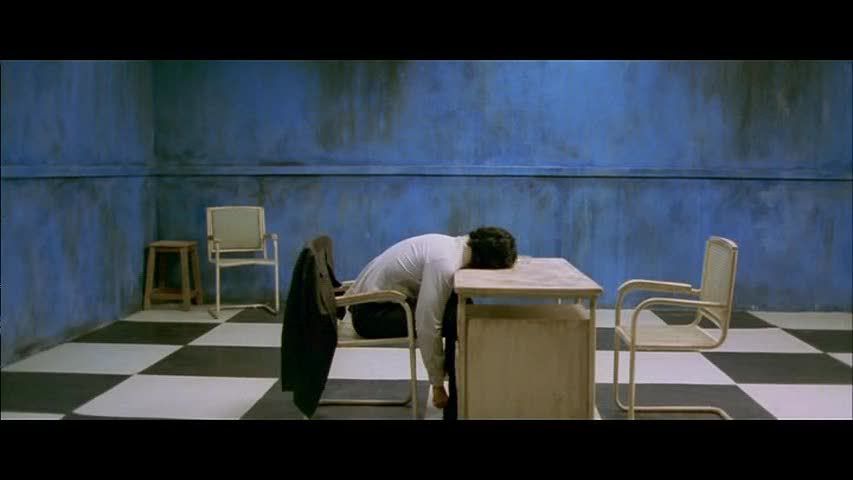
Bheja Fry is a short, light fluff piece of a comedy - zipping by at 90 minutes and yoking more occasional chuckles than full-on belly laughs. Far from a perfect film - the pacing is often stilted, with some of the actors stepping on each other's cues and losing the comic timing - it is nonetheless enjoyable and cute. It's also refreshingly indie - something we always appreciate in Hindi filmmaking and indeed our latest flavor of the month here at the PPCC (after the wonderful Mithya and the freaky No Smoking).


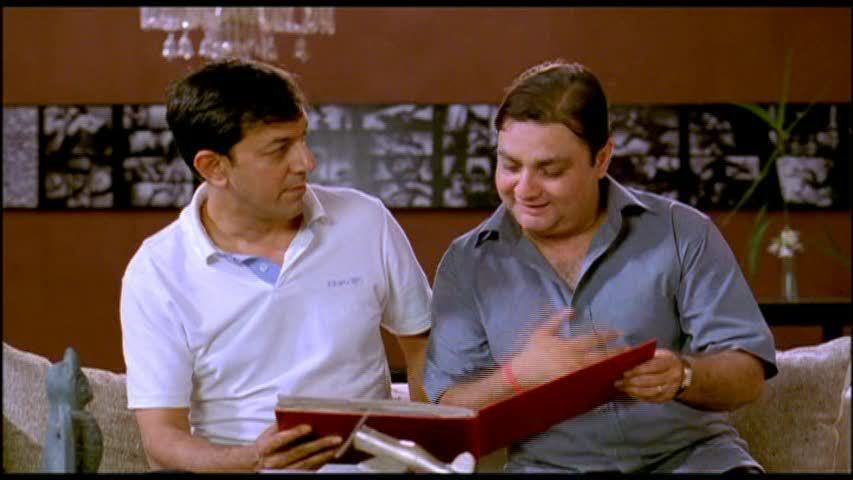
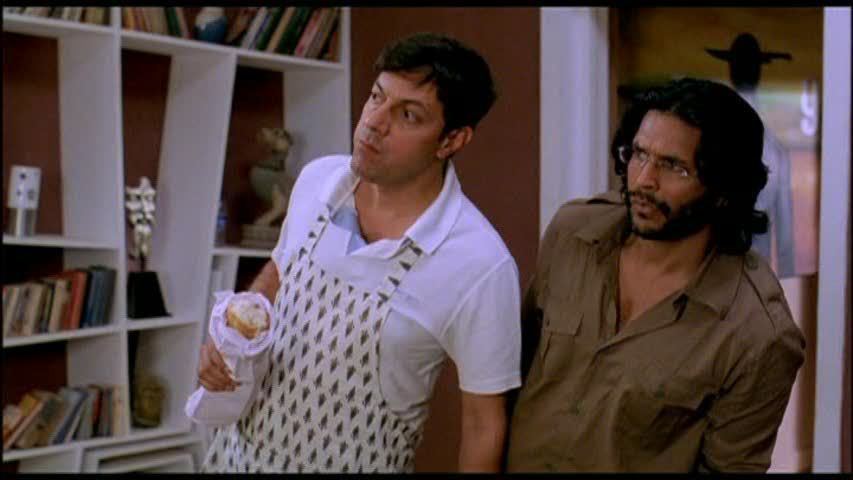
Rajat Kapoor and Vinay Pathak.


When we were thinking of how to review this, we kept thinking: "What's the word for French humanistic comedies?" We just thought we were assigning it a French vibe because we've got Mathieu Amalric (and Giancarlo, wheeeee!) on the brain today. But then we saw that our instincts were right: Bheja Fry is a remake of the French film, Le Dîner de cons.

Meet Ranjeet (Rajat Kapoor). Ranjeet is a wealthy music producer who enjoys humiliating half-baked talents at his weekly "singing competition" dinner party. Basically, he invites his friends round and hand-picks one glaring "idiot" to perform for them. Ranjeet's wife, Sheetal (Sarika), is a successful singer who disapproves of Ranjeet's cruel habits. This week, Ranjeet has found his latest "idiot": the sweet, excitable, aspiring vocalist, Bharat Bhushan (Vinay Pathak). After inviting Bharat to his home, Ranjeet meets with an accident and pulls his back. The chiropractor (surprise cameo by Tom Alter!) advises Ranjeet to call off the dinner party, but Ranjeet - after meeting the buffoonish Bharat and having Sheetal angrily walk out of the house - can't resist. He invites Bharat to stick around. Bharat, observing the marital strife, offers to help. The two are then joined by Ranjeet's friend, hipster music producer Anant (Milind Sonam), and Bharat's friend, über-nerd Asif (Ranvir Shorey, in a very hammy performance). Wacky hijinx ensue.


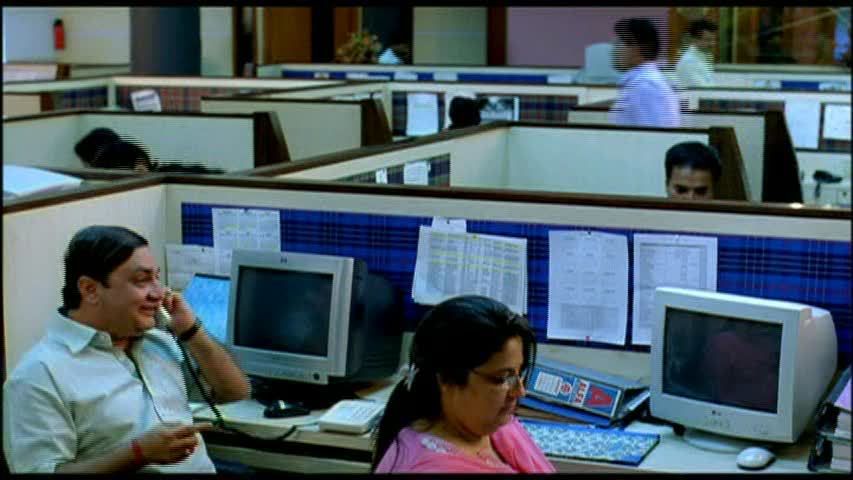
A nice grace note: Bharat's funny and adorable work friendship with his cubicle-mate.


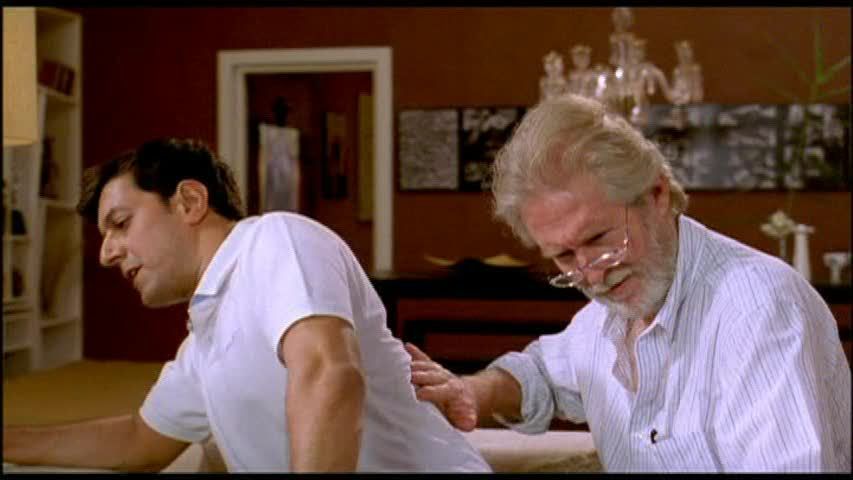
Whoa! Tom Alter showed up! And, for once, we hear him speaking English (with an American accent - interesting! We thought he'd have an Indian one)!


Most of the gags are low-key and filled with a sort of childlike glee. Bharat keeps convincing Ranjeet of a number of silly plans to prank call all the possible men Sheetal could have potentially fled to. There's also an underlying current of humanistic heart-squish, as the audience clearly sides with the unknowingly-victimized Bharat, who is so open-hearted and adorable. Poor Bharat! Don't hurt him, evil Ranjeet! All he wants to do is sing for you! In fact, amidst all the yelling, there are even unexpected flickers of warmth between the bastardly Ranjeet and Bharat. Memsaab mentions her favorite scene as being Bharat's impromptu lullaby to Ranjeet - and it's ours too! Very funny. For a film about mean-spirited mockery, this film's style is instead quite forgiving and gentle.


Ranvir Shorey just sails in on the good ship crazy in this one.


The script - which is very strong, considering all the relationships - was written in Hinglish, heavy on the English. This made some of the dialogues feel stilted to us - particularly Rajat Kapoor and Sarika's. The strongest performance was definitely Vinay Pathak's: this was really his show, and he was delightful. The rest of Team Parallel - Rajat Kapoor, Ranvir Shorey, Sarika - were okay, though there seemed to be some mismatch in tone (at least, where did Ranvir's performance come from?).


Jiggawha?


Fun, undemanding, easy. Not a film you'd name your first-born after (ahem, that would be Tezaab) but not a bad way to spend 90 minutes either.

Sunday, 8 February 2009

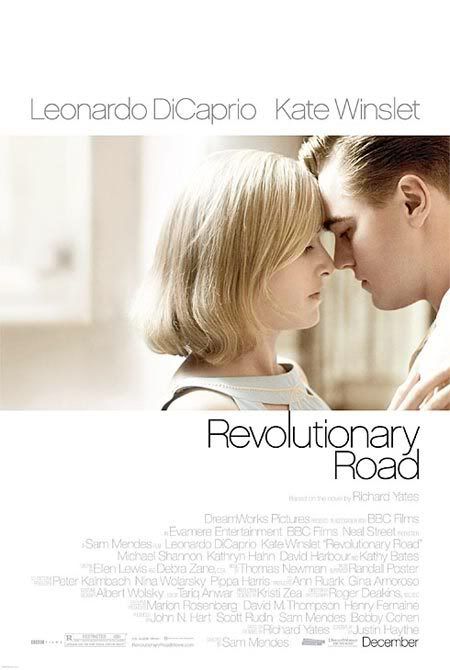
Revolutionary Road (2008)


First things first: Revolutionary Road is good. Actually, it's very good.

We're a little surprised to be typing that. We were more than a little cynical about it, pre-viewing, as it was Oscar bait, dealing with a subject we have little patience for (middle-class suburban ennui) and directed by Sam Mendes, who is perhaps most famous for directing American Beauty, one of the PPCC's most disliked films.

Yet all the things that didn't work for us in American Beauty suddenly came together perfectly in Revolutionary Road, and the same story of dead souls struggling to live in repressed, picture-perfect suburbia was both touching and incisive this time round. We think one of the major points in favor of Revolutionary Road was the setting. Putting the story in 1950s suburban America changes the tone from the self-indulgent, self-obsessed 1990s family in American Beauty, to a period renowned for its conspicuous economic growth (post-war booming America) and wide-spread cultural paranoia and hegemony (McCarthyism, post-Hiroshima, Cold War). Haven't we all seen those satirical parodies of 1950s public service films and advertisements - with those scrubbed, squeaky cheeks, angular haircuts and eerie, plastic smiles? Setting a story about ennui there makes a lot of sense. In fact, we feel like we've seen this story before (didn't Betty Friedan cover this?).

Frank (Leonardo DiCaprio) and April (Kate Winslet) Wheeler are, on the surface of things, the perfect couple: a comfortable, dainty home in suburbia, two shiny kids, a shiny car and a shiny life. Yet, already in the first ten minutes, we see the deep cracks in their relationship. They have everything, and yet they are unhappy and feel trapped: often dissolving into screaming fights over nothing. They both know why there is such a deep, underlying dissatisfaction. Again and again, they express existential angst at having become "like everybody else" - they are just drones. Desperate to be the meaningful, "special" people they want themselves to be and see themselves as, they each cope in their own way: Frank with a thoughtless extramarital affair and constant griping, April with an idealistic plan to flee to Paris, where the people "really live".

April eventually convinces Frank of the Paris plan: and, for a brief while, they are happy again, filled with hope and excitement. Yet, the more they plan their escape, the more suburbia reaches its tentacles around to stop them: their friends subtly mock them, an unexpected promotion is offered to Frank, April becomes pregnant. Meanwhile, their kindly real estate agent (Kathy Bates) has introduced them to her mentally ill son, John (Michael Shannon), who doesn't seem mentally ill so much as completely, willfully detached from the norms of the highly restrictive society they're all living in. This gives him the freedom to voice the Wheelers' most unsayable tensions and, after one particularly scathing articulation, things come to a dramatic, dismal end.

The depth of this film was remarkable (and very enjoyable!). The subtle plays of emotion and characterization were fantastic - April's flinty, resigned strength, the weaker and more cowardly Frank's manipulations, and the scenes with John were incredible! In this regard, all the performances - even Frank's unfortunate girlfriend (Zoe Kazan), which is a relatively small role - are amazing. Kate Winslet deserves all the accolades, baited or not, because the depth and expressiveness of her performance was completely compelling. Leonardo DiCaprio seems to even mimic the performance style of old 1950s actors: the typical mannerisms of an all-American tough guy from that era.

(A note about the setting, but this was crafted in all the details - most interesting of which were the social norms! It was shocking, from a 2009 standpoint, to see the ubiquitous cigarettes and martini glasses, as well as here the now-archaic speech patterns.)

There was depth in the themes, as well. This isn't the self-indulgent, navel-gazing angst of American Beauty that made us want to send Kevin Spacey and his whole family to a developing country (or even just an inner-city ghetto in America) just so they could see what real problems look like. Instead, Revolutionary Road tackles the very real tension between our dreams (to be famous, amazing, well-traveled, articulate adventurous heroes) and our drab, unexciting reality. As John Lennon said, "Life is what happens when you're busy making other plans." And the Wheelers pin all their hopes and desires on these plans - a surefire way to be existentially disappointed. As April says:
I wanted in. I just wanted us to live again. For years I thought we've shared this secret that we would be wonderful in the world. I don't know exactly how, but just the possibility kept me hoping. How pathetic is that? So stupid. To put all your hopes in a promise that was never made.

Wow. We definitely hear you, April, given that the PPCC still hasn't abandoned the childhood notion that we'll one day become famous writers... or movie critics... or screenwriters... or cultural philosophers... or something, anyway! Yet, as the Wheelers never really realize, much to their detriment, the sooner they accept their unexceptional, unadventurous, unglamorous, monotonous lives, the sooner they'll find that ever-elusive contentment and satisfaction. Nirvana! Even if you realize this on an intellectual level, it's still hard to accept on an emotional one - we certainly haven't given up hope of becoming "wonderful in the world"! Even though we admire films like Saaheb for showing us that, you know, being ordinary can be just as meaningful as being great.

This movie even got us thinking about the whole cultural thing again: when you're raised to believe in the pursuit of an individualistic American dream, where everyone should have big dreams, where hard work and big hopes are enough to guarantee success, it sets you up for a big fall when you realize that you might just be, well, mediocre or unlucky. Hey, the American dream can be very useful - it's motivating, and it glorifies ambition, optimism and the meritocracy. Indeed, we at the PPCC are often gently teased by our non-American friends for the optimism and confidence Americans stereotypically demonstrate at public speaking or job applications. Once a career center adviser told the PPCC: "I always need to tell the American students to tone down their cover letters, and I need to tell the British students to sell themselves more." Large generalizations - but there's a grain of truth. Growing up in America anytime post-WWII pretty much guarantees that you'll have that optimism and individualism ingrained in you. That's what makes The Incredibles so resonating: it shows that the stereotypical American ideal - where everyone is "super" - is, by definition, impossible. Because if everyone is super, no one is.

So what happens when you realize you're not super and you'll never be? For the Wheelers, they don't cope so well. And as flawed as they are - Frank especially - we pitied, sympathized and couldn't help blaming some of their angst on the impossible American ideal. We can't all be super, alas! Again, a line from the film (voiced by April) perfectly captures this dismal realization:
Look at us. We're just like everyone else. We've bought into the same, ridiculous delusion.

Devastating - and spot on. As you can see, a thought-provoking and intelligent film. Highly recommended!

P.S. One of the most confounding references in the film, however, is John: is he supposed to be John Forbes Nash? The coincidences - diagnosed schizophrenic who underwent shock therapy, mathematics PhD, 1950s, East Coast, "John" - seemed far too many to ignore!

P.P.S. Also, what's the significance of making a film like this now? On the one hand, we can see some similarities (comparing the threat of Communism and nuclear war to the threat of terrorism, for example, and how this plays out into the common man's fears) though there are also some stark differences in today's society compared to yesterday's (the glorification of diversity, as well as the actual diversity, the economic recession). Interesting to think about. So much to discuss!

Saturday, 7 February 2009

Reality implosion #4: Aneel Kaporre's continued adventures in Amreeka!

Oh, "Aneel". Bless. The surreal adventures continue.


"Whoops! 'Slumdog Millionaire' baddie Anil Kapoor gets in the wrong car in New York!

This video makes the PPCC happy it's not Aneel, though, here accosted by a warbling flock of autograph-seekers and smartasses ("What can I do to be a good Bollywood actor?" "Come on, bust a move for him, Anil!").


This is like that freaky video of Shah Rukh Khan drowning in a sea of crazy people and having his hat ripped off his very head!

Thank God we're not famous, especially in the Web 2.0 age.

No Smoking (2007)


In the literal "middle" of "Nowhere".


Just one of several disturbing images.


Arghhhh, our brain! OUR BRAAAAAIN! While Paresh Rawal's evil Guruji was busy severing souls from bodies, the PPCC's brain was slowly coming unhinged. We tried to keep track of everything in this film but eventually resorted to just listing references we recognized, because we couldn't make any sense of it. Filmi Girl's review has much more sense than this one, so we definitely recommend you read hers for intelligent commentary on this film. If you'd like instead our baffled "???!" take, then read on.

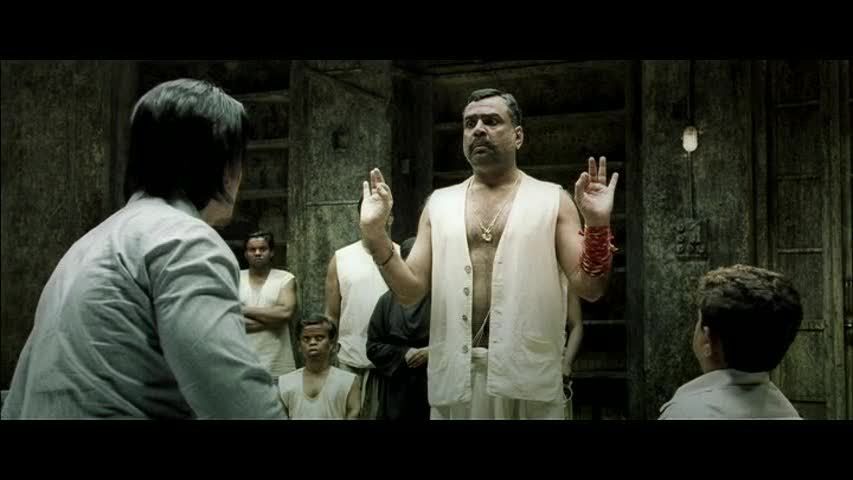
No Smoking, Anurag Kashyap's supremely surreal film, tells the story of "K" (John Abraham), a chain smoker who, after being threatened with divorce by his wife (Ayesha Takia) and encouraged by his friend (Ranvir Shorey), joins a radical rehabilitation program called the Laboratory. The Lab's director is Guruji (Paresh Rawal), and he is attended to by a wide variety of dwarves, giants, women in burqas and ghostly, whispering apparitions. "K"'s rehabilitation is a sinister, soul-sucking, Stephen King-inspired experience which includes finger-chopping, abduction, random explosions and, in the coup de grace, literally imprisoning the soul.

Well.

When the PPCC wasn't laughing at the occasional moments of dark humor, we were crying from TERROR. Yes, PPCC reader log, yes. We are a wet blanket when it comes to surreal art, and feeling disoriented scares us. We spent so much time clinging onto the few, rare moments of logic and whimpering "Mommy!" that we had just no idea what the hell this movie was really talking about. It certainly wasn't talking about smoking. Or was it? Filmi Girl reckons it was about homosexuality, or other subversive behaviors. Or was it about the Holocaust? Or the death of the individual in society? OW, MY BRAIN!


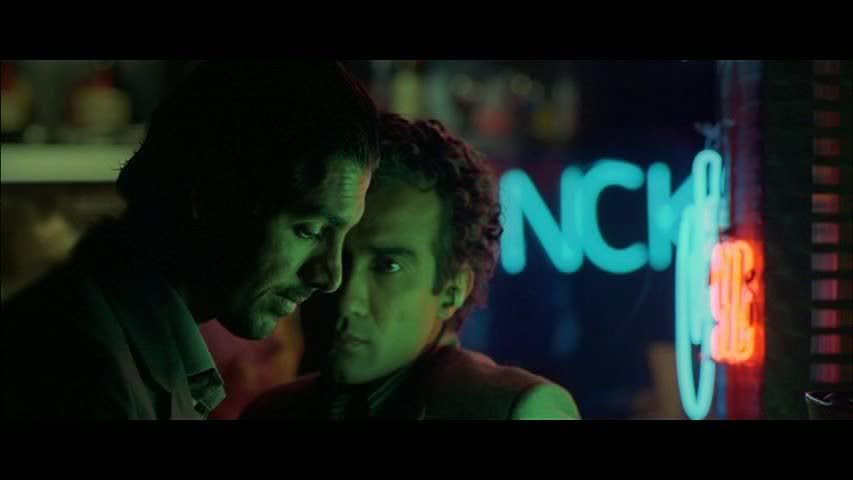
Reminiscent of the club scene in Trainspotting.


Reminiscent of The Matrix.


This was scarier than that surreal art installation movie thing we saw at the Tate Modern that one time - but that was just five minutes, and we were surrounded by people, and it was just about some women who keeps walking up stairs that never end. But this! THIS! This was two freakin' hours of Dalí and dimensions changing frame to frame and scenes restarting in different ways and, occasionally, just icing on the crazy cake, old Hitler speeches disguising themselves as doorbells or mobile ringtones. *sob* Then there were moments of American Psycho and American Beauty. And, of course, K for Kafka! Arghhh, what does it all meeeean?!

We have no idea. We've always been absolute crap at surrealism since we're just so baffled by it. Indeed, No Smoking will perforce have limited appeal, as its aesthetic is so alienating and its point - whatever it is! - is buried so deep in confounding, sometimes contradictory allusions and references. As a friend of the PPCC once remarked about a favorite scarf of ours: It raises more questions than it answers! Are smokers Fascists, or the people who ban smoking? Is K's soul tied to his family, his passions or himself? Why is Ranvir Shorey in a perm and cross-eyed?


Paresh Rawal was fabulously bizarre.


Was this movie really about THEM?! We have no idea.


We have to really hand it to Anurag Kashyap, for his extraordinarily unique vision, and to John Abraham, for being in this film. Poor John gets written off by us and our friends for being a pretty pin-up boy, and yet, if we really pay attention to him, it's clear that he's invested quite a lot of thought into his roles and he's desperate to push the envelope. This film, which is about as weird as can get, is a great thing to have made. We can't really say we enjoyed it, but we definitely appreciated it.

Now we just need to go bury ourselves in a comfortingly familiar, undemanding 1970s masala movie to cleanse ourselves of the weird! (And, yes, we HAVE to see Dev.D now.)

Friday, 6 February 2009

Mithya (2008)

*happy sigh*

We haven't enjoyed a movie that much in a long time. Mithya (Fake) is such a refreshing change from anything else we could have possibly watched, it was like a brainwash.


What a composition!


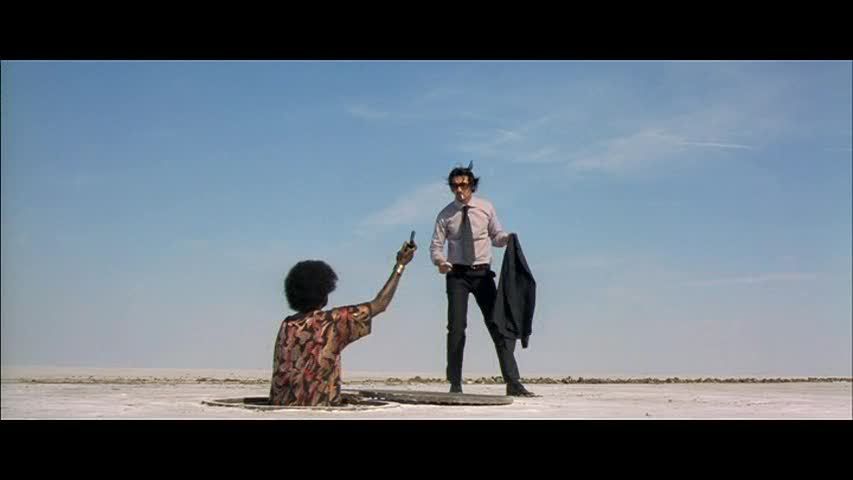
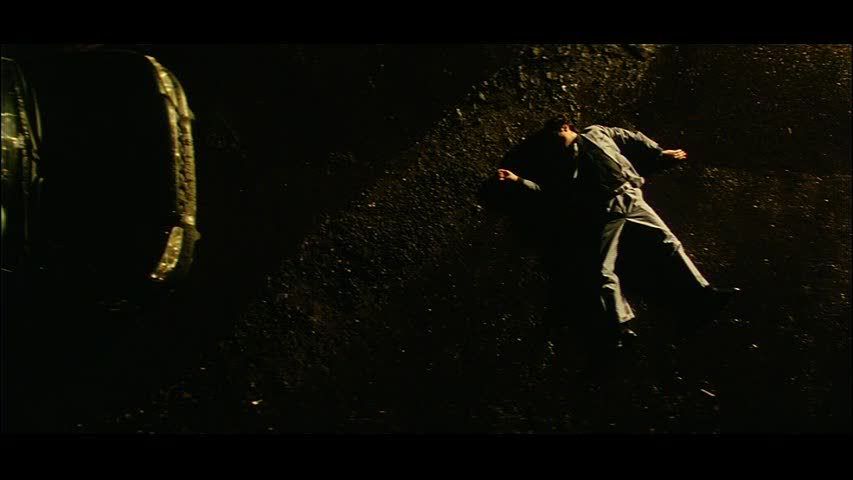
If the Italian film Johnny Stecchino and the Korean film Oldboy had a baby, it would be the strange and beautiful Mithya. Mithya inherits its plot from the former, but its aesthetics and dark sense of humor from the latter. Dressed in the guise of a bizarre gangster black comedy/noir, it's an unexpected meditation on identity which becomes increasingly labyrinthine in philosophy: is our hero Raje-bhai the crime lord? Or VK the struggling actor and loser? Does it matter anymore? Rajat Kapoor, the character actor from Monsoon Wedding, Jaane Tu... Ya Jaane Na and Krazzy 4 (off the top of our head), is apparently a wonderful director too, with a unique and gorgeous visual style akin in boldness to early Raj Kapoor. The aesthetics were truly mighty in this great little film.

VK (Ranvir Shorey) is a struggling actor and all-round loser. He lives alone in his dingy flat, where he recites Hamlet in the mirror, he wears plastic pants in the rain and mutters to himself on the bus. Welcome to the dead end! One evening, after accidentally witnessing a brutal gang shoot-out, VK is stalked by a pair of henchmen (Vinay Pathak and Brijendra Kala) since - as his bad luck would have it - he is physically identical to their arch-nemesis, the Mumbai crime lord Raje-bhai (Ranvir Shorey, again).

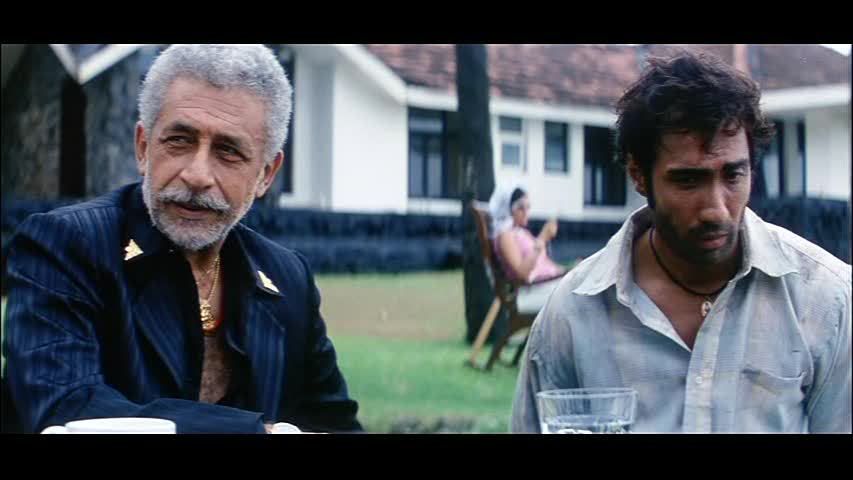
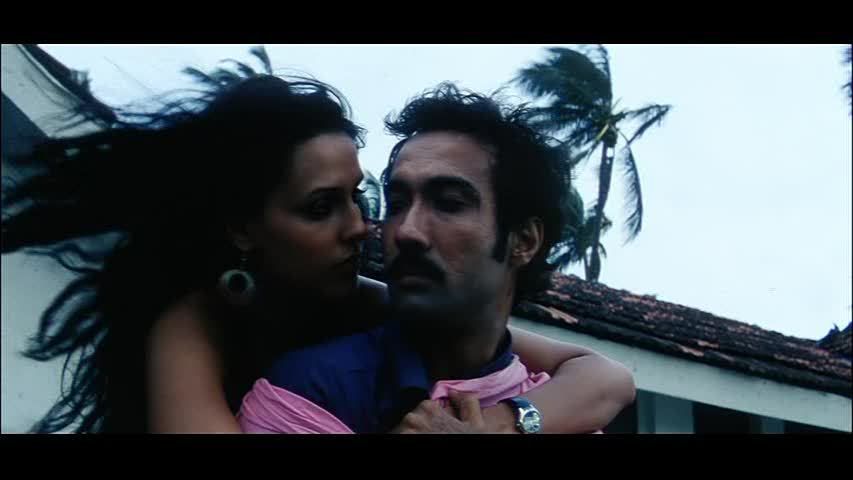
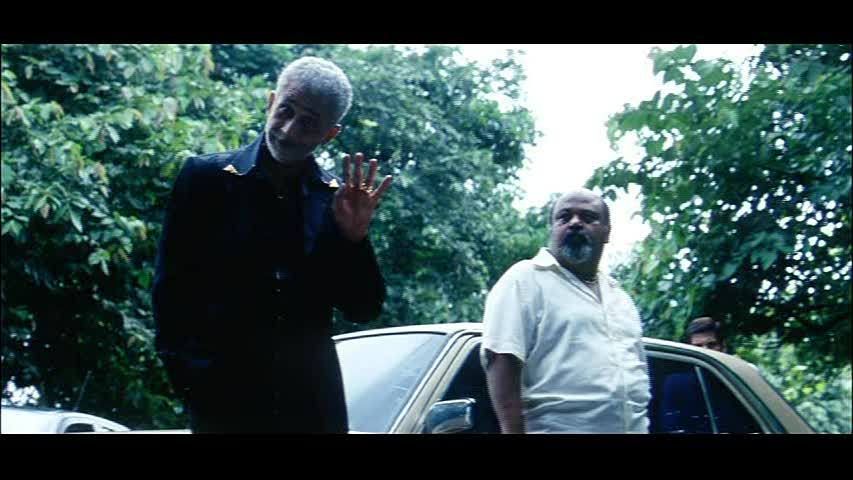
Eventually, VK is kidnapped by the rival gang - led by the grumbling Gavde (Naseeruddin Shah) and his buddy Shetty (Saurabh Shukla, who seems to be all over the PPCC these days!) - and engineered to take Raje-bhai's place. Their plan: assassinate Raje-bhai and plant VK as their mole. During VK's reluctant training in a remote beach-side house, he falls in love with Gavde's latest accessory, the sympathetic and sorrowful Sonam (Neha Dupia).

That's all we'll tell you. Once VK manages to take Raje-bhai's place, the plot spirals in a whole new, unexpected direction.


Our beloved Naseeruddin Shah and our newest fave, Ranvir Shorey.


Whenever we see "crime comedy", we cringe. Yet Mithya is more of a black comedy in the manner of Pasqualino Settebellezze or even, say, Kill Bill. That is, it was violent, gritty and sinister - yet with an acerbic wit and occasional sweetness. Quite a feat to pull off! The whole vibe of the film reminded us of those Cannes-beloved European films: for example, its rapid pacing and sudden, vignette-style cuts (like, say, Gegen die Wand) and its gentle, pretty background score with contrasting tensions (like, say, La stanza del figlio).

The acting was SUPREME, and the main role of VK/Raje-bhai seemed tailor-made for Ranvir Shorey, who was absolutely perfect. The role required a lot of range and depth, as we had to see and believe in two radically different men eventually merging into one, with all the pitfalls, doubts, hesitations and misunderstandings along the way. While some of these scenes were played for broad comedy (for example, when VK is hiding in Raje-bhai's bathroom), others were poignant (failing to recognize Sonam) or terrifying (VK's VKness slipping through). VK experiences some highs and many lows in this film, and Ranvir Shorey was both charismatic and naturalistic. If anything, we should note that this is the third Ranvir Shorey film we've seen - after Ugly aur Pagli and Aaja Nachle - where he plays a loser who is repeatedly beaten up, physically or spiritually or both. Is this becoming the brand? Hmm, too early for us to tell. But suffice to say, this role is the end-all, be-all lovable loser.


Another thing Ranvir has been good at in every film we've watched: romancin' the ladies and winning over our heart!


Everyone else is in top form: Neha Dhupia as Sonam was sweet, and her counterpart, Iravati R. Mayadev as Raje-bhai's wife, Revati, infused some unexpected depth into her scenes. It was both frightening and poignant to see Revati falling in love with her new Raje-bhai. Naseeruddin Shah was his usual Naseeruddin Shah-ness, and his bickering with Saurabh Shukla was very endearing. Even more endearing were the bumbling, low-level goons played by Vinay Pathak and Brijendra Kala - these two were hilarious! And oddly sweet! They seemed so mischievous and vulnerable, such as when they make VK stand in a barrel of cement just to scare him, or when they and VK engage in a little power war in the beach house.


Naseeruddin Shah and Saurabh Shukla, who we may as well deem Dictator of the PPCC since he has literally been in EVERY SINGLE FILM we've watched this week.


The bumbling, evil henchmen played by Vinay Pathak and Brijendra Kala - who was AMAZING - decide how to torment VK next.


As we said earlier, the film is about identity - in particular, its malleability. The Philosophers' Magazine has a great game on personal identity called "Staying Alive" which investigates whether you define identity in terms of your body, your mind, or some hidden essence, like a soul or something. The game kills you off in a variety of ways, and all you have to do is remain internally consistent regarding which of you is YOU to survive. Mithya interestingly uses this same trope: various versions of Ranvir Shorey's characters - whether it's Raje-bhai, VK-as-Raje-bhai, VK-as-an-actor, VK-in-a-film-scene, and so on - are shot and, in the very end, while we know who Ranvir Shorey is playing, Ranvir Shorey's character has since become very confused as to who he actually is. There's also a funny little running joke when VK keeps jolting awake gasping, "My shooting!" Presumably, he's anxious about the film he's working on. But there's a heavy note of foreshadowing as well.

Overall, this is NOT a typical Hindi film - it's neither commercial "Bollywood" (no songs, no happy ending), nor does it resemble the usual arthouse fare (no put-upon women, no farmers, no widows). That said, another very valid description of this film would be that it's your usual masala meal in a very special sauce. Indeed, several reviewers noted the similarities with that old masala classic Don. And in the second half, as VK's identity gets screwed up, there are a lot of genuinely heart-warming, masala-style moments where everyone is humanized, vulnerable and expressive. However the aesthetics of the film seem to be much more surreal, hipster and edgy.

*toot!* Ranvir Shorey time has hereby commenced at the PPCC. We want to see more weird and grimy tales from this guy, as he's clearly all that and a bag of chips! No Smoking is definitely next, and we remember reading about him playing a heroin addict on Paisa Vasool somewhere? What else, PPCC readers? We need your help! Hamko aapka madad chahiye!

Aaja Nachle (2007)

Oh, Madhuri.

Ooooh, Madhuri.

We love you, Madhuri.

We love you so, so much.
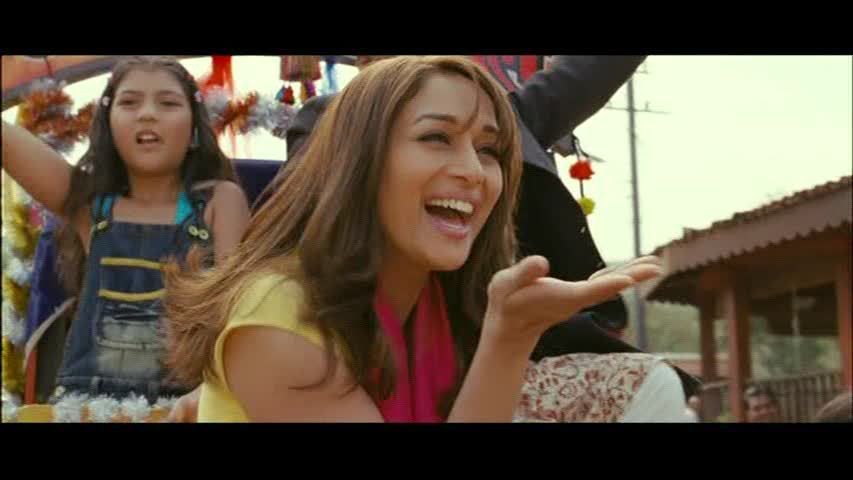

MAAAAADHURREEEEEEE!!! MADZ!


Madhuri is DA BEST, DA BOMB, DAAAAA BEARS. She is our shining heroine, the one the PPCC aspires to be like. We want to glow like Madhuri! Dance like Madhuri! Kick ass like Madhuri!

In Aaja Nachle (Come dance), Madhuri's wonderful comeback vehicle, the whole film is about - as Beth would say - finding your inner Madhuri. And while Carla and Beth rightly note that Aaja Nachle skirts away from the controversial issues it brings up (and Roswitha and Amrita note that it's controversial anyway), it is nonetheless (or perhaps because of this) a light, fluffy and intoxicatingly free Madhuri-style entertainer. Back in November, when we started watching Anil Kapoor movies like it was going out of style, we quickly came up against the bombest pair of the 90s: Anil Kapoor and Madhuri Dixit. And while we've already talked about how much we love these two, and how much we love Anil, we've never really talked about what makes Madhuri so great. So we'll do that here: if every performer has a brand, then her brand is freedom. Often playing strong women who get things done, she was glamorous yet approachable, confident, daring and fun. In a type of cinema whose female roles were often populated by wet lettuces, self-sacrificing martyrs and idiots, Madhuri brought back the strong woman. Suddenly heroines were cool again! Gosh, we hadn't identified with anyone like that since the days of Nargis - another strong, beautiful, fun heroine.

Aaja Nachle is based firmly on the Madhuri brand: the mythos of her dancing, her gutsiness, her sparkle, even her flight to America. With obvious meta implications (Madhuri married an American NRI and abandoned her filmi career in the early 2000s, much to the woe of Anil Kapoor), the story tells of Madhuri's rapprochement with small town, India. It also tackles the obvious tension which any successful heroine faces: that old school, conservative notion that purity and performance are incompatible, that marriage and a successful acting career cannot coexist. It uses the ever-lovable trope of bringing a ragtag ensemble together to achieve unexpected greatness, and it aims (but doesn't always shoot) at issues like NRI-versus-Indian, future-versus-past, global-versus-local, Westernized-versus-traditional and man-versus-woman. Sure, it leaves a lot of these significant issues unexplored or just blandly acknowledged, but, well, how - HOW!? - can you expect the PPCC NOT to love a film stuffed full with incredibly hot guys, incredibly fun dancing, an incredibly pretty setting, all led by an incredibly strong, lovable heroine?! It was too much! Aaja Nachle captured our dil big time - we loved it!

The story: Back in the day, Dia (Madhuri Dixit!) was the star of her local dance company. Independent and charismatic, one day she fell in love with a handsome Westerner (Felix D'Alviella) and - defying small town Indian conventions - eloped with him to America. There, they divorced and she became the single mother of their daughter. After eleven years of living in Manhattan and managing her dance studio there, she receives word that her beloved childhood dance instructor is terminally ill. She makes a hasty return to India only to find that he has passed away. Once back in town, however, she learns that her legacy shamed her family and her dance company into destitution. Now the dance stage is threatened to be bulldozed to make way for a new mall and it's up to Dia to save it! Yet the smarmy (and unexpectedly super-hot) local MP, Raja Uday Singh (Akshaye Khanna), gives her an ultimatum: she has to successfully mount a performance using only local amateurs in TWO MONTHS and everyone in the town must LOVE IT in order for the Anjana stage to be saved. OMG can Madhuri do it?!!?!!

The PPCC's reaction here was approximately: "Squeeeee!! Goooo, Madhureeeeee!"
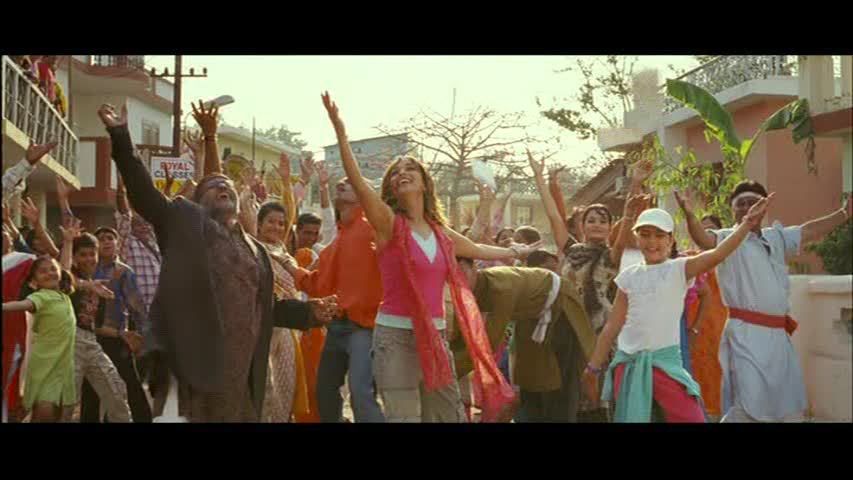

Huzzah!


Dia quickly attacks her problem head-on: she decides to stage the classic Laila-Majnu and, after auditions yield little promise, she just starts hand-picking town residents to be her cast. In the role of Majnu, she picks the monosyllabic goon, Imran (Kunal Kapoor, who is apparently like ten feet tall). Laila's role is quickly taken by Anokhi (Konkona Sen Sharma), the goofy, brash tomboy who harbors an intense secret crush on Imran. Meanwhile, Dia's spurned ex-fiancee, Mohan the chaiwallah (Ranvir Shorey), agrees to help and ends up playing the evil king. The cast begins to fill out - a goon leader (Akhilendra Mishra) here, a clumsy husband (Vinay Pathak) there - and eventually even 1980s child actor Jugal Hansraj and his cute Pinocchio nose show up as the straight-laced stockbroker who ends up playing Laila's brother. He even gives odds of success throughout the film ("Twenty percent today, guys") - how adorably nerdy! This film is clearly at 110% awesome now.


Awww, Konkona.


Now it's just a matter of tackling the various obstacles - a surly crowd, conservative gender norms, and a smoking hot evil businessman, Farooque (Irrfan Khan) - for Dia to mount the most gloriously glorious spectacle of Laila-Majnu you done ever saw. As the PPCC's viewing companions commented, "That was better than the film!" It was like the perfect icing to a highly satisfying cake - it was that extra 10% of fun.

We weren't wearing our thinking cap during this, nor did we focus too hard on the issues or the logic or anything. But that wasn't the film's aim: it wanted to be mainstream, and therefore non-provocative, but also liberated, so, much like Dostana, it made some compromises. Anyway, its set-up was open-minded enough: NRI Dia ends up showing that you can be divorced, Westernized, happy and in tune with your Hindustani dil! In a nice ironic twist, it's also NRI Dia who cares about the town's traditional dance stage, and it's NRI Dia who saves the town from the onslaught of a Westernized shopping mall.

There was also a nice theme of moving outside of your comfort zone and falling in love (charmingly captured in the song, Ishq Hua - "Love Happened"). For example, Imran is a brutish, macho goonda who is embarrassed by the idea of playing the classic softie, Majnu. Meanwhile, Anokhi is clumsy and blunt in expressing her feelings and she doesn't do herself any favors either: wiping her nose on her hands, picking fights in the dirt and so on. Neither of them make particularly good potential mates for each other, and both are initially resistant to the idea that they should change. Yet thanks to Dia's advice, the two meet in the middle and fall in love: Anokhi, well, grooming a bit and learning how to attract his interest (via the tried-and-tested "hard to get"/"watch out or these boots are gonna walk all over you" routine), Imran embracing his inner theater geek and allowing himself to appear vulnerable and sensitive (and thus EVEN MORE HOT). Other examples of this theme are Dia, of course, and her initial romance with the videshi, and the straight-laced, middle-aged Mr. Chojar (Vinay Pathak) joining the theater troupe in a roundabout way to woo his wife and inject some pizazz into their marriage.
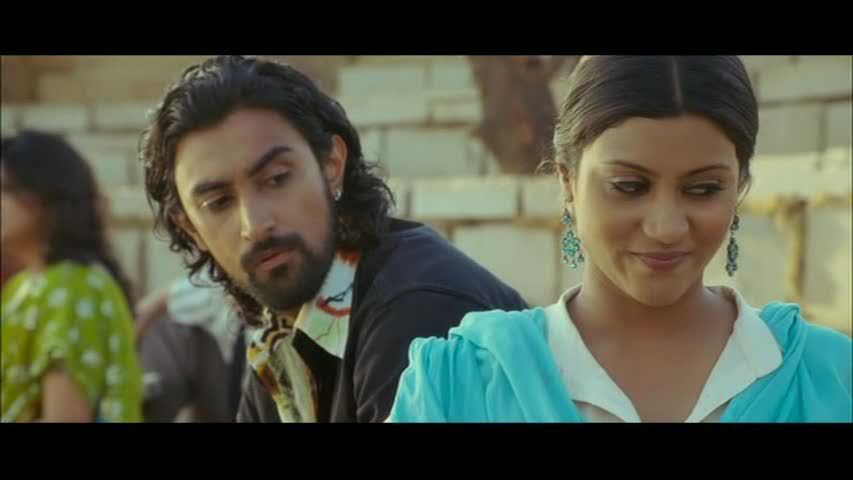

The cutest Laila and Majnu.


When these people weren't all falling in love with each other, the PPCC was falling in love with all the other fine studs in the house. We will now just list them and their most sizzling qualities because we really are only thirteen years old in spirit.
    1. Mohan the grieving, sensitive chaiwallah.
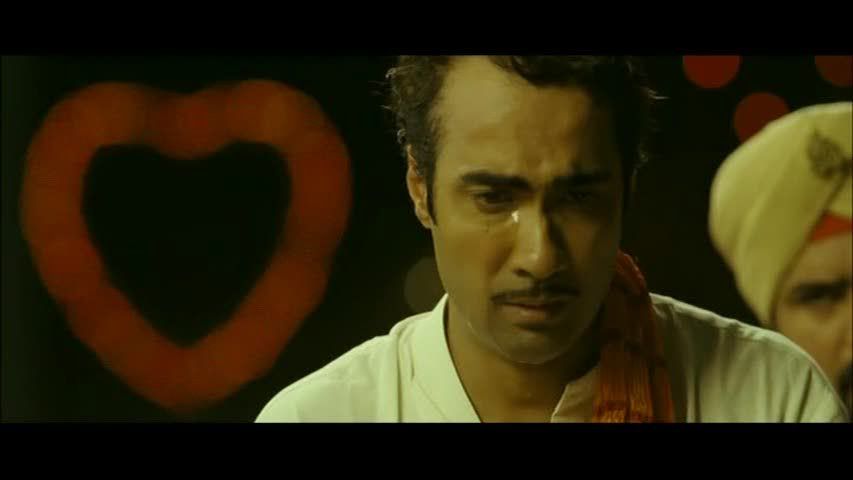
    Oh, don't cry, Ranvir! We'll light up your neon dil!
    Ranvir Shorey has that hurt-puppy look throughout the film, and apart from eliciting a group "awwww!" for the moment he's left at the altar to cry quietly in front a giant flashing neon heart sign, he won our hearts completely with his epic "wounded, pining & sensitive" routine (the name of our new band, incidentally). He defends Madhuri! He helps Madhuri! He still loves Madhuri! Even though she humiliated him in front of the wedding guests! He gives sage, world-weary love advice to Imran! All he does in the evenings is drink and cry about Madhuri! All he wants in the world is to open a hotel and live with Madhuri in "our little world" and serve chai! ACK, MY DIL JUST EXPLODED. WE'LL LIVE IN YOUR LITTLE WORLD, MOHAN! 2. Uday Singh the post-modern, globalized raja.
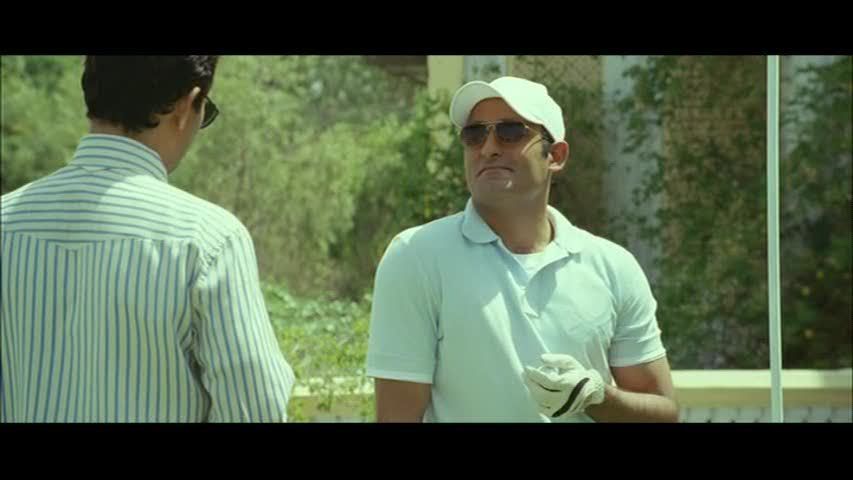
    Harr harr harrr. Another round of golf?
    What should have been a straightforward villain role is instead, via Akshaye Khanna's irresistible little dimples, cute Abercrombie & Fitch prep style and cheeky offers of gourmet pizza, something much more morally ambiguous and quite lovable! Uday's not out to get Madhuri. He's not angry or morally indignant or insane. He's just like, "Dude, I just want what's best for the town. What do I care?" Mall, theater, meh. A slice of sexy with pepperoni on top? WHY THANK YOU. 3. Farooque the evil, dashing businessman.
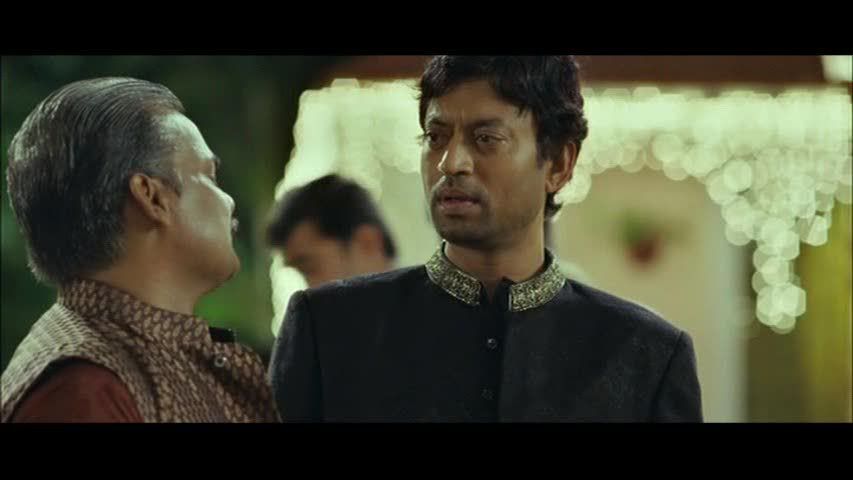
    OMG IRRFAN'S HOTNESS KILLED US DEAD.
    Okay, so this guy is just plain evil but never have we seen Irrfan Khan looking quite so delectable too! What? Okay, we've gone a bit schoolgirl, but, whatever, it's an objectification party in this review and EVERYONE'S INVITED! Just check Irrfan out in that elegant black sherwani, as he looms his tallness over the other party guests and gently suggests that Madhuri is really a spawn of the Great Satan in disguise. Please don't make Irrfan play any more villains, movie producer, we just find him far too attractive when he does! 4. Sanjeev the dorky stockbroker.
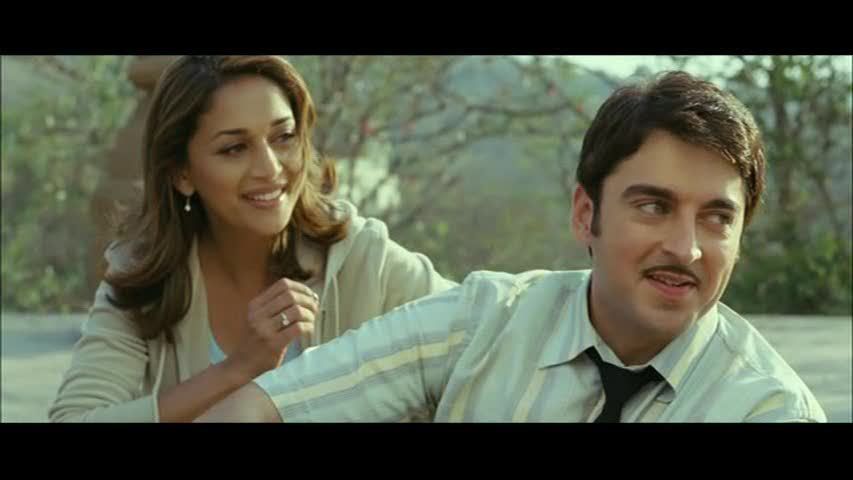
    Cute in 1983. Cute in 2007. Go, Jugal!
    What a most pleasant surprise! We've watched Jugal Hansraj grow from adorable child actor to awkward child actor to adorable adult actor to this. He's still got those to-die-for hazel eyes and that cute nose and now, even better, a little Raj Kapoor pencil mustache and a fashion sense that just SCREAMS "seduce me, I'm a socially awkward nerd". Man, we'll buy your shares any day of the week, Jugal! 100% on fire! SELL SELL SELL!


And that is all. Watch this movie! Whoo!

P.S. Can a nice reader tell the PPCC what happens in the very end? Our last five minutes were missing! Spoilers bedamned, just tell us that Mohan and Dia finally get together.