Saturday, 31 January 2009

Dulha Dulhan (1964)

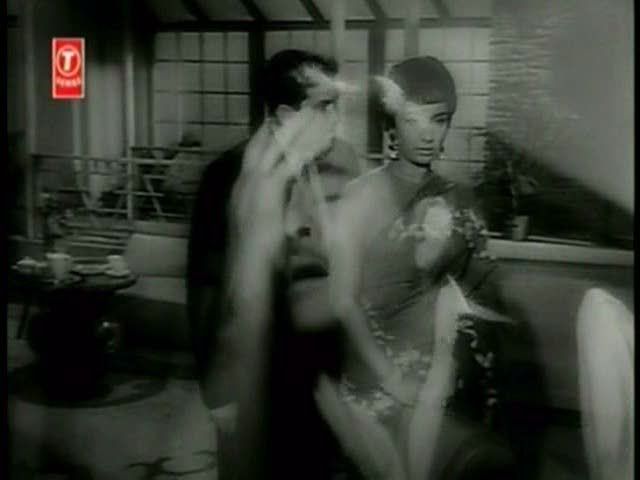
Dulha Dulhan (Groom Bride) is a sweet little film that doesn't aspire to much and generally succeeds. It is pure vanilla: a straightforward take on the old school Memory Loss Romance, with several pretty songs, pretty actors (although Raj Kapoor was, by then, going a bit blobby) and pretty moments. It is the oft-elusive "nice" movie: something almost everyone will probably like, at least a little. Vanilla is, after all, the most purchased ice cream flavor!

This may make it sound bland, and in a way, it is. But it's a... nice sort of bland, a mashed potato sort of bland, even - at times - a poignant Morandi painting sort of bland. It's a humanistic, non-demanding comfort movie for the jaded PPCC reviewer's soul. And anyway - we love Raj Kapoor.


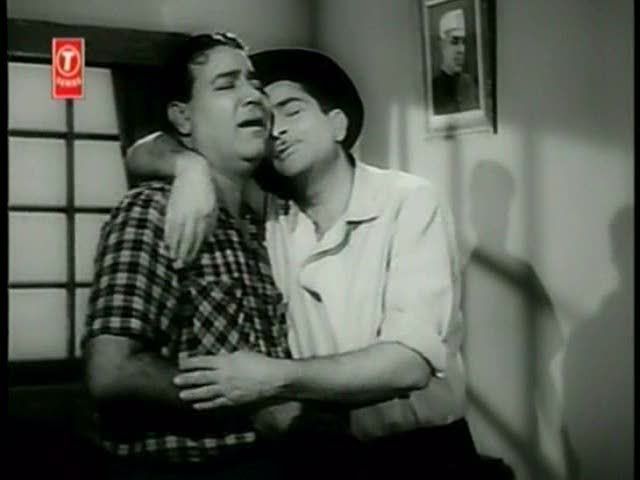
The bromance is strong in these two.


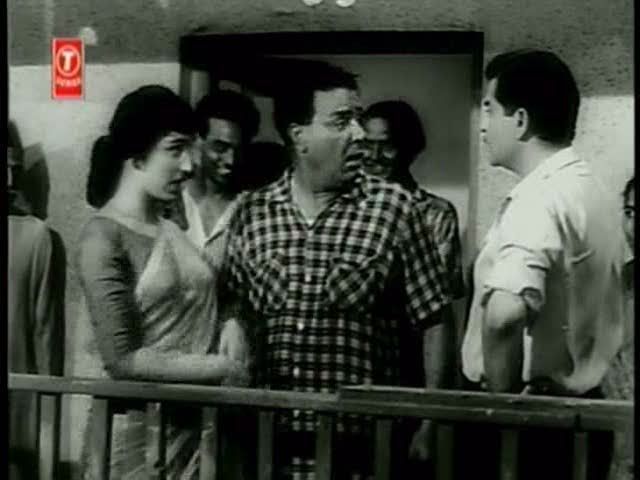
And the trio has great chemistry as well.


The story is simple. In a working class chawl somewhere in Bombay, two buddies - Raj (Raj Kapoor) and Bansi (Agha) - struggle to make ends meet. Raj is the sensitive, poetic one who, of course, is a struggling playback singer, while Bansi is loud, boisterous and working nights on the movie sets. (There's a funny implicit commentary on the inefficient, haphazard way movies are made in Bombay, as Bansi is more often coming home from cancelled shoots than anything else! And there's even a surreal Shammi Kapoor reference!) One day, the boys get a letter from Raj's friend, alerting them that the friend's daughter will be visiting Bombay and could they show her around, yadda yadda.

When Raj goes to the train station to pick her up, he sees that she is the beautiful, bewildered Rekha (Sadhana). Although Raj is anxious to get rid of her and put her up in a decent hotel, lest people talk, he eventually gives in and lets her stay with them. Eventually, her wide-eyed, Bambi-esque naive good humor wins over even his (relatively) more cynical urban bad attitude, and they fall in love. Marriage, sweetness, memory loss and emo ensue.


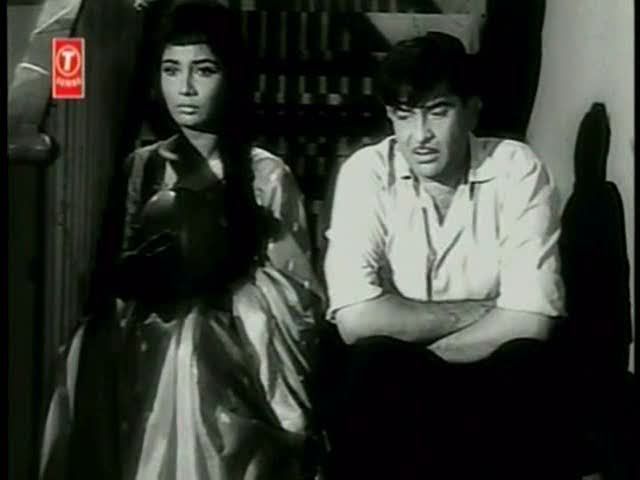
A cute moment.


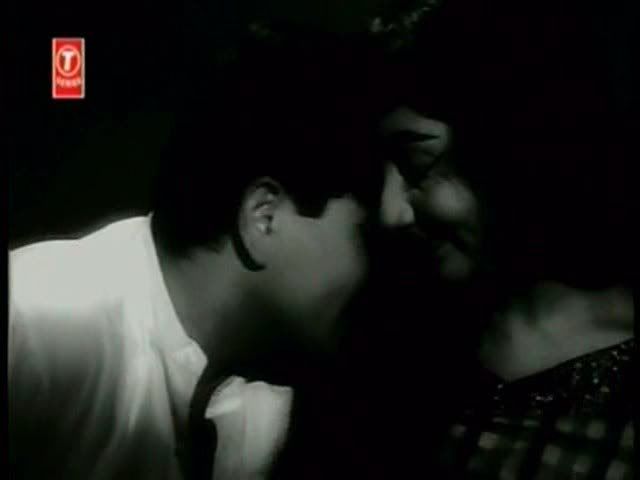
Another cute, intimate moment. Awww!


There were a number of sweet little grace notes in this film, and the vibe throughout is one of gentle good humor. Even the latter half, which falls into the usual old school emo and made us wonder if tragedy king Dilip Kumar would have been better suited, was never really that dramatic. When a despairing Raj proclaims he's going to go wander around India and wallow and don't try to find him, we weren't that surprised to see that he was actually just down the street, moping but remembering to shave. Or maybe we've just gotten used to spectacular, over-the-top dramatics - where losing love pretty much guarantees death and destruction - so it was pleasantly surprising to see Raj despair in such a contained, rational way.


Raj's emo despair is only expressed in some handy superimposed flashbacks on low volume.


The performances matched the film's understated sentimentality. Critics of Raj Kapoor can relax in knowing that he's very toned down in this film, with none of the trappings of the squirrelly, "Ji!"-ing tramp persona he was most famous for. We should note that he shares the screen very well in this film - acquiescing his huge screen presence (and iconic fame, at the time!) to Agha again and again. For a performer that sometimes suffered from overly self-indulgent theatrics and occasional outright screen-hogging, it was refreshing to see how well he worked with the other two leads, Agha and Sadhana. Beth rightly notes how sweet the bromance between Raj and Agha is and, while Sadhana's performance sometimes felt flat for us, the romance was lovely (sometimes heart-meltingly so!). For that reason, we liken this film as more Chori Chori or Jagte Raho than one of those "It's The Raj Kapoor (Me! Me! Me!) Show!" movies, and Raj Kapoor haters, you should give this a try.

Thursday, 29 January 2009

Power's out!


PPCC hero and angst king Dilip Kumar: "NAHIIIN! BIJLI KAHAN HAI?!" Pic courtesy of Antarra's Ramblings.

The games have begun.

Cyclone season.

No more power (for watching movies!). No more water (for brushing our teeth!).

Which means: The PPCC is temporarily and indefinitely on hold.

Who better than to express our frustration, angst and emotional pain than the King of Tragedy himself, Dilip?


Motilal and Dilip Kumar bumping into each other at the power-less PPCC headquarters.

"How long will the PPCC be bijli-less?" the loyal reader cries.


We don't know. However, the current evidence is:
  • Last time a cyclone hit, PPCC HQ was without power and water for five smelly, dark days. :(
  • There are reports that power has already resumed in some neighborhoods. Hope! :)


In the meantime, why not do what the PPCC will do? Read a good book about the Muslim punk movement and listen to the The Kominas, a "Punkistani" Punjabi band that is smart, angry and fun. YESSSSSS.

Monday, 26 January 2009

Taal (1999)


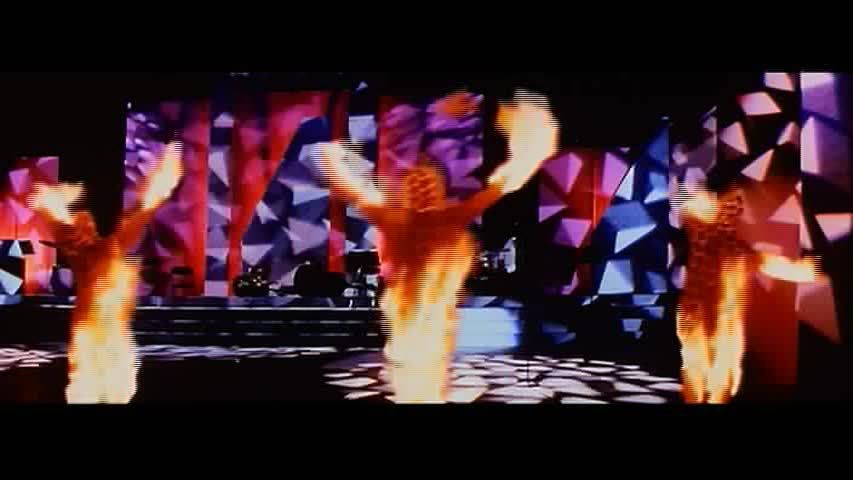
Thank you, thank you. For my next number, I will set my backup dancers ON FIRE.


Taal (Beat) is a flashy, tacky spectacle that is a lot of fun as long as you can cope with Akshaye Khanna's hideous haircut. The music by (Oscar-nominated!) A.R. Rahman is, as in Yuvvraaj, leagues beyond the film's quality - except that Taal is a very decent little story with pitch-perfect narrative form, whereas Yuvvraaj was a car careening around with no driver. Taal demonstrates again - as Black & White and Ram Lakhan - that director Subhash Ghai has a cunning ability to just crash into genius sometimes. Because Taal was really, really well-told, with an ending that aspired to Dilwale Dulhania Le Jayenge or Kabhi Alvida Naa Kehna in terms of sprinting, sobbing, gargantuan satisfaction.


THE HAIR. LOOK AT HIS HAIR.


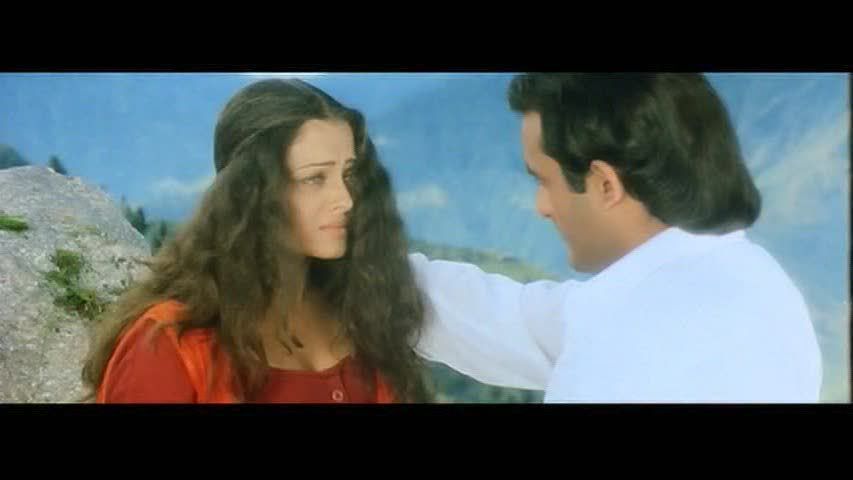
The story is simple. London-based rich boy Manav (Akshaye Khanna, in The Hair) accompanies his dad, Jagmohan (Amrish Puri, in gentle paternal mode), to India for the first time. There, in the gorgeous setting of Himachal Pradesh, Manav spots village girl, Mansi (Aishwarya Rai). Her father is a locally famous folk musician, Tara Babu (Alok Nath), and, when not accompanying her dad on one of his folk songs, she teaches yoga and runs around in the rain. The lovers are smitten, leading some of Manav's evil relatives to grumble and gripe about gold diggers and poor folk who don't know their place. Eventually, Manav and his wealthy family head down to Bombay - but not before Manav and Mansi exchange tender embraces, an onscreen kiss (!), a scarf embroidered with "Manavsi" (GET IT?! LIKE BRANGELINA!) and promises of eternal commitment.

Not long later, Mansi and her father head to Bombay too in hope of setting up the marriage. Unfortunately, they come to the mansion "without an appointment" and on a day when Manav is out - so the evil relatives have a helluva time prolonging the tortures and making Mansi and her father undergo a nine-hour game of musical chairs in the burning sun (this started to feel very Alice in Wonderland after a while). Properly humiliated and grumpy, Mansi and her father confront the Evils, and things degenerate into name-calling and bitch-slapping. They storm out.

And who should they run into but - yes, Anil Kapoor! We mean "Vikrant Kapur", the hugely successful and hugely trashy music producer, who cheerfully rips off Tara Babu's folk songs according to his personal Seven Commandments of Selling Out and Getting Ahead in Mumbai. Vikrant, who Prof. Lutgendorf describes as "postmodern" and an older, cynical-er SRK from Dil To Pagal Hai, operates at a mile-a-minute, and he speedily invites Tara Babu and Mansi to join him. At least they'll be able to join him in profiting from their music!

And thus, the love triangle square has delineated. Well, reader, should Mansi choose:
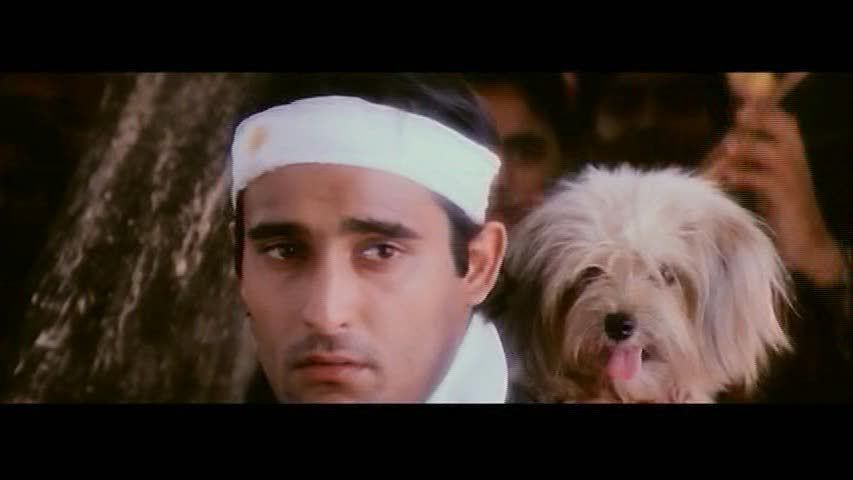
    1. The arrogant yet sweetly endearing Manav, whose puppy-dog pouts reveal a tender sensitivity.


The Pout #1: includes wounds that need to be tended, puppies that need to be cuddled, and woobieness.

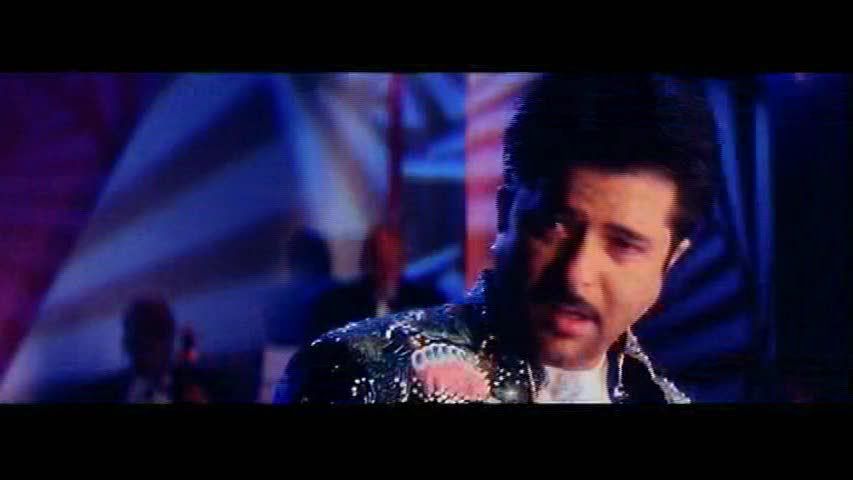
    2. The arrogant yet sweetly insane Vikrant, whose puppy-dog pouts reveal a tender, wounded sensitivity.


The Pout #2: includes older wounds that need to be tended, REAL TEARS COMING ON, but, alas, no puppy.

    3. The puppy.


The Pout #3: dispenses with other formalities and just GIVES US THE PUPPY.

We know what you're thinking ("THE PUPPY!"), but you'll just have to watch the film to see how it all plays out.

Now onto the main thing that everyone mentions about Taal (Prof. Lutgendorf, Carla, Beth...): the product placement. We think the product placement - in particular, the use of Coca-Cola - in this film was GENIUS. Pure, unbridled, postmodern GENIUS. Don't believe us? Read on!

Never has beverage choice been so inextricably linked with matters of the heart - behold, as Beth names it, the "Coke-bottle flirting". There is a notable scene when, at a party, Manav drinks from a Coke bottle and cheekily sends it to Mansi. Prof. Lutgendorf notes:
Cultural point here: this is not merely bad manners, but a violation of the strong Indian taboo against jutha, or food/drink contaminated by someone else’s saliva, so when Manasi daringly takes a sip it is somewhat akin to kissing Manav. Not surprisingly, this will follow ‘ere long…

Indeed, "sharing the Coke bottle" comes to mean a lot more than just, well, sharing a Coke bottle.


The odd and funny "moohahahHAHAHAHA!" Dr. Evil laugh moment.


The puppy again. What?


Later, as the more world-wise and cynical Vikrant begins to fall for his heroine, he starts to hit the liquor and, interestingly, his love is finally given raucous, epic expression in a drunken Sufi-esque chant, Ramta Jogi, where he recalls "drinking everything available" and "living entire centuries in a moment". This all seems to imply that Vikrant has aged past the era of young, pure Coca-Cola love and is now in the more hard-edge, emotionally baggaged red wine love. This is, of course, much more appealing and interesting (who needs bubblegum heroes? not us! Han Solo, all the way!) and has poignant Sufi undertones. Interestingly, this is also the only scene in the film where it seems that Mansi feels the slightest flicker of affection for Vikrant. Gasp! Is the Rumi working?

Well, no. Behold another symbolic scene: when we see Manav and Mansi's fathers laughing over a couple Coke bottles together. When we the audience and Vikrant witness this, we know it's time for Vikrant's heart to pack up. And when Vikrant drinks from a Coke bottle and hands it to Mansi, urging her to, "Drink up! They're our company sponsors!" she is hesitant. Sorry, my Sufi man, Coke love has beat wine love!

The music of Taal is just gorgeous - which is right and proper, as Taal is about music, after all. There's the spectacular Jungle Mein Bole Koyal, the touching Ishq Bina and the repeatedly-used leitmotif Taal Se Taal Mila. A vibrant and addictive soundtrack, we've actually been listening to it ever since the post-Yuvvraaj "A.R. Rahman is AMAZING!" boom here at the PPCC.


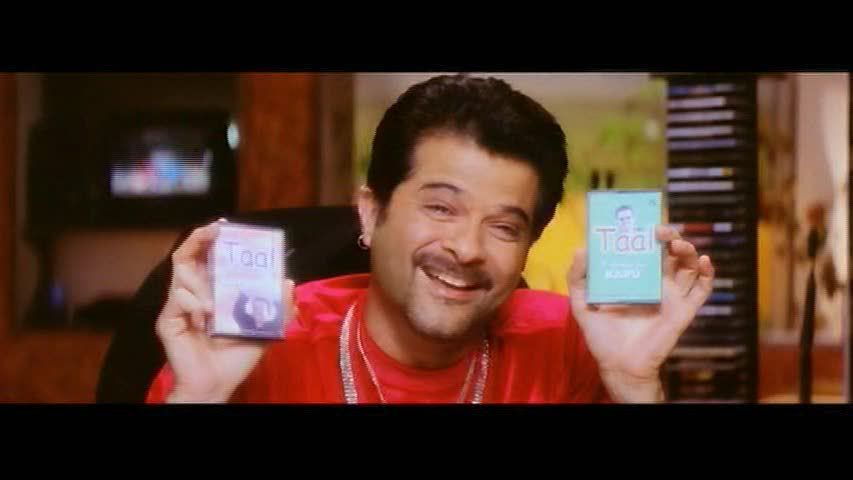
Beneath that hard, sleazy, oily shell of a man, there is a tender, loving spirit. Not convinced? Perhaps you'd prefer...


Performance-wise, Prof. Lutgendorf is, of course, right in noting that Anil Kapoor owns it and manages to make Vikrant a parody of his earlier screwball performances (and of SRK's performance in Dil To Pagal Hai): he is clearly OTT insane, pinballing from crazy to crazy, with moments of unexpected depth and vulnerability. When Vikrant asks Mansi desperately, again and again and again, "Do you love me?" We at the PPCC kept going, "YES, WE LOVE YOU!" And we do. We'll take one Vikrant and one puppy, please.


...THE PUPPY?!

Sunday, 25 January 2009

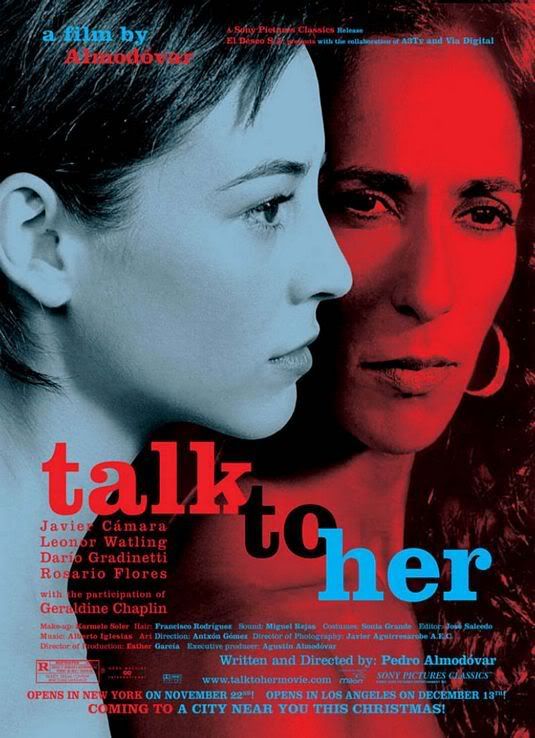
Hable con ella (2002)


Pedro Almodóvar's films are always a treat - colorful, outrageous, rich, bright and feminist - and Hable con ella (Talk to Her) is no different. One of his better known films, it features the strangest love scene ever recorded in film history (guaranteed!) as well as his usual provocative examinations of gender roles and relationships through an endearingly expressive telenovela-esque lens. Hable con ella also resembles other weird love stories such as The Crying Game or Léon (well, a little bit) in that the central romance is envelope-pushing to the extreme. Prepare to be provoked.

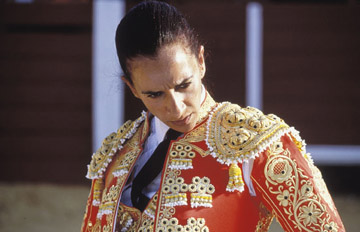
Love and longing are central to this film, and couples abound. The first couple are the sensitive, tearful Marco (Darío Gradinetti) and bullfighter Lydia (Rosario Flores) - they meet when he comes to interview her and, accompanying her home at night, is forced to kill a stray rattlesnake in her kitchen. She is phobic of snakes and decides to abandon the home altogether. Marco helps her - offering to raid her home of things she needs, driving her to the hotel, and so on - and eventually they get together.


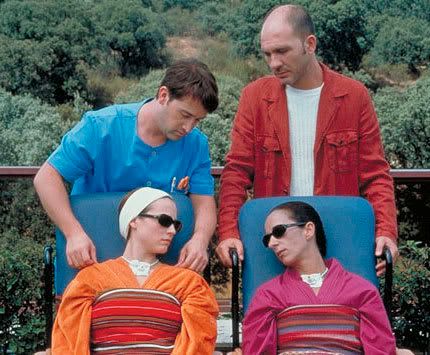
Clockwise from top left: Benigno (Javier Cámara), Marco (Darío Gradinetti), Lydia (Rosario Flores) and Alicia (Leonor Watling).


The second couple - if you can call them that - is male nurse Benigno (Javier Cámara) and his comatose patient, Alicia (Leonor Watling). If that sounds creepy, just wait - it gets creepier. Benigno, a friendless thirty-year-old virgin and social recluse, has obsessed over Alicia for years - even before the accident, he used to watch her in the dance studio across from his parent's apartment. When Alicia is in a car accident and rendered comatose, Benigno is only too thrilled to become her round-the-clock caretaker. After four years in a coma, Benigno is now unreservedly in love with her - he talks to her endlessly, does the things that she used to like to do (such as watch silent films and dance recitals) and plans their life together.

Meanwhile, tragedy strikes the first couple - Lydia is gored by one of the bulls, and her cerebral cortex is destroyed. Now also indefinitely comatose, she is taken to the hospital where Benigno cares for Alicia. There, Benigno - starved for more talkative company - immediately poaches Marco for friendship. Marco, simultaneously repulsed and curiously charmed by Benigno, spends many weeks waiting by Lydia and Alicia's sides, being lectured by Benigno on what makes women happy: you have to talk to them, be thoughtful sometimes, show you're listening and you care.

This all seems very cute, if weird, until things take a really weird turn. You'll have to watch it to find out (and don't let the kids around!).


Lydia kicking some bull butt.


The most interesting stuff in Almodóvar films are his gender relations: often his protagonists are female, and his films are typically about the female experience. According to the Wikipedia article about him, he has said that women make better characters as they "are more spectacular as dramatic subjects, they have a greater range of registers, etc." In this film, the two male protagonists exhibit traditionally "feminine" characteristics, since Benigno is a nurse and Marco is moved to tears by just hearing delicate Caetano Veloso songs (admittedly, that is da bomb of a Caetano Veloso song). Meanwhile, Lydia works in a male-dominated sport - bullfighting - which also has heavy symbolism of virility and masculinity (fighting massive bulls, hello!). In the film itself, there are several dialogues which address the male-female dynamic. For example, Alicia's old dance instructor (a surprise cameo by Geraldine Chaplin, daughter of Charlie) excitedly describes a new interpretive dance she's choreographed, entitled "Trenches". The dance is about the First World War, and she has planned to show the soldier's souls floating up to heaven via ballerinas emerging from the male dancers: because, as she describes, the female emerges from the male, the male becomes female. The Wikipedia articles notes that this is then reflected directly in the story (though warning for spoilers!).


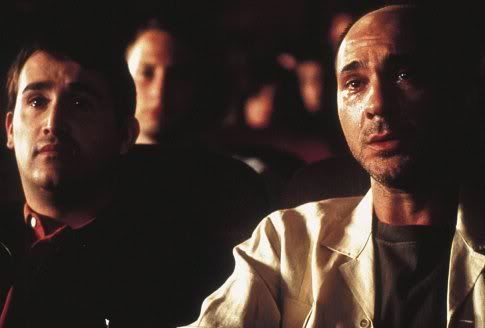
Benigno and Marco (in a moment of characteristic tearfulness).


The filmmaking in terms of editing, style and cinematography is lovely - and it is distinctly characteristic of Almodóvar's other work (e.g. Volver). The palette is suffused with bright, warm reds - the entire bullfighting spectacle, for example, or Benigno's dream bedroom - and there are some quirky details, such as the title cards announcing a relationship, or the notorious silent film-within-a-film sequence. Javier Cámara gives the most memorable performance as the increasingly creepy, increasingly vulnerable and increasingly unbalanced Benigno. He's saddled with the near-impossible task of maintaining Benigno as a sympathetic character for the audience and, generally, while he doesn't totally succeed (we were too freaked out!), it is a very compelling, even at times powerful performance.

This won't be a film for everyone's tastes - the story's outrageous twists make sure of that - and we have to caution that it fully deserves its R-rating for the troubling themes it discusses, but it is nonetheless a very good film: strangely whimsical, provocative and entirely unique.

Saturday, 24 January 2009

The Children of Huang Shi (2008)

The Children of Huang Shi suffers from an overly blunt script, stilted acting and a general failure to live up to the epic "Oh, the humanity!" vibe it seems to be striving for. It is, nevertheless, an enjoyable film that illuminates the previously-unknown amazing life story of English adventurer and journalist, George Hogg. In fact, so fascinating is his story that it's somewhat of a shame that the film about it is so... meh.


Heroes who accumulate orphans are always A+ at the PPCC.


The film begins with our hero, Hogg, twiddling his thumbs and ready to get into some action in war-torn Shanghai. With his friend, Barnes (David Wenham, in a brief cameo), he manages to get to Nanking, where there is rumor of fighting but a ban on journalists. Hogg, a bright-eyed, bushy-tailed fresh graduate from Oxford, exhibits much of the same characteristics as, well, a certain other famous Oxford grad who meddled in global affairs: he is entitled, over-educated, and clearly enamored with this foreign culture he now finds himself in. He is also in way over his head.

After witnessing the atrocities at Nanking, however, he is narrowly saved from a samurai blade to the neck by a charismatic underground Communist fighter, Chen Hansheng (Chow Yun-Fat). They team up for a bit, but Hansheng eventually sends Hogg up into the mountains - to "improve his Chinese" and with promise to bring him back for the front for more coverage. Little does Hogg know that he's been sent to take care of a rag-tag group of orphans. The rest of the film follows his slow transformation from reluctant care-taker to genuine hero, as he leads the orphans across an epic, thousand-mile trek into the Gobi Desert, safe from the oncoming Japanese forces. Along the way, a little romance is thrown into the mix as Hogg falls for the American nurse, Lee (Radha Mitchell).

Wartime China is still a relatively untold story from the Hollywood perspective - the only other films about it that we can think of, off hand, are Ang Lee's Lust, Caution, The Painted Veil with Edward Norton, and Steven Spielberg's Empire of the Sun. The Children of Huang Shi is, unfortunately, the worst of the lot - it has neither the provocative envelope-pushing of Lust, Caution, nor the sweeping epicness of Empire of the Sun, and its cinematography - which is beautiful - is still only as beautiful as the mind-blowingly gorgeous scenery (and music!) from The Painted Veil. Oh well.


Dreeeamy siiiigh, Chow Yun-Faaaat. We looooove yooooou. Marreeeeee us, pleeeeeease.


Some gorgeous scenery.


That's not to say it's a bad film - far from it. It was beautifully shot and the story was compelling and touching. The Chinese actors were particularly good - the children and especially the underused Chow Yun-Fat, who is always a welcome presence and, we should probably admit, the PPCC has a size-medium crush on. Michelle Yeoh also shows up at one point, playing a dethroned bourgeois madame, now reduced to selling opium to addicts.


An earnest performance by Jonathan Rhys Meyers, here in his thousand mile stare mode.


The romance, though? Meh.


In terms of film analytics, the most interesting thing we noticed was the power dynamics of the Hogg-Cheng-Lee love triangle. In particular, Cheng and Lee are both older, wiser and world-wearier than Hogg, so it was interesting to see how he could fit into their flinty cynicism. Cheng seems to hurtle from danger to danger, saved only by his fabulous good looks oozing charm and luck. Meanwhile, Lee is slowly chipped away at, so that her vulnerability is eventually revealed in all its shivering, detoxing awfulness. We had to commend the filmmaking for portraying things which might have become gratuitous or overwrought - Lee's addiction, the massacre at Nanking, an orphan's suicide - with a sensitive, straightforward touch. It made it all the more affecting.

The performances were decent, as we mentioned, though they were crippled by a script that did a lot of "WE ARE A BLOG AND WE WRITE MOVIE REVIEWS AND THIS IS WHAT WE DO"-type sentences. Awful, clunky exposition. The dialogues almost felt like something from an ancient 1950s play that no one had bothered to update. This is a shame , because Jonathan Rhys Meyers visibly gave it his all - the moment when Hogg is about to be beheaded was terrifying, and this was sans background score or cinematographical embellishment. It was all Rhys Meyers' work: his terror as he waits for the sword. Also, he learned a convincing amount of Mandarin for the role, and that's pretty awesome. It was nice to see the others - Chow Yun-Fat, Michelle Yeoh and David Wenham, even - though all their roles felt limited and constrictive.

Oh well, you might feel some light disappointment with this film - but not everything can be the glorious, transcendental Empire of the Sun. If you take this for what it is - a relatively simple film told against a much larger background - it should be fairly enjoyable. Like a nice cuppa with toast.

Friday, 23 January 2009

Rock On!! (2008)


Rock on, man! Yeah, man!


The much-acclaimed Rock On!! is a pretty bauble of a film, entirely masala-free and resembling other Hindi films only in the language the characters (occasionally) use. It offers an all-too-rare glimpse into the Indian indie music scene - that cultural underdog so often overshadowed by the filmi tyranny. However the film's dedication to a specifically Western cultural legacy - there are nods to The Doors, The Who, The Rolling Stones and so forth - means that the good ol' Hindustaniness gets left behind. For this reason, this is a great film to show your non-filmi Bollywood virginal friends, as these angst-filled rockers are easy to identify with from a Western perspective (and there's none of that pesky song-and-dance stuff). Yet it's also true that we don't watch Hindi films for movies like Rock On!!.

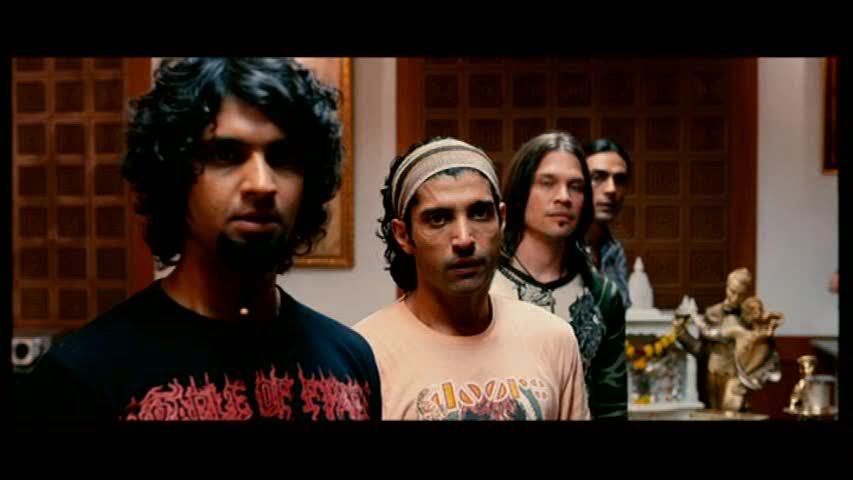
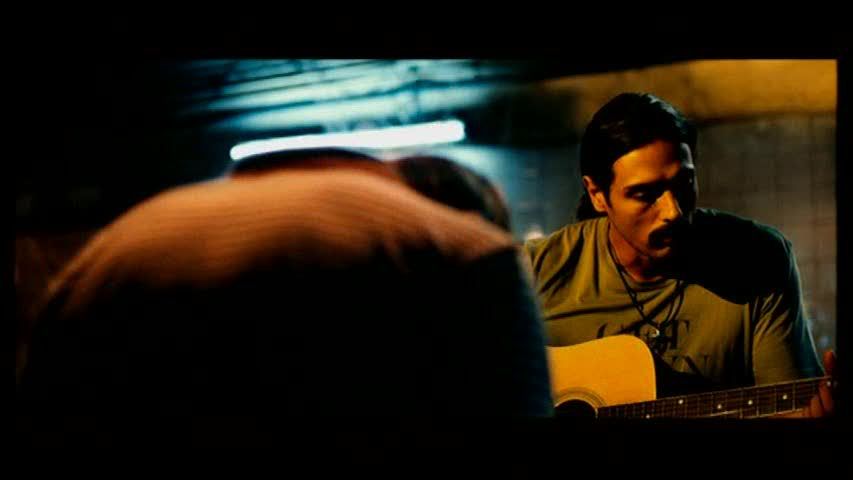
There once was a band named Magik. On vocals was the studly Aditya (Farhan Akhtar, son of Javed), a bit of a prima donna with Italian soccer star hair. On lead guitar: Joe (Arjun Rampal), whose quiet studliness hides an occasionally violent temper. On keyboard: the peace-making Rob (Luke Kenny). And finally on drums, the Puckish goofball, K.D. (Purab Kohli). After a quick opening number, we fast-forward ten years to find the four bandmates adrift in their separate lives, older, seriouser, sadder. Aditya has become an investment banker/emotional zombie, Joe is an unemployed sadsack, Rob is doing reasonably well under the patronage of filmi music director Anu Malik (for realz!) and K.D. is just not getting anywhere with the ladies.


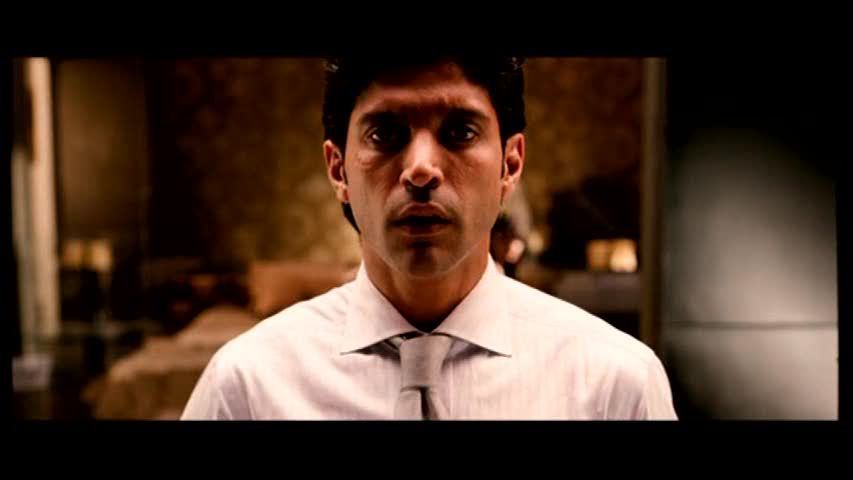
Aditya (Farhan Akhtar) has become a beige DRONE. Or should we say just another brick in the wall?! Nyuk nyuk nyuk...


Aditya's wife, Sakshi (Prachi Desai), finally gets tired of living with a zombie and, via a chance finding of Aditya's secret "band memory box" in the attic, she works to reunite the four boys in the hope that this will reignite Aditya's lost joie de vivre. As this plays out, we are treated to interlinking flashbacks which show us how the band broke up and why.

Farhan Akhtar, the well-regarded director of Dil Chahta Hai, makes his acting debut in this film - and he seems to be turning into an auteur for movies which directly address the dreaded quarter-life crisis through the lens of bourgeois hipster twenty- and thirtysomethings. Dil Chahta Hai was a smash hit since it touched a chord with the growing yuppie class in India, and Rock On!! follows much in that vein. The characters here are all relatively privileged, well-off individuals who live in swanky pads and dress in designer clothes. The only character who seems at all concerned about money is the slightly more middle-class Joe who, interestingly, is portrayed as a Goan Christian and therefore exhibits some characteristically Goan hippie trendiness. We say "interestingly" because more typically, in a masala film, poverty or middle-classness comes with a whole host of conservative norms, usually going hand-in-hand with Hinduism or, more rarely, Islam. Given that Christians are often seen as pretty fly cats in Hindi films - see Amitabh's boisterous Anthony Gonsalves in Amar Akbar Anthony or SRK's wacky parties in Kabhi Haan Kabhi Naa - this gives Joe the liberty to, well, be a dreamy-eyed rock star rather than an angry young tapori.


And God said, LET THERE BE A TOTALLY KICKASS POWER CHORD!


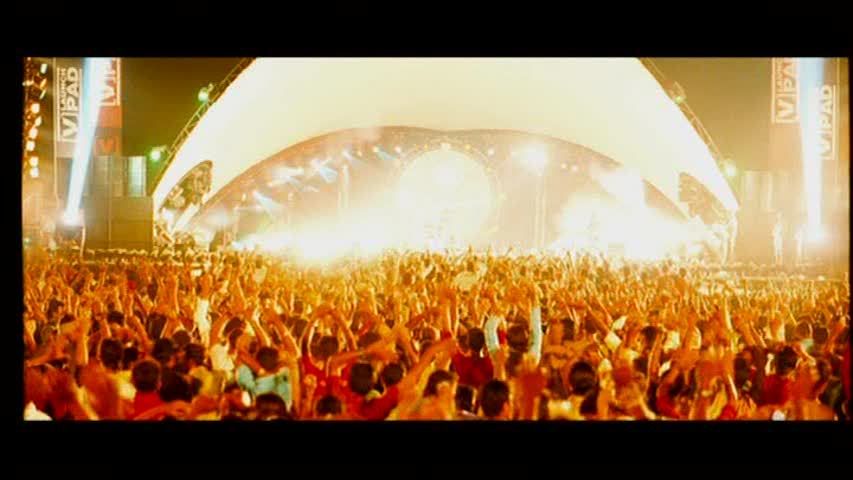
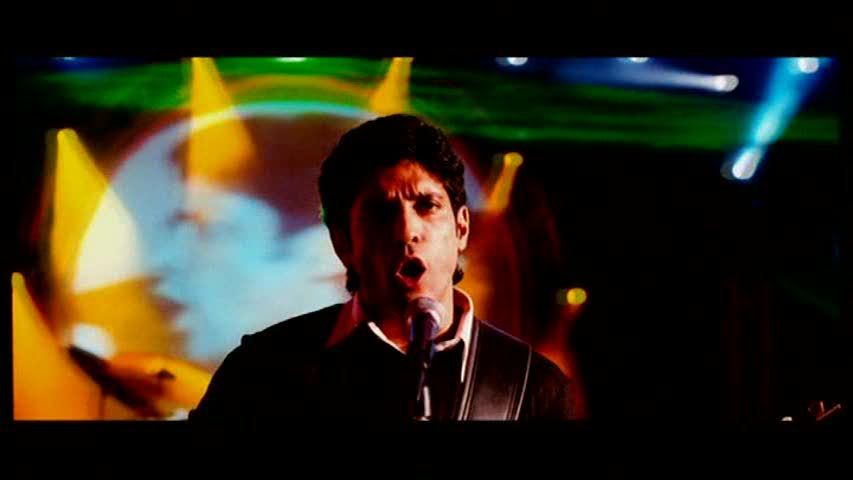
The best scene and the only one that lived up to its promise was the final concert. When Farhan Akhtar hit those falsetto notes (which, btw, he's a triple threat: actor, singer, director!), and with all those streaming colors, we had Radiohead at Glastonbury flashbacks. Joy...


All this means that this'll be a great film to show your Bollywood virginal friends, as it's no different from a Hollywood film. The aesthetics - bright colors, slap-dash camera angles, inventive editing and heart-meltingly gorgeous focal depth - resemble the energy and youthfulness of a tamer Danny Boyle (ironically!). There's even the presence of the mystical Hipster Color Combo - blue and orange - found in hipster movies and hipster books! Eerie, man.


GASP! Blue and orange! The official colors of our people!


The only problem is that these hipsters may come from the Planet Cool, but they seem to have forgotten their Hindustani heart. The only times when Hindi music is even considered as a possibility, it's presented as the very antithesis of rock, and it's either shown to be soul-deadening (Rob's work with Anu Malik), worthy of ridicule (the band's Dandiya concert), or tongue-in-cheek cutesie (Sakshi's karaoke moment).

Yes, we feel a little silly saying this, as we constantly criticize the overwrought nationalism of other, more jingoistic Hindi films, but we really missed Indian culture in this film. The characters lived in a bubble of globalized, heavily Western-influenced luxury, completely detached from the realities present in the usual Hindi film: familial demands (the guilt trip!), institutional corruption, poverty, the often-constrictive dharma. So while Rock On!! should be pretty enjoyable to a Bollywood novice, it won't be particularly enlightening. (For this reason, we're much more looking forward to Farhan Akhtar's upcoming Luck By Chance, which satirizes the Hindi film industry with the same knowing, angst-filled hipster aesthetic.)


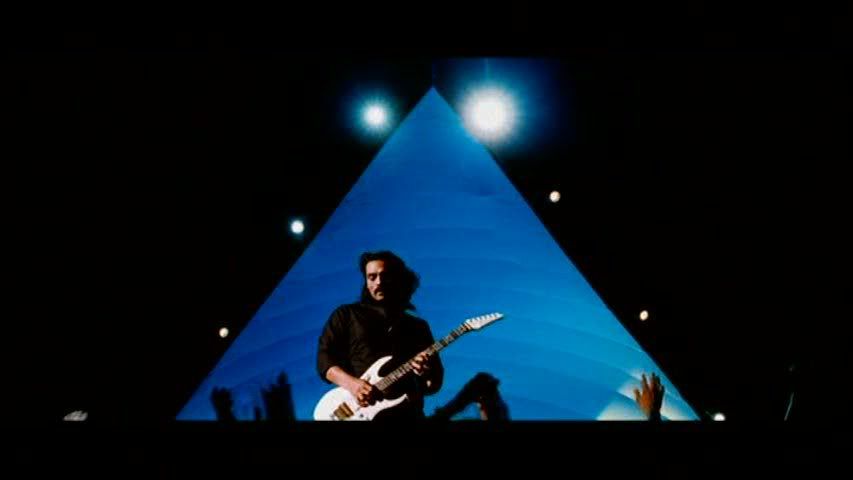
So when's this coming out on Guitar Hero?! And look: Pink Floydy triangles!


Don't get us wrong. The PPCC is all about cross-cultural fertilization and the glories of fusion. Jhoom Barabar Jhoom is a good example of a film that manages to take Western and Indian aesthetics and create a quirky, lively, fresh hybrid. Heck, even the outrageous tackiness of Tashan merits praise for forging brave, new paths of fusion fashion. Rock On!!, for however pretty it is, often comes across as a mediocre mimicry: we weren't impressed by the songs, which sounded like uninspired and recycled pop (except for the outstanding Tum Ho To with the Baba O'Rily-esque ending), and the costume design was metrosexual but standard.

That said, we can see how Rock On!! is a necessary breath of fresh air to Hindi commercial cinema. While it doesn't seem very relevant except to trendy hipsters thick in their quarter-life crises (PPCC bell goes CLANG!), and it doesn't have much to Say, it does attempt to introduce the indie culture into films and that is a worthy target indeed. Today's grade is a B-.

Wednesday, 21 January 2009

Ram-Avtar (1988)

Ram-Avtar starts out very strong, with a fun, quirky vibe, drunken "tapori bastard" antics and some "Aww!"-inducing bromantics. But then, at around the halfway mark, the film starts to rot away like that perfect papaya you left on the counter for too long. With each passing scene, it rots and rots, eventually crumbling into a lesser copy of the already trying Sangam. Dude, we've already seen this film, and it was such a drag.


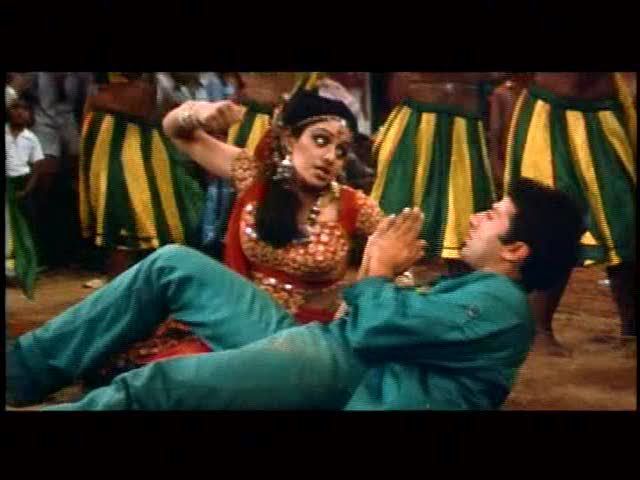
Ram (Sunny Deol). This scene awakened an intense craving in us for some Sound of Music action. Expect that from your local PPCC soon.


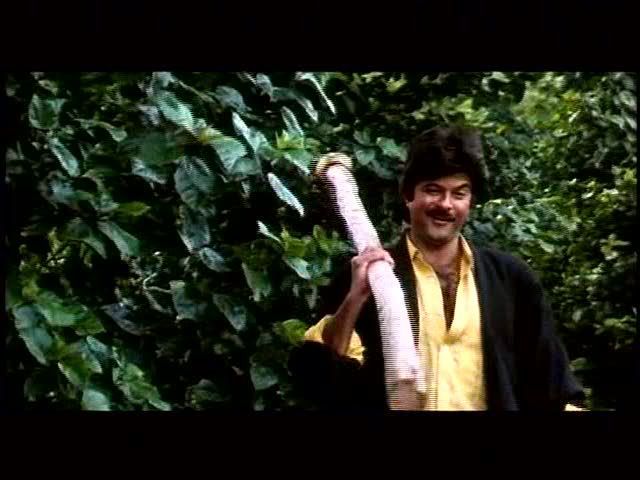
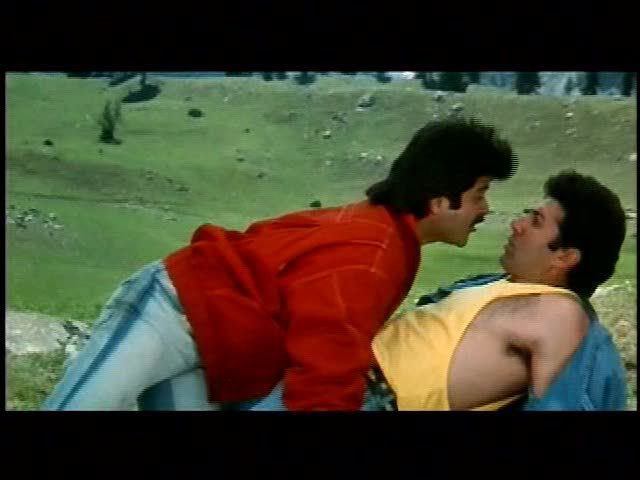
Avtar (Anil Kapoor)! This scene awakened an intense craving in us for... well, more Anil Kapoor action. Expect that from your local PPCC soon. Okay, you probably already do.


The strong opening: businesslady Sangeeta (Sridevi) lives in a village near Srinagar and keeps getting hassled by the wicked Gundappaswami (Shakti Kapoor, in heavy "South Indian" makeup) and his "Seven Bald Men" gang (yes, really). To fight them off, Sangeeta hires her own muscle: a silly, drunken cartoon named Avtar (Anil Kapoor). In a grand entrance reminiscent of Anil Kapoor's introduction in Ram Lakhan, or even Toshiro Mifune's introduction in any number of Toshiro Mifune movies, Avtar is thrown from the bus in the middle of town square, dead drunk. As the goons encircle and harass a pair of poor villagers, the tension rises, the noon sun burns quietly, and suddenly, at the nagging of a rooster, Avtar rouses himself to ass-kicking effect. "Khalaaaas!"

Now who doesn't love an ass-kicking tapori with a heart of gold? Uh, NO ONE. So after this single bombastic entrance, the entire, grateful population of the village (and the PPCC) falls in love with Avtar, and he meanwhile falls in love with Sangeeta. But it's clear that Sangeeta, for however endearingly scruffy she might find him, is not interested.

Enter the hunky, squeaky-clean Ram (Sunny Deol), Avtar's childhood friend. Ram and Sangeeta bump into each other a few times, and while Ram is smitten, Sangeeta's not really interested... that is, until he saves her from a Rohypnol-wielding Italian stereotype (!) Marconi (Manik Irani). Then, grateful, she falls for him. (Gratitude and love are really the dominant feelings here.)


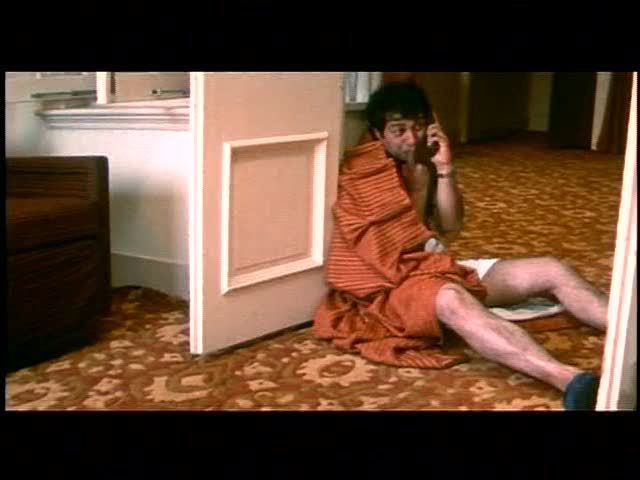
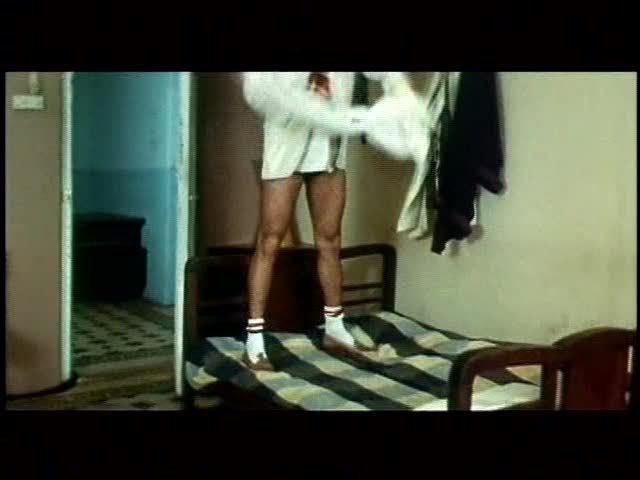
The boys have a lot of funnily effeminate moments, such as when Ram wraps himself in a shower curtain of cuddliness.


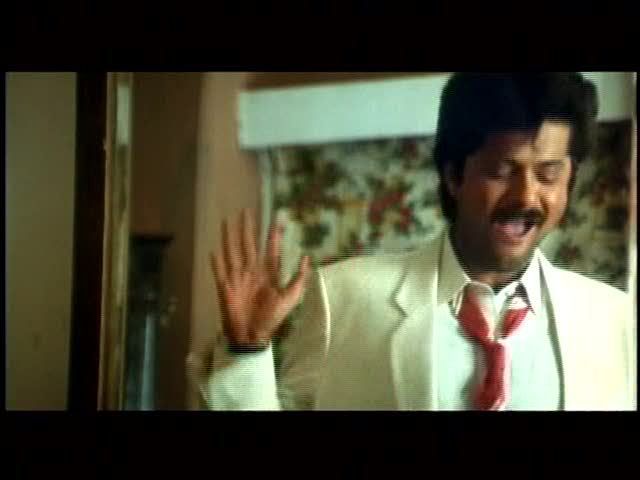
Or Avtar squees because of his new suit.


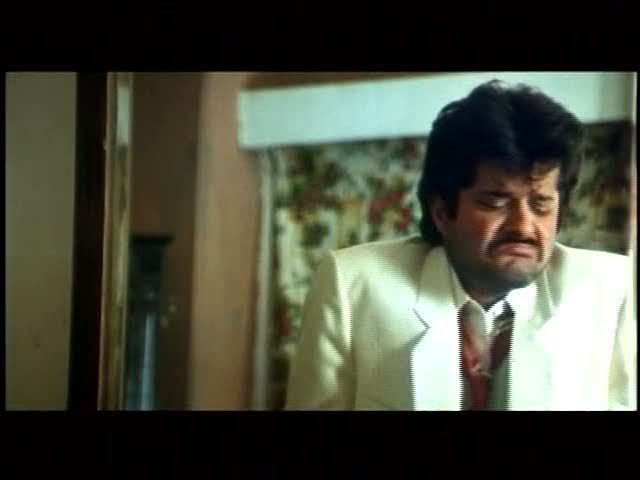
And then starts mugging in the mirror and pulls the French face fart the Italian shrug! Oh, bless.


Yet while Ram and Sangeeta's relationship soars into the usual Himalayan heights, Avtar is getting similarly swept away by his growing crush for Sangeeta. Eventually, both boys approach her father for marriage arrangements on the same day, at the same time, and when one of them figures everything out - in this case, Ram - the rest of the film progresses much as you would expect: it turns into Sangam, with Ram and Sangeeta quietly suffering as they protect the increasingly fragile Avtar from the cold, hard reality that... OMG! They had feelings for each other! But Avtar would be so sad and lonely if they just told him! Clearly that means someone has to get out of the way... BY KILLING THEMSELVES.

Sigh. If you know old Hindi films, you know several things in filmi love triangles are certain: no one JUST SAYS IT, no one can apparently cope with break-up, marriages are sacrosanct and an unhappy, shambolic marriage is better than a divorce (even if a divorce would make everyone concerned happier), "love is just a feeling that happens, marriage is a fact" (Sangeeta's words!), and love triangles are deadly. By the end of the film, when the three characters were wrestling each other over who gets to commit suicide first, the PPCC couldn't help but laugh. Filmi morality can get so contorted at times. Goodness, yes, breaking up is hard to do (and hard for audiences to accept, apparently), but, gosh, when it's a question of triple suicide and breaking up... come on, people!

It's interesting, though, isn't it? So many Hindi films are moral fables which propagate cultural norms (sometimes effectively, sometimes ineffectively) and it's always striking to see films martyr their characters in the name of ideals. In this case, marriage is shown to outvalue human life. And, unsurprisingly, it's the woman who preserves the cultural norm: as in Woh 7 Din, even though she is unhappy in her marriage, Sangeeta does everything she can to preserve it.


Who loves each other more? Him and her?


Or him and him? We rest our case.


We at the PPCC were just bewildered that this film decided to go the Sangam way at all. The beginning was so breezy! It was Salaakhen-style charm: fun fluff, a tongue-in-cheek vibe, everyone in visible good humor. When Ram realizes that he and his best friend love the same girl, and Anil Kapoor pulls a face of such heartbreaking vulnerability, we thought, "Awww, the poor dear! Now they better not undermine this by playing it for laughs." Little did we know they would swing the entire narrative to the other side and play it for maximum melodrama! Sigh.

It's like the film was suddenly wrestled away from the original director. Similarly, the performances, which were bright-eyed, bushy-tailed and sweetly ridiculous in the first half, suddenly came clunking down into dead-eyed moral pontificating. There was some fun in watching Anil have his trademark scene of meltdown (now in Johnny Walker Black Label variety), but even that couldn't rouse us from the stupor of boredom the second half provoked.


So we'll use this opportunity to note the best physical asset of Anil Kapoor: his surprisingly shapely, muscular legs! Wow! Has he been blessed by the squat god or what?!


Review: khalaaaaaaas!

In site news, check out our newest fiddly widget below this review: the REACTIONS buttons! For those readers too lazy/shy to comment, now you can have your feelings articulated at the CLICK OF A BUTTON. OMG SQUEEEEEE!

Tuesday, 20 January 2009

Chandni Chowk to China (2009)


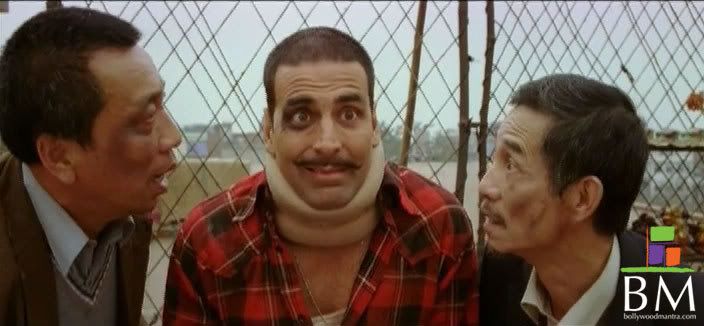
Now the PPCC is not going to bash Chandni Chowk to China (CC2C), as other critics have, because the film did one thing well: it managed not to rely on an endless series of Chinese stereotype jokes. Our expectations were pretty low and we were just so relieved that no one started blurting out over-the-top fake Mandarin that we could almost - almost - like the movie. Couple that with some off-beat film references - including Lust, Caution!!! - and we can conclude: Chandni Chowk to China is not very good, even by low-brow spoof masala standards (we just weren't that emotionally invested in it, nor did we find it that funny), but it is also not that bad. Anyway, kung fu is always fun.

Filmi Girl noted that it is bewildering that Warner Bros. chose to use this as its hyped-up, heavily advertised, Bollywood-for-Americans vehicle. It is, after all, chock-full of self-references that assume a long cultural memory of both Hindi and Hong Kong cinema. The typical American viewer weened on Monsoon Wedding for "Bollywood" and Kill Bill for "kung fu" is not going to pick up many of these. So why sell this to the mainstream American audience? Well, it dawned on the PPCC that this film's story type - the epic hero, the quest pattern, the loner seeking vengeance, the unlikely hero "making it" - is characteristic of the kung fu genre (which this film spoofs) and has had a historical appeal among American audiences too. CC2C is thus not really masala by the usual definition - there are no brothers, no corruption, and no mothers. Instead, we follow the slow, painful transformation of the loser vegwallah, Sidhu (Akshay Kumar), into a lean, mean, fighting machine. The film even has a particularly un-masala moral: Believe in yourself! Make your own destiny! It's not who you were in a past life or where you were born, it's what you make of yourself here and now!


This is the Lust, Caution parody bit. Just look at this! Don't agree with us? Then you are BANNED FROM THE PPCC FOREVER.


This is in stark contrast to the more typical masala convention of reinforcing dharmic obligations and a hero ultimately conforming to his righteous, moral place in the social hierarchy (or an anti-hero reforming himself towards the same aim). How many times have we watched sighing lovers be separated thanks to caste, religion or just plain parental whimsy? How many individuals have we seen swallowed up by the community? Sidhu instead has no such problems. He's almost entirely free of ties (his only family being a kindly man who adopted him, played by Mithun Chakraborty) and hence can make his own destiny, picking himself up by his bootstraps and generally following a heroic pattern more typically found in American films. The question of whether Sidhu is really the One, in the same way iconic Western heroes like Neo, Frodo, Harry or Luke were the Ones, that is, the reincarnation of an ancient Chinese warrior, is the driving force of the narrative but also, interestingly, left ambiguous. Or maybe we just forgot. Anyway, the point is that Sidhu doesn't inherit heroic powers or, for that matter, a whole load of responsibilities and family ties in the same way a masala hero would. Instead, Sidhu regularly shirks his "dharmic role" of lowly vegwallah and seeks a number of get-rich-quick schemes with the local Chandni Chowk palm readers, Sufi mystics and, of course, the conniving Chopstick (Ranvir Shorey). The tragedy that propels Sidhu on his vengeful kung fu path is not, as in masala, something that happens to his family in the prologue when he was too young to do anything about it. Instead, the tragedy happens indirectly because of present-day Sidhu's present-day choices: it's his own fault and only he can fix things and he has to fix them now!

CC2C does have a few superficial trappings of old school masala, though, as there are the usual extreme swings between extreme emotions (melodrama! slapstick comedy! dishoom dishoom!) and there is also, yes, a pair of twins separated at birth (Meow-Meow the evil vamp and Sakhi the cute advertising girl, both played by Deepika Padukone). This leads to some very masala-esque family reunions. But the heart of the film is much more individualistic a la Ayn Rand (an oddly popular reading choice among some Hindi actors, we keep noticing!) than old school masala. Just as Sidhu doesn't have the obligations of dharma, community and family, he also doesn't have their help: he has to literally make himself what he is from scratch.

Despite all this, we expect that trying to sell CC2C to the mainstream American audience will be like trying to sell Slumdog Millionaire to the mainstream Indian audience. Both films contain an essentially familiar core (self-made hero for CC2C, two warring brothers and happy endings for Slumdog) sold in a completely unfamiliar package (zany masala comedy for CC2C, trendy hipster aesthetics in Slumdog). We don't expect either to do well outside of their primary target audience.

But here's something the target audience can enjoy: CC2C is also chock-full of (sometimes mindblowing!) references. For example, the tongue-in-cheek referencing to the shared socialism of historical Sino-Indian relations. The ancient Chinese hero Sidhu is believed to be a reincarnation of, Liu Sheng, is iconically captured with a hammer in one hand and a sickle in the other as he defeats the oncoming foreign hoards. Later in the film, Sidhu picks up another hammer and sickle and calls out to the Chinese villain, Dojo (Gordon Liu): "Arre, bhaiyya! Hindi-Chini bhai bhai!"

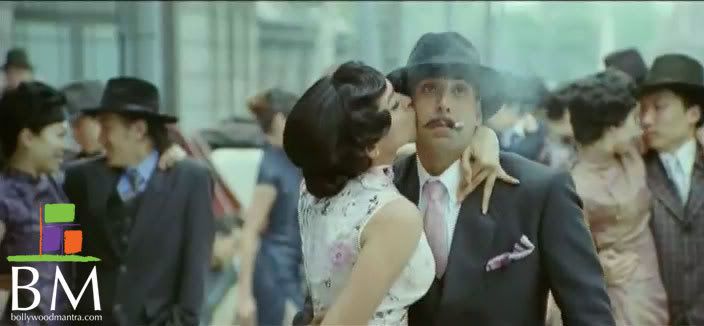
There were also loads of film references, and so for those of you who have been pining for the day when Akshay Kumar would do his best impression of Rekha's Salaam-e-ishq dance (we know it's not just us!), here's your chance. More interesting were the references to non-Hindi cinema. The villainous Dojo, with his flying bowler hat of DOOM, is a direct tribute to Oddjob and his evil hat from the James Bond series (and we were then reminded of the Odd Job parody in Austin Powers: "I mean, who throws a shoe?!"). Chinese culture was also reference: for example, the whole warrior with the baby scene, featured in Three Kingdoms, Red Cliff and ancient Chinese literature. Another example: in the title song, Akshay Kumar and Deepika Padukone find themselves first in the flower-laden Forbidden City - site of several wuxia epics and, we reckon, a direct homage to Zhang Yimou's Curse of the Golden Flower - and then they zip off to a wartime Shanghai street corner, dressed in identical costumes to Tony Leung Chiu Wai and Wei Tang from Ang Lee's recent Lust, Caution. Lust, Caution, for the love of God! A Hindi film just referenced Lust, Caution! Excuse us while we pick up our jaw off the floor.


Akshay Kumar in a wickedly unglamorous, unselfconscious role.


Akshay Kumar is really the main attraction of a film like this, as it's a tailor-made star vehicle for all his wacky charisma (and real-life martial arts skillz). So basically: if you dislike Akshay Kumar or don't know who he is, you'll probably find CC2C quite trashy and torturous. If you like Akshay Kumar (as we do!) you'll find CC2C quite trashy but tolerable. We haven't seen much Akshay, but everything we have seen has showcased his earnest sweetness with a dash of dolt (Welcome, Tashan, the little of Dil To Pagal Hai we could bear to watch...). We had to give Akshay full props for giving a real paisa vasool performance (what's the industry word for it? full eighteen reels?) and, importantly, not shying away from the unglamorous bits. Sidhu is a drooling, farting idiot in a fatsuit (that was definitely a fatsuit - just watch the drunken song!) for much of the film, and if we had seen one more string of saliva or dripping nose of weepiness... well, we would have been grossed out. But we also had to admit: damn, the man is pulling out all stops, and he doesn't care if he looks like an idiot. Which of course only endears him more to the audience! He only really cleans up in the last thirty minutes of the film, but we at the PPCC don't need to root only for prettiness. We were with him all the way, the silly goof, whether his underpants were showing or not.

Monday, 19 January 2009

Janbaaz (1986)

Moral purists, beware: Janbaaz (Daredevil) is not for you. It is a raunchy, sleazy, anti-morality fable that is sometimes nightmarishly (sometimes hilariously!) anti-puritan. The heart and soul of the film - the lustful attraction between the thoughtless hedonist, Amar (Anil Kapoor), and the badass, hard-core Reshma (Dimple Kampadia) - is not very vanilla or even masala. It's actually a lot more... Rocky Road (da dum shhh - thank you, thank you, we'll be here all night). Rocky Road with a strong helping of 1980s tackiness and SLEAZE. So if you recoil from vile anti-heroics and dodgy fashion sense, stay away. If instead you are like the PPCC and you suspend not only disbelief but also moral indignance when watching certain films, then Janbaaz is a plain ol' hoot and a hog. Or should we say: (insert your own poultry-related double entendre here). We loved it! It was a spectacle of pulp! Gosh, Anil's good at those. We also think (drumroll) that what it's really really about is not the 1980s fashion of drug dramas, but the modern cult of Dionysus.


Your brain on drugs.
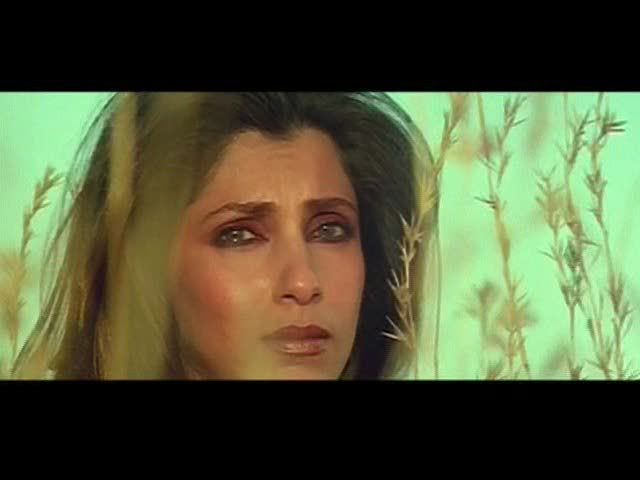

The gorgeous and (mostly) empowered Reshma (Dimple Kampadia).


Molding itself along the two-brothers masala standard, only with a filter of old school Miami Vice, Janbaaz concerns itself with the strange moral quagmire that is the Singh family. These people run the gamut of the usual Mother Theresa-meets-Gandhiji fare (a favorite of masala moral tales!) to... well, Anil Kapoor in full-on bastard mode. The father, Rana Vikram Singh (Amrish Puri), is an aging epicurean (small e) who finds his older, straight edge son, Rajesh (Feroz Khan), incredibly dull, and instead showers praise and encouragement on his permanently-in-a-stupor younger son, Amar (Anil Kapoor). On a night when Amar lurches home after snorting lines of cocaine and playing Russian roulette, father Rana laughs with gusto: "Bravo, son, well done!" What's an honest Stoic (big S) to do in this house of sin?

Well, poor, harassed elder son Rajesh asks himself this, again and again. A police officer in the Narcotics squad (Hindi Movie Irony Bell goes CLANG!), he toils in a sighing, hang-dog way under the moral contradictions of his father and the moral vacuum of his brother, still grieving over his lost love (Sridevi in a cameo) and getting no love from anyone - except maybe his similarly bewildered-lost-lamb mother (Sushma Seth).
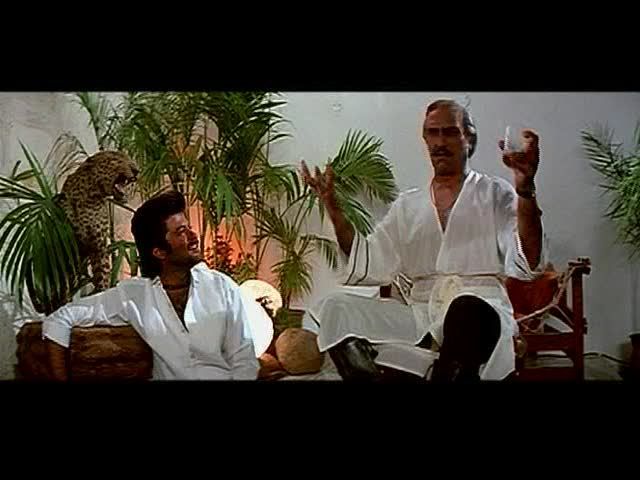

Father and son yakking it up over the most inappropriate party stories.
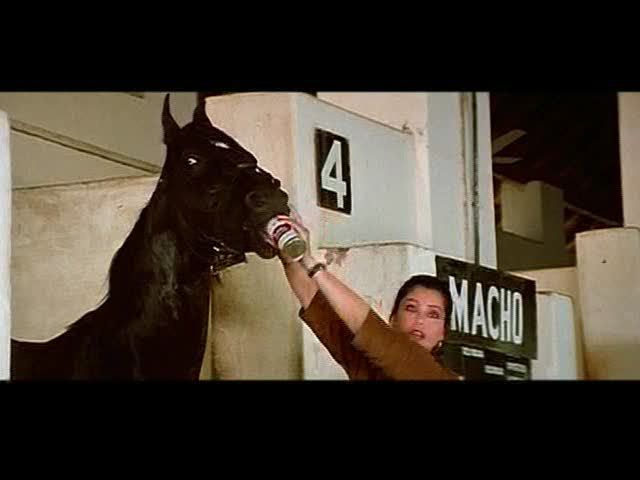

See what Reshma can do to your Macho!


One day, a new element is thrown into the mix with the arrival of the strong, capable Reshma (Dimple Kampadia). Recently orphaned after her gambler father (a dashing Kulbhushan Kharbanda) was killed by the local drug gang (among them Shakti Kapoor), Reshma is more like Rajesh: serious, hard-working, living unhappily under a shadow of sin (she's an illegitimate child, something no one ever tires of reminding her), and she doesn't suffer fools gladly. Or, for that matter, lecherous fathers and wastrel sons. As Amar tries his usual come-on strategy of strutting around and making godawful double entendres, Reshma does what any self-respecting girl would do: she rolls her eyes, gives him a good slap now and again (including ramming pie down his throat in one of the most satisfying scenes) and even - interestingly! - shows him who wears the pants by unmanning him via his horse (appropriately named, "Macho"). And then - surprise! - she falls for him, or falls for something, and soon enough they're rolling around in the hay.

And it's all fun in the hay until someone gets a pitchfork to the back, and we find ourselves on the run with Amar and Reshma on the motorcycle and Rajesh following close behind. Throw in one disgruntled drug gang, and the fact that it's 1986, and you're in for some full-throttle, grenade-explosion, flame-thrower dishoom dishoom.

There's a word in Italian for what Anil Kapoor looks like in this film: "sbronzo". Basically, it means sozzled - but not just drunk, it means that sort of tanned, bleary-eyed, ravaged nose drunkenness found only in the most devoted long-term drinker. As he guzzles champagne for breakfast, snorts coke for lunch and knocks back Johnny Walker for supper, you can only imagine what Amar's liver must look like! That man may be young, but - thanks to Anil's constant blush and trademark scraggly stubble - it looks like it's taking its toll, too. A tough cookie like Reshma is just what this guy needs if he's going to live past 35.
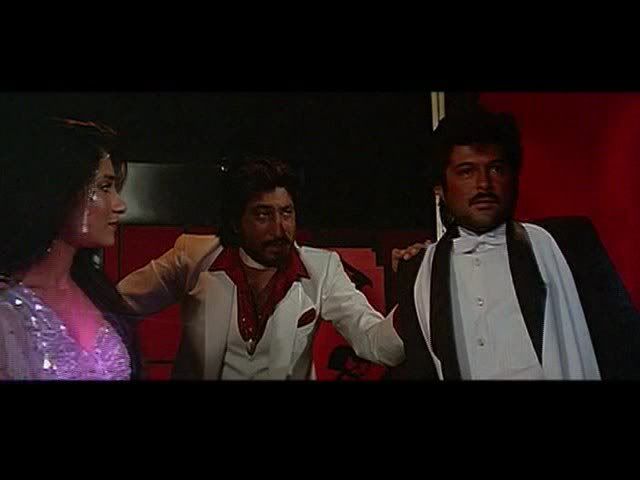

Sbronzo! Not to be confused with "stronzo", which is, well, also applicable.


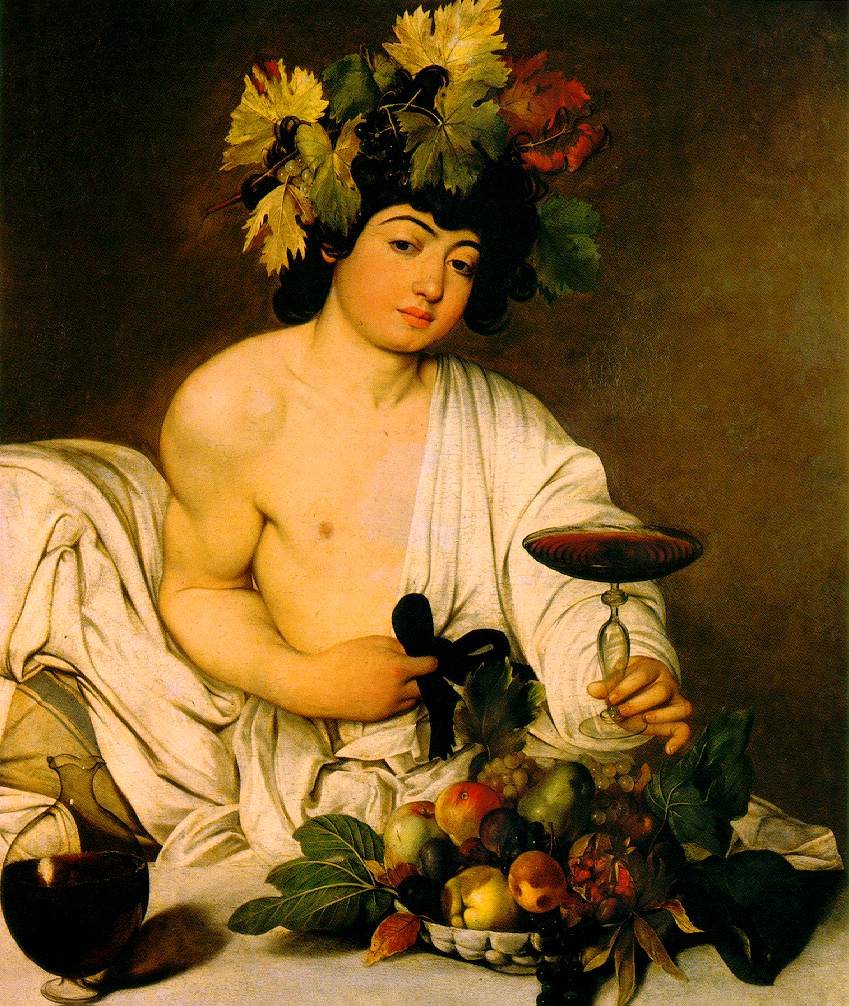
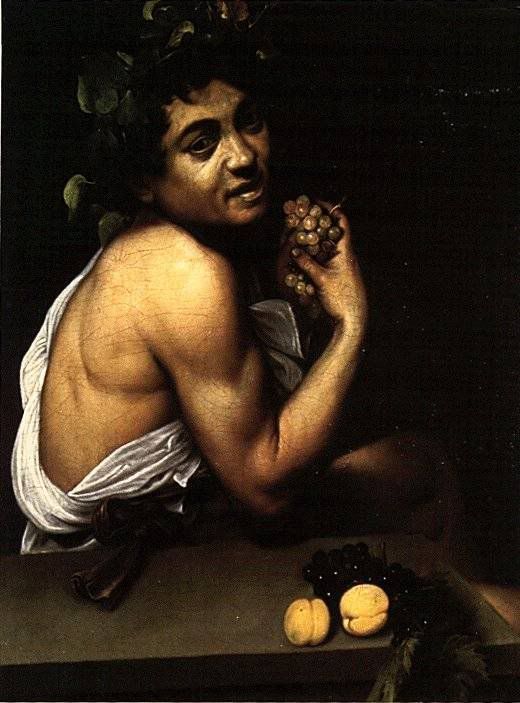
Which segues nicely into Reshma and the relationship: a more typical masala heroine would have fallen for the poor, quietly tragic Rajesh, not the jackass Amar. And yet Reshma falls for Amar! Is it his gracious charm? (Definitely not, he has none!) Is it his studly mustache? (Possible!) We actually think she falls for that glamorously tawdry Dionysus in him. For those not up on their Greco-Roman mythology, Dionysus (called Bacchus by the Romans) was the god of wine, women and theater. He had all sorts of colorful, grisly things happen to him (including getting ripped apart by the Titans during one of his various deaths) and he represents, in modern aesthetics (and thanks mostly to Nietszche's reinvention of him), that sort of loose cannon, unregulated, uninhibited and unintellectual art that comes straight from the gut. A good example would be Jackson Pollock: an alcoholic painter famous for a style where he used to fling, dribble and pour the paint onto the canvas.

So Dionysus - the original and most archetypal "black sheep" of Olympus - has an attractively rebellious anti-hero quality to him, and he has become - like the Byronic loner - a standard character found in various incarnations in various media (film, music, art, etc). Dionysus has long been associated with the primal, and the marginal strata of society - back in the day, there was the cult of Dionysus which was renowned for its frenzied, crazy meetings and shrieking female fans. So of course Amar - the Dionysus of Janbaaz - is (1) going to be a male chauvinist jackass whose sole motivations are satisfying base, primal impulses and (2) Reshma, a "marginal" of society (lady! tough lady who wears pants! illegitimate daughter!), is going to fall for him. Tellingly too, their relationship is all about lust initially - even from Reshma's side (as baffling as that may be considering Amar's fashion sense - off-the-shoulder sweaters! - and hairiness), a rarity in the genre. Things go a lot more Hindi when that initial attraction turns into the emotional investment of real love and Reshma becomes a helpless damsel in distress. But everything up until that point: pure, seedy Dionysian. And the point of this film and the source of its notoriety is, after all, its envelope-pushing seediness, not its somewhat deflated ending.
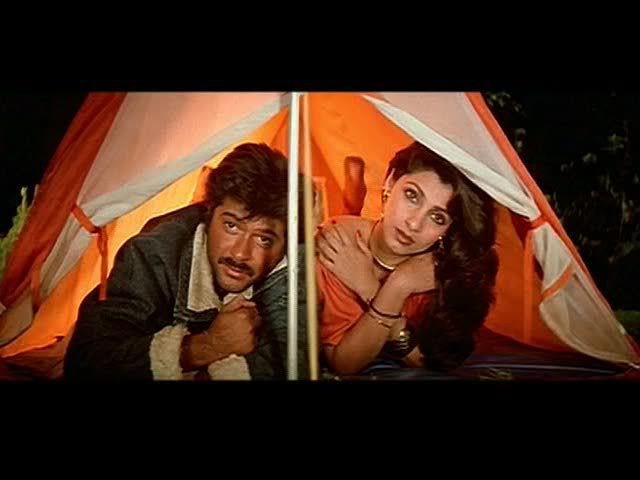

Dionysus and Ariadne?


A short interlude about the PPCC's critical philosophy

Now, just to preempt a comment that could be made: yes, we know that Feroz Khan probably wasn't thinking explicitly about Dionysus/Bacchus when he made this film. But that doesn't mean the meaning's not there!

We at the PPCC are followers of the "death of the author" school of thought - that is, we don't believe that the author/artist/filmmaker's intentions are the most valid interpretation of a text/art/film. Just because the author didn't consciously put something into his art doesn't mean it didn't end up in there anyway. To take an example, J.R.R. Tolkien intended Lord of the Rings to be a Catholic allegory, but he also ended up with a World War II allegory - something he fervently denied. Does this make interpreting Lord of the Rings as a World War II allegory wrong? Not at all! In fact, it would be silly to dismiss the idea, considering Tolkien's background and context. (For crying out loud, he wrote it during the war!) You can go even further: people have argued that Lord of the Rings is an environmentalist allegory. Indeed, ecocriticism - the interpretation of literature through the lens of environmentalism - is a very recent development that by definition relies on reevaluating older texts in a completely modern way - a way which was probably furthest from the authors' minds. Of course Shakespeare probably didn't mean to make King Lear a "green" play, but that doesn't mean a green interpretation is wrong or invalid. Quite the opposite! And it's one of many, many valid interpretations. The possibilities are really endless!

Before you think we're just critical theory anarchists who'll accept any interpretation about anything, we do have two rules. An interpretation is valid if:
1. It presents a genuinely novel, stimulating way of understanding both the text/art/film and, where possible (brownie points awarded), reality. For example, Film X is a meta-representation of Swiss cheese...
2. It does so in a convincing, rigorous way, using real evidence from the text. For example, ...because its plot is full of holes!

So basically the argument is important - as long as you've got evidence and facts (Amar is a wastrel, Dionysus is the god of wastrels, Dionysus was worshiped by marginalized women, a marginalized woman falls for Amar) then you've got a valid argument (Amar is Dionysus). The fact "Feroz Khan probably doesn't know that much about Dionysus" is just as important as the "Amar is a wastrel" fact - one doesn't cancel out the other. QED. Ta da!

Back to the review

Anyway.

In terms of performances, everyone is fine - with the real stand-out being Amrish Puri. Feroz Khan, who also directed the film, channels Manoj Kumar both in his directorial style and in his performance: he's the put-upon, quietly suffering, noble fighter for justice. The only problem is: we like it better when Manoj Kumar does it, perhaps because of his quirky, mumbling delivery style and nervous hands. Feroz, for however cute he is in an aging post-evergreen sort of way, seems to suffer from Frozen Face Syndrome.
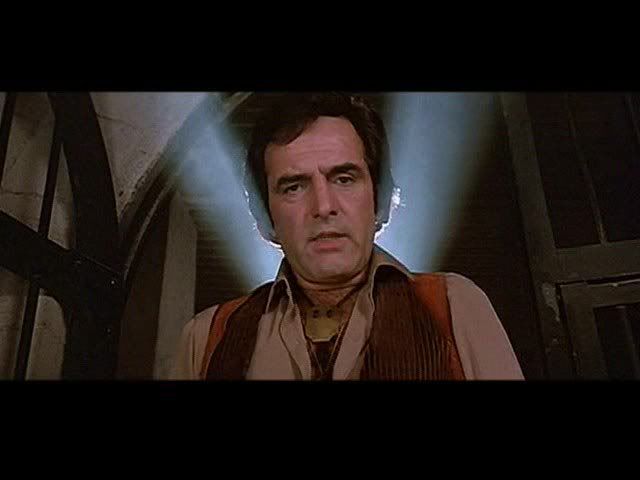

Feroz's frozen face, item 1: Interrogating a drug lord.
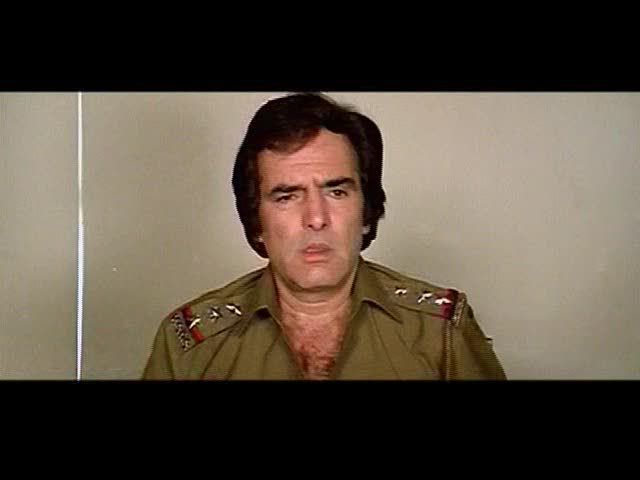

Item 2: hearing something horrible has happened to a loved one.


Anil Kapoor has the more colorful role and basically hams it up. He's already played a rated-PG Dionysus for comedy value in Welcome, and he's always been very good at projecting maximum sleaze. Plus, his OTT performance style is perfectly suited to characters with tenuous grips on their serenity (and sobriety). Yay for Anil (again!)!
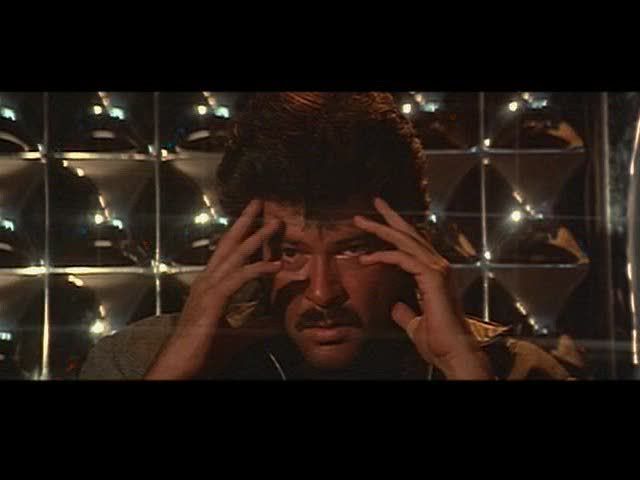

Dionysus doesn't feel too hot in chiaroscuro.


Dimple is new to the PPCC and, based on this debut performance, we give her two big thumbs up. In particular, she managed to find herself in a very feminist-unfriendly role - the girl who falls for the chauvinistic player and, later, the damsel-in-distress - and yet she manages to project strength, assurance and general badassness throughout the film. When she knees Shakti Kapoor during the dennouement - priceless. This girl doesn't need any help!

The standout performance though was Amrish Puri. He proved again and again that he could play the bug-eyed villain, but in Janbaaz, he gets a meatier role. The patriarchal Rana is a complex, contradictory figure: lecherous on one occasion and gently loving on another, a rebellious hedonist who becomes morally indignant about illegitimacy, and very, very flawed. But - like Anupam Kher in 1942: A Love Story - this was a role we could get behind, a role that gave an iconic villain a chance to flex some of those hidden acting muscles. It gave Amrish a lot of room to maneuver, and his gruff, morally ambiguous father figure was the best part of the show.

And finally, we should mention the aesthetics. Feroz Khan has taken a big lesson out of the Manoj Kumar School of Directing: hallucinogenic imagery (eggs exploding! hammers smashing into flowers! a cresting wave!) and INCREDIBLY BLUNT symbolism (wild, untamed stallions! the stud farm! passionate people literally catching fire!). He also seemed hell-bent on pushing the Hindi mainstream envelope. We all know about the roll in the hay by now, but there's also the overall theme of humanizing the immoral anti-hero and tough illegitimate daughter as well as the crazy amounts of on-screen drug use, violence and eroticism. This still doesn't get much further than an American PG-13 rating but it was, in a Hindi film, very unexpected!

Anyway, there's still more we could talk about - the Sufi presence was well-noted, and it would be interesting to compare Sufi and Dionysian aesthetics; also, Rekha's WTF cameo - but we'll leave that for another day. Today, we can only encourage you to enjoy Janbaaz, but please, watch responsibly.