Showing posts with label notable gender relations. Show all posts

Sunday, 25 September 2016

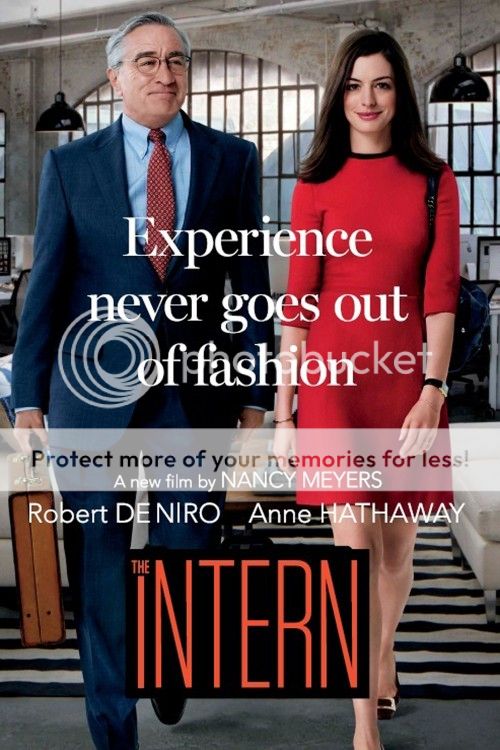
The Intern (2015)


A spiritual sequel to Working Girl, The Intern is a moral, feel-good fantasy that touches on two of our favorite topics: the changing nature of work, and BUSINESS FEMINISM (yyaaaayy). The Intern is more earnest and optimistic than Working Girl, but its scope is also more expansive.

Jules (Anne Hathaway) is the smart, impassioned founder of an exploding, StitchFix-like fashion tech company in Brooklyn. She's firing on all cylinders and her company is a spot-on caricature of today's tech world: giant, open plan warehouse office, army lines of iMacs, endless screens of fashion clothing and code, code, glorious code! Also Millennials, every which way! Millennials being awkward and snarky! Oh, the youths. Oh, you sillies.

Into this silicon spritz world steps 70-year-old Ben (Robert DeNiro), the company's first "senior intern". The film opened with Ben, and he's basically the Platonic ideal of a senior citizen: hale and hearty, handsome and active, there just isn't enough to do for this uber-mensch out to pasture. Wise and funny, warm and gentlemanly, he carries the best parts of a bygone Golden Era where men groomed well and treated women chivalrously - but he's also, magically, unicornly, completely updated in his feminist thinking.

He is - and we hate that we can't find it on Google - what Jungians? Freudians? some psychoanalysts would call the Empathetic Sage Fantasy. You know when shit is tough and your life seems to be sucking and you JUST WISH Obi-Wan Kenobi or Gandalf or some other kindly grandfatherly type would just be in your corner for a while? Fighting your fight for you, calling you "champ"? Ben is that guy. He is that archetype. And while Jules starts drowning under her mountain of work (there are only so many hours in the day!), juggling a young family at home too, she quickly recognizes that Uber-Gandalf has just walked into her life - and everything will now be OK.

The main themes of the film center on being a smart, energetic businesswoman in a world where the glass ceiling is still there and women need to worry about "having it all" and dying alone - and that certainly hit us right here - but there are some very deft sub-themes about what work used to mean, and what it means now. Of course, Ben brings only the best of the bygone era: he is diligent, organized, methodical, and has a laser focus. No nagging notification bells for him; no Internet-eroded attention span! This man knows how to work. He is also humble, gracious, excited about having A Job. It's touching - it's heartwarming - it sets itself as a counterpoint to the (myth?) more modern ideas of "finding your passion". Of course, Jules is following her bizniz passion - the whole movie's about that - but we still appreciate any tiny ways we can find those narratives. (See our Jiro Dreams of Sushi review for much more on Labor Stuff.)

Anyway. Ben also knows how to flirt (just groom!), and there is much gentle mockery of the extended adolescence of Millennial men ("Boys! Boys?!" Jules cries in one scene).

It's indulgent, it's less edgy than Working Girl (which remains primero in our Business Feminism sub-category), but it's joyous and presents a world where we get it all: endlessly scrolling code, free beer in the fridge, the zing of good business, and - as DeNiro says in one wonderful moment - that "bright, beautiful thing" of creating a great biz. On to Warren Buffet next!

Sunday, 12 June 2016

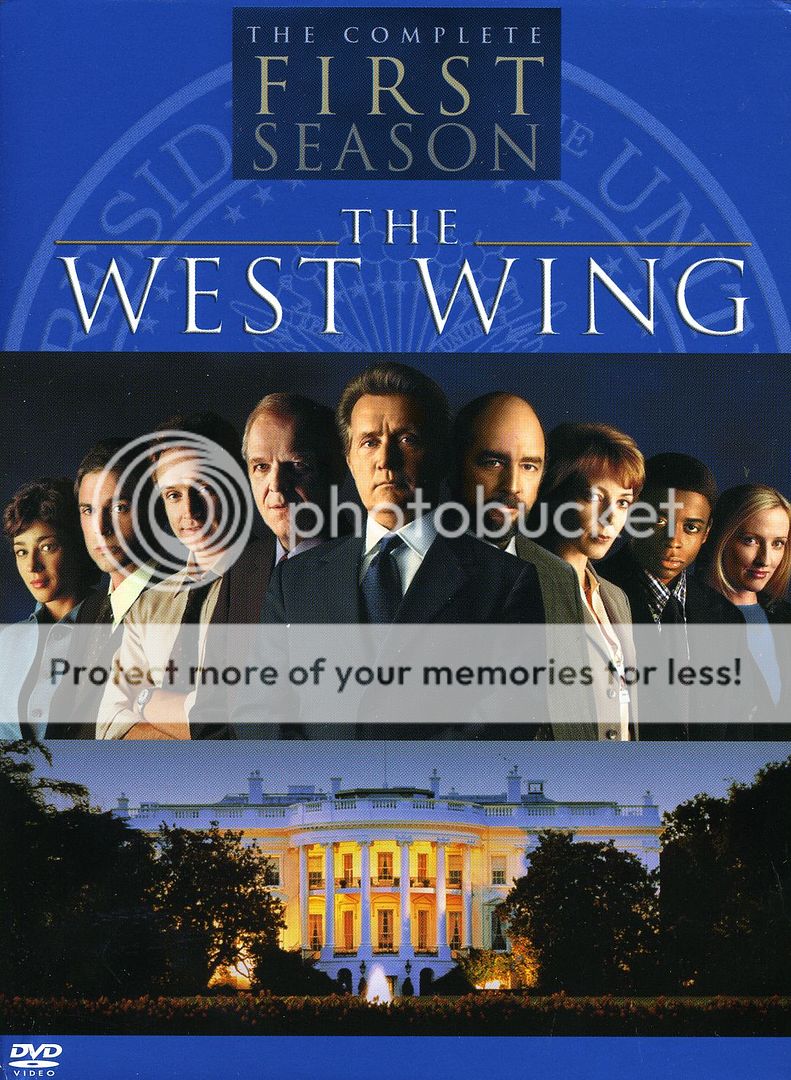
The West Wing (1999-2006)

As is our wont, we're joining a party 17 years late to rush in and say: OMG, guys, have you seen The West Wing? It's so good!

Just like Jesus Christ Superstar and Evita are about mobs; just like Star Wars is about false dichotomies; West Wing is about systems. Systems, systems, systems. And - since it's so goddamn optimistic and cleverly written - we find ourselves swept along: God bless America, indeed; God bless good institutions!

Told mostly via lively walk-and-talk dialogues between a core group of intellectual idealists (the White House staff), led by the most intellectualest of them all, philosopher-President Jed Bartlet (a born-for-this-role Martin Sheen), The West Wing unpacks both the quotidian chaos and overall chaos of Politics in America with glee and gusto. This stuff is fun and fascinating, episode by episode by episode by SWEET GOD IT'S BEEN TEN EPISODES WE NEED TO GO TO BED NOW.

One common, overarching theme is the clash between dumb humans, lofty ideals, and our institutions - and how that clash is constant, sometimes exhilarating, often painful. We're often reminded how much the President is a prop and a position, distinct from the individual currently wearing the suit, currently sitting in the egg-shaped office:

Father Cavanaugh: I don't know how to address you. Would you prefer Jed or Mr. President?
Bartlett: To be honest, I'd prefer Mr. President.
Father Cavanaugh: That's fine.
Bartlett: You understand why, right?
Father Cavanaugh: Do I need to know why?
Bartlett: It's not ego.
Father Cavanaugh: I didn't think it was.
Bartlett: There's certain decisions I have to make while I'm in this room. Do I send troops into harm's way. Which fatal disease gets the most research money.
Father Cavanaugh: Sure.
Bartlett: It's helpful in those situations not to think of yourself as the man but as the office.

Indeed, another thing we're often reminded about is that this group of idealistic, intellectual liberals are just one group in a long, long line of Presidents and staff: 44 such groups, so far!

King George III: They say / George Washington’s yielding his power and stepping away / ‘Zat true? / I wasn’t aware that was something a person could do / I’m perplexed / Are they gonna keep on replacing whoever’s in charge? / If so, who’s next?

We see systems come slamming down on the individuals when - for example - President Bartlet is shot (er, spoilers for season 1 stuff, whatever, we're like the last ones to have seen this). Everything goes batshit insane; Secret Service professionalism struggling to keep the blood and adrenaline and vomit from splattering onto everything (it does get on the cars). There's a wonderful quick moment - amid the assassination crazery - when the Vice President (Tim Matheson) is physically manhandled out of a low-stakes schmoozefest by a group of burly Secret Service officers: the look of fear on his face, marching with all those Secret Service hands on him, is - mwah - such perfect! Such writing! Such direction!

This trifecta clash - humans, ideals, systems - runs big and small. Such as the problematic charm of newspaper journalist Danny (Timothy Busfield) rom-com courting the White House Press Secretary, CJ Cregg (Allison Janney): doesn't this violate some sort of check or balance? And yet - it seems so innocent! So soft and fun! And then there's the unfortunate byproduct of these glorious, insane systems: politics (ughh). That is, the cynical political machine: the machine that worries about polls, reelection, and popularity - often at the cost of ideals. It's wrenching to watch CJ struggle to disentangle the personal from the political in the wake of a gruesome homophobia-driven murder in season 1: and she's the face! She's got to keep a lid on it!

And now: a loving paean to Toby. Oh, Toby Toby Toby. Like Season 3 Tigh, Toby is the heart and soul of the show for us: a hangdog Eeyore driven by seemingly limitless depths of feeling and intellect. And all conveyed with NOT ONE, BUT TWO, INCREDIBLE ACTING EYES. We doff our hats to Richard Schiff, who follows a Luigi Lo Cascio-esque style of acting: mostly stares (lots of staring), monosyllables, and lots of DEEPLY MEANINGFUL YET MUMBLED "okays" and "yeahs". Ah. So good. Incidentally, The West Wing Weekly podcast covered both the eternal shades of meaning in the show's abundant, Miles Davis-esque verbal tics ("yeah... okay."). Incidentally #2, the same episode has Richard Schiff co-hosting and confirming the eerie quality of hearing lines that weren't even said (INCREDIBLE ACTING EYE, I am telling you). And, frankly, we were touched by Schiff's still-fresh emotional resonance with the show's ideals.

Phew. Okay. So it's amazing. Watch it. We'll keep watching. Five seasons to go, wooo. What's next?


Thursday, 15 May 2014

Then She Found Me (2007)

Then She Found Me is a lemon tart of a film; sweet, tart, small (90-ish mins). It breaks a lot of rom com conventions by following slightly older people with slightly older problems: biological clocks, baggage, ingrained imperfections. And, because of that, it feels refreshingly honest and it's unexpectedly touching. Honestly, this film really hit us right here. It had a romance that moved us in ways that movie romances haven't moved us in a long, PPCC-saturated time. Oh, you people.

April (Helen Hunt; appropriately named for themes of love and fertility) is a kinda high-strung, kinda devout, kinda nice elementary school teacher in New York City. She's "39 and a half", and feeling the strain of her biological clock. She desperately wants a baby, and has been trying for months. Things go sour (lemon tart!) when her husband, Ben (Matthew Broderick), decides he doesn't "want this life" and walks out (taking the dog!). Things pick up a bit when she meets Mr. Darcy - aka Frank (Colin Firth, in almost permanent smolder). Things go back down when April's biological mother turns up unexpectedly, and reveals herself to be Bette Midler playing a slightly less Bette Midlery Bette Midler. But still big! Still vivacious! Still faaaa-aamous!

And so forth. The movie follows April as she stumbles and hesitates and grasps through the ups and downs of her messy, complicated, not unlikable life. Her growing romance with Frank is tender, almost to the point of making us feel invasive of their intimacy (something which hasn't happened since a Raj Kapoor-Nargis film, so kudos to Colin Firth and Helen Hunt for generating such chemistry!). Her mother-daughter rapprochement with Bette Midler Starring Bette Midler always threatens with turning into madcap farce - but never does.

There's an interesting meta quality, as the movie establishes and subverts a lot of the New York City rom com tropes: New York, for example, looks drab and pedestrian. This meta extends to its casting, with each member of the pretty great cast playing a character who's like a warts-and-all "real life" version of their best-known roles. Helen Hunt is the typically New Yorker New Yorker - except her Jewishness is real and tangible (she prays often), her neuroses are strange and unsightly, and she has a tendency to anxiously talk over other people. She calls to mind an edgier version of her roles in As Good As It Gets or Mad About You, if that idealized New Yorker lady actually existed and actually aged and actually had problems and insecurities. Likewise, Matthew Broderick is like an aging, Peter Pan-type Ferris Bueller.

And Colin Firth! Ah. What to say of lovely Colin Firth. Who doesn't love this man? No one. We all know him as Mr. Darcy (which, wow, was 20 years ago) - smoldering, aloof, a man full of English passion. That is, passion that courses deep and silent under a buttoned-up surface. So it's interesting that Frank is, yes, also a smoldering, aloof, tortured stranger from across the pond. Yet the film's hyperrealism subverts even these Trademark Colin Firth Things: he's disheveled, shabby even, with tempestuous moments of insecurity and general capsizing. It's raw and unpleasant, rather than being sort of comfortingly Byronic. (The New York Times review has some interesting thoughts on this in particular.)

So we'd definitely recommend this film, even though the characters are sometimes annoying in their imperfections, the plot is sometimes frustrating in its refusal to adhere to standard narrative arcs, and, oh God, is the music hokey. We're actually quite a bit worried this - like the gorgeous nugget that is Cairo Time or the smart, funny, and surprising Leap of Faith - will be forgotten and disappear into the ethers in just a few years' time because it doesn't fit anyone's mold. Don't let that happen, people! This is a strong, solid, touching film with an awesome cast in very real performances. It deserves to be preserved.

Thursday, 17 April 2014

Kramer vs. Kramer (1979)

Kramer vs. Kramer deeply troubled us.

Ostensibly a liberal film from the late 70s, about a New York City couple undergoing a painful divorce and custody battle, it ended up being insidiously sexist. How did it win so many accolades back in the day? Were people really so blind? Was this meager bone tossed to women, with its MARROW OF SEXISM (ahem), really meant to be progressive?! Come on! While it was nominally about the women's lib movement, it was basically about how that movement could become a vehicle for one man to become closer and more emotionally open with his son. The women in the film (of which there are two - and, no, they don't talk to each other) are sidelined, their women's lib movement regularly mocked. The finale seems to say: after emancipation, there's no place for women.

Ted Kramer (Dustin Hoffman) is a young, upwardly mobile New Yorker. On a day when everything in his professional life is going great, his personal life falls apart: he comes home to find his wife, Joanna Kramer (Meryl Streep), with a packed suitcase. Without much explanation, she walks out - and leaves him to care for their rambunctious, adorable 5-year old son, Billy (Justin Henry). The film then becomes essentially a father-son buddy film, as Ted learns to juggle work and homelife.

Numerous social threads are woven throughout: Ted cites feminism as the cause of his wife's antics, he has trouble performing against "all the other mothers" at PTA meetings or play-dates, and his office is basically intolerant of anything less than "110%". Big client, you know.

Of course, Ted stumbles and bumbles, but eventually emerges triumphant. And it's very much at the expense of, well, women and women's issues: Joanna is villainized, even in Meryl's capable hands, and she's presented as a trembley, flakey cipher with only one setting: timid, borrowed rebellion. It's really painful to watch.

(We also couldn't stand Ted (and that's saying something, since we normally appreciate Dustin Hoffman): his violent outbursts seemed waaay too normalized, as if calling your kid a "little piece of shit" or throwing a wine glass past your ex-wife's head are somehow understandable moments of weakness rather than, well, crossing an important line. Dude just seemed like an abusive asshole, to put it bluntly.)

It's interesting to compare this film to another period divorce, The Squid and the Whale. That film's tortuously-divorcing parents were well-rounded, understandable people. They were weak - and Jeff Daniels's Bernard was perhaps more bluntly odious than Dustin Hoffman's Ted - but one could still sympathize. The Kramers, unfortunately, just felt like straw people in a straw world.


Sunday, 23 February 2014

Julie & Julia (2009)


Julie & Julia is a lovely film about the joys of cooking, affection, inspiration, and good ol' fandom. It follows the parallel lives of celebrity cookbook author Julia Child (a wonderful Meryl Streep) and her superfan/descendant, modern-day blogger Julie Powell (also wonderful Amy Adams). It is sweet without being saccharine, punchy and pleasant. Really, a joy of a film. We found ourselves mostly smiling and laughing, not because there were jokes, per se, but because it just made us so damn happy.

Briefly, the plot tracks the two womens' lives such that each high, each low, is a mirror reflection: from Julia in the 1940s to Julie in 2002. For both women, the story starts with their fresh move to a new, strange place - Paris and Queens. Both women are at a loss, with fizzling careers and anxious to do something new. And, for both women, that inspiration becomes cooking: with Julia pursuing a degree at Le Cordon Bleu, and - reflecting forward - Julie deciding to blog her way through cooking all of Julia Child's 524 recipes from Mastering the Art of French Cooking.

The narrative arc is a slow rise, with little conflict. Sure, we get some historical moments - such as Julia's husband, Paul Child (Stanley Tucci, always lovely), getting a bit harassed by McCarthy-era bullying - but it's nothing heavy. Everything is as light and airy as a hollandaise sauce, where butter "dies and goes to heaven".

The performances are all strong, with the older couple - Meryl Streep and Stanley Tucci - perhaps outshining their younger counterparts. This is partly the fault of the screenplay; Julie comes across as a bit less likable, and more narcissistic, than the zany, towering Julia. Amy Adams - who can be just as adorable as Meryl Streep (and Meryl is pretty goddamn adorable in this film; her clucking and hamming it up made us LOL and wish she was our friend!) - does what she can, but she sort of comes across as, at best, a semi-precious Meg Ryan from You've Got Mail.

We hate to have to bring this up, but we do just because it's so rare: here is a film by a woman (the late, great Nora Ephron), about women, which is fun, funny, smart and eminently freeing. Why does that have to be so rare? We wish there were many, many more films like this. Films that didn't need to be labelled "chick flicks" (vomit), films that can show us fresh, new stories. Julia Child had a really interesting life! Dammit.

Also, Amy Adams is great. And Meryl Streep is our jam these days. Can this woman be more lovable? We think the answer is no. Here are some GIFs and some YouTubes and TA DAAAA.

Thursday, 29 December 2011

Orgasm Inc. (2009)

Orgasm Inc. is a wonderful documentary pulling together the big issues of Big Pharma and feminism. It explores the medicalization of female sexuality, and the intense race by pharmaceutical companies to get FDA approval for a "Viagra for women" that will "cure" them of female sexual dysfunction (FSD). Whether FSD is a real illness, or the "hysteria of the 21st century", is still hotly debated - but Big Pharma plows on, preparing pills, patches and nasal sprays aimed at helping women achieve orgasm. 

The documentary is brief (80 minutes), informative and fun. It swings from hilarious (the San Francisco Museum of Antique Vibrators was particularly wonderful) to tragic (the women who've undergone vaginoplasty or invasive procedures where a tiny vibrator is put in their spinal chord (seriously, W.T.F.)). And, overall, outrage. Outrage both at the medicalization of everything in America (America and New Zealand are the only two countries where pharmaceutical companies can run ads), and at the punitive gaslighting of a culture that tells women they're not "normal" and need to be "fixed" if they don't always orgasm during sex. Indeed, the tragedy is hearing how often the "bad guys" (those scrabbling to find a corrective pill/patch/spray to "cure" women) invoke "normality" - and how internalized that language is. Consider the poor clinical test subject of Orgasmatron-inventor, Dr. Stuart Meloy. This woman, happily married in her 50s, describes "humiliation" at feeling like she's not "normal" because of her FSD diagnosis. Dr. Meloy tells her that "over 80% of women" have FSD. (And did we mention that the original academic article from 1999 basically asked women if they ever didn't feel like having sex? Or didn't enjoy sex?) Just this contradiction was astounding: something that, purportedly, a majority of women have, and it's still classified as abnormal? Something that needs to be labelled and chemically altered? 

The amount of misinformation regarding female sexuality is also, we think, outrageous - and a glaring symptom of our patriarchal, sexist culture (yes, in America). When the Vibrator Museum's curator mentions little old grannies not knowing where their clitoris is, we wanted to laugh and cry. Or the scene where the filmmaker pays a visit to the Dr. Berman's Chicago clinic, where - for the modest price of $1,500 - you too can be shown a porn film while a medical assistant uses a vibrator on you, and then they tell you what you did wrong. For the love of God! Arghhh! 

The documentary's narrative eventually culminates in an FDA hearing over a new testosterone patch by Procter & Gamble - a patch that found, in a clinical study, to increase sexytimes and orgasms for its test subjects. Leaving the issue of publication bias aside, the study was performed on a select subsample of the general female population. When the FDA makes its decision, in the final minutes of the doc, we almost whooped for joy. But we would have appreciated some of the focus to shift more to the sex-positive talking heads: people like Dr. Tiefer and New View, who work to combat both FSD and its products; or the hilarious and wonderful Good Vibes (with a shout-out to Toys in Babeland); or Ray Moynihan and Dr. Kim Wallen, who just talked a lot of plain sense about the whole pseudo-science of it all. 

As it was, the doc was infuriating - but, showing more of the work of these people, we think it would have been inspiring. (We also wanted more on the history of vibrators, since that was hilarious - oh well, onto Sarah Ruhl and Jonathan Pryce now!) A must-watch.

Sunday, 25 January 2009

Hable con ella (2002)


Pedro Almodóvar's films are always a treat - colorful, outrageous, rich, bright and feminist - and Hable con ella (Talk to Her) is no different. One of his better known films, it features the strangest love scene ever recorded in film history (guaranteed!) as well as his usual provocative examinations of gender roles and relationships through an endearingly expressive telenovela-esque lens. Hable con ella also resembles other weird love stories such as The Crying Game or Léon (well, a little bit) in that the central romance is envelope-pushing to the extreme. Prepare to be provoked.

Love and longing are central to this film, and couples abound. The first couple are the sensitive, tearful Marco (Darío Gradinetti) and bullfighter Lydia (Rosario Flores) - they meet when he comes to interview her and, accompanying her home at night, is forced to kill a stray rattlesnake in her kitchen. She is phobic of snakes and decides to abandon the home altogether. Marco helps her - offering to raid her home of things she needs, driving her to the hotel, and so on - and eventually they get together.


Clockwise from top left: Benigno (Javier Cámara), Marco (Darío Gradinetti), Lydia (Rosario Flores) and Alicia (Leonor Watling).


The second couple - if you can call them that - is male nurse Benigno (Javier Cámara) and his comatose patient, Alicia (Leonor Watling). If that sounds creepy, just wait - it gets creepier. Benigno, a friendless thirty-year-old virgin and social recluse, has obsessed over Alicia for years - even before the accident, he used to watch her in the dance studio across from his parent's apartment. When Alicia is in a car accident and rendered comatose, Benigno is only too thrilled to become her round-the-clock caretaker. After four years in a coma, Benigno is now unreservedly in love with her - he talks to her endlessly, does the things that she used to like to do (such as watch silent films and dance recitals) and plans their life together.

Meanwhile, tragedy strikes the first couple - Lydia is gored by one of the bulls, and her cerebral cortex is destroyed. Now also indefinitely comatose, she is taken to the hospital where Benigno cares for Alicia. There, Benigno - starved for more talkative company - immediately poaches Marco for friendship. Marco, simultaneously repulsed and curiously charmed by Benigno, spends many weeks waiting by Lydia and Alicia's sides, being lectured by Benigno on what makes women happy: you have to talk to them, be thoughtful sometimes, show you're listening and you care.

This all seems very cute, if weird, until things take a really weird turn. You'll have to watch it to find out (and don't let the kids around!).


Lydia kicking some bull butt.


The most interesting stuff in Almodóvar films are his gender relations: often his protagonists are female, and his films are typically about the female experience. According to the Wikipedia article about him, he has said that women make better characters as they "are more spectacular as dramatic subjects, they have a greater range of registers, etc." In this film, the two male protagonists exhibit traditionally "feminine" characteristics, since Benigno is a nurse and Marco is moved to tears by just hearing delicate Caetano Veloso songs (admittedly, that is da bomb of a Caetano Veloso song). Meanwhile, Lydia works in a male-dominated sport - bullfighting - which also has heavy symbolism of virility and masculinity (fighting massive bulls, hello!). In the film itself, there are several dialogues which address the male-female dynamic. For example, Alicia's old dance instructor (a surprise cameo by Geraldine Chaplin, daughter of Charlie) excitedly describes a new interpretive dance she's choreographed, entitled "Trenches". The dance is about the First World War, and she has planned to show the soldier's souls floating up to heaven via ballerinas emerging from the male dancers: because, as she describes, the female emerges from the male, the male becomes female. The Wikipedia articles notes that this is then reflected directly in the story (though warning for spoilers!).


Benigno and Marco (in a moment of characteristic tearfulness).


The filmmaking in terms of editing, style and cinematography is lovely - and it is distinctly characteristic of Almodóvar's other work (e.g. Volver). The palette is suffused with bright, warm reds - the entire bullfighting spectacle, for example, or Benigno's dream bedroom - and there are some quirky details, such as the title cards announcing a relationship, or the notorious silent film-within-a-film sequence. Javier Cámara gives the most memorable performance as the increasingly creepy, increasingly vulnerable and increasingly unbalanced Benigno. He's saddled with the near-impossible task of maintaining Benigno as a sympathetic character for the audience and, generally, while he doesn't totally succeed (we were too freaked out!), it is a very compelling, even at times powerful performance.

This won't be a film for everyone's tastes - the story's outrageous twists make sure of that - and we have to caution that it fully deserves its R-rating for the troubling themes it discusses, but it is nonetheless a very good film: strangely whimsical, provocative and entirely unique.

Friday, 9 January 2009

Travolti da un insolito destino nell'azzurro mare d'agosto (1974)

Travolti da un insolito destino nell'azzurro mare d'agosto (literally, Swept away by an unusual destiny in the blue sea of August or, more often just, Swept Away) is, in some ways, the classic "holiday from our lives" story. Just like the preceding PPCCed film, Una giornata particolare, Swept Away follows the initial clashing and eventual romance between a decidedly odd couple. A recent Hollywoodified remake was attempted by Guy Ritchie, with Madonna and Giancarlo Giannini's son, Adriano, in the leading roles - by most accounts, it was a terrible film that managed to suck all of the substance out of the original.


The film's palette is full of bright blues, earthy tones and white. Makes you want to fly to the Mediterranean RIGHT NOW!


Because the original Swept Away isn't just about two beautiful "opposites" attracting on a deserted island paradise. It's something complicated, provocative, erotically charged, funny, intelligent and insane. It manages to mix up 1970s Italian sociopolitics, regional racism, gender relations and human psychology into a tale that is at times outrageous, at times tender, and always very funny. The eventual love affair between the southern Communist Gennarino (Giancarlo Giannini) and the snobbish northern Raffaella (Mariangela Melato) isn't easy to relate to or understand, but it does make you laugh and even cry (a little!).

Somewhere in the glittering blue Mediterranean, there is a yacht full of rich, fashionable couples from Milan (Italy's industrial and business center). One of the Milanese women is Raffaella (Mariangela Melato), an entitled, snobbish princess-type who gets into energetic arguments with the other Milanese over those "awful Communists". There is a small group of poor, southern Italian workers on the yacht who tend to the northerners' whims - one of these meridionali is Gennarino (Giancarlo Giannini). Gennarino is a card-carrying member of the Communist Party and he grows increasingly infuriated to listen to Raffaella's talk. "It's like someone paid her to piss me off!" he hisses in private to one of his colleagues. And even worse: Raffaella steps all over him, complaining that his coffee is just reheated, his pasta is overcooked and his shirts are smelly and need to be changed when he serves her.


The bitchy and entitled Raffaella (Mariangela Melato).


One morning, when Raffaella demands that Gennarino take her out in the motorboat for a quick swim, the motor dies and they find themselves adrift in the wide, lonely sea. After several days, they land on a tiny, deserted island and Gennarino, finally fed up with Raffaella's bitchiness, explodes with rage, tells her off and stalks away. Since Gennarino is much better at coping in the harsh conditions, Raffaella eventually finds herself begging him to let her have some of his food. And Gennarino, taking advantage of his suddenly powerful position, abuses, blackmails and enslaves Raffaella. And thus begins their tumultuous, bizarre, slightly sadomasochistic affair.


One of the funniest moments: when Gennarino (Giancarlo Giannini) wakes up to find himself, ahem, adorned in flowers.


Much of the "romance" is really about power struggles. Just like the uncomfortable lovemaking scenes in Ang Lee's recent Lust, Caution, Gennarino and Raffaella's bedroom (okay, beach) is where all the power struggles are played out, often violently. It's not just about kinkiness or Stockholm syndrome, it's about the power struggles between the rich North and poverty-stricken South, the mainstream, "industrialist" Democrazia Cristiana Party and the opposition Communist Party, the master and servant, man and woman.


Aww!


That's not to say that the romance isn't also oddly touching. We knew about the film's themes before watching it, and we never imagined we'd find ourselves almost rooting for Gennarino and Raffaella. For example, there is a scene when a boat comes by the island and only Raffaella sees it. Rather than calling to it, she - properly swept away by her new love for Gennarino - hides until it leaves. And we at the PPCC found this moment utterly romantic! "I didn't want this to end!" she sobs to him later. Indeed, while the spark was a somewhat perverted and sadomasochistic attraction, loaded with all those sociopolitical issues, their love eventually becomes remarkably sweet and simple. It's never saccharine though - the end makes sure of that, when the sociopolitics and reality come marching back.

This is a much-loved Italian classic, and the performances by Giancarlo Giannini and Mariangela Melato are fondly remembered by everyone we talk to - heck, the DVD cover calls this their best work EVER. Both Giannini and Melato have appealing, if unconventional, looks - a bit laconic hangdog for him and bumblebee doll for her - and yet in this film they are glamorous and glittering in a primal, sun-drenched way. We've always been a bit mystified by the glassy-eyed praise Giancarlo Giannini's beauty gets on YouTube comment pages. Adorable and lovably cute, yes, but sex god, uh...? And yet, after this film, we can see why people might go a bit crazy for him.

DVD Bonus!: The Italian DVD of this film contains interviews with the director, Lina Wertmuller, and lead actress, Mariangela Melato. The Melato interview is a hoot - she proclaims that the remake was trash and that she was definitely "più bona" (hotter) than Madonna, and she tells how apparently the weather was frigid and, to stay warm, she and Giannini drank grappa in their morning cappuccinos and spent most of the shooting "rincoglioniti" (befuddled).

(P.S. The review entitled "Screwball Comedy, Italian Style" by Arriflex1 on the IMDb comments page for this film is more concise than ours and spot-on!)

Wednesday, 7 January 2009

Bulandi (2000)

The blundering Bulandi suffers from a narrow-minded worldview, an idiotic storyline and inevitable comparisons with the far, far superior Virasat. Like Virasat, Bulandi is an epic tale of rural India, told from the perspective of a divided village's noble thakur, played - yet again - by Anil Kapoor. Yet despite excellent cinematography and a gorgeous setting - similar to Virasat's - this film's attempts to tackle the same East/West cultural dilemmas are irritatingly simple-minded. Whereas Virasat acknowledged the East/West tensions and ultimately demonstrated how both Western individualism or Eastern communalism can be morally problematic, Bulandi falls back on the tired, regressive cliché where all that is Indian is morally pure and all that is Western is morally corrupt. Even more annoyingly, women are once again presented as the vehicles of Western temptation and weakness. Oh, come on! Furthermore, an unnecessary comedy sideplot starring Paresh Rawal slows and cheapens the narrative (most of the jokes are incest-based), and the comic book villain (Shakti Kapoor) felt similarly tacked on in a feeble attempt to pump up the narrative. We can only imagine that this film was made in an attempt to redo the formula which worked for Virasat - rural setting, Anil Kapoor as thakur, remake of a South Indian film, discuss culture and other lofty things. Understandable, since Virasat was such a good film. Too bad Bulandi isn't. Like waaaaay isn't.


Pretty shot, no? Well, enjoy it 'cause that's all you're gonna get here!


The story begins with some narrated scene-setting: the Elysial rural Indian village, where life is simple and the thakur's word reigns. In one particular village, we are introduced to the thakur's family of three brothers: eldest is the affectionately named Dada Thakur ("Grandpa Thakur", Anil Kapoor in gray), middle is the spunky Arjun (Anil Kapoor in brown), and last is the young Nakul (Harish). The way the brothers are introduced, it felt like the story wanted to sketch out some rough character traits - too bad they apparently didn't have any!

The story begins with Dada Thakur fixing middle brother Arjun's marriage to the "educated, modern girl", Meena (Raveena Tandon). Uh oh. Meanwhile, another even more Westernized "modern girl" arrives in the village as the next schoolteacher - this woman's only setting seems to be "Horny" and so, after one quick glance of Arjun's manly, hairy chest, she proceeds to spend the rest of the film biting her lip and writhing around while embarrassing eroticized howling plays in the background. And it gets worse! But once rapists starting marrying their victims and this was being presented as "justice", the PPCC adopted a policy of Ignore the Story, knowing that, otherwise, our head would just explode. So we distanced ourselves from the terribleness, leaned on the fast forward button, and ended up laughing very, very hard during the "tragic" ending.

The Awful

First, let's get the awfulness out of the way. First and most awful thing: the gender relations.

The film's two "bad" women - Meena the wife and No Name the school teacher - couldn't be more superficially presented. "Modern wife" Meena is a caricature of Westernized ignorance and disrespect: she scoffs at the village's superstitions, proclaims that she's not interested in children and - in one of the film's (unintentionally) funniest moments - warns Dada Thakur himself to "MIND IT!" when he innocently asks for some cold water. "Isn't this woman stupid and evil?!" the film seems to scream. Well, we found her hilarious too. Too bad she had to be "tamed" by the Good Indian Wife Lakshmi (Rekha), Dada Thakur's wife.

We found less funny the ridiculous schoolteacher woman (who wasn't even credited on IMDb!). Watching her scenes of breathlessly detailed and demonized sexualization was just painful. How regressive and idiotic were her attempts to seduce Anil Kapoor, especially compared to, for example, Madhuri Dixit's seduction of Anil Kapoor in Beta. We were very annoyed to see woman's sexuality caricatured and demonized (and associated, again with Westernized moral bankruptcy!), where anything less than being "shy and demure" loses a woman's "respect" and brands her as a shameless whore. ARGH. Does anyone have a spork?! Because we'd like to POKE OUR EYES OUT WITH IT.


The saucy school teacher.


She saucily strews strategically opened magazines in Arjun's path.


And then just tackles him onto a pile of melons, provoking much jocularity at the PPCC.


Of course, all these regressive inhibitions and limitations on women are dressed up in the usual "But it's your dharma!" discourse - that is, as Good Indian Wife Lakshmi explains, it is a wife's spiritual obligation to "serve like a slave, look like a goddess... and have the capacity to endure like the earth"! Once again, a comparison with Virasat is inevitable: while it didn't beat us over the head with "dharma" this and "dharma" that in the dialogues, Virasat's entire narrative was basically an examination of what it means to follow your dharma all the way to the (occasionally grisly) end. Without giving too much away, Virasat's protagonist loses almost everything dear to him in his pursuit of his dharma as the thakur's son (to serve the village) - yet he chooses the dharmic path anyway since that's the only morally acceptable choice. That is, after a reasoned evaluation of a difficult moral situation, Virasat's Shakti chooses the self-sacrificial anti-individualist dharmic path - this is in contrast to having dharma repeatedly thrust upon the hero via guilt trips about cultural loyalty and Hindustani pride - and the film furthermore shows that the dharmic path is painful, mired in ambiguity and an ultimate submission of the individual into the community. Bulandi's circular argument is, "You must follow your dharma because dharma is good."

The Curious

That said, there are some acceptable aspects to Bulandi (the cinematography, Rajinikanth's cameo, Kulbushan Kharbhanda shows up at one point too), as well as some purely "whoa, freaky" factors for the curious: Anil Kapoor bizarrely (and unnecessarily?) plays a double role and is paired opposite Rekha (?!) in the "older" incarnation. Whoa! Freaky!

Heroines get a hard time in commercial Hindi cinema, and there's the usual double standard where twenty year age gaps between heroes and heroines are okay... if and only if the man is older. We admit that, since it's so unusual to see an older heroine, we watched the Anil/Rekha romantic cavorting in a state of slightly bewildered discomfort. And yet Rekha's only five years older than Anil (!) - despite this Planet Bollywood review's wild claims ("70"?!).


Wha...?


Yanna Rascala! MIND IT!!!


South Indian superstar Rajinikanth's extended cameo injects a much-needed punch of energy into the film. He also seems to be the only one with a sense of humor, and he plays it straight pulpy. We've never seen Rajinikanth in action, but have only seen him parodied. South Indian cinema remains shrouded in exoticized mystery for us Hindi cinema-loving PPCC, so we were very curious and just soaked it all up. Our first impression? We can see why Rajinikanth is so popular - he was a tidal wave of charisma, with hilarious trademark moves like flipping his cigar into his mouth and flapping his shawl around to dishoom dishoom sound effects. This guy was like an alien from the Planet Fantastic! And we even recognized that exaggerated superhero anthem-style acting in Rajinikanth as the thing we loved best about Anil Kapoor's performance in Nayak where, wait for it, he plays a character... based on Rajinikanth! (That is, Anil's character's name, Shivaji Rao, is Rajinikanth's real name. And the film is a remake of a South Indian film.) Except that, next to the real deal, even our reliably zany and larger-than-life Anil Kapoor looked awfully repressed - his naturalism looked out of place amidst Rajinikanth's antics, and we kept going, "Come on, cut loose!" Have these two been in any other films together?

But speaking of jodis, why did Anil Kapoor get a double role in this? He was sort of okay as old Dada Thakur, forgettable as Arjun and only slightly resembling his usual persona as young Dada Thakur. We think this film would have improved heaps if Anil Kapoor had confined himself to playing one role and then let someone else play the other brother. That would have also opened up the jodi potentials. Since, come on, how are you gonna have jodi with yourself!?


That's just weird. (Though, side note: look! The doubling was so good that the two Anil Kapoors could even TOUCH EACH OTHER. AMAZING, NA!?)


The Passable

As stupid as this film was, we did derive some satisfaction in seeing occasional flashes of directorial and cinematographical brilliance. The compositions during the song sequences were often inspired, despite the often mediocre dancing and forgettable music. Little details were amplified for good emotional effect. For example, the PPCC is a big fan of zooming in on nervous, expressive hands. We still remember the moment in the 2005 Pride and Prejudice where the camera followed Darcy's hand in close-up as Darcy walked away from his secretly beloved Elizabeth Bennett. Heck, it was that moment itself that made us reconsider the whole film and dub it "very, very nice" instead of just, "Well, it's not Colin Firth, is it?" Bulandi has a similar moment when the camera briefly focused on Dada Thakur's hand as he gripped the carriage in an effort to discreetly contain his vast emotional suffering, and, a moment later, another close-up of the hand relaxing as the tension breaks and relief floods in. (Don't ask us what Dada Thakur was upset about, though, as it was really stupid.)


This film would have been so much better on silent. Pretty visuals without interference.


Another source of decency in the film were two of the songs. First, there is an oddly (and unintentionally!) poignant song when Arjun and Meena, having freshly made up and resolved to be the ideal Good Indian Couple, accidentally drink a load of hemp-laced bhaang, get stoned and imagine themselves in a sort of lovably dorky early 90s rap video. There was something endearingly sweet and also tragic about these two hapless, sheltered people fantasizing about enjoying life in the evil West - within the highly restricted confines of this film's "morality", a drug-induced fantasy romp was the only way poor old Arjun and Meena could have any fun, cross cultural borders and harmlessly shake it up a bit! And they were so dorky about it too! And the song itself was decent too! Oh, tragic.


The family that gets inadvertently stoned together...


...and fantasizes together...


...about mimicking LL Cool J circa 1990 together... STAYS TOGETHER.


The second song we want to mention was worth it for novelty value. In the extended flashback sequence, we see the young Dada Thakur (Anil Kapoor, remember!) fall in love with Lakshmi (Rekha, remember!). The cinematography in this song was gorgeous, the dancing was fine, but we just watched it with eyes wide because... well, goodness, it's Anil Kapoor and Rekha (!?!).

Our dominant feelings during this film - disgust, boredom, unintentional laughter, occasional rage and the mild freak-out - meant that (1) we will never watch this again and don't recommend you do at all and (2) we desperately need to go purify ourselves with something GOOD now. Recommendations, please!

Wednesday, 31 December 2008

Lajja (2001)

Some movies end with "Thank You!" instead of "The End", and the epic, dismal, nominally "feminist" misfire that is Lajja (Shame) should give us some gratitude too, wethinks. Gratitude for sitting through three hours and twenty minutes of a relentless, ham-fisted grotesquerie about the Plight of Women, where the scenes swing from fantasy-style empowerment to incredibly distressing violence. We'll just say up front that we found the recent Chak De! India and the zany, emancipated Beta much more succesful feminist Hindi films. Lajja, for however hard it tries, ultimately left us with a bad taste in our mouth - it wasn't challenging, subversive or uplifting. It was just angry and angering. In short, Lajja was to misogyny what Dhan Dhana Dhan Goal was to racism: both films tackle an unsavory, real life topic in a clumsy and ultimately ineffectual way.

The first red flag, for us, was director Rajkumar Santoshi's well-meaning but subtly offensive disclaimer:


Last line, in particular: "After all, the greatness of a civilization can only be measured by the status of its women."


Ahem. Okay. Right. This annoys us because why can't society also be measured by the status of its men? Why are women relegated to this "special" role, serving as representative tokens? In particular, the film itself criticizes Indian culture's "hypocrisy" in putting women on a pedestal - for example, Sita of the Ramayana, or the eternal "Maa" of filmidom - worshipping them while simultaneously imprisoning them in highly restrictive ideals of purity, chastity, morality, and so forth. Yet the film seems to suffer from this very thing, if we're measuring freaking civilizations by the size of that pedestal! Also, very importantly, notice that the harrassed heroine, Vaidehi (Manisha Koirala), is a stereotypical filmi Good Indian Wife: that is, she is distressed not only by her husband's physical abuse and philandering - as anyone would be - but she is also alarmed by seeing her emancipated friend, Janki (Madhuri Dixit), drinking, smoking and whistling. And the Good Indian Wife gets the happy ending, whereas Janki is the victim of mob violence! We got the distinct feeling that, as much as director Santoshi wanted to emancipate and empower women, he still suffered from that particularly male-centric desire to define the terms in which women can be emancipated. Apparently it's okay to want to be free from domestic abuse, but it's not really okay to try things, have vices, make mistakes or, gosh, not want children (shudder at the thought!) as every woman in this film is associated with being a (potential) mom.

The odyssean tale begins with Vaidehi (a gloomy Manisha Koirala), imprisoned in the first ring of misogynistic inferno: her husband, the schmoozy, boozy Raghu (Jackie Shroff), gives her a lot of material wealth and a lot of problems. He openly flirts with other women and hits Vaidehi behind closed doors. When Vaidehi finds the strength to escape, she flees to her parents' home in India - and her parents, in what will become a running leitmotif of the film, offer practically no sympathy and urge her to return to Raghu. Meanwhile, Raghu has been in a car accident and found that he's sterile and Vaidehi is pregnant. His desire to track Vaidehi down therefore becomes much more intense, as she becomes - clang! another blunt note! - importantly and merely a "baby-producing machine" that he can dispose of once the baby is born. He sends his two goons (a highly restrained Johnny Lever and Razak Khan, thank goodness) to track her down.

Vaidehi now runs around the subcontinent fleeing from her evil husband's evil goons' evil clutches. And along the way, she runs into every Representative Problem of Indian Women that director Santoshi could think of. First: dowry. Vaidehi gate crashes a wedding in order to hide from the cops. There, she runs into the first (of two) good guys, the thief with a heart of gold, Raju (a very cute Anil Kapoor), as well as a gaggle of unexpected 1970s masala comedians (Asrani! Jagdeep! a Johnny Walker lookalike!). Vaidehi and Raju and the comedians witness the evil conniving of the groom's family as it tries to extort as much dowry money as possible from the harried father of the bride (Anjan Shrivastav).


A special note about Asrani: he looks AMAZING for his age! A special note about Jagdeep: we secretly hard-core love Jagdeep and think he was an untapped potential of humanistic, tragicomic genius. We have also decided that he will be playing Anil Kapoor's father in the film we're writing.


Next up: the working woman. Hindi films have a long tradition of showing the theatre woman's doomed attempts at love and marriage due to society likening her to little more than a prostitute. Vaidehi indeed runs into the feisty, fun Janki (Madhuri Dixit), who is pregnant, unmarried, a drinker, a smoker, a whistler and the star of a local theatre company. When the jealous and evil theatre owner (Tinnu Anand) plants the seeds of doubt in Janki's lover's mind, lead actor Manish (Sameer Sodi), Janki is quickly dumped and asked to have an abortion. In retaliation, Janki becomes a little wasted and - in the film's most blunt but also most satisfying mini-climax - rewrites the Ramayana play they're performing to demand why Sita must be tested by fire, why not Ram too?! Good one. As Carla noted, this nugget is representative of the entire film: that is, it is a criticism of Sita's famous trial by fire, on which so much of Indian culture's gender relations are based. (Nota bene that all the heroine's names are variations of Sita's.)


You made Sita cry! BESHARAM!


Anyway, third problem: infanticide (and a little wollop of casteism). Vaidehi's next stop is in a tiny village ruled by an evil thakur type, Gajendra (Danny Denzongpa). The village's midwife, Ramdulaari (Rekha), is progressive and empowered - uh oh, this doesn't bode well in a film where all except two of the male characters are violent, stupid and evil. As Ramdulaari welcomes her computer geek son back from university, she is horrified to learn that he has fallen in love with Gajendra's daughter. This gives Gajendra the perfect pretext to get rid of Ramdulaari once and for all. Yet with the arrival of the second (of two) good guys, the dacoit with a heart of gold, Bulwa (a very studly Ajay Devgan), a full-scale dishoom dishoom is unleashed. The remaining half hour of the film sounds like this: dishoom! whack! aarghhh! wahh-pshhhh! splash! gurgle! thump!

And the PPCC of course: siiiigh.

Just when we were thinking, "Hey, it's been over an hour and no sign of Anil or Madhuri. Did Santoshi just forget about them!?" Santoshi proves that, no, he didn't - as he ties everything up, a little haphazardly, in a hasty "happy" ending.


Man, we wish we could just chill out with Rekha sometimes.


We've already described the film's main problem above. Basically, it's a dangerously oversimplified, one-sided view of a complex and deep-rooted problem. In this film, all women are pure, virginal and true, and all - except two - of the men are either stupid, evil or both. While Santoshi's disclaimer notes that things have been "amplified for deaf people to take note", we think he undermines his own message by being so "loud". Awful things happen to women in this film, and it seems like anything less than perfection - both in terms of personal strength and purity - is severely punished. Often, even perfection itself isn't enough, and then it's up to Anil Kapoor and Ajay Devgan to sweep in and save the damsels in distress.


Manisha and Madhuri. One of the few moments when they're not CRYING ABOUT BEING A WOMAN in this evil man's world.


Which segues nicely into a note about the two sole "good guys". We thought it was interesting that both good guys are "anti-socials", a thief and a dacoit, operating outside of the system. Way to the stick it to the Man! Anil's Raju openly criticizes the establishment as a hateful society, noting that going to jail would be a respite from its wretchedness (ha! we liked that line, btw), while Ajay's Bulwa seems to embody a fiercely independent (notable in itself) and proto-feminist Jai Santoshi Maa! mentality. One of the most notable scenes (slight spoiler), we think, is when Bulwa has the chance to behead Raghu the evil husband. As he raises his machete, Vaidehi screams in horror. Bulwa stops himself and, angry, bellows at Vaidehi that "you women are your own worst enemies!" and only an "Indian woman" would still be apalled by the decapitation of her clearly evil husband. We think this scene is interestingly saying that Indian women's culturally-approved devotion to the sanctity of marriage (sometimes embodied in their inability to remove their mangalsutra or, you know, watch their husband get decapitated without flinching) is against their own interest. A fascinating, weird scene.


Shameless Ajay Devgan pic, but, goodness, he looked divine in this film. STUD! And Good Guy #1.


That said, our heart belongs to Anil Kapoor these days. Awwww! Good Guy #2. Dilsquish!!


We wanted to like this film, because anything pro-woman gets big brownie points at the PPCC. Unfortunately, we found this like a much more bloated Mirch Masala - a facile, unhelpful look at "how women suffer". We highly recommend, however, that you watch it yourself as it can certainly stimulate useful debate.

Friday, 26 December 2008

Judaai (1997)

Judaai, a moral fable about the evils of greed, is both too exaggerated and too simplistic to make much of an impact. It also has far too many obnoxious touches - from an unsympathetic and almost odious anti-heroine to a brain-dead comedy sideplot to a grating character motto ("Hello!") - so that we spent much of it fast-forwarding or groaning or both.


Check out who's on the TV screen: CHARLES BARKLEY OMG!!! 1990s FLASHBACK!!!


Raj (Anil Kapoor) and Kaajal (Sridevi) are a (somewhat) happily married couple with two charming kids. The main source of tension is Kaajal's desire to be rich - a desire which seems to spring eternal. Although Raj is an honest and hardworking middle-class engineer, Kaajal has got class on the brain, and she insists that the family adopt more "fancy" manners such as:
  • Eating bread, butter and jam rather than roti parcels.
  • Using fake plastic instead of plain, honest sindoor.
  • Taking taxis rather than the bus.
  • Having the children call her "Mummy" rather than the more "middle-class"-sounding "Ma".

Raj, a meek and patient husband, does what he can, but Kaajal is just never satisfied - and, in some interesting gender role reversals, she even beats on him! (Hey, this is actually the second film where we found ourselves urging Anil Kapoor to respect himself and not go back to his abusive relationship!)

Enter Janhvi (Urmila Matondkar), who has everything Kaajal wants (loads and loads of cash), and who wants everything Kaajal has (loads and loads of Anil Kapoor's bouncy, mustachey, husbandly goodness). The ladies - in another interesting gender role reversal - arrange a trade, with Kaajal essentially pimping out her husband in exchange for all that glorious moolah. Janhvi happily adopts the middle-class Good Indian Wife role and tends to the tiffins and pooja sets while Kaajal lives it up and takes to sleeping with rupee notes (yes, really). Raj, upset at being a pawn and essentially occupying the typically powerless "heroine" role, eventually finds himself falling for his "second" wife Janhvi despite himself. So do the kids. And it's only when the hearts start squeezing in the wrong direction that Kaajal realizes what anyone with any sort of moral brain already knew: GREED IS BAD... ESPECIALLY WHEN YOU START PIMPING YOUR FAMILY.


Ahh, the trappings of wealth haven't changed much: iPod, toy dog, check.


The only funny thing about the comedy sideplot was Kader Khan's portrait. Okay, and Johnny Lever does a decent Sanjeev Kumar impression.


We haven't mentioned the horrible comedy subplot, mostly because - after two scenes - we realized just how horrible it was, and so spent the rest of the film fastforwarding. Basically, the comedy subplot has three jokes:
    1. Johnny Lever marries a brainless tart who can only say one phrase, "Abba Dhabba Jabba."
    2. Her father, who has a question mark drawn on his forehead, is a chatterbox who asks a thousand questions.
    3. They know a guy who says, "MMMM!?!!" in a strange way at the end of every sentence.

Funny, right? Well, no. We didn't think so.

There were a couple interesting things about this film, despite the ridiculous and uninteresting moral fable that it was. First, on the gender relations. According to a thoughtful comment by user akbarnali on IMDb's Laadla page, Judaai and Laadla were both notable for presenting the somewhat revolutionary concept of the anti-heroine to Hindi commercial cinema. We haven't seen Laadla yet, but Judaai's Kajal was certainly despicable: greedy, money-hungering and ruthless. As we said earlier, she was even abusive! The gender roles were interestingly reversed, in that the film was driven by Kaajal's (well, bad) choices. And even more interesting was the climax when, rather than the (male) hero and (male) villain deciding what happens to the heroine (as was typical back in the day), Raj's fate is debated by anti-heroine Kaajal and anti-villain Janhvi.


The most striking song. We wish we had a color-coded gaggle of back-up dancers to follow us around the park!


Which segues into the second interesting thing about Judaai: the anti-villain. We say that because Janhvi has all the trappings of a typical Hindi movie villain and/or vamp - dressing in provocative Westernized clothing, threateningly liberated and aggressively pursuing her man - and yet it is she who comes out as the strongest and, well, goodest. Raj, as we said, is pretty meek and ineffectual. Kaajal blunders along as she learns that a loving husband outweighs playing cards at the Rotary Club in terms of emotional fulfillment. But Janhvi, despite her "purchase", seemed to be the most sympathetic, easy-going and modest of the bunch. Even though we couldn't stand her motto - "He-llo!" - we had to admire her go-get-'em attitude and gutsy responsibility-taking. Go, girl!


A wooby moment for Anil, since it's one of the few times when one of the scary women is being nice to him.


The filmmaking was fine, with some cheeky commentary on wealth-fetish (always associated with the West) in the funny Las Vegas number (and check out all the bewildered Americans stopping to watch them film!). The performances were all decent. Sridevi, who we sometimes like and sometimes barely tolerate was in her barely tolerable mode. That said, her role was pretty awful. Urmila Matondkar was quite likable as the oddly empowered Janhvi - indeed, she came out on top. Our beloved Anil Kapoor had precious little to do - much like a typical heroine! - though we did note that he shares with our beloved Giancarlo Giannini that ability to sympathetically play the man who is tossed around by strong women. We think certain macho actors would shrink from a role which "unmanned" them, but Anil has taken a few such "submissive", unempowered roles - Beta being the most notable, Pukar the most recent - and we always appreciate it. Thanks, man. Break free of the box!

Monday, 22 December 2008

Pukar (2000)

For lovers of maximum meltdown, Pukar (Calling) is for you. Kind of like a superficial version of Dil Se, it has all the same juicy ingredients - gorgeous, dream-like song sequences (music by A.R. Rahman!), a demented heroine who drives her hero similarly demented, an unhealthy and very doomed love triangle, fabulous fight sequences, an impressionist, colorful aesthetic, a Himalayan backdrop and heaps o' crazy. Heck, it even has a "we must avert the evil terrorist plot to blow something up on August 15" climax. Unlike Dil Se, however, Pukar isn't worried about advancing any sociopolitical message or philosophical conundrum. It's just about the crazy. WELCOME THE CRAZY!

We at the PPCC are highly appreciative of actors who can melt down like steel at high temperatures. We like to see The Flip-Out, that moment when he or she just loses it completely - flailing, yelling, havoc-making. Our best-of-the-best, Toshiro Mifune, used to go all frenzied on enemy samurai. Hayaaaaaaah! Dil Se's Shah Rukh Khan won our hearts with that fight scene in the sewer - he was at 200%! And the reason we can't get off the Anil Kapoor All the Time train, no matter how hard we try, is because - happy surprise! - the man is just so good at flipping out. And Pukar is just one, long flip-out. Usually a character flips out only after he or she's reached the end of his tether. Well, in Pukar, Anil reaches the end of his pretty early... with Madhuri following close behind! So most of the film is just watching these two charismatic actors go demented, again... and again... and again... Enjoy! We know we did!


At the top...


...and at the bottom.


Pukar is essentially the story of an angry, young PPCC Amitabh Anjali (Madhuri Dixit). When Anjali's old school crush, Jai (Anil Kapoor), returns home as a conquering hero, all the old, squishy feelings come flooding back. And Jai's pretty awesome - with his goofy smile, poofy hair and bad-assness, he's just come from single-handledly taking down terrorist mastermind, Abhrush (a bald and scary Danny Denzongpa). Yet after skimming past Anjali with some pleasantries, he falls for beauty queen Pooja (Namrata Shirodkar) at the awesome West Side Story-esque bop. Argh, Madhuri's dil! Heck, our dil! Anil, how could you break it like that?! It's Madhuri, your pyaar, for crying out loud! This does not bode well.


At the top (and incidentally, YAY OM PURI!!!)...


...and at the bottom.


Poor Anjali, rather than picking herself up and gathering the pieces of her heart off the floor with some dignity, quickly spirals into Medea-esque spurned-and-insane-now destructiveness. Lured by the Mississippi Masala Uncle - who, by the way, looks a lot like our beloved Giancarlo Giannini at certain angles; and is, in the film, in cahoots with the evil Ambhrush - Anjali steals some military code from Jai and basically succeeds in ruining his life. Her plan to hurt him works a little better than expected - as the beauty queen, military glory, joie de vivre, raison d'etre and sobriety flee from Jai like... uh, something that flees from something else very quickly. Hindus from a beef buffet? New Year's Resolutions from the PPCC?

Anyway, the rest of the film is just one protracted meltdown at maximum voltage, with a hasty patch-up cobbled together for the required "happy ending". Though honestly, everything that does go wrong, can go wrong to Jai and Anjali, so the only reason we think they're smiling in the end is because they've finally completely lost their minds.


Check out that fabulous composition! The ladder's diagonal, the rough texture of the stone wall, and poor Anjali dwarfed by the size of her HUGE, exponentially-expanding problems.


Even though this wasn't a very profound film in terms of content, it was very well-done in several ways. The music, as we said, was absolutely divine. It was so good, even Lata ji shows up in a rare on-screen appearance. It was so good that - we kid you not - the PPCC actually loved the song Kismat Se Tum from long ago, before having seen a single Hindi film. Yes, it was that good. It crossed temporal borders and went BACK IN TIME to make us love it! Many of the compositions were striking - with excellent colors, textures and lines. The choreography in the "love is great, no, love sucks" dance-off was inspired.

And the acting!

Vah!

Well, Anil himself thinks and others agree that this is his "best performance ever" - and nota bene that he won the National Award for Best Actor in this. What can we say? This is probably one of the few films that amply showcases his very wide range - from the comedy with Pooja's mom ("My daughter won't marry an army man. You should probably just leave.") to the crazy (yay!) to the bad-ass to the romping around on icebergs and singing love duets. But hey - we don't need National Awards or Pukar or Anil himself to tell us how talented he is. We know, dude, we know.

Anyway, Anil's notable scene which has been mentioned by others and yet more others is - similar to Mashaal's - the drunken breakdown scene, with its forced smiles, tenuously hidden despair and the Amitabh Bachchan sweaty, tearful drunk face (except done right this time). Vah! But what made that scene really heartwrenching was... Madhuri! Oh, Madhuri. Poor Madhuri. When she gives Anil his roti parcel (stuffed with cold, unmicrowaved GUILT) and then watches him eat it and CRIES quietly, we at the PPCC felt like the movie had just blended our dil into a Frappe of Woe.

Where have all the charismatic heroines gone? Madhuri has the difficult task of maintaining sympathy for a character that the script didn't seem to know whether to make a villain or anti-heroine or what, and yet she succeeds. Not only is Anjali likable, even during all the ups and downs, she's also got three dimensions. We understand, little by little, just how important her childhood sweetheart has become in her life, and her hurt at being quickly dismissed in favor of some "plastic girl" was all too painful to watch. Her scenes of desperation and bad ideas were heart-breaking! Even when she went all crazy lady, we couldn't get angry, we were just disappointed.


Another movie where the most unexpectedly affecting scene was when someone ate.


A lot of other good actors show up - Om Puri was a very welcome surprise, and Danny Denzongpa was wonderfully evil - but this film, once again - belongs to Anil, Madhuri and Anil/Madhuri.

Alas, apart from a very good slice of melodrama, the film makes plenty of silly mistakes. The characterizations are uniformly superficial and everyone seems motivated by... well, it's a mystery. Ambhrush is evil because he just... is evil. He hates India because... well, he does. Anjali likes Jai... because she does, and Jai doesn't respond to Anjali's initial advances because... Oh well, you get the idea. And no one seems to have second thoughts or self-doubt - excepting, of course, Anjali (but you'd be having second thoughts too if people are starting to throw their shoes - that's a pretty blunt message!). We were ready to forgive these paper-thin characters since the plot was just rootin' tootin' along like a steam train, but then things started dragging in the second half and there were enough logical inconsistencies in the climax (why did Jai's parents attend the ceremony? why did Jai threaten to blow someone up in order to stop people from blowing up?) that we eventually went, "Oh, come on now." Also, hairy ethical moments: We didn't much care for all the hawkish India/Pakistan warmongering (Jai and Abhrush spend way too much time trash-talking each other's countries), and the gender relations were pooh. That is, this movie failed Mo's Movie Measure big time - I mean, as perversely fascinating and fun as it is to watch people get a little crazy about their crush, it was just disappointing to see Anjali's entire characterization built around her obsession with Jai. Massive HMMM! of Feminist Disapproval.

Saturday, 6 December 2008

My Wife's Murder (2005)


Yet another highly satisfying nuclear meltdown, brought to you by current PPCC favorite and Toshiro Mifune-esque Anil Kapoor.


My Wife's Murder tackles the gender-insensitive taboo plot of the meek husband who inadvertently kills his nagging wife. Produced by current PPCC favorite, Anil Kapoor, and Bollywood's Misogyny King, Ram Gopal Varma, we went into it with some heavy misgivings. As Strange Horizons magazine notes in their submissions guidelines, stories where
"Man is entirely blameless, innocent, mild-mannered, and unobjectionable, and he kills his awful, shrewish wife entirely by accident, possibly in self-defense, so it's okay."

are pretty much sure-fire rejections. Now that we've watched My Wife's Murder, we can say that - while the filmmaking is top-notch - the story is still exactly what it says on the tin, and we don't like that sort of tin. Rejected! We can only hope that Anil Kapoor invests his money in filmmakers with similar technical talent, but with a more enlightened mentality.

The plot is exactly what Strange Horizons described. Ravi (Anil Kapoor) is an overworked and alienated video editor. He is "entirely blameless, innocent, mild-mannered and unobjectionable and he kills his awful, shrewish wife entirely by accident, possibly in self-defense, so it's okay." He spends the rest of the (very brief - under two hours) film attempting to cover it up, eventually dragging his swooning, young, pretty assistant Reena (Nandana Sen), her boyfriend (Rajesh Tandon), and his two children down with him as he flees from the confident Inspector Tejpal (Boman Irani). Much of the film is spent with Ravi desperately arguing that it wasn't murder, it was "an accident". Hmm. When you've slapped your wife hard enough that she hits her head on the bed and her brains fall out... well, premeditated or not, we call that voluntary manslaughter, yaar. Off to jail you go!


Boman Irani, flexing his smirk and excellent acting abilities.


A great and creepy shot.


Indeed, while the film intends to sympathize with nervous, nerdy Ravi, and demonize the Inspector, we actually watched it in the opposite way: we were waiting with excitement to see how Inspector Tejpal would eventually catch Ravi. "Go, go!" we urged Boman Irani on. "Catch him!" It was at times painful, at times perversely enjoyable to watch Ravi go from cock-up to cock-up as he bumbles his way ahead of the police for... well, a few days. When he is finally caught in the end, we sighed in satisfaction.

The main problem with a story like this, from a feminist's perspective, is that it demonizes the victim. Ravi's wife (Suchitra Krishnamoorthi) is a caricature; as soon as he drags his weary way through the door, she's all over him with mindless ranting and accusations. We're supposed to feel sorry for poor, put-upon Ravi, so that when - ding, dong! - the witch is dead, we can sympathize with his panicked flight. He is, in the eyes of the filmmaker (ahem, Ram Gopal Varma), blameless. But that's a little hard for a thoughtful woman (yes, we do exist, Ram!) to swallow when Ravi hesitates to divorce his wife "because of the kids" but doesn't hesitate too much in dumping her remains in the river and then pulling his kids out of car wrecks to drag them limping into the woods with him (during the Fugitive-esque dennouement). Blameless, my butt. The fact that his swooning assistant, Reena, happily becomes his accomplice ("Ravi sahab's a great man," she says with a dreamy look) is just icing on the misogyny cake. And, even worse, in the end, even Inspector Tejpal can sympathize because - guess what! - he's married to a shrewish caricature, too! Oh, you poor lot of men.


Rajesh Tandon and Nandana Sen and some excellent lighting.


Yet more brooding lighting and claustrophobic spaces.


One review makes an interesting argument that this film is about reverse domestic abuse - that is, wives abusing husbands. However, while such a topic would be an interesting story to tell, we really don't buy that for a dollar with respect to My Wife's Murder - and it's irresponsible to pretend that we don't live in a world where men are more empowered than women, and where the direction of abuse is typically male-to-female. A film like this is more a glorification of that violence - "accidentally killing your wife can be OK!" - than any subtle argument for a minority of men's rights.

Now, while the story is abhorrent, the technique of filmmaking is excellent. The lighting, cuts and composition were very well-done, reminding us of the brooding cinematography in The Usual Suspects. This film had a great palette (muted blues, sun-dappled greens) and textures (the curling smoke of Ravi's endless stream of cigarettes, the inky pools of blood). The performances were also very good (though, again, the women had precious little to work with). Anil Kapoor is very effective in his spiraling, panicking decline. He sweats, stutters, hyperventilates and has various breakdowns. The final meltdown was wonderfully frenzied - gosh, he's good at those! Boman Irani, the new millennium's Anupam Kher, does very well in his role of the constantly-snacking, sly police inspector. Nandana Sen doesn't have much to do either than swoon dreamily, though she does get some interesting scenes with boyfriend Rajesh Tandon - scenes of domestic heaven and then domestic hell. Major, major kudos go to whoever played Ravi's son, Karan - when little, 9-year-old Karan shakes himself free of his father to stand his ground and declare, "No, I'm not coming with you. You're a liar. Tell me what's going on." We at the PPCC cheered, "Yeeeeah, Karan, you little bad-ass!"


GO, MY SON, GO!


So what now, on the Anil train? Well, we think that, like Shashi, his sin is thoughtlessness. He doesn't seem to worry too much about the gender relations in his films - which leads him to making some really pro-girl films and some really anti-girl films. Since it's unlikely he'll be hiring us as his agent anytime soon (though, Anil ji, we're totally available!), we can only send out our desperate plea to the Internets: Anil, please try to be a bit more gender-friendly in your choices! Half of your fan-base is, after all, female!

Sunday, 30 November 2008

Beta (1992)

Beta would have been the perfect Hindi film, if Anupam Kher hadn't ruined it.


The PPCC likes empowered, intelligent women who get shit done. We can do it!


Check this out: a masala with a giddy, wholesale reversal of gender roles. All those great masala tropes, switched around so that all the heroes and heroines' usual gestures are reversed. Just to show you how much this film was crazily, bizarrely, extremely feminist, we found ourselves even worrying about the male character's empowerment. In the last scene, we found ourselves exclaiming, "OMG, no, Anil! You don't have to go back to her! You can live your life independent of women! Respect yourself!"

We absolutely loved this one. Everything about it - except for Anupam Kher - was perfect, beyond perfect. It did things we dared not to even dream of seeing in a Hindi film. It even made Chak De! India - a film which methodically established all the feminist issues and tackled them, one by one - look stodgy and even a little backward (it is, after all, a man who emancipates the women in Chak De...). Beta seems to say: why beat around the bush and make grand proclamations when you can have much more fun just switching all the genders around in your standard masala epic?

Indeed! (We even thought it might be fun to switch all the gendered pronouns around, in keeping with the film, but then we thought that would just be confusing.)

The film starts predictably enough. Cue prologue: once upon a time there was a little boy, Raju. Raju, whose mother died in childbirth, had only one wish: to have a mother again. One day, he got his wish - his father married a seemingly OK lady, Lakshmi Devi (Aruna Irani). However, as in all fairy tales, she was an evil stepmother. Intending to strip Raju and his father of their wealth, she brings all her evil relatives along - her evil son, stepbrother Ramesh (Ajitesh Kumar Irani), and her evil brother, Totaram (an awful Anupam Kher), and his wife - and proceeds onto Operation Gold Digger. Her two main methods of assuring future success are: (1) instill in Raju a case of mammismo so acute that he worships her in a most unhealthy way and is absolutely incapable of doubting her and, (2) never send him to school, just in case he should get any bright ideas there. Honestly, the scene when Evil Stepmother tells the silly, little Raju that "educated people just serve... to rule, you must work in the fields!" and sends him out onto the mud patch with a sickle was... absolutely outrageous and hilarious.

Raju grows up into a bouyant Anil Kapoor. Operation GD is working like a charm: he almost kills a man who dares criticize his beloved stepmother, and he can't read. One day, Raju and Evil Stepmom go to a wedding in town - there, Raju's hit by a bolt of lightning called Saraswati (an incredibly awesome Madhuri Dixit). This scene - when Saraswati's dupatta flies off the balcony and accidentally gets draped all over Raju - is symbolic, we think, of the complete transfer of power. The dupatta has strong connotations about the virginity, purity and modesty of women. Many Hindi films feature coy heroines peeking shyly from below their dupatta. The fact that this scene instead features the innocent, guileless Raju peeking up to become enamoured with his savior is incredibly fun and thought-provoking. Basically from this point on, Raju is no longer the hero - Saraswati is, and Raju henceforward plays the role of heroine and damsel-in-distress.


A pure and virginal Raju finds his hero.


This is what happens when people say bad things about his ma. Can you guess what he's screaming? MAAAAAAAAAAA!!!


Indeed, while Raju flies off into never-never lands of love and cuddles, the wiser, bad-ass Saraswati shrugs off his advances. (An aside: there is a magic moment which merits commenting, when Raju follows Saraswati to a fair and, by a series of baroque and funny coincidences, ends up rolling down a hill on a rice trolley with her while a mob runs after them. Saraswati demands, "So you've finally caught me. What the hell do you want?" And a bewildered and giddy Raju says, "Well, gosh, I feel shy now." It was the cutest, most romantic scene ever.) After Raju helps Saraswati fight off some rapist goondas (though, again, she was doing pretty well by herself and kicking tons of ass), he offers to accompany her home. On the way, it rains and they take refuge in a barn. When, the next morning, they return to Saraswati's village, they are confronted by a mob of loud, stupid, angry men who make the usual proclamations of lost honor, lost purity and other such rubbish. Saraswati's father (Satyendra Kapoor!) wails in despair: "Who will marry you now?!" Saraswati and Raju insist on their innocence, but things degenerate - Raju picks a fight with Saraswati's ex-fiancee, the man-mob attacks Raju and then Saraswati saves Raju's ass, beats up the man-mob and asks him to marry her!

Our jaw dropped so low it hit the basement.


Madhuri saving Anil from the man-mob.


And it gets better! A coy, bewildered Raju (OK, Anil spends a lot of time in this film being coy and bewildered) giddily (...and giddy...) accepts. Yet when they return home in triumph, Evil Stepmom takes one look at Saraswati and recognizes a worthy adversary. (And a wonderful touch: when Stepmom asks Raju where he was last night, and he tells her about the barn escapade, she just shrugs with an, "Oh, OK.") After some quick thinking, Evil Stepmom decides to try to poison the marriage from the get-go. She tells Saraswati that, according to some esoteric astrology, there can be no love-making EVER (as otherwise Raju will basically die in childbirth... yes, really). So much for suhaag raat... or any other raat, for that matter. Except Saraswati figures it out pretty quickly, and decides to make amends... by seducing Raju the next day in some other barn! So much for "the husband's right" - this film has completely moved everything over to Saraswati! (And it even features a triumphant, post-coital song by all the women!)


The woman takes charge in the bedroom (well, shed) too!


Saraswati (Madhuri) and Evil Stepmom (Aruna Irani).


And indeed, the rest of the film concerns how Saraswati basically duels with the Evil Stepmom, saving Raju's ass again and again. In the end, it threatens to become a bit farcical - as the house o' melodrama is divided along clear battle lines (Good Dad, servants, Madz on one side; Evil Step-people on the other; illiterate Raju in the middle) and their warfare degenerates into bizarre and extreme practical jokes (including drinking a bottle of urine!). However the final dishoom-dishoom was so magnificent that we forgave the previous thirty minutes of silliness.

Well, we just could not get over the gender relations in this film. They were frickin' AWESOME. Saraswati kicks ass. She hammers things into walls. She figures things out. She gets her man out of jams and, when desired, out of his dhoti. She is completely and totally in control. And her villain - another woman! Indeed, the entire narrative structure hangs on the decisions and conflict between two women. Raju - disappears for long stretches, just like a heroine! has basically little understanding and no say in the serious matters of the household, just like a heroine! is used as a pawn by the hero and villain, just like a heroine! It was crazy!

If movies are supposed to be the place to air our fantasies, the PPCC has always had a bit of trouble with Hindi films. What self-respecting lady honestly fantasizes about being a trophy love-token whose purity is a source of conflict for a bunch of men? Who gets to come onscreen a few times, bat her eyelashes, heave her bosom and then get spirited away as the men beat each other up? Where the best we can hope for is that Shah Rukh Khan will decide he needs a come-back and the best way to do it is by coaching the women's team towards self-confidence and success?!

No!

We, like everyone else, want to be the heroes of our stories! We want to save our beloved from the bad guy, we want to take charge and make decisions and kick ass! Beta is the perfect film for this because it's like action-hero Madhuri... and yet never is her behavior implied to be butch or masculine or anything. She just gets shit done. It was so fabulous!


Saving Raju's ass, yet again. Milk is such a great liquid for slow-motion sprays.


WHY, ANUPAM, WHYYYYY?


The performances, of course, drive the awesomeness (and, in Anupam's case, the terribleness) of this film. Madhuri is charismatic, heroic and fun - indeed she won Filmfare Best Actress for this. She's a wonderful dancer, too, so the songs are a hoot. Anil Kapoor, who also won Filmfare Best Actor, does a great job of making Raju ignorant, but not unintelligent; as well as damsel-in-distress-esque but not effeminate. Also, he wears a dhoti throughout the film and we have a semi-secret love of the dhoti. Aruna Irani plays along most of the stereotypes of the Evil Filmi Ma - see Swayamvar for more of this genre. And Anupam - oh, Anupam. His "comic relief" role was so torturous and awful that he ruined many a scene. This is such a silly shame. Anupam Kher is a great actor - watch him in Lust, Caution or that movie with Sridevi and Sanjay Dutt about cocaine trafficking in Hong Kong - and yet this role, complete with buckteeth and an exaggerated limp, was just awful. Thankfully, the goodness of this film (mostly) outweighed the stupidness of his performance.

(Finally, we're especially interested to hear if other people found this film as feminist as us or if we've just been blinded by the Anil-Madhuri jodi.)