Showing posts with label bechdel test pass. Show all posts

Monday, 27 February 2017

Halt and Catch Fire: Season 2 (2014-)


Halt and Catch Fire's second season is a smart, compelling take on modern Silicon Valley's origin story. And, given the incredible economic and cultural power Silicon Valley holds in today's world, our origin story.

It follows four people - three makers and one suit - as they scramble, squabble, and build our brave new world amidst much blood, sweat, tears, shoulder pads and cyberpunk squalor. The fact that two women are portrayed as the central hardware and software geniuses is a sly criticism of Silicon Valley's current Vile Sexist Problem. But what's a real relief is that tech sexism takes a backseat to the real core theme of this wonderful show: the creative spirit, as mediated by modern, late capitalist work.

In 1980s Texas, the "Silicon Prairie", companies are just waking up to the economic and social potential of networked computers. While season 1 introduced us to a Dallas electronics company, Cardiff, getting whipped into digital shape by Ayn Randian ubermensch, Joe McMillan (a divine Lee Pace), it was - well, mostly boring. The three makers - cyberpunk riot grrrl Cameron Howe (Mackenzie Davis), hardware genius Donna (Kerry Bishé), exasperated wife to frustrated goober Gordon (Scoot McNairy) - felt a little flat, and Joe's American Psycho with a heart of gold thing was, yeah, whatever.

Season 2 underwent a radical change in tone - and it pays off. Suddenly, the tired Mad Men stuff was gone: replaced by smart commentary on our earliest digital roots (online communities, copyleft, brogrammers). Donna and Cameron have now joined forces to launch Mutiny, an online gaming/chatroom startup. Leading an army of slobbish brogrammer stereotypes, they clash over visions of the future (will online text-based chat be the future? or multi-player role playing games? ding ding, both!) and clash against the reluctantly ruthless corporate shark that is Joe.

What really impressed us about season 2 though was the incisive looks into modern work. We see modern American work in all its incantations: the "garage startup" aesthetic of protracted adolescence (pizza boxes, action figure office decor, geek fun aplenty), the genteel humiliations and scrabble of cutthroat corporatism, the desperate attempts to preserve the creative under the onslaught of capital. And once again, we at the PPCC are reminded: oh, how we wished work was organized along Renaissance Italian 15th century lines, and we would have bottegas dedicated to great masters created their art, and we would have apprenticeships with great masters, and the wealthy would be patrons of the arts, and we would dedicate our lives to seeking knowledge (science) and beauty (art). WE CAN DREAM.

Anyway. Here's a scene which captures the mood:


They're going to California next (season 3), and we can't wait. We at the PPCC have a long meditation on California festering in our minds, perhaps ready one day for the Internet. Suffice to say, it'll be about Californian secession, Californian arrogance, the way a Whole Earth Catalog + VC bros culture is exported throughout America, "please don't deport my redneck ass", and the fact that this Dead Kennedys song is still so darkly, hilariously true. Mellow out or you will pay. MELLOW OUT OR YOU WILL PAY.

Thursday, 10 February 2011

Ricordati di me (2003)


With the allegretto pacing, semi-satirical tone and superficial beauty that is characteristic of all of director Gabriele Muccino's films, Ricordati di me (Don't forget about me, though the US title was Remember Me, My Love) explores and generally eviscerates the modern Roman yuppie.

The family of characters in Ricordati di me run the gamut between limp lettuces and egotistical jerks. Must be hereditary! Parents Carlo (Fabrizio Bentivoglio) and Giulia (Laura Morante) are suffering from the usual cinematic marital ennui. Their teenage children, the insecure Paolo (Silvio Muccino, the director's younger brother) and the predatory Valentina (Nicoletta Romanoff), are in the same predicament, restless and unsatisfied. All four seek external validation and gratification. All four repeatedly seek confirmation that they are still attractive in the eyes of "those outside".

Indeed, solipsism and selfishness run deep in this family. And each cultivates a private ego project: Paolo via an affair with an old flame (Monica Bellucci), Giulia by dusting off her amateur acting career, Paolo via an old crush on the shrewd Ilaria (Giulia Michelini), and - most troublingly - Valentina by becoming one of those awful TV starlets on Italian variety shows (if you're not familiar with these girls, BE GRATEFUL).

As in Muccino's other work, this film is fundamentally a satire of these people, even if it flirts with sympathy for them. But these are the most unlikable of Muccino characters - worse than the philandering 20somethings in L'ultimo bacio or the superficial rebels with adopted causes in Come te nessuno mai - mostly because these are yuppier, superficialer and pettier than all those other people. They're also living in an apathetic, post-political vacuum - something the film hints at by indicating, ever so briefly, at the Fascist heritage of the yuppies' neighborhood and the right-wing whitewashing of the Italian political landscape. These aren't the politicized, concerned citizens of C'eravamo tanto amati or Love and Anarchy; instead, they are as complacent as they are self-centered.

There's better versions of all these things: Signore e signori was a more cutting and more satisfying portrayal of bourgeois moral corruption; Revolutionary Road a better portrayal of a dissolving marriage; and Come te nessuno mai a more fun Muccino film. Plus, this film suffered from vague misogyny in portraying the women as either spineless lumps or sluts: then again, we couldn't tell if the cynicism of Valentina's Becky Sharp storyline or the eventual triumph of limp dishrag/sobbing mother into self-assured theater artiste were subverting the misogyny or condoning it.

The performances were notable, if only because they were all pretty likable or impressive, despite the horribleness of their characters and the meh-ness of the plot. Nicoletta Romanoff was phenomenal as the femmbot from the abyss, Silvio Muccino was his usual laconic slacker, Laura Morante was a pack of nervous energy (in great contrast to her usual roles), and Fabrizio Bentivoglio is our great discovery as the man born to play Lorenzo il Magnifico! Someone get that man a doublet!

Monday, 17 January 2011

Shakespeare in Love (1998)


Shakespeare in Love is a grand celebration of the creative drive and the pleasure of fiction. It's also what we consider a Perfect Film - much like Rashomon or Ladri di biciclette.

Fictions layer over each other in Shakespeare in Love - and the way we approach this fundamental deceit is explored. Are we like the enraged, indignant preacher, waving his hat at the fact that "vice is in the show!"? Or are we like the passionate theater-goer Viola de Lesseps (Gwyneth Paltrow), who admits that her love affair with William Shakespeare (Joseph Fiennes) "is not life - it is a stolen season", or, even better, is a "flattering dream - too sweet to be substantial", but revels in it nonetheless?

Because fiction abounds - fiction as the transformative, cathartic, passionate release for our transcendental drive. The fiction of Viola as "Thomas Kent", an actor for the down-on-his-luck Henslowe (Geoffrey Rush) and his struggling theater company. The fiction that Shakespeare is writing Romeo and Ethel the Pirate's Daughter - no, Romeo and Rosalind - no, whatever - and that this play is for Henslowe… no, his competitor, Burbage (Martin Clunes). The fiction of Viola and Will's love for each other - she, already bound to the blunt, unimaginative Lord Wessex (Colin Firth); and he, exiled from his wife and children in Stratford. The fiction of the final play - Romeo and Juliet - and how it interweaves with the stolen romance Viola and Will enjoy.

You could call it lies or deceit, but everyone is definitely living in a fantasy in this film - deception, masks, costumes and dissembling abounds. Yet - just like in the Neopolitan underworld and its circus-like, surreal atmosphere in Mi manda Picone - this essential non-reality is accepted by everyone. It's like structured play. Everyone agrees that this isn't real, and everyone still operates within these bounds of non-reality.

The result is priceless: whimsical, funny, heartfelt and, ironically, very true. Early in the film, Queen Elizabeth (Judi Dench) accepts to judge a wager between the hard realist Wessex and the dreamer Shakespeare that true love could never be captured in a play. In the end, even though everything on which that love was built was a lie, we see that the love indeed was true. It's a cunning meta turn. And, just like Will and Viola or the audience of the play, the audience of the film - i.e. the PPCC - suffers a big letdown when we leave Narnia and return to reality. The dreamscape was so much… realer. At least, it felt so! (Ironically?)

Of course, the strength and intelligence of this film relies almost entirely on the strength and intelligence of the script by Tom Stoppard. The actors are all uniformly strong; it's a veritable tour of RADA talent. The music and direction support and give accent to what is essentially an emotional story (much as dreams have their own emotional logic!) and, of course, it's great as just a celebration of Shakespeare (expect lots of puns and references). It also does something which is rare, but delightful, to behold: it shows us the creative process at its most fluid and prolific. Like Amadeus, this film captures the verve and alive-ness of producing something creative, especially when that something just pours out of you. As if you were a conduit to something greater. The best part of being human? We'd wager Wessex his fifty pounds on it.

Highly recommended.

Tuesday, 21 December 2010

The Tempest (2010)


We had been hearing about Julie Taymor's The Tempest for nigh on two years now, ever since Helen Mirren was announced to be playing the role of a female Prospero (called Prospera - catchy!). Imagine our delight and excitement when we learned that they were also adding some of our favorites - Chris Cooper! Djimon Hounsou! DAVID. STRATHAIRN! - to the mix.

However, The (girl) Tempest is a big mess; incoherent and over-the-top visuals coupled with a chopped-up Shakespeare that's barely recognizable. Most people agree (statistic!) that Shakespearean plots don't resonate with modern audiences anymore - twins, shipwrecks, fairies, love at first sight, those wretched proletarian comedy subplots, people being deceived by masks or a pair of pants - ha! We are not so easily duped as those Elizabethan yokels. And that's not why us modern folk usually watch the Bard - we watch it for his epic, fancy talking (so Elizabethan! so complicated! so fancy!). So when you remove the talking, you're left with a lot of silliness. And when you amp up the ridiculous elements with Xena: Warrior Princess-style CGI and loony, masala-style close-ups, the audience (or, at least, the PPCC) feels overwhelmed and eventually alienated. Nothing really could resonate in all that bombastic mishmash.

The plot: Prosper(a) (Helen Mirren), the exiled Duchess of Milan, is living on some random island with her daughter, Miranda (Felicity Jones). She is a great magician, and she uses her dark arts - along with the help of her enslaved fairy, Ariel (a gender-less Ben Wishaw) - to destroy a passing ship in a passing thunderstorm. Onboard are none other than all her political rivals: her conniving brother Antonio (Chris Cooper), King Alonso of Naples (David Strathairn), his brother Sebastian (Alan Cummings) and the kind-hearted consigliere (or somesuch) Gonzalo (Tom Conti). They are all shipwrecked together on one side of the island. On the other side emerges Alonso's son, Ferdinand (Reeve Carney), and - from a third angle - the dim-witted shipmates, Trinculo (a mighty Russell Brand) and Stephano (Alfred Molina). Add the controversial character of Calaban (Djimon Hounsou, in burnt, peely skin) to the mix, and you have the cast. Mostly, the story is about all of them bumping into each other and eventually bumping into Prospera, where they all apologize and Miranda says, "O brave new world! That has such people in it!" The end.

Hacking the text to pieces was really a shame, since so much was lost or garbled - ultimately appearing superficial and daft. Ferdinand and Miranda see each other and are immediately smitten. It's idiotic! OK, that always happens, but here, it's idiotic and inarticulate. This is also a shame, since the cast is really top-notch, and they do quite well given their muted, over-simplified dialogues: Helen Mirren is, of course, amazing in her role, and yes, there is some ephemeral interest in seeing the Prospero-Miranda dynamic become a mother-daughter thing. (It makes the Ferdinand treatment make a bit more sense, at least.) Similarly, Chris Cooper and Alan Cumming do well; while David Strathairn just mopes. Alfred Molina and Russell Brand basically do slapstick, and Djimon Hounsou's interpretation of Calaban is bravely, troublingly close to slave stereotypes. (We've seen productions where Calaban was played as a ghoul-buffoon; here, he's a proud, dignified, angry slave.) Ben Wishaw was fine, though his occasional breasts and lack of genitals distracted.

There were some strange moments, when the music and imagery came together to produce scenes from Dune; we half-expected Helen Mirren to declare, "Yes! For he is the Kwizatz Haderach!" Think fuzzy, reverb-heavy electric guitar slamming down on minor power chords, coupled with epic shots of Prosper(a) standing on cliff precipices.

It's a shame this movie emphasized its million visual ideas (much to its detriment; like the over-stuffed Daywatch) rather than its story or text. Even genuinely striking visuals were lost in the mush; one great moment, for example, was when Ariel explains to Prospera that all the nobles - while given a good scare - emerged scratchless from the shipwreck. In that moment, we see David Strathairn, Chris Cooper, Alan Cumming and Tim Conti suddenly emerge, fully upright, in the rocky ocean, as if the water level itself was decreasing. A quirky, fun visualization of being unharmed! Alas that it was just a brief gem in a messy sea of good, bad and ugly.

Saturday, 23 October 2010

Time Stands Still (2010)


For however powerful and intriguing the play Time Stands Still was, it left us unsatisfied. Alas.

Ostensibly dressed up as a topical drama about a traumatized photo-journalist, Sarah (a graceful, fiery Laura Linney), freshly returned from Iraq, it covers instead a much larger issue of postcolonialism, justice and white guilt. It doesn't go into the nitty gritty surrounding the politics of Iraq or Afghanistan (as we had expected it to), nor the debates around humanitarian aid; its scope is less political and much more philosophical and, to its detriment at times, vaguer. Sarah and her partner, James (Brian D'Arcy James), are both damaged adrenaline junkies - forever chasing the next war zone, the next famine, dancing with death and flirting with notions (delusions?) of grandeur. Does their work mean anything? Does anyone back in the "developed" world actually notice Sarah's pictures or James' essays? When they turn Sarah's latest visit to Iraq into a glossy coffee table book, are they "profiting from the suffering of others"? (Sarah's words.) They are a dark, brooding pair given to an epic sense of significance: even as their romantic lives get mixed up and similarly scorched by their war zone wanderings, it's something they have great difficulty living without. They are, they feel, doing something very important.


Laura Linney and Brian D'Arcy James.


Which is not the case for their close friend and photo editor, Richard (a rakish Eric Bogosian), who - while admitting to "living vicariously" through the duo's adventures - feels likewise shaken by their breakdowns and near-death experiences, eventually swinging around the spectrum to a philosophy of embracing vitality and comfort, debauched West or not. His new love, a young event planner naif named Mandy (Christina Ricci), is both a point of derision between the three old friends and a testament to Richard's dedication to his new life. No more hunting for suffering.

There's no doubt that Time Stands Still is very good - the interplay between the characters is dynamic, energetic and smart. While they risked becoming caricatures - especially Mandy - the writing respected their various positions, and they all played important roles in presenting these "options" for the liberal mentality. How guilty are we supposed to feel for the suffering of those in absolute poverty? Or in war? How responsible is the West for these disasters? These are thorny topics, and the play does a great job of, for example, establishing an uneasy (and funnily Brechtian!) parallel between the escapism of Hollywood horror movies and the "escapism" of going into a land of suffering and documenting it (and the escapism of watching a play about these escapisms). There's this sense of intrusion - Sarah has a great monologue about this, when she describes a PTSD flashback about a market bomb in which she was urged by a wounded woman to "Go away! No pictures!" - and there's a concurrent sense of detachment, of hiding behind a lens (or a coffee table book), all in the (noble?) name of atonement for past geopolitical grievances.


Is it wrong that (1) we think Eric Bogosian looks like Anthony Bourdain, and (2) this renders him hot?


We felt unsatisfied, though, because the play spent so much time setting up this complex, layered look at the effects of living in a powerful white hegemony on white people - just how guilty should white people feel, as humanitarians? as liberals? etc. - but then gave essentially no answers. There was even a scene in which James and Sarah have a raging fight about each other's "imperialist" attitudes, and how even their romantic entanglements carried tinges of exoticism and Orientalism. This is a scathing remark - and it's a very valid argument. Yet it is never pursued; the writing backs away from really damning Orientalists, or damning people who damn Orientalists. We think partly this had to do with the playwright (Donald Margulies) never criticizing Sarah as much as he could have - and perhaps should have. Despite the writing's nominal criticism of Sarah's less virtuous motivations - her trust fund baby guilt, her romanticizing of "adventures", the obvious, self-important pride - it never really undermines her. As a result, the audience never gets an opportunity to really question her role in the same way the other three are questioned. A little more subversion would have gone a long way in challenging us to think more deeply about these issues. At the moment, we were left only with the questions, and no options given as answers.

Nonetheless, it was an amazing opportunity to see the absolutely lovely Laura Linney on stage! She was really fabulous, and gracious to her adoring legions who waited by the cast door later. Christina Ricci did a great job keeping the humanity in her borderline cartoon character; and we may have a crush on Eric Bogosian now (BUT WHATEVS MOVING RIGHT ALONG). Brian D'Arcy James had some strong moments, but we had a hard time finding consistency in his performance. Time Stands Still is playing at the Cort Theater in New York.

Also, we think Saviors and Survivors might be an interesting companion to reading/seeing this play.

Saturday, 16 October 2010

Passion Fish (1992)


John Sayles is a great director. He sets up clever symbols or reassuring stereotypes and then gleefully subverts them. Passion Fish is not his strongest film (we liked Limbo more), but it is another interesting, atmospheric look at a broad philosophical question set within a particular American niche culture.

In this case, it's about the painful, crucial clash between harsh realities and dreamy fantasies, and the setting is 1990s Louisiana. May Alice (Mary McDonnell) wakes up one morning to find herself paralyzed from the waist down. A successful soap opera star, she has just been in a car accident. With his wonderful economy of storytelling, Sayles shows us shots of May Alice the Misfit of Rehab. She falls further and further into depression, eventually retreating to her childhood home in rural Louisiana, where she spends her days drinking, watching daytime television and scaring a series of caretakers away.


Soap opera as Greek chorus and weird Freudian fantasy projection of our own harsh realities.


The restorative properties of fine Louisiana flora.


That is, until Chantelle (Alfre Woodward) arrives. Chantelle is quiet, evasive even, but also straightforward and steady as a nurse. She provides May Alice the support she desperately needs to get her life back on track and, as the physical therapist constantly chides, build her strength.


Both damaged, both on the road to recovery.


Meanwhile, a parade of characters troop through the family home. There is May Alice's hard-drinking dandy of an uncle (what shoes!). There are her former childhood enemies and her vapid New York City friends. And then there are the men. In a rare subversion of typical gender norms in film, this film not only passes the Bechdel Test (with flying colors!), its only two recurring male characters are sex objects. One is Sugar LeDoux (Vondie Curtis-Hall), a Frenglish-speaking Creole (or is it Cajun?) strutting peacock who flirts and charms Chantelle relentlessly. The second is Rene Boudreaux (David Strathairn), a Frenglish-speaking Creole (or is it Cajun?) sweaty handyman who flirts and charms May Alice relentlessly. While Chantelle of the Harsh Reality proceeds into sexy manfriendship with caution, May Alice of the Crushed Fantasy falls hard and fast into thick, soap operay, David Strathairny love. LOVE, she says.


Chantelle and Sugar.


May Alice and Rene.


There are two reasons we didn't heart this movie as much as Sayles' other work. First, he has a tendency to be really, really strong on the fast-paced, spare storytelling style - when the Black Sox are setting up their paydays, when Alaskans bemoan their self-inflicted purgatory - and, in Passion Fish, he gets bogged down with the whole cycle of self-pity/self-healing. Given that the restorative properties of soulful, rural areas is already well-established in cinema, a lot of this could have been sped up. (Though having Mary McDonnell use the Yank accent for moments of self-pity, and the drawling Louisiana one for moments of clarity and equanimity was a nice touch.) Second, we were disappointed that he didn't push some of the envelopes further. For example, mixed ethnicities are an integral characteristic of modern Creole and Cajun cultures, so it was a let-down to see the two couples pair off along racial lines. (By the way, did you know that David Strathairn is of mixed heritage? Pacific Islander and Scottish. Yeah.)

(By the way, when David Strathairn said "bon chance!": sexy mantimes!)


Gratuitous David Strathairn shot. Yes, he pwns this blog these days. Deal with it!


But don't let these mild criticisms deter you. This is still another strong entry by our current favorite director. Can we call him an auteur? Or, perhaps a more urgent question: why is there no John Sayles Box Set?! Why is it not in our hot little hands!?! Right now?!!?!

Friday, 8 October 2010

Never Let Me Go (2010)


Never Let Me Go, the anemic adaptation of Kazuo Ishiguro's famous book of the same name, puts all its money in a sort of fuzzy, idyllic, Cotswold-saturated nostalgia, and unfortunately it's a waste. Much like the protagonist who waits for people to break up or die, we waited… and waited… and waited for this movie to end.

Ostensibly a dystopia, though we'll remain spoiler-free, the tale is set in recent-past England, and it's a typical look at lost love and wistful childhood memories that abound in other films about the English being bad at love: Atonement springs immediately to mind, with the same country manor setting for a love triangle that goes on for the characters' entire lives. Though another Ishiguro adaptation, Remains of the Day, is also very similar.

Kathy (Izzy Meikle-Small as a child, the cute Carey Mulligan as an adult), Ruth (Ella Purnell as a child, Keira Knightley as an adult) and Tommy (Charlie Rowe as a child, Andrew Garfield as an adult) are students at your Standard English Boarding School - where they frolic in the fields, hide buttons in their little tin boxes, and play deadly amorous games with each other. This could be any other film about the posh and heartbroken, what with their inhibited half-confessions and epic yearning. They grow up, they pine. Some slightly sci-fi stuff happens, but the movie isn't too concerned about it - it's essentially just another way to drive the same point home. And in case you still had any doubts about what, indeed, the point of all this is, Kathy helpfully TELLS YOU THE MORAL OF THE STORY in the end. Thanks, K!

Few films accurately capture the poignant, impermanent transcendence of an English countryside - our recently reviewed A Month in the Country is one of them. Few films know what to do with love too, it seems, and Never Let Me Go presents us with the same fairy tale we've been watching since Disney: pre-pubescent "true love" that lasts a lifetime, the virgin vs. whore (with the whore meeting her usual end), people who are static, unchanging and yearning, YEARNING, so painfully, ALL THE TIME.

Which is not to say that statically yearning unreconstructed romantics aren't occasionally fun. But when their Truly Tragical Romanticness is driven home with a hammer by the director (here, Mark Romanek), we get bored and a little insulted. We get it! We can't help compare Romanek unfavorably to our recent worshipee, John Sayles: in John Sayles's Limbo, there is a stock "nightmare torment angst" scene when tragic fisherman Jumpin' Joe comes awake with a gasp, causing lounge singer Donna to awake and ask what's wrong. A shaken Joe comments only that you can't always save people. END SCENE. DONE. We got it! Great! In Never Let Me Go, there is a stock "sensitive boy has tragical rage angst" scene, which is long, and detailed, and milked for all its juicy tragicalness. We get it! We get it already!

THIS REVIEW WAS ABOUT THE MOVIE NEVER LET ME GO AND HOW WE DIDN'T LIKE IT VERY MUCH. BUT IT'S NOT REALLY A REVIEW ABOUT A MOVIE AT ALL; IT'S ABOUT LIFE. PERHAPS IF ONLY WE HAD VALUED THE PRECIOUS MOMENTS WE HAD ON THIS EARTH WE WOULD NEVER HAVE WATCHED IT/WE WOULD HAVE LIVED LIFE MORE COMPLETELY/LESS TRAGICALLY. SO MANY REGRETS!
(the book!)

Saturday, 2 October 2010

Limbo (1999)


Oh man. We forgot how incredibly good this movie is.

Limbo, a moody, intelligent film by John Sayles, is set in present-day Alaska. The state stands in for Limbo itself - if you define Limbo as a state of in-betweenness that goes on forever and ever. Because Alaska is struggling between its past and its future (with a present that tries to market one to the other), between being a frontier to the existential vacuum (visiting retirees and drifting non-people populate the state, and murder-suicides occur regularly "when people get too bored") and being a real home, a place to settle. What it most certainly is not is definitive.

This state of floating, anxious in-betweenness extends to the characters as well. Donna de Angelo ("woman of the angel", an excellent Mary Elizabeth Mastrantonio) is a lounge singer living in her own purgatory - too good for total obscurity, not good enough to make it big, she lives a non-life traveling around the country and singing in anonymous bars. Her dark, teenage daughter, Noelle (Vanessa Martinez), grudgingly accompanies her. When the de Angelos meet "Jumpin'" Joe Gastineau (David Strathairn), both are smitten. And we learn that the perpetually cautious and, well, jumpy Joe is drifting along as well - wounded from long-festering survivor guilt, he broods as a dark fixture at the town's main bar.

Limbo, the film, is presented in two distinct acts. The first act is a complex, layered (and often very funny) introduction to the characters and the world they live in. Sayles layers cross cuts over each other, playing with dialogues to create one strange, cohesive monologue about the State of Alaska (which might as well be the State of Being, considering how existential the story is). The scene in the bar, with all the seemingly unrelated conversations, is a great example of this. Also weaving in and out of this noise is a tour guide, who serves as a Greek chorus. When Joe's half-brother, Bobby (Casey Siemaszko), and his dubious drug dealing past show up, the tour guide walks by telling her retiree audience (and us) about "desperate men" that come to Alaska, ready to kill and be killed.

The second act has its own Greek chorus as well - now embodied in the mysterious, 19th-century frontiersgirl diary that Noelle finds, once she, Donna and Joe end up stranded on a remote, uninhabited islet after a very, very bad mix-up between the Gastineau brothers and some other drug dealers. Noelle reads from this diary every night, and the parallels between the previous inhabitants - a family of three, scraping out a frontier life by fox pelting - and the current trio are obvious to the point of being blunt. That bluntness is OK, though, because of how poignant and universal the feelings are. Joe, Donna and Noelle may be literally stuck in a suspended state of existence, a no man's land, but we are all prone to existential angst and asking the big questions. Why? What?

The movie is ultimately philosophical, but it can easily be enjoyed as a quasi-satirical, Altman-esque character piece of America's forgotten corners, as a touching romance between Joe and Donna, and as a Cast Away-type survival adventure. The three leads are very strong. Mary Elizabeth Mastrantonio is charming, vulnerable and, frankly, amazing when she belts out those bar tunes. David Strathairn's "tall, dark stranger" persona is very well-used - he seems perpetually uncomfortable, visibly tormented. And Vanessa Martinez was great - it's so rare to see teenagers (and teenagerdom) portrayed intelligently and realistically, without caricature.

Highly recommended.

Tuesday, 22 June 2010

Ghost in the Shell (1995)


Ghost in the Shell blasts onto the screen with haunting, Melanesian-esque choral music, post-human spinal tubing and lots and lots of arching breasts. We were kind of terrified in the first few minutes, but eventually settled down to really enjoy this innovative, brilliant, bizarre cyberpunk anime.

They say there are no new stories to tell, but surely all that 1980s early Internet sci-fi and Singularity stuff was new! Designing our own evolution for a transhuman future, etc. Because while Ghost in the Shell is talking about ancient Descartesian problems of defining consciousness in a world of epistemological doubt, it's also approaching those 17th-century questions with very 21st-century post-human answers. In particular, in a world of networked computers and biological augmentations, the division between meatspace and cyberspace is blurred. And this redefines everything - as Battlestar Galactica's philosophizing Cylon, Caprica Six, put it: "Are you alive? Prove it." Because, for all you know, you're a machine brain living in a virtual reality. Everyone thinks they're human.

Major Motoko Kusanagi (voiced by Atsuko Tanaka), she of the arching breasts which we will be seeing a lot of throughout the film, is a fully cyborg, detective-type badass killing machine (literally). She works for the Japanese government's Section 9, a sort of cyberpunk police squad. Their current target is the criminal hacker, the Puppet Master, who hacks into people's "ghosts" - that is, their consciousnesses, which these days are often embedded in brains permanently connected to the Internet. The Puppet Master's motives are nebulous, and some havoc is wreaked on the garrish, dilapidated, rainy downtown streets. That is, until a rogue cyborg claiming to be housing its own ghost appears. And then everything - especially the definition of life - is thrown into question.

But not before we squeeze in some evocative, meditative sequences. Even in moments of crisis, such as during a high-tech/high-speed car chase across nighttime Tokyo, director Mamoru Oshii slows the emotional pace down with somber, spacey music and lingering shots on the details of this very strange, brave new world. Though there are some grisly moments of violence (is this rated R? it should be!), the tone of the film is more cerebral than action-oriented. Characters often spend their time expositing the themes and ideas. This is excusable as they are running an investigation, and so explaining things to each other makes sense. It's also excusable because those ideas - do you grant human rights to a thinking machine? how did that ghost appear? - are so clever.

We really enjoyed it. We liked that, while there is the token human male character (sporting some very 1980s hair and shoulder pads indeed!), the film is brave enough to keep our focus on the non-human female protagonist, Motoko. Motoko's existential angst is resonant. It feels real (point of the movie, maybe?). When she talks about how being some biomachine superlady with access to infinite bits of data only makes her realize her limitations, we were moved. Oh, Pinocchio! Or as Rudyard Kipling once said, in a quote which has already been pilfered by sci-fi people for post-human themes, "Let them fall, Mowgli. They are only tears."

Is this THE cyberpunk movie of all time? Can it be topped?! We don't think so. It's more cyberpunky and smart than the oft-cited Father of the genre, Blade Runner! Highly recommended.

Thursday, 29 April 2010

The Philadelphia Story (1940)


1940's The Philadelphia Story starts slowly, with some creaking of the joints, and it initially feels like it's going to be a heavy morality play about an older, purer notion of dignity, equated with privacy and modesty, leading us to write a review about how this generation has become crass with rank exhibitionism (this) and voyeurism (Simon Pegg's tweets). And maybe there'll be some commentary on class too. But then everything gets derailed into farce, seasoned heavily with rapier wits and rivers of champagne. And it's wonderful.

Young divorcée, Tracy Lord (Katherine Hepburn), is old Philadelphia money and kind of intimidatingly amazing (those mile-wide shoulder pads don't help) and she's getting married again - this time to up-by-his-bootstraps self-made man George (John Howard), who everyone agrees is a total bore. As the wedding day approaches, ex-husband C.K. Dexter Haven (Cary Grant) ("What kind of name is that?!" Jimmy Stewart will later yelp) hires two young reporters from a Philly gossip rag, Macaulay Connor (Jimmy Stewart) and Liz Imbrie (Ruth Hussey), to be reluctant paparazzi spies in the fancy Lord estate.


Mon Dieu! Le petite pox?


Now see here... and other expressions.


When the Lords find out they have two seedy media types in their midst, they initially decide to put on a good show indeed. Little sister Dinah (Virginia Weidler, great) comes pirouetting into their room in a tutu, speaking French and slamming away at the piano, before Tracy sends her away for possibly having "le small pox". The reporters are properly horrified, but then, it's time for the party, laaaaa -

And everyone gets wasted and goes crazy. And it all ends happily.


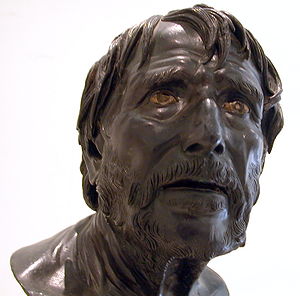
The bromance between these two was too cute. And keep your eyes peeled for Cary Grant's bust of Pseudo-Seneca! His cool-and-fineness factor just multiplied.


So this movie was, like, a big deal back in the day. We mean 1996, when we first saw it and were all about that foreign land called The Past. The dialogue is just exotic enough to intoxicate us present day types. These people hadn't even seen the end of World War II yet! (Leading to an incidentally bizarre moment when a drunk, gushing Jimmy Stewart likens the radiant Hepburn to "hearth-fires and holocausts!") They also hadn't done the whole political correctedness, second wave feminism, alcohol-for-breakfast-is-bad thing. They were wild! Such creatures.

But ultimately lovable, very much so. Especially for how articulate and inventive the screenplay was. People said things like, "You're so cool and fine and always so much your own. There's a kind of beautiful purity about you." Well, golly. What else? Go on!

The actors in this were all heavy-weights, and it shows in their easy glamour and tremendous confidence. Watch your retinas don't detach when they flash one of their sparkling, superstar smiles. And take the character of C.K. Dexter Haven, who is a self-described alcoholic and should be a tragic figure, as all he does for much of the film is mope, brood bitterly and accuse Tracy of cruelly ditching him. But played by Cary Grant, he has a sort of edgy dashing thing going. You're like, double whiskey in the morning? How sexy! Jimmy Stewart is great in this self-righteous "intellectual snob" role - it's almost a cheeky commentary on his sugary idealism with Frank Capra. He also, oddly, reminded us of Obama. Or vice versa? Cary Grant and Jimmy Stewart also have amazing chemistry, especially in the late-night scenes.


Gee!


Katherine Hepburn! Vah! Luminous and fierce, she was just great - much like Nargis in the Hindi remake of It Happened One Night, Chori Chori. It was entirely understandable that all three men were periodically reduced to whimpering piles of mush in her fiery presence. Gosh, she was like a real, live Galadriel. The other ladies were also very "cool and fine" - especially the cynical Ruth Hussey and the puckish Virginia Weidler.

So was the film talking about dignity, celebrity and class? Sort of, but it just concludes that the upper class aren't all evil, the media is a totally not-classy weapon, not Big Brother, and if you want to be a "first class human being", you need to learn to forgive a little human frailty... including that time your alcoholic ex-husband punched you in the face, he's, like, really sorry about that. Have any of you read F. Scott Fitzgerald's Tender is the Night? Because this movie sure looks like that book, with its dizzying fortunes and near-constant drunkenness. Except here, it's a fun, frothy fantasy where everyone is fundamentally good, only a little cheeky from time to time. Given that Tender Is the Night left us in a bad mood for days, and Philadelphia Story made us sigh with happy satisfaction, we'll take the latter.


Help us, readership, you're our only hope!

It's a Cary Grant movie. It's black and white. It's not really a comedy, more like a bittersweet war or post-war romance with strong Manchurian Candidate (minus the psycho) vibes. An exotic locale - a bar. South America? Panama? Cary Grant in a uniform and some lady. Cary Grant punches an obnoxious dude at the bar, and it hurts his hand. He and the lady make bittersweet, cynical and witty exchanges. What movie was it? (Because we have no idea.)

Saturday, 6 March 2010

Battlestar Galactica: Season 3, Episode 1 (2006)

Standard spoiler warning applies!

Things take a sharp left turn at the beginning of Battlestar Galactica's third season, as we jump ahead by over a year and return to the life of a pioneering human race on an inhospitable planet, New Caprica, now at the mercy of an occupying Cylon force. Beginning, as is its way, with a number of disparate plot threads - which will weave more or less harmoniously throughout this epic season premiere - it seems like the writers of BSG just suddenly decided to be Very Very Clear about what they want to talk about.

Suddenly introducing timely themes of unwanted occupations, civilian insurgency, torture and suicide bombings, the human- and Cylon-occupied planet of New Caprica is at once a recollection of American colonies, early Israel, World War II, and Iraq. Forget all that Old Testament stuff, we are now being much more relevant - uncomfortably so! Mixing and matching from our recent history, the episode demonstrates the dangers inherent in an occupation - even a well-meaning one.


The first thing we thought of.


To signify the passage of time and significant life experiences, almost all of the characters exhibit visible signs of change: the former Colonel Saul Tigh (Michael Hogan) has lost an eye, Admiral Adama (Edward James Olmos) now has a mullet and moustache (deadly combination), Kara "Starbuck" Thrace (Katee Sackhoff) has longer hair and Lee "Apollo" Adama (Jamie Bamber) has put on about ten kilos. Furthermore, in their new roles as pioneers, insurgents, oppressed people, collaborators and would-be saviors, characterizations have suddenly expanded and developed. The decent Chief Tyrol (Aaron Douglas) is a Karl Marx-like agitator for socioeconomic justice and prominent member of the insurgency, Gaius Baltar (James Callis) has devolved into a debauched and reviled collaborator, wallowing in clammy self-loathing, and our favorite Cylons - Caprica Six (Tricia Helfer) and the original Sharon (Grace Park) - are pro-human advocates from within the Cylon administration.

It is, overall, insidiously depressing and beautifully told.

It's sad because everything and everyone has changed for the worst. Suddenly, in this post-apocalyptic landscape, everyone is a well-meaning murderer and everyone is suffering. Everyone's a victim. There's a lot to be said that even the Cylon occupiers, with an allegorical vibe hovering uncomfortably between Fascist Germany and the Coalition Provisional Authority (CPA), are shown to be just as terrified, incompetent and hate-filled as their human counterparts. It makes for highly provocative viewing, and seems to advance further along the difficult path of moral relativism. Is motivation or action more important? And which should be punished? How? By who? Suddenly the idea of an all-knowing, all-powerful God is comforting. It means we don't have to take the horrible responsibility of deciding what to do with those we deem "wrong" - we can let God handle it. But, since divine justice is difficult for we mortals to depend on (and, often, just plain believe in), both humans and Cylons take things into their own hands - with disastrous results.

A very alarming (and refreshingly funny) character to be introduced is Brother Cavill (the wonderful Dean Stockwell!), an older Cylon who is whimsically cynical and, seemingly, an atheist. This contrasts sharply with the misty-eyed monotheistic mysticism of the creepier Leoben (Callum Keith Rennie) Cylon model, or even the earnest devotionalism of the Six. Indeed, two Brother Cavill models - who constantly refer to God using air quotes - have a very good monologue/dialogue about their Cylon compatriot's destructive evangelism:


"Uh, we're supposed to bring the word of 'God' to the people, right?"

"To save humanity from damnation by bringing the love of 'God' to these poor, benighted people?"


BROTHER CAVILL(S): "Let's review why we're here, shall we? Uh, we're supposed to bring the word of 'God' to the people, right? To save humanity from damnation by bringing the love of 'God' to these poor, benighted people... But I want to clarify our objectives. If we're bringing the word of God, then it follows that we should employ any means necessary to do so, any means. Yes, fear is a key article of faith, as I understand it. So perhaps it's time to instill a little more fear into the people's hearts and minds."

Oh dear.

There's a very good book about the CPA in Iraq during 2003-2005-ish, Imperial Life in the Emerald City by Rajiv Chandrasekaran. It shows the destructiveness of well-meaning evangelism, especially when driven by a single-minded (here, almost exclusively Republican and pro-Bush) mentality steeped in ignorant ethnocentrism. The Cylon occupation doesn't outwardly exhibit the same monochromatic political spectrum as the Republican-heavy CPA did, but it does carry the same prosletyzing earnestness and frightening mismanagement.


Out of the gulag? Or Abu Ghraib?


Poor, destroyed and destructive Tigh.


Which brings us to the insurgents: the triumvirate of the grizzled and tortured Tigh, the heroic resistence fighter Sam Anders (Michael Trucco), and the idealistic Chief, they are at once sympathetic and repugnant. We sympathize because of their suffering, but we are horrified by their "desperate measures in desperate times" (i.e. suicide bombing). It is, ultimately, tragic - almost harrowing. Particularly Tigh, who's tenuous grip and losing battle with inner demons, lends him a terrible frailty - when you couple that with murderous rage, it's just awful. He has, unexpectedly (but as many people predicted!), become our favorite character, if only for the amount of sheer change he's undergone and the awesome complexities. Poor Tigh! Terrible Tigh! Oh my, oh my.

Friday, 5 March 2010

Battlestar Galactica: Season 2, Episode 12 (2006)

In an effort to stop binging on Battlestar Galactica and try to break up this weekend with something fresh and new, we've decided to review some... Battlestar Galactica.


Based on Da Vinci's Last Supper, we love it! Commander Adama as Simon the Zealot, Gaius Baltar as Judas and the heart-warming Cylon, Caprica Six, as Jesus?! CAN THIS SHOW BE MORE AMAZING?!


Disclaimer: Because it's really hard to review individual episodes of a TV show with a long-scope narrative arc, we'll just put a big fat spoiler warning on this review. In case you are, like us, one of the last people on this planet who hasn't seen this show. Nonetheless we'll try to be as vague as possible.

As our review of the miniseries noted, one of the main themes in BSG (yes, we're on acronym-only basis now) is the difference or non-difference between humans and their Cylon "descendants", and how pure survivalism can sometimes unveil the disturbing similarities between the two groups. All this is textured with classical myth in the form of a conflict between Greco-Roman gods (whom the humans worship) and Abrahamic monotheism (which the Cylons promote). In plainer terms, the humans are constantly faced with tough moral choices, and their behavior becomes increasingly relativist - kind of like the way Zeus et al. were so morally ambiguous. As Commander Adama (Edward James Olmos) notes, "Context matters." The Cylons, on the other hand, resemble any hard-line moral absolutist in their unambiguous belief that they are right and the humans are wrong. The ultimate absolutist and judge, God, they believe, will eventually punish the humans for their various sins - and, to help Him along, the Cylons will put an end to their race. Interestingly, there are only twelve models - matching the twelve apostles? Hmmm.

By season two, episode Resurrection Ship, a new character has been introduced - Admiral Helen Cain (Michelle Forbes). Now, considering we're steeped in a story full of Old Testament allusions, Commander Adama and his ark of survivors flying to a promised land aboard the Battlestar Galactica don't take well to this new person named Cain and her militant commando-style Battlestar Pegasus. After a near-civil war between the two battlestars over the manslaughter of a Pegasus man (long story, other episode), the two agree to unite forces to destroy a Cylon spaceship dedicated to "resurrecting" Cylon consciousnesses into new bodies. In a secondary plotline, the ever-unstable Dr. Gaius Baltar (James Callis) has been assigned the task to interrogate the Pegasus' Cylon prisoner - an unnamed woman (Tricia Helfer) who is (1) a visible victim of torture, and (2) an identical copy to Baltar's ex-girlfriend and hallucination-companion, Cylon model number six (Tricia Helfer, duh). He, understandably, empathizes, as does the audience.


Jesus and Judas - err, I mean Caprica Six and Gaius Baltar the Traitor. Love it!


Now, a lot is going on here. An intimidating amount, in fact. So we'll start with what we know:

My brain! MY BRAIN!

There's no spoiler in acknowledging that one of the Galactica's former pilots, Sharon (Grace Park), is a sleeper Cylon agent. (This is revealed in the pilot episode.) As the show progresses, her character becomes increasingly complex - she is, right now, our absolute favorite. Without giving too much away, Sharon is now a prisoner aboard the Galactica, and the rest of the humans have very mixed feelings about her. Adama, in particular, has a tendency to get a little upset. (PPCC aside, but their interactions are the best!) In one scene, an exasperated and brooding Adama calls Sharon to his room to sit her down and ask, "Why do the Cylons hate us so much?"

Her response captures the entire issue: Adama himself once noted that humanity is a "flawed creation", and that humans can still be petty, hateful, even murderous, thus provoking the question, Do they deserve to survive?

"Maybe you don't," Sharon says bluntly.

This, of course, prompts Adama to prove that damned Sharon wrong by being the best human he can be, and hence deserving of survival. He shares his insights with the crew, too. But we can't help thinking Adama (Adam?) is a very flawed creature himself - his occasional tough decisions to cut the fleet's fat are pretty traumatic. Furthermore, we can't help wondering where, exactly, he is regarding the knowledge of good and evil? His relationship with the wonderful President Laura Roslin (Mary McDonnell) - apart from being sweetly romantic - often takes the hint of the seemingly pure and maternal Laura showing the gruff Adama just how much more hardcore she is than him. (No apples to appear, yet.)


Can we love these two even more? The answer is no. They are our peanut butter and jelly. They are our Saturday morning and Super Mario Bros. Can we just have an episode about how much they love each other? Please?!


The pageantry of science fiction

This show has made us cry a number of times now, often because of the beauty with which it presents the dystopian crises and interstellar battles. The lovely aesthetics are aided by atmospheric and interesting music by Bear McCreary, the show's composer. Often McCreary's music feels like a mix of minimalist Philip Glass (in one episode, one of Glass's piano pieces is heard) and the evocative Tan Dun (composer for films like Hero and House of Flying Daggers). In the episodes surrounding the Resurrection Ship, the Cylon warships are sometimes introduced with music resembling the chanting of Tibetan Buddhist monks. In some ways, it's reminiscent of the Tibetan long horns heard in War of the Worlds.

One scene, in particular, captures the grand-scale myth-making imagery found in the series. Ace pilot Lee Adama (Jamie Bamber) has ejected from his fighter, and he floats peacefully through space - the battle before him is spread silent and distant, and we take a moment to watch it with him, and to marvel at the tragedy. It's a lovely piece of filmmaking!


Captain Apollo watches the destruction as he floats through space.


And the moral of the story is...

...no idea!

This is what we consider to be the genius of Battlestar Galactica: it is so ambiguous. Because we empathize and follow the storylines of a large ensemble of flawed characters, we can only watch the terrible things happen and lament at the iron-clad rules of cause and effect. Ideas such as free will feel deeply unstable when characters are often at the mercy of their own ignorance and heated emotions (ah, how Buddhist). And often we're faced with the "most pure" characters - Laura Roslin, Lee Adama - making decisions which force us to redefine purity so we can keep shoe-horning them in.

Similarly, the Cylons are progressively more and more humanized - such that, by this episode, it is unclear just how "morally correct" the humans really are in the war. Is it wrong that we love the Cylons too?!

So maybe the moral of the story is just that: Shit is complicated.

Tuesday, 16 February 2010

Battlestar Galactica (2003)


There's a series of books out there called Something... And Philosophy, where the Something will be something unexpected and pop culture-y, such as Star Trek, or Star Wars, or Lord of the Rings. We always thought it was just marketing tripe to get people into philosophy via their favorite low art setting. Surely Star Trek is the only TV pop which merits a book on philosophy?

Apparently not, for there is the movie-length pilot of Battlestar Galactica.

Everyone who knows us offline knows that we have a bit of a dystopia fetish. We have a worrying appetite for disaster stories, especially when they are set in the future and/or space, and we prefer all our characters in such stories to be dark, brooding and preferably doomed.

"Then you'll LOVE Battlestar Galactica!" our friends chorused.

And, yes, we have started the brainwashing, and, yes, we are loving it. But while it presses our usual buttons in a usual way (99% humans killed by angry robots! lone human ark sailing through space to an unknown destination! ensemble bonding! be still, my heart), it also amazes us by being so gosh darned philosophical. We could... well, gosh, we could write a book about it!

In the past or future or somewhere, but definitely in media res, it's been forty years since the human-Cylon war, and relations between the two groups are icy at best. One of the last warships of the human fleet, the Battlestar Galactica, is preparing for its decommissioning ceremony, and its crew is all abuzz with its quotidian soap opera motley human drama. There's Kara "Starbuck" Thrace (Katee Sackhoff), the stogie-chomping ace pilot with a big ego and big, cocky smile, there's the grim (and glorious!) Commander Adama (Edward James Olmos, of Blade Runner), his alcoholic XO, Tigh (Michael Hogan), and his son, Captain Lee "Apollo" Adama (Jamie Bamber). There are also a bunch of other people doing a bunch of other things. The point: no one has any idea of the dystopian doom which awaits them, nor will the dystopian doom necessarily drive much of the drama (though it drives a lot of it, admittedly).

Meanwhile, on the Earth-like human colony planet of Caprica, the terribly clever, terribly cheeky genius Dr. Gaius Baltar (James Callis) is discovered to be (1) cheating on his girlfriend, Six (Tricia Helfer), (2) who is also, incidentally, a Cylon in disguise (new model!) (3) who has used him for his defense systems knowledge, thus dooming the human race to near-extinction. Moments after Gaius learns this, a bunch of Cylon spaceships appear and the atomic bombs begin to drop. Gaius flees, but not before acquiring Six as a permanent companion via flickering hallucination; also, the decommissioning ceremony is interrupted, all twelve planets of the human colonies are destroyed, and the Secretary of Education, Laura Roslin (Mary McDonnell), becomes the new colonial President.

Not since Pasqualino Settebellezze has a film made us muse on the right to survive. But this movie-length pilot sets up a number of fruitful (and fairly typical) sci-fi themes: What makes us humans, when Cylons look, feel and act like us? What is free will and consciousness, in an age of artificial intelligence? As the first scene shows, a Cylon asks a human, "Are you alive? Prove it." Or, as a character from the new spin-off series says, "A difference that makes no difference is no difference." This is all par for the course - we've seen it before in movies like Blade Runner or books like Neuromancer - but BSG seems to be looking at it from an interesting angle: if the point of the human-Cylon conflict is that there is some fundamental difference between being human and being Cylon, and if humanity's uniqueness comes from its loftier ambitions (justice, mercy, compassion, blah), then what do we make of humans who must continuously do awful things in order to save themselves? That is, when the biological imperative of surviving drives out all the loftier concerns, the lines between human and Cylon are not just blurred - they're erased.

Pasqualino Settebellezze and BSG's pilot both demonstrate how surviving for surviving's sake can lead to some very nasty moments indeed. Or, let the PPCC rephrase: while Pasqualino unambiguously portrays the moments as nasty, BSG leaves the questions hanging. Two examples. First: there are a number of scenes in the pilot where the remaining humans (now numbering 50,000), have to choose to either let some X number of humans die (where X<<50,000) in order to save the majority. The characters agonize over this, but the conclusion is always the same: the majority wins. It has to. But the lingering doubts remain: Does it really? We can't be sure that the decision to survive, at the expense of an unlucky minority, was right or wrong. BSG impressed us by presenting these difficult questions for what they are: pretty unanswerable! Incidentally, there's a great game about this on the PhilosophersNet: Morality Play.

Second example: there are two notable scenes in which a major character admits that, even in the face of our species' worst crisis imaginable, they are still more concerned with their individual fate. These two characters are Gaius Baltar, who is concerned that the other 49,999 people will soon learn that the genocide was partly his fault, and Laura Roslin, who learns early in the pilot that she has cancer. Here, too, BSG emphasizes the ambiguity: Baltar is mocked by his hallucination-Cylon (who begins to sound increasingly like a sort of Jiminy Cricket-style disembodied conscience) for his selfishness, and Roslin is reassured that her feelings are normal, nay, characteristically human. So who's right? Does the victimless nature of Laura's doom erase her selfishness, redefining it as humanity?

With such a large cast of characters, it's easy to find your personal favorites. Our favorites are Commander Adama and Gaius Baltar, who are brilliant in radically different, clashing ways - like ice cream and cheese. But the performances by all the actors - particularly Mary McDonnell as Laura Roslin, Paul Campbell as her assistant Billy, and Katee Sackhoff as the swaggering Starbuck - are very good. We look forward to seeing how the characters and the themes (especially free will, given all those creepy sleeper Cylon agents!) develop over the next four seasons.

Monday, 25 January 2010

Caprica (2010)


In 1950, Alan Turing devised a test of artificial intelligence. The basic criteria was that a computer could be called "intelligent" if a human, without realizing it, thought she was talking to another human when interacting with it. Hence C-3PO fails the test, but Rick Deckard passes it. The notion of artificial intelligence (AI) has since become a standard sci-fi theme, as it is fruitful both for philosophy (What makes us human?) and pulp (AI robots rebel! kill all humans!). It's become so well-worn that there isn't much new to say... thankfully, the movie-length pilot episode of the new series Caprica still manages to put an interesting twist on the tale, mostly by loading it down with a bunch of other, unexpected stuff.

Caprica takes place 58 years before the events of the highly popular Battlestar Galactica series (itself a revival of the cult 1970s show of the same name). Whereas the latter show followed humanity's last ditch effort to survive in a galaxy of angry AI robots - "Cylons" - the former is an origin story which precipitates the human genocide. And, like any good Genesis, it features a Promethean fall from grace (knowledge bad! progress bad!), along with Frankenstein-type creation, and a guy named Adam(a). As if the Biblical parallels weren't enough, the writers then throw in some Quo Vadis? sauce: the planet of Caprica is much like a decadant 3rd-century Rome, complete with nightclubs featuring gladatorial-type slaughter and human sacrifice, as well as an underground cult of monotheists who are very keen on moral absolutism, secret symbols (not a fish this time) and overthrowing the Mount Olympus pantheon.

As if the story wasn't busy enough with classical themes, Caprica also attempts to tackle 20th-century racism - as embodied in the trials and tribulations of the off-world Tauran immigrants. Taurus is a stony planet where the mafia thrives. Inland Sicily, perhaps?

"I'm not a person, but I feel like one!"
- definitely not a person, in Caprica


The story opens on the surreal debauchery of Caprican virtual reality nightlife. Here, a small minority of morally indignant youth exists - led by their charismatic leader, Zoe Graystone (Alessandra Torresani). These kids are students of the mainstream Athena Academy prep school by day, but they trawl the virtual net by night. Zoe, a genius with computers, has created a near-perfect AI representation of herself in the net, and they are training this AI Zoe for a mysterious mission which will advance the monotheistic cause (or something). Zoe's parents, computer and robotics mogul Daniel (Eric Stoltz) and Amanda (Paula Malcolmson), neither understand nor approve of her shady rebelliousness. These people are also uniformly filmed in cold, hard colors.


Daniel, man of machine.


Joseph, man of soil.


Meanwhile, filmed in earthy reds and oranges, an immigrant family, the Adams (later, Adama), from Taurus is introduced - father Joseph (Esai Morales), mother Shannon (Anna Galvin), and their children, Tamara (Genevieve Buechner) and William (Sina Najafi). Joseph is a lawyer with ties to the Tauran criminal world, and he constantly struggles to balance his Caprican new start with his (literally) old world obligations.

Tragedy strikes in the first act when Zoe, as well as Shannon and Tamara Adams, are killed in a terrorist attack on the city metro. After a chance meeting, the grieving fathers form a friendship - yet just as Joseph Adams is busy thwarting misguided mafia offers to punish those responsible, Daniel Graystone discovers his daughter's genius AI designs.

The story calls to mind the pre-New Wave sci-fi of the 1940s and 1950s (e.g. I, Robot), as humans mindlessly rely more and more on robotic assistants. Didn't these people ever see Terminator? The costumes and Italian immigrant allegories also lend a wartime America feel to the proceedings, especially from the Adams side. The Graystone plot, instead, feels more cyberpunk (e.g. Neuromancer) - with its heavy use of cold lighting, metallic surfaces, and the ambiguous juggle between cyberspace and meatspace.

"A difference that makes no difference is no difference."
- Daniel Graystone, creator of robots that think there is a difference


Ethically, the writers unambiguously side with earthy, good ol' boy Joseph, who disapproves of Daniel's attempts to resurrect Zoe using robotics and the AI. As anyone who watched Battlestar Galactica knows, it will be Daniel's creation which ultimately destroy most of the human race. We give some lukewarm kudos to the somewhat lame attempts to humanize and sympathize with Daniel's plight, but overall we still thinks it's a too-easy moral equation. Daniel may be misguided, perhaps even crazed with grief, but he is never afforded a moment to be right.

We at the PPCC would have loved to see a bit more ambiguity in the whole Cylon/AI business - after all, Prometheus may have gotten his liver eaten, and Eve may have gotten us kicked out of Eden, but at least we learned about fire and morality! Daniel's creation of the Cylon is driven purely by his justifiable, but ultimately selfish and single-minded desire to see his daughter again. And what do we get in the end? A Catholic school girl killing machine! From a storytelling perspective, it's too easy. We never get a chance to love, or be awed by, the Cylon. And hence we probably won't get a chance to feel fear when they turn on us. For the audience, we barely meet Zoe before she is gone - and so there's never any investment in having her return. The best we can do (especially given Eric Stoltz' inexpressive performance) is offer some cold appreciation of Daniel's bend towards mad scientist, and then just cluck our tongues when he creates what is clearly a bad idea. We can never really relate, nor certainly root for. The first, working Cylon - whose appearance concludes the pilot - is Evil with a capital E from day 1. A little more ambiguity, a slower slide into moral oblivion, a less blunt foreshadowing of a path paved with good intentions, would have been a lot more compelling.

What if the Cylons had become a standard resurrection device on Caprica, and thousands of people were peacefully and contentedly uploading their consciousnesses into the Graystone Death Insurance net program? (With, of course, some requisite moral discomfort from special interest/religious groups.) And then it was the faulty resurrection of some psycho, who took over the Cylon battle-body, which precipitates the Cylon War? Or perhaps some bug, or hacker virus, turns all these happy-go-lucky cyber-zombies into angry robots on a mission to kill? Honestly, there were a lot more interesting ways to begin a human-AI meltdown. Maybe Caprica will get better. But the beginning is, while certainly clever and interesting for its Greco-Roman allusions, a little uninspired as well.

Sunday, 10 January 2010

Working Girl (1988)


"I'm not gonna spend the rest of my life working my ass off and getting nowhere just because I followed rules that I had nothing to do with setting up!"
-Working Girl


We love Working Girl.

There's no two ways about it. It's sexy, smart, feminist and purely lovable. It's got a sweet, clever humanism, managing to balance a dry sense of humor with a strong underlying Girl Power theme. It's one of our Personal PPCC Classics - a movie we always come back to, and, having watched it again today, a little older and wiser than last time, we admire it for its cheeky philosophical touches (more on those later).

First of all, Working Girl is about Tess McGill (Melanie Griffith). The setting is 1980s Manhattan, a land where men were men and admin assistants were still called "secretaries". But things were changing, and Tess - outwardly just another girl from Jersey with a towering hairdo, screaming-loud make-up and sneakers on her pantyhose - also harbors an intense passion for business. She struggles ambitiously, but finds herself repeatedly hitting the glass ceiling: her attempts to climb up the corporate ladder are invariably squashed, with the men implicitly or explicity degrading her to just another sex object.


Some not-so-subtle visual metaphors - in America, even women can make it! Yay!


Joan Cusak's look is GREAT in this film!


When one particularly sleazy boss (a young Oliver Platt!) basically pimps her out to his even sleazier buddy in arbitrage (a young Kevin Spacey!), Tess flips and quits. Her next job turns out to be under a woman, Katharine Parker (Sigourney Weaver). At first, things seem great: Katharine is the same age as Tess, and she gives a lot of lip service to helping her fellow sisters up the ladder. "It's a two-way street in here," she assures Tess, who glows at having finally found her "mentor".

Of course, things are not what they seem: when Tess proposes one of her brilliant business ideas to Parker, Katharine minimizes it. When Katharine then breaks her leg on a ski trip and gives Tess the keys to her flat, Tess finds Katharine's evil notes to secretly steal Tess's work and pass it off as her own.

The PPCC gets pretty into this film, so, at this point, we usually scream, "WELL, THIS WILL NOT DO!!! BRING ON THE CARPE DIEM!"


Could he be more wonderful? No.


And bring on the Harrison Ford! On the same day that Tess discovers that Katharine was stealing her business ideas, she also discovers that her blue-collar Jersey boyfriend, Mick (Alec Baldwin), has been cheating on her. Things seem pretty uniformly shit, until Tess hits on the idea of stealing her idea back from Katharine, re-doing her make-up and hairdo into Career Woman mode, stealing Katharine's clothes (ha!) and showing up at an exec drinks in order to meet and mingle. There, she meets fellow lion of the business jungle, Jack (a glorious Harrison Ford), who is immediately smitten. And, as luck would have it, he's also the go-to man for her business idea! It all seems to be falling back into place, but true love (and true business) never did run smooth... FOR LIARS! So how will Tess make it?!


We've been so inured in 30 Rock Alec Baldwin, we forgot this is what he used to look like!


Okay, so we love this film big time. BIG TIME. We love it for two reasons: first, it's well-made on almost every level. Directed by Mike Nichols, who made us cry for the evil lawyer-turned-good in Regarding Henry, this film has wonderful touches: nothing is ever taken too seriously, nor is anything mocked too much. The vibe is one of irreverent gentleness, and great sympathy for our girl Tess. Melanie Griffith is infinitely charming as the endearing Tess: she's a lovable mix of gentle and ambitious, innocent but sharply intelligent. Harrison Ford is rarely comic in this role, and he even pulls a Shashi by going a bit meta and mocking his own real life status as a stud (more on this below).

The second reason we love this film is that it's pro-girl power message is feminist without being too overt. Because unlike more bumbling attempts, Working Girl portrays the very real trials and tribulations we women folk have to face: the stare-downs from creepy men on the street, the hint of mocking when we stray from our traditional feminine roles. Just watch the men in the background as Tess passes: director Nichols never misses an opportunity to show how constantly, systematically objectified she is. Of course, it's cruelly ironic that this film was made by a dude, and that Harrison - the trophy boyfriend! - gets top billing. But the cheeky visual metaphor of the Statue of Liberty (a lady!) and the cunning musical metaphor of Carly Simon's all-girl gospely Let the River Run make up for these minor sins.


Free prize for anyone who can spot David Duchovny in this picture. His first appearance on screen!


And here's where things get great: Katharine and Jack are the new variations to this feminist tale. Katharine's the scary, predatory woman of post-feminism nightmares; she is aggressive, self-absorbed and demanding. Meanwhile, Jack is used both as a trophy boyfriend (director Nichols never misses an opportunity to objectify him! just watch all the women's expressions as Jack passes, or Joan Cusack's wonderful, "Coffee, tea... me?") as well as a way to undermine traditional norms of manhood while still, er, being manly. Partly this is because, well, he's Harrison Ford. But we also like to think that the movie's about showing how traditional gender roles don't have to end up with meek, subservient women and powerful, career-driven men - nor do women have to appropriate masculinity just to get ahead in business. (One of our favorite lines Jack says to Tess: "You're the first woman I've seen in one of these things that dresses like a woman, not like a woman thinks a man would dress if he was a woman."). You can be a classy lady and a corporate warrior. You can be Indiana Jones and be unsure about yourself. And, if this fairy tale is to be believed, you can get the job and get the boy!

Sunday, 9 August 2009

Y: The Last Man (2002)

There's a delightful, meta moment in the superb graphic novel, Y: The Last Man, when the main character, Yorick, is reading a graphic novel about the last woman on Earth. He describes it as "this quasi-feminist, sci-fi thing. Very po-mo." When asked if it's good or bad, he thinks and finally concludes, "Meh."


The cover of the first issue.


Oh, Y: The Last Man! Where have you been all my life? This snarky vignette of self-satire perfectly encapsulates why we at the PPCC loved this graphic novel: feminism, sci-fi, po-mo, and twentysomething nerd chic. Oh, Y: The Last Man, you are not "meh" at all, you are awesome. After sixty issues and countless hours, we finally finished this glorious story last night at 1am. And - pray - is that a tear in the PPCC's eye? Why, yes. Yes, it is.

Taking place in the year 2002, the story opens with a mysterious plague that kills every mammal with a Y chromosome. In an instant, every man in the world is struck dead. The only survivors are a young amateur escape artist, Yorick (the titular "Y"), and his Capuchin monkey, Ampersand (i.e. "&"). Now it's up to Yorick to navigate the dystopian, post-gendercide landscape in a trek to reunite with his girlfriend, Beth, who was studying in the Australian outback when the plague hit. Along the way, he runs into all manner of adventures: a group of radical, nihilistic feminists calling themselves the Daughters of the Amazon, mad scientists, ninjas (!), pirates (!!), crazy Republicans, crazy Secessionists, and loads and loads of snappy commentary on gender.


We cannot recommend this enough. The story is smart, fast, nerdy, funny and touching. Did we mention it's also really, really smart? The dialog zips back and forth at lightspeed, with a whip-snap snark reminiscent of Joss Whedon when he's really on his game (think the best of Buffy, or Firefly). The plot twists and turns in unexpected - and often completely delightful and fascinating! - ways, such as when we bump into the post-plague Pacific heroin trade, or when a war-mongering Israeli general decides to use the post-plague geopolitics to her advantage (Israel is, after all, one of the few countries where women are drafted to serve in the military, and where women have seen combat). All in all, the general idea - What would happen if, one day, all the men died except one? - is explored in a variety of interesting, and often very realistic ways. This inevitably leads to a wicked smart commentary on gender - on the gender balance in the workforce, on gender roles across cultures, on gender and sexuality, and on gender and evolution. (Wo)Man, it really blows your hair back.

The storytelling is also top-notch, and it's chock full of (sometimes very) cheeky literary references (with Shakespeare and 20th century intelligentsia cinema up the wazoo) and cross-cuts between all the various plot threads. It seems to have been written specifically for the PPCC's demographic (twentysomething intellectual uber-nerd? XKCD lover?) - we practically imploded with glee when Yorick admitted to not writing much except for "Knightrider fanfic", or when someone used Ampersand to make a comment on "Stick enough monkeys in a room, and you get Shakespeare!" Or when Yorick accuses his travelling companions, ultra-kick-ass Agent 355 and the grumpy Dr. Allison Mann, of engaging in "Spock/Bones slash fiction"!


Another cover.


And we think the gloriousness of the story will appeal to a lot of people, regardless of where you sit on the pop culture spectrum. Heck, the fact that you're reading a blog called the "Post-Punk Cinema Club" pretty much guarantees you'll enjoy this title.


Gratuitous Richard Feynman picture. We love you, Mr. Feynman! We're not joking!


Now, a graphic novel like this just begs to be turned into a film, and apparently there is something in the works, with the possibility of young Shia LeBeouf playing Yorick. We saw Yorick more as a Luke Wilson type, but... meh. The novel is pretty hardcore - with numerous, quite violent (and sometimes repetitive) fight scenes, occasional complete nudity, sexual scenes and frequent swearing - so we expect it would have to be an R. At least, while we could live without all those stabbings and gunshot wounds, we think - to respect the interesting arguments about sexuality - you would have to give this an R rating. Indeed, a small warning: this story was pretty heavy-duty, both on your gray matter and your heart. Even we at the PPCC - lovers of the dystopia - found the dystopia occasionally oppressive, and just wanted everything to be okay again. But maybe we're just big lumps of vulnerable goo. We won't tell you if there's a happy ending, but we can tell you that there were some strong Richard Feynman vibes in the end, and we love Richard Feynman, so we were pretty happy. We can also say that this story covers sex, death and EVERYTHING (the name of our new band) and is like purified John Hughes (RIP) and Joss Whedon for the Y generation, so you must read it now.

...GEDDIT?!