Showing posts with label nargis. Show all posts

Monday, 8 December 2008

THE JODI: a bonanza of love!

जोड़ी - jodi, n. Hindi. pair, match, duo


The Masala Jodi
Shashi Kapoor & Amitabh Bachchan, "Shashitabh"


The rest of this list isn't in any order, but this is definitely first. It would be silly to pretend that our favorite genre of Hindi films isn't masala - that unique and characteristic blend of outrageous, operatic, zany emotionalism that they make so well in Mumbai. Fellow blogger Beth has already discussed what aspects makes masala masala (dishoom dishoom, gangster lairs, lost babies, disguises), and indeed the masala genre - especially its golden era in the 1970s - is much beloved by the blogosphere. We have to admit - masala is like crack. Once you start, you can't get enough. Or maybe it's like sushi - an acquired taste, addictive for the converts but unpalatable for those missing the gene. Masala demands that you suspend all logic to honor instead the big heart of humanity. Dishoom! Its high point, we would argue, was in the mid to late 70s with the films of Manmohan Desai, though there have been some peaks since then (e.g. Farah Khan's films).

The jodi that best defined that golden era of 1970s masala was, of course, our beloved Shashi Kapoor and Amitabh "Biggest superstar of Bombay" Bachchan. These two met at the party that was Roti Kapada Aur Makaan, but they fell in bromance in Deewaar. The chemistry between these two already very charismatic actors was magnetic - whether they were playing estranged brothers or even antagonists, we could rest assured that they would always have a very strong connection. Like the Force! They complimented and contrasted each other as a quirky yin and yang: Amitabh's macho bravado against Shashi's fey dandying. Sometimes one would be the "straight man" to the other's gags (e.g. Amitabh begging Shashi not to report him in Suhaag), sometimes the roles would switch (e.g. Shashi begging Amitabh to save him from marriage in... Suhaag again). They had unique and different screen presences (and hotness factors) which, combined, became even better. Like... chocolate and raspberries! Pizza and pineapple!

What are some magic jodi moments? Most people would probably point to the iconic "Mere paas maa hai!" dialogue from Deewaar, but we've never cared for that film. Instead, we love:
  • Amitabh dragging a drunken Shashi away from an Amazon-style Parveen Babi in Namak Halaal.
  • When Amitabh and (a sick!) Shashi fight off some goons in Immaan Dharam, and Shashi warns the goons that their (platonic) girlfriend has two brothers looking out for her. When none of them are actually related!
  • In Silsila, when Shashi gives Jaya a tape of Amitabh reciting poetry. Jaya asks, "Praytell, who is this gentle poet with the fly voice?" And Shashi smiles in that Shashi way of his and croaks that Shashi voice of his, proudly informing her, "Mere bhaaaaaaai hai!" ("He's my brother!") And then a fast cut to Amitabh kicking it with a brass band in tow.
  • Basically, all of Suhaag, but especially the bit when Shashitabh's mom enquires about whether Amitabh is already/is intending to get married, and Shashi jams his toast and says, "And who's gonna marry this loafer, goonda, idiot..." under his breath.


Where can I watch this jodi in action? Deewaar, Suhaag, Immaan Dharam, Trishul, Do Aur Do Paanch, Namak Halaal, Silsila, Kaala Patthar... and in particular Aa Yaar Sun.


The Endangered Jodi
Rani Mukherjee and Anil Kapoor, "Anvil Rain, by Meatloaf"


Anyone else reminded of Broken Social Scene's Lover's Spit? "Oooooh, all these people drinking lover's spit, sit around and clean their faaaace with it."


We must make special mention of our newest favorite jodi, Rani Mukherjee and Anil Kapoor. These two are endangered because, as Anil creeps along to 30 50 (!), it becomes increasingly unlikely that he'll be playing many hero roles and indeed, as Filmi Girl notes and we agree, he's instead moving into the Pran territory of character roles. Meanwhile, Rani, at 30, is in her heroine prime - though heroines have a much shorter lifespan than heroes in Bombay, and so she might be finding herself in that netherworld of Juhi Chawla-esque pre-"Naaahiiiiin!"-ing Mom roles in ten years (good for this jodi!). Either way, it's unlikely that we'll see this jodi again anytime soon - as much as we really, really would like to, Mr. Bollywood Producer! Surely Anil's producer brother, Boney, can get something going for these two? Maybe they can be the kooky sideplot couple in some multi-starrer melodrama? (Though, honestly, we'd prefer to just give 'em a big ol' three-hour masala meltdown movie as hero and heroine. That would rock!)

Anyway, the reason we like these two so much is because, as with all good jodis, they have great chemistry. They're both talented at comedy of the squishy dil variety; e.g. expressive, funny and able to freely burst into tears. They can both carry much more depth, if needed. But we really like them for their light-hearted romping in Nayak, our newest favorite movie. Those acid trip scenes won us over completely.

Magic jodi moments?
  • In Nayak, when Anil says something sweet to Rani, causing her to burst into tears. After letting her cry for a minute, he goes, "Okay, okay, give me a smile now. Come on, smile." When a blubbering Rani tries to smile through her tears, Anil looks disgusted and drawls, "Theek-se haanso, naaaa?" ("Laugh better!")
  • In Nayak, when an angry Rani admits she had fed Anil's lunch to the goat because she was so angry at him, and so can only give him some stale roti and onions. Anil not only assures her that "stale rotis with you is great!" but cries when she feeds him.
  • And basically everything they do in the roti song, the Mughal-e-Azam song, the chalo chale song and the pot people song.


Where can I watch this jodi in action? Nayak, Calcutta Mail, the movie that we're going to make the day we win the lottery and take over Bollywood... and that's IT!


Jodi of the Future
Farah Khan and Shah Rukh Khan, "Yes, we Khan!"


While choreographer/director Farah Khan and superstar Shah Rukh Khan have been friends since their early days in Mumbai, they only started their most potent collaboration in 2004 with Farah Khan's directorial debut, Main Hoon Na. This film revived in grand style the best of masala (which the Shashitabh jodi embodied): it was loud and beautiful and fun and frantic and smart. The two followed this up with 2007's Om Shanti Om, which was even louder and more fun (though with a crazy second act... a more unfortunate masala characteristic!). Given the superhit status these two films achieved, we're pretty sure that Farah and SRK will be teaming up again, and we look forward to whatever they'll give us with great anticipation!

Why is this jodi so great? Well, Farah Khan knows masala and she knows exactly how to use SRK. The man was made to be a singing, dancing, charming performer - a star, more than an actor - and Farah puts his hamming and preening to work in the best possible context. Om Shanti Om, in particular, is loaded with a knowing, self-deprecating sense of humor as we watch SRK the struggling extra ham his way up to SRK the egotistical superstar, with ample in-jokes along the way. We love Farah and SRK because they are two intelligent entertainers who make seemingly "brainless" pop which is actually not so brainless at all!

Magic jodi moments?
  • A scene that made us go, "Yes! YES! THANK YOU, FARAH KHAN!" was in Om Shanti Om, when Om the struggling SRK comes home to his mother and engages in the most filmi melodramatic meltdown over his doomed chances at becoming a star. This scene - with its silly camera angles, and SRK's angsty posturing - was perfect and great, a silly piss-take both of SRK's critics and SRK himself.
  • In Main Hoon Na - another film filled with in-jokes about the aging SRK playing the eternally youthful college student - the scenes when SRK expresses his most charming nerdy side, singing off-key, throwing his limbs around helter-skelter, swooning at Sushmita Sen and generally being buoyant and wonderful and freeeee. Sometimes we forget why we love SRK so much, but then we watch Farah's films and dance routines and go, "Oh, yeah."


Where can I watch this jodi in action? Main Hoon Na, Om Shanti Om, and almost any SRK dance routine in the 90s and 2000s was choreographed by Farah... so we'll just pick the legendary Chaiyya Chaiyya from Dil Se as representative.


Golden Era Jodi
Nargis and Raj Kapoor, "Setting screens alight (burn, baby, burn!)"


Sigh. Raj and Nargis. To call what they had "chemistry" is to undervalue it. These two were on fire. They were electric, magnetic, alive. Perhaps it was due to their rumored affair, but watching Raj Kapoor and Nargis together on screen was something so elegant, intimate and intoxicating that we at the PPCC always feel a little voyeuristic. Their connection leaped off the screen, it just seemed like they were in each other's skins. We reckon they defined the black and white era of Bollywood too, as they made some of the biggest classics together - Shree 420, Awaara, Chori Chori. Already two very talented performers, they improved each other - especially since powerful, fiery Nargis tempered Raj's tendencies for objectification. And they were equals - another very important aspect of all our favorite jodis.

Magic jodi moments?
  • When Raj Kapoor realizes Nargis is his long-lost childhood sweetheart in Awaara. He takes her home and shows her a childhood picture and she turns, eyes alight. "Oh, Raj, it's you!" And Raj just smiles serenely and shrugs.
  • Actually, all of Awaara.
  • Their flirting and mutual seductions in Barsaat, where they cast burning glances at each other while the Sitars of Sex blaze in the background.
  • In Chori Chori when, after a long journey of Benedick-Beatrice style snapping at each other, Nargis realizes her feelings for Raj and realizes that they are reciprocated. Her joy and longing in the song Aajaa Sanam is just incredible to watch. Guh, they're so beautiful!


Where can I watch this jodi in action? Awaara, Barsaat, Chori Chori, Shree 420


The Alt Indie Jodi
Naseeruddin Shah and Om Puri, "How do you like them apples?!"


The whole reason we started this blog, Naseeruddin Shah and Om Puri are probably the most recognizable and palatable jodi for the Western Bollywood virgin. With their naturalistic acting, and their tendency to appear in Western films as well, these two are most fun when they can just cavort together like the Statler & Waldorf of Hindi cinema, grumpily heckling the younger generation. Honestly, when our well-meaning and thoughtful Hindustani friends try again and again to tell us why Aamir Khan is really a great guy, blah blah, we just think of Naseer and Om cackling in the background. Because they are it - they are the real deal. Aamir Schmamir, Naseer and Om are the real progressives.

The best parts of the jodi can be found in their Parallel Cinema days, but there are also some Bollywood moments to be had. Magic jodi moments, off the top of our head:
  • Naseer trying to save Om's butt in the first film ever PPCCed. Oh, the memories!
  • The wasted Om and Naseer peeing over the side of the balcony in Maqbool.
  • Team Naseer-Om kicking dacoit butt in the Kurosawa-inspired misfire that was... CHINA GATE.


Where can I watch this jodi in action? China Gate, Aakrosh, Maqbool, Sparsh, Arth, Shoot on Sight

The Official PPCC Jodi
Pran and the PPCC, "A match made in heaven"


It was love at first sight here at the PPCC when Pran made his debut on our television screen and in our hearts. Never again would we be able to review a film co-starring Pran in the same way, as his presence inevitably provoked such an intense burst of passionate affection that we usually can only write "PRAAAAAN!!!!!!!!!!!" and be done with it.

What is it about Pran that makes him so gosh-darned special and so golly-whiz lovable? Is it his characteristic delivery WHERE.EVERY.WORD.SOUNDS.LIKE.IT'S.OWN.SENTENCE!? Or is it his craggy, pirate-esque features? Is it the fact that he was apparently some sort of mathematical genius? Or is it all those fabulous character roles he played, where no masala treat would be complete without "...and PRAN!" in its title credits?

Whatever it was, we identify with Pran. We are like the Pran of the blogging world. When they make the masala madness meltdown movie of Bollywood bloggers, we want to be the Pran - perhaps a little ambiguous, a little shady, but distinct, quirky, memorable! Hero, schmero, GIVE US MORE PRAAAAAAN!!!!!!!!!

Magic jodi moments:


Where can I watch this jodi in action? Amar Akbar Anthony, Madhumati, Do Musafir, Don, Chori Chori, and our hearts

Monday, 1 September 2008

Jogan (1950)


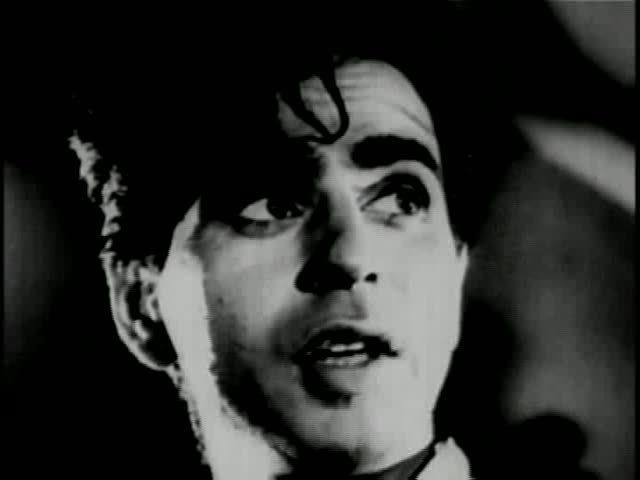
Hi, I'm Dilip. I'm an atheist. I'm also a stud.


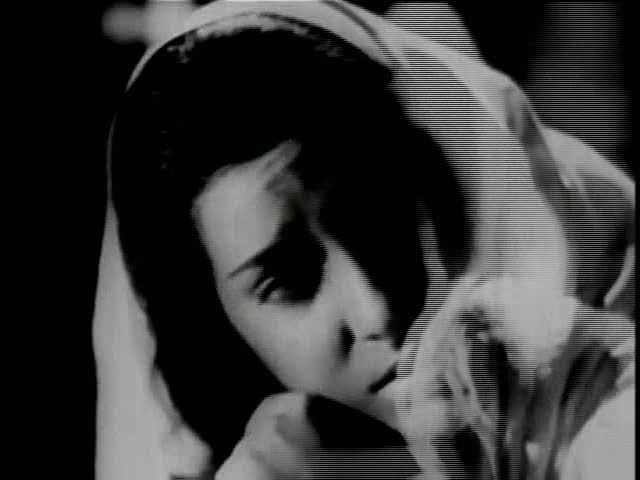
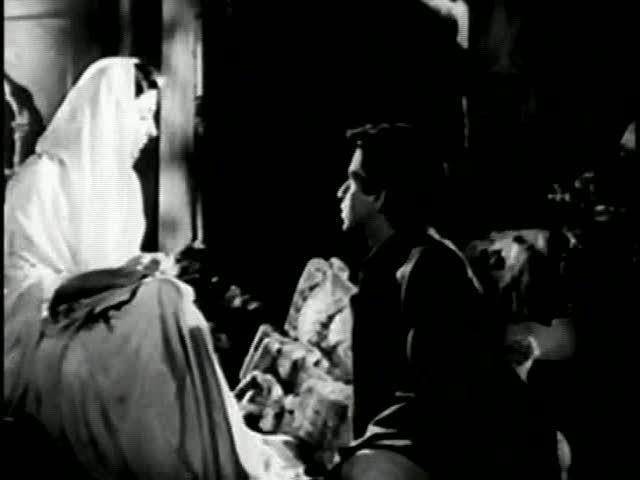
Hi, I'm Nargis. I'm a nun. See that bird fluttering over the superimposed image? That's my dil, trying to break free. Enjoy the angst!


Some films defy categorization. Films such as Dil Se and Awaara and now, Jogan (Yogi/Mendicant/Nun*). Neither mainstream nor arthouse, these films are difficult to describe, to pin down, because we can't compare them to anything else. They just are... how they are.

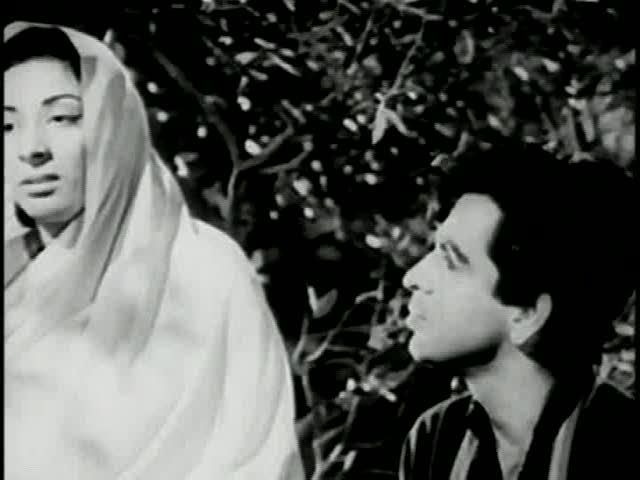
The story of Jogan is simple. According to the title credits, it was written by "?" - perhaps it's a traditional fable? Village atheist, Vijay (Dilip Kumar), is content with hanging around and avoiding the temple. One day, a traveling mendicant arrives - and this ascetic is none other than the gorgeous Nargis! Vijay is positively smitten, and suddenly going to temple doesn't seem like such a bad idea. However, the presence of a brooding hottie severely disturbs St. Nargis' peace of mind, and she repeatedly requests that he take his brooding butt and sit outside. He does, but then leaves flowers on her doorstep and engages in other manner of cuterie. St. Nargis' detached serenity just goes all higgledy piggledy.


As Joss Whedon would say, he is starting to damage her calm.


When Vijay confronts her about the turmoil in her eyes, and asks her why she gave up the material world, she narrates a sad and sweet story when she lived as the secular, frothy Nargis we all know and love. The present tension between religion and securalism, theism and atheism, and to hottie or not to hottie ends on a sad, symbolic note.

We definitely haven't captured the vibe of the film - which is deeply rooted, enigmatic, Zen-like (if we may mix religions). It's... just difficult to write about, as we've never seen anything even resembling it. We can only liken its profound emptiness to the feeling we got sometimes reading J.L. Carr's A Month in the Country, which was similarly thoughtful and vast.


Sometimes nuns can doubt...


...and atheists can worship.


Jogan treats its story with the softest of touches - neither the atheist nor the ascetic are demonized for their choice, though their choices are gently explored. In one touching sequence, a holy man arrives at a courtesan's parlor where Vijay is lounging. Everyone hurries to greet the ascetic - Pranaam, Gurudev! Namaste! - and, embarrassed, they urge Vijay to do the same. Vijay is reluctant, he keeps his eyes lowered and says, Log mujhe nastik kehte hain. (I am called an atheist.) The holy man and Vijay banter and tease each other, and the ascetic praises Vijay's atheism as a form of secular humanism and an ultimate search for love: "I am an atheist like you, I am constantly searching for God. God is truth, beauty, happiness. I search for these things in the huts of the poor, you search for them here [in the courtesan's parlor]. Lord, your soul is in search of someone. Someday you'll make room for God in your heart." Smiling wryly, Vijay finally greets the ascetic, Pranaam, Gurudev.

Similarly, Nargis' choice to become a wandering nun is gently questioned by the head nun. When Nargis arrives at the nunnery, having escaped from her home, hurt and upset, she asks to seek refuge in God. The head nun warns her that becoming a mendicant is not something to rush into, it's not something that happens just because you "give up" on the world. Still, Nargis insists and the head nun yields. Throughout the film, a perturbed Nargis chants the peace (shanti) mantra, seemingly to little effect - but we don't think the film is necessarily showing the meaninglessness of religious devotion. Rather, by our reckoning the main message is finding the happy medium, a flexible yielding between the purely areligious and purely devotional life. Vijay and Nargis' character are both very young and passionate about their beliefs, and yet these beliefs - while ostensibly deriving from choices made for their own happiness - seem to give them nothing but trouble. Why not just give a little and not be so inflexibly atheistic/ascetic? Gosh!


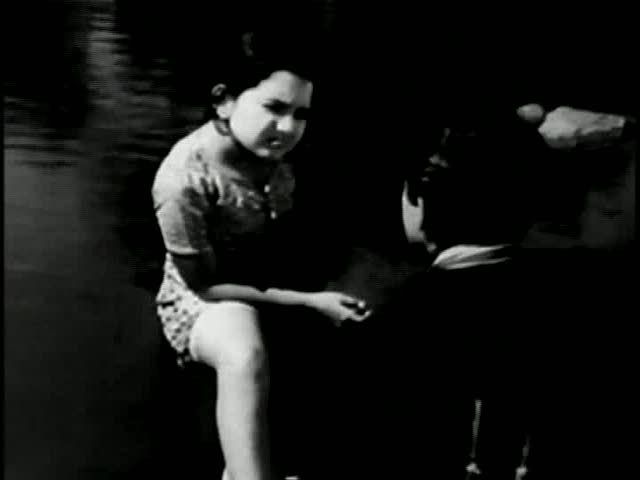
The relationship between this little firecracker and Dilip was adorable.


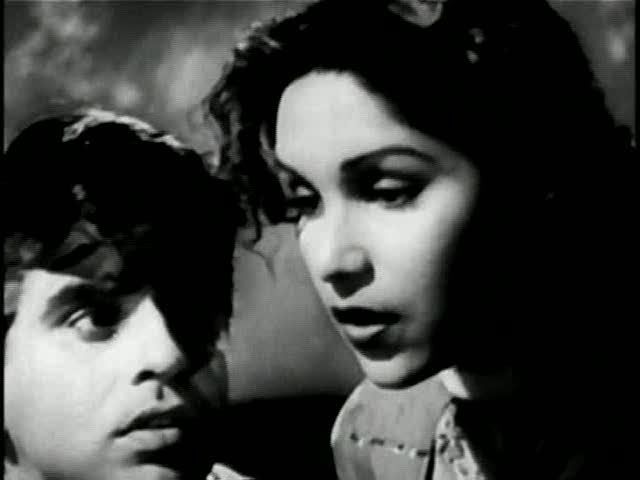
Dilip the atheist searching for God in the courtesan's parlor. Are you loving this movie? We are. Note the super-tight close-ups and the fact that they're both in each other's faces.


Both Nargis and Dilip Kumar do a very good job in their softspoken, sweet interactions. Dilip mostly maintains the same vibe throughout the film - dreamy-eyed and lovelorn - while Nargis demonstrates her formidable range as the ghost-like mendicant versus her former, high-spirited self. Watching her transform from one into the other is really quite sad.

The film's aesthetics, as we said, were hard to pin down. There were some cute, blunt symbols: such as when Nargis, after first meeting her admirer, escapes to her room and the picture of a fluttering, caged bird is superimposed over her. The director also favored incredibly tight close-ups coupled with minimalist composition, all contributing to the Zen look. Another really interesting thing: this might be the shortest Hindi film ever, clocking in at a mere 1hr 45min! Canst it be POSSible?! Just another thing to add to the list of Why Jogan Is So Unique.


Oh Lord, can't we be friends?


* So we're using "nun", "mendicant", "ascetic" and "holy type person" interchangeably in this review. If you are any of the previously mentioned and wish to complain, please take it up in the comments. We love those.

Tuesday, 5 August 2008

Jagte Raho (1956)


The alienating demon apartment block, standing in for Dante's rings of hell.


We were pumped to see Jagte Raho (Stay Awake). First, after hearing the song, Jago Mohan Pyare, our weak little dil filled up with great red excitement and our hair stood up on end. Check! Second, it was written and directed by Sombhu Mitra, a "legendary Bengali actor-director". Bengali cinema! Finally, we get to see what all the fuss is about. Indeed we were predisposed to approve of anything that came from the land of Devdas, Satyajit Ray, and Amartya Sen, a region in India renowned for its intelligentsia. Check! Third, it promised to be one of those wonderfully stark, arthouse Raj Kapoor films. Triple check!

Jagte Raho takes place over one long, surreal night in a city apartment block. A thirsty villager (Raj Kapoor) arrives in search of some water. When he worms his way through the apartment gate to drink from a pipe, he is quickly spotted and accused of being a thief. As the apartment comes alive, demon-like, the villager goes from flat to flat in search of a safe hiding spot. And in every home, he's confronted with corruption and moral bankruptcy. A group of angry young men, headed by a wannabe tough guy (a very young Iftikhar!), organize relentless search parties. An alcoholic (Motilal) insists that his wife sing and dance in the manner of loose Western types. A corrupt Hindu pandit (???) charges commission for false predictions on the upcoming horse races.


Director Mitra uses a lot of widely framed shots, where the characters are dwarfed by looming buildings and deserted city streets.


Raj Kapoor disguises himself as a Sikh, while the thuggish Iftikhar freaks him out.


Eventually, our poor, hapless hero gets trapped in this web of sin when he gets mixed up with an illegal money-printing business in the basement. Now, some scary money-printing thugs are going to kill him if Iftikhar's mob doesn't, and all he wanted was a glass of water!

Much in the manner of Martin Scorsese's After Hours, this film is a satirical look at the dark side of humanity, using one interminable, weird night as the allegorical setting. By day, the apartment block is full of respectable people going about their respectable, middle class lives. By night, the apartment becomes a living inferno, complete with Dante's rings of increasing evilness. Neighbors have petty feuds. Daughters disobey their fathers and have private affairs with cowardly men. Husbands attempt to pawn their wives' jewelry. It's a violent baptism by fire for our naive protagonist to see how flawed and hypocritical these rich city people are. In one sequence, when he's reached the end of his tether and has been literally cornered by the mob, he lashes out, screaming and voice breaking, "You're literate people, big people! You taught a peasant like me that you must rob to be rich!"


Our favorite scene, for Raj's acting. Here, he's confronted with loads and loads of money.


Motilal, hamming it up. He's a good sharaabi, but he's not the best; that title belongs to our beloved Shashi!


The pervasive cynicism is occasionally lightened by tragicomic details - no character is spotless, but they are human, and their human frailty is treated with a sort of weary sympathy cum despair. Raj Kapoor is surprisingly sweet as the child-like villager, scared witless and head spinning. And while he's technically the protagonist, he acquiesces the spotlight constantly, acting more like a peripheral Greek chorus to the drama of the petit bourgeoise around him. It's notable that he hardly says a word in the film - mostly emitting terrified squeaks and sqawks and reacting rather than acting. The only scene where he says anything of substance is his moment in the corner, when he declares he too will be a thief, if that's what the stupid world wants him to be. But, no! Don't give up, Raj!

A constant theme of the film is sleeping versus waking. In the final scene of the film, when the woman at the temple (Nargis, in a gorgeous cameo) beckons for the flowers and Krishna to wake up, we see that all the evils fade away in the dawn light. Just like to be a buddha means to be "awakened" (from the Sanskrit root, budh, to know, to understand), the film draws parallels between the evils committed when the mind/conscience is "asleep" and the importance instead of remaining "awake", that is, mindful. Just as, in the opening scene, night watchmen cry out to each other, "Jagte raho!" (Stay awake!) So the film cries out to the audience - wake up! Whether this be to your social reality, political injustices, or personal demons.

This rather broad moral theme is painted on the canvas of post-Partition India. Several times in the film we see characters committing evil deeds in front of portraits of national heroes. In the end, when dawn finally breaks and the light hits our hero's eyes, these portraits reappear in all their bombastic glory. It is, depending on how sentimental you are, either powerfully moving or somewhat undermining of the film's earlier nihilistic despair. Prof. Lutgendorf, as usual, sums it up perfectly:
"The coexistence of patriotic schmaltz with trenchant social critique is of course characteristic of Kapoor's films, as is the suggestion, in the apotheosis-like finale, that the vision of a buxom goddess in a blouseless sari (played by Nargis, naturally), accompanied by a soaring hymn to Krishna, (Jaago Mohan pyaare, "Wake, O beloved Enchanter") might suffice to lift this dark Dystopia into a bright New Day. The awakened viewer gets to choose between lingering skepticism, and surrender to enchantment—or go away savoring both."
- philip's fil-ums: Jagte Raho

This tension between "skepticism" and "enchantment" is perhaps the film's golden touch: the extreme highs and lows of humanity are on display, from mindless mob violence to gentle compassion.

Raj Kapoor is very effective in his Chaplinesque tramp persona. We've never liked this character, and yet here - partly because he seems to naturalistic and, well, terrified, and partly because he allows himself to remain largely peripheral - we thought he was very effective. Other reviews have noted Motilal's performance as the drunkard, and he is indeed very touching, infusing his character with that sort of tragic, debauched Sufi-esque epistemological doubt. Life is a dream, he sings continuously. People make decisions based on what their heart says, but when they "wake" up, they're not sure whether they did the right thing or not.

Tuesday, 10 June 2008

Chori Chori (1956)

Preamble: Thanks to Sanket for alerting us to this amazing movie via his excellent post on its music. (The back cover of the album is our new desktop wallpaper!) Also, thanks to the excellent Parties, Sarees and Melodies, in their infinite generosity, for doing a post about its music as well.


Raj and Nargis burning up the screen.


As we mentioned on Memsaab's blog, recently we've been feeling like Your Friendly Raj Kapoor Apologist. Not only on the blog world, but even in real life, we find ourselves saying things like, "Sure, he objectified Zeenat, but Awaara is kinda feminist!" and "Yes, yes, I know, but he was really effective when restrained!" It seems that, as per our previous discussion of the Good Raj and the Over the Top Raj, most people's opinion is tipped over into the dislike side of things. However, we remain big big fans of Raj, and, lately, defenders of his awesomeness. Like any performer, he had his good and bad days - and we think his good moments far outweigh his bad moments (though his bad moments are, yes, pretty bad). At least, the artist of Awaara and Teesri Kasam will always be treasured by the PPCC!

Chori Chori is another example of Raj at his best - though, that said, the movie really belongs to Nargis. This was one of those movies that we enjoyed so much that, even though the ending is happy, we were left depressed. Sigh! If only life was like it is in Chori Chori! Alas.


There are a couple classical-ish numbers in the film.


A remake of It Happened One Night (and not the only Hindi remake, apparently), Chori Chori has exactly the same rakish, knowing, gentle-with-a-bite humor that characterized Hollywood romantic comedies during the 1930s and 40s. It could be the Hindi cousin of Sabrina or The Philadelphia Story, except it has an added bonus of incredible songs (and these are a big bonus in this movie!).

Nargis stars as Kammo, a spoiled, ultra-rich heiress who jumps off her father's yacht and swims to Madras in a stubborn effort to show him who's boss (he clearly concedes that she is, as we all do). Insert first amazing song. The source of Shakespearean disagreement between father and daughter is Kammo's choice of husband - she is madly in love with the smarmy Suman (PRAN!!!). Understandable. It is Pran. PRAN. But Kammo's father (an excellent Gope), like most people, believes Suman is just marrying into their money. Kammo refuses to believe this and, after numerous thrown dishes, thrown tantrums and bodies thrown into the sea, she arrives in Madras, jewelry pawned and in disguise.


Nargis is one classy lady in this. We loved her!


But how can she love the smarmy Suman? Maybe because under all that smarm, there shines the wonderfulness of PRAN!!!


There she meets Sagar (Raj Kapoor), the cliché hardbitten/softcore fedora-wearing writer-journalist of black and white cinema. (Lovin' it!) Channeling more Humphrey Bogart than Charlie Chaplin, thank God, Raj Kapoor is restrained, sarcastic, and great. When Sagar and Kammo catch the bus to Bangalore together, they fuss and argue with gusto. Clearly, they are on the road to the big L. Indeed, the wonderful chemistry between Raj and Nargis is at it again; they are so great together.

Enter the two comedy subplots. Since there are Kammo wanted ads all over the newspaper, a couple of your usual proletarian comedians, Bhagwan (Bhagwan) and his wife (Raja Sulochana), are desperate to find Kammo and collect the massive reward. They embark hence on a mini adventure to find her, and much hilarity ensues. Meanwhile, a lecherous poet (Johnny Walker) sits next to Kammo on the bus and proceeds to torture her with his awful poetry. After Sagar threatens him and implies he's a big shot dacoit, the terrified poet decides to bring the whole family around - that's one wife and ten kids - for an apology, and much more hilarity ensues.


From Panchhi Banu Udati Phiru, which was so perfect that we became tearful. And how interesting: the YouTube commenter says Nehru loved this song too.


A moment from the equally excellent and sweet Jahan Main Jaati Hoon. Clearly the inspiration for Phir Raat Kati, our favorite song from Paheli.


Film analytics-wise, what struck us most was the major theme of marriage, treated as a tragicomic ball-and-chain satire rather than domestic bliss (see Masoom, The Son's Room, Baseraa, or even just Vinod and Shabana's verse from Hamko Tumse Ho Gaya from Amar Akbar Antony if you want to see married life treated as a domestic Elysium). Marriage is everywhere in Chori Chori, and not always in a positive way. Kammo, above all, wants to marry the leery Pran, even when everyone is telling her not to. Sagar and Kammo often have to disguise themselves as a married couple in order to get into inns on their way from Madras to Bangalore. There are numerous on-screen arguments between married couples: between both sets of innkeepers, between both sets of comedy subplots, between Raj and Nargis when they must pretend to be married, and between Raj and Nargis again when they imagine themselves puppets in a puppet show. Much of the humor also comes from this gentle teasing of married life. In one scene, an innkeeper kicks Raj's butt, Marx Bros.-style, and then concludes, "Yes, this man is married. He didn't flinch when I hit him. He must be used to abuse."

Indeed, the whole treatment of love and marriage is very similar to Shakespeare's Much Ado About Nothing. The couple in each story - Sagar and Kammo, Benedick and Beatrice - didn't fall in love via the usual lightning-bolt, puppy-dog-eyes cliché. Rather, both only came to love each other after a lot of bitching and arguing and misunderstanding. And, if we remember correctly, it was literary critic Harold Bloom in Invention of the Human who noted that, at the end of Much Ado About Nothing, we get no guarantee that Benedick and Beatrice will live, married, happily ever after. Quite the opposite, it seems! Similarly, given Chori Chori's humorous pessimism regarding married life and Sagar and Kammo's already prickly interactions, we get the vibe that they too will be having their arguments down the road. Overall, Chori Chori exhibits that same sort of "benign nihilism" (Bloom's term) that characterizes several of Shakespeare's romantic comedies - an attitude that is both cynical and forgiving towards love.


Sagar: kinda loving her, kinda hating her.


Another similarity that the Kammo/Sagar-Benedick/Beatrice couples share (and we love) is cryptic allusions to their pasts. One thing that always struck us - especially after Kenneth Branagh's sun-soaked Tuscan Much Ado... - is the vague allusions to a past relationship between Benedick and Beatrice. In particular, these lines of dialogue stick out:
DON PEDRO: Come, lady, come; you have lost the heart of Signior Benedick.

BEATRICE: Indeed, my lord, he lent it me awhile; and I gave him use for it, a double heart for his single one: marry, once before he won it of me with false dice, therefore your grace may well say I have lost it.

Winning each other's hearts with false dice? A double heart for his single? Hmm, sounds like someone's been dumped.

Sagar seems similarly scorched by some past wrong (or maybe that's just the standard jaded attitude characters like him are supposed to have). The line of dialogue that jumped out for us - with the caveat that this was subtitled and we're paraphrasing - is when, after having his busride nap disrupted, he says, "No problem. I've had so many sleepless nights, what's one more?" Hmm.

In terms of performances, Nargis really makes the movie. Upperstall's review of the movie calls her the "dizzy heiress" - that's an apt description. A character like Kammo could have easily become someone the audience hates - a petulant, spoiled snob stereotype. Instead, Nargis manages to make Kammo obviously spoiled, yet sympathetic. It's like we're seeing her through Sagar's eyes: her sense of entitlement, her brash and confrontational behaviors seem sweetly disconnected with reality. It's obvious she's been sheltered in a gilded cage for very long, and it's likewise plain that her personality is a force to be reckoned with. Nargis also displays great range: playing both extremes of comedy (the puppet show!) and drama (the misunderstood betrayal!) with talent.

Raj, not a performer who usually took the backseat, shares the stage well and often lets Nargis outshine him, so that Sagar remains almost a secondary character. We've always said Raj was at his best when he was restrained, and here he is, and how! In fact, it's wonderful to juxtapose his relatively toned down scenes as Sagar to his brief spell as a puppet in Jahan Main Jaati Hoo, where he is free to be as over-the-top as he wants - and it's a great sort of OTT!

We would be remiss not to mention the obviously fascinating meta aspect of Raj and Nargis' reported real-life affair. Somewhat ironically, this was their final film together and Nargis went on to marry Sunil Dutt (Suman/Pran?) in 1959. Even though the popular rumor might be false, thinking about it during the film lends everything a sad touch. Sigh.

And finally: the music! What a great soundtrack - all swaying Shankar-Jaikishen melodies! And what great picturizations! The visuals resembled the stark, stylized songs of Awaara, with numerous dramatic shots of the clouds, with geometric patterns made of light, shade and people. Pancchi Banu Udati Phiru and Us Paar Sajan stand out for us as excellent examples of Hindi Music Perfection. We also noted that the songs are primarily from a female POV. Nargis gets two item numbers (the sublime Rasik Balma and the springtime frollicking of Pancchi...) and there are three additional female dance numbers. Indeed, Raj has no songs to himself, and only comes in on the three love duets (Aaja Sanam, Yeh Raat Bheegi Bheegi, Jahan Main Jaati Hoo) - and, in two of them, he comes in second! This is all very notable to us, as all the gender conventions are reversed.

Overall, an excellent film and one of our favorite Hindi films so far.

Wednesday, 28 May 2008

Barsaat (1949)

Disclaimer: The PPCC watched Raj Kapoor's Barsaat (Monsoon) with fellow blogger and owner of our single brain, Beth. As a result, the PPCC was a bit distracted by the fun chatting and we spent a lot of time going, "STUD IN THE HOUSE!" instead of actually listening to what Raj Kapoor or Prem Nath were saying. Well, what can ya do? STUDS.


We're always so charmed by Raj Kapoor's visuals.


Or just visuals of Raj Kapoor. Young, thin, Byronic. Triple yeah!


The plot: Gopal (Prem Nath) and Pran (Raj Kapoor) are two studs on the prowl, cruising along the Indian countryside in their trendy wheels. It should be noted that both are phemonally good-looking. Anyway, Gopal is a bit of a dallier - he's got a girl in every hamlet, you know what I mean? Meanwhile, Pran is the sensitive poet of the two. So far so standard. Every year they rock up to a hillstation or something. Gopal pays a visit to his frequent lay, Neela (Nimmi), a poor mountain girl who does nothing but wait for him to return. Pran, like the PPCC, is disgusted and highly disapproving of Gopal's dallying, but, well, what can ya do. The two rent a house from some dude whose daughter happens to be the likable Reshma (a gorgeous, young Nargis). Both men are taken with Reshma - as would anyone, she's just so cute! - but for Pran, it becomes something more, and soon enough, the Raj-Nargis energy supply source is activated. Honestly, the heady scenes of their courtship are reason enough to watch this film, and the PPCC spent most of the time gushing to Beth about how gorgeous Raj is, how wonderful Raj-Nargis are, and - OMG - are those the looming Sitars of Sex, I hear?


The Raj-Nargis chemistry, on high.


Prem Nath's looking quite the stud himself these days.


They're actually not, we were just having Dum bhar jo udhar munh phere flashbacks. Pran and Reshma have a platonic-yet-passionate courtship, and soon enough the wedding sitar - no, violin - no, shehenai - is playing. But one evening, when Reshma's father catches Reshma on her way out to meet Pran, he assumes - like the PPCC did, honestly - that she's going to get some Raj some'n some'n. There follows a bizarre scene that ends with Reshma sort of drowning.

Now begins the usual forced separation of intensely-in-love lovers. Reshma is fished out of the river by the huge brute, Bholu (K.N. Singh, who plays Jagga the Dacoit in Awaara). Bholu, struck by Reshma's prettiness, decides he will wed her as soon as she comes round. Meanwhile, Pran, presuming Reshma is dead, spirals down into the usual unwashed, unshaven lover's depression/madness thing. The lovers get to sing matching his and hers songs of painful longing, as well as a gorgeous duet - Chodd Gaye Balam (My beloved has left). Several close calls occur, according to the Law of !ncredible Indian Irony, where the lovers are almost reunited. Much drama occurs of the usual La Traviata style and we should note that, in the end, the PPCC cried.


Whoa, diagonal.


Barsaat shares many similarities with Raj Kapoor's later work, Awaara. Both feature strong, stylized visuals that make ample use of dramatic lighting, sharp diagonals, textured black and white, and frequent shots of the sky. The music in both includes at least one large choral number and a couple longing solos - as Philip Lutgendorf's review aptly describes, these songs are like arias which lend an operatic-feel to both films.

Indeed, Raj, when he was on top of his game, had a humanistic grandeur that is just immensely satisfying to watch. When Raj was good, he was really good. Better than his brother, the PPCC's beloved Shashi. Better than anyone else in the Kapoor clan. Better even than Naseeruddin Shah, the PPCC's benchmark for Best Indian Actor. Raj was transcendental.


Do you feel the drama? FEEL THE DRAMA.


Unfortunately, Raj was also highly, highly variable. The PPCC has seen 5.5 of his films so far: this, Awaara, Teesri Kasam, Sangam, Aag, and half of Shree 420. And our verdict on these films and, specifically, Raj's performances, has ranged from transcendental to, well, astonishingly bad. It's not that he was an incapable actor. It was just that he was clearly very talented, and he seems to have become very well-appreciated at a very young age (his first film as a director was Aag, which came out when he was 24), that his performances could sometimes feel incredibly self-indulgent. A bit like the Kenneth Branagh effect (though, OK, Kenneth gets a lot of flack and Indulgent Ken has never been as difficult to digest as Indulgent Raj).

Also, his most famous persona - the Chaplinesque tramp character of Shree 420 and some scenes in Awaara - now rings annoyingly cheesy to our 2008 eyes. As a result, the PPCC has never liked over-the-top comedy Raj, nor have we liked over-the-top melodrama Raj - both performance types are so loaded with affectations and self-conscious posturing. Instead, when Raj was restrained - Teesri Kasam is a perfect example - he was so good. SO GOOD. In Barsaat, we would estimate that he was about 60% amazing Awaara Raj, and about 40% OTT Raj. This is a tolerable mix, and makes for generally fine viewing.


Aww, Nargis was so pretty in this.


The Mao hat, which Beth spotted first. Later in the film, the actor who plays Bholu's local pandit looks Chinese, too.


But that's only talking about his performances. Director-wise, we have enjoyed all of his films (with the possible exception of the overused two-tone color filters he used in Satyam Shivam Sundaram).

The music of Barsaat is, as usual for Shankar-Jaikishen, top-notch. There was an interesting selection of classical Western pieces which serve as background music - we're philistines, so we can't tell you who they were. Uh, Chopin? Beethoven? Liszt? Honestly, it could be anyone. We have no idea. But we do know that our favorite song was Chodd Gaye Balam - such bittersweet melancholy! Such transcendental bliss! Clearly, Chodd Gaye Balam is the new Ham Tujhse Mohabbat here at the PPCC. Chodd Gaye Balam is like Madeleine L'Engle's A Wrinkle in Time, if the latter was an old Hindi film song and not a young adult book. You know what we're saying? SUBLIME FROM ANOTHER DIMENSION.

Exploring further: